Donation will help preserve Little Truckee River watershed

The Truckee Donner Land Trust recently received $5 million from the Wildlife Conservation Board to acquire approximately 2,995 acres of land for the protection of significant alpine and wet-meadow habitat, protection of the upper Little Truckee River watershed, and allow for continued conservation-based management and public use of the property.

Through 2011, the Land Trust and its acquisition partner, the Trust for Public Land, has been fundraising in earnest to raise $8 million to purchase Webber Lake and Lacey Meadows north of Truckee in Nevada and Sierra counties.

From a biological, historical and recreational perspective, this may be the most important acquisition the Land Trust says it has pursued. Lacey Meadows comprises 1,900 acres and is one of the best examples of a highly functioning meadow system in the northern Sierra Nevada eco region.

The landscape has been targeted by the Nature Conservancy as a “Portfolio Site” because of the critical habitat it provides for biodiversity in the Northern Sierra Nevada.

Webber Lake has been a private recreation destination for more than 100 years and is said to be the birthplace of sport fishing in the Sierra. The site is also of immense historical significance. Webber Lake Hotel, built in 1860, still stands on the property, which is traversed by the historic Henness Pass Road, a crucial emigrant and early California commerce route.

The Land Trust, working in partnership with the Trust for Public Land, hopes to close on the properties in fall 2012.


Vail Resorts beefing up safety at its 6 ski areas

Vail Resorts is introducing an enhanced slope safety campaign across its six resorts called “Play It Safe, Play All Season”.

The announcement came the same week it was announced Heavenly Mountain Resort was being sued by skier who alleges having been severely hit by an employee on a snowboard.

“Our guests have been telling us that safety is a key component of their mountain experience, and their comfort level on the mountain relative to safety is one of the most important things we can affect,” Blaise Carrig, co-president of Vail Resorts’ mountain division, said in a statement. “Because of this, we’re launching the Play It Safe campaign across our resorts to encourage locals, destination guests and employees alike to ski and snowboard responsibly so that everyone can have fun on the mountain all season long. While everyone is ultimately responsible for their own behavior on the slopes, we can absolutely do our part in encouraging and enforcing responsible behavior and are committed to doing that.”

The Play It Safe campaign is a multi-faceted, comprehensive campaign aimed at addressing slope safety by communicating how guests can ski and snowboard more responsibly and still have a great time. All six of the company’s resorts, including Heavenly and Northstar, are implementing enhanced on-mountain Play It Safe messaging across a variety of channels and in critical locations, such as terrain park exits and areas where trails merge, to reach skiers and snowboarders of all ages.

Vail Resorts is also working on video communications with sponsored Olympic and world champion ski and snowboard athletes Lindsey Vonn and Shaun White.

Guests can also expect to see a greater presence of mountain safety and operations personnel at all six resorts.

In addition to the Yellow Jacket program, management teams across all six mountain resorts are also being provided with additional training to support the slope safety efforts and will have a larger on-mountain presence particularly on busy days.


Conditioning helps ensure muscles are ready for the slopes

By Alan Barichievich

Winter is finally here and while we’re waxing our skis or boards, dusting off our goggles and making sure our boots are still comfortable, many of us tend to forget about pre-season conditioning. It’s easy to just “click-in” and jump on the slopes. But if you don’t take the time to get in exercise, increase your strength and flexibility and work on your balance — you could be in for a rough winter.
Proper conditioning can ease the pain the skiing.

By taking time and working on conditioning your body, it’s possible to decrease your risk of injury or sore muscles and joints.

Endurance

Any popular aerobic activities are in the spectrum of endurance training, such as running, biking, swimming, the elliptical trainer and jumping rope. I recommend picking two of these endurance activities to give you a cross training effect and minimize the potential for overuse injuries (3-4 days/week for at least 30 minutes).

Strength

Obviously, strengthening exercises will focus on the lower body; however, you must include core strengthening to really be prepared. (3 days/week, 2 sets of 60 seconds each exercise)

• Squats (free standing and/or against the wall)

• Lunges (forward and to the side)

• Bridges (double and single leg)

• Heel raises

• Hamstring curls

• Planks

• Sit-ups

Flexibility

Stretching should include both static and dynamic stretches and should only be performed after warming up with an aerobic activity. Two sets of 60 seconds each for static stretches; dynamic stretches should be a repeat of the static stretch motion but in an active manner, i.e., swing your leg from the hip forward and backward / side-to-side 5 to 10 times, marching in place with high knees (5 to 10 times each leg).

Stretches:

• Hamstrings

• Calves

• Quadriceps

• Sky reaches

Balance

If you have a solid single-leg balance stance on level surface for 60 seconds, you can progress to harder balance activities (daily, 2 sets of 60 seconds).

• Single-leg balance

• Single-leg balance with mini squats

• Single-leg balance playing catch or bouncing a ball

• Single-leg hop, hold landing for five seconds, repeat hop (straight up and down, forward and back wards, side to side)

Specificity Principle

One thing to keep in mind is that all of these exercises have their place in a pre-season ski conditioning program; however, in order for them to be a truly effective ski/snowboard conditioning program the “Specificity Principle” must be put in place. This principal states “sports training should be relevant and appropriate to the sport for which the individual is training and move from highly general to highly specific skill or sport.” The principle of specificity also implies that to become better at a particular exercise or skill, in this case skiing or snowboarding, you must actually perform the exercise.

Ski boot exercises

With specificity training in mind, Barton Rehabilitation encourages skiers who are treated in physical therapy to bring their ski boots into the clinic in the later stages of their therapy to perform several of the above exercises. Outside of actually skiing, performing these exercises in your ski boots is the best way to prepare your legs and trunk for the forces that will be placed on your legs and body when normal foot and ankle motion has been taken away and the weight of your ski boots has been added to your legs. In regards to snowboarding, the boots are generally not quite as stiff, weigh less and both feet are attached to one board; however, the four components, endurance, strength, flexibility and balance still apply.

Exercises to be done in ski boots include, but are not limited to:

• Squats, free standing and against wall

• Lunges, forward and side

• Single-leg balance, balance with ball toss or ball bounce

• Bridges

• Planks

• Hamstring and quad stretches

The ultimate goal of a pre-ski season conditioning program is to minimize the amount of time it takes for you to “get back into it” and reduce the risk for injury.

Remember, for the first few days when you go out on the slopes, your body will readjust as you start to move with the skis or board. It’s just like riding a bike – physically and mentally the muscle and brain memories come back slowly as you take to the hill. Be sure to take your time and enjoy.

Have fun this winter season and I’ll see you on the mountain!

Alan Barichievich is a Barton Health physical therapist and director of rehabilitation.


Families create holiday memories on the ski slopes

By Kathryn Reed

For those dreaming of a white Christmas, they had to leave the lake behind. But only for a short time and even then Lake Tahoe could still be in full view.

“The lack of natural snow has not put any damper on our fun,” Joe Hilliard of Corpus Christi, Texas, said.

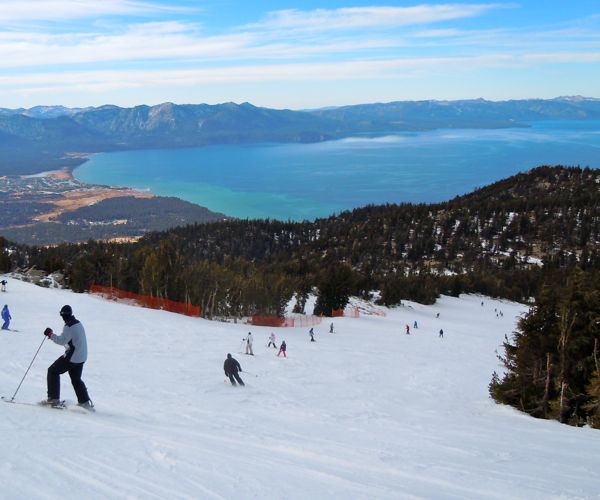
Skiers and snowboarders schuss down the slopes of Heavenly on Christmas Day. Photos/Kathryn Reed

Three generations of Hilliards are on the South Shore for the Christmas holiday. With Joe Hilliard’s parents enjoying gambling, and his wife and kids wanting to ski, Lake Tahoe was the perfect vacation spot.

Six-year-old Savannah said the best part about skiing at Heavenly was going fast. She and 4-year-old brother Hunter spent two days in the kids’ ski camp at Heavenly Mountain Resort learning the sport. This was the first time both kids had been on skis.

Based on the apparel in line for the gondola as well as at Tamarack Lodge on Christmas Day, it was obvious this was not an ordinary ski day. The number of ski or snowboard boots seemed to equal that of those clearly not participating in either sport.

Fun hats, and bright colored jackets and pants filled the lodge and slopes. Pink, at least this day, was one of the dominate colors.

Steve from Sacramento came dressed in a Santa outfit. He had no trouble negotiating the runs off Dipper despite the crowded slopes.

Twenty-seven-year-old Brenton could be enjoying a much warmer holiday if he were home in Australia. Instead, he’d rather travel with his snowboard. This year Tahoe, last year Japan.

While his Aussie accent was easy to discern, plenty of foreign languages and accents could be overheard in the lodge. The lodge felt like it was more full of out-of-towners than locals on this holiday.

Jayashre Tanbon brought her 3½-year-old daughter Aishwerya to enjoy the snow. The duo from San Jose comes to Tahoe about once year.

The little one likes to make snowballs, while mom said it’s the weather and scenery that captivate her.

A family of six from Oahu wanted to go tubing, but it was sold out for the day. Still, the mom, dad, daughter, son, cousin and niece all took the ride up the gondola to check things out.

“It’s beautiful,” Antonio Manrique, 14, said of the resort and Tahoe in general. “We like the cold.”

Coming from a much warmer climate meant some long-sleeve articles of clothing were under the tree.

Rhonda Kadokawa, the cousin in the group, said it had been about 30 years since she was last in Tahoe. She remembers snowmobiling then. While ski resorts can accommodate riders with manmade snow, the same cannot be said of businesses that operate the gas-powered sleds.

A family from Monterey was in line early enough to buy tubing tickets. This was the first time for any of them to visit Tahoe. While they said it was fun, it tired the kids out so they were all getting a bite to eat at the year-old lodge.

Chanel Sims, 12, said she liked how fast the tubes go on the snow; while Javionce Proctor, 13, said he was ready to up again.

Bags of ice sat on the table next to Linda Doller of Los Altos. On the first run of the day she tweaked her knee. With an elevated leg, she waited for her husband and two college-age daughters to get off the slopes. It had been 10 years since she last skied. She’s hoping whatever she did to her knee won’t keep her off the slopes for long.

ngg_shortcode_0_placeholder  (Click on photos to enlarge.)


Free guided New Year’s Day hikes in Nevada state parks

The Nevada Division of State Parks is sponsoring free, guided hikes in seven state parks on New Year’s Day as part of America’s State Parks First Day Hikes initiative.

First Day Hikes offer individuals and families an opportunity to begin the New Year rejuvenating and connecting with the outdoors by taking a healthy hike on Jan. 1 at a state park close to home.

Spooner Lake at Lake Tahoe Nevada State Park is offering free hikes in Northern Nevada. In Southern and Southeastern Nevada entrance fees are waived for the hikes at: Cathedral Gorge, Spring Valley, Spring Mountain Ranch, Kershaw Ryan, Valley of Fire and Old Las Vegas Mormon Fort.

Go online for a list of locations and times of the hikes.

First Day Hikes originated 20 years ago at the Blue Hills Reservation, a state park in Milton, Mass. The program was launched to promote healthy lifestyles throughout the year and year-round recreation at state parks. Many other states have offered outdoor recreation programs on New Year’s Day, but this is the first time all 50 state park systems have joined together to sponsor First Day Hikes.

Park staff and volunteers will lead the hikes, which average one to two miles or longer depending on the park.


South Shore’s 2 best known lakes on 1 easy hike

By Kathryn Reed

CAMP RICHARDSON – Tahoe’s past, present and possible future unfold along the shore of Lake Tahoe and Fallen Leaf Lake on an easy five-mile trek that never gets old.

Meandering through the estates of the Tallac Site on the South Shore, the buildings of yester-year dot the landscape. If only they could talk. Life in the basin was much different when the Baldwins, Hellers and Popes called this lakefront oasis home.

Looking across the meadow toward Taylor Creek. Photos/Kathryn Reed

Now it’s a historic site on land owned by the U.S. Forest Service. In the summer it’s more populated with tourists and the buildings are in use. The old boathouse is a theater. The grand hall is used for weddings and other functions.

Markers along the way tell the story of how these buildings came to be.

Walking close to the shore, the lake looks cold and uninviting in December. With the abundance of snowfall last year, the water level is 2½ feet higher than it was a year ago at this time.

We come to Taylor Creek Visitors Center and walk through the Rainbow Trail. The dead foliage looks otherworldly.

The stench of decaying fish fills our nostrils. A couple months ago the creek was teeming with kokanee salmon on their annual migration to spawn.

The four of us cross Highway 89 to go up Cathedral Road. The Forest Service is looking at making this a safer crossing, along with a slew of other improvements to the trail system in the area.

Signage is lacking. It’s a good thing we know where we are going. Plus, this is a common running loop for Brenda so she is our leader this afternoon.

We cross the dam at Fallen Leaf Lake. That too is old. In 1934, Anita Baldwin put up the money for it to be built.

We come out at the campground, then head across the highway again, headed back to our vehicles parked at the Beacon restaurant.

No wildlife to be seen on this particular day. But the scenery is ever changing with the lakes, meadow and forest.

If you can do five miles of walking, this is one of the best routes on the South Shore for ease, beauty and history.

Getting there:

From South Lake Tahoe, take Highway 89 north to Camp Richardson. Turn right to park at the Beacon restaurant.

Begin walking to the left of the restaurant at the beach and into the Tallac Site. If you see signs for Taylor Creek Visitor Center, follow those. Then take the Rainbow Trail. Cross the highway on the other side of the stream profile center.

Go up Cathedral Road. A dirt trail juts off from the road to the left. From there, well, stay to the left and hopefully you will find the dam. (There are no signs.) Keep walking and you’ll hit the campground. That leads you to Fallen Leaf Lake Road, which goes to Highway 89. Cross the highway and follow the bike path to Camp Rich.

ngg_shortcode_1_placeholder (Click on photos to enlarge.)


Truckee’s Finch to spend time promoting China Peak resort

By Marek Warszawski,Fresno Bee

Andy Finch, the world-traveled snowboarder and recent reality TV contestant, will be spending more time at his old stomping grounds. Finch, who grew up riding at China Peak, will be a larger presence at the Huntington Lake resort this winter through personal appearances, ad campaigns and videos.

The Fresno native also plans to host snowboarding events and offer suggestions for the new terrain park.

China Peak began daily operations this month with four chairlifts in operation, even though most of the white stuff so far this season is man-made.

“It’s really cool to be a part of the local mountain that I grew up riding on,” Finch said. “China Peak is so familiar to me. I know where every little hit is.”

Finch said he wants to pass along some of his experience by helping younger snowboarders reach their potential as well as promoting the sport’s “fun side.”

China Peak owner/operator Tim Cohee praised Finch for choosing to help promote snowboarding in Central California when he could lend his name to any number of resorts.

Read the whole story


Extended hiking season in Tahoe worth braving the cold

By Kathryn Reed

Conflicted between wanting to go slow enough to embrace the beauty and fast enough to ward off the biting cold – such are the hazards of hiking in Lake Tahoe in December.

Hiking in the basin this time of year feels so foreign. But with no snow at lake level to snowshoe or cross country ski on, hiking becomes the default sport. The positive thing about the current weather is being able to visit trails I usually reserve for another season.

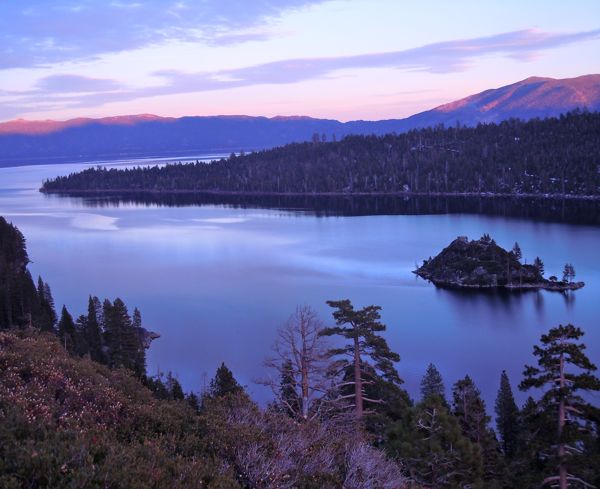
Emerald Bay at sunset on Dec. 18. Photos/Kathryn Reed

Our intent was to do a one-way between the parking lot for Vikingsholm and D.L. Bliss State Park. While the distance to drive the route is two miles, the hike is more than four miles. On a warm summer day it’s great to start at one end (we’ve always started at Emerald Bay because it’s closer to home), have lunch at the beach, and then traipse back to the starting point.

Not starting until the afternoon last Sunday we knew we didn’t have enough daylight to do a roundtrip. But we didn’t want to start sooner because being out in the cold any earlier could have meant excessive whining.

The problem was when we got to the stream-waterfall (I use those words extremely loosely) crossing. With ice having formed on either side of the path and the amount of water just deep enough to get my boots wetter than I wanted on this day, the rocks looking slippery, and the fall (if there were to be one) treacherous, I called “uncle”.

It became an out-and-back hike.

Still, it was worth it.

The Rubicon Trail has some of the most stunning views of the lake. San Francisco Chronicle outdoor writer Tom Stienstra calls it one of the most spectacular hikes in the U.S.

The only bad part about it is the one-mile trek from the parking lot to the Vikingsholm castle feels like at least three miles going up.

Few people are on the trail compared to the number of cars in the lot. All I could think is “no wonder California State Parks is broke” when I saw the parking was free and the lot was full.

My dismay subsided as we got to the bottom and we started walking along the north side of Emerald Bay. Hikers going in the opposite direction saying hello sporadically break up the solitude.

No campers at the boat in campsites. If only it were warmer, the bay is like glass. On the way back the only ripples on the water are from the mallards.

Shades of emerald dot the shoreline in the bay as well as along sections of the trail paralleling Lake Tahoe.

This is what makes this hike so stunning – the varied colors of the water, cedars too large for Sue and I to wrap our arms around, boulders seeming to bob, distant peaks without snow belying the time of year.

Much of the trail to the point is flat. Then it goes up a bit, with some granite staircases of sorts in a few spots.

Starting at the hour we did meant seeing the sunset. With clouds strewn across the sky, it made for a dramatic ending to an already spectacular hike.

Getting there:

From South Lake Tahoe, take Highway 89 north past Camp Richardson and to the far side of Emerald Bay. Park to the right in the lot for Vikingsholm.

Descend the path, then go the to left before reaching the castle.

ngg_shortcode_2_placeholder (Click on photos to enlarge.)


Setting the geographical record straight in the greater Sierra Nevada

By Guy Rocha

Padre Pedro Font, during an expedition to Spanish-controlled Northern California in 1776, named and mapped the Sierra Nevada for the first time.

Sierra means saw-toothed mountain range in Spanish, and Nevada means snow-covered. How many times have TV and radio commentators referred to the Sierra Nevada as the Sierra Nevadas or the Sierra Nevada Mountains? National news accounts — most recently CBS News’ Sunday Morning airing on Nov. 27 — rank among the worst offenders. Reporters, too often, make a plural out of Sierra Nevada akin to the Rocky Mountains becoming the Rockies (that’s acceptable in English).

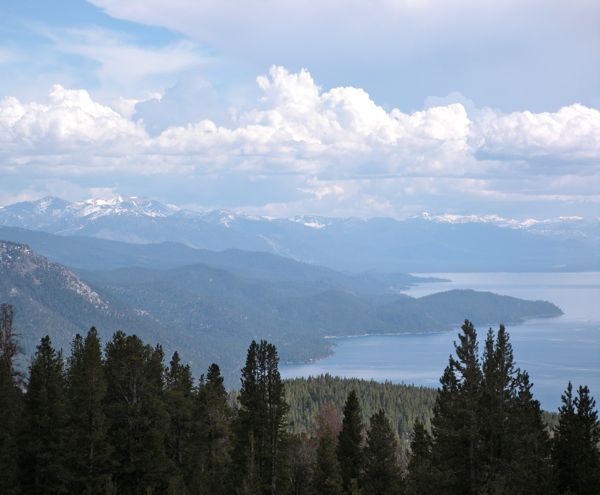
From Mount Rose -- the Carson Range -- looking down on Lake Tahoe. Photo/LTN file

Many times, a journalist or writer mistakenly referring to the Sierra Nevadas or the Sierra Nevada Mountains has compounded the problem by geographically placing nearby Carson City in the Carson Valley (it’s in Eagle Valley) and situating Reno in Washoe Valley (it’s in the Truckee Meadows).

Here is something that might surprise people who have lived in the area for some time and know to call the Sierra Nevada the Sierra Nevada or just the Sierra: Technically the Sierra Nevada crest line and the mountains descending to the west and east are wholly and solely in California. It’s true that the 19th century California-bound immigrants crossing the Great Basin upon seeing the huge mountain range looming in front of them assumed it was the Sierra Nevada.

An 1874 map of Lake Tahoe describes the feature as “Sierra Nevada (eastern Summit).” Another common name for the feature at the time was the “Eastern Slope.”

Guy Rocha is the former Nevada state archivist.

Read the whole story


Science center in Incline explains what’s going on in Lake Tahoe

Discover what makes Lake Tahoe so unique at the UC Davis Thomas J. Long Foundation Science Education Center.

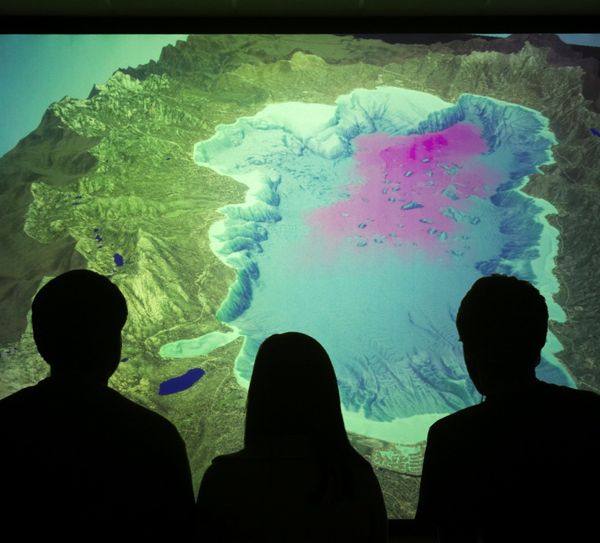
Investigate local science and explore how research is being used to restore and protect Lake Tahoe. Guided tours include a virtual research vessel, virtual laboratory, 3-D visualization theater and green building tours.

A new 3-D movie “Lake Tahoe in Depth” is an education is less than 16 minutes.

The center is open during our regular hours from 1–5pm Dec. 28-29 and Jan. 3-6. It will be closed Dec. 24-27 and Dec. 30-Jan. 2.

The center is located at 291 Country Club Drive inside the Tahoe Center for Environmental Sciences building on the campus of Sierra Nevada College in Incline Village.