Cubs rehabbed at LTWC return to the wild

By Marek Warszawski, Fresno Bee

SIERRA NATIONAL FOREST — Two orphaned bear cubs returned home to the mountains east of Fresno on Tuesday, nearly five months after a poacher killed their mother.

Campers found the two California black bear cubs Aug. 21 near the High Sierra Ranger Station on Kaiser Pass Road crying and suckling on their mother’s carcass after she was killed illegally by a bow hunter.

The distraught male cubs were undernourished and underweight for their age at about 30 pounds apiece, so California Department of Fish and Game biologists determined they would not survive on their own. The cubs were captured and taken to Lake Tahoe Wildlife Care in South Lake Tahoe a nonprofit that raises and rehabilitates orphaned and injured wild animals and birds.

Named “The Fresno Brothers,” the cubs spent their time in captivity fattening up on a diet consisting mainly of leafy vegetables, watermelon, sweet potatoes and live fish placed in tubs. To prevent them from bonding with humans, handlers avoided contact and placed their food out of sight.

“We want to help these bears survive and return to the population, but in doing so we must be sure they don’t get used to being around people,” DFG Bear Program coordinator Marc Kenyon said. “Once bears are no longer wary of people, they become nuisance bears that are no longer wild.”

Read the whole story


Winter forecast to arrive in Tahoe next week

By Jeff Delong, Reno Gazette-Journal

The winter that didn’t come may be on its way.

Hopefully, anyway.

After a record-making spate of sunny, dry weather kept conditions bone dry through December and half of January, a pattern change in the Pacific could be sending wet weather on its way.

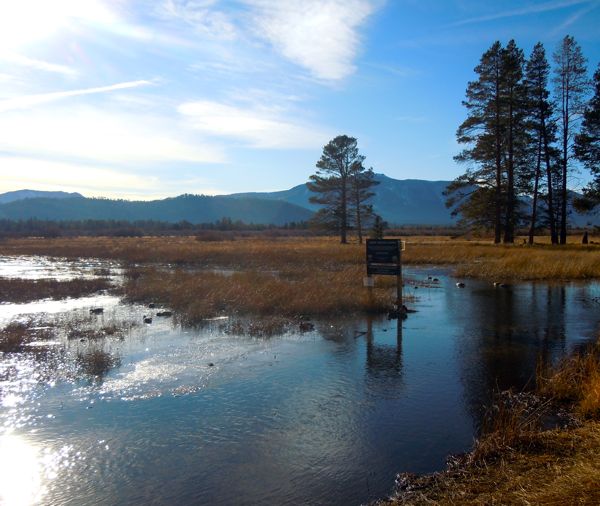
Despite the lack of moisture this winter, the Upper Truckee Marsh on Jan. 10 is still flooded. Photo/Kathryn Reed

It’s still a ways off — probably not until late next week or even next weekend — but forecasters said Thursday that rain and snow could finally make an appearance in the Reno-Tahoe area.

“It’s quite a shift from all the doldrums,” said Shane Snyder, a meteorologist with the National Weather Service in Reno.

It would be welcome news for Reno-area residents watching lawns brown under winter sun and water suppliers anxious to build on reserves for the future. Skiers and snowboarders are biting at the bit to take to slopes white with fresh snow while ski resort operators are eager to improve upon a season thus far characterized by costly dryness and mostly barren mountains.

The first hint at expected change comes Sunday as the region is brushed by a storm system forecast to bring cold air and high wind but only a slight chance of showers to the north, Snyder said. Sunday’s system is expected to be more associated with increased fire danger than any real chance at wet relief.

Read the whole story


Tahoe tourism agencies back Olympic effort with cash

By Kathryn Reed

STATELINE – Lake Tahoe tourism agencies are doing their financial part to help bring the 2022 Winter Olympics to the region.

On Jan. 12 the Lake Tahoe Visitors Authority allocated $25,000 to the bid effort, with the North Lake Tahoe Resort Association having already committed the same amount. Each will be asked to put in another $25,000 next year. (Board member Tom Davis was absent.)

Blaise Carrig, co-president of Vail Resorts mountain division, made a pitch to the LTVA board at the Thursday board meeting. Carrig, who the day before officially became a board member of the Reno-Tahoe Winter Games Coalition, first worked with the team when he worked at Heavenly Mountain Resort.

Blaise Carrig

“It would be a really good legacy project for Reno-Tahoe,” Carrig told the LTVA. “It would bring national and international recognition to the marketplace that Reno-Tahoe could use.”

It will take more than $1 million to put the bid together, so the tourism agencies’ checks are just a start. Nevada has pledged money. Private and public entities are being asked to be part of the process.

The bid would have to be ready to be presented to the U.S. Olympic Committee by March 2013, summer at the latest. The International Olympic Committee picks the host city in 2015. That gives the city and/or region seven years to get everything together.

“When Salt Lake City was awarded the bid, in those seven years it went from 25th to No. 1 for getting funding for infrastructure,” LTVA board member Nancy McDermid said. “This would be one way in seven years to get infrastructure we haven’t had.”

Roads, transit and venues are all things that would come to the region.

Carrig said venues have been scoped out, but nothing is solidified. Earlier he told Lake Tahoe News it is possible Heavenly could create a new run to accommodate the men’s downhill.

Without being able to accommodate that event, sources have told Lake Tahoe News, no area can host a Winter Games.

Carrig assured the LTVA board the South Shore would be part of the Olympics.

He said the international committee looks for bids that are compact. In large part this has to with the media and how they cover the Games.

While Sacramento was brought up, Carrig sees it more as a gateway to Tahoe-Reno, than a venue site. But with a large arena, having ice events there has not been ruled out. Reno doesn’t have a single sheet of ice. The South Lake Tahoe Ice Arena in the past has been talked about as a training area. It has no seating to accommodate anything close to an Olympic event. The next nearest ice is in San Jose where the Sharks play. But the Cow Palace in San Francisco and Oakland arena have had skating events before.

McDermid also questioned Carrig about whether environmental groups had been approached. He said Nevada Lt. Gov. Brian Krolicki, who is heading up the Tahoe-Reno coalition, has started those talks.

“Part of the bid is what is the environmental legacy,” Carrig said.

“Legacy projects” is a phrase often heard when discussing Olympic bids. It’s what a community is left with after the two weeks. It could be roads, a stadium or less sediment reaching Lake Tahoe. The theory is those legacies would be viewed as a positive by and for the community.


Report: Officials stay one step ahead of aquatic invasives

By Kathryn Reed

STATELINE – Sixty-three percent of the vessels inspected in 2011 had to be decontaminated before being allowed to enter Lake Tahoe.

Of the 30,400 boats that were launched, 7,600 had to be checked for aquatic invasive species, with 4,800 of those needing to be decontaminated. While most of the boats originated in California or Nevada, Utah, Oregon and Arizona were the states with the next highest number of boaters.

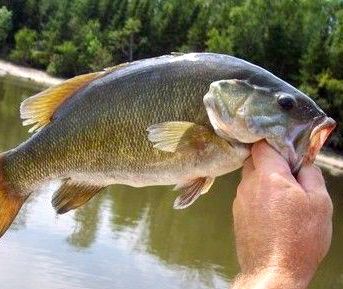
Small mouth bass are a threat to mackinaw in Lake Tahoe.

Overall, that was 9,000 more than in 2010. Ted Thayer, aquatic invasive species program coordinator for the Tahoe Regional Planning Agency, said how data is collected changed between 2010 and 2011, so while marinas reported business was up, it may not have been as significant as the AIS program numbers indicate.

Thayer on Jan. 11 updated the Advisory Planning Commission about how the AIS program worked last year. The TRPA Governing Board will hear the presentation at its Jan. 25 meeting in Stateline.

“This was a very successful year for the program,” Thayer said.

The program since its inception in 2007 keeps evolving. Prevention, monitoring and controlling are the mantras. Weeds, Asian clams and warm water fish are the predominate invasives that partners in the program are trying to eradicate, control or prevent from reaching Lake Tahoe. Fallen Leaf and Echo lakes also come under the purview of this program.

But what makes Fallen Leaf Lake different than Tahoe is no aquatic invasive species have been found in that body of water off Highway 89. Motor boats are inspected at the marina, with a roving inspector checking non-motorized watercraft that are mostly launched from the U.S. Forest Service-owned campground at the other end.

The Fallen Leaf Lake report shows of the 428 inspections, 24 vessels came from lakes known to have quagga or zebra mussels, or New Zealand mud snails.

Other regional bodies of water like Donner Lake and Lahontan Reservoir are outside TRPA’s control. However, as funding these programs becomes more difficult with the disappearance of federal dollars, a broader regional approach to aquatic invasive species is likely to occur.

Thayer said this could mean one day the decontamination station on the North Shore being outside the basin and closer to Truckee, and possibly having a station in Carson City instead of at the top of Spooner Summit. Those are just ideas now. Eventually permanent stations are the goal.

TRPA is not alone in the AIS program. A number of agencies and groups are involved, including, but not limited to, Tahoe RCD, UC Davis, California Department of Fish & Game, and Nevada Department of Wildlife.

In 2011, 6.51 acres of Emerald Bay were treated for invasive weeds. This compares to the 1.1 acres treated in 2010. Commercial divers helped with the removal of the plants.

Milfoil is one of the biggest problems throughout Lake Tahoe, especially in the lagoons of Tahoe Keys on the South Shore.

“This project was designed to test multiple methods,” Thayer said. “Tahoe Keys is a very different environment. There is a lot denser growth of weeds, with a lot of boat docks.”

A dye that is invisible to the human eye was used in this area. Thayer praised Lahontan Regional Water Quality Control Board’s decision late last year to allow herbicide use in Lake Tahoe on occasion. He said this may be needed for the Keys.

Using a barrier to suffocate Asian clams was most effective in summer, but worked in the winter as well – it just takes longer when the water is colder. Marla Bay is where the winter tests were done.

Knowing this works means the material could be used in areas with a ton of boat activity – like Ski Run Marina area – that during the summer make it dangerous for divers to work.

A pilot program to rid the mouth of Emerald Bay was less successful because of the topography and water exchange.

A warm water fish eradication program encompassed about 14 acres, mostly in the Tahoe Keys. An electrical charge was sent into the water that stunned the fish. They were then scooped out of the water – all 12,000, which weighed 2,157 pounds.

The small mouth bass, according to Thayer, is what concerns officials the most. They can threaten the mackinaw. Even though the mackinaw is not native — it was introduced as a sport fish — it is not considered an invasive species.

A change going forward is creating a lakewide permit for AIS treatments. Thayer said that should be in place this year.

In the past, engines were flushed for one minute to decontaminate them. That will decrease to 10 seconds this year. Thayer said this is to conform with industry standards. For boaters it will speed up the process and decrease potential propeller damage from the decontamination process.

Monitoring the water at 60 locations throughout Tahoe, Fallen Leaf and Echo is how scientists determine if invasives have reached those bodies of water. The most threatening are quagga and zebra mussels. They have not reached any of these waters.

To keep the program going, an increase in watercraft inspection fees is being proposed. The Governing Board will make that decision. The document linked here is what was presented to the APC and is likely to change before it reaches the Governing Board in 12 days.


Jam event at Boreal for skiers and boarders

Boreal’s Expression Sessions are returning for the 15th consecutive season. The Expression Sessions are a series of four jam-style events between January and April for skiers and snowboarders of all ability levels.

Anyone over the age of 7 is encouraged to compete in any and all of these events. Awards are given to the top three skiers/riders in each division, plus tons of other prizes will be randomly distributed and raffled off to spectators and competitors throughout each event.

New this year, each Expression Session will build on the theme of Junkyard Jams. Before each session Boreal will unveil a never-before-seen terrain feature that has been reduced, reused or recycled for a second life. The first event Jan. 13 will feature a slightly modified 1,000 gallon propane tank. The final event on April 6 will be a showdown on all three features from the previous events.

For each competition the terrain features and prizes will change, giving everyone something to look forward to. The age divisions are decided after registration, based on the ages of those registered. Registration will begin at 5pm the day of each event and competition will begin at 6:30pm.

Entry is $5 for anyone that has a Boreal lift ticket or season pass. Helmets are required.

Other session dates are Feb. 10, March 9 and April 6.


Fire officials on heightened alert because of dry conditions

Due to the lack of measurable precipitation and drying north and east winds, all burning in El Dorado and Amador counties have been banned on state responsibility lands until further notice.

“Since this is one of the driest winters on record, we have decided to take this action in order to protect life and property. We have put into place a staffing pattern that maintains one fire engine in each of our divisions and one conservation camp crew in each of our camps 24/7,” Chief Kelly Keenan of the Amador-El Dorado Unit of CalFire said in a release.

The public is being asked to not burn debris piles and check on old debris piles to make sure they are completely out.

“We are seeing escape control burns almost daily due to these extreme weather conditions,” Keenan said.

The U.S. Forest Service has put the fire danger level at moderate — an occurrence almost unheard of in January.

“The overwhelming majority of our wildland fires are human-caused. As usual, the No. 1 cause was illegal or abandoned campfires,” Forest Service spokeswoman Cheva Heck said in a release. “We ask that that people remember that campfires and warming fires generally are not allowed on the Lake Tahoe Basin Management Unit.”

The chart shows fire stats for the LTBMU for 2011.

The Forest Service this winter has responded to two wildland fires caused by residents dumping woodstove ashes in the forest near their homes.

A couple lost their rental house near Meyers from putting hot ashes on a deck.

Fire agencies recommend placing ashes in a metal container, which should be stored on a non-flammable surface like a concrete walk. They should cool for four days before final disposal

Nevada officials are also worried about fire as precipitation this winter is still non-existent.

Fire agencies usually spend winter months training, maintaining equipment and preparing for the next wildfire season, but so far this winter, wildfires have occurred weekly throughout Nevada.

In 2011, Nevada experienced 814 wildfires and lost approximately 423,768 acres, just shy of the five-year average of 428,084 acres burned.

Conditions are similar to late summer or early fall, and the potential for a rapidly spreading wildfire during daylight hours is high. In several cases, fire behavior has been extreme because of the lack of precipitation, high winds, low humidity and extremely low fuel moisture.

 — Lake Tahoe News staff report


Biathlon course open in Tahoe City

Tahoe Cross Country Ski Area and Tahoe Peak Endurance will be hosting a free Laser Biathlon “do-it-yourself” mountain biking and/or running course Jan. 14 from 10:30am-2:30pm.

Six biathlon stations, a penalty lap and a main lap will be set up between these hours to give people the opportunity to try your hand at biathlon. Bring your bike and/or running shoes to test your endurance.

Some biathlon facts:

It is the most popular winter sport watched on European TV.

Skiers average about 4 minutes per mile when racing.

Heart rates on the ski course reach 180 beats per minute.

Missing the correct wax and improper ski base preparation will cost a racer more time lost than missing a target.

The best nations in biathlon are Germany, Norway and Russia.

The rifle weighs about 8 pounds but feels much heavier when one skis uphill.

Volunteers needed or for more information, call (530) 583.5475 or email ski@tahoexc.org.


Shrinking glaciers in Cascades a growing problem

By David Lester, Yakima Herald-Republic

YAKIMA, Wash. — Spectacular on a clear, sunny day, Mount Adams rises a scant 53 miles from Yakima.

But the mountain holds what until now has been pretty much a secret.

In the first comprehensive study of its kind, a Portland State University study has found Mount Adams’ 12 glaciers have shrunk by nearly half since 1904 and are receding faster than those of nearby sister volcanoes Mount Hood and Mount Rainier.

It’s another sign of gradually warming temperatures that — if continued as expected by researchers — will mean significant problems for the water-dependent Yakima Valley.

The study lends urgency to an earlier federal report that shows the water content of Cascade Mountain snowpacks could dwindle by as much as 50 percent by the 2070s.

More rain and smaller snowpacks will result in water shortages because less water is projected to be available to support the Valley’s agriculture in the hot summer months, according to that congressionally ordered report by the Bureau of Reclamation, Army Corps of Engineers and the Bonneville Power Administration.

The Yakima Valley already has had five economically damaging droughts since 1992. And while the Valley’s water supplies don’t come from the flanks of Mount Adams, the study carries implications for other parts of the south Cascades that do provide water for the Valley.

Read the whole story


Tahoe ski resort heavyweights to advance Olympic chances

By Susan Wood

Experience counts. The Reno-based coalition tasked with bringing Olympic gold to the California-Nevada region in winter 2022 threw some big guns behind the effort Wednesday by appointing to the board Lake Tahoe ski giants Blaise Carrig of Vail and Andy Wirth of Squaw Valley.

The two men have shared the Olympic experience when they worked in Utah. They would like to share it again in 10 years.

If organizers get their way, the Olympics will return to Lake Tahoe 62 years after they were in Squaw. Photo/LTN file

Carrig, co-president of Vail’s mountain division, brings to the Tahoe table his experience at The Canyons resort in Park City during the 2002 Winter Games at Salt Lake City and a steadfast investment as the head of Heavenly Mountain Resort before moving up Vail’s corporate ladder.

Wirth would like to see the Games return to Tahoe and pledged to work closely with his old pal and resort competitor Carrig to accomplish that goal.

The board may even enlist some high-level help from the East Coast – as in presidential candidate Mitt Romney, who salvaged the Winter Games to Utah a decade ago and turned it into a profitable endeavor. Romney visited the coalition in 2008.

It could also be a boon that Nevada Lt. Gov. Brian Krolicki is co-chair of Romney’s presidential campaign in Nevada.

“(Romney) did a phenomenal and remarkable job. He took a group from utter disaster to an extreme success,” Wirth said.

The Squaw chief noted that even if the Reno-Tahoe group loses to a city like Denver, it would be a lesson learned.

“It’s difficult to handicap (one city versus another). I’m just encouraged by the initiative of the resorts,” he said.

Reno and Denver want to be the U.S. city chosen for 2022. Reno has Tahoe, with resorts from Squaw Valley to Heavenly providing world-class views from one side of the lake to another. Denver has Vail, with seven back bowls stretching seven miles across at its namesake and a not-for-the-faint-of-heart World Cup downhill run (Birds of Prey) at the customer-oriented Beaver Creek resort that would make Tahoe’s Olympic downhill legend Daron Rahlves look twice.

On the North Shore, Squaw has a reputation. Let’s face it. If one doesn’t get enough of a poignant chill seeing that Olympic flame burning on Highway 89, then maneuvering with the elite down runs off KT-22 may provide bone-chilling humility.

On the south side, Heavenly has the entertainment to support the bed base and snow caches some don’t want to share. The bi-state resort even brings its own entertainment to the slopes, with Gunbarrel 25 each spring. Just once, one may want to imagine skiing wild man Glen Plake and freestyle Olympian Jonny Moseley bumping knees side-by-side.

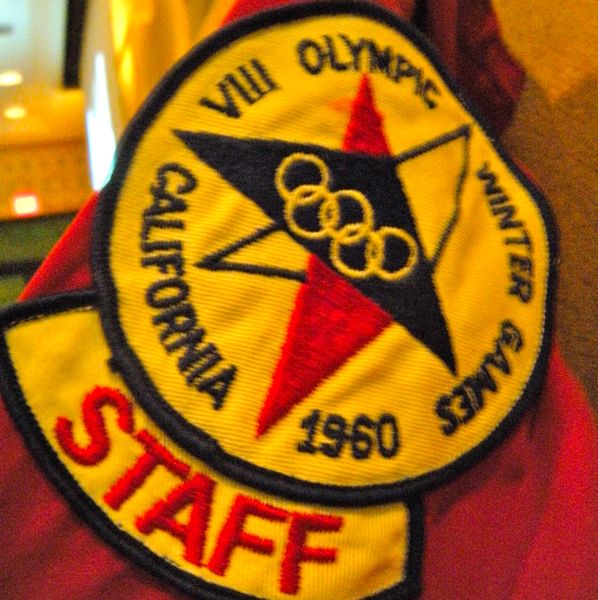
Both resorts have a history with the Winter Games.

The guts and vision of Alex Cushing brought the games to Tahoe in a surprise move away from Innsbruck, Austria, 42 years ago. A decade ago this month, the Olympic torch graced Lake Tahoe on its way to Utah with one of the torchbearers, Martin Hollay, skiing it down Heavenly’s Olympic run. (This reporter ran a leg of it down Sierra Boulevard.) The South Shore community showed up in great numbers for both.

In an area divisive on many fronts, the North and South shores were unified in being a part of something big.

Organizers hope for this dream again.

But either way, the revenue-sharing agreement between the U.S. Olympic Committee and International Olympic Committee will need to be worked out before any U.S. city is considered. The two entities are in meetings this week to hash out their differences.

Carrig insists the Olympic-seeking group remains in the early phases of planning – with no cost analysis or set venues in mind.

The Denver committee recently released a cost estimate to host the Games — $1.5 billion. They used the 2010 Games at Vancouver as a benchmark, the Denver Post reported.

Everything remains on the table as a possibility in Tahoe. Carrig did mention Heavenly could see a new run – perhaps one carved on the front ridge of South Lake Tahoe leading to the Olympic run. It’s all just a possibility. It all could be for the men’s downhill.

“We’re going to evaluate it. A new venue could start over that way,” Carrig told Lake Tahoe News, while peering out his Colorado window at snow falling last weekend.

“A larger issue is all the beds being filled by the spectators, media and athletes,” he said.

Carrig admits Tahoe and Colorado are attractive for the Winter Games, with their history, ski terrain, scenery and environmental cultures.

He believes the stigma has disappeared regarding Denver turning down the Games in 1976 after winning the bid. Nonetheless, Carrig said his loyalty lies with working with Reno-Tahoe Winter Games Coalition Chairman Krolicki.

Squaw Valley CEO Wirth has a massive background at Vancouver with Intrawest. His home resort’s host-city status in 1960 and his company’s purchase of neighboring Alpine Meadows bring elements of nostalgia and terrain to the Olympic bidding table.

The goal is for Tahoe-Reno to edge out Chile and China on the international front after bumping Denver out of the picture.

What Denver’s coalition of public officials and business leaders doesn’t have is a representative from Vail Resorts, the largest U.S. ski company.

“I’m not sure how (our efforts) all stack against others, but their not having something has no bearing on what we do. The truth is, we have the properties in both regions. We did look at who they have on their committee and noted what representation they did have but didn’t focus on what they didn’t have,” Reno-Tahoe coalition CEO Jon Killoran told Lake Tahoe News on Jan. 11. Instead, Killoran focused on the board’s level of depth. The efforts began in 2001 with Reno sports commissioner Jim Vanden Heuvel, who died three years ago.

Since then, California Lt. Gov. Gavin Newsom – the former San Francisco mayor — threw his support behind the venture, along with a Bay Area sporting event group which tried to bring the 2012 Summer Games to the area. State Sen. Ted Gaines, R-Roseville, is one of the California Winter Games Committee members. Gaines started skiing at a young age at Tahoe resorts and has a second home on the North Shore. And Newsom has business interests at Squaw.

To Killoran, a vision like forming an Olympic bid requires cooperation from a collective group of people.

“You don’t always do that every day,” Killoran emphasized.

Wirth seconded the sentiment.

Other members of the Reno Tahoe Winter Games Coalition board include:

• Dan Allen – ITS Logistics

• Krys Bart – Reno Tahoe International Airport

• Larry Bernard – attorney

• Bruce Breslow – Nevada Department of Motor Vehicles

• Nicholas Butler – Umpqua Bank

• Brad Chamberlain – attorney

• Nancy Cushing – Squaw Valley

• Carolyn Wallace Dee – Squaw Valley

• Susan Fisher – Fisher Consulting

• Jeff Hamilton – Olympian

• Toni Harsh – Valley Building Company

• Glenn Hibl – CFO Group

• Chris Kassity – Kassity Management Group

• John Krmpotic – KLS Design

• Limin Liu – Olympian

• Tamara McKinney – Olympian

• Gregory Peek – ERGS Inc.

• Michael Pennington – Community Services Agency & Development Corp.

• Daron Rahlves – Truckee Olympian

• Rossi Ralenkotter – Las Vegas Convention & Visitors Authority

• Tony Sanchez – NV Energy

• Jim Simon – Porter-Simon Attorneys at Law

• Steve Trounday – Navegante Group

• Steve Woodbury – Nevada Commission on Tourism

• Larry Young – Ward Young Architects

• David Youngberg – Youngberg Group.


Competing interests for birds and their lovers along the Pacific flyway

By Felicity Barringer, New York Times

WILLOWS — These are good days to be a snow goose on the Pacific flyway. The water in the rice fields is at an ideal depth for snacking on marsh plants. A bit of grain is left over from the harvest around the Northern California city of Chico, which is gearing up for its annual Snow Goose Festival.

Just past sunset, thousands of the geese rise as one from the marshes here, a primal force riding a soft thunder of black-tipped wings.

There is just one problem with this picture, which results from nearly a century of efforts to sustain the plump white birds along their migratory paths. From the Arctic tundra to the marshes of Chesapeake Bay, snow geese have become far too much of a good thing over the past two decades, crowding out smaller species and destroying their own summer nesting grounds with their nibbling.

In places where the birds sojourn in the winter, Missouri and Mississippi River farmers consider them pests that not only eat grains but also peck and claw at plant roots. In Chincoteague Bay in Maryland, they turned stretches of marsh into open water.

Whether the cause of this population explosion is a warming trend in Northern breeding grounds, an increase in the food supply in their winter homes or a combination, few would dispute that there are too many birds in all five groups of snow geese that migrate along North America’s flyways. “Nationally, snow geese numbers are increasing exponentially,” said Dan Frisk, the manager of the Sacramento National Wildlife Refuge here. “They are destroying their own habitat.”

Read the whole story