Gore-Tex competitors want a level playing field

By Mike Kessler, Outside

The biannual gathering of the gear tribes is typically a magnanimous affair. Held each winter and summer in Salt Lake City’s 675,000-square-foot Salt Palace convention center, the Outdoor Retailer trade shows (OR for short) draw some 20,000 industry types—an assortment of hyperfit gear wonks who pal around, show off their wares, and tout their stuff to resellers and the press. At OR, VPs wear Keen sandals and sales guys balance on slacklines; even ambitious young marketers rarely speak ill of the competition.

That’s why the banner at last summer’s show was so striking. Ten feet tall and 30 feet wide, it was the first thing people saw when they walked through the convention-center doors. Next to an image of a professional climber who’d been Photoshopped to look like someone from a “Faces of Meth” poster—vacant stare, yellow pallor—was the explanation, spelled out in massive, no-nonsense type: “Endured Constant Overheating and Freezing for 12 Years.” And below, the payoff: “Liberated by NeoShell.” While the message would probably seem cryptic to industry outsiders, everyone here knew exactly what it meant: NeoShell is better than Gore-Tex.

Similar advertisements for NeoShell, a new waterproof-breathable material made by Polartec, the Massachusetts-based fabric manufacturer best known for popularizing synthetic fleece, were suspended throughout the Salt Palace and plastered on billboards around town. They’ve subsequently appeared on websites and in magazines, including this one. NeoShell, which debuted last fall in top-of-the-line jackets from the likes of Marmot, North Face, and Mammut, is the company’s first-ever waterproof-breathable product. “We did tons of research,” Nate Simmons, Polartec’s marketing director, told me at the company’s booth. “We wouldn’t have come into this space unless we were confident we could compete.”

While NeoShell was Gore-Tex’s most conspicuous new challenger at OR, it wasn’t the only one. At the elaborate Columbia booth, staffers were just as determined to upstage Gore-Tex by touting the breathability of their own new proprietary fabric, OmniDry, which the company launched last year with a marketing video vowing to “take down Gore-Tex.” Woody Blackford, Columbia’s VP of global innovation, was dressed in a white lab coat for theatrical effect. He guided me to a display that looked like something out of a well-funded high school science fair, with two hot plates sitting side by side. Blackford squeezed a drop of water onto each plate, then placed a cutout from a jacket that features OmniDry, among other exclusive technologies, onto one and a swatch of a generic jacket with an ePTFE membrane, the main ingredient in Gore-Tex, onto the other. He then placed a shallow glass cup atop each swatch. Within minutes, the cup on the OmniDry sample had fogged up. The one atop the generic swatch, meanwhile, remained mostly clear. (Several minutes later it was cloudy, too.) The reason the OmniDry cup fogged up so much faster, Blackford explained, is that the fabric is better at passing moisture vapor. In other words, it’s more breathable. “If you’re going to be out sweating,” he asked, “which one would you want to wear—the one that stays wet or the one that gets dry?”

A few years ago, this kind of brazen, taste-test marketing against Gore-Tex would have been unheard of. Over the past three decades, Gore has become one of the most powerful and recognizable brands in the world, transforming its proprietary membrane into a household name, as synonymous with waterproof-breathable as Coke is with soda. That transformation has been very good for the outdoor industry. Some of the largest companies on the OR floor were literally built through their affiliation with the Gore-Tex brand. According to some estimates, Gore now commands more than 70 percent of a waterproof-breathable outerwear market that didn’t even exist before its membrane was developed, a market that now, by some estimates, tops a billion dollars.

Gore-Tex might be a cash cow for gear manufacturers, but you wouldn’t have heard a lot of gratitude by surveying last summer’s OR crowd. I asked dozens of industry veterans and designers about the unprecedented marketing attacks from Columbia and Polartec, and the first thing I noticed was the fear. Hardly anyone was willing to speak about Gore-Tex on the record. When I asked one manufacturer why people were being so coy, he told me, “Everybody hates Gore, everybody needs Gore, so everybody’s afraid of Gore. They can make or break you.” He was referring to an open secret among industry insiders: that Gore’s licensees are afraid to work with non-Gore technologies, lest the market leader terminate their contracts.

Whispers about Gore’s heavy-handed tactics have been circulating for years, but allegations have recently gotten serious enough that both federal and international regulatory agencies are involved. In the fall of 2010, Columbia and its Italian subsidiary, OutDry, a small company that specializes in waterproof-breathable technology, submitted a 55-page complaint to the Commission of the European Union. While the complaint is confidential, the grievances are said to be straightforward. “In order to maintain market dominance,” Peter Bragdon, Columbia’s lead counsel, recently told me, “W.L. Gore and Associates engages in unfair business practices, intimidating footwear and glove licensees into loyalty and violating antitrust laws by excluding the competition.” In other words, Gore is being accused of systematically preventing manufacturers from gaining access to competing products.

At almost exactly the same time, a “non-public” complaint against Gore was put forth to the U.S. Federal Trade Commission. While the complainant’s name (or names) is confidential under federal law, and no one has publicly taken credit, the grievance was convincing enough for the FTC to launch a follow-up investigation last spring, a fairly uncommon response. “While antitrust complaints are filed at a rate of several hundred per year, only around 10 percent become full-scale investigations,” a former FTC lawyer, who requested anonymity, told me. “The government is picky.” In the meantime, outerwear heavyweights are waging a battle on terms unfamiliar to this crowd, and the otherwise collegial outdoor industry may never be the same again.

Read the whole story


Lake Tahoe to receive measurable snow

Crocuses are blooming in the basin. Robins are confused. Spring is the season according to the calendar. And snow is about to pile up. It must be Lake Tahoe in March.

A winter weather advisory is in effect until 11am March 28. Wednesday’s commute is expected to be difficult – slick roads, blowing snow and nasty roads.

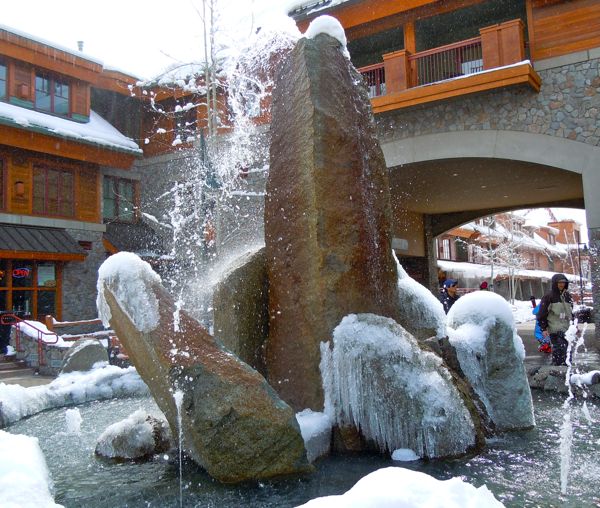
The fountain at Heavenly Village should be covered in snow soon. Photo/LTN

Click the state icons on the home page of Lake Tahoe News to know what the road conditions are like.

The National Weather Service is calling for 8-16 inches of snow above 7,000 feet and 4-8 inches at lake level.

The wind will continue to howl through much of Wednesday, which could bring waves as high as  4 feet.

Thursday and Friday are expected to be mostly sunny, with rain arriving Friday night and turning to snow on Saturday.

— Lake Tahoe News staff report


South Tahoe basketball star to coach Alabama-Birmingham

By Reno Gazette-Journal

Jerod Haase, who led South Tahoe High to a state basketball championship in 1992, was named the head coach at Alabama-Birmingham on Monday night.

Haase, who was officially announced as UAB’s coach Tuesday afternoon, has worked under Roy Williams for the past 13 seasons at North Carolina and Kansas.

Jerod Haase

“I want to thank (UAB President) Dr. (Carol) Garrison and (athletic director) Mr. (Brian) Mackin for this opportunity,” Haase said in a release. “It’s a tremendous leap of faith, and I will do everything in my power to prove that this is the right hire at the right time. I will work tirelessly to ensure that this decision on your behalf is a great one.

“I also want to thank Coach Williams. Without getting into too much detail, when I left his office yesterday I told him I have to leave and not talk because I can’t do it (emotionally). He’s been great to me.”

Haase replaces Mike Davis, who was fired after six seasons. He agreed to a five-year contract worth $475,000 annually plus incentives. The contract must still be approved by the Alabama university system.

Read the whole story


Tahoe Pipe Club filming untreated water flowing into Lake Tahoe

The scientists at Tahoe Pipe Club have just completed the what they call most comprehensive field assessment of wet weather hydrologic connectivity of urban storm pipes in the Lake Tahoe Basin.

This film is the result of this effort.

“For the urban component of clarity loss, the most important issue is defining directly connected impervious areas,” the Pipe Club says. “But unfortunately this concept has been ignored in the TMDL [total maximum daily load] and in the RPU [Tahoe Regional Planning Agency Regional Plan update].”

For more information, go online.


Robins struggle to survive in spastic Tahoe weather

By Tom and Cheryl Millham

Robins are a species that migrate to Lake Tahoe in the early spring to nest and raise their young. Then, they leave in the fall, back down to the lower elevations.

So, what is the problem?

Well, in February and early March, as you will remember, the Lake Tahoe Basin had spring-like weather and temperatures. Because of this unseasonably warm weather the male robins thought it was time to head to the higher elevations such as Lake Tahoe to begin setting up territories for the soon to follow females.

They were doing fine until it started to snow.

Robins are ground feeders. They run around the ground pulling up worms or other insects. They also eat fruit — never seed — and berries.

Lake Tahoe Wildlife Care started receiving calls after the first blizzard about robins which were standing around in the snow with no food and what could people feed them.

Here is the list if you would like to help them survive the snowstorms. On your back deck, throw out blueberries, cranberries, grapes and/or raisins. We have one robin that comes down to get raisins, even before we close the sliding glass door.

A baby American robin. Photo/LTWC

If you have a robin attacking a low window or sliding glass door (and I do mean attacking), you need to help in a hurry. We have seen robins that have attacked windows/glass so viciously that they have made their bill bleed. They have not gone “mad” or “crazy”.

Here is what is happening. The male robins come up to Lake Tahoe first to set up their territories. When the females arrive, they can entice a mate to come to their area. If the reflection is right, this male robin sees, what he thinks is another male robin. When, in actuality, he is just seeing himself and attacks the “new” male.

Birds do not understand glass or mirrors. So, all you have to do is tape up a single piece of paper on the outside of the glass so the robin cannot see himself. He then thinks that he chased away the other male robin and he is happy again. In a few days, you can take down the paper.

Tom and Cheryl Millham run Lake Tahoe Wildlife Care on the outskirts of South Lake Tahoe.


Permanent location to rehab wildlife in LTWC’s sights

By Kathryn Reed

MEYERS – If it’s true getting a step in the door is the hardest part to realizing a dream, then that step may have literally been taken this month by the Lake Tahoe Wildlife Care board of directors based on where they conducted their meeting.

They met in a house at the bottom of the Old Meyers Grade in what is now a vacation rental. But that nearly 3,700-square-foot house on those 16-plus acres that back up to U.S. Forest Service property is on land zoned recreational/commercial and comes with 130,000-square-feet of coverage. That could make all the dreams of the Millhams come to fruition.

A conceptual drawing of what the bear facility at Lake Tahoe Wildlife Rehabilitation and Education Center could look like.

For 34 years, Tom and Cheryl Millham have been operating the animal rehabilitation center. The animals are in cages in their back yard. They function with a special use permit from El Dorado County.

They are tired. They want to enjoy their retirement by not being tied to the phone to rescue animals, care for them and then release them.

While in many ways they are a mom-and-pop operation, Cheryl Millham’s knowledge is coveted. She is often asked to be a guest lecturer. She knows how migration patterns have changed over the decades; she knows what animals were here 30 years ago are no longer here. She is a wealth of information.

The Millhams work closely with the state Department of Fish and Game, especially with bear releases. Another cub is slated to go back into the wild this week near San Luis Obispo.

But the Millhams have had their dreams dashed before. Parcels have come and gone as possible locations. Not only do they want to move their operation, but also expand it to include a larger education center, a place to have conferences, and a sanctuary to let the animals that cannot be released call home.

The board is hoping this was the first of many meetings in a permanent home.

“This is the closest now to having a done deal,” Tom Millham told Lake Tahoe News. And even now the deal is far from being done.

Before the nonprofit is on the deed, the money needs to be secured for the property that is listed at $1.99 million. This is less than the $5 million the owners wanted in 2007.

“They are open to being creative,” Rene Brejc, who is listing the property, said of the trust that owns the property.

Tom Davis, who is on the LTWC board, pointed out that how the center has operated for the past 34 years is not how will be able to operate in the next 34 years. He said veterinarian officials from UC Davis have expressed an interest in having a teaching component at the center about wildlife.

Talk that night was about how perhaps a foundation or investors need to be sought and a significant fundraising drive initiated.

Beyond the payment for the property, significant improvements need to be made – from parking, to building cages, to upgrading the water system.

The property now uses a well, but with the type of facility the Millhams envision, officials would require the center serviced by South Tahoe Public Utility District. This would help it better comply with fire regulations as well.

Jumping through county and Tahoe Regional Planning Agency hoops could be problematic. Preliminary discussions with both agencies have taken place.

There have been meetings where planning officials have said they worry about how much soil a 300-pound bear will compact at the wildlife center. This, despite the fact that bears and other wildlife roam the woods everyday without any apparent degradation to Lake Tahoe’s clarity. And plenty of hefty people compact soil, too, and they aren’t told to stop doing that.

El Dorado County Supervisor Norma Santiago, who was at the board meeting, said she would not let the county be a stumbling block. She is also on the TRPA Governing Board.

Julie Regan with TRPA, when contacted by Lake Tahoe News, said, “It’s important to find a solution that works. (LTWC) is an important community asset. When El Dorado County brings forward their local area plan, I’m sure they would want to look at what land use changes would come after the adoption of the Regional Plan.”

While other places have facilities like what the Millhams and the LTWC board envision, one does not exist in the Lake Tahoe Basin.

Mike Dill with Aspen Environmental Services along with the Millhams has met with TRPA and county officials. Issues like needing to fence the entire property could be a stumbling block. The fact that TRPA does not allow accessory uses for entities falling under “public health and safety” is another issue. The building permit expires this fall.

It has been agreed a bridge that would hold the weight of a golf cart could be built across Echo Creek.

Despite the hurdles, the Millhams, board members, the consultant, the county supervisor and the real estate agent agreed on two things – Lake Tahoe Wild Care would not close and a solution would be found.


Truckee to launch summer air fair

The Truckee Tahoe Airport is soaring to new heights with the inaugural Truckee Tahoe Air Fair & Family Festival in July.

The last air shows at the airport were from 1974-96.

On July 7, from 7am to 4pm there will be periodic fly-bys; large static aircraft displays; pilot docents; hot air balloons (weather permitting); free Experimental Aircraft Association (EAA) Chapter 1073 Young Eagle flights for youths ages 8 to 17; live music; kids activities; a food court, beer garden, souvenir and craft vendors and more family fun.

Scheduled to be on display are a large variety of aircraft from military, experimental and general aviation. Several of the original Tuskegee Airmen will attend as grand marshals.

The Truckee Tahoe Air Fair is looking for interesting aircraft to put on static display in addition to vendors. To participate, contact Tim LoDolce at flyingtiger17@gmail.com or phone (530) 386.3100.

This event is free, and all proceeds from sponsorships and vendor sales go toward local youth programs, activities and scholarships.

The event will take place at the Truckee Tahoe Airport located at 10356 Airport Road, Truckee.


North Shore to embrace Earth Day with multitude of events

The largest eco-event in the North Lake Tahoe-Truckee area — the Tahoe Truckee Earth Day Festival — is April 21 from 11am to 5pm at the Village at Squaw Valley.

This all-ages, community sponsored event gives participants an opportunity to learn about recycling and composting, alternative energy, sustainability, watershed and forest health, and reducing ecological footprints via a diverse array of agency representatives and earth-friendly vendors.

Earth Day is a zero waste event. Typical trash receptacles will not be available in an effort to drastically minimize waste at the event. Booth participants are requested to minimize handouts and implement other forms of waste reduction. All food vendors will be using biodegradable take-out containers made of either paper or PLA, a high tech starch-based plastic provided by Tahoe Green Products. Food and biodegradable waste will be collected by volunteers and IVGID Waste Not and composted by Full Circle Compost in Minden.

This year’s theme is Do One Thing. All participants are asked to consider and implement their pledge to help the environment and cool the climate.

For more information, go online or contact info@tahoetruckeeearthday.org.


Alpine Meadows devotes week to working with disabled veterans

Disabled Sports USA Far West, located at Alpine Meadows, hosts its weeklong Ability Celebration March 27-April 1.

This annual event invites veterans disabled in Iraq and Afghanistan to participate in adapted skiing and snowboarding and celebrates the abilities of people with disabilities.

As part of a week, 25 active-duty U.S. soldiers and marines disabled in Iraq and Afghanistan will ski Alpine Meadows for the Wounded Warrior Ability Ski & Snowboard Camp.

Soldiers who were disabled in Iraq and Afghanistan will receive specialized instruction in adapted skiing and snowboarding at the Disabled Sports Program Center at Alpine Meadows. They will also participate in other winter recreation such as cross country skiing at Tahoe City Cross Country Ski Area, sled hockey at South Lake Tahoe Ice Arena, snowmobiling with Lake Tahoe Snowmobile Tours – all designed as part of their therapy and reintegration into the community.

To learn more about Disabled Sports USA at Alpine Meadows Ski Resort, call (530) 581.4161.


LTUSD on verge of creating winter sports academy

By Kathryn Reed

Prom, football games, hanging with friends, a diploma. In part, that’s what high school is all about.

But in Lake Tahoe, where some of the world’s best skiers and snowboarders call home, they don’t have those high school memories because they were on the slopes more than they were in the classroom. And some leave town to be able to get the training and education they want. That all might change for the next generation of Olympians and X Games competitors who hail from the South Shore.

On Tuesday night, the Lake Tahoe Unified School District board of education will have a one-hour study session about creating the South Lake Tahoe Mountain Sports Academy, with a vote to be taken later that night.

LTUSD expects to partner with Sierra-at-Tahoe, and Tahoe Sports and Entertainment, owners of the South Lake Tahoe Ice Rink.

(Board member Judy Cefalu won’t be able to vote because her son, Chris Cefalu, is president of Tahoe Sports and Entertainment.)

The idea would be to create a schedule for students where they are at South Tahoe High School in the morning and on the slopes or ice in the afternoon.

“We have had to send a few of our alpine racers to Sugar Bowl to balance their education,” John Rice, general manager at Sierra, told Lake Tahoe News. This program would keep them on the South Shore.

Sugar Bowl is the closest academy, with one near Vail and others on the East Coast.

Sierra has a proven history of turning out world-class athletes – Travis Cabral, Travis Ramos, and Jamie and Joanie Anderson, to name a few.

Moving, ditching classes or home schooling are the choices skiers and snowboarders have today.

Maddie Bowman, who will lead the Pledge of Alliance at the March 27 meeting, is the rare exception of being a world-class athlete (silver in the superpipe at this year’s Winter X Games and second overall in the Dew Tour rankings) and skiing for the high school team.

LTUSD Superintendent Jim Tarwater said parents and students for years have been asking for an academy.

“The timing is right. We have the strong educational facilities,” Tarwater said in reference to the infrastructure and associated programs that have come with the 2008-voter approved Measure G.

The academy, which could be running by the start of the 2012-13 school year, would come under the district’s alternative education program. Amy Jackson would likely be the counselor for the students. Between 20 and 30 kids are expected to enroll initially, with it growing from there.

It’s anticipated students from the West Slope and Sacramento area may also be initial registrants. The district does not foresee getting into the business of housing academy kids.

While the cost of the programs is not finalized, the district will neither make money nor incur additional costs. But it will realize average daily attendance dollars – the way California schools receive money from the state.

Rice expects the ski-snowboard program to cost less than $10,000 per year. Tarwater said the hockey academy will be closer to $15,000. (Neither Chris Cefalu nor Van Oleson of TSE returned a phone call.)

Incorporated into the fee will be the cost of busing students to their training locations and back.

Rice provided the following rough schedule for student-athletes:

Fall: September-November (first quarter)

Conditioning begins school calendar year

Baseline physical condition test (possibly tie into sports medicine component that will open at STHS in fall 2013)

Winter: December-January (second quarter)

Daily on mountain training

Events as qualified and registered

Spring: January-March (third quarter)

Daily on mountain training

Events, competition

Summer: March-June (fourth quarter) (resort closes mid-April)

School sports medicine lab, media

End of season progress report, summer training plan

Voluntary participation: social events, soccer, volleyball, beach days.

Tarwater said by breaking the academy into quarters it will mean being able to compress some of the academics during the time when the slopes are bare.

Another component could be to integrate various aspects of the high school curriculum into the academy – for instance having students interested in digital media film the racers and tying in sports medicine classes.

Rice envisions working with Lake Tahoe Community College on backcountry awareness for academy students. He also anticipates this type of academy helping athletes secure scholarships to compete at the college level.

Meeting info: Study session about the proposed academy begins at 5pm March 27. A vote on the proposal is farther down on the agenda. The meeting is at the district office on Al Tahoe Boulevard in South Lake Tahoe.