What to do when a bear is ‘stuck’ in the neighborhood

By Cheryl Millham

I guess you all wondered when I would be talking about bears. OK. It’s time.

I got a call last week. It sounded like a young woman who told me a bear was “stuck” in a tree. I found out that the bear weighed about 150 to 200 pounds. Well, first of all, bears do not get stuck in trees. They are not even taken out of their birthing den until they learn to climb a tree.

So, I told her that the bear must be eating someone’s garbage, or it wouldn’t be around. She laughed and said the bear “had” been eating her garbage for about two months. Isn’t it interesting that she had been feeding the bear for two months out of her garbage can. No wonder the bear stayed by her house.

Maybe you should put yourself in the bear’s place. Think about it. A bear looks at a garbage can as a bear dish. We humans are so nice by putting a big food bowl out —  just for them. Not only that, but we do it once a week and it can be from everyone on your block.

A bear feasts on items found in an outdoor food locker. Photo/LTWC

So, one of the first things we all need to do is to secure our garbage by using either a bear proof garbage can, or keep in it your garage and only take it to the curb when you hear the refuse truck approaching. Ours arrives at 5:30am, but we hear it about 15 to 20 minutes before it reaches our house.

Also, bears have learned how to open most car doors. Bears can smell even an old French fry that has fallen between the seats. And, yes, I have had a bear open my car door, as well as my sliding glass door to my house.

Now, when we can’t keep our car in the garage, I first make sure there is no food – new or old – in the car and make sure the car is locked. So, when the bear(s) try to open the door, he/she can’t. Lots of times, we will see bear pawprints on our car door and window, but, at least, they do not get in the car.

Should you ever need any personal assistance, we are happy to help out. Just give us a call at (530) 577.2273. Or, you can also call the BEAR League, which we are members (530.525.7297). More about bears later this spring/summer.

Cheryl Millham is executive director of Lake Tahoe Wildlife Care on the outskirts of South Lake Tahoe.


Ski industry veteran takes the helm of Kirkwood Mountain

By Kathryn Reed

With the sale of Kirkwood Mountain Resort to Vail Resorts being finalized Thursday, Casey Blann can officially call himself vice president and general manager of the ski area.

Blann, at 53, is a veteran of the ski industry – especially in Tahoe. Out of college it was Bill Killebrew who hired him to be a lift supervisor at Heavenly Mountain Resort in 1981. He worked there for a dozen years before going to Sierra-at-Tahoe for nine years.

For the past 10 years Blann has been back at Heavenly, with his most recent title being director of operations.

Casey Blann

“I’ve been able to live in the same house since 1989. I just turn a different direction as I leave the driveway,” Blann told Lake Tahoe News.

The ski industry is in Blann’s blood. He grew up in Bend, Ore., where his dad was general manager of Mount Bachelor. At age 2 he was skiing.

Now he has a resort to call his own.

“Casey is a real mountain man and skier at heart, and really appreciates what Kirkwood is. I think it’s a great fit for him,” Blaise Carrig, co-president of Vail Resort’s mountain division, told Lake Tahoe News.

Carrig added that beyond Blann’s expertise with mountain operations, his leadership, attentiveness to safety as well service were reasons he got the job.

(Internal and external candidates have applied for Blann’s old job at Heavenly, but a decision has not been made as to who will replace him.)

The enthusiasm as Blann talks about Kirkwood fills his voice. It also doesn’t hurt that his office allows him to watch the snow fall, even though visibility was just 100 feet. Friday was another powder day at the ’Wood.

“This resort is incredible. Every time I come out here I find something new and unique,” Blann said.

When he describes Kirkwood he calls it the Jackson Hole of California.

While his commute is now longer, he doesn’t mind.

“I’m really excited to join the team out here at Kirkwood and take it to a different level,” Blann said.

A Vail Resorts trademark of high quality guest services is one element he will be working on. But he is quick to praise the employees. Other than his arrival, no immediate staffing changes are taking place.

One of the reasons to buy the resort midseason was to be able to see how things really run and to strategize on changes for the upcoming season.

Blann said changes skiers are likely to notice at the start of the 2012-13 season are improvements to the food and beverage facilities. Specifics are still a ways off of what that might mean.

Epic Mix, a corporate-wide program that allows riders to track their vertical feet, get pins, share info with friends and other things, will be instituted at Kirkwood next season. Epic Photo will probably not be part of the initial launch.

Overall operations are being looked at, Blann said, with changes likely from the get-go. What will change still needs to be worked out.

He equated the changes about to take place at Kirkwood being similar to when he was at Sierra in 1993 and the Sprock family sold it  to Fibreboard Corp.

Having more money makes a world of difference for any business.

Blann knows he can tap into the skills and resources of Vail Resorts to put Kirkwood on a bigger map.

The current master plan for Kirkwood calls for tons of improvements. Blann and others with Vail are going over that plan to see what they like, how they would prioritize what’s in it, and are evaluating whether the U.S. Forest Service as land owner will need to be consulted about revising the plan.

“We will assess and prioritize operations as well as future capital investments,” Blann said.

What Vail officials keep saying is they don’t want to change the funkiness of the Kirkwood, just the functionality.

Kirkwood is known for its steeps and unique personality. An infusion of cash could mean making the terrain more accessible via new lifts as well as upgrading the ones in place. Kirkwood only has two high-speed quads and one of those accesses beginner terrain.

Summer operations are a growing component of what Kirkwood has to offer. An independent operator runs the zipline, there’s a mountain bike park and disc golf. Plus, at different times the lifts will run for hikers to access endless miles of trails.

Blann met with the mountain bike team Thursday, but added, “It’s premature to comment too much about summer.”

For those who don’t want to be limited to one resort, a pass for Heavenly-Northstar-Kirkwood is available. But the die-hard Kirkwood-only riders still have a pass just for the ’Wood.



Expensive gamble to try to be Olympic host city

By Fred Dreier, Forbes

Fans of the bobsled and biathlon should not hold their breath for the United States to host the Winter Olympics.

Officials in California and Nevada formed a committee last week to bring the 2022 Winter Olympics to the Lake Tahoe-Reno area, joining Denver, and Salt Lake City as potential American Olympic host cities. But due to the United States Olympic Committee’s ongoing dispute with the International Olympic Committee over TV and sponsorship dollars, all three cities’ chances are slim.

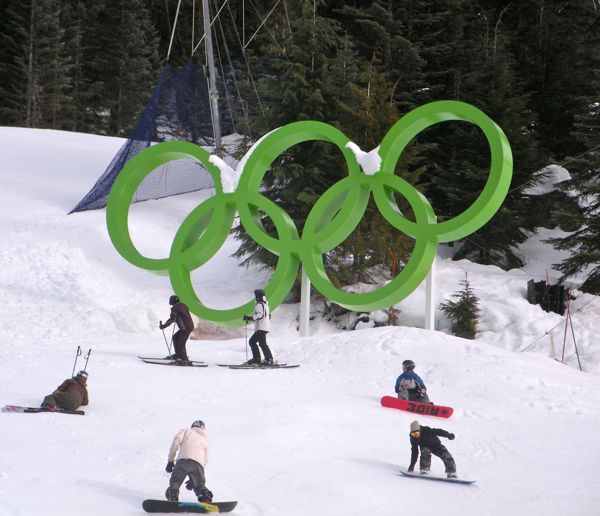
Riders check out the Olympic rings at the Women's Downhill before the Games in Whistler two years ago. Photo/LTN file

Rick Burton, a professor of sports management at Syracuse University’s Falk College of Sport and Human Dynamics, cautioned the American bid committees to spend wisely. Vancouver’s successful bid for the 2010 Winter Olympics cost a reported $34 million. Annecy, France, spent roughly $30 million in its failed attempt to win the 2018 winter games, which will be hosted by Pyeongchang, South Korea.

“You can bang your drum from a PR standpoint, but until you know that the USOC has worked out its agreement with the IOC, I’d keep my powder dry,” Burton said.

Since 2005, the USOC and IOC have sparred over the current revenue sharing agreement, which gifts 12.75 percent of U.S. broadcast revenue and between 16-20 percent of the IOC’s global sponsorship revenues to the USOC. These are serious sums of cash. NBC reportedly paid $456 million for broadcast rights for the 1996 Olympics, $3.5 billion for 2000 through 2008, $2 billion for 2010 and 2012 and 4.4 billion for 2016 through 2022. The revenue helps supply much of the USOC’s revenues, which according to its 2010 tax filing, was $250.6 million that year.

The USOC has publicly stated it will not submit any host bids to the IOC until the negotiations end. The two groups last met in January but failed to finalize a new plan. In September, Colorado state senator Michael Bennett wrote a public letter to USOC Chairman Larry Probst urging both sides to agree on a new deal.

“As you are aware, the work and preparation that it takes to produce a winning bid is extensive,” Bennett wrote. “It would be unfortunate if the current impasse undermined these efforts.”

If the IOC and USOC hammer out an agreement in the coming year, however, the American cities are still long shots for 2022, Olympics experts said. Burton, who was chief marketing officer for the USOC at the Beijing Olympics, believes the USOC would rather bid for the 2024 summer games over the 2022 winter games because the summer games generate substantially more revenue.

Read the whole story


Snow stops school in Truckee; avalanche risk high

Tahoe Truckee Unified schools are calling it a snow day.

All other schools in the Lake Tahoe Basin are open today.

Some area ski resorts are reporting more than a foot of white stuff to greet skiers Friday morning.

Snow never stops the mail from being delivered. Photo/LTN

More is on the way throughout today. A winter weather advisory remains in effect through 5pm Friday.

For road conditions, click on the state icons on the home page of Lake Tahoe News.

The Sierra Avalanche Center is rating today’s risk as considerable.

 — Lake Tahoe News staff report


USFS recreation sites likely to open in May

U.S. Forest Service Lake Tahoe Basin Management Unit officials are readying seasonal recreational facilities.

Campgrounds, day-use areas and forest roads generally open in mid-May. It all depends on the weather.

Taylor Creek Visitor Center and the Tallac Historic Site typically open Memorial Day weekend.

Until recreation facilities officially open no parking, trash removal, or restroom facilities are available. The Forest Service asks people to park vehicles off the roadway, to not block access gates, pack out all trash and clean up after pets.

A complete list of projected opening dates is online.


Snow shovels may be needed Friday morning

The National Weather Service has issued a winter weather advisory from 10 tonight through 5pm Friday.

Four to 8 inches of snow are expected at the lake, with up to a foot above 7,000 feet.

Wind will be a big factor. It already has been. For one commuter going over Spooner Summit on Thursday morning it felt like her truck was being blown up the highway as she descended into Carson City.

Mother Nature is making it hard for flowers in Tahoe to survive. Photo/LTN

There won’t be much difference between the high and low temperatures on Friday – 31 and 23 degrees, respectively.

The weekend will be a mixed bag. A chance of snow Saturday with a high of 42 in South Lake Tahoe, and mostly sunny Sunday with temps reaching 47.

— Lake Tahoe News staff report


Permits to cut wood in Tahoe National Forest available in May

Woodcutting permits for the Tahoe National Forest may be purchased beginning May 2.

The price for permits is $15 per cord with a two-cord minimum and an annual 10-cord maximum per household.

Permits can be obtained at all TNF Ranger Stations, the forest headquarters or by mail. Applications for mail-in permits can be found online under “Passes and Permits”. Firewood season will extend into the fall, until rain and snow traditionally make the roads impassable.

In general, the woodcutting permit allows removal of dead and down wood on TNF system lands unless otherwise designated. It does not allow cutting on private land. Trees may not be cut if marked with paint, wildlife signs, boundary signs, other official signs or in areas closed to woodcutting.

Wood cutters are also reminded that they are required to keep a serviceable shovel at least 46 inches long and an approved fire extinguisher (2 pound dry chemical or 1 pound foam type – ABC or greater) within 25 feet of where saws are being operated. All gasoline-powered saws and other internal combustion engines such as motorized splitters must have a USFS approved spark arrester installed. Transportation load tickets will be issued along with the permit.

For more information on the woodcutting program and the woodcutting hotlines, call (530) 587.2158.


Boat inspections slated for 3 N. Nevada reservoirs

By Jeff Delong, Reno Gazette-Journal

Guarding against the potentially disastrous spread of invading mollusks, Nevada officials hope to begin inspecting and decontaminating boats at three Northern Nevada reservoirs come summer.

A voluntary inspection program could be under way at Lahontan, Rye Patch and Wildhorse reservoirs sometime in July, said Karen Vargas, aquatic invasive species coordinator for the Nevada Department of Wildlife.

The program’s goal is to prevent spread of aquatic invaders — in particular the quagga mussel, which has overrun Southern Nevada’s Lake Mead since it was first discovered there five years ago.

Tests conducted last April indicated the presence of juvenile quagga mussels in Lahontan and Rye Patch — the first Northern Nevada water bodies where quagga contamination is suspected.

Read the whole story


Habitat loss impacting deer in California

By Matt Weiser, Sacramento Bee

An estimated 445,000 deer live in California, or about equal to the city of Sacramento’s human population. Which sounds like a lot, until you realize the deer are spread over the entire state: 99 million acres.

If there were only 445,000 people in California, how long would it take you to find somebody you really wanted to hang out with?

Such is the plight of the state’s deer population, our most iconic emblem of the forest. Without much notice, the species has declined slowly but relentlessly in virtually every corner of the state.

The decline has been almost too small to see on an annual basis. But since 1990, California has lost nearly half its deer population, according to the state Department of Fish and Game.

“Our deer are surviving, they’re not thriving,” said Craig Stowers, deer program manager at Fish and Game. “Quite frankly, until people start taking this seriously, we’re going to continue to experience these types of declines.”

This forest icon is on the wane mainly for one simple reason: habitat loss.

Read the whole story


Parks urge caution as bears come out of hibernation

By Chuck Raasch, USA Today 

Yellowstone National Park rangers are preparing for the upcoming tourist season by updating bear-warning signs and stepping up grizzly-awareness education after two hikers died in separate grizzly attacks in the park last summer.

The deaths of men from Michigan and California, the first in 25 years, reflect a rising trend of human-bear encounters in North America, as the populations of grizzlies and black bears have increased and as humans have encroached on their habitat.

Yellowstone officials had contemplated making it mandatory that hikers travel in groups and carry bear-repellant pepper spray, park spokesman Dan Hottle says, but enforcement would have been difficult, so Yellowstone officials are updating bear-warning signs, and park publications feature ways to avoid confrontations. Rangers will conduct bear-spray demonstrations.

“Encounters are most definitely a fact of life” as the grizzly population grows, Hottle says.

These encounters are not just in wild places anymore. Wildlife officials from New Jersey to California will meet Monday in Missoula, Mont., to discuss how cities, states and parks can deal with growing bear populations.

“What we can do as managers to minimize those conflicts is to educate people how to live with bears,” says organizer Chris Servheen, grizzly bear recovery coordinator for the U.S. Fish and Wildlife Service.

Read the whole story