Summer-like weather for the weekend; then winter returns

By Kathryn Reed

People were shedding their clothes Friday, with more of the same expected throughout the Lake Tahoe Basin this weekend.

While no records in the basin were set Friday, the National Weather Service says the best chance to set one in South Lake Tahoe will be Sunday. The forecast is for 73 degrees. The record of 71 degrees for April 22 was set in 2009.

It was 71 degrees in South Tahoe on April 20 – two degrees shy of the mark set three years ago.

On April 20, Reno tied the record of 84 that was set in 2009.

Truckee records are not likely to be broken. But temps will be in the upper 70s.

Shane Snyder, meteorologist with the National Weather Service in Reno, explained that while the water temperature of Lake Tahoe is cold this time of year, Truckee’s air temps are higher than those in the basin.

“When the lake is cold, it keeps the land around it cold,” Snyder told Lake Tahoe News.

While the warm weather has lured people to the beach, gotten them on their bikes and doing other summer activities, they shouldn’t get used to it. The normal turbulent spring-winter weather fluctuations associated with April-May in Tahoe are alive and well.

A chance of showers is in the forecast for Monday, but a bigger storm could roll into the area Wednesday night through Thursday night.

“It will be cold and wet. We’re not done yet getting mountain precipitation,” Snyder said. “It will be snow at the lake.”


757 acres return to public ownership

By Carlos Alcalá, Sacramento Bee

After a 10-year effort, the American River Conservancy has completed the purchase of 757 acres of former ranch lands that straddle Salmon Falls Road in El Dorado County.

The lands are on the north side of the South Fork of the American River where it flows into Folsom Lake.

The lands run for about 2 miles along the water front, which can be lakefront or the riverfront, depending on how high the lake is.

The new acreage will allow for more public trail opportunities, said Alan Ehrgott, Conservancy director.

Read the whole story


South Tahoe golf course opens with lower fees

By Kathryn Reed

Get out the golf clubs, not only does Bijou Golf Course open Saturday, but a round costs less than it did a year ago.

“We need to recapture the market we lost,” South Lake Tahoe City Manager Tony O’Rourke told the City Council this week. The city discovered fewer people were playing, with much of that attributed to a spike in fees and not being competitive with area courses.

Last year most fees in the Parks and Recreation Department increased by 14 percent.

Dropping the fee from $19 for a local to play a round of nine holes to $15 still has the price higher than it was two years ago.

Bijou Golf Course in South Lake Tahoe opens April 21. Photo/South Lake Tahoe

On April 17 the council voted on its annual fee structure. Most services related to recreation are now less expensive.

Camping fees are dropping for spring and fall users by $3 to $24 for no hook up and $35 with hook up.

“At the campground we were charging more than some commercial sites,” Stan Sherer, who oversees the parks department, said.

Sherer added that he’s hoping income will be better this year. Weather and construction hampered revenue last year. The golf course did not open until mid-June because it was so wet and kept snowing, and campers wanted their money back because nighttime road work on Highway 50 made for less than an ideal experience.

Airport fees are still being worked out, though talk is to have those decrease as well. That fee structure should be before the council in May.


Spring runoff sending more water into Lake Tahoe

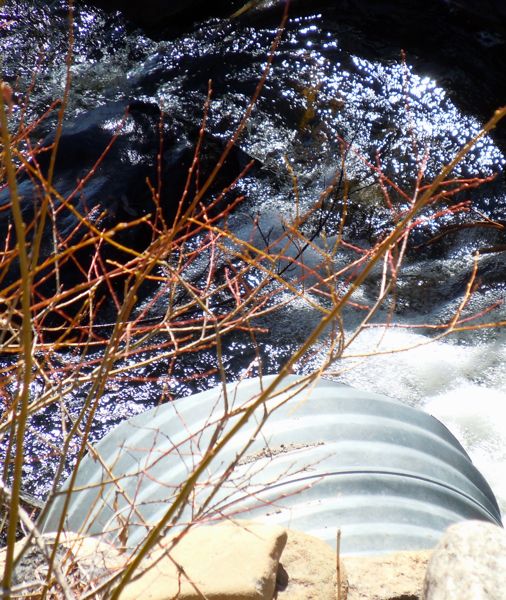
CARNELIAN BAY – Lake Tahoe is like glass – except where the storm pipe is draining.

It’s more like a manmade waterfall just off Highway 28 in Carnelian Bay.

Across the highway a stream is filtering down from the mountainside above. It drains under the road, continuing through a pipe that is just above the water’s edge. There, it cascades into Lake Tahoe.

Storm drains are on both sides of the highway to collect the runoff from the road, deliver it to the pipe and let it flow into the lake.

On April 19, white specs of  “pollution” dot the surface. The water is shallow here, with the submerged rocks visible, albeit murky, from the road.

With a chance of thunderstorms on Friday, it could mean more gunk being carried into Lake Tahoe.

— Kathryn Reed

The roadside drain just above the lake, from left; residue floats on top; water drains directly into Lake Tahoe. Photos/Kathryn Reed


Ski legends inducted into hall of fame

By USSA

SEATTLE – In a night filled with emotion and fond memories, eight legends of skiing were inducted into the U.S. Ski and Snowboard Hall Fame as more than 600 attended a ceremony in Seattle.

Olympic and World Championship medalists Joe Pack and Eva Twardokens headlined eight skiing luminaries who joined the Hall of Fame’s Honor Roll for 2011. Also honored was ski area pioneer, the late Nick Badami, who played a pivotal role with the U.S. Ski and Snowboard Association and the Salt Lake City Olympic Winter Games.

The Hall of Fame ceremony last weekend, which rotates around the country each year, was in Seattle for the 50th anniversary ski and snowboard manufacturer K2, which received the Hall’s Legends of Skiing Award.

Also honored were ski area pioneer Phil Gravink, ski historian Mason Beekley, speed skier and author Dick Dorworth, ski show pioneer Harry Leonard and World Cup and Pro Skiing racer Tyler Palmer.

Nominations for the Hall of Fame are open to the public with the process managed by the Hall of Fame’s National Selection Committee followed by a vote of over 100 skiing experts and enthusiasts who make up its National Voting Panel.

Nominations for the Class of 2012 are now open but will close on April 30.

Nick Badami had a four-decade career in the ski industry as a business owner, executive and volunteer. After retiring from a successful business career at the age of 49 he bought Alpine Meadows and later Park City Ski Area. He served in leadership roles at the National Ski Areas Association, U.S. Skiing and both the Bid and Organizing Committees for the 2002 Salt Lake City Olympics. At the USSA he played a vital role in the transformation of the organization to become a highly respected Olympic sports organization. As chairman of Powdr Corporation he grew his resort holdings before retiring in 2003. Badami passed away in 2008.

Joe Pack was one of the stars of the Salt Lake City Winter Olympics whose performance resulted in a silver medal in the freestyle skiing aerials event. Over his career he reached the World Cup podium 12 times, including three wins. He won two World Championship bronze medals to go along with his Olympic silver medal, which he won in front of his hometown fans at Deer Valley Resort in Park City. After retiring from skiing he became a professional golfer based in Hawaii.

Reno native Eva Twardokens made her World Cup debut at the age of 17 in 1982 and was Ski Racing’s Junior Racer of the Year in 1982 and 1983. In a 12-year career she earned three podiums and 34 top tens, including the giant slalom bronze in the 1985 World Championships. She was a two time Olympian finishing sixth in the GS in Lillehammer in 1994. Today she is a fitness advocate and trainer in Santa Cruz and holds a Masters National Weightlifting title.

A 1969 junior champion, New Hampshire’s Tyler Palmer was a dominant racer on the newly formed World Cup tour in the 1970’s. In 1971, he was the first American male to crack the top three overall in slalom. During his career he won two World Cup slaloms, reached the podium four times and had nine top tens. Later he raced on Bob Beattie’s World Professional Ski Tour where he won five races. A National Masters Champion several times Palmer was a coach for junior racers at Sun Valley until his retirement in 2010.

Dick Dorworth was a ski racer, world speed record holder, coach, instructor and journalist. As a ski racer he was named a collegiate All American in 1962 and in 1963 he set a world speed record of 170 kph, in Portillo, Chile. He went on to become a certified instructor in both France and the USA, including ski school director at Aspen, and a U.S. Ski Team coach. The publisher of several books on skiing and a recipient of an Ullr Award from the International Skiing History Association, Dorworth’s articles have appeared in nearly every skiing magazine and journal.

Mason Beekley, who died in 2001, was a successful businessman and passionate skier who eventually directed that enthusiasm to the support of preserving skiing history. During his lifetime he developed an extraordinary library dedicated to skiing and one of the world’s most extensive collections of ski art leading him to form the International Skiing History Association in 1991 which today has over 2,000 members worldwide and publishes Skiing Heritage magazine.

Phil Gravink was a key player for 35 years at the national level in ski area management. After graduating from college he started out helping run his family’s farm in New York State before founding an area known as Peek’n Peak. He went on to head Gore Mountain and later New Hampshire’s Loon Mountain, developing it into a leading modern resort. He was also a key player in influencing the policies of the U.S. Forest Service and served as a National Ski Areas Association director for 18 years including a term as chairman. He received the NSAA’s Sherman Adams Award for his leadership as well as a Lifetime Achievement Award and the BEWI Award.

Harry Leonard was skiing’s impresario, visionary and cheerleader during the 1960s and 70’s. He organized the first ski consumer show in Chicago in 1958, which was a success that spread nationwide within the next few years. With his partner Jerry Simon, he brought to the shows a creative genius and enthusiasm that made them fun and entertaining. He pioneered the use of the ski deck that brought skiing right into his shows as well as great skiers who were the headliners for his events.


Spring paddle launches from Tahoe City

Lake Tahoe Water Trail’s annual Spring Paddle is May 19 from 9am-1pm.

Launch from Commons Beach in Tahoe City for a morning paddle, followed by lunch at Sunnyside.

Interpretive guides will navigate and educate about the Lake Tahoe environment. All ages and skill levels are welcome.

For more information and registration, go online.


Truckee area control burns about to begin

The Truckee Ranger District will begin spring prescribed burning in the Truckee area as weather permits. The timing of burning will depend on favorable weather conditions. The prescribed burns will be implemented by fire management professionals.

In addition to weather factors, wildlife needs, soil conditions, tree survival, sensitive plants, and fire suppression activities are all considered in the timing of prescribed burns. A benefit of the prescribed burning will be reduced intensity of future wildland fires in the treated areas. These areas may also provide firefighters with safe locations to control wildfires in the future.

Some of these burns are located in more remote areas of the forest, while some are near communities. Within the Truckee Ranger District of the Tahoe National Forest, pile burning is planned along Alder Creek Road, at Tahoe Timber Trails, and along Highway 89 North. Underburning is planned near Klondike Flats, on Sawtooth Ridge, and near Stampede and Boca Reservoirs. Smoke may be visible in these areas.

Forest Service fuels management personnel work closely with the California Air Resources Board and the local air quality management districts to minimize smoke impacts to communities.

The Truckee Ranger District has a pre-burn notification email list. If you wish to be placed on the pre-burn notification list, or if you would like more information on the fuel reduction efforts on the Truckee Ranger District, contact Linda Ferguson at (530) 587.3558.


Entrance to national parks free for one week

Next week is National Park Week. From April 21-29, all 397 units of the park system will waive their entrance fees, from Acadia to Zion and everywhere in between.

To help celebrate National Park Week, mobile app developer Chimani has announced that it will give away 1 million of its 10 highly rated park guides for smartphones. Normally they cost between $4.99 and $9.99 each. If you’re considering a trip farther off the beaten path, their general guide for national parks is also free. All are available for iPhone and Android using the links on their website.

If you use an iPhone, NPCA has a free National Park Field Guides app.


Mountain travel experts hash out ways to lure consumers

By Kathryn Reed

OLYMPIC VALLEY – With skier visits down this season, lodging occupancy at 40 percent and consumers having more choices where to spend their travel-leisure dollars, what are mountain communities supposed to do to stay competitive and solvent?

Embracing that skiing is more than a sport – it’s a lifestyle – is one suggestion. Tap into the fact that people say “I am a skier” and not just “I ski” is what Ian Arthur, chief marketing officer with Intrawest, told a group of industry officials Wednesday morning.

Arthur, with Kirsten Lynch, chief marketing officer of Vail Resorts, and J. William Seccombe, chief marketing officer of Visit Florida, bantered back and forth as they delved into the business of destination mountain travel.
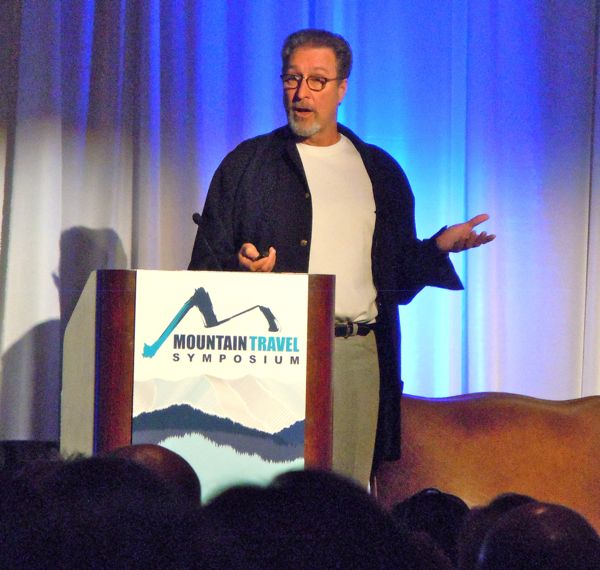
Ralf Garrison, director of MTRiP, speaks April 18 at the Mountain Travel Symposium. Photo/Kathryn Reed

The three were part of one of the sessions during the 37th annual Mountain Travel Symposium that is being hosted by the Resort at Squaw Creek. With several hundred in attendance for a multi-day conference, this is billed as the largest gathering of mountain travel professionals in North America.

Ralf Garrison, director of MTRiP (Mountain Travel Research Program), said, “Pure destination guests, led by international visitors held up the best while the local and regional skiers and boarders were more fickle and made fewer trips to the slopes. As a result, destinations catering to multi-night visitors who book well in advance fared better than the resorts that are more dependent on regional and short-stay guests and the disparity among the various resorts is more pronounced this year.”

Dan McHale, general manager of Inn by the Lake in South Lake Tahoe, echoed that sentiment. He told Lake Tahoe News that it was the international travelers, primarily Europeans, who were filling his rooms this winter, while the Bay Area skiers stayed away.

The MTRiP data Garrison released April 18 shows below normal snowfall and warm weather had skiers doing other things this winter. While the previous handful of years showed skier visits above the 60 million mark, when the final tally comes in at the end of April it’s likely that number won’t hit 50 million for 2011-12, he said.

Perception is everything. The drive-up market for resorts on both sides of the country stayed away as the snow was sporadic, this, despite the abundance of snowmaking in so many places.

Weather is always a factor. A year ago, the snowfall set records in Tahoe for the abundance, this year is was all about the scarcity of white stuff.

If NOAA’s Climate Prediction Center is correct with this week’s posting of warmer water in the Pacific likely to generate an El Nino weather pattern for fall 2012, it could translate into a wetter winter for California next year. However, with where Lake Tahoe is located, these El Nino and La Nina predictions for the rest of the state don’t always hold true for the Sierra.

It was the destination traveler who saved this season.

As Garrison pointed out early in his presentation, for places that consider themselves destination resorts, the season could be salvaged, but for those claiming to be just a ski area, the season was one to write off.

Occupancy during the ski season at Western mountain areas was down 3.9 percent during March compared to the same month last year, Garrison said. Throughout the winter months the occupancy is down 2.3 percent.

The bright spot for hoteliers and those receiving hotel tax, though not for the consumer, is the average daily rate was up in March by 1.7 percent compared to 2011, and is up 4.8 percent for the November-April ski season compared to last season.

To move forward, Garrison said, “You are going to need to generate your own demand.” This is because while consumer confidence is up slightly, it is basically flat.

Arthur pointed out how 25 years ago there was 40 percent more ski resorts in the country and that with the supply going down this should be good for the areas still remaining.

One way to get people into the sport is to show more people having fun. It was pointed out how Ski magazine shows shots of serious skiers. Photographs aren’t of people laughing, having a good time, socializing, or conveying emotion.

Lynch said with Gen Y being full of risk takers and wanting freedom it’s a tough balance between traditional skiing and turning a resort into a sports theme park.

Seccombe pointed out how with all the television channels there are that poker and fishing have more outlets than skiing. With the X Games and Olympics being the only times skiing, boarding or other snowsports are on TV, this gives the mountains little exposure to potentially new customers.

“With billions of dollars  spent to lure the same people, mountain travel needs to broaden its approach or it will see a drop off,” Seccombe said.

Some of the constraints the industry has are price, how long it takes to learn the sport, and accessibility to the mountains.

“We need to start telling our story to a broader consumer base,” Arthur said.

Lynch said the whole summer experience needs to be part of the discussion when it comes to traveling to the mountains.

“There are a lot of choices out there and we need to stay relevant,” Lynch said.

Thinking beyond the traditional skier was brought up. Not everyone in a family or group skis. Promote the spa, shopping and other activities.

McHale said he noticed with his guests that many come to the South Shore not to ski, but to be in the mountains. He partners with Heavenly Mountain Resort so they can go tubing.

Give people more than just a day on the slopes. Seccombe singled out NASCAR and how cameras are put in vehicles so spectators can keep watching those left turns made by their favorite driver.

Arthur said the best way to deliver more to the consumer is to know more about them.

Lynch summed it by saying the way to be successful is to concentrate on delivering service and experiences to the guests – making it all about them – and touting the destination less.




Dry conditions could be problematic for bears, other wildlife

By Jeff Delong, Reno Gazette-Journal

From bears breaking into Lake Tahoe homes to possible disease outbreaks and other problems, Nevada wildlife officials are waiting to see how this year’s dry conditions impact animals.

Significant snowfall in March has eased concerns – at least to some degree – that a lack of berries and other backcountry forage will send black bears marauding through neighborhoods at Tahoe and other bear-prone areas.

“I’m a lot more optimistic than I was two months ago,” said Carl Lackey, bear biologist for the Nevada Department of Wildlife. “It’s kind of wait and see. Up until the beginning of March I was really worried.”

March snowfall will hopefully nourish berry bushes sufficiently that a lack of natural food won’t drive bears into communities to raid trash containers and search for other human food sources, Lackey said.

That’s what happened during the summer of 2007, “by far” the worst on record for bear problems at Tahoe and along the Carson Range, Lackey said.

That year the Department of Wildlife recorded more than 1,500 bear complaints, with drought-related bear problems also experienced in California, Utah, Colorado, New Mexico and Idaho.

Read the whole story