Public participation lacking in mapping future of Tahoe park

By Jessie Marchesseau

The turnout for the trails workshop in Incline Village hosted by the Nevada Division of State Parks was underwhelming at best. Eight people showed up to voice their opinions.

“It’s kind of everybody’s backyard; I thought there would be more people there,” said Mark Kimbrough, recreation and trails consultant helping with the development of the new general management plan for Lake Tahoe Nevada State Park.

Hosts nearly outnumbered the attendees, with representatives from the Tahoe Rim Trail Association, Nevada State Parks, Incline Village General Improvement District and the Incline Village trails committee in attendance.
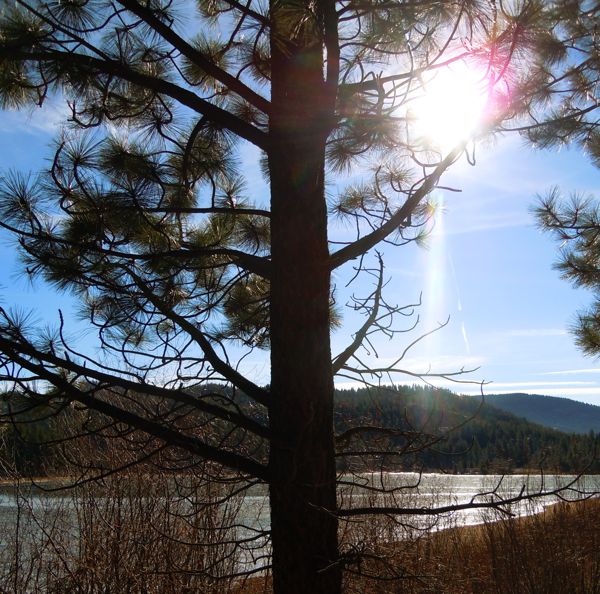
Nevada parks officials are trying to figure out the future of Spooner Lake and other Lake Tahoe entities. Photo/LTN file

NDSP organized the June 7 workshop in an effort to solicit feedback and encourage public input on the new trails map for Sand Harbor, Van Sickle Bi-State Park, and the Marlette Hobart and Spooner backcountry areas.

Initially, the workshop was going to include discussions on the possibility of opening some of the trails currently restricted to foot traffic up to mountain bikes. This has been a contentious topic among trail users and could have resulted in a crowd. But Kimbrough said that plan was recently dropped, something to which he attributes the low turnout.

Park planners were also hoping for some ideas on what people would like to see happen concerning the winter season operation of Spooner Lake. The concessionaire who has been running the cross country ski operation there for the last 27 years has decided not to renew his contract, leaving recreation for future winters at Spooner up in the air.

Jay Howard, park supervisor for Lake Tahoe Nevada State Park said the snow accumulation at Spooner is unpredictable, making a cross country ski area hard to maintain. He was hoping the workshop would spawn some ideas of what to do with the area in the future, however only three of the attendees had even visited the ski area and no one had any new ideas of what to do with it.

For now, it is likely the building will remain in place, but empty, leaving the option for a ski area or something to return in the future.

The new general plan is set to be in place before the end of the year, replacing the current plan developed more than 20 years ago. This was the second of three public workshops for residents to offer their input on the future of Lake Tahoe Nevada State Park.

The third and final workshop will be within a next few months to present the chosen plan alternatives to the public.

Anyone who has ideas or comments concerning changes, additions, facilities or anything else related to the new general management plan is encouraged to send their input to ltnsp.gmpcomments@ascentenvironmental.com.


Weekly mountain bike rides start at South Tahoe Y

Every Tuesday night TAMBA is putting on a fun ride.

These are low key mountain bike rides open to everyone. Meeting place is 5:30pm every Tuesday at Pearl Izumi on Highway 50 at the Y.

Employees from South Shore Bikes and Pearl Izumi will lead these rides.

Following the ride there will be drink and food specials at Murphy’s Rockwater Pub.

For more info, contact brianabiller@awakenergy.com or laketahoe@pearlizumi.com.


League organizing series of educational walks throughout basin

The League to Save Lake Tahoe is organizing a series of educational walk and talk tours throughout the Lake Tahoe Basin.

Each tour will highlight a particular area of interest and provide an opportunity to talk with League staff about the issues facing Lake Tahoe’s clarity and ecological health.

Heavenly Gondola: South Lake Tahoe/Stateline, June 16

Topics: Environmental and fire management history, forest ecology.

Blackwood Creek: West Shore, June 30

Topics: Restoration project, wildlife habitat, wild flowers.

Skunk Harbor: East Shore, July 20

Topics: Forest restoration, cultural history, water quality.

Taylor Creek: South Lake Tahoe, July 28

Topics: Forest ecology, riparian habitat, Tahoe fishery.

Third Creek: Incline Village, Aug. 25

Topics: Stream restoration, forest/ecosystem restoration, water quality monitoring.

Registration is required and space is limited. RSVP to events@keeptahoeblue.org or call (530) 541.5388.


2 SUP events on Tahoe’s North Shore

The 2nd annual Adventure Sports Week Tahoe (June 15-24) includes two standup paddle boarding events.

The Thunderbird Run, produced by the Ta-Hoe Nalu Festival, is scheduled for June 16 at Sand Harbor State Park in Incline Village. Participants will paddle an eight-mile loop along Tahoe’s North and East shores. All ages are welcome to take part. The race begins at 10am.

On June 17 is the inaugural Tahoe Waterman Challenge, produced by the Lake Tahoe Waterman Association, which involves swimming, running and standup paddle boarding. The race kicks off at Tahoe City’s Commons Beach at 10am.

For more information about Adventure Sports Week Tahoe, go online.


Defensible space can save a house during a fire

By Jessie Marchesseau

Could you throw a smoldering ember the size of a softball anywhere in your yard and walk away feeling confident that it will not start a fire? If not, then it may be time to work on your defensible space.

Angora Fire -- 5 years later

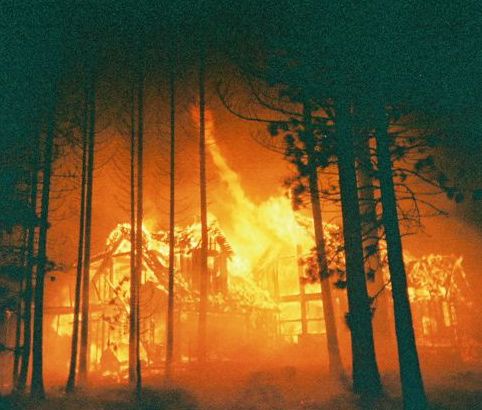
Practically an everyday term now, defensible space was not mentioned much in the Lake Tahoe Basin before the Angora Fire ravaged the South Shore in 2007.

Coined in the 1980s, the term defensible space refers to the area of vegetation and landscape management between a house and a potential oncoming wildfire. And not only is it a good idea, it’s the law.

California Public Resources Code Section 4291 states:

“A person who owns, leases, controls, operates, or maintains a building or structure in, upon, or adjoining a mountainous area, forest-covered lands, brush-covered lands, grass-covered lands, or land that is covered with flammable material, shall at all times do all of the following: (1) Maintain defensible space of 100 feet from each side and from the front and rear of the structure…”

Even though your property may not back to open forest land, the law still applies. Nearly all of the Lake Tahoe Basin is located within what is known as a wildland urban isnterface, or an area where civilization meets and intermingles with the wilderness.

Nevadans are not off the hook, either. Legislation and building codes require Nevada properties to have defensible space as well.

Proper defensible space spared this house in the Angora area. Photo/Lake Valley Fire

Some of the regulations have been altered since the Angora Fire, but they are far from new. Lake Valley Fire Protection District was enforcing defensible space requirements before signing occupancy permits for years prior to the fire.

Defensible space is not just for new and remodeled homes, either. It applies to all structures, residential or commercial, within the WUI zone. Owners can even be fined for non-compliance.

Fire Chief Gareth Harris of LVFPD said that all of the homes in the Angora burn zone had been contacted by defensible space technicians at least twice prior to the fire. Of those that did complete their defensible space, 75 percent survived.

So why were some owners reluctant to comply? Well, for a variety of reasons, including financial ones and difficulties with the TRPA. But after losing 254 houses to the Angora blaze, area fire districts and the Tahoe Regional Planning Agency agreed things had to change.

Together, the groups streamlined the defensible space process, and the TRPA loosened its grip a little on tree removal and erosion standards. Now defensible space inspectors from the fire districts can authorize tree cutting for fire safety, and property owners can remove pine needles from within 30 feet of structures once a year.

“I don’t think it’s a choice of a clear lake or a safe community,” said Peter Brumis, public outreach specialist for the Tahoe Resource Conservation District.

The group focuses on erosion control and protecting lake clarity, forests and wildlife. Brumis admits there is a delicate balance when it comes to the issues of erosion control and defensible space, but maintains that one is no more important than the other. In most cases, he said, both can be done effectively and simultaneously.

The financial burden of defensible space was also addressed. The Nevada Fire Safe Council was able to secure grants and offered up a rebate program starting in 2008. Property owners could recoup half of their costs to install defensible space up to $1,000. Unfortunately, the entity lost its grant funding for 2012 and closed its doors at the end of April.

Making the permitting and financial aspects less burdensome may have contributed to the sharp spike in defensible space compliance immediately after the Angora Fire, but Forest Schafer, forester for the North Lake Tahoe Fire Protection District, thinks it was more than that.

The NLTFPD did 163 defensible space evaluations in 2006. In 2008, the year after the Angora blaze, that number jumped to 410, but has been steadily declining ever since.

“I think the Angora Fire was a very stark reminder of how important it is to do that,” he said. “It’s not in the front of everyone’s mind when smoke’s not in the air.”

NLTFPD, like LVFPD, the South Lake Tahoe Fire Department, and other fire districts around the lake, offers free defensible space inspections and evaluations. Experts will visit the property, make recommendations, mark trees for removal and even advise owners on the best types of vegetation to include in their fire safe zones.

The resources are available, and the effectiveness of defensible space has been proven time and again. But when it comes to wildfire, there are no guarantees. Even with the best landscape management, an ember that lands directly on a wood deck or shake roof can mean the end. So while defensible space is a good start, fire safety does not stop at the front door.

“Don’t be complacent,” advises Harris, “protect your property.”


Golf event benefits South Tahoe Cancer League

South Lake Tahoe Moose Lodge No. 1632, along with Sierra-at-Tahoe and Harrah’s-Harveys Lake Tahoe are sponsoring the 7th annual Longest Day of Golf on June 20.

Tahoe Paradise Golf Course has committed to helping this community fundraiser by donating the course for the entire day. Golfers will start at sun rise and play as many holes as they can before sundown.

Last year, the golfers played 125 holes and raised more $12,000 for the South Tahoe Cancer League. Every dollar raised stays in town to provide financial assistance to local cancer patients.

Consider pledging on a per hole basis or a flat dollar amount. Send tax-deductible donations to either Angie Keil or Greg Kuntz at SLT Moose Lodge No. 1632, 961 Eloise Ave., South Lake Tahoe, CA 96150.


Individuals, teams invited to Tahoe Legends runs

The Tahoe Legends 10K and 5K runs are June 16 starting at 8am at Lake Tahoe Community College.

TR4CK (Track for Community and Kids) sponsors the annual event that stars at the college and ends on the track at South Tahoe Middle School.

The Tahoe Legends Challenge also pits local fitness clubs in head-to-head competition for the Fast and Fit Trophy.

Here is the registration form.


‘Glamping’ removes all the roughing-it from camping

By Sam McManis, Sacramento Bee

BIG SUR – Over the past few days, while “roughing it” on the rugged Central Coast, I have slept between high-thread-count sheets made toasty by a heated mattress, cringed as my bloated carcass was kneaded like a blob of sourdough by a sadistic redheaded masseuse named Nora, gazed at a coniferous hillside while submerged in the amniotic warmth of a hot tub, and seen a dazzling ocean view from a bed inside a yurt.

I also have eaten a $22 Caesar salad, with free-range chicken, at a campground. I have hiked on private trails where ticks wouldn’t dare alight on your epidermis. I have been basted, scalp to toenails, with medicinal oils purported to promote healing. I have lingered under a hot, pulsating shower, all lathered up with a loofah and artisan peppermint-and-grapefruit soap.

Yeah, it’s been a nice time.

But, tell me, have I really been camping?

“No, not at all,” said traveler Molly Lindgren, cradling a coffee cup outside her yurt at Treebones Resort, equidistant between Hearst Castle to the south and Big Sur proper to the north. “And that’s a good thing. I hate camping. I did it as a child and loved it back then. But now, I don’t want to be bothered. The great thing here is, you’re in this yurt, it’s totally in nature, but comfortable. You’re not roughing it so much.”

What I’ve been doing, snooty as it sounds, is “glamping.”

That’s the smashed-together term meaning “glamorous camping,” a high-end activity for those seeking to commune with nature without struggling with troublesome tent poles, without sleeping on the cold, unforgiving ground, while substituting organic, locally grown cuisine for reheated beans and franks, and happily trading up from s’mores to tiramisu.

Read the whole story


Solutions to living with animals in Tahoe so everyone is happy

By Cheryl Millham

Believe it or not, Tahoe people care about their wildlife.

A good friend of ours has a lot of seasonal neighbors. One of the families leaves in the fall and does not come back until late spring or early summer, so the house is empty and quiet all winter.

Every year, a family of coyotes makes their den under the house. It is a perfect, quiet neighborhood to raise their family. However, on Memorial Day, the humans who own the house came up to Tahoe to start their summer vacation. When they realized the coyotes are living under their house, they panicked. They want them killed.

Our friend (who is also a trained volunteer with LTWC) took it upon herself to harass the coyote mom to move her family out from under the house over to the meadow. People come up to their second home in Tahoe never realizing they share their home with a coyote family who have been there all winter and spring.

Then, we have a few people that just don’t seem to care about the life of little birds. I received a call from a lady who panicked because she had a nest with three live Steller’s Jays, which were all crying for food with one dead.

As the story goes, two boys decided to have “pet” birds. They took down the nest (I am assuming that their mother either knew nothing about it or did nothing about it). After two days of feeding them the wrong diet, one of the jays died. (Obviously, the boys were tired of their new toy.) It was at this point that a neighbor decided to take it upon herself to intervene. She took the nest of jays and called LTWC.

I am happy to say the three remaining jays are doing well.

Then, I received a call from a man who found out – the hard way – that there was a mother raccoon living in his chimney on top of the flu. (He thought the raccoon had fallen in.)

His friend got up on the roof and looked down the chimney. Not only was there a one large raccoon, but there were babies also. LTWC gets at least two calls per week with raccoons down chimneys. I think he was a little disappointed. He thought he was the only person with a raccoon down his chimney. I went over with him how to get the mom to take her babies out of his chimney and then how to cap off his stovepipe so this wouldn’t happen again.

He said he would do what I told him, but that he didn’t think it would work. His friend told him that, “No way would a raccoon be able to climb up and down inside of a chimney, let alone carry the babies out.”

After a few more calls – to answer more of his questions – I reassured him it would work and he said he would try.

Well, I got a call the next day. It was the man with the raccoon family in his chimney. He told me it worked. He woke up at 2am to a lot of noise coming from his fireplace. The next morning, they looked down the chimney. No more raccoons.

A happy ending for that family — the raccoons and the humans.

Cheryl Millham is executive director of Lake Tahoe Wildlife Care on the outskirts of South Lake Tahoe.


Splendor of the mountains fills trek along Squaw Creek

By Kathryn Reed

OLYMPIC VALLEY – Tumbling water splashing down from the mountains above; at times rippling across smooth rocks, other times in freefall.

Despite the lack of snowfall this winter, rivers and creeks in the greater Lake Tahoe area are still providing a scenic thrill for hikers.

As we scampered up from the parking area, we could hear the sound of rushing water fill the air. To our right is Squaw Creek. It doesn’t take long and mini waterfalls are before us.

Hiking next to Squaw Creek provides for one photo op after another. Photos/Kathryn Reed

While the entire hike is not ideal for all ages, some of the most scenic areas are at the start of the trail. Young families have found this a good place to recreate.

Expansive “beaches” of granite call out as a potential sunbathing or lunch spot. We move on. It’s too early for a break.

The towering granite spires make us feel little. And we thought the pines were tall. The mountains on the North Shore seem bigger, certainly more jagged.

A soft dirt trail takes us up. A few spots are muddy on this particular Sunday, but it’s still early season.

Our goal is Shirley Canyon – a hike Squaw CEO Andy Wirth says is one of his favorites and one that he has done about 20 times.

We didn’t make our goal.

Sometimes taking a wrong turn can be a good thing.

This was the case Memorial Day weekend. We ended up in another canyon.

What was so spectacular is we were all alone – embraced by Mother Nature. The trail is less defined here. We meander along and through the Manzanita as we head into a canyon.

We cross under the Silverado chairlift that sits idle. The terrain is way too rugged to merely follow the lift up. Instead, we head farther into the canyon, with the top of the tram to our right and in front of us. We’d like to get there, though it’s not running yet for the summer.

We inch up along a snowfield, not wanting to walk in the middle of it for fear of breaking through into a creek.

Truly, it was breathtaking – and not just because of the elevation. I felt so small. But I had this weird smile on my face – being someplace new, where there was only the two of us, and where most hikers probably never venture.

Having skied here, I knew we were in for some dicey conditions if we pressed onward.

As we scampered out, in the distance we could here loud talking. It turned out to be a smaller group of the 31 who were hiking together. I had forgotten how unpleasant it could be to hike on a holiday weekend until I came across this group.

Maybe I’m a snob. But to me, one of the points of hiking is the tranquility. All the jibber-jabber makes it impossible to hear the sounds of the woods – the water flowing, the birds singing, the wind whispering.

What we should have done to get to Shirley was cross the creek. On a cursory glance it looked deep so I picked the “wrong” trail. Going back we saw it wasn’t that big of a deal to cross. And just on the other side is wonderful waterfall, skinny compared the ones early on the trail. By this time, though, we were ready to find a different kind of watering hole.

—–

Notes:

• The tram opens June 15. It’s free for all 2012-13 passholders; $29 for adults and $10 for kids (with discounts every Tuesday in July and August for Bluesdays).

• The tram is free for hikers going down, at least according to the sign posted at the start of the trailhead.

• The High Camp Pool and Hot Tub, and Umbrella Bar open June 15 and there is an additional cost to use the pool.

• The village is at 6,200 feet and High Camp is 8,200 feet.

Directions:

From South Lake Tahoe, go north on Highway 89. At the Y in Tahoe City, go left. Turn left into the entrance at Squaw. (There’s an Olympic flame and rings to let you know you are in the right place.) Follow this up to the ski area. Drive all the way up Squaw Valley Road, take a right at the tram, follow road all the way around. Park. Then follow the creek all the way up to Shirley Lake and follow the trail to High Camp. Or do what we did and don’t go all the way to the top.

ngg_shortcode_0_placeholder (Click on photos to enlarge.)