NDOT helping make roads safer for winter travel

Motorists can drive a little safer on winter roads this season with safe driving tips and new snow removal technology from the Nevada Department of Transportation in association with the Nevada Highway Patrol.

Last winter, there were three fatalities statewide attributable to unsafe driving behaviors in snow, ice and other wet conditions, such as driving too fast for conditions, following too closely, and failing to maintain a lane and overcorrecting.

“There are too many crashes every winter from drivers not slowing down in winter conditions,” NHP Trooper Barb Stapleton explained in a press release. “Slowing down and wearing seatbelts is always important. And, in winter weather, drivers should avoid quick stops and turns and turn off the cruise control to help avoid skidding.”

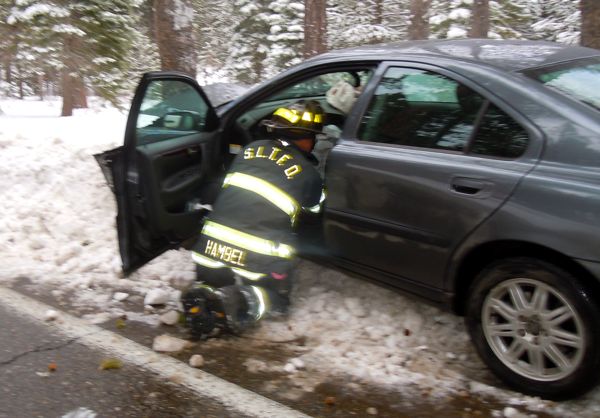
Slowing down can help drivers avoid sliding off the road. Photos/LTN file

NDOT Director Rudy Malfabon said, “This year, NDOT will be using a tow plow and automatic bridge anti-icers as an even more efficient way to clear the road.”

Automatic bridge anti-icers have been put in place on bridges on Interstate 580 between Reno and Carson City. During inclement weather, an anti-icing solution automatically sprays on the bridges to help delay and prevent ice.

Beginning in 2013, motorists will also see a tow plow being used to remove snow on Interstates 80 and 580 in the Reno area. The tow plow is a second, steerable snowplow blade towed like a trailer behind a traditional snowplow. The tow plow swings out to the lane next to the lead snowplow to clear a second lane of snow. By using one plow to clear snow from two lanes, the tow plow increases mobility and safety for all drivers and leads to a $78 per hour estimated cost savings compared to operating costs of a single plow.

Updated state road conditions, from winter road closures to traffic and road incident information, are available by dialing 51” or clicking on the Nevada icon on the home page of Lake Tahoe News.

Winter driving tips:

∙ Only travel in winter weather when necessary, leave enough time to safely reach your destination and plan your route to avoid snowy/icy areas and steep hills.

∙ Before leaving home, check weather and road conditions.

∙ Share your travel itinerary so others know when to expect you.

∙ Remove snow and ice from all vehicle windows, mirrors, lights, turn signals and license plates.

∙ Buckle up.

∙ Turn on headlights to see and be seen.

∙ Turn off cruise control.

∙ Avoid quick starts, stops and fast turns. Accelerate, brake and steer smoothly and gradually.

∙ Reduce speed. Speed limits are based on normal road and weather conditions, not winter road conditions.

∙ Do not slam on brakes. Apply steady pressure on ABS-equipped vehicles and pump the brakes if necessary on non-ABS vehicles.

∙ Always comply with all posted chain requirements.

∙ If your vehicle has snow tires, install and use them between Oct. 1 and April 30.

∙ Keep additional distance from other vehicles.

∙ Watch carefully for snow removal equipment.

∙ Do not pass without good distance and sight clearance.

∙ Use extra caution on bridges, ramps, overpasses and shaded areas- they may freeze first.

∙ Maintain a high fuel level.

∙ If vehicle begins to skid, steer in direction of slide and slowly remove foot from accelerator.

∙ Be aware of black ice.

∙ If parked or stuck in snow, leave window slightly cracked for ventilation and make sure vehicle exhaust system is clear of snow.

Carry with you:

∙ Tire chains/tow strap

∙ Flashlight

∙ Spare batteries

∙ Ice scraper

∙ Cell phone for emergency communication only

∙ Snow shovel

∙ Flares

∙ Jumper cables

∙ Small bag of sand for wheel traction

∙ Extra winter clothes — coat, gloves, socks

∙ Blanket or sleeping bag

∙ Non-perishable food, water

∙ First aid supplies, prescription medication

∙ Battery-operated radio

∙ Candles, matches or lighter

∙ State map for navigation in event of winter detour.


Cold, snow about to overtake Tahoe

Enjoy those yellow leaves because they may all blow off the trees with the storm that is about to roll into the Lake Tahoe Basin.

A winter storm advisory is in effect for the 24-hour period beginning at 4pm Thursday.

The National Weather Service in Reno says snow will reach the valley floors, with largest accumulations coming Thursday night. The storm could bring 6 to 12 inches above 7,000 feet and 3 to 8 inches below 7,000 feet. Ridge wind gusts could reach 100 mph.

“Lake effect snow bands are possible on the east side of Lake Tahoe and in the Carson Range Friday night,” the Weather Service warns. “Overall, expect moderate snow accumulations from the Lake Tahoe Basin north into Lassen and Plumas counties to create slick and icy road conditions.”

This means chains or four-wheel drive will be the safest bets for traversing the mountain passes.

This storm is also going to be a cold one. While Wednesday’s high was supposed to be 62 degrees, it will be half that on Friday – or 31 degrees. The low Saturday is slated for 6 degrees. The bright spot is the sun will return Sunday, if the forecast is correct.

— Lake Tahoe News staff report


Coverage of Sandy gives Weather Channel a lift

By Katie Leslie, Palm Beach Post

ATLANTA — Hours after Hurricane Sandy trampled the Northeast, a group of exhausted meteorologists and journalists gathered in the Weather Channel’s Atlanta newsroom to assess the damage.

And their own work.

Tom Moore, a meteorologist with the Atlanta-based network, was succinct: “(We) knocked it out of the park.”

Sandy’s timing may have been rotten for the presidential campaigns, but it was very good for the Weather Channel. The outfit, whose parent company recently dropped the word “channel” from its name, becoming simply The Weather Co. LLC, has navigated its own choppy waters this year.

Viewership is down 18.5 percent from last year, and in recent weeks the newsroom lost employees to a company-wide layoff that saw 80 workers depart. It’s a business that thrives on bad weather, which until this month, was at a minimum in 2012.

And then along came Sandy, a seemingly impossible blend of weather oddities. Getting it right was paramount, especially after an alert issued by Weather Channel senior meteorologist Stu Ostro prompted an outpouring of skepticism online.

Sandy “will occupy a place in the annals of weather history as one of the most extraordinary to have affected the U.S.,” Ostro, a 23-year-veteran of the network, wrote in Sunday’s warning.

“WHOA: The Weather Channel Meteorologist Just Completely Freaked Out About Hurricane Sandy,” read a headline from Business Insider.

Many comments to the story followed that sarcastic lead. “Our Nielsen ratings are down this year, so it’s absolutely essential that you continue to watch the EXTREME weather on the Weather Channel so that my boss’s boss can get his bonus,” read one.

Twitter soon picked up the drum beat. “Freaked out meteorologist does his part to spread panic about Sandy,” read a tweet from chriscostner.

Helen Swenson, the network’s vice president of live programming, rebuffed critics.

“We never called it Frankenstorm,” said Swenson, who, like her employees, has spent every day in the newsroom since Sandy’s first sighting last week. “We don’t need to be dramatic. Our mission is to get it out there to the masses and get it out early.”

Ostro, who stayed overnight in the newsroom during storm coverage, betrayed just a touch of smugness his week when asked about the skeptics: “Wonder what they think now,” he said via email.

Without a doubt, media analysts say, Sandy was a boon to The Weather Co., which was acquired in 2008 by NBC Universal and private equity firms The Blackstone Group and Bain Capital. The flagship website, Weather.com, exploded with nearly 300 million page views Monday – almost eight times its daily average.

The previous record was 141 million single page views during a massive snowstorm in February 2011, said digital president Cameron Clayton. Monday, all digital platforms combined had about 450 million views, followed with another 356 million Tuesday.

The TV viewership numbers aren’t available yet, but the online stats point to a substantial bonanza.

“They seem to have reported this very well . they’ve done incredible numbers,” said Sam Thielman, staff writer for Adweek who covers the network, noting that the staff cuts didn’t seem to harm the coverage.

Thielman, like Swenson, said critics who suggest that the company trumps up stories are off the mark. In fact, he said, doing so could help company’s business model.

“I don’t think they’re telling people the storm will split the earth open to get more people to watch the network,” he said. “You may see that more on cable news, and honestly, that might be one of their problems.”

In recent years, the TV channel has experimented with documentary-style programming, getting away from its original mission. No more.

CEO David Kenny – who joined the company earlier this year – said that, based on expectations that climate change will create bigger weather disasters, the network is refocusing its efforts on weather and science. One goal, he said, it to explain climate change in a way that people will understand.

“The whole realization that weather is going to become more volatile made us say there is more to do on weather. We should not shy away from it,” he said. “I believe our refocus on weather is going to help us with ratings.”

But when storms like Sandy are in full swing, ratings take a backseat, Swenson said.

“People will tell you I’m highly competitive. But when we are absolutely serious in warning people to get out of harm’s way, I’m not here to be competitive anymore. I’m there to save as many lives as I can,” she said. “At that point, the only thing we’re competing against is Mother Nature.”


TAMBA celebrating a year of hard work on bike trails

TAMBA’s end of season party is at Mo’s Place in South Lake Tahoe on Nov. 7 starting at 6pm.

There will be a huge raffle with prizes donated by many local businesses. All proceeds go directly back to TAMBA. This is our largest fundraiser for next year’s trail projects.

Here’s a short list of some of the mountain bike organization’s highlights from 2012:

Created Mountain Bike Trail Map for all trails between Kingsbury Grade and Highway 89 at Luther Pass.

Trail Build Days with about 2,000 volunteer hours recorded. This includes work on the following trails – Mr Toads, Sidewinder, Corral, Tyrolean Incline Village, Tahoe City Rim Trail Connector, Sunflower Hill, Rim Trail at Stagecoach and the new Monument Trail above High Meadow.

Rose to Toads Ride. The second annual epic ride starting at Mount Rose and ending in Meyers on the famed Mr. Toads attracted nearly 60 people this year, half of whom were non-Tahoe locals.

Kirkwood Sierra Cup Races. Fundraiser included XC and Super D races in July over twodays.

Tahoe Fat Tire Festival. Fundraiser festival and multiple races over four days in September that attracted nearly 300 people.

Advocacy and education on the Draft Forest Service Plan. We created a FAQ, attended public meetings, met with Wilderness groups to understand their side and solicited fellow riders to submit comment letters.

Kingsbury downhill trail – reroute. We are in the works of creating a fun downhill type trail off Kingsbury Grade.

Bijou Bike Park. We have made major progress moving forward with getting a 4-acre bike park built in South Lake Tahoe.

Sunflower Hill Trail. Created and built this new 2.5-mile trail in Spooner Lake State Park.

Resource for riders in Tahoe. The website is regularly updated with trail conditions, descriptions, maps, events, and advocacy alerts reaching thousands of mountain bikers, visitors and locals.

Regular coordination with land managers and other area groups.


Discounted chipping available in Placer County

Placer County’s chipper program continues to be available for local residents seeking to reduce their fire hazards and improve defensible space around structures.

Chipping rather than burning reduces the impact of smoke. Another benefit of chipping is that the woody material can be used for landscaping or ground cover.

The program, managed by the Placer County Resource Conservation District, is a low-cost curbside chipping service, supported in part by state and federal grants. The program also can assist qualified Placer County homeowners with financial or physical limitations to access the chipping program through fee waivers.

Under direction from the Board of Supervisors, the county worked with the resource conservation district to establish a reasonable and sustainable cost-share rate structure to keep the program running. The full cost of the chipper service is estimated at $80 per hour. With the applicable cost-share rate, the minimum charge is $40 for up to one hour of service.

The low-cost chipping service is available for Placer County residents who live west of Serene Lakes.

To arrange for chipping services or request information, call (530) 889.0111, ext 3. Follow the message prompts.


LTWC in talks with investors to grow rehab facility

By Kathryn Reed

The sound of hope fills Tom Millham’s voice when he talks about the possibility of investors coming forward who could transform Lake Tahoe Wildlife Care into a sustainable enterprise for generations to come.

For more than 30 years Tom and Cheryl Millham have been rehabbing wild animals in their spacious backyard. Long ago they outgrew the facility that is in El Dorado County, on the edge of South Lake Tahoe. And all those years they have been looking to move to a more suitable location that would also allow them to create an education component to the center.

Reason after reason the center has stayed put.

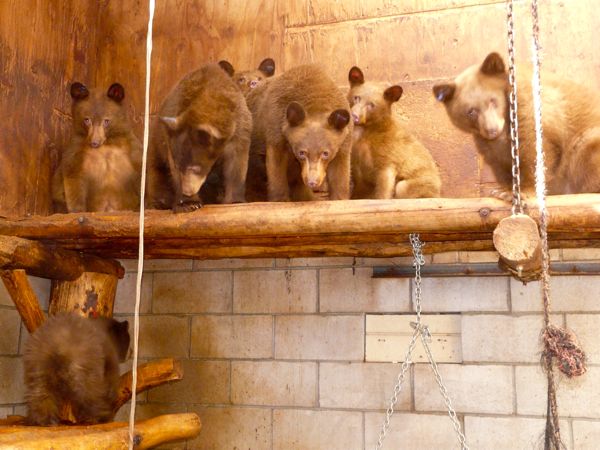
Lake Tahoe Wildlife Care is caring for a record number of bears. Photo/LTWC

At tonight’s LTWC board meeting, the volunteers of this nonprofit will be updated on the two people who have expressed interest in putting up what could be millions of dollars to buy a 3,700-square-foot house on 16-plus acres that back up to U.S. Forest Service property at the bottom of Old Meyers Grade, as well to pay for the work needed to make LTWC more than it is today.

“We haven’t heard that part yet,” Tom Millham said of what the investors might want in return for their cash. “None of that has been discussed yet. We are still in the initial stages of discussions, but at least we have someone now we can focus on.”

Millham would not discuss who the potential investors are so as not to jeopardize negotiations. He said one is from the region, while the other is out of the area.

He told Lake Tahoe News if things progress smoothly and quickly, the rehab part of the operation could move to the Echo Creek Estate location by the end of next summer. This is assuming a decision by the backers is made by the end of the year.

“We know we can rebuild these nine cages in a fairly short amount of time,” Millham said.

Ben Fagan has been sketching some designs for possible cages.

The next phase would be the education center.

“It would have an amphitheater for shows and things like that; a store for retail; café; upstairs will be the board room, offices and living quarters for the person living on site; and custodial,” Millham explained.

The amphitheater may seat up to 200 people. It would be used to show educational films about wildlife, the facility, be a place for lectures, and also be a venue for community gatherings.

The idea is one person or a family would live onsite. It will not be the Millhams – they’ve had enough of that experience.

Mike Dill with Aspen Environmental Services has been working with the Tahoe Regional Planning Agency. The original permit on the property was to have expired last month, but a two-year extension has been granted.

Millham relayed that TRPA and El Dorado County have been working cooperatively to make the wildlife center a reality at the Meyers location.

The need for this type of facility keeps increasing based on the numbers of animals LTWC rehabilitates each year. This season, which is usually wrapped up by now except for getting bears to hibernate, has been busy. The eight bears and six bobcats were each a record number.

The bears alone cost $3,000 a month to feed. That will taper off soon as they transition to hibernation.

“It’s not stopping. We got a red tail hawk on Saturday,” Millham said. Two golden eagles still remain, with the likelihood of one starting to exercise next week for release. The other is not likely to make it back to the wild so it will need to find another home.

One of the bobcats will also not return to the wild. It had become too comfortable around people. It’s next home could be Six Flags Marine World in Vallejo. Folks from that facility were in town Monday to take a look at the little guy.

While Lake Tahoe Wildlife Care has interested investors, the Millhams know it could fall through. That is why they are continuing to seek out others who may be interested in helping LTWC evolve. Then, there’s always the need for donations to keep the animals fed.

More info about LTWC is online – including webcams of the bears.


LTWC bobcats to continue rehabbing in Placerville

By Kaci Poor, Times-Standard

Chips, the bobcat kitten who attracted national attention after she was rescued by a Six Rivers National Forest Mad River Ranger District hand crew working the Chips Fire near Lake Almanor in July, has made a full recovery, a new friend and soon will have a new home.

Tom Millham, secretary and treasurer for the Lake Tahoe Wildlife Care, said the nearly 4-month-old bobcat has gained about six pounds and moved on from her diet of mushed mice to pork ribs, chicken thighs and baby chicks since arriving at the center in August.

”Chips is growing up to be just a normal little bobcat,” he said.

LTWC Executive Director Cheryl Millham said Chips, who survived the fire that burned tens of thousands of acres in the Plumas and Lassen national forests, got a new roommate in late September. Sierra, a male bobcat estimated to be about one week older than Chips, came to the care center after he was found orphaned in Lassen County.

With plenty of energy, Cheryl Millham said she hopes Sierra will show Chips how to be a “proper bobcat.”

Over one of the care center’s webcams, the two young bobcats can be seen pouncing and tumbling across the obstacles in the bobcat enclosure as they wrestle with each other. Chips, a female and younger, appears to hold her own as she playfully bats at Sierra.

Cheryl Millham said the young bobcat has fully recovered from the burns to her four tiny paws and an infection in her eyes since she was rescued by Mad River Hand Crew Superintendent Tad Hair, who said he found the young kitten as he was driving through a burnt swath of land on his way back to camp an Aug. 25.

”I got out of the truck, and I couldn’t believe it,” Hair said. “It was a kitten, a bobcat kitten.”

Hair said he trailed the kitten through the dust for a few minutes before he decided to intervene. He could tell something was wrong. Alone, seemingly dazed and with second-degree burns on her paws, the kitten whimpered as Hair approached.

”I thought at first she was blind,” Hair said. “Her eyes were full of soot and puss. I knew a mama cat would never have let that happen if she was around. At that point, I decided I had to do something.”

After unsuccessfully trying to locate the kitten’s mother, Hair contacted supervisors and brought the bobcat to the incident command post where officials arranged for her to be sent to the Lake Tahoe Wildlife Care.

Hair said he is glad to hear she is doing well and hopes to take his children down to visit the cat once she is settled into her new Placerville home.

Cheryl Millham, who served as Chips’ primary caretaker when she was first brought to the Lake Tahoe center, said she and her husband will be sad to see the bobcat leave when both young bobcats are transferred to the Sierra Wildlife Rescue Center in Placerville sometime this week. With temperatures dropping in Tahoe, the two bobcats will be more comfortable in Placerville and able to continue playing outside, she said.

Barbara Barker, a volunteer coordinator at the Placerville rescue center, said her organization is excited to receive the two young bobcats.

Barker said the pair will spend the winter under the care of a volunteer who specializes in rehabilitating foxes, coyotes and bobcats. She expects both young bobcats will be ready to be released back into the wild by spring.

”We can’t wait to get them,” Barker said. “We are all trying to do as much as we can to help out. There is just such a need to help these animals.”


Lawsuits stemming from inbound avalanches on the rise

By Devon O’Neil, ESPN.com

On Jan. 22, 2012, Christopher Norris, a 28-year-old father of two, went skiing with his father-in-law at Winter Park Resort in Colorado. The two separated during the day, planning to meet at the car for lunch and then resume skiing together. But Norris never showed.

After the lifts closed, Norris’ father-in-law reported him missing. Searchers working with headlamps found his body buried under two feet of avalanche debris later that night.

A subsequent investigation by the Colorado Avalanche Information Center (CAIC) confirmed the avalanche — by all accounts a fluke slide, running approximately 30 vertical feet off a small rock outcropping — was likely triggered from below while Norris was skiing in gladed terrain that was open to the public. The fact that the accident occurred during a time of high avalanche danger in the backcountry seemed innocuous, since the slide released inside the ski-area boundary.

Four months after the accident, Norris’ family filed a wrongful-death lawsuit against Winter Park. Among other claims, the suit alleges his death could have been prevented if Winter Park employees had properly safeguarded the run or closed it altogether, especially given the dangerous conditions in local backcountry terrain.

“To me it’s pretty simple,” says Michael Burg, a Denver attorney who is representing Norris’ family. “It’s their job to know if there’s a potential avalanche that could affect any of their runs. And they were on notice” due to the volatile local snowpack. A Winter Park spokesperson declined to comment.

Winter Park is not the only major resort currently facing a lawsuit in the wake of a deadly inbounds slide. Two others — The Canyons in Utah and Jackson Hole in Wyoming — are fighting similar suits resulting from fatal accidents on open slopes in 2007 and 2008, respectively.

Vail Resorts also is being sued for the avalanche death of a 13-year-old boy named Taft Conlin, who was killed on a closed run at Vail last winter. That slide occurred the same day as the deadly Winter Park slide, and there is significant dispute between Vail Resorts and the boy’s family as to whether the run had been sufficiently roped off.

The individual case details are unique, and each suit is in a different stage of the legal process. But together, they raise questions about the structure of the system and what ripple effects might follow a potentially precedent-setting outcome should one of the plaintiffs win. Not one of 15 people interviewed for this story, including experts who have been studying avalanches for 30 years, could recall that happening before.

Suing a ski area after an accident is, of course, nothing new — tens of cases are filed in this country each year. The practice is more prevalent in the U.S. than in Europe, where there is limited liability at ski areas.

Although people continue to injure themselves on exposed rocks and stumps, inbounds avalanche deaths — skiers or snowboarders who die in open, patrolled terrain, with no extenuating circumstances — have spiked in recent years. They’re still rare, but since 2005, inbounds slides have killed people in Nevada, California, Colorado, Utah, Idaho and Wyoming, totaling eight fatalities at some of the most famous resorts in America. That amounts to 24 percent of all inbounds avalanche deaths since 1950, according to records maintained by the CAIC — or double what the average would suggest over the same seven-year period. (In the 20 years before 2005, only three people died in inbounds slides.)

“We use explosives, ski cut the snow, pay close attention to the weather factors and monitor changes in the snowpack, but it’s not an exact science,” says Will Paden, a veteran ski patroller and avalanche expert at Squaw Valley, where a 21-year-old local man died in an inbounds slide on Christmas Day in 2008. “It requires intuition and years of training to get a feel for what Mother Nature is doing.”

Grant GundersonIf the avalanche danger is high, the safest place to be is at a controlled ski area. But even that is not foolproof.

The U.S. Forest Service leases land to most of the ski resorts in question, and as such, employs a cadre of snow rangers who approve each resort’s avalanche mitigation plan annually. Ken Kowynia, the Forest Service’s winter sports program manager for the Rocky Mountain region, doesn’t believe the recent wave of inbounds deaths represents a failure of the system. (The Forest Service is rarely sued despite its direct oversight of resorts.) “When you’re in a high-danger avalanche cycle, the safest place to be is inside a ski area,” Kowynia says. “But the fact is, these plans are not absolute.”

Some victims’ families abide by the same principle — not everyone sues. After David Conway, 53, was killed by a wet slab that ripped out of a mogul run at Colorado’s Arapahoe Basin in May 2005, the ski area renamed the run in his honor; his family declined to litigate. When 28-year-old Heather Gross died in a Snowbird, Utah, avalanche triggered by someone above her in December 2008, it happened on the first day the terrain had been open all season. An estimated 300 people had descended through the starting zone before it fractured. Later, her father was quoted as saying, “My wife and I don’t see Snowbird at fault unless there’s something egregious I’m not aware of, but I don’t see them at fault.”

The perceived fault line can be paper-thin. Thirteen days after Gross’ death, on Dec. 27, 2008, David Nodine, 31, died in an avalanche under similar circumstances at Jackson Hole. The run that fractured had been opened that morning for the first time all season, in the midst of the busiest week of the year. Resort ski patrol had conducted avalanche control on the run seven of the nine days leading up to Nodine’s death, including that morning. Numerous visitors had ridden over the fracture site without incident. To the casual observer, it seemed a simple freak of nature, nothing more.

But in the hours before Nodine died, two other inbounds avalanches caught and carried people in the same general area where his slide released. Both slides were reported to ski patrol — including one that buried a snowboarder leaving only his arm free — but according to sworn evidence filed in court and supplied to ESPN by Nodine’s family’s lawyers, the patrol declined to close the area, maintaining that the terrain was safe.

Nodine’s slide, less than an hour after the second reported avalanche, was witnessed by two patrollers and a local ski guide. They located Nodine under 7 feet of snow within two minutes and uncovered his face within eight, but he never woke up. He left a wife and unborn child.

Nodine’s lawyers argue that Jackson Hole Mountain Resort’s decision to open the terrain and then leave it open after the first two slides, despite considerable avalanche risk, amounts to “reckless decisions driven by profit.” They allege that the resort’s gross negligence — a subjective term that is more egregious than “ordinary” negligence — supersedes the liability-release form Nodine signed when he bought his season pass.

According to a motion to have the case dismissed that was filed by JHMR’s defense lawyers, Nodine’s liability form read in part: “I agree to release, discharge, waive, save and hold harmless, indemnify and defend JHMR … from and against any and all claims … brought under any theory of legal liability, including negligence, arising directly or indirectly out of my use of the … ski area … The above release includes, but is not limited to, any and all damages occasioned in the event of … death … however caused.” Among the inherent risks Nodine acknowledged: “Avalanche.”

An overwhelming majority of liability cases settle before going to trial, and that possibility remains. In a phone interview, Nodine family lawyer Andy Payne said his team is seeking “multiple millions” in damages. An attorney representing JHMR declined to comment.

Read the whole story


Opinion: Skiing officials are wrong in denying Vonn’s request

By David Trifunov, Global Post

Saying it’s written clearly in the rules – and clearly not understanding the spirit of the request – skiing’s international governing body on Saturday denied Lindsey Vonn’s request to compete against the men.

The American World Cup champion had asked FIS to let her compete in the men’s World Cup downhill skiing race later this month at Lake Louise in Alberta, Canada.

“The council respected Lindsey Vonn’s proposal to participate in men’s World Cup races and confirmed that one gender is not entitled to participate in races of the other and exceptions will not be made to the FIS rules,” an official statement said, according to AFP.

FIS, somehow, has been caught unprepared.

Golf has experimented with allowing women – Michelle Wie and Annika Sorenstam – lineup alongside the men. Danica Patrick continues to challenge men on the racetracks of NASCAR after a successful Indy Car career.

Countless others have already broken that stereotype – Billie Jean King in tennis and golf’s Babe Zaharias being the most famous. Heck, even ice hockey allowed men to blast frozen pucks at Manon Rheaume’s head in an NHL exhibition game.

Skiing should have seen this coming, you’d think. We’re moving past the 24-hours news cycle into an age where social media and smart phones make exchanging views and news instantaneous.

FIS said it considered the request and, not slighting Vonn’s skills or accomplishments, flatly denied it.

They could’ve said tried to say men’s racecourses are too dangerous for women (ignoring Vonn’s two Olympic medals and 53 World Cup wins) but FIS instead tried to say it’s just not in the rules.

Wait, isn’t racing against 40-odd other cars at 200 mph on a concrete oval more dangerous?

Sure, she’s looking for a new challenge after dominating the women’s World Cup races these last few years. Vonn won the women’s downhill championship from 2008 through 2010 and again last season, and has won the 2010 Winter Olympic downhill in Vancouver.

But this is more about, “Why not? What are we waiting for?”

Organizers of the Lake Louise race said they’d happily welcome Vonn. There’s little danger for her there, anyway. She’s won nine of her 26 World Cup downhill races on the resort’s slopes.

“I saw it as a great opportunity to raise the profile of the sport by attracting interest from people who do not normally follow ski racing, particularly in North America,” Alpine Canada president Max Gartner said.

“It would have been interesting to see how she stacked up against the best male racers in the world. Lake Louise is the perfect venue to have that comparison because Lindsey has as much experience on the mountain as many of the men have had.

What makes the whole situation worse, though, is that FIS invited Vonn to apply for a “forerunner” position.

Forerunners test the racecourse before the athletes compete for real.

Suggesting Vonn become a forerunner would be like Yahoo telling Marissa Mayer, “thanks, but our CEO position has been filled by a man, but maybe you want to work in our marketing department?”

Face it FIS, this is going to happen sooner rather than later.

Change your rules now, because the world is changing quickly around you.


Backcountry skiing can raise money for Sierra Avalanche Center

The 2012-13 Tahoe Backcountry Vertical Challenge continues its third year as Lake Tahoe’s communitywide fundraising initiative to benefit the Sierra Avalanche Center, a vital yet underfunded resource for the Tahoe backcountry community.

Participants may register for free online to log human-powered, backcountry vertical travel. When the cumulative goal of 15 million vertical feet of human-powered uphill travel is reached, Alpenglow Sports will make a $3,000 donation to the Sierra Avalanche Center.

This is the opportunity for local backcountry enthusiasts to give back to the Sierra Avalanche Center at zero cost. Every single foot of uphill travel matters. No number is too small. The event is designed to motivate, inspire, and bond the Tahoe backcountry community around a key resource for all methods of backcountry travel and recreation.

The event will run from Nov. 15, 2012, through April 30, 2013, and data will be recorded online.

As extra incentive, podium prizes will be awarded for the top three men and women. Throughout the challenge any skier or rider who registers data is also eligible for a free bi-monthly raffle. Title sponsors include Dynafit and Black Diamond, with additional help from Scarpa, G3, Marmot, Suunto, Clif Bar and Smith Optics.

If you would like more information about this event, call (530) 583.6917 or email brendan@alpenglowsports.com