Storms provide water for Yosemite falls to flow again

By Dana M. Nichols, Stockton Record

SAN ANDREAS – After an unusually long stretch with no water, Yosemite National Park’s beloved waterfalls are flowing again, the park announced Monday.

Blame the record dry summer and a fairly dry winter last year for Yosemite Falls drying up in July, several months earlier than usual.

Upper and Lower Yosemite Falls as well as Bridalveil and other waterfalls are flowing again just before Thanksgiving, thanks to storms that dumped almost 2 inches of rain over the weekend, park officials said.

“After such a dry period, seeing the waterfalls flowing again is spectacular,” Yosemite National Park Superintendent Don Neubacher said.

The park recorded one of its driest years on record, and the driest winter since 2007.

Park staff said the recent storms also brought the first significant snowfall of the season at altitudes higher than 8,000 feet. Park scientists said the storm helped saturate extremely dry soils.

The flow of the Merced River, measured at the Happy Isles Gauging Station, had dipped below 4 cubic feet per second in October.

Such a low level is rare. The storm system over the weekend has not yet done much to boost Merced River flows.

Still, it did dump enough snow to make back country travel difficult. Tioga Road and Glacier Point Road within the park remain closed.

Unsettled weather is expected the rest of the week, with a chance for more rain and snow.


No changes for now to fishing campground at Webber Lake

By Bill Lindelof, Sacramento Bee

A land trust will continue to lease a fishing campground at Webber Lake for four more years, even though the public will be able to access nearby Lacey Meadows.

It was announced last week that the Truckee Donner Land Trust and the Trust for Public Land paid $8 million for property that will protect Webber Lake and Lacey Meadows at the headwaters of the Little Truckee River.

The Truckee Donner Land Trust will own and manage the land. At the request of the family that sold the land, the trust will continue to lease the fishing campground to the current caretakers for four more years, after which the lake will be open to the public.


Special weekend to teach newbies to ski, snowboard

North Lake Tahoe ski resorts shorten the learning curve with those new to skiing and snowboarding by offering a special savings weekend to get you cruising down the slopes in no time.

The 13th annual Learn to Ski and Board Weekend is Dec. 8-9. The event is geared for beginners, costs only $30 and includes an all-day beginner lift ticket, group lesson and gear rental.

First-timers have their choice of six resorts to learn at: Alpine Meadows, Boreal Mountain Resort, Granlibakken Resort, Homewood Mountain Resort, Squaw Valley and Sugar Bowl Ski Resort.

Several resorts will also offer guests a bounce back offer with savings good on a return visit.

Reservations are not required, but participants should arrive early. Lesson packages can be purchased at each individual resort the day of lessons. Students should contact resorts directly for resort-specific information.

Some restrictions apply.

For more information about the Learn to Ski and Board Weekend, go online.


Youngsters turn out to compete in Turkey Trot

Nearly 100 people participated in the 2012 Turkey Trot Fun Run last weekend.

The free event for children ages 3-13 was put on by South Lake Tahoe.

A total of 94 participants turned out for the Turkey Trot Fun Run and racers ages 3-4 and 5-6 competed in the 25-yard dash, ages 7-8 raced 50 yards, ages 9-10 ran 100 yards, and ages 11-12 competed in the 200-yard dash.

Results:

Ages 3-4 Females Place Ages 3-4 Males Place
Kaia Burby 1st Rowan Gower 1st
Sophia Nielson 2nd Ralston Pierce 2nd
Teagan Bailey 3rd Cruz Hernandez 3rd
Ages 5-6 Females Place Ages 5-6 Males Place
Allana Hernandez 1st Marcus Vidaurri 1st
Lexie Allison 2nd Spencer Jones 2nd
Sydned Irwin 3rd Noah Lyons 3rd
Ages 7-8 Females Place   Ages 7-8 Males Place
Leilani Camepanis 1st William Dawes 1st
Sofia Wagner 2nd Matteus Sokulsky 2nd
Mackenzie Nealis 3rd Nico Wagner 3rd
Ages 9-10 Females Place Ages 9-10 Males Place
Sydney McLeod 1st Josh Bull 1st
Nina Seeman 2nd Oscar Marzocco 2nd
Jamie Johnson 3rd Derek Robbins 3rd
 
Ages 11-12 Females Place Ages 11-12 Males Place
Samantha Vidaurri 1st Ethan Nelson 1st
Caleb Caramazza 2nd
Aaron Johnson 3rd


Endurance athletes using caffeine to keep them going

By Murray Carpenter, NPR

The Ironman World Championship in Kona, Hawaii, is an extreme event — a 2.4-mile swim, followed by a 112-mile bike ride, topped off by a marathon.

Throughout the event, racers drink plenty of fluids and eat energy bars or gels. Most also take a performance-enhancing substance that is legal and effective — caffeine.

“While I’m racing, caffeine is actually a pretty important part of my day, particularly in the Ironman, where it’s such a long race,” says Sarah Piampiano, a professional triathlete.

She integrates calories and caffeine into her race-day diet using energy gels. Each contains 50 milligrams of caffeine, which Piampiano calls a “shot.”

“Before the race, I typically take one gel that has one shot of caffeine in it, and then when I get onto the bike, each hour I take one shot of caffeine,” explains Piampiano. In the last half of the marathon, she ups her dose to two shots every 20 minutes.

“Caffeine has been well-known to be a beneficial drug to use during sport. It’s been studied for many years over a variety of different types of sports; it will improve your performance,” says Matthew Ganio, director of the University of Arkansas Human Performance Laboratory.

But, he says, it is important to take the right dose.

“The general consensus is 3 to 6 milligrams per kilogram of body mass, and it can be quite a bit. The example being, an 80-kilo individual needing 6 milligrams per kilogram body mass — that’s four strong cups of coffee,” says Ganio.

But instead of guzzling coffee, many athletes rely on products, such as energy gels, that allow them to better quantify their caffeine. Brian Vaughan is CEO of GU Energy Labs, which makes gels that blend carbohydrates, amino acids, electrolytes and caffeine.

“The top-end athletes, the pros, want to be able to meter out caffeine during the course of an endurance event. It’s always nice to have that second wind, late in the race, where you can energize the mind, stimulate the mind, with the central nervous system response of caffeine,” says Vaughan.

Some researchers urge restraint. University of Connecticut doctoral candidate Evan Johnson says caffeine works best when used judiciously.

“You find a lot of people who constantly ingest caffeine throughout the day and therefore need alcohol or some sort of sleep aid to get to bed, and then in the morning are so groggy they need caffeine again,” Johnson says. He calls it a “vicious cycle of supplementation.”

That’s what happened to players on England’s soccer team. They took caffeine pills to amp up for a recent World Cup qualifying game and then needed sleeping pills to wind down.

Some athletes say they avoid caffeine because it makes them jittery, or it bothers their stomachs. Others, like triathlete Sam Gyde of Belgium, take a less systematic approach.

“I have a very busy life and a very busy work, and I train a lot, so I just drink lots of coffee so I am naturally very caffeinated. During training and racing, I use gels, which contain caffeine, and it’s not with any purpose, but I’m more or less like a heavy caffeine user,” says Gyde.

It seems to work for Gyde; he has won his age group twice at Kona. And you may not have to be an Ironman to benefit. A recent Australian study showed that caffeine enabled sedentary men to work out more vigorously.

The side effects of ingesting so much caffeine are still being elucidated, however. The Food and Drug Administration announced last week that the agency is investigating several deaths that could be linked to energy drinks.


South Shore ski club looking for youth participants

Zephyr Cove Ski Club, a nonprofit organization comprised of parent volunteers, is looking for youth who want to learn how to ski or snowboard.

ZCSC is associated with Douglas County Parks and Recreation and the Douglas County School District.

The program is open to grades K-12 and all ability levels. It includes transportation to and from Heavenly’s Boulder lodge, optional ski or snowboarding lessons in the morning, and a lift ticket for the entire day. All riders 8-years-old and younger must be picked up and supervised by an adult or other authorized person after morning lessons.

The program begins Jan. 12 and runs for six Saturdays (excluding holiday weekends).

For questions or to sign up, call Sally O’Brien at (775) 588.7233.


Officials using public input to prioritize how to improve Lake Tahoe Nevada State Park

By Anne Knowles

CARSON CITY – Officials are considering a whole menu of changes in Lake Tahoe Nevada State Park and will prioritize them based, in part, on public input.

The Nevada Division of State Parks received input on Sand Harbor, Cave Rock and Spooner Lake backcountry at its second public meeting on the Lake Tahoe Nevada State Park general management plan update.

About a dozen people showed up here last week to discuss ideas for improving the park, including redesigning the boat launch at Cave Rock, creating additional access for kayakers at Sand Harbor and the future of recreation at Spooner Lake now that the concession for cross-country skiing and mountain bikes has closed.

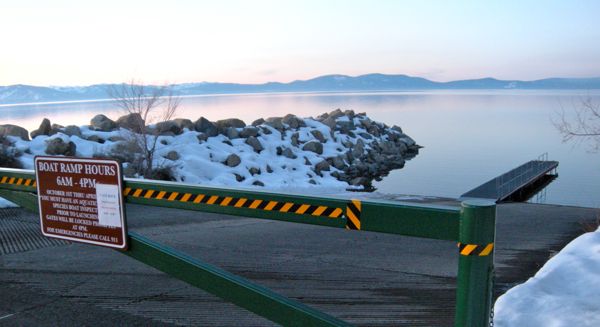
At Cave Rock, for example, the department is looking at reducing congestion at the boat ramp by possibly adding slips to expedite launching; building a ramada for picnic tables and barbecues; redrawing the parking lot to lengthen spaces; and adding acceleration and deceleration lanes for vehicles at the entrance.

It’s possible that slips would be added at Cave Rock. Photo/LTN file

At Sand Harbor, the parks division’s suggestions include making the south beach area more accessible for kayakers; relieving congestion at the boat ramp; adding picnic seating for groups; and making the whole area easier to navigate for visitors with disabilities.

“That place is loved to death,” said Steve Noll, principal at Design Workshop, discussing the challenges at Sand Harbor. His firm is working with Ascent Environmental, the main engineering consultant on the park’s general management plan.

A visitor center may be built at Spooner Summit, Noll said. The division is considering three locations: off Highway 50 where 50 meets Highway 28; and two spots on Highway 28, one at the junction of 50 and 28, on the opposite side of 28, and another farther down 28, on the lake side of the highway. Each location has its pros and cons, said Noll.

Jay Howard, parks supervisor, said the division is working on getting another concession in Spooner. But for now, he said, the division plans to plow the parking lot and may use skimobiles to clear some trails for skiers. Previously, Max Jones cleared the trails as part of his work as the concession operator.

“We’ll do our darnedest to keep it open,” Howard said.

Jones said, “I’ve had the concession for 27 years, but it’s hard to rely on it in the winter. I’m tired of stepping up to the winter roulette table.”

Jones said the concession was long a struggle because of unpredictable snowfall, but he finally decided to give up the business when the parks division said it was raising his fees.

“Last year we were open 30 days in the winter,” Jones said. “I can’t make a go of it.”

Jones now operates the Tunnel Creek Café in Incline Village and plans to open a 1,000-square-foot mountain bike shop on a parcel behind the restaurant. He said he’d continue to run a shuttle busing runners, bikers and hikers between Incline and Spooner, and to work with the parks division, on a volunteer basis, to develop bike trails.

“I’m here about the continued winter use of Spooner,” said Jennifer Roman, a Minden resident attending the meeting, who said she skis at Spooner and kayaks out of Sand Harbor. “And the boat launch area (at Sand Harbor) gets pretty packed sometimes.”

Dave Morrow, administrator for the state parks division, said he and Howard sit on a committee overseeing the plan to improve the Highway 28 corridor from Crystal Bay to Spooner Lake, and are working to coordinate the park’s plan with the highway proposal.

The Highway 28 plan involves a dozen state and federal agencies with the goal of making the recreational areas along the East Shore of the lake safer and more accessible for visitors.

Funding is an issue, though, and both plans are long-term roadmaps, not immediate checklists of changes, Morrow said.

“We want people to know that we will use this as guidance,” Morrow said. “Trouble is people make comments and think something is going to be done right away. Where we go with this in the future depends on funding.”

The division is accepting public comment on the update until Nov. 30. Maps and details are available at the division’s website, and comments can be emailed to Dana Dapolito, conservation staff specialist, at ddapolito@parks.nv.gov.

At its first meeting in March, the division said it planned to produce a draft plan by year-end. But a draft is now likely in March or April next year, with time for further public comment then.


Acreage near Truckee bought by public land trusts

By Bill Lindelof, Sacramento Bee

Two land trusts have acquired an alpine lake, along with biologically and historically significant property north of Truckee, and plan to open the land to the public for the first time in more than a century.

The Truckee Donner Land Trust and the Trust for Public Land announced Nov. 16 that they have purchased the 3,000 acres of property for $8 million from a conservation-minded owner, a press release states.

The acquisition includes the 260-acre Webber Lake at the headwaters of the Little Truckee watershed. The other major component of the purchase is Lacey Meadows. The meadows near Webber Lake provide critical habitat for several species.

“This property has it all: 1,900 acres of pristine sub-alpine meadow, California history with Henness Pass Road and Webber Lake Hotel,” said Donner Lake Trust Executive Director Perry Norris, “and critical habitat for a number of threatened or endangered species.”

The property will be opened to the public for the first time in more than 100 years when the snow melts in the spring.

“This will provide exceptional recreation opportunities,” said Dave Sutton, Northern California director of the Trust for Public Land in the press release. “It was the largest piece of unprotected private land in the entire Little Truckee river watershed.”

The property was purchased from Clifton and Barbara Johnson. The family owned the property for almost a century, using Lacey Meadows for summer sheep pasture.

The sheep were herded from the Johnson ranch near Roseville. The the trip took 15 days into the mountains and 10 back to the valley.

“The beautiful lands we have worked on and cared for are, at long last, protected for future generations to enjoy forever,” said Barbara Johnson.

Highlights include Webber Lake, stocked with trout as far back as the 1800s, Henness Pass Road, which was once a heavily traveled emigrant route, and the 1860s-era Webber Lake Hotel, once a stagecoach stop.

The property also is home of animals protected by state law, such as the pine marten and the Sierra Nevada red fox. Other animals include black bear, mule deer, mountain lion and birds such as the bald eagle and the endangered willow flycatcher.

Flora includes exceptional wildflower displays in Lacey Meadows, which include lupine, larkspur and alpine buttercups.

The Truckee Donner Land Trust will own and manage the property. Near-term plans include establishing new trailheads along Henness Pass Road and Meadow Lake Road, paths that would provide non-motorized access to Lacey Meadows.


Winter weather advisory for Lake Tahoe

A winter weather advisory is in effect from 4pm Saturday through 10am Sunday in the Lake Tahoe area.

Snow levels are expected to start high, but drop to lake level by Sunday morning.

According to the National Weather Service, the heaviest period of snow will be between 10pm and 6am. Above 7,000 feet there could be 8 to 12 inches and up to 6 inches down to 6,500 feet in that time period. More snow is expected later Sunday morning.

Expect roads to be slick because of the rain-freeze effect, making travel difficult.

— Lake Tahoe News staff report


Heavenly seeks to expand summer operations

Heavenly Mountain Resort wants to start expanding its summer operations next year, with the goal of having the projects in the ground in the next building season.

Before they can move forward the U.S. Forest Service must sign off on the proposal. Public comment is being taken by the Lake Tahoe Basin Management Unit.

The projects are consistent with the improvements identified in Heavenly’s Master Plan Amendment.

Additions would include a climbing wall, zipline canopy tour, adventure course, aerial challenge park and zipline center.

The Adventure Peak climbing wall would be replaced with a larger, realistic three-dimensional rock structure approximately 30-feet high adjacent to the Tamarack Lodge. A Discovery Forest Zipline Canopy Tour is proposed for the forested area between Tamarack Express lift and the Big Easy trail. The Discovery Forest would provide a tree-bound zipline and canopy tour activities that would incorporate environmental education information designed for children. This would require selective tree removal.

A proposed Bear Cave Challenge Course adjacent to the ski school near Tamarack Lodge would include a multi-level climbing structure approximately 40-feet high. Selective tree removal would be required.

Boulder Cove Challenge Park would be built across from the base of the gondola stairs and would include a self-guided challenge activity that consists of a series of vertical wooden columns, platforms and rope walkways/bridges approximately 30-feet high. Limited tree removal and limb removal of existing trees would be required.

A new Zipline Center would be constructed in the area between the existing tubing hill and the Big Easy lift and would include four ziplines approximately 1,000 feet in length. Limited tree removal would be required and low voltage electrical and communication lines would be installed. A total of 40 trees would be removed for the entire project.

Comments should be turned in by Dec. 21. For more information on the proposal, contact Jonathan Cook-Fisher at (530) 543.2741 or email jcfisher@fs.fed.us. A map of the proposed project area is online.