Judge rules against USFS regarding off-road vehicles

By KCRA-TV

A federal judge has ruled that the U.S. Forest Service failed in its management of forest trails used by off-road vehicles in the Stanislaus National Forest.

U.S. District Court Judge Kimberly Mueller ruled on Friday that the Forest Service didn’t minimize damage to the environment caused by the vehicles.

In issuing the ruling, the judge did not order the closing of any specific off-road vehicle trails.

The Stanislaus National Forest is located between Lake Tahoe and Yosemite National Park. The forest has a web of roads, trails and other areas designated as open to off-road vehicles.

Conservation groups took legal action in August 2010 to try to stop the Forest Service’s approval of an additional 137 miles of off-road vehicle routes.

The judge ordered a hearing on Feb. 15 to consider remedies for the management plan.


Ski resort clinics keep people out of hospital ER

By Kathryn Reed

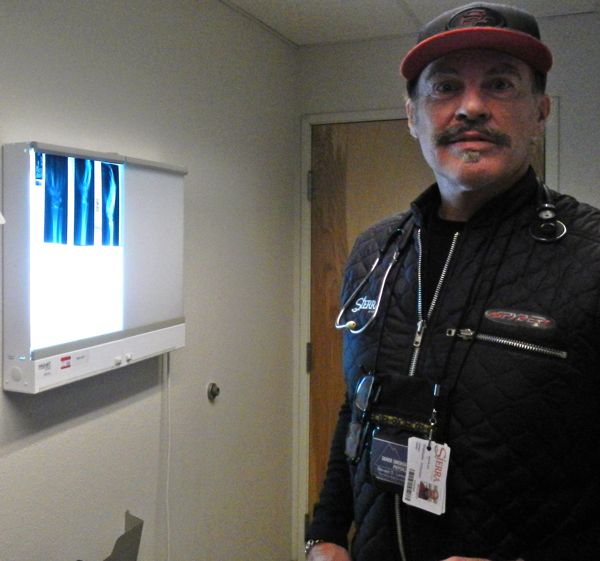
TWIN BRIDGES – An X-ray of a wrist is on the light board. The patient is being seen in one of the three exam rooms. Out front all of his vitals are inserted into a computer.

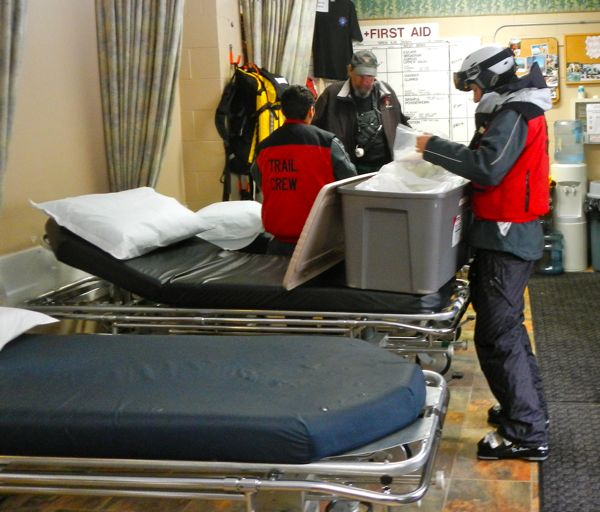
But this is no ordinary emergency room. This is where injured skiers and snowboarders come to be treated at Sierra-at-Tahoe.

It is one of three clinics Barton Health medical personnel operate. The others are at Heavenly and Kirkwood mountain resorts. They are staffed with an emergency room doctor, registered nurse, technician and radiologic technician.

Dr. Steve Leman considers Sierra the model ski clinic based on how it is set up and operates. Barton’s team works closely with Sierra’s ski patrol. Patrollers assist people with less serious injuries in the front area. They do more first aid work as trained emergency medical technicians.

Steve Leman is the doctor on duty Jan. 6 at Sierra-at-Tahoe’s medical clinic. Photos/Kathryn Reed

The three exam rooms Barton uses once were the ski patrol locker rooms. Dispatch is still there so everybody is hearing the same calls.

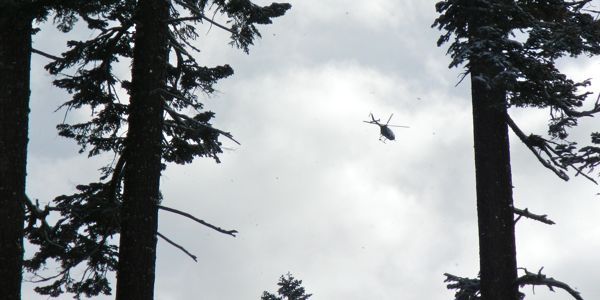
However, it is a patroller who decides when CalStar is called in to airlift someone off the mountain. Pilots have three locations they may land at Sierra. On Sunday a chopper is called to take someone out who has a head injury.

But Leman and his crew also treat head injuries.

“If we can stabilize them, they can go by private car to the hospital for a CAT scan,” Leman explained during a tour of the clinic Jan. 6.

He said there used to be so many head injuries with all of them taken by ambulance to Barton Memorial Hospital. This would present a problem for the rest of the community because the ambulances were tied up going to ski resorts – sometimes stuck in long holiday or weekend traffic – and unable to respond to other calls.

Leman said the medical clinics at the ski resorts mean fewer people going to the hospital’s emergency room.

With the 10 to 20 patients each clinic sees a day on peak weekends and Barton’s ER full at those times, “we would be in disaster mode,” Leman told Lake Tahoe News, if the skiers ended up at the hospital. That is why it’s imperative to have the clinics at the resorts, he added.

Barton staff was at Sierra all through the holiday period, while normally they are at the clinic just on weekends.

Sierra ski patrol operate the first aid clinic adjacent to Barton’s operation.

Even though skier visits are up 900 percent compared to a year ago at this time for Sierra, the number of injuries has not increased anywhere near that percentage. The soft snow is the big contributing factor to keeping people out of the clinic.

But their info is easily accessible. All of their data is entered into a computer that is part of Barton’s system, so it’s all centralized.

Plus, people can leave with their X-rays to take to their physician.

Leman, who used to be on the ski patrol at Sierra in the 1970s, said there was a time when someone would come up via bus, hurt themselves, be hospitalized and then need their parents or someone to drive to Tahoe to get them. With the clinic, pain meds are available to make the ride back tolerable, docs can stabilize many injuries, and they have the X-rays to know if someone needs more immediate care. This can mean the person travels back with their buddies instead of needing someone to come get them.

“They like me. I’m the lady with narcotics,” Sandy Wirth, registered nurse, says. She shakes her head though; wishing snowboarders would wear wrist guards.

CalStar flies into Sierra on Jan. 6.

Wrists and shoulders are what snowboarders injure most, while it’s knees for skiers. And the harder the snow, the more injuries there are. However, fresh, deep powder can increase knee injuries.

It’s cheaper if people go to one of the clinics at a ski resort because the charges are nowhere near the hospital’s ER costs. Plus, it’s faster.

“We are able to serve most patients at the resort and in most cases deliver definitive care, which saves them a long, painful drive to the hospital,” Warren Wither, medical director of emergency service at Barton Memorial Hospital, said. “The cost is lower for patients than at the hospital.”

It’s not just skier injuries the Barton crew treats.

“They help us with seeing employees with colds or flu,” John Rice, Sierra’s general manager tells Lake Tahoe News. “A lot of kids are away from home. They can come in and get a script.”

Wirth says she’s seen skiers who have had an allergic reaction, needed sutures and have let their sugar levels get too low if they are diabetic. While it’s considered a clinic for skiers and snowboarders, it is a medical clinic for anyone who needs it.


Controlled burn scheduled in Incline area

North Lake Tahoe Fire Protection District’s fuels crew will continue the hazardous fuels reduction project in the Galena and Davis Creek Park areas starting Jan. 8 and continuing through the week of Jan. 14, weather permitting.

This project is a cooperative effort between North Lake Tahoe Fire Protection District, Truckee Meadows Fire Protection District, Washoe County Parks Department and Nevada Division of Forestry. The debris or slash piles were created as a result of a hazardous fuels reduction and defensible space project over the last year to help minimize the risk of wildland fires in the area.

The project’s safety plan calls for cancellation of the controlled burning based on weather conditions each day, such as significant wind activity or precipitation.

The burning piles are expected to produce smoke that may be visible throughout the area. Smoke resulting from the pile burns will affect the surrounding areas for approximately 24-36 hours. People who are smoke sensitive are advised to please stay inside and close their windows and doors as much as possible until the smoke dissipates.

For further information, call (775) 831.0351, ext. zero.


Crystal Bay Club owner buys auto racing’s SCORE International

By Autoweek

Culminating a deal that has been in the works for the last year, Sal Fish, longtime president of desert racing sanctioning body SCORE International, has sold the organization to racer and businessman Roger Norman. The sale marks the culmination of a lifetime of work for the seller.

Fish got his start in desert racing when he was still in the publishing business. After a disastrous though entertaining attempt at the Baja 1000 as a driver in the early 1970s, he was hooked. He learned the race sanctioning trade under SCORE founder Mickey Thompson and took over the organization shortly afterward. Fish, who is 73, has run it for most of SCORE’s 39 years.

“Next to my wife Barbara, SCORE has been the love of my life, my passion and I have left my blood, sweat and tears in the desert of Baja California, Mexico, and in the USA in Arizona, California and Nevada,” said Fish in a SCORE release. “I believe fervently that this is the time to pass the torch to the next generation and Roger Norman is a great racer with a big vision, superb business acumen and I know I leave my ‘baby’ in good hands. I know I’ll wake up tomorrow wondering what did I do, but I have had a phenomenal run and I wouldn’t change a thing. I have been able to grow this sport to the level it has reached and now Roger and his team will take it to the next level. I have no regrets and I leave knowing I have left a good legacy for the sport to continue to move forward in for the next 40 years.”

New owner Norman comes from a racing family. His father Don entered cars in IMSA races, according to Norman’s website. His stepfather is the late Unlimited hydroplane racer Bill Muncey. Roger Norman’s first race was in a Class 1 buggy in the 1996 Best in the Desert Vegas-to-Reno. Within two years he was part of the legendary Rod Hall’s off-road team. From there he ran in the Baja Challenge class before forming Norman Motorsports in 2008 to race in the showcase Trophy Truck class. As an organizer and sanctioning body head he resurrected the old High Desert Racing Association (HDRA) last year.

Norman owns, among other properties, the Crystal Bay Club Casino at Lake Tahoe.

“For me it’s a dream come true,” said Norman regarding his acquisition of SCORE. “Sal Fish is the godfather of this sport and it is an honor to move forward with the incredible legacy he has left our sport with SCORE International. We have been talking about this for over a year, but I knew I had to learn all sides of the sport before I could be in a position to make a solid offer to Sal.

“I have tremendous respect for the future of the sport and the leadership role of SCORE International,” Norman said.

Norman has big plans for the sport, announcing three separate championships for 2013: HDRA, SCORE, and a new world championship. The world championship will be comprised of three HDRA races in America and three SCORE races in Baja. The World Championship is the culmination of six of the seven races of the HDRA and SCORE race series with the Tecate SCORE Baja 1000 (Nov. 14-17, 2013) in Ensenada, Mexico as the deciding factor with double points. The first race is the HDRA South Point Vegas 250, Jan. 12 in Jean, Nev.

Norman also has big plans for televising the sport.

“Races will be nationally televised in the U.S. and we will provide greater details of our plans over the next two weeks,” Norman said. “The vision of a world championship will be monumental for our sport. We will look forward to honoring the legacy of SCORE and the colossal contribution to our sport by Sal Fish at the SCORE Awards Night on Jan. 12.”

The awards night will be Jan. 12 at the Hyatt Regency Hotel and Spa in Newport Beach honoring the Champions of 2012 and ushering in a new and exciting era for SCORE International.


Respect for Mother Nature helps ensure safe snow experience

By Debbie Arrington, Sacramento Bee

Snow – so beautiful, so tempting, so dangerous.

Drawn by its sparkling presence, thousands of outdoor enthusiasts will trek to the Sierra Nevada this season to experience snow’s magic.

But with more than 16 feet of snow at many resorts so far, this season already has had tragic reminders that the mountains must be respected at all times.

An experienced snowboarder at Donner Ski Ranch and a ski patrol member at Alpine Meadows were killed in separate Christmas Eve avalanches. Earlier in December, a stranded motorist died in deep snow near Burnside Lake while trying to reach help.

“Mother Nature always calls the shots,” said Lel Tone, a longtime ski patrol member at Squaw Valley. “We do our very, very best and work hard to keep people safe, but there can be really hazardous conditions.”

The death of Bill Foster, a 53-year-old ski patrol veteran, hit home for many working in the industry. He was caught up in an intentional avalanche – triggered by explosives as a safety measure – that started higher and wider than expected.

According to reports, Foster had proper safety equipment. Rescuers found him just one minute after the avalanche and pulled him free in under eight minutes, but he did not survive massive injuries from the crushing snow.

“It’s so incredibly sad to lose a fellow ski patrol member,” Tone said. “It’s such a painful thing.”

Recently, Tone led a women’s avalanche clinic at Squaw Valley to help prepare fellow skiers for such dangers. Such safety education has become as important a part of snow sports as gloves and sunscreen. Several ski areas will host events this month as part of National Safety Week. Squaw Valley and other resorts also host free avalanche workshops. So do guide and gear companies. Some schools – such as Sierra College in Rocklin – offer snow-related safety courses, too.

“Safety – it’s something you can’t just say once,” said Troy Hawks, spokesman for the National Ski Areas Association. “You need to repeat the message in every form and fashion.”

Constant safety reminders nudge snow lovers to think before they swoosh.

“The No. 1 rule of our code of responsibility is ‘Always stay in control,'” Hawks said. “That means stay focused. That’s why there are safety reminders everywhere.”

Marking its 50th anniversary this winter, the NSAA has focused on basic safety initiatives such as helmets. Efforts have paid off. Two-thirds of all skiers wear helmets, Hawks said. Among children age 9 and under, 91 percent wear helmets while skiing or boarding.

Awareness of changing conditions can also play a role in staying safe. Roads can quickly become icy. Cars can become stuck or buried in snow.

“You’ve got to be really respectful of the weather at all times,” said Mary Bennington, executive director of the Tahoe Rim Trail Association. “It can change in a hurry.”

On Jan. 12, the Tahoe Rim Trail Association will host National Winter Trails Day at Tahoe Meadows with several safety clinics. Demonstrations include survival equipment and techniques such as avalanche beacons and building of a snow shelter. Geared for the whole family, the event also will have guided snowshoe hikes.

“We want people to be safe,” Bennington said. “People come up – not for skiing, but just to play in the snow. We see so many people come up here for a snow day totally unprepared.”

If your vehicle does become stranded, Bennington suggests that you stay put.

“Rescuers will spot your car before they see you,” said Bennington, who carries emergency supplies in her car including warm clothes, food, water and a blanket.

Timing is everything; that includes snow safety. Sunny, windy days after heavy snowstorms can unleash an avalanche.

“When you have those conditions, layers develop in the snow and it can set up for avalanches,” Bennington said. “It’s like little ball bearings between the layers. It can come down in a hurry.”

Avalanches killed 34 people in the United States last winter. About 90 percent of victims triggered the avalanche. Three out of four avalanche victims suffocate. The other 25 percent are crushed to death by snow.

“Fresh snow can look light and airy, but when it compacts, it’s very heavy,” Bennington said. “After an avalanche, it solidifies.”

Every second counts in snow survival. According to a recent study, the survival rate for individuals completely buried in an avalanche is about 40 percent after 15 minutes. Those survival odds drop to 25 percent after 30 minutes.

Those same survival figures can be applied to snow-immersion accidents such as slipping into a “tree well,” an area of loose snow around the trunk of a tree that’s otherwise enveloped in deep snow. Branches keep snow from accumulating close to the trunk, but create a treacherous hole.

Depending on the surrounding snowpack, tree wells can be 20 feet deep. Their victims often fall into these icy traps head first. According to another study, 90 percent of skiers or snowboarders who fall into tree wells can’t free themselves.

“Tree wells can be particularly treacherous for snowboarders,” Hawks said. “They can’t release their equipment and they’re upside down.”

Since 1990, 15 people have died in California from tree well accidents at ski areas, more than any other state. Most of these accidents happen in late morning as skiers and boarders – looking for fresh snow – edge closer to the trees. And experts warn not to count on a cellphone to call for help if you’re in trouble; coverage is spotty at best in most mountain areas. And that phone may be in a pocket you can’t reach.

Instead, make sure to always stay in visual contact with a partner – never lose sight.

“It’s the old buddy system,” Bennington said. “Always have a partner.”


Cross country skiing — no need to pay, travel far

By Kathryn Reed

MEYERS – If you don’t like to break trail, wait a day or two after a snowstorm and it’s possible snowmobilers will have laid down a path that is better than what fellow human-powered recreationists have done.

Those sled tracks are wide enough to find your own groove, whereas someone else’s skis may be too wide or narrow to adequately follow.

Last weekend we found great snowmobile tracks to follow in Meyers just off Highway 50.

I’ve never been one who likes hills on cross country skis, so this flat area was ideal. Plus, the snow was the perfect consistency – whether in powder or the sled trail.

With three snowmobilers still out playing when we arrived, we were the first to benefit from their maneuvers. And we thanked them for that.

It doesn’t take long to think we’re in some remote location. The din of the highway has disappeared and pristine snow shimmers around us. Pines with their boughs full of clumps of snow loom tall.

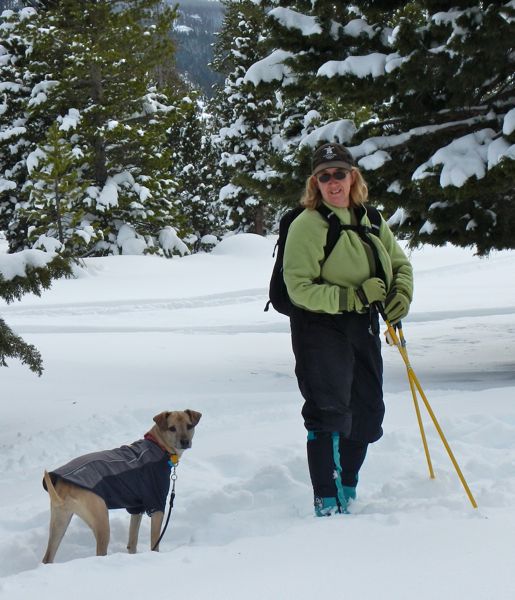
Sue and AJ on a trek through the snow in Meyers. Photos/Kathryn Reed

Smiles cross our faces as we glide along in what becomes our private playground.

Then we stumble upon modern-day equipment. This is where the U.S. Forest Service in summer 2011 installed a fire weather station.

Forward we go and head a bit to our right. There we see houses. People along Modoc and other streets have this area practically in their back yard.

Not much farther and we hit the road that leads to Tahoe Paradise Park. Had we crossed it, we would have come to Lake Tahoe Golf Course. Instead, we choose to ski along the tennis courts at the park.

Across Lake Baron we see a group of snowshoers exploring that section of the forest.

Oddly, we see signs saying no dogs or trespassing at the lake, but no sign saying there is a lake there. It looks like a drowning waiting to happen. It’s not obvious it’s a lake with the snow on it.

We shake our heads and meander farther. As we head back toward the highway we veer out to the right to make this as wide of a loop excursion as possible.

While this trek didn’t get the heart rate up, it was a great way to get a little exercise outdoors without seeing many people on a busy weekend.

—-

Getting there:

From South Lake Tahoe, go west on Highway 50. Go beyond the bug station. The Caltrans chain RV was out when we went. We parked well before that. This is before the climb up Echo Summit. Climb the snowbank and start having fun.

ngg_shortcode_0_placeholder (Click on photos to enlarge.)


Truckee resident takes bronze at cross country championships

By USSA

SOLDIER HOLLOW, Utah — APU Nordic had a strong day Friday at the U.S. Cross Country Ski Championships with Erik Bjornsen (Winthrop, Wash./APU Nordic) and Rosie Brennan (Park City/APU Nordic) taking their first U.S. titles.

Bjornsen won the men’s 15K freestyle individual start in 37:02.7, a 6 second margin over U.S. Ski Team teammate Tad Elliott (Durango, Colo./Ski and Snowboard Club Vail).

Matt Gelso (Truckee/Sun Valley Ski Education Foundation) took bronze.

APU Nordic swept the women’s podium with Brennan winning the 10K in 29:12.3 – an 11 second margin over Sadie Bjornsen (Winthrop, Wash./APU Nordic). Kate Fitzgerald (Palmer, Alaska/APU Nordic) won bronze.

More than 430 athletes from around the country are taking part in the U.S. Championships at Soldier Hollow, the 2002 Olympic venue.


Echo Lakes fuel reduction project could start in summer

About 100 acres in the Upper Echo Lakes area could be thinned beginning later this year.

It is likely to take six years for the U.S. Forest Service Lake Tahoe Basin Management Unit to do all the work. The project is intended to reduce the risk of wildfire and improve firefighting effectiveness.

Forest Supervisor Nancy Gibson recently signed off on the project. People have until early February to appeal the decision.

A portion of the project is in the Pyramid Roadless area. Brief closures of areas adjacent to the Pacific Crest Trail are possible. Resource protection measures are included in the project design to maintain the scenic nature of the trail, according to the Forest Service.

While cabin owners are responsible for their defensible space, the Forest Service is responsible for the wildland urban interface when it comes to fire safety.

Fuel reduction work would consist of cutting and hand piling brush and conifer trees up to 16 inches in diameter. Vegetation would be cut by hand, with chain saws or other hand tools. Piles would then be burned approximately one to three years later. Larger thinned trees would be made available for firewood.

Money from the Southern Nevada Public Land Management Act is funding the project.

For more information about the project, contact Brian Garrett at (530) 543.2694 or go online.

— Lake Tahoe News staff report


Frosty cold Tahoe not breaking any temperature records

It’s been icy cold in Lake Tahoe, especially in the wee hours of the morning. But it hasn’t been record cold.

On Jan. 3 the low in South Lake Tahoe was minus 2 degrees, while the record was set in 1994 – minus 21.

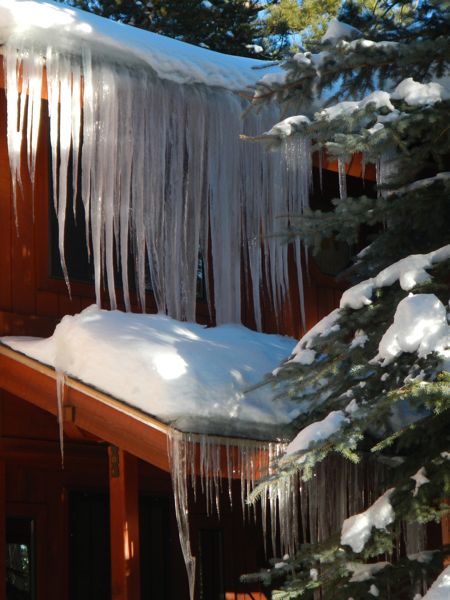
Lingering icicles prove it’s been chilly in Lake Tahoe. Photo/LTN

In Tahoe City on Thursday the low was 9 degrees. The record of minus 6 was set in 1910.

On Jan. 2 the mercury dropped to minus 4 in South Lake. In 1993 the record was set at minus 12. On the same day in Tahoe City the low was 7 degrees. The record of minus 2 was posted in 1993.

Even though records are not being broken, it is about 10 degrees colder in the basin for this time of year than the norm.

The average highs, though, have been inching up to more normal levels of the low to mid-40s.

The National Weather Service in Reno is saying there is slight chance of snow coming in Saturday, so the sunny days will be disappearing.

 — Lake Tahoe News staff report


Guided snowshoe trek near Camp Rich

Winter Trails Day on the South Shore will include a guided snowshoe hike featuring wildlife habitat and forest health, the watershed and water quality impacts, and historic aspects of Camp Richardson and the surrounding area.

All snowshoers should meet at Camp Richardson adjacent to the Winter Sports Center located on Highway 89. The trek is easy to moderate and appropriate for adults and children 10 and older.

The event is Jan. 12 at 10am.

For more info, call (530) 542.6056.