U.S. women dominate at World Cup in Austria

By USSA

ST. ANTON, Austria — Alice McKennis (Glenwood Springs, Colo.) came out of the No. 4 start position Jan. 12 to pick up a career first Audi FIS Alpine World Cup win in a challenging downhill in St. Anton.

McKennis led three Americans into the top six – five in the first 15 – on a dominating day for the U.S. Ski Team, becoming the ninth American to find the podium this season and the fifth winner. McKennis moved into fourth in the downhill standings, with three Americans in the top four.

Laurenne Ross (Bend, Ore.) had a career best downhill fifth and Lindsey Vonn (Vail) returning to action in sixth.

Leanne Smith (North Conway, N.H.) and Julia Mancuso (Squaw Valley) tied for 15th. Stacey Cook (Mammoth Mountain) was 22nd.


Study explores California’s diverse plant life

By Bettina Boxall, Los Angeles Times

California plant life is unusually rich and diverse. The state has more than 5,500 native plant species, more than any other state. Roughly 40 percent of them are found nowhere else.

A new study offers an explanation for that incredible variety: The state’s climate, latitude and complex topography created plant refuges that reduced extinction rates. Species that may not have survived elsewhere because of climate shifts during the past 45 million years could persist here in ecological niches.

The state’s mountain ranges played a vital role in that preservation, capturing ocean moisture and allowing plants to move up or down slope to stay in appropriate conditions.

The study, published in the journal Evolution, was conducted by Lesley Lancaster as part of a postdoctoral fellowship at UC Santa Barbara and Kathleen Kay, an assistant professor of ecology and evolutionary biology at UC Santa Cruz.

Their findings depart somewhat from those of a landmark 1978 study that attributed much of the state’s floristic diversity to elevated rates of species formation after the onset of a Mediterranean climate several million years ago.

Using fossil records and DNA sequences to reconstruct plant lineages, Lancaster and Kay estimated historical rates of species development, extinction and migration and concluded that species formation was not greater in California. “We have pretty good evidence that there was no increase in speciation with a Mediterranean climate,” Kay said. “The most important factor is the refuge from extinction.”

She added that the findings underscore the “importance of protecting areas in California so that it can continue to be a refuge for biodiversity in the future.”


Anderson wins slopestyle at U.S. Grand Prix

By USSA

COPPER MOUNTAIN, Colo. – Jamie Anderson of South Lake Tahoe and Chas Guldemond of Reno swept the slopestyle finals Jan. 11 at the Paul Mitchell Progression Session at the Sprint U.S. Grand Prix at Copper Mountain.

Anderson got back on track after a disappointing practice session and nailed her backside 540 mute-grab that earned her a score of 83.

Despite snowy conditions that made for slow in runs, Guldemond was able to float his signature double 1260 that earned him a winning score of 92.50.

The Grand Prix marked the first opportunity for athletes to garner Olympic qualifying points and 5Star World Snowboard Tour points.


Northstar opening superpipe

The 22-Foot superpipe at Northstar opens for public riding Jan. 12.

The Tahoe region’s only superpipe was designed by Northstar team rider Shaun White. It is located on the Cat’s Face trail, and can be accessed from the Vista Express chairlift.

Following the public preview on Saturday, the superpipe will be closed through Jan. 20 while Northstar hosts the U.S. Revolution Tour. This is a three-stop tour featuring halfpipe, slopestyle and cross events for freeskiing and snowboarding athletes.

Northstar also plans to open its 18-foot superpipe in the next week on the Pipeline trail which can be easily viewed from the mid-mountain area and the Big Springs Day Lodge.


S. Tahoe’s Bowman wins U.S. Freeskiing Grand Prix

By USSA

COPPER MOUNTAIN, Colo. – Despite snow and wind Maddie Bowman of South Lake Tahoe displayed great athleticism on Jan. 11 with her left and right 900s that landed her in first at the Visa U.S. Freeskiing Grand Prix.

Colorado native and 16 year-old U.S. Rookie team member Aaron Blunck (Crested Butte) beat tough competition and weather to take second in the men’s competition at his third FIS World Cup appearance. Teammate David Wise (Reno) played it safe in the treacherous conditions and placed third place.

Canada’s Mike Riddle won the men’s competition and fellow Canadian Rosalind Groenewoud came in second.

Brita Sigourney (Carmel) was able to secure third with a more conservative second run at the FIS World Cup.

This is the first domestic stop for athletes to gain Olympic qualifying points and AFP Platinum level event points.

Bowman winning run included a right 900 into a left 540 mute-grab, straight air with safety grab, left 900 to right 720 and switch 540.

“My right 900 is a new trick. I learned it last year and I used it for the first time at the Dew Tour and so far it is working out for me,” Bowman said.


Sugar Bowl implements chairlift changes after boy’s death

By Stephen Magagnini, Sacramento Bee

A year after John Henderson, an avid 7-year-old skier from Davis, fell off a chairlift to his death, Sugar Bowl has announced a comprehensive chairlift safety program inspired by the boy’s parents.

The improvements recommended by John’s mom and dad – UC Davis Medical Center doctors Helen Chew and Mark Henderson – include live video cameras at each lift and the lowering of the safety bar for kids under 51 inches, who aren’t allowed to ride without adults.

“John had a certain light about him, and the best way to honor his memory is to do something positive,” said Henderson, associate dean of admissions at UC Davis Medical School. “For a long time, we didn’t even want to get up in the morning.”

John, 43 inches tall, was a second-grader at North Davis Elementary who rode the chair with two teammates on the Sugar Bowl ski team.

At 11:15am Dec. 18, 2011, John was riding the Mount Lincoln express chairlift when he fell 52 feet. Though he wore a helmet, he died of head trauma two days later.

“It’s very rare for somebody to fall out of a chair,” said Michael Berry, president of the National Ski Areas Association. “It’s usually at the beginning or the end of the lift, not midride.”

Sugar Bowl, on its website, said 13 new safety measures are being adopted this season because “ultimately our safety program was insufficient to prevent this tragedy.”

The ski team coach allowed the three boys to board without supervision, and “we also believe the chairlift restraint bar was not lowered properly at the loading terminal and children of this age were unable to lower the bar themselves,” the resort said.

A 10-month investigation into the youngster’s death was inconclusive because of “conflicting accounts and few direct eyewitnesses,” but found no evidence of horseplay by the other kids.

Sugar Bowl’s risk manager, Nicole Lieberman, said the resort worked closely with John’s parents to craft the new chairlift safety measures.

“They have undergone an unspeakable tragedy and they chose to deal with that by working with Sugar Bowl and the industry to see what could be done differently,” Lieberman said. “Working with them has been amazing and inspiring. We had many meetings, phone conversations and emails looking at lift safety.”

The resort, 90 minutes from Sacramento on Donner Summit, averages 230,000 visitors a year and has 13 chairlifts and a gondola, Lieberman said.

The new safety measures this season include:

• The installation of a web-based camera at chairlift loading stations to monitor the loading process, lift operators and riders.

“The camera was our suggestion, so you can diagnose a problem and use it to change procedures and give feedback to a lift operator who isn’t putting the bar down,” said Henderson, who with his wife spent months studying ski-lift safety. “Most accidents occur because of problems with loading.”

Sugar Bowl believes it’s the first resort in the country to have cameras at chairlifts, Lieberman said.

• Skiers and snowboarders will ski up to a 51-inch mascot, the “safety bear,” and those shorter than that will not be allowed to ride the chair without an adult.

Henderson said they got the idea from the height requirement for rides at Disneyland.

Sugar Bowl developed the height stations with Mammoth Mountain, Lieberman said. “These are the first height stations I’m aware of,” said Berry, who represents more than 300 resorts.

• Sugar Bowl installed bull’s-eye targets on the chair seats on three of its chairlifts so far – an idea the Hendersons borrowed from Canyons Resort in Park City. “It’s been really quite phenomenal to watch children and adults aim for those bull’s-eyes to help riders sit back on the seats and be properly spaced apart,” Lieberman said.

• Sugar Bowl installed a training chairlift in the base area that patrons can practice on, Lieberman said. “We plan to install another one,” she said. “We’re really focusing on education and outreach.”

• The resort will train lift operators and ski team coaches in lifts and promote lift safety through the National Ski Areas Association.

Berry said a ski safety website, www.kidsonlifts.org, “was inspired by John Henderson.”

“The legacy of this tragedy is that it’s not repeated,” Berry said.

Chew, professor of medicine and director of the clinical breast cancer program at the UCD Med Center, said she and her husband had no interest in filing a lawsuit against the resort.

“That was never our intention,” Chew said. “If we could actually get the resort to make some lasting changes and lead the industry in chairlift safety, that would be the best outcome and could affect generations of kids.”

Henderson and his wife and son Paul, 17, still ski Sugar Bowl. “The anniversary of John’s death was Dec. 20, and it’s been a very difficult couple of weeks around Christmas without him,” Henderson said. “But I think these are wonderful changes.”


Dogs need training to be responsive ski companions

By Grayson Schaffer, Outside

Of all the hazards out there in the woods — mountain bikes, porcupines, thin ice, your trigger-happy hunting buddies — none are as dangerous as skiing with your dog. You’ve got four long, sharp metal edges that move at high speed; he’s got four soft paws and, most likely, a strong drive to chase and be near you. If you ski with your dog, chances are you’ve cut him. If you’re lucky, you didn’t sever a tendon or muscle. Of the half-dozen editors’ dogs who ski with us on a regular basis, including my dog Danger, I can’t name one that hasn’t either been cut or, worse, run over by a snowmobile.

The fix is investing the time and discipline into proper obedience. Your dog should wait patiently while you ski down, stop, and call him to join you. On cat tracks, he should heel beside you without nipping at your skis. Do it right and your dog gets to run around in the mountains all day. Avoid it and your dog is stuck at home. The only commands you need are heel, here, and sit. To ski with your dog, though, you’ll need these commands ingrained over time as behaviors.

Teaching him to wait

Start all new training drills in the home, where obedience is likely to be better than outside. Most dogs will master new skills better if they initially learn them without the distraction of unfamiliar places.

1. Have your dog sit. He should remain sitting until you either call him to you or ask him to heel. Practice by walking circles around your sitting dog. He should follow you with his eyes but not get up.

2. Now walk away from him. If he breaks and runs to you, correct him immediately and return him to his sitting position. Make him wait. Then call him to you and have him sit again. This is the way skiing should work: You move away from him and then call him to you. In some cases, you’ll want him to wait for you to stop, in others, like powder, you’ll get a head start on him and then let him follow.

3. Now take it to the field. Once you’re getting consistent results inside, build up your pup’s patience outside, where there are distracting smells. If he won’t do it while you’re in street clothes, he definitely won’t when you’re on skis.

4. If he’s consistent on land, then you’re ready for snow. Many local ski areas allow up-hill skinning and dogs on the slopes before the lifts open. Pick a mellow beginner slope, preferably groomed, where you can slide away from your dog backward. Have him sit. Move only a few feet away, make him wait, then call him to you. Build up the distance slowly. You want him to succeed every single time. Once he’s solid on groomers, take him into the backcountry.

Teaching him to heel behind a skier

1. Before you can heel your dog beside you while you ski, you’ll need a good off-leash heel on land. You’ll know you’ve got a good heel when your dog is constantly making eye contact while heeling, looking for instruction. If he’s still sniffing the ground or occasionally wandering, keep working on correcting these behaviors. An energetic dog with a good off-leash heel will almost run in place to match your slower speed.

2. When you’re ready to move to snow, start snowplowing on the beginner slope. Your dog may have to heel behind you rather than beside you. On narrow tracks or in powder, when there’s only room for one of us, he naturally goes behind. If obedience breaks down and he lunges for your skis, go back to using a leash on snow. Move slowly. Have him go from heeling to sitting to build patience. If he breaks, stop and start over.

3. Be consistent. Once you’re taking your dog into the backcountry, he should be heeling all the way up the hill. You can’t let him run free and then expect him to know that you’ve changed the rules for the descent.

Upshot

In all of this, you may have to adopt a different attitude about what it means to ski with your dog. I like to think of skiing as one of his jobs. When he’s on the snow, he’s on the clock: No petting unless it’s as a reward; don’t let him sniff or wander without correction. You may feel like a taskmaster at first, but once it’s ingrained in the two of you, you’ll begin to work like a team and stay out of the vet’s office.


$235 million Yosemite Valley renovation plan unveiled

By Mark Grossi, Fresno Bee

The National Park Service is calling for a $235 million renovation of world-renowned Yosemite Valley — featuring a pedestrian underpass near Yosemite Falls and a limit on visitors during crowded times.

The changes are part of the embattled Merced River Plan, a draft of which was released Tuesday. Yosemite Lodge, listed for removal in an earlier option, will be retained. There will be more campsites, too.

But popular Curry Village Ice Rink will be torn out. Bicycle and raft rentals also will go away, though visitors still can bring their bikes and rafts, said Kathleen Morse, Yosemite chief of planning.

“There’s a limited amount of space in Yosemite Valley,” she said. “People are more interested in day-use parking and more campsites.”

The $235 million would come from several Yosemite National Park income sources, including entrance and concessions franchise fees, leaders said. No additional money is needed from Congress, they said. The projects will be spread out over 15 to 20 years, Morse added.

This is the third time the park service has written the Merced River Plan. The previous two were stopped by a lawsuit, which succeeded in forcing the park service to specify a visitor limit.

The activist group Friends of Yosemite Valley led the legal protests. Representatives spoke with park officials throughout the planning process. However, activists declined immediate comment because they had not yet seen the 2,500-page draft environmental document.

In the last decade or so, more than 10,000 people have commented on the park’s proposals for protecting the Merced River, the main stream through the 7-square-mile valley.

About 4 million people visit Yosemite each year, and up to 70 percent pass through the valley to see iconic landmarks such as El Capitan, Half Dome and Yosemite Falls.

The public will have until April 18 to comment on the draft environmental document for the plan. By court order, Yosemite must have a final plan in place by late July.

Officials say they are optimistic that the plan will pass muster this time, but there is no guarantee that another lawsuit will not be filed.

Morse said that in creating the plan over the last three years, federal leaders had dozens of public meetings in many cities and paid more than $1 million for further research.

“It’s the most extensive outreach and research I’ve seen,” said Morse, a 25-year veteran of public service.

The visitor limit is 19,900 visitors per day, just shy of the 20,900 peak estimated in 2011, Morse said. To keep an eye on crowding, park rangers will monitor the traffic and parking while communicating with park service employees about incoming visitors at the gates.

When the valley becomes too congested, cars will be diverted to a new parking area on the west end of the valley, Morse said. Or visitors can go to other parts of Yosemite, including Glacier Point or Tuolumne Meadows.

Gate closures and day-use permits are not among the features in the preferred alternative of the draft environmental document.

Morse said day-use parking will increase from 2,337 spaces to 2,448, and campsites would go from 466 to 640. About 200 acres of meadows and riverside areas will be restored, she said.

The pedestrian underpass at Northside Drive will eliminate a bottleneck that backs up traffic as people cross the street from Yosemite Lodge to view Yosemite Falls.

“The concern is not that there is too much traffic,” Morse said. “It’s a bad intersection because a lot of vehicles leaving the valley must pass through.”


Winter weather advisory for Lake Tahoe

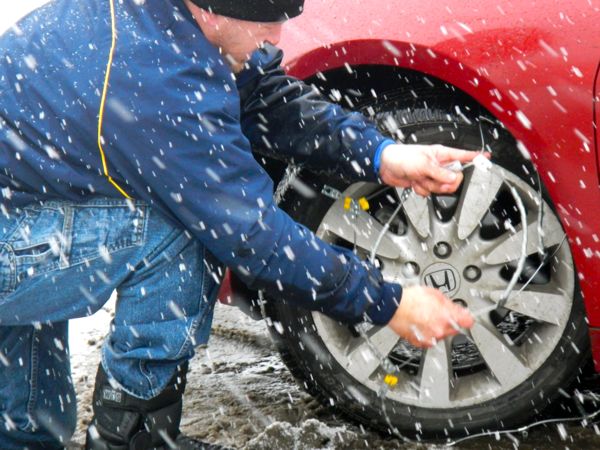
The howling wind that has been whistling through the Lake Tahoe Basin for most of the day is a precursor to a storm that is on its way.

The National Weather Service in Reno has issued a winter weather advisory for Tahoe from 6pm Wednesday through 9am Thursday.

The heaviest snow is expected in the morning. The lake could see 3-6 inches, while higher elevations could get 9 inches.

Snow is possible into Friday, with a break on Saturday before the white stuff starts falling again on Sunday.

— Lake Tahoe News staff report

Chains were needed when traveling over Sierra passes last weekend and are likely to be needed Thursday morning. Photo/LTN


USFS leading interpretive ski tours at Heavenly

The U.S. Forest Service Lake Tahoe Basin Management Unit is putting on the Ski with a Ranger at Heavenly Mountain Resort Jan. 18-April 12.

Participants will learn about the mission and role of the Forest Service in ski area management, improve their understanding of natural resource issues, and learn about environmental stewardship.

Tours are offered Mondays and Fridays at 10am 1pm. The tour lasts approximately one hour and is open to Heavenly Mountain Resort guests who are intermediate level and above skiers and snowboarders. The tour begins near the bottom of the stairs at the top of the Heavenly Gondola. No reservations are required.

For more information, contact Megan Dee at (530) 543.2618 or mldee@fs.fed.us.