2014 Winter Games not looking good in Russia

By Ryan Dunfee, Powder

When Mark Meadows first visited Sochi, Russia, in 2009, his first impression was how much work there was left to do.

“That was the first thing that hit you,” said Meadows, the vice president of Torrent Engineering, the company responsible for much of the snowmaking infrastructure for the Vancouver, Sochi, and the future Korean Winter Olympics. “You sat there and said, ‘OK, what’s the date? There’s a ton of stuff to be done.’”

The airport baggage claim looked more like a conveyor belt in a warehouse, and the entire airport held maybe 100 people.

Sochi in mid-February.

As he headed up the one-lane road into the Caucasus Mountains, he passed a couple of ski shops, but ski culture in this part of Russia was not an established phenomenon. The small village of Rhosa Khutor had one small ski area with some ageing fixed-grip chairs, and one twenty-room family-run hotel. The only evidence of a future Olympic venue were a few muddy roads leading up to an enormous mountain, and a remote camp of grizzled men living in shipping containers and tents, who were responsible for cutting the trails. They’d started only six months prior. Road access and telephones had only come into the valley 20 years prior.

While the Soviet Union was a force to be reckoned with at any Winter Games during the Cold War, after it collapsed in 1991, Armenia, Georgia, and Azebaijan broke away and became independent countries, taking the Soviets’ best winter training facilities with them. So Russia has had to build its snowsports facilities for Sochi more or less from scratch. And Vladimir Putin — The Bear — is evidently using every ounce of his position, his dogged enthusiasm for sport, and undoubtedly many of his state cronies and oligarch friends, to muscle the 2013 Sochi Games forward to completion.

Now, 60,000 workers pound away 24/7 both in the palm tree-lined city of Sochi and in the “mountain cluster” where all the alpine and Nordic events, along with the luge and bobsled, are taking place. A new international airport has been built next to the quiet regional one that Mark flew into five years ago, as have countless high rises. The third-largest gas plant in the world has just been finished, with seven others on the way, to power both the construction and the Games. Twenty kilometers of high-voltage lines, along with high-speed light rail passing through 22 new tunnels, now march up the valley where only the tiny one-way meandered before.

Up in Rhosa Khutor, where the mom-and-pop hotel had been the only show in town,10 brand-new hotels and 1,600 rooms have opened, with some of the foundations for the buildings having only been poured in October. These look down on a river whose course is being moved by bulldozers. Where they had been no ski area, Dopplemayr gondolas and high-speed six packs climb 5,700 vertical feet to the summit, off of which lies alpine terrain to rival Jackson Hole. Putin is punching through the most sensational development plan of any Winter Olympic Games in history, as an event that’s usually held in known ski destinations — Whistler, Salt Lake City, Nagano — is being held in a locale more famous as a summer beach retreat in one of the world’s most controversial emerging powers.

But, as in Beijing, the coming out party is not coming together without controversy. Sochi is the warmest venue in Winter Olympic history. Despite the nearly 6K of vertical at Rhosa Khutor, leadership decided to place the halfpipe, slopestyle, aerials, and moguls venue at the bottom, where a climate change report revealed that average February temperatures are around 35 degrees Farenheit.

While the run-up to the Beijing Olympics involved a lot of talk about whether the city’s notoriously noxious air would be clean enough for elite competitors, at Sochi the concern is whether or not there will be enough snow. The Chinese forced factories to close so air quality would be high enough; the Russians say they can bully the snow into existence regardless of temps via their “Hot Snow” program. The new snowmaking system is reportedly able to make snow at temperatures up to 60 degrees, while a reservoir near the alpine venues holds frozen snow collected from past seasons. In a no-holds-barred, hey-didn’t-we-say-this-was-a-green-games approach, chemical additives are at hand to make the snow bond better, and the Ministry of Defense in Moscow even has its hand in cloud-seeding to ensure any rain might fall as snow.

Despite all this, halfpipe skiers at last week’s Olympic test event were competing in the rain in a pipe slushed out by 59-degree temps. Nearby, a bare slopestyle venue sat layered with snow-saving tarps, that test event cancelled due to a lack of snow. Many of the snowboarders were saying it was Vancouver all over again.

Human rights groups have cried foul that many of the migrant workers building Sochi’s stadiums and facilities have been abused as contractors push to meet construction deadlines. A heavy security presence alludes to the tension, both recent and past, that beleaguers the area. Almost directly off the back of Rhosa Khutor sits Abkazia, the disputed territory that was the subject of the 2008 war between Russia and Georgia. Abkazia’s nominal independence is supported heavily by Russia and recognized by only five other countries. Georgia still considers the area a part of its territory.

Sochi itself was once the capital of the Circassians, a North Caucasian ethnic group that was expelled from the area when the Russians conquered the Caucausus in 1864. They still maintain that a genocide of their people has gone unrecognized, and a lobbyist for the group’s 3.7 million-strong international diaspora wants athletes to know that they “will be skiing on the bones of our relatives.”

Sports Illustrated’s Alex Wolff recently wrote: “Putin is interested in much more than being a gracious and modern host. To maximize the nationalist passions on which his United Russia Party plays, The Bear must win.” Only time will tell if the potential fissures in Putin’s iron plan for Sochi materialize into anything more serious than a slushy halfpipe.
Pile burning to begin on North Shore

The North Lake Tahoe Fire Protection District is planning on conducting pile burning efforts, weather conditions permitting, in the Gale Street and Lariat Circle areas Feb. 25-28.

Smoke resulting from the pile burns will affect the surrounding areas for approximately 24 hours. People who are smoke sensitive are advised to please stay inside and close their windows and doors as much as possible until the smoke dissipates.

For further information, or to be added to the district’s smoke sensitive notification list, please call the Fire District at (775) 831.0351, ext. 0.


Mancuso just misses podium in super combined

By USSA

MERIBEL, France — World Championship super G bronze medalist Julia Mancuso (Squaw Valley) ripped to second in the downhill half of Sunday’s super combined, but dropped to fourth overall after hooking up in the soft snow of the slalom portion.

Tina Maze of Slovenia took the win – her eighth on the season – to boost her World Cup point total to 1,844 and clinch the Audi FIS Alpine World Cup overall title a full three weeks before the end of the season.

Julia Mancuso

Julia Mancuso

Austrians Nicole Hosp and Michaela Kirchgasser finished 2-3.

Laurenne Ross (Bend, Ore.) was 15th and Leanne Smith (N. Conway, N.H.) 26th. Stacey Cook (Mammoth Mountain) did not finish the downhill.

Heavy overnight snow forced the organizers to delay the start of the downhill and lower the start.

“In places we got like two feet of snow last night. It was really soft so those slalom athletes definitely had a good advantage with the lowered downhill start and the better start positions,” Mancuso said. “I didn’t make any mistakes in the downhill and that was my plan. I made too many yesterday, but it’s pretty hard to put any time on the slalom skiers. It seemed like we ran about half of the full length of the downhill.”


Report: Outdoor recreation big business for California

By Jennifer Booton, Fox Business

Outdoor recreation generates more than $85 billion in consumer spending and creates about 732,000 jobs each year in California, according to a report by the Outdoor Industry Association.

Contributing more nationally to consumer spending than both the household utilities and gasoline sectors combined, the industry that includes hiking, bicycling, fishing and skiing is bigger than most people realize, the group argues.

“Outdoor recreation is a significant economic driver,” it said in the report.

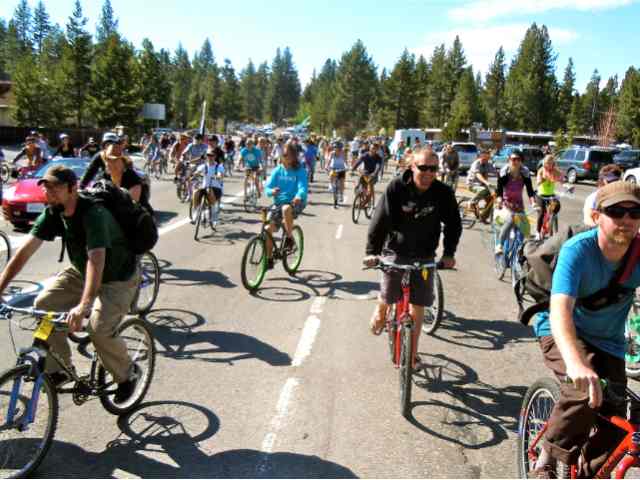
Lake Tahoe residents know all about playing outdoors. Photo/LTN file

Offering a number of open, public spaces, including Yosemite National Park, Redwood national and state parks and Big Sur, a sparsely populated region of California’s Central Coast that spans dozens of miles, California is by far the nation’s largest contributor to outdoor recreation.

Money spent on gear, vehicles, trips and travel-related expenses there generate $270 billion in California wages and salaries and $6.7 billion in state and local tax revenue each year. The group estimates that at least 59 percent of California residents participate in outdoor recreation each year.

“This creates jobs, supports communities, generates tax revenue and helps drive the economy,” the Outdoor Industry Association said.

The report comes as California struggles to improve its economy in the wake of the 2008 financial crisis. The state pays public workers more than any of the other 12 most populous states, according to Bloomberg, and has struggled to overcome deep debt obligations.

On a national level, outdoor recreation generates $646 billion in consumer spending while contributing nearly $40 billion in federal and state and local tax revenue.

The market contributes more to consumer spending than household utilities and gasoline combined, and also trumps pharmaceuticals and motor vehicles, according to the report.

The next largest contributor to outdoor activity behind California is Florida, generating about $38.3 billion in consumer spending a year, followed by New York with $33.8 billion and Texas with $28.7 billion.

The industry, which creates more than 6.1 million direct American jobs nationally, also generates more employment than construction, oil and gas, education and transportation, the industry group says.


Heavenly combining big air, poker in competition

Heavenly Mountain Resort is partnering with Snow Park Technologies and two-time Olympic gold medalist Shaun White to host High Roller Hold ’Em big air competition.

There is $50,000 at stake in this casino-inspired event that combines high-flying big air competition with Texas hold’em poker.

High Roller Hold ’Em will take place on the World Cup run at Heavenly on April 6 with a monster big-air jump created by SPT. In this unique poker-style format, each rider will be dealt two cards (three in the super final) with each card featuring a different trick. Each rider will then bet on the trick of their choice and must execute the trick during that jump to win that round. The rider that lands the trick with the highest level of difficulty will win that round and qualify for the big cash in the super final.

Some of the world’s top professional snowboarders will compete in this high-production, nighttime event, which will also feature live DJ music, an exhibition with local athletes, and pyrotechnics.

The competition starts at 6pm, with fireworks and music about 8:45pm. There is no cost to watch.


Kashima returns to competition

By USSA

INAWASHIRO, Japan -– Rookie of the Year Bradley Wilson (Butte, Mont.) earned his career first podium in single moguls with a second place finish on a slick course in Inawashiro.

Sho Kashima

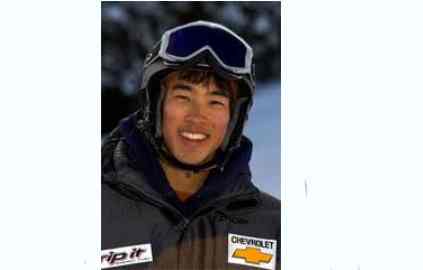
Wilson was able to stay tight and in control on the fast course and finished only 0.10 points behind the winner. Sho Kashima (Stateline) finished a respectable sixth in his first competition back since a knee injury sidelined him last season.

Mikael Kingsbury and Audrey Robichaud both of Canada took the respective wins.

Eliza Outtrim (Hamden, Conn.) was the top U.S. woman landing in seventh.


Tight race in women’s downhill

By USSA

MERIBEL, France — Less than a second separated the top 17 finishers in Saturday’s Audi FIS Alpine World Cup women’s downhill, with Julia Mancuso (Squaw Valley) leading the way for the U.S. Ski Team at 13th, 0.90 behind surprise winner Carolina Ruiz Castillo of Spain.

Julia Mancuso

It was a historic first World Cup downhill victory for Spain and the first podium of any kind since 2006. Alice McKennis (Glenwood Springs, Colo.) finished just behind Mancuso in a three-way tie for 14th.

Leanne Smith (N. Conway, N.H.) was 18th, Stacey Cook (Mammoth Mountain) 27th and Laurenne Ross (Bend, Ore.) 35th. Cook dropped one spot in the World Cup downhill standings to third behind sidelined Lindsey Vonn (Vail,) and Tina Maze of Slovenia.

McKennis is fifth, Smith ninth and Mancuso 14th in the standings as the U.S. Ski Team continues to lead the nation’s standings for downhill.


Sullivan leads U.S. men in World Cup

By USSA

Marco Sullivan

GARMISCH-PARTENKIRCHEN, Germany — Veteran Marco Sullivan (Squaw Valley) was 19th to lead the U.S. Ski Team in a shortened Audi FIS Alpine World Cup downhill Saturday in Germany as Birds of Prey downhill champion Christof Innerhofer of Italy claimed his third win of the season.

The race course was shortened after heavy snow covered the Kandahar course over night, making track preparation of the upper section difficult. Action now shifts to giant slalom on Sunday with triple World Champion Ted Ligety (Park City) returning to the site of his 2011 GS gold to seek a record fifth World Cup victory this season in the discipline.

Early starters Travis Ganong (Squaw Valley) and Steven Nyman (Sundance, Utah) finished 33 and 42 respectively


USFS, Heavenly offering ranger program in Spanish

The U.S. Forest Service Lake Tahoe Basin and Heavenly Mountain Resort are offering Ski with a Ranger en Español.

Spanish Ski with a Ranger brings awareness of environmental issues to the local and visiting Latino community. The program will be offered March 13, March 27 and April 10, weather permitting. Tours are offered twice a day at 10am and 1pm.

The tour lasts approximately one hour and is open to Heavenly Mountain Resort guests who are intermediate level and above skiers and snowboarders. The tour begins near the bottom of the stairs at the top of the Heavenly Gondola. No reservations are required.

Participants will learn about the mission and role of the Forest Service in ski area management, improve their understanding of natural resource processes and issues, and learn about environmental literacy and stewardship.

For more information, contact Megan Dee at (530) 543.2618 or email mldee@fs.fed.us.


Tahoe Sierra Club chapter wants wilderness protected

By Kathryn Reed

Peace, beauty, quiet, serenity, creatures, no machines, watershed.

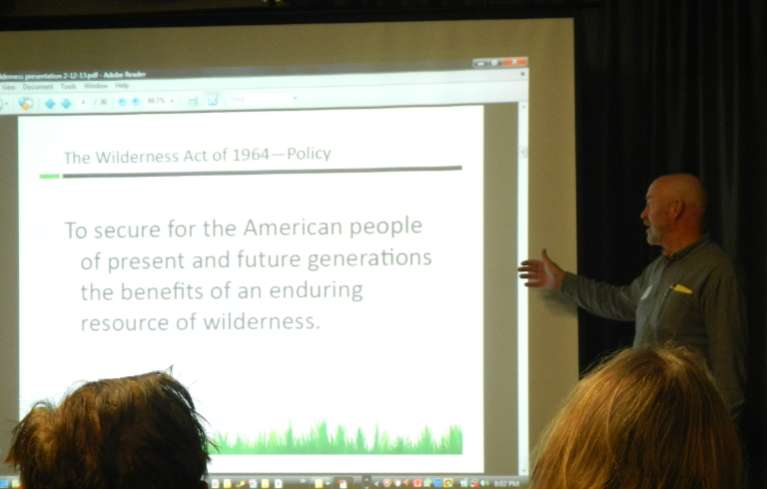
Those are some of the reasons people at the Feb. 20 Tahoe Area Sierra Club meeting said they walk in the forest. And it is for those sentiments and others that this group wants to protect the wilderness.

Wilderness has a loose definition of being out in the woods, whereas wilderness area is a distinct region. In those regions – like Desolation Wilderness, Mount Rose, Granite Chief and Mokelumne – mountain bikes and snowmobiles are not allowed.

Bob Anderson with the Tahoe Area Sierra Club talks Feb. 20 about wilderness areas. Photo/Kathryn Reed

The Wednesday night meeting in South Lake Tahoe was supposed to feature Steve Evans, conservation director of the Friends of the River. He came down ill and in his place Fred Roberts and Bob Anderson, both members of the local Sierra Club chapter, spoke.

Roberts, who used to teach biology at Lake Tahoe Community College, said fewer people are experiencing their natural environment.

“We are losing every day to asphalt and social media and whatever forces there are that disconnect us from nature,” he said.

He also said how nature is disappearing and changing in various locations because of the bark beetle infestation, as well as because of climate change.

Roberts said it’s time to have a national conversation about the environment, adding, “We went through a presidential election and there was no mention of the environment.”

Locally, he advocated for the starting point of the Upper Truckee River getting a scenic designation.

“If we come together, we can leverage our power,” Roberts said.

Anderson, who is the group’s president and a member of the Tahoe Institute for Natural Sciences, picked up where Roberts left off. His talk focused on how the Lake Tahoe Basin Management Unit of the U.S. Forest Service is in the midst of reviewing comments to the Forest Plan update.

The Sierra Club actively lobbied for and still touts the desire that the Meiss Meadow area to become a wilderness area. This is the headwater of the Upper Truckee River.

“The U.S. Forest Service failed to identify and include in the alternatives an analysis of all of the wilderness-eligible land in the basin,” Anderson said. “There should also be a backcountry zone for mountain bikers.”

Alternative D in the Forest Plan would create 29,000 acres in the Meiss-Dardanelles area as a wilderness area. While the Sierra Club supported that idea, members also thought that alternative did not go far enough.

(The plan by the Forest Service should be released soon.)

The other designation the Sierra Club would like is to make the Upper Truckee River a wild and scenic river. This would take an act of Congress.