Snow, cold temps to descend on Lake Tahoe

Cold and wet – that’s the Lake Tahoe Basin forecast for most of the week.

A storm system will move into Northern California late Tuesday and drop into western Nevada and the Sierra by early Wednesday.

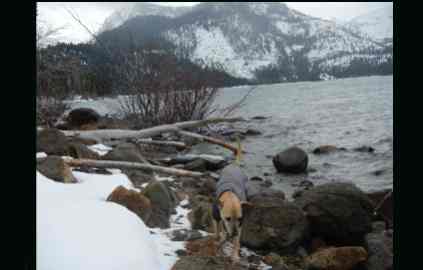
AJ will need her jacket this week if she goes out for a walk. Photo/LTN

AJ will need her jacket this week if she goes out for a walk. Photo/LTN

Expect the wind to arrive first. Gusts up to 50 mph could be blowing through Tuesday night. Snow will be close to lake level that night and down into the Carson Valley on Wednesday.

The National Weather Service in Reno says to expect 6-12 inches at lake level from Tuesday night through Thursday, and a foot or more along the Sierra crest.

A chance of snow is in the forecast for Friday too, with mostly sunny skies returning Saturday.

Starting Wednesday the high in the basin will be in the mid-30s, which will last for a few days.

 — Lake Tahoe News staff report


Mosquitoes learning to bite through Deet

By Rebecca Morelle, BBC

The widely used insect repellent Deet appears to be losing its effectiveness against mosquitoes, scientists say.

Researchers from the London School of Hygiene and Tropical Medicine say mosquitoes are first deterred by the substance, but then later ignore it.

They say more research is needed to find alternatives to Deet, which was first developed by the U.S. military.

The research was carried out on Aedes aegypti, a species of mosquito that spreads dengue and yellow fever.

The findings are published in the journal Plos One.

Dr. James Logan from the London School of Hygiene and Tropical Medicine, said: “The more we can understand about how repellents work and how mosquitoes detect them, the better we can work out ways to get around the problem when they do become resistant to repellents.”

Deet – or N,N-diethyl-meta-toluamide – is one of the most widely used active ingredients in insect repellents. It was developed by the US military, following its experience of jungle warfare during World War II.

For many years, it was not clear exactly how the chemical worked, but recent research suggests that insects simply do not like the smell.

However, there are concerns that some mosquitoes are growing resistant to it.

To find out more, researchers from the London School of Hygiene and Tropical Medicine took some A. aegypti mosquitoes in the laboratory, and tempted them with a human arm covered in Deet.

As expected, the repellent put the insects off their potential meal.

However, a few hours later when the same mosquitoes were offered a chance to dine again, the researchers found that the Deet was less effective.

To investigate why this might be happening, the researchers attached electrodes to the insects’ antenna.

Logan explained: “We were able to record the response of the receptors on the antenna to Deet, and what we found was the mosquitoes were no longer as sensitive to the chemical, so they weren’t picking it up as well.

“There is something about being exposed to the chemical that first time that changes their olfactory system – changes their sense of smell – and their ability to smell Deet, which makes it less effective.”

Earlier research by the same team found that genetic changes to the same species of mosquito can make them immune to Deet, although it was not clear if there were any mosquitoes like this in the wild.

Logan said it was vital to understand both these permanent genetic and temporary olfactory changes that were taking place.

He said: “Mosquitoes are very good at evolving very very quickly.”

He stressed that the findings should not stop people from using Deet in high risk areas, but that they would help scientists who are trying to find new versions that could be effective.

To follow up on the study, the researchers now plan to find out how long the effect lasts after the initial exposure to the chemical.

The team would also like to study the effect in other mosquitoes, including the species that transmit malaria.


Easy to escape the masses at snowshoe park atop Colorado ski resort

By Kathryn Reed

BEAVER CREEK – Debris is falling from high up in the tree, creating a mess of sorts at the base. That was the work of a porcupine, that while not easily seen, was obviously sitting high atop a branch in what she thought was an isolated spot.

On this particular Friday a group of snowshoers is taking in a small slice of the 32 kilometers of trails through Beaver Creek’s McCoy Park Nordic Center. We don’t seem to interrupt the chomping above us.

Guide Laurie Hardmeyer points out other signs of wildlife.

Naked aspens provide a surreal landscape at Beaver Creek on a cloudy day. Photos/Kathryn Reed

Naked aspens provide a surreal landscape at Beaver Creek on a cloudy day. Photos/Kathryn Reed

Coyotes, fox and black bears call this terrain at 10,000 feet home. So do ermine, which are part of the weasel family. We see their tracks in the couple inches of fresh snow that has fallen overnight.

“They dive under the snow and eat their weight in mice and voles every day,” Hardmeyer says. “Under the snowfall there is this ecosystem.”

Our leader says she saw eight ptarmigan (a medium-size bird) on the trail earlier in the season, which she said was unusual.

Elk chew on the aspens that fill the landscape. It’s a natural analgesic. She jokes that if we get sore on our trek, we can start gnawing on one of the trees. No one tries. After all, we know soon enough there will be plenty of wine to be had to ease any aches.

This excursion is part of the annual Beaver Creek Food + Wine event. (Alex Seidel was the featured chef with Grouse Mountain Grill Executive Chef Gutowski at the Snowshoe & Gourmet Lunch at Gutowski’s restaurant inside the Pines Lodge.)

This land wasn’t always about luxury. Early settlers grew vegetables in the mountains. McCoy, after whom the park is named, was a lettuce grower.

The Nordic center is all about getting people on snowshoes, cross country skis or skate skis. Equipment may be rented, lessons taken or day passes bought for those who come equipped. The trails are accessed via Beaver Creek’s Strawberry Park Express chairlift.

Hardmeyer talks about the views that a sunny day would provide. But there is no evidence of the Sawatch Range, Gore Range or back bowls of Vail. Instead, we are treated to what appears to be a mystic fog that floats through the barren aspens.

Besides the aspens, groves of mostly lodgepole pine dot the landscape. Colorado blue spruce and Engelmann spruce are part of the mix.

“When you need peace and quiet, this is the place to come,” Hardmeyer says.

ngg_shortcode_0_placeholder (Click on photos to enlarge.)


Snowshoe event at Van Sickle Bi-State Park

There will be a guided snowshoe hike at Van Sickle Bi-State Park on March 9 from 10am-1pm offered through Explore Tahoe: An Urban Trailhead and the Tahoe Rim Trail Association.

The distance of the snowshoe is 2-3 miles and is rated as moderate in terms of difficulty.

Meet at the Heavenly Village parking garage at 10am. Refreshments will be served at the end of the program at Explore Tahoe.


California policy allows nonlethal response to mountain lion problems

By Matt Weiser, Sacramento Bee

For the first time, California state wildlife officials have clear rules in place to deal with problem mountain lions short of killing them.

On Friday, the California Department of Fish and Wildlife released a revised policy to respond to mountain lions that show up in urban areas, for example, and appear to pose a danger to the public. In the past, the department’s only position in such incidents has been to eliminate the problem by killing the cougar.

mountain lionNow, if a mountain lion has not already threatened or attacked a person or domestic animal, it will be considered a “potential human conflict” incident that allows a range of nonlethal responses.

The policy change follows an incident in Half Moon Bay on Dec. 1 in which state wildlife officers killed two mountain lion kittens that were hiding under a deck in a residential area. Necropsies later determined the two kittens were 4 months old, weighed only about 13 pounds, and had no food in their stomachs.

“With these new guidelines, they’ve added a whole new category where it gives them the option to slow down and take some other course,” said Tim Dunbar, executive director of the Mountain Lion Foundation, a Sacramento-based nonprofit. “This is a good step forward. We believe it’s something that’s been needed for some time.”

California is unique in the nation in its management of mountain lions, thanks to a 1990 ballot measure, Proposition 117, in which state voters declared cougars a protected species exempt from hunting.

Since then, mountain lions have been killed only when they pose a danger to people or domestic animals.

Since 1910, there have been 15 verified attacks by mountain lions against people in California. Of those, five have been fatal.

The revised policy still states that mountain lions may be killed if they threaten or kill people or domestic animals. This is done under a “depredation” permit issued by the Department of Fish and Wildlife, which is limited in time and geography.

Now, the policy defines “potential human conflict” incidents as those “that could reasonably be perceived as having potential to cause severe injury or death to humans.”

In such cases, state wildlife officials now have the leeway to respond by hazing the cougar with rubber bullets; a beanbag, Taser or tranquilizer gun; pepper spray; or trained dogs. They also may capture, rehabilitate and relocate problem mountain lions.

“This gives responders a better understanding of what to do and how to deal with it,” said Jordan Traverso, a spokeswoman for the Department of Fish and Wildlife.

The policy notes that state law does not authorize the department to rehabilitate mountain lions or to work with nonprofit groups for that purpose or to capture or haze mountain lions.

For that reason, Traverso said, the policy is considered a draft that will be amended if state law grants new powers.

A bill introduced in January by Sen. Jerry Hill, D-San Mateo, would do just that. The bill, SB132, would allow the department to work with other government agencies, universities and nonprofits on nonlethal means to manage mountain lions.


Mancuso on podium in super G

By USSA

GARMISCH-PARTENKIRCHEN, Germany — World Championship bronze medalist Julia Mancuso (Squaw Valley) was third Sunday in the final super G of the Audi FIS Alpine World Cup “regular season.”

Mancuso finished just ahead of discipline leader Tina Maze of Slovenia to push the title to the final race of the year. Maze leads Mancuso by 55 points with a max of 100 super G points up for grabs at the March 11-17 World Cup Finals in Lenzerheide, Switzerland.

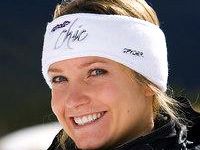
Julia Mancuso

Julia Mancuso

Austrian Anna Fenninger won the race, pushing local favorite Maria Hoefl-Riesch to second.

Mancuso’s result, coupled with her second on Friday and Laurenne Ross’ (Bend, Ore.) second in the downhill capped a three podium weekend for the U.S. Ski Team.

It was Mancuso’s fifth super G podium of the season and second in three days at Garmisch. She was second in the first SG Friday.

“I am happy to be on the podium, just trying my best every day. I am enjoying it with the sun out. I wish I could have gained some more points on her (Maze), I need all the luck on my side. I need to win the (last) race and then anything can happen,” Mancuso said.


White remains king of the superpipe

By Jason Blevins, Denver Post

The showdown became a battle of East vs. West at the Burton U.S. Open Saturday, with Shaun White eking past Japan’s rising son of snowboarding Ayumu Hirano to win his fifth open title.

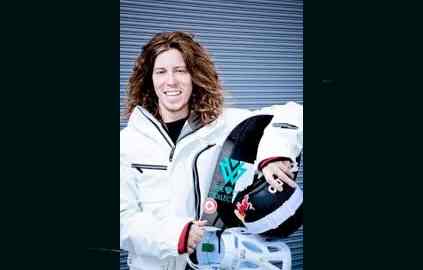
Shaun White

Shaun White trains at Northstar in Truckee.

White’s second run — with five tricks including back-to-back double-cork 1080s and back-to-back double 1260s — earned the highest points of all tricks thrown by each of the 12 finalists in the 22-foot superpipe on Saturday. After a first run score of 92.5 drew pointed criticism that it should not have eclipsed 14-year-old Hirano’s monster first run, White crushed any judging skepticism with a dominant, indisputable second run.

While White’s win was hardly surprising — he’s now won 13 consecutive halfpipe contests — but Hirano’s performance solidified his status as the greatest threat to White’s decade-long reign and the leader of the next generation of snowboarding.

The 75-pound eighth-grader with springs for legs notched the highest airs of the contest — and arguably the loftiest airs in the history of snowboarding halfpipe competition — but was unable to match the master’s signature double-cork 1260 McTwists, the indomitable trick that has sustained White’s invincibility. Still, Hirano seemingly stalled in midair, floating as if in slow motion through technical spins and tight grabs.

Louie Vito, Ohio’s magnate of the board, took bronze with solid airs and technical spins.


Mammoth athletes shine at skicross competition

By USSA

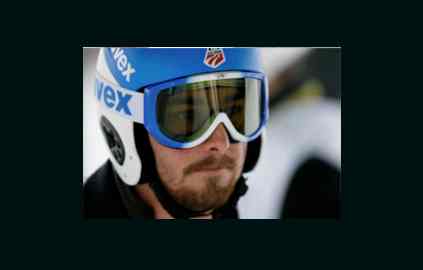
John Teller

John Teller

PARK CITY -– John Teller (Mammoth Lakes) defended his lead down the tight, technical course to win the USANA Skicross and the U.S. Championship title at the Sprint Grand Prix at Canyons Resort on March 1. Madeline Riffel (Mammoth Lakes) recovered after a first turn crash to snag second in the women’s race, also clinching the U.S. title.

Tyler Wallasch (Mammoth Lakes) finished second in the men’s race after a fierce battle to advance through the semi-finals, and Langley McNeal (Sun Valley, Idaho) took the third spot after going down in the final race. France’s Ophelie David won for the women.

The tricky, narrow course didn’t allow for much passing and yielded hard crashes throughout all the heats


3 U.S. women in top 10 in World Cup event

By USSA

GARMISCH-PARTENKIRCHEN, Germany — Laurenne Ross (Bend, Ore.) became the sixth U.S. Ski Team women’s speed athlete to finish in the Audi FIS Alpine World Cup top three this season with a stunning second in the Garmisch downhill on Saturday.

Julia Mancuso

Julia Mancuso

With her career first podium, Ross also became the fourth U.S. woman to land her first World Cup podium this season, joining teammates Stacey Cook (Mammoth Mountain), Leanne Smith (N. Conway, N.H.) and Alice McKennis (Glenwood Springs, Colo.).

Slovenia’s Tina Maze won the race to eclipse Austrian Hermann Maier’s single season World Cup point record and become the third woman in World Cup history to win in all five disciplines in the same season.

Julia Mancuso (Squaw Valley) was sixth in the race and Cook ninth for three U.S. women in the top 10.

Despite missing the last two downhill races, Lindsey Vonn (Vail) continues to lead the downhill standings. Maze is second. Cook fourth, Mancuso ninth, McKennis 10th, Smith 12th and Ross 16th.

McKennis crashed late in her run and was helicoptered off the slope as part of standard FIS procedure. Evaluation revealed a fractured right tibial plateau.


Truckee snowboarder redefines extreme

By Max Klinger, New York Times

TRUCKEE — The snowboarder Jeremy Jones arrived at the Atomfjella Mountains on Svalbard, an island above the Arctic Circle, after 30 hours of tundra crossing on a rattling snowmobile convoy in April 2011. He had invited Terje Haakonsen, known in the snowboarding world for his ability to ride almost anything, any style, to attempt the summit and first descent of a set of precipitously icy couloirs.

Jones, 38, spends years scouting locations and assessing risks. “He walks away from stuff all the time,” his brother Steve said. “He’s incredibly patient.”
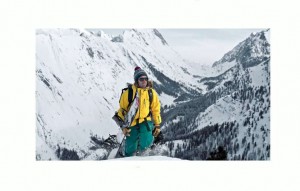
Jeremy Jones making snowboard history. Photo/New York Times

Jeremy Jones of Truckee is making snowboard history. Photo/New York Times

As the men arrived at midnight to get their first look at the steep chutes they would be climbing, the skies were still filled with endless sunlight, and something occurred to Jones that he had not anticipated, despite years of diligent planning.

“Man, I hope Terje’s even up for this,” he thought, signaling just how daring his snowboarding exploits had become.

Haakonsen grew up a three-hour flight from Svalbard but never knew it held mountains as impressive as the Atomfjella. “My first reaction was ‘Wow,’” he said.

He eventually accepted the challenge, riding his lines with his usual brio, but said that hiking up those sheer walls had gripped him more than he could remember.

The same might be said about many of the partners Jones invites on his backcountry adventures, because for the past few years, he has committed himself to summits and descents around the world that are groundbreaking in size, scope and degree of vertical exposure.

“He’s pushing technical snowboarding, meaning very critical turns on really steep terrain, and executing like no one else,” said Lucas Debari, another expedition partner and a freeriding standout from the state of Washington. “Other guys are going bigger off cliffs, or going faster, but no one is pushing technical snowboarding on lines of consequence like he is.”

The precedence of these feats is largely the product of Jones’s unconventional methods, which incorporate splitboarding, mountaineering techniques and multiweek approaches, and have allowed him to access mountain ranges and massifs that were previously considered untouchable, if charted at all.

At a local restaurant here in his hometown, Jones does not look like one of the world’s most radical snowboarders. A 38-year-old father of two, he is soft-spoken and friendly, an outlier in a sport known more for brazenness than modesty. But for more than two decades, as snowboarders have started trends and realized Olympic ambitions, Jones has pursued a singular dream: riding some of the biggest, significant mountains in the world.

Over a veggie burger stacked with bacon, he traced his evolution from an Alpine racer from Cape Cod, Mass., to an elder statesman of snowboarding in Lake Tahoe. Jones followed his two older brothers to Jackson, Wyo., when he was 16. Soon after, he took his first trip to Alaska, where, he said, he lived in his car for months.

Jones met his wife, Tiffany, a former competitive snowboarder, in Lake Tahoe. She knows the risks and long absences associated with the profession.

“I watch all his movies,” she said in a telephone interview, “and if he does something unnecessarily dangerous, I’ll call him on it. But he’s a very calm person, not ego-driven, and he always has a thought process for every decision, and he can always walk me through it.”

Jones’s position on snowboarding’s hierarchy is hard to calibrate if only because he nearly predates the sport. In the 1990s, he began pushing big-mountain freeriding and exploring Alaska’s varied and challenging terrain by helicopter. This year, he was voted Snowboarder magazine’s big-mountain rider of the year for the 10th time.

Jim Zellers, a snowboarding pioneer in Alaska in the 1980s, recalled the first time he met Jones, in Squaw Valley, in the mid-1990s.

“I was following him down this really steep, technical line, and I remember thinking, ‘This guy is special,’” Zellers said. “To this day, there’s no one who looks at the landform, the geomorphology, like him and thinks about what would be the most interesting part of the mountain to be involved in.”

But at a certain point, Jones felt limited by the helicopter exploration as it became as popular and predictable as resort riding.

“It’d be the best day of the year,” he said, “and I’m standing on top of the best line in the best heli zone in the world, and I realize that I’m riding it for the third time and it’s already been in multiple movies and magazines. Where’s the progression or adventure in that?”

He added: “You eventually discover that with a heli and snowmobile, you can only access about 5 percent of the mountain range. To keep the adventure alive, we had to turn to something else.”

He turned to the splitboard, a snowboard that separates into two touring skis, which allowed him a new way to get around the backcountry and ascend mountains. The splitboard had been around since the 1980s in Europe, but the crude initial designs never caught on. As Jones began approaching these mountains from the bottom, he also began borrowing equipment from traditional Alpinism like ice axes, crampons and climbing ropes.

Conrad Anker, a leading mountaineer, climber and skier from Montana, compared Jones’s feats to the rock climber Alex Honnold’s free climbing.

“It’s really high stakes, the hardest level of technicality and difficulty,” Anker said. “You take that human-power element and the solid mountaineering, and you see why he’s so well-respected in the mountaineering community.”

In many cases, this self-ascent ethos has allowed Jones to outperform helicopters in traveling deeper into mountain ranges, waiting out bad weather and finding steeper lines to ride. As he approached these mountains from below, his knowledge of snow and avalanche conditions grew, and his understanding of a mountain’s features expanded the types of lines he was willing to attempt.

After failing to persuade his longtime sponsor, Rossignol, and several other companies to produce a splitboard for him, he started making his own. Then in 2010, Teton Gravity Research, his brothers’ production company, released the first of a planned trilogy of backcountry snowboarding movies, “Deeper,” which in Jones’s words “threw a bunch of gas on the backcountry fire that had been developing for years.”

Despite a decline in overall sales of snowboards, splitboarding has become the fastest-growing segment in the sport, rising about 32 percent so far this season compared with the same period last season. (Three companies that refused to make Jones a splitboard are now producing them.) One effect has been to move snowboarding from the resorts to the off piste, where the sport was conceived.

But with freedom comes risk. In the winter of 2010-11, 16 skiers or snowboarders died as a result of backcountry avalanches in the United States, according to the American Avalanche Association. During 2011-12, the number of deaths climbed to 20, as advancements in equipment made backcountry riding more accessible.

“You look at Europe and what the standard is for a technical mountaineering background for their winter athletes; it far surpasses the United States,” Anker said. “I see it all the time: seasoned skiers who get themselves into these avalanche situations, making preventable and sometimes fatal mistakes.”

Even Jones’s expeditions have had close calls. During the filming of “Further,” released in September as the second part in the trilogy, the snowboarder Forrest Shearer was knocked off balance by a batch of slough — a small surface-level slide — near the top of a steep, narrow chute in Japan and fell 1,200 feet before he recovered. In Austria, the husband-and-wife team Mitch Tölderer and Bibi Pekarek were feet from the summit of a giant peak when a slab they were standing on broke and slid. In each case, the riders were largely unscathed.

Jones tries to avoid these pitfalls with methodical research and planning.

“A lot of climbing has to do with ethics, and the style and manner in which you do things, in which you make decisions,” said Debari, the standout freerider. “He definitely brings that mind-set into snowboarding.”

Jones spends years scouting locations, gathering data on weather and snow, and talking to local guides before he selects a destination. On the mountain, the talk revolves around “slough management” and limiting “secondary exposure,” meaning avoiding areas that put his fall line above dangerous obstacles like cliffs, rocks, trees or gullies.

“He walks away from stuff all the time,” said Steve Jones, Jeremy’s oldest brother and longtime expedition partner, and a principal in Teton Gravity Research. “He’s incredibly patient, and that’s a big part of the unspoken trust that our family puts into what he does.”

Jones has learned to look for ranges where the predominant weather has a heavy maritime influence, generally meaning heavier snow that is less likely to form layers that can fracture and slide. He also searches for mountains that rise out of large, flat glaciers and ice fields, creating shallow avalanche run-outs instead of deep, obstacle-filled terrain traps.

In perhaps his most risky expedition, Jones traveled to the Wrangell-St. Elias Mountains in southeast Alaska. They sit in America’s largest and least explored national park, a mountainous zone larger than Switzerland. These ranges have achieved a high profile among climbers, skiers and snowboarders who consider them the tallest in the world, not in altitude, but in the sheer vertical relief with which they rise from flat ground.

In an email, the veteran Alaskan bush pilot Paul Claus wrote, “The St. Elias also have probably the hardest conditions found anywhere: the coldest temps, very bad weather, unfathomable amounts of snow and extreme remoteness.”

Jones had avoided the Wrangells after a friend, Aaron Martin, disappeared in 2002 while skiing down a mountain there. After years of tracking the Wrangells’ weather, he thought it was time to go last April.

Jones planned to fly to Bagley Ice Field and set up camp for a month to get to know the weather, the snowpack and the best lines. He invited his longtime riding partner Ryland Bell and Debari.

They discovered some of the most complex and technical walls, spines and couloirs they had ever seen. But at the base of most of the walls were bergschrunds — gaping, 40-foot-deep crevasses. Everything they were going to ride had extreme secondary exposure, so one slip could be fatal.

“We’re talking about things that most people wouldn’t even consider being on,” Claus said. “Even if you were actually climbing the mountain with the goal of getting to the summit, you would not go where he went.”

Nonetheless, Jones, Bell and Debari tackled five major first descents, with names like the Tooth and West Wall, in 30 days. After pushing his partners to their limits, Jones said he had one final goal: a “cherry line” in the middle of a “no man’s land” peak. He named it Space Needle, and hiked there alone at 7pm, carving a gutsy 1,400-foot line on one of the trip’s nonpareil descents.

“The pitch of what he was riding — that was incomprehensible,”Debari said. “Not just steep and technical, but mentally so challenging. You have to be the most calculated snowboarder in the world to do what he does over and over again and survive.”

Even at 38, Jones says he has no plans to slow down.

“It’s funny,” he said. “With splitboarding, I have less pain than I’ve ever had. I spend more of my day hiking and getting a good full-body workout, and less time on high-impact descents.”

When asked about his next movie and his plans to top his previous feats, he turned philosophical, saying, “In 12 hours, we go out and experience nearly every emotion in the human range: physical strain, frustration, pain, anxiety, fear, calculation, the joy of making it to the top, the beauty of your surroundings, camaraderie, then the 60 seconds of adrenaline-filled activity.”

He added: “If it was all about the adrenaline and the descent, you wouldn’t last doing the style of riding I do. It’s about a much wider experience. But, yes, we’ve got some pretty amazing stuff planned.”