Vonn wins downhill title; Sullivan has best season in 5 years

By USSA

LENZERHEIDE, Switzerland – Lindsey Vonn (Vail) won a record 17th Audi FIS Alpine World Cup globe and record sixth straight downhill title after fog forced officials to cancel the final men’s and women’s downhills on Wednesday.

Vonn won three of seven World Cup downhills this season and missed two due to injury following her super G crash at World Champs. March 13 cemented the U.S. Ski Team’s win of the women’s downhill standings by 457 points over the Swiss thanks to nine U.S. podiums from five different women.

The 17th title breaks the women’s record of 16 she previously shared with Annemarie Moser-Proell. Only Ingemar Stenmark has more with 19.

Stacey Cook (Mammoth Lakes) finished fourth behind Slovenia’s Tina Maze and Germany’s Maria Hoefl-Riesch. Julia Mancuso (Squaw Valley) ended up ninth, Alice McKinnis (Glenwood Springs, Colo.) 10, Leanne Smith (North Conway, N.H.) 12 and Laurenne Ross (Bend, Ore.) 16.

Marco Sullivan

Marco Sullivan

Marco Sullivan (Squaw Valley) finished 14th in the World Cup downhill standings, his best season since 2008 and the top finish for U.S. men. Norwegian Aksel Lund Svindal took the men’s downhill title, his second of the season. Travis Ganong (Squaw Valley) had his career best downhill season with an 18th finish.


Rahlves’ injury ensures new winner of Banzai

Kyle Coxon won the Super Final at the Rahlves Banzai Tour and John Bochenek took both the overall skier title and Sugar Bowl stop win on the final race of the tour March 10 at Sugar Bowl Resort.

Chelone Miller, brother of Olympic and World Cup skier Bode Miller, stood on top of the men’s snowboard podium, after winning both the Sugar Bowl stop and the overall men’s snowboard tour title. Shannon Rahlves took the women’s ski win and the overall women’s ski tour title. Kiana Putman won the women’s snowboard event, and Casey Lucas was crowned overall women’s snowboard tour champion.

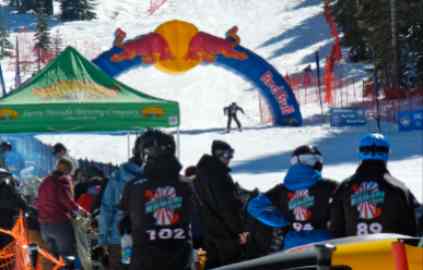
Banzai's finish line at Sugar Bowl is visible from the Lincoln chair. Photo/LTN

Banzai’s finish line at Sugar Bowl is visible from Lincoln chair. Photo/LTN

The Rahlves’ Banzai was held under sunny skies and soft snow conditions left over from a mid-week storm that dropped nearly 2 feet of new snow on the mountain. The Sugar Bowl stop was the fourth and final stop of the two-month race tour that had already run races at Kirkwood, Squaw Valley and Alpine Meadows.

At Sugar Bowl Resort racers rocketed through the rock-lined, spectator-friendly Silver Belt Gully course, made famous during the original Silver Belt races of the 1940s. A mix of natural jumps, tight corners, and moguls made for spectacular crashes, tight passes and big airs during the finals and super final on Sunday.

Rahlves’s Banzai Tour organizer, Sugar Bowl Resort ski ambassador and skiing legend Daron Rahlves was unable to defend his Super Final crown because of a minor injury he suffered at the Squaw Valley stop of the tour. The Super Final field instead included Kyle Coxon, John Bochenek, Jesse Maddex, and John Lange. Coxon was awarded $5,000 for the win.

In all, $30,000 of prize money was handed out at the awards ceremony at Sugar Bowl Resort’s Judah Lodge.

Overall tour top finishers included:

• Men’s Ski Overall- John Bochenek, first; Kyle Coxon, second; John Lange, third

• Men’s Snowboard Overall- Chelone Miller, first; Lucas Dehmlow, second; Adam DeVargas, third

• Women’s Ski Overall- Shannon Rahlves, first; Shelly Robertson, second; Hannah Jermstad, third

• Women’s Snowboard Overall- Casey Lucas, first; Macy Price, second; Anna Weber, third.

Sugar Bowl Banzai top finishers included:

• Men’s ski- John Bochenek, first; Kyle Coxon, second; John Lange, third

• Men’s Snowboard- Chelone Miller, first; Sylvain Duclos, second; Lucas Dehmlow third

• Women’s Ski- Shannon Rahlves, first; Shelly Robertson, second; Hannah Jermstad, third

• Women’s Snowboard- Kiana Putman, first; Macy Price, second; Carrie Hall, third.


8-acre controlled burn on N. Shore scheduled

North Lake Tahoe Fire Protection District’s fuels crew will continue the hazardous fuels reduction project in the Hunter Creek area on March 11, weather permitting.

This is projected to be a one-day event and crews will be monitoring and mopping up March 12.

This project is a cooperative effort between North Lake Tahoe Fire Protection District, Reno Fire Department, Truckee Meadows Fire Protection District and Washoe County Parks Department.

This 8-acre slash pile project was created as a result of a hazardous fuels reduction and defensible space project over the last year, to help minimize the risk of wildland fires in the area.

For further information, call (775) 831.0351, ext.0.


USFS to burn near Cold Creek Trail

U.S. Forest Service fuels management crews will continue prescribed fire operations near South Lake Tahoe on March 7.

Operations will take place off of Cold Creek Trail. Crews expect to burn approximately 5 acres, weather permitting. Operations may continue through the end of the week as conditions allow.

Residents and visitors can expect to see smoke from this prescribed fire project area. The Forest Service strives to minimize the impacts of smoke on local communities. Smoke-sensitive residents should consider staying indoors and keeping doors, windows and outside vents closed.

To directly receive prescribed fire updates, send an email to pa_ltbmu@fs.fed.us.

Forest Service staff will post road signs around areas affected by prescribed fire, and update the local fire information line at (530) 543-2600, No. 6.


Disabled people no longer left off the slopes

By Carrie Jung, NPR

March means spring break is just around the corner, and for New Mexico it means mild temperatures and fresh snow — perfect conditions for visiting area ski resorts.

A growing number of resorts are now offering programs that cater to vacationers with disabilities, and resort owners say it has proved to be a boost for business.

At a Taos Ski Valley chairlift, Barbara and Philip Logan prepare their son, Tilghman, for his first day of ski lessons.

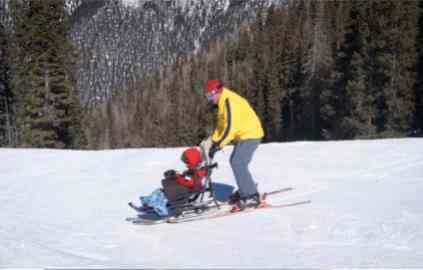
 Enlarge image Tilghman Logan and his instructor, Craig Stagg, do some practice turns using sit skis. Some ski resorts have created opportunities for people with disabilities to participate in snow sports. Photo/NPR

Tilghman Logan and instructor Craig Stagg practice turns using sit skis. Photo/NPR

The Logans traveled from New York City to Taos, N.M., for a winter vacation, and Tilghman can’t wait to begin his ski lesson.

Tilghman has a severe form of cerebral palsy that limits much of his physical movement and some of his eyesight. But that’s not stopping him and his father from experiencing the snow. With some careful planning and specialized equipment, the duo hopes to be tearing up the slopes together in no time.

Ski instructor Craig Stagg takes the group up the lift to demonstrate a few sit ski basics. A sit ski is a specially made sled developed for people with limited use of their lower limbs, allowing them to slide down a mountain much like an able-bodied skier.

“They really are a lot of fun once you get the hang of them,” Stagg says.

Peter Donahue, the resort’s ski school director, says the snow can be a great equalizer for people with disabilities. “It gives them a great sense of freedom and accomplishment,” he says.

“Snow sports is a venue where a child or an individual with a disability can actually stand up and glide and move over the surface of the ground in a way that only able-bodied people can,” Donahue says.

The resort must offer adaptive ski lessons under the Americans with Disabilities Act because it sits on Forest Service land. The resort takes the program very seriously because it helps serve the needs of all guests, which, Donahue says, is just good business.

“The ability for families to come and the money that they bring to the community and to the resort certainly helps us to continue to provide those services,” he says. “It’s a benefit for everyone.”

Eric Lipp, executive director of the Open Doors Organization, an advocacy group helping people with disabilities get access to travel and other consumer opportunities, says people with disabilities are extremely vocal, and they’re a large group with significant buying power.

A recent market study shows that the disabled community now spends more than $13 billion each year on travel. As the general population continues to age, Lipp says, that number is only expected to grow.

“The likelihood of having a disability the older that you get increases greatly, and it doesn’t stop people from going out and wanting to go on vacation,” he says.

When it comes to adventure tourism, this demographic should be considered a viable and competitive market, he adds.

Back at Taos Ski Valley, Philip and Tilghman head over to the lodge to discuss their first day on the slopes.

“I think after today it’s just a question of maybe getting the right equipment, running it and getting nice conditions. And if Tilghman’s up for it, you want to do some skiing next year?” Philip asks his son.

Tilghman responds with a “yeah.”

And with a trip to the resort, some training and appropriate ski equipment, two new ski enthusiasts have been made.


Snow affecting school operations in Tahoe area

Whittell High and Zephyr Cove Elementary schools will open one hour later than usual because of the snow. That means the buses will arrive one hour later, too, to pick up kids.

In the Tahoe Truckee Unified School District it is a snow day for Donner Trail Elementary and all Donner Summit students. All other schools in the district are open.

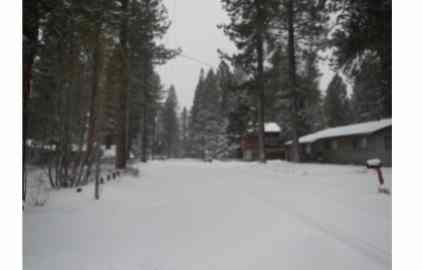
Snow is covering the streets of Lake Tahoe on Feb. 6. About 4 inches fell in South Lake Tahoe. Photo/LTN

Snow is covering the streets of Lake Tahoe on Feb. 6. About 4 inches fell in South Lake Tahoe. Photo/LTN

Lake Tahoe Unified is open.

Highway 89 around Emerald Bay is closed for avalanche control. Most other roads in the basin and leading in or out of it require chains or four-wheel drive.

The wind is gusting at lake level, causing whiteout conditions. It will be worse as one drives over the mountain passes.

While it will be a powder day at the ski resorts with more than 6 inches falling on some slopes, wind is likely to cause problems for chairlifts reaching higher terrain at the more exposed resorts.

For those hitting the backcountry today, the Sierra Avalanche Center is saying conditions are considerable.

A winter weather advisory is in effect for the Lake Tahoe Basin through 10 tonight, so expect snow all day. The National Weather Service in Reno is calling for a 50 percent chance of snow on Thursday and 30 percent on Friday. Sun will be S word to use on the weekend.

— Lake Tahoe News staff report


USFS to burn in 2 South Shore locations

U.S. Forest Service fuels management crews will begin prescribed fire operations in two locations on Lake Tahoe’s South Shore beginning March 6.

Operations will take place near the intersection of Pioneer Trail and Al Tahoe Boulevard. Crews expect to burn approximately 9 acres, weather permitting. In addition, operations will begin in the Angora Fire area near Pyramid Circle. Crews expect to burn between 10 and 15 acres, weather permitting.

Operations in both locations will continue through the week as conditions allow.

Residents and visitors can expect to see smoke from these prescribed fire project areas. The Forest Service strives to minimize the impacts of smoke on local communities. Smoke-sensitive residents should consider staying indoors and keeping doors, windows and outside vents closed. T

o directly receive prescribed fire updates, send an email to pa_ltbmu@fs.fed.us.

Forest Service staff will post road signs around areas affected by prescribed fire, and update the local fire information line at (530) 543.2600, No. 6.


Reno’s Wise wins men’s halfpipe competition

By USSA

OSLO, Norway -– David Wise (Reno) and Torin Yater-Wallace (Basalt, Colo.) boosted ahead of the tough competition to win halfpipe gold and silver at the FIS Freestyle World Ski Championships on March 5.

Wise and Yater-Wallace put down solid first runs that couldn’t be topped, landing them on the podium just 0.6 points apart.

David Wise

David Wise

In women’s halfpipe, Angeli Vanlaanen (Bellingham, Wash.) finished sixth, the top spot for U.S. women. Switzerland’s Virginie Faivre took the gold medal for women.

Maddie Bowman (South Lake Tahoe) did not compete after she sustained a fall in training and didn’t feel up to qualifiers.

Yater-Wallace attempted a double 1080 in his second run, which could have put him in position for gold, but he didn’t land it.

Tuesday was Wise’s first World Champs win after placing fourth in 2009 and 2011 in Japan and Park City.

The win gave Wise the extra 141 points to overtake teammate Yater-Wallace in the AFP halfpipe World Rankings.


Tahoe slow to memorialize Olympic history

By Sam McManis, Sacramento Bee

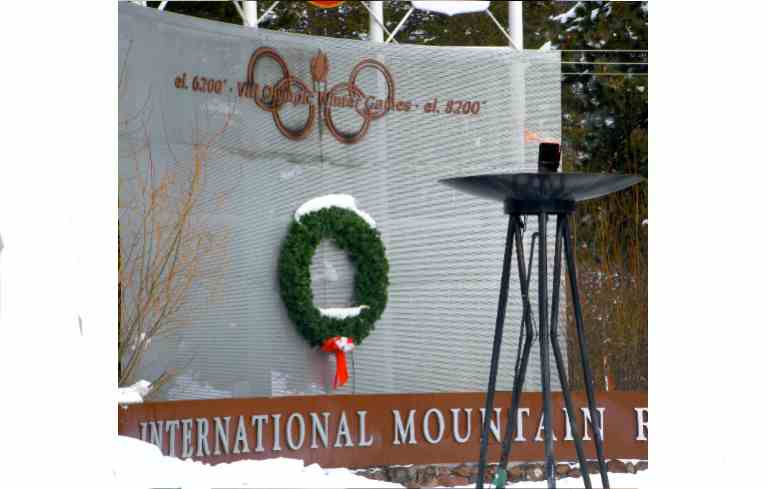
TAHOE CITY – Flames lick the crisp morning sky, as they’ve done for decades from two cauldrons along Highway 89, midway between Truckee and Tahoe City. They don’t quite reach the Olympic rings looming from the twin-towered entrance to Squaw Valley USA, but their symbolism burns strongly. Once, these flames announce, something extraordinary happened here.

But that’s it, ladies and gentlemen. There is your Squaw Valley 1960 Winter Olympic Games history, in toto.

Move along, now. Go hit the slopes.

Nothing else to see here.
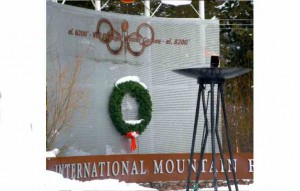
The Olympic flame at the entrance to Squaw Valley. Photo/LTN file

The Olympic flame at the entrance to Squaw Valley. Photo/LTN file

Actually, there is plenty of history to be cataloged and relished about Squaw Valley’s brief and unlikely period on the world stage. But you’d almost have to embark on an archaeological dig to unearth it.

There is no permanent museum documenting Northern California’s lone flickering fortnight of Olympic glory. No repository for keepsakes and mementos. No place to educate youngsters who consider the X Games the pinnacle of snow-sports achievement.

It’s not for a lack of trying. For five years, a group of avid skiers and history buffs has been trying to rectify this gross slight, in a curvy giant slalom of an effort.

The Squaw Valley Ski Museum Foundation has doggedly drawn up plans, redrawn them a few times, chatted up Placer County politicos, elicited public donations of funds and memorabilia, yet it still has not yet reached the finishing chute to actually break ground on a facility.

So, until a permanent museum can be erected – Lake Placid, N.Y., by the way, boasts an Olympic museum that draws 35,000 tourists annually – what we’ll have to settle for is a four-panel display hanging in the Boatworks Mall in Tahoe City.

Yet even on such a small scale, the array of artifacts from the 1960 Games is impressive.

Programs, pins and pennants. Photos from official Olympic photographer Bill Briner. Promotional material, such as an “Olympic Survival Kit” from Harrah’s Club, and a jaunty felt Nordic hat with an “Olympic VIII Winter Games” logo ironed on. Magazine covers, from Time, Newsweek, Sports Illustrated. A red bib number worn by a downhill competitor.

Best of all is a sign posted in the window of a nearby boarded-up bookstore, reading: “Future Site of the North Tahoe 1960 Winter Olympics Museum, coming April 2, 2013.”

So, history will finally get its due?

Sort of.

Consider the future Boatworks Mall site a temporary home, said David Antonucci, the force behind the mall effort. An author and Squaw Valley Olympics historian, Antonucci has teamed with the Baptiste family of Granite Bay, which has an extensive collection of Squaw Valley Games memorabilia, to give the public a taste of what a larger, permanent facility might offer.

“The history is totally underappreciated,” Antonucci says. “In the aftermath of the Olympics, it was like people walked away from their heritage. Now, 50 years later, people are saying, ‘Gee, we should be preserving and honoring our Olympic and skiing heritages.'”

For the past six months, Antonucci has cataloged Stan and Maryann Baptiste’s more than 200 artifacts and sent out the word that they are looking for other items residents may have kept from the Games.

He said he sees the Boatworks site as an acceptable temporary home until the “world-class museum” the Squaw Valley Ski Museum Foundation plans can be approved. Antonucci said he and the Baptistes had no plans beyond the four-panel display, but added that the mall’s owners offered the empty space rent-free after “they saw what kind of artifacts we had.”

Ideally, Antonucci says, the Baptiste artifacts will be combined with a big collection of non-Olympic but historical ski memorabilia held by the Auburn Ski Club, and housed at the foundation’s proposed permanent site at the entrance to Squaw Valley USA.

What’s the holdup with the “real” museum?

Bill Clark, head of the foundation’s board of directors, said museum consultants they hired in 2009 to do a site selection determined that the best spot for the museum was at the county-owned park at the base of Squaw Valley USA – near those dueling Olympic flames.

“It makes so much sense to put it there it’s mind- boggling,” Clark says. “(But) there were some folks who didn’t think that was the greatest idea, mostly because our consulting architects threw out conceptual plans that showed this enormous building. It originally looked like it was going to overwhelm the park.

“But if it’s properly sized and sited within that park, and if we can work with (Placer County) with the operation, we think it’s a win-win. We’ve done a revised concept and been sharing it with different supervisors in the county. But we have not gotten to the point where we’ve had any formal sort of evaluation.”

In other words, don’t expect a swift, luge-run type of approval any time soon.

But Clark is optimistic. He thinks it’s important to preserve Squaw Valley’s history, and he’s excited about some of the items his group has stumbled upon.

“Every day, we hear of things hiding in people’s closets,” Clark says. “We know where the scoreboard from the Olympic ice arena is hiding. I just got an email from a guy the other day who (said) his brother had purchased the downhill skis from the giant slalom winner. He walked up to (the winner, Roger Staub of Switzerland) in the finish corral and said, ‘I’ll give you $20 for the skis.’ He’s going to donate them. We have the winning hockey puck from when the USA beat the Russians. A guy from Rocklin ran out on the ice and grabbed it.

“There’s some great stuff.”

Until then, if you want history, nod to the flames but head to the mall.


6 Diamond Peak skiers qualify for performance camp

By Lisa O’Daly

Far West 14 and under athletes gathered at Alpine Meadows for the North/South Series last weekend to compete in super G. While Sunday’s race was canceled, the teams had the opportunity for a Friday training run and an exciting Saturday one-run race on a long course from the top of Summit down the Wolverine bowl and over Waterfall to the bottom of Alpine Meadows, a distance of three-quarters mile.

Icy conditions turned slushy as the day wore on, challenging the racers, along with the already difficult course. A mid-course jump and an unnerving athlete injury requiring evacuation during the training day had the racers exercising caution and on race day, included a 45-minute course hold to dig out a rock.

Diamond Peak’s Casey Delaney still led the pack of 92 competitors for the men, finishing first.

Madison Idso, who often leads the Diamond Peak women, took a hard crash and was not able to finish.

“Casey Delaney is dominating the U14 races this season, at every resort and in every snow condition,” commented Diamond Peak Ski Foundation Coach Mark Norton.

The Diamond Peak men once again rocked the competition with not only Delaney’s top-of-the-podium finish, but also with Payton Norton’s fifth place (1:13.67), followed by Winston Pretti in eighth (1:14.56) and Noah Cleary in ninth just 0.06 seconds later (1:15.02). Teammates Corey Huber (22nd, 1:16.36), Tommy Corcoran (48th, 1:19.75), Nick Fischer (57th, 1:21.85), Trent Funke (60th, 1:22.35), Jeff Miller (67th, 1:23.98) also finished the challenging race.

“The course was tough; the conditions were tough. Fortunately, Diamond Peak’s U14 athletes — men and ladies — are also tough and faced the challenges head-on,” said DPSF Coach Raquel Norton.

The Diamond Peak women skied the super steep, technical course extremely well and were led by Emily Donahue in 19th (1:18.67), with Sophia Holm following at 21st (1:19.13) and Bridgette Johnson 28th (1:21.43). Laurel Taylor finished 35th (1:22.48) after making a critical error on the face and had to dump all her speed. Emily White (44th, 1:23.93) and Katie Fisher (70th, 1:44.61) can join their teammates in proudly saying they completed their toughest race.

Six of the Diamond Peak athletes — Casey Delaney, Noah Clearly, Corey Huber, Payton Norton, Winston Pretti, and Madison Idso — qualified to attend the U14 performance camp, an invitation-only event at Sugar Bowl on March 15-17. Twelve men and 12 women are selected from the North Series to compete based on 2013 series races conducted by Feb. 17, while Idso and Huber were selected separately due to their seasons’ performances. Athletes will race SL, GS, SG events against the other top athletes of their age class. The entire team next competes at the U14 championships where the North meets the South and Central divisions to compete in all four events (SL, GS, SG, and PL) on April 4-7, also at Sugar Bowl.

And don’t forget that next weekend is the Diamond Cup at Diamond Peak, where everyone can be a ski racer. The entry fee of $15 per racer includes two runs on a course set up for a duel. The race categories include: Individuals (age/sex groups), Family, Husband/Wife, Father/Son, Father/Daughter, Mother/Son, and Mother/Daughter.

Lisa O’Daly is a parent volunteer with the Diamond Peak team.