Temperature changes challenge Tahoe’s wildlife

By Jim Sloan

The pika is a small, furry mammal that lives in the harshest of places — in mountainous rocky areas where the snow is deep, the air is cold, and conditions are unforgiving.

The small-eared member of the rabbit family doesn’t even hibernate, choosing instead to burrow into hay piles it builds beneath the deep snow and using its high metabolism and thick fur to survive.

But now the American pika is disappearing from vast stretches of the backcountry because of a new enemy: climate change.

A 6-inch mammal that can survive for months beneath massive snowpacks is disappearing in the face of increasingly hot summertime temperatures.

In a study published earlier this year in the journal PLOS One, researchers found that the pika has vanished from the rugged backcountry around Mount Pluto bounded by Lake Tahoe, Highway 89, and Highway 267.

It is the largest area of pika extinction reported in the modern era. Researchers said the extent of the die-off echoed “large-scale range collapses” that occurred after the last Ice Age.

From 2011 to 2016, lead researcher Joseph Stewart, a conservation biologist at UC Santa Cruz, scoured that triangle of land looking for pikas. He found plenty of old pika scat and used carbon dating to show how long the animal had occupied the area, but all signs of living pikas had disappeared.

“We knew that historically they occupied habitat all through that area,” Stewart said. “But the living animals were no longer there.”

Stewart says the pikas died out first in the lower elevations and then in the higher reaches of the 165-square-kilometer area because of increasingly hot summer temperatures. Pikas are sensitive to the heat; they can only survive for an hour in temperatures that are above 75 degrees. When the daytime temperatures are too high, pikas can’t get out and forage or die trying.

Although some pikas survive in other parts of the Sierra, Stewart predicts that their numbers will decline by 97 percent by 2050. Other studies have shown that the pika has disappeared from the Black Rock Range in Nevada and from Zion National Park.

And the American pika is not the only victim of climate change. Stewart noted that Belding’s ground squirrel and the alpine chipmunk are also suffering in the heat. The pika has disappeared from 15 percent of its historical habitat, but the Belding’s ground squirrel — which lives above 6,500 feet elevation between Lake Tahoe and Kings Canyon — is gone from 42 percent of its historic stomping grounds.

More troubling, Stewart says, is that many more species may be disappearing but wildlife managers are having trouble documenting the decline due to a lack of funds for monitoring.

“For these species that are vulnerable, we need baseline data on where they are now,” he said. “It’s totally feasible to develop that knowledge. We just need to put money toward the effort.”

The news of Stewart’s findings about the pika triggered a wave of media reports. Discover magazine, the New York Times, and many local and regional newspapers reported his findings. Stewart was surprised — this was his third paper on the topic — but hopes the public interest will convince people to help reverse global warming.

“It’s one thing to hear about polar bears suffering because of climate change, but when you hear about an animal that is much closer to you and that you have seen on hikes or trips into the mountains, it tends to resonate more,” he said.

Stewart notes other studies that show climate-related local extinctions have already occurred in hundreds of species around the world. A recent study that surveyed 976 species from tropical to marine habitats found that nearly half have suffered local extinctions.

Stewart says one hope for slowing the loss of species is to use targeted gene flow, in which animals from warm-adapted populations of a species are translocated to populations that don’t yet possess these genetic adaptations to withstand warmer climate conditions.

“But a far simpler and more economical solution than trying to save each species individually is to rein in and reverse climate change,” he said.

This article is republished from the winter 2017 edition of Tahoe In Depth.


Who to watch in the 2018 Winter Olympics

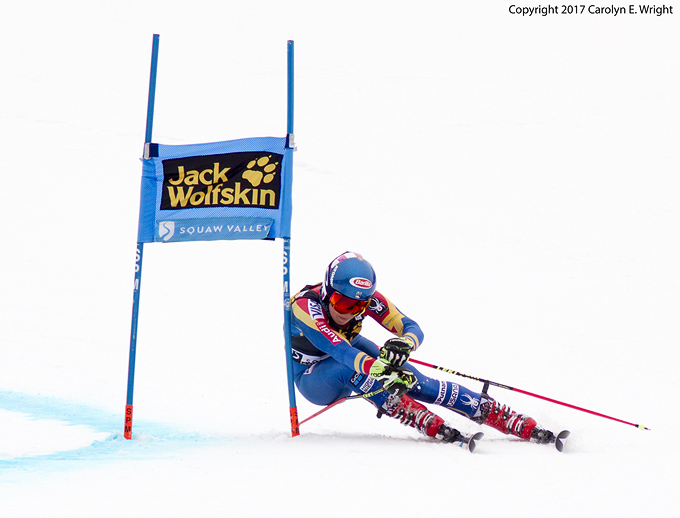
Mikaela Shiffrin is a favorite for the women in alpine skiing. Photo Copyright 2017 Carolyn E. Wright

By Jennifer Calfas, Time

From a 17-year-old snowboarding star to a gold-medal-hungry women’s ice hockey team, Team USA’s athletes competing in the 2018 Winter Olympic Games in PyeongChang, South Korea, are looking to make a mark.

The official roster for Team USA will not be finalized until weeks before the 2018 Winter Olympics start Feb. 9, but the first competitors in the 15 Winter Olympic sports have already been chosen — and they each bring a unique story to the games.

Maame Biney is a 17-year-old who already made history as the first black woman to qualify for Team USA’s short track speedskating team. Making his return in 2018, Gus Kenworthy is a freestyle skiing star who could become the first openly gay male athlete to compete at a Winter Games. And Chloe Kim is a 17-year-old snowboarding phenom who is the favorite to win gold in the sport for Team USA.

Read the whole story


Yellow-jacket boom: Experts puzzled by insect’s cycles

By Adam Jensen

Predicting snowfall is a guessing game each winter. A spring equivalent is guessing how many yellow jackets will invade the Sierra.

Cold and dry conditions in the winter of 2015-16 likely contributed to a boom in 2016. While the winter of 2016-17 knocked down populations at higher elevations in 2017, it led to monster populations in the Central Valley, said Lynn Kimsey, a professor of entomology at UC Davis.

Exactly what conditions make for a population explosion like 2016 remain a mystery. The size of the 2018 yellow jacket population at Lake Tahoe is unclear.

“We don’t really know why they have this boom-bust population thing,” said Kimsey, who spoke at the UC Davis Tahoe Environmental Research Center evening lecture series this fall.

There are several species of wasps in the Sierra Nevada, but yellow jackets are a nuisance to humans because they scavenge for sugar, protein, and fat, while the other species survive on live insects.

“We make life good for them,” Kimsey said of the yellow jackets, noting they like much of the same food people do.

Kimsey encouraged people to feed their pets indoors, dispose of any fruit that falls from trees, and be mindful of potential food sources like bird feeders. Hanging up yellow jacket traps early is also important. “If you wait until mid-summer, it’s too late,” Kimsey said.

Yellow jackets build large nests in many locations, including logs and building crevices. Kimsey recommends anyone who disturbs a nest to run away and don’t stop.

“Holding still will not prevent them from stinging you,” Kimsey said.

If you’re stung once, antihistamines and a cold compress are likely suitable treatments, but multiple stings will probably require a visit to a medical professional, she added. And take heart, it could be worse. Wasps rank a two out of four on the Schmidt Insect Sting Pain Index, a relative pain scale developed by entomologist Justin O. Schmidt, Kimsey said. The scale ranks the bullet ant, native to Central America and South America, as having the most painful sting. In an article in Business Insider, Schmidt described the sting as “pure, intense, brilliant pain. … Like walking over flaming charcoal with a 3-inch nail embedded in your heel.”

This article is republished from the winter 2017 edition of Tahoe In Depth.


Making headway battling aquatic invasive plants

By Tahoe Resource Conservation District

After four years of treatment, Emerald Bay remains free of aquatic invasive plants.

In 2010, the Tahoe Resource Conservation District, in collaboration with California State Parks and the Lake Tahoe Aquatic Invasive Species Program, began treating 6 acres of Emerald Bay to remove Eurasian watermilfoil, an invasive plant that alters the aquatic ecosystem by raising the pH of the water, decreasing oxygen, and increasing water temperature. Dense mats of vegetation can also interfere with boat navigation and recreational activities such as paddling and swimming.

The Emerald Bay project was a model for success that is being replicated at other locations.

This year, Tahoe RCD realized a similar achievement at Crystal Shores East Marina in Incline Village. From 2014 to 2016, crews used diver-assisted suction removal and lake-bottom barriers to eliminate invasive plant growth. In 2017, no plants were detected in any of the three Crystal Shores marinas. Surveillance surveys will continue in 2018.

With support from public and private partners, teams are controlling invasive plants at other locations around the Lake Tahoe Basin. The University of Nevada, Reno’s 2015 Implementation Plan for the Control of Aquatic Invasive Species within Lake Tahoe is guiding the way. The plan uses an ecological and science-based framework to prioritize locations for controlling satellite populations of invasive plants.

In 2017, Tahoe RCD surveyed over 9 acres of aquatic plant habitat at Lakeside Beach and Marina, Fleur du Lac, Crystal Shores, Tahoe Vista Boat Launch, the Truckee River, and three miles along Nevada’s shoreline. All Eurasian watermilfoil and curlyleaf pondweed plants were removed this season, and the sites will be monitored next year.

In a pilot project, Inventive Resources Inc. and Tahoe RCD used ultraviolet light to treat invasive plants at Lakeside Marina. Lab studies and small field tests have shown that ultraviolet light damages the DNA and cellular structure of aquatic plants, causing them to die back. Tahoe RCD will work with partners this winter to finalize initial results and schedule post-treatment monitoring for 2018.

“From our work in Emerald Bay and Crystal Shores, we know that invasive plant populations can be reduced, and with continued treatments, we will be able to better manage populations around the lake in the future,” said Nicole Cartwright, executive director at Tahoe RCD. “While bottom barriers and diver-assisted suction removal have proven to be successful, we need to identify other techniques that could help us get ahead of the battle, particularly with persistent plant species such as curlyleaf pondweed, and much larger infestations that are looming.”

Funding for these projects has been provided by California Tahoe Conservancy, Crystal Shores East Homeowners Association, California Department of Water Resources, Incline Village General Improvement District, Tahoe Water Suppliers Association, Nevada Division of State Lands, Tahoe Fund, Tahoe Regional Planning Agency, Truckee River Fund, and the U.S. Fish and Wildlife Service.

This article is republished from the winter 2017 edition of Tahoe In Depth.


Fun in Tahoe without skiing/snowboarding

By Ryan Buell, Moonshine Ink

A lot of ink (and the digital equivalent) has been used to write about skiing in Tahoe. Obviously — more resorts than you can count on both hands, more than 100 lifts, world class backcountry offerings, The Palisades. It needs no repeating. And that’s why we want to devote some space to sharing the love with Tahoe’s less-renowned and equally-epic sports and activities.

While most locals certainly know it, if you were going only off media coverage, it might come as a surprise that there is, in fact, more to do here in the winter than ski — and I don’t mean snowboarding. For that matter, there’s more to do in the summer than hike and mountain bike. It’s time to celebrate the full breadth of recreation we have in our community.

Starting with the Truckee-Donner Recreation and Park District. TDRPD is as sure a place as any to find the diversity of recreation in our community. From common sports like hockey and indoor volleyball, to the more eclectic pickleball and broomball, the TDRPD offers a variety of sports for all interests and levels of skill and competition.

Read the whole story


Asians develop a taste for snow, ski resorts

By Alex Frew McMillan, The Street

The Winter Olympics are fast approaching. And with the next two installments happening in Asia, the center of the ice-and-snow world is shifting ever so slightly to the East.

South Korea hosts the games in February 2018, now just two months away, in and around the resort of PyeongChang. That’s not to be confused with Pyongyang, the capital of the noisy neighbor to the north! Then Beijing will become the first city in history to have hosted both summer and winter games when it takes on the colder form in 2022.

China has yet to produce a ski resort of any note. The best-known is Yabuli, the largest resort in the country, 100 miles outside Harbin in the country’s most-northern province, Heilongjiang. Club Med, now a Chinese company, owns one of the two slopes on the hill. But lifts and slopes are limited.

Read the whole story


Greatest Bond stunt has roots in Tahoe

By Rick Sylvester, Moonshine Ink

The year 2017 marked the 40th anniversary of James Bond’s “The Spy Who Loved Me.” One local historian and pundit opined the stunt I performed doubling for Roger Moore playing James Bond as part of the opening pre-credit sequence represented a “game changer.”

Though the movie was panned, it was a commercial success. The San Francisco Chronicle called it the “greatest Bond stunt in history.” Newsweek’s film critic took it further and said it was the greatest stunt in the history of cinema.

I found these statements interesting, as despite playing Bond twice, I never regarded myself as a stuntman per se, but merely a climber, skier, former distance runner, former wrestler, and novice parachutist who just happened to have come up with a rather odd idea.

Read the whole story


SLT halfpipe skier Smaine healthy and confident

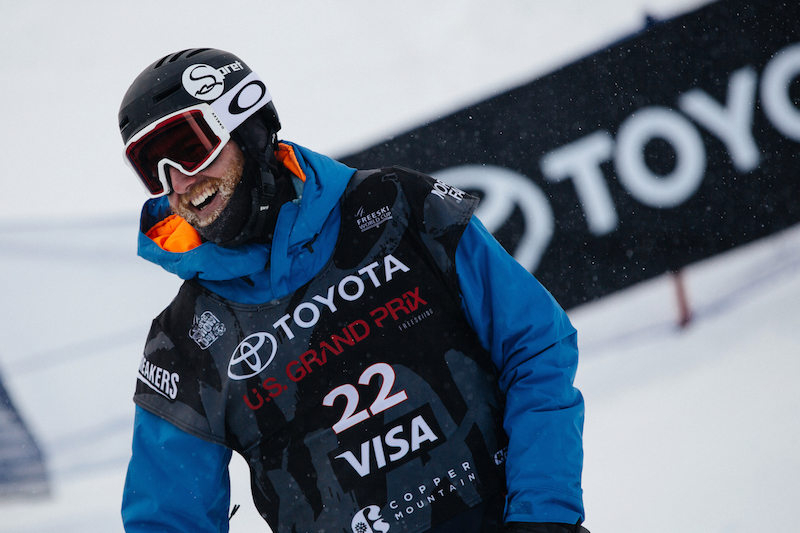
Kyle Smaine is hoping for a spot on the 2018 Olympic team. Photo/Sarah Brunson/USSA

By Becky Wright, Tahoe Quarterly

Kyle Smaine spent the better part of last season “crutching [his] way through the seemingly endless snowbanks” in his native South Lake Tahoe.

Now, with a surgically repaired anterior cruciate ligament and meniscus, the Sierra-at-Tahoe halfpipe skier feels healthy and motivated to make a run at the 2018 Olympic Winter Games. But with a stacked field of talented U.S. athletes, he knowns it won’t be easy.

“With my injury last January, I haven’t had the luxury of doing any on-snow training leading into this winter. I have spent a ton of time in the gym this summer, as well as taking a step back and working on my mental game and mindset,” Smaine said. “I really feel like I’m heading into this winter as physically strong as I have ever been. I have learned over the years that I ski the best when I’m enjoying myself, so I haven’t really been putting any pressure on myself heading into this winter. I have set goals, and every day I have done what I was able to in order to set myself up for success, but I’m just taking it day by day.”

Read the whole story


Squaw becomes training site of U.S. ski-snowboard teams

U.S. Ski & Snowboard and Squaw Valley entered a five-year agreement designating the resort as an official training site of the U.S. ski and snowboard team.

Squaw Valley joins Mammoth Mountain, Deer Valley in Utah, Copper Mountain in Colorado and Timberline Lodge in Oregon as one of only five official training sites across the country. In addition to being an official training site, Squaw Valley is a high performance center and development site for the team.

Squaw Valley will host U.S. team athletes for elite training sessions at the resort at key times during the season. Additionally, the high performance center and development center designations connect Squaw Valley staff with the Park City-based Center of Excellence and other high performance centers across the country to share best practices in strength and conditioning, sport science and sports medicine while also acting as a central training and education site for U.S. Ski & Snowboard clubs in the region.


Enough snow in Tahoe for Christmas skiing

By Benjamin Spillman, Reno Gazette-Journal

Winter is off to a slow start, especially in the Lake Tahoe Basin, with snow totals well below normal for late December.

But a recent shot of snow and mild holiday forecast spell good news for conditions at Sierra Nevada resorts.

In the Tahoe Basin the snowpack is just 35 percent of normal while the Truckee, Carson and Walker river basins are at 68, 54 and 62 percent of normal, respectively.

Read the whole story