Anderson takes silver at X Games in France

By USSA

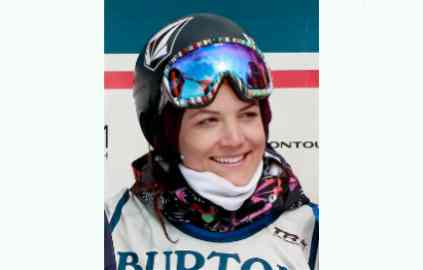
TIGNES, France -– Jamie Anderson (South Lake Tahoe) threw down a stylish and technical run to win silver in snowboard slopestyle at X Games Tignes on Friday. She was gunning for an X Games three-peat, after winning gold at X Games Tignes in 2011 and 2012.

She put down a progressive line in the first round, but couldn’t match it in her final two runs. Norwegian Silje Norendal went home with the gold.

Jaime Anderson

Jaime Anderson

Her first run put her on the podium, in particular the rails section with her super stylie boardslide 270 out with a nice gap before the landing.

En route to Tignes, Anderson’s snowboard bag went missing and she was forced to ride on all new gear without having time to break it in.

“My board bag has been lost for like two weeks and it’s a little challenging to break in all new boots and bindings. I am thankful to get some runs and be safe and sound,” Anderson said.

Norwegian Silje Norendal went home with the gold.

It was a progressive comp with new tricks performed by a talented field of international women. Anderson was the only American in the women’s final.

In the men’s final, Eric Willett (Breckenridge) took the top spot for U.S. Snowboarding in fourth place.

Sage Kotsenburg (Park City) wound up fifth, matching his season best fifth in Spindleruv last weekend.

Chas Guldemond (Reno) did not advance into the finals.

The beautiful bluebird weather and plentiful sunshine was a welcome sight after heavy snow early in the week threatened the competition.

Friday’s event wraps up another X Games Tignes for snowboarding.


Mancuso third in super G behind Ross, Cook

By USSA

OLYMPIC VALLEY — Laurenne Ross (Bend, Ore.) captured the first U.S. title of her career with a mere 0.01 second super G victory over Stacey Cook (Mammoth Mountain) on Friday at the Nature Valley U.S. Alpine Championships at Squaw Valley.

The incredibly tight race saw favorite and defending champion Julia Mancuso (Squaw Valley) land third, 0.08 seconds behind Ross. Mancuso was skiing on borrowed equipment because her skis didn’t make it to Squaw from World Cup Finals.

Thousands were on hand as California sun continued to produce perfect spring race conditions at the home of the 1960 Olympic Winter Games.

Top junior honors went to Abby Ghent (Edwards, Colo.) followed by Paula Moltzan (Lakeville, Minn.) and Lauren Samuels (Golden Valley, Minn.).

The challenging super G course starts in the shadow of the fabled KT22 and going down Julia’s Gold, named after Mancuso. It was a bumpy course with a tricky jump toward the finish.

The race served as the first half of the combined title, pairing the fastest times from super G and slalom.


Volunteer at U.S. Freestyle Championships at Heavenly

Ready to get up close and personal with today’s best freeskiers?

Then volunteer for the March 29-31 U.S. Freestyle Championships being hosted by Heavenly Mountain Resort. On snow and off snow help is needed. Volunteers are needed in mogul course and big air jump maintenance, banner set-up, food and beverage runners, registration, zero waste warriors for the recycling team, and more positions. No experience needed.

For more information or to sign up, contact Tiffany at (530) 542.5180.

The competition on the California side of the resort includes moguls, aerials and dual moguls.

Sho Kashima returns to home mountain the last weekend of March. Photo/Provided

Sho Kashima returns to Heavenly — his home mountain — the last weekend of March. Photo/Provided

Leading the U.S. team are Olympic and world champion Hannah Kearney (Norwich, Vt.) and Stateline’s Sho Kashima. Kashima will be competing in the moguls event on that Friday.

The weekend hits a high note on that Saturday with live music by Liquid Blue followed by fireworks. Event admission is free, and spectator seating will be available on a limited basis.

Heavenly will also host the U.S. Championships following the Olympics in 2014.


Jitloff wins men’s GS at Squaw

By USSA

OLYMPIC VALLEY — It was locals day at Squaw Valley as Tim Jitloff (Reno) boosted his U.S. title count to four with a victory in the men’s giant slalom to close a sun soaked Day 1 of competition at the Nature Valley U.S. Alpine Championships.

Tim Jitloff

Tim Jitloff

Jitloff is the 2008 and 2009 U.S. giant slalom champion and also owns the 2009 combined crown.

Defending champ Robby Kelley (Starksboro, Vt.) landed second and Seppi Stiegler (Jackson Hole, Wyo.) in third on Thursday.

Top junior honors went to Kieffer Christianson (Anchorage), who finished fourth in the race.

World Cup and World Champion Ted Ligety (Park City, UT) did not race, but will be in Squaw Valley for the Championships.

The race was staged a day later than planned as more than a foot of snow blanketed the Olympic race hill on Wednesday.


Mancuso nails win on home turf

By USSA

OLYMPIC VALLEY — Olympic gold medalist Julia Mancuso (Squaw Valley) on Thursday took full advantage of home snow to win the Nature Valley U.S. Alpine Championships giant slalom for a record 16th U.S. title.

The Olympic gold medalist finished 0.88 in front of a red-hot Mikaela Shiffrin (Eagle-Vail, Colo.), 18, who had just locked the Audi FIS Alpine World Cup slalom title in Switzerland.

Julia Mancuso

Julia Mancuso

The race opened the four-day culmination of the alpine ski racing year with more than 500 young athletes from across the country converging at the 1960 Olympic mountain to hunt for U.S. titles.

2013 NorAm overall champion Megan McJames (Park City, Utah) finished third to round out the women’s podium.

U.S. downhill champion Jackie Wiles (Aurora, Ore.) was sixth and Foreste Peterson (Berkeley) seventh to finish 2-3 among junior women.

The race was shortened from the planned start due to inconsistent snow after heavy snowfall on Wednesday. A packed crowd was on site for the opening race under Squaw Valley’s bluebird skies.

The Nature Valley U.S. Alpine Championships continue Friday with men’s and women’s super G.


Non-athletes subsidizing college sports

By Sean Gregory, Time

What ticks off many college students even more than an 8am class? Finding out how much they pay for sports.

B. David Ridpath, a professor of sports administration at Ohio University and a former president of the Drake Group, a college-sports watchdog organization, just finished polling about 4,000 students attending schools in the Mid-American Conference (MAC), a group of a dozen public institutions mostly in Ohio and Michigan. He asked if they knew that a significant chunk of their annual student fees — payments on top of tuition that fund various student services — helped finance their school’s intercollegiate athletic department. For example, at Miami University, in Oxford, Ohio, $950 of a student’s $1,796 annual fee, or half the payment, funds athletic scholarships, coaches’ salaries and other sports-related spending.

Some 40 percent of respondents said they were totally unaware that their fees funded sports. And even those who knew about the payments were in the dark about exactly how much of the fee went to athletics.

“Ridiculous,” wrote one MAC student in the comments section of the survey. It was a familiar refrain: “I pay a ridiculous amount for events I don’t attend.” “I’m here to learn, not to watch sports.” “My feelings with this news stretch no shorter than outrage.”

When the men’s 68-team NCAA Division I basketball championship, aka March Madness, tips off today, the nonstop television coverage, full of ecstatic crowds and handsomely compensated coaches roaming the sidelines, might create the impression that sports programs shower their schools in cash. But in the vast majority of cases, the opposite is true.

Money from students — and taxpayers — subsidizes sports. According to USA Today, of 227 public institutions playing Division 1 sports, just 22 have self-sufficient athletic departments. (These include the revenue-generating machines at the University of Texas, Ohio State and Florida.)

What’s more, even in the face of ever tighter budgets and ever escalating costs for students, the subsidies keep soaring. According to a January report from the American Institutes for Research, athletic subsidies per athlete at public schools with top-tier football teams spiked 61 percent from 2005 to 2010. Meanwhile, per-student academic spending rose just 23 percent.

President Obama has promised to tackle rising college costs.

“Let me put colleges and universities on notice,” he said in January. “If you can’t stop tuition from going up, the funding you get from taxpayers will go down.”

College-sports reformers acknowledge that steps like reining in coaching salaries, offering fewer football scholarships and streamlining athletic administration won’t solve the affordability crisis.

Still, “it’s a logical starting point,” Ridpath says. “These levels of spending are not sustainable.”

Sports budgets in the MAC average $23.2 million and rose 29 percent from 2006 to 2011, according to USA Today; they are 75 percent funded through subsidies. Notwithstanding the president’s warning, don’t bet on immediate changes.

“There’s tremendous student engagement through participation in athletics, through support of athletics,” says George Ross, president of Central Michigan University.

And sports can raise a school’s profile. Kent State, whose baseball team reached the College World Series in June, projects a 51 percent increase in applications from 2010 to 2013. Is there empirical proof that sports drove this growth?

“We haven’t done a study here,” says Kent State athletic director Joel Nielsen. “But with our visibility in baseball and football and basketball, just common sense would tell you it did.”

Luis Proenza, president of the University of Akron, whose men’s basketball team enjoyed a 19-game winning streak this season, offers a final word on college-sports spending.

“I would say to most people, Don’t get too worried about it, and enjoy what it does bring to our campuses, our society. It’s a tremendous learning opportunity for student athletes. For many of them, it’s a ticket to a higher education. And understand that this is just one of many social, human institutions that–because they are human–are not perfect.”

Who pays for that imperfection? You.



Tahoe teens on freeskiing junior worlds team

By USSA

PARK CITY – Tahoe athletes are among the 35 skiers and snowboarders who will be competing at the 2013 FIS Freestyle Junior World Championships March 26-31 at Valmalenco, Italy. The event includes moguls, aerials, skicross, halfpipe and slopestyle.

Headlining the team are U.S. Team members Mac Bohonnon (Madison, Conn.) in aerials, Ali Kariotis (Tiburon and Olympic Valley Freeride and Freestyle club) in moguls, Alexi Micinski (Meridian, Idaho) and Jess Breda (Marshfield, Mass.) in slopestyle. Kariotis is the 2012-13 moguls NorAm Grand Prix champion.

On the men’s slopestyle team is Brent Whipple of Stateline with the Waterville Valley BBTS.

He recently took first in slopestyle Junior Nationals and will be looking to continue his solid skiing.

Nicolo Monforte of Olympic Valley, who is on the Squaw Valley Ski Team, will compete in the men’s skicross.

Women’s skicross has Whitney Garners of Stateline, who is with the Heavenly Ski & Snowboard Foundation.


U.S. women dominate X Games halfpipe in France

By USSA

TIGNES, France -– Despite the falling snow, Kelly Clark (West Dover, Vt.) took her 62nd podium and the gold medal at the X Games Tignes women’s halfpipe on Wednesday.

Elena Hight (South Lake Tahoe) rode away with the silver and 16-year-old rookie Arielle Gold (Steamboat Springs, Colo.) landed on the podium with bronze.

Elena Hight

Elena Hight

Clark’s win comes after dominating the Burton U.S. Open at Vail earlier this month. Clark has now won double X Games gold along with her win in Aspen in February.

Hight’s run: Method, frontside 720 Japan-grab, cab 720, backside 900 mute-grab.

Hannah Teter (South Lake Tahoe) just missed the podium, finishing fourth.

Gretchen Bleiler (Aspen) placed fifth, a great result for her this season following a serious eye injury.

Heavy snow, poor visibility, swirling winds and accumulating snow in the base of the pipe created an all-around tough competition.

The final consisted of 100 percent American athletes due to injuries and scheduling conflicts with other international riders.


TRCD receives $1.5 mil. for stormwater monitoring

Tahoe Resource Conservation District has received two grants that will be used to implement a basinwide stormwater monitoring program. The first is for $750,000 and the second is $760,000; for a time period of four years.

The regional stormwater monitoring program will not only serve to fill scientific gaps, and provide a means by which jurisdictions can assess the cumulative effect of environmental improvement programs in specific watersheds, but it will help to track basinwide progress toward achieving lake clarity goals, TRCD said in a press release.

One grant funded through the U.S. Forest Service and will be used to solidify a partnership between the Tahoe RCD, Nevada Tahoe Conservation District, South Lake Tahoe, Placer, El Dorado, Washoe, and Douglas counties, and the California and Nevada departments of transportation. This project will monitor several watersheds and stormwater treatment facilities around the Lake Tahoe Basin in order to assess the effectiveness of pollutant load reduction efforts.

The second grant is funded through the state Water Quality Control Board, and will be used to unite university scientists, environmental agencies, and private contractors who have developed various methods for monitoring stormwater in the Tahoe basin over the last decade with the goal of agreeing on a collaborative, scientifically sound, cost-effective regional stormwater monitoring approach. The long-term goal will be to establish a lake wide monitoring effort that contributes to our understanding of stormwater treatment benefits.

“Developing the administrative and scientific structure to implement a Regional Stormwater Monitoring Program is a new role for the Tahoe RCD, but has been a long term planning effort for many Basin partners,” Andrea Parra, monitoring coordinator for the Tahoe RCD, said in a statement.

A second major goal for the Tahoe RCD is to establish a comprehensive web-based database for housing all Lake Tahoe stormwater data in one location.


Incline racer sets pace at performance camp

By Lisa O’Daly

On March 15-17, 50 of California and Nevada’s fastest under 14 ski racers were invited to spend a weekend racing and training at Sugar Bowl for the 2013 Far West Performance Camp.

Olympian Daron Rahlves, a World Cup alpine race champion and the most decorated American downhill and super G skier in history, was on hand to offer advice to the young racers.

The three-day weekend consisted of training each morning with coaches from throughout the Far West division and racing each afternoon in slalom, giant slalom, and super G. Diamond Peak Ski Team qualified six of its 20 U14 athletes — Casey Delaney, Noah Clearly, Corey Huber, Payton Norton, Winston Pretti, and Madison Idso — to attend the invitation-only event.

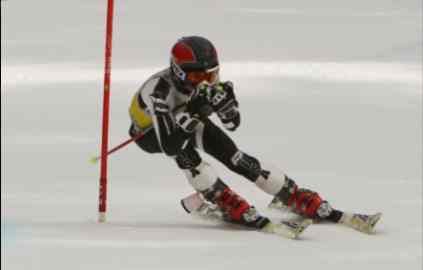
Winston Pretti dominates at Sugar Bowl. Photo/Provided

Winston Pretti dominates at Sugar Bowl. Photo/Provided

Pretti slayed the competition to become the top point-getter, taking first overall for the weekend’s events. Delaney was right behind him with an impressive display of Diamond Peak’s strength. Pretti took first in Friday’s GS race, fourth in Saturday’s SL competition, and seventh on Sunday in SG. Delaney took second in GS, third in SL and sixth in SG.

Huber had his best race weekend of the season (4th, 15th and 8th). Cleary (9th, 5th and 19th) and Norton (6th GS and 10th SG) rounded out the men’s field of the Diamond Peak Performance Camp athletes.

Idso was Diamond Peak’s only female Performance Camp qualifier, with a 12th, 13th and 14th over the weekend.

The whole squad of Diamond Peak’s U14 racers will return to Sugar Bowl April 4 for the four-day Far West Championships.The North meets the South and Central divisions to compete in all four ski racing events (SL, GS, SG, and the Parallel).

Lisa O’Daly is a parent volunteer for the Diamond Peak Ski Team.