Kashima 2nd in dual moguls

By USSA

Joe Discoe (Telluride, Colo.) won his third U.S. title Saturday in the dizzying dual moguls competition at the Sprint U.S. Freestyle Championships at Heavenly Mountain Resort.

In the women’s duals, Sophia Schwartz (Sun Valley, Idaho) won her first U.S. Championship title on the soft course at Heavenly.

Joe Discoe

Joe Discoe

Local favorite Sho Kashima (Stateline) took silver, along with Mikaela Mathews (Frisco, Colo.). Dylan Walczyk (Breckenridge, Colo.) and defending U.S. Champion K.C. Oakley (Piedmont) took home the bronze medals.

World Cup winner Hannah Kearney (Norwich, Vt.) and teammate Heather McPhie (Bozeman, Mont.) didn’t compete in the dual moguls event.

Brothers Bradley and Bryon Wilson (Butte, Mont.) also chose not to compete after Bradley took his first U.S. Champs title in the singles moguls on Friday.

Due to incoming weather, officials moved up the dual moguls event from Sunday to Saturday to prevent delays or cancellations.

Saturday began as a beautiful California day, with the frozen course softening throughout the day. Clouds arrived in the afternoon.

The really large jumps lent to big crashes, upsets and an all-around exciting competition.


Forest managers told to protect rivers

By Dana M. Nichols, Stockton Record

McCLELLAN — State and federal scientists met here this week to consider something most Californians take for granted: The health of the rivers flowing from the Sierra Nevada.

It may seem obvious that the humans who drink that water and the fish who swim in it benefit if it is clean and plentiful. Yet it is only recently that the officials in charge of the place where those waters are born have had marching orders to make sustained flow of those rivers a priority.

“The national forests are located in the headwaters of the major rivers,” said Barry Hill, a U.S. Forest Service hydrologist who spoke Wednesday during the opening session of a dialogue between government scientists and advocates for various other groups including anglers, conservationists and the residents of rural counties.

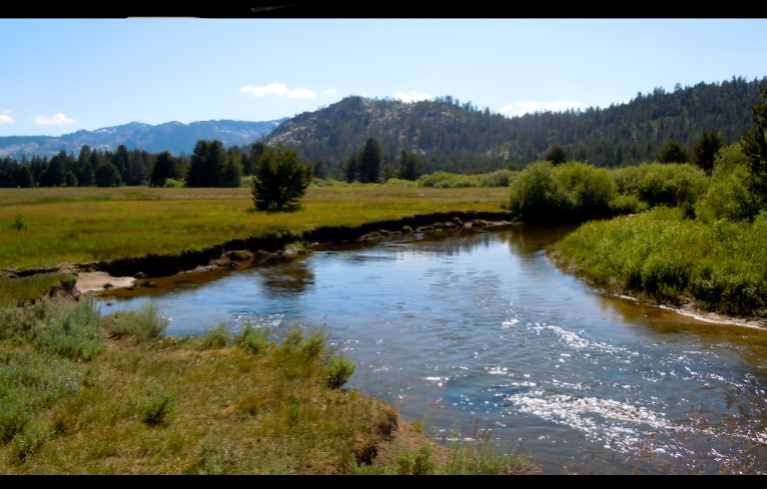
The Upper Truckee River is part of the Lake Tahoe Basin Management Unit. Photo/LTN file

The Upper Truckee River is part of the Lake Tahoe Basin Management Unit. Photo/LTN file

Under the new National Forest Service rule for creating forest management plans, the work is being done publicly and is supposed to take into consideration the long-term sustainability of the forests and of the economy.

Last year, the Forest Service adopted a new rule for forest planning that requires forests to make sustainability a priority, and defined that as making sure that the needs of the present generation are met “without compromising the ability of future generations to meet their needs.”

That means that for the first time, forest managers are required to adopt practices intended to ensure just as much clean water for fish and people in the future.

In contrast, the Forest Service previously followed a “multiple use” approach that tried to balance the demands of interests such as logging, ranching, recreation and water, but was not necessarily focused on long-term sustainability.

Also, for the first time, the new rule emphasizes the sustainability of human communities as integral to the health of forests and rivers.

“Who knows it better than the people?” said Jo Ann Fites-Kaufman, an ecologist on the planning team for the Forest Service’s Pacific Southwest Region that serves forests in California.

Forest management has a huge impact on water.

Scientists say many forests are overgrown after decades of fire suppression by humans. That means they tend to burn hotter when they do burn. Hotter fires do more damage to plants and soils, allowing sediment to flow into reservoirs and reducing the ability of soils to hold snowmelt and release it slowly.

Other human activities such as road building, cattle grazing and mining also can pollute rivers or reduce their flows. And then there’s climate change, which scientists say is reducing average snowpack and sending more precipitation as rain.

Yet it was clear during Wednesday’s session that coming to a consensus on what to do about all these changes will be difficult.

One current debate, for example, is whether forest thinning projects should emphasize the use of mechanical cutting by human crews, or instead rely more on periodic fires, whether set naturally by lightning or deliberately by humans.

Conservation groups tend to advocate for more fire and less cutting. Their argument: the road networks required for cutting contribute eroding sediment into rivers and fragmenting habitat for fish and other wildlife. Also, Sierra Nevada plants and wildlife need the periodic fires to replenish nutrients in soils and support many plant life cycles.

“Mechanical treatment alone can not replace the ecological function that fire plays,” said Greg Haller of Pacific Rivers Council, conservation director for Pacific Rivers Council.

Yet there are scientists who say the net benefit of mechanical cutting outweighs the harm done by machines and roads. At the same time, many mountain communities are benefiting from the jobs created by forest thinning projects.

Bill Wickman of the Sustainable Forest Action Coalition advocates on behalf of rural communities seeking to put more people to work restoring forests. Wickman said lighter cutting machines available in recent years do much less damage to forest soils.

Questions remain over the future of cattle grazing in the Sierra. Conservationists at Wednesday’s meeting expressed frustration at spending money to repair mountain meadows only to see those meadows trampled and degraded the following year by cattle.

Forest officials admit that they feel pressure to allow continued grazing despite the problems.

“There are some concerns about grazing,” said Hill, the Forest Service hydrologist. “The status quo is not working very well.”

Inyo, Sequoia and Sierra national forests will be the first three in California to revise their forest management plans under the new rule. Forests farther north, including Stanislaus, will follow suit in coming years.

Fites-Kaufman noted another change under the new planning rule: All the development of the proposed plans is being done publicly and documents in process are posted online.

Previously, forest managers drafted the plans in private and once they were largely finished held public meetings during the environmental review stage.


Eldorado lifting forest road closures

Eldorado National Forest’s wet weather seasonal closure for dirt roads and trails ends April 1. The seasonal closure applies to routes identified on motor vehicle use maps which are available free-of-charge at all Eldorado National Forest offices and on the forest’s website.

“We recently reviewed the road and trail conditions and found that they met our criteria for ending the seasonal closure,” said Eldorado National Forest Supervisor Kathy Hardy. “This time of the year, however, some routes may remain wet and visitors have the responsibility to not damage these roads and trails.”

Hardy says that visitors will encounter unmaintained routes that could have road hazards such as potholes, rocks on the road, and overgrown vegetation that blocks visibility. Higher elevation routes may still be covered with snow.

The Mormon Emigrant Trail, a route that connects Highway 50 with Highway 88, remains closed to through traffic due to snow. The snow is not plowed on this road and typically opens to the public in June.

The seasonal closure does not apply to the Rock Creek Recreational Trails Area near Georgetown, which has its own wet weather closure procedures.


Meeks Creek Meadow restoration comments sought

The U.S. Forest Service Lake Tahoe Basin Management Unit is seeking public input for a proposed project to restore Meeks Creek Meadow. The project area is located on the West Shore near Meeks Bay.

The proposed project would restore approximately 300 acres of meadow habitat, re-establish a natural fire regime, and provide for diverse wildlife habitat.

Proposed project work would include removal of encroaching trees and prescribed fire operations. Implementation would depend on funding availability.

Tree removal would include hand and mechanical thinning in and around the meadow, and near stream environment zones. SEZs that are determined to be suitable for low impact equipment would be thinned mechanically, while all other SEZs would be hand thinned. Some over-the-snow mechanical and hand thinning could occur.

Thinning operations would utilize existing Forest Service roads along with construction of less than a quarter of a mile of temporary roads, which would be decommissioned after the project.

To provide for public safety when mechanical equipment is in use, temporary closures of Forest Roads 14N42, which provides access to the Desolation Wilderness trailhead, and 14N44, could occur. The Forest Service would explore options to prevent disruption of access, but a closure lasting approximately two weeks is possible.

The 30-day comment period ends April 30. Comments may be submitted electronically to comments-pacificsouthwest-ltbmu@fs.fed.us. For more information, contact Sarah Muskopf at (530) 543.2835 or email smuskopf@fs.fed.us, or go online.


Kashima takes bronze on home snow

By USSA

Heather McPhie (Bozeman, Mont.) successfully defended her title, taking gold in moguls at the Sprint U.S. Freestyle Championships on Friday at Heavenly Mountain Resort.

In the men’s contest, Bradley Wilson (Butte, Mont.) took his first U.S. crown winning over brother Bryon with local favorite Sho Kashima (Stateline) taking bronze. World Cup titlist Hannah Kearney (Norwich, Vt.) was second for women with Eliza Outtrim third.

The championships close Saturday with dual moguls and aerials.

Weather created challenges with rare fog and ice delaying the start Friday morning.

With incoming heavy weather predicted for Sunday, the scheduled dual moguls competition was moved along with the already scheduled aerials event.

“It was a warm day, the course was soft, but I was just working on getting my speed, charging out of the gate and really get some speed through the middle section,” Kashima said. “My recovery has been long but my skiing feels good and I finally feel like I’m back to the skiing I know I can do. Skiing in front of the home crowd, my family, friends, doctors, sponsors, everyone who enables me to be able to do what I love is a great feeling. And being able to put on a show for them after all the support they’ve given me is awesome!”


Mountain bike trail work season to begin

The snow is melting, the lower trails are starting to be ridden, it’s time for mountain bike riders to get to work.

The first TAMBA Trail Day of the season is April 6 on the Whites Creek Trail in Galena. Workers will be fixing some damage from the winter storms, rerouting an eroding section of trail away from the creek and legitimizing a log ride-over to make it more solid and a permanent feature.

Meet at 9am at the Whites Creek Day Use Parking lot up the road from Timberline Drive. Wear long pants, long sleeves, and sturdy shoes and bring water and snacks. Lunch and post work refreshments will be provided.

Please RSVP on the Facebook event so organizers can plan tools and food.

There will be a second trail day at the same place on May 5 to do another reroute and build a “switchberm”.


Controlled burn next week in Hunter Creek area

North Lake Tahoe Fire Protection District’s fuels crew will continue the hazardous fuels reduction project in the Hunter Creek area the first week of April, weather permitting.

This project is a cooperative effort between North Lake Tahoe Fire Protection District, Reno Fire Department, Truckee Meadows Fire Protection District and Washoe County Parks Department.

This 8-acre slash pile project was created as a result of a hazardous fuels reduction and defensible space project over the last year, to help minimize the risk of wildland fires in the area.

The project’s safety plan calls for cancellation of the controlled burning based on weather conditions each day, such as significant wind activity or precipitation. The burning piles are expected to produce smoke that may be visible throughout the area. Smoke resulting from the pile burns will affect the surrounding areas for approximately 24-36 hours.

People that are smoke sensitive are advised to please stay inside and close their windows and doors as much as possible until the smoke dissipates.

For further information, call (775) 831.0351, ext.0.


Slice of land near Death Valley kept in private hands

By Tom Knudson, Sacramento Bee

DEATH VALLEY NATIONAL PARK – The first sign says: “Private Road – Authorized Vehicles Only.” A short distance later, at a locked white gate, another reads: “Borax – Do Not Enter.”

Ahead, less than a mile from Death Valley National Park, is one of the most well-preserved historic mining camps in America: Ryan, California.

Here, for select tour groups, scientists and guests, history comes alive. At a one-room schoolhouse, you can ring a bell that called students to class 90 years ago. Near the dining hall, you can step into a meat locker and, in the thick wooden walls, smell the slabs of beef that fed miners in the 1920s.
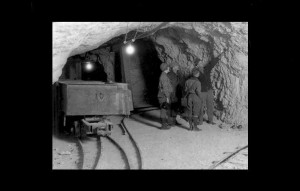
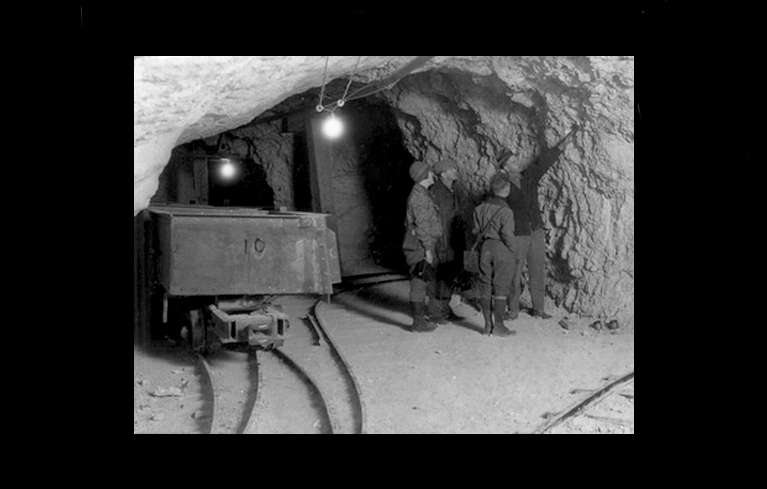
Pacific Coast Borax Widow Mine, Ryan, California,  Burton Frasher, 1928

Pacific Coast Borax Widow Mine in Ryan, circa 1928. Photo/Burton Frasher

In dorm rooms, you can peer through cracked, tattered window shades that have held back the sun for generations. Outside, you walk by rusty ore carts, wheelbarrows, picks, shovels and other relics. Up a steep hill is a rare treasure: a much-weathered weather vane once photographed by Ansel Adams.

Four years ago, all of this nearly became part of Death Valley National Park as a gift from London-based Rio Tinto, the third-largest mining company in the world.

But in a surprising turnabout, Rio Tinto chose instead to give Ryan to an entity it felt could better care for the site: a fledgling nonprofit – the Death Valley Conservancy – headed by one of the company’s own executives.

Park visitors who long had dreamed of touring Ryan were dismayed. So, too, were park managers.

“I was very disappointed,” said J.T. Reynolds, a former Death Valley superintendent who worked with Rio Tinto in 2007 to make Ryan part of the park. “It would have served many people, many organizations and the best interests of historic preservation.”

What’s unfolding here is more than a story about the curious fate of a remote mining camp in the hottest, driest corner of America. It is part of a wider debate about how best to protect historic resources across the West in an era of limited and declining government resources.

Already much has been lost. One example lies inside Death Valley National Park, where someone has chiseled into a rock wall in an attempt to steal American Indian petroglyphs, defacing the area forever.

In one of the most brazen cases, thieves used power saws, ladders and generators last year to steal centuries-old petroglyphs from federal land north of Bishop. Although the rock art has been recovered, no arrests have been made.

“It’s akin to someone defacing part of the Vatican or damaging an important artistic piece, like the Mona Lisa,” said Greg Haverstock, an archaeologist with the U.S. Bureau of Land Management. “A few greedy, self-minded individuals destroyed an amazing, finite resource.”

His budget to monitor and protect such sites across 750,000 acres of public land is $52,000 – seven cents an acre. “It is just not a lot of money,” Haverstock said. “It forces me to seek outside sources of funding.”

Many historic mining sites are at risk, too – and that’s one reason Preston Chiaro, president of the Death Valley Conservancy, cited in explaining why he believes Ryan should remain private.

“The fact that it’s been in private hands rather than part of the national park has been one of the things that has helped to preserve it,” said Chiaro, Rio Tinto’s group leader for technology and innovation. “There is a proven model here. It works. Why would you want to change it?”

But private ownership of historic treasures also raises questions: Who will have access? Under what conditions? What will it cost? How will tax-deductible contributions be spent?

“Once a site gets into private hands, there is really no control of it,” said Michael Newland, past president of the Society for California Archaeology. “You are at the good graces of the (owners). Some people are fantastic. Some may not be.”

As the donation nears completion, some have asked the conservancy tough questions, in writing, about its budget, management and plans. They have learned little.

“I got one reply to four letters saying they have every right to do with this property whatever they want to do and furthermore, they have no time to talk to me,” said Steve Bruce, member of a group called Save Ryan.

“As a public charity taking public money, they have a responsibility to respond to the public,” Bruce added. “It’s very frustrating.”

An outpost in the wilderness

There is one thing on which all agree: In a region peppered with old mine shafts, shacks and diggings, Ryan is a remarkable place, an outpost of culture and rustic comfort in a harsh, unforgiving wilderness.

It began humbly, with a cluster of cabins, lean-tos and dugouts at the base of a dark cliff overlooking Death Valley. “A stranger would have been amused to see the heads pop up all over the place like prairie dogs when the warning whistle blew before breakfast,” wrote mine superintendent Harry Gower in a memoir: “50 Years in Death Valley – Memoirs of a Borax Man.”

But like the cactus that clings to canyon walls, Ryan would blossom into something special.

Down a narrow, winding rail line came the heavy timber, wood stoves, concrete, bed frames, mattresses, wash basins, electrical wire, tools, windows, medical supplies and other building blocks of civilization.

Ryan was never large – just a few dozen buildings that housed 150 to 200 people, including some wives and children. But for a company town – it was owned by Pacific Coast Borax – it was surprisingly well furnished.

There was a hospital, schoolhouse, post office, general store, two bunkhouses, even a community hall where residents gathered to watch silent movies – a vast improvement from the early days when miners scraped borax off the Death Valley floor and hauled it to market in mule-drawn wagons.

After mining stopped in 1928, Pacific Coast Borax retooled Ryan into a tourist attraction: the Death Valley View Hotel. Visitors rented rooms, played tennis and rode the “baby-gauge” rail with its jaw-dropping views of the valley.

Pacific Coast Borax didn’t just promote Ryan, it protected the site with a full-time caretaker, a practice continued by U.S. Borax and Rio Tinto. Though some buildings are deteriorating, others are in great shape. Even the train engine that once carried tourists is kept in working order, though it is no longer used.

“It’s just like going back in time,” said Linda Greene-Smith, former chief of resources management at Death Valley National Park. “This place has really been lovingly cared for. It’s a treasure.”

Two Pacific Coast Borax executives, Stephen Mather and Horace Albright, even joined the National Park Service. As its first two directors from 1917 to 1933, they called for protection of Death Valley, which was declared a national monument by President Herbert Hoover in 1933. It became a national park in 1994.

Albright’s daughter, 91-year-old Marian Schenck, said that before her father died in 1987, he told her he felt Ryan belonged in the park.

“It would be ridiculous not to bring it in,” Schenck said. “The whole (park) concept came from borax. When you don’t include Ryan, it’s eliminating a big part of it.”

Decision stunned park officials

In 2008-09, a donation to the park was close. Rio Tinto officials met with Death Valley officials. Park officials prepared planning documents and a legislative plan for Sen. Dianne Feinstein, D-Calif.

Rio Tinto put together a color fact sheet titled “Public benefits of the Ryan Camp donation.”

“Donating Ryan Camp is a natural step in the long partnership between Death Valley National Park and the company who was instrumental in its creation,” the fact sheet reads.

“With the addition of Ryan Camp … the complete historic continuum of borax mining within Death Valley would be preserved.”

But in 2009, the plan was dropped after Chiaro met with Rio Tinto officials, including its CEO, and persuaded them to donate Ryan to the Death Valley Conservancy.

“We believe that the DVC shares our vision to preserve this unique facility,” said Rio Tinto’s spokesman, David Outhwaite, by email from London.

Asked recently about the decision, Death Valley spokesperson Cheryl Chipman said by email: “It is always up to the property owner whether they want to donate property to the park.”

At the time, though, officials were stunned.

“Very disappointing,” wrote Sarah Craighead, then superintendent of Death Valley, in a July 2009 email. “Lots of people, including the folks at Rio Tinto, worked a long time to get Ryan to the park service.”

Since then, the park and Rio Tinto have remained quiet, kindling interest, speculation and numerous requests for information from the conservancy.

“If you go to them asking for details, asking for facts – one of my questions is, where is their money actually coming from? – their response is ‘we don’t have the time to deal with you,’ ” said Bruce with the Save Ryan group.

Chiaro said his organization’s reticence is rooted in online speculation and criticism from Bruce and others that he feels are ungrounded.

“The human reaction when you are being attacked is to defend yourself,” Chiaro said. “I suppose we did some of that. That’s not maybe our proudest moment. But I think that’s a bit of human nature.”

The real reason for keeping Ryan private, Chiaro said, is that he believes the conservancy can better protect it.

“It’s not that the Park Service wouldn’t care about the site and treat it with respect,” he said. “I don’t think they have the vision for it. I don’t think they have the money.”

Reynolds, the former superintendent, disagreed.

“The Park Service is the caretaker of the country’s cultural history,” he said.

“You could have had a world-class historic preservation training program,” Reynolds said. “We could have employees in historic and period dress. It was endless. You could have that whole area as your classroom.”

Chiaro said the conservancy has similar goals and plans to work with the Park Service on ways to achieve them.

“We want more people to be able to share in this incredible piece of history that’s been preserved at Ryan, but we don’t want to damage it,” he said.

For now, Ryan remains closed to the public. And for Kathleen Knowler – whose grandfathers were Harry Gower, the man who helped carve Ryan out of bare rock, and Horace Albright, who was director of the National Park Service from 1929 to 1933 – that is unfortunate.

She recalled visiting Death Valley a few years ago with her daughter, hoping to see Ryan, only to discover it was off-limits.

“It was very disappointing not to be able to get there,” said Knowler, a first-grade teacher in Arizona. “That’s family history we can’t appreciate. It’s a really neat little mining town that should be part of the park service.”

Sochi organizers stockpiling snow — just in case

By John Branch, New York Times

SOCHI, Russia — The biggest worry among organizers for next year’s Winter Olympics is not whether the sites will be in order, or that the 30-mile road and the new railroad tracks and the thousands of hotel rooms all being built from scratch will be complete, or that the stands will be full of fans despite this city’s remote location.

The biggest worry is the one the Russians cannot control: the weather.

And they have plenty of reasons to worry.

The last Winter Games, in Vancouver in 2010, were bedeviled by unseasonably mild temperatures in British Columbia. Alpine ski races were persistently postponed because of fog and slushy conditions. Hidden hay bales took the place of snow to build mounds for various courses. A lasting image of those Games is that of helicopters ferrying buckets of snow to the snowboarding site.

sochiSochi is more worrisome. This city of nearly 500,000, filled with palm trees and year-round flowers, hugs the shore of the Black Sea. Unlike Vancouver, where most of the outdoor mountain events were 90 minutes away around Whistler, the venues in the Caucasus Mountains are about 30 minutes away, up a winding canyon.

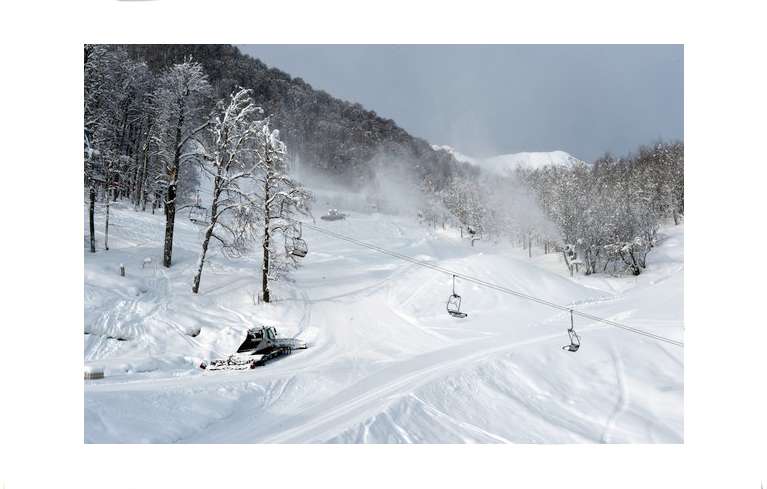
There is a plan, and it does not include helicopters and hay bales. Sochi organizers, fully aware of the problems in Vancouver, have installed what they say is the biggest snowmaking operation in Europe. More than 400 snowmaking cannons, each looking a bit like a jet engine, are continually spitting streams of crystals for next year’s Olympics.

On the advice of a Finnish company called Snow Secure, the goal this season is to stockpile 500,000 cubic meters of snow into 10 shady pockets above the venues. The massive piles will be covered by insulated blankets, not unlike giant yoga mats, to protect them from the heat of summer.

Up to half of the saved snow may melt by next winter, but the site managers said they could conduct the Olympics even in the unlikely event that no natural snow falls next winter. The stockpiled snow can be shoved down the mountain with snowcats or guided onto steep slides — pipes, a meter in diameter, cut in half — aimed at where the snow is most needed.

“Each venue in the mountains has its own peculiarities,” said Valeriy Lukjanov, whose job is to forecast the weather at the Sochi Games, perhaps the least appreciated task of them all. He sat in his office recently in the mountain valley where more than half of the events will take place.

“Last year, there was a meter of snow outside this window,” Lukjanov said.

One year from the start of the Sochi Games, there was none.

The places hosting the mountain competitions — not only the five Olympic sites, but also the ski resorts surrounding them — are mostly new, constructed since Russia was awarded the Games six years ago. Sochi has little experience in hosting world-class sports events, and little historical climate data is available to fully appreciate the weather possibilities.

With few exceptions, the weather stations have been in place only since 2010. What the Russians have learned since then is that the weather in the mountains above Sochi can be wildly unpredictable.

In February, World Cup snowboard cross and ski cross events were canceled because of a lack of snow, and other competitions at the Extreme Park were held amid criticism of slushy conditions.

Two years earlier, part of the European Cup Alpine skiing championships was canceled because of too much snow. Low clouds rearranged the schedule for last month’s Russian Alpine ski championships, an official test event. During the World Cup luge event in late February, it rained.

At the Olympics, unlike at test events, competitions cannot be canceled.

“During the Games, we will have more snow and we will have all the events,” Dmitry Chernyshenko, the president of the Sochi 2014 organizing committee, said in an interview last month. “We didn’t expect that the amount of snow we collected was not enough. So now we learned this lesson and paid the price.”

Chernyshenko and other Russian leaders boast of the compactness of the Sochi Games. The venues are divided into two clusters: “coastal” and “mountain.” The Coastal Cluster, next to the sea, is a ring of five arenas for indoor events, like figure skating, speedskating, hockey and curling. A sixth site is an outdoor stadium, intended for the opening and closing ceremonies.

The average high temperature in Sochi in February is about 50 degrees. An overcast sky is likely, and snow falls only occasionally. As if to demonstrate how unwintery Sochi is, in February the city hosted a national racewalking event — a rare sport from the docket of the Summer Olympics, contested at the time and place of next year’s Winter Olympics.

The weather in the city of Sochi is not the major concern of Lukjanov, the deputy director of the Russian meteorological service, who was assigned last year to be the chief meteorologist of the Olympics. He oversees a team of 50 dedicated to analyzing and predicting weather in the region through next February. The team includes 37 meteorologists. Most others are data technicians, helping assess the 50 remote weather stations that have been installed across the valley in the past three years.

Their primary job is to explore and forecast all possibilities, particularly in the sites that hang on high plateaus and dot the mountains above the valley floor, which is at an elevation of roughly 1,800 feet, or 500 meters. Although the new sites are so close as to look like a constellation on a map — getting from the valley floor to any of them takes no more than about 15 minutes — they sit at widely varying altitudes. Each has its own climate vagaries.

In February, whether one stood at the valley floor or took a gondola up to the highest reaches of the jagged, frosted peaks, the quandary was thrust into sharp relief: the mountains looked striped, horizontally, as if with giant paintbrushes. There was a white ribbon sweeping across the upper regions above timberline, a brown swatch closer to the valley floor, and an earthy mix between, where rain and snow and fog mingled daily in a climatic tug of war.

The RusSki Gorki Jumping Center, easily spotted near the valley road, sits at about 2,000 feet (610 meters), between two ridges that protect the two jumps from wind. But last month, no snow had accumulated there, and some training was canceled by heavy rain. Part of the surrounding slopes was being reinforced because of problems with mudslides.

Nearby, the Sanki Sliding Center, the home of luge, bobsled and skeleton, rests on a plateau at about 2,300 feet (700 meters). Most of the track is covered, so weather may not hamper competition. But it seems to sit in a transition zone. Last month’s World Cup events took place amid mostly fog and rain. A year earlier, the track was smothered in deep snow.

The Extreme Park, for snowboarding and free skiing events like the halfpipe, moguls and slopestyle, is an intimate place snuggled into a hillside at 3,280 feet, or 1,000 meters. Above-freezing temperatures can play havoc with the halfpipe, and a lack of snow can hamper the long, winding courses for snowboard cross and ski cross.

Across the valley is the Laura Cross-Country Ski and Biathlon Center, two stadiums on a shelf at 1,500 meters, about 4,920 feet.

“Starting from 1,500 meters, there is always snow,” Lukjanov said. “Always.”

The most vexing site, as usual, will be for Alpine skiing at the new Rosa Khutor resort. The men’s downhill will begin above timberline, at roughly 2,000 meters (6,560 feet), and end at the common finish area, at 940 meters (3,084 feet). The worry, as with most courses on the World Cup circuit, is that there will be too much snow at the top, low visibility because of clouds along the way, maybe some rain and too little snow at the bottom.

“Vancouver had problems with snow,” said Sergei Estrin, the venue manager for Alpine skiing. “We try to analyze the experience of the previous Games. That’s why we have the backup plan with snow in storage. That’s why we give a lot of attention to the possible problems and we try to solve it in advance.”

A few miles and about 1,800 feet below, on the second floor of a small house in the valley, the Olympic forecasters are monitoring the weather with a series of computers.

Asked if he has been told that he better supply good weather to the Games, Lukjanov smiled.

“Sometimes, they don’t like the weather, so they blame the forecaster,” he said, describing a universal problem for meteorologists. “For us, the most important thing is to give the right forecast.”


Expect smoke in Meeks Bay area

U.S. Forest Service fuels management crews will begin prescribed fire operations near the Meeks Bay area on March 27.

Crews expect to burn approximately 30 acres near Meeks Meadow. Operations may continue through the week, weather and conditions permitting.

Residents and visitors can expect to see smoke from this prescribed fire project area. Smoke may be visible on Highway 89. The Forest Service strives to minimize the impacts of smoke on local communities.

Smoke-sensitive residents should consider staying indoors and keeping doors, windows and outside vents closed. To directly receive prescribed fire updates, send an email to pa_ltbmu@fs.fed.us.