Nevada Moves Day designed to get kids moving

Many Nevada schoolchildren will take part in organized events to walk or bicycle to school on April 24, which has been proclaimed the fourth annual Nevada Moves Day by Gov. Brian Sandoval.

Walking and bicycling to school events are planned for Douglas, Washoe, Clark, Lyon, Lincoln, Elko and other counties, with more than 110 schools across the state committing to participate in Nevada Moves Day.

Children not taking part in an organized school event are encouraged to involve their family in safely walking or bicycling to school on April 24 and other days.

To learn about specific Nevada Moves Day events, call (775) 888.7357 or email trowe@dot.state.nv.us.


Uphill climb to allow mountain bikes on PCT

By Jessie Marchesseau

You could walk or ride a horse the 2,650 miles from Mexico to Canada along the Pacific Crest Trail, but don’t try to ride your bike.

Prohibited since 1988, riding a bicycle on the Pacific Crest Trail could cost you as much as $5,000 and six months in jail, though tickets normally run between $50 and $150.

The Pacific Crest Trail Reassessment Initiative is trying to change that. Since 2010, the group has been working to get the U.S. Forest Service to reconsider the ban on bicycles. It contends that the trail was never meant to be a foot- and equestrian-only trail, but mountain biking, which began to gain popularity in the 1980s, simply did not exist when the trail was originally developed.

The junction of the Tahoe Rim Trail and Pacific Crest Trail at Meiss Meadow. Photo/Ben Fish

The junction of the Tahoe Rim Trail and Pacific Crest Trail at Meiss Meadow. Photo/Ben Fish

The PCT has been around since the 1930s and stretches through California, Oregon and Washington. In 1968, it was designated a National Scenic Trail by the National Trails System Act. It was not until 1988 that the PCT Advisory Council unanimously agreed to ban bicycles on the entire trail.

Bicycles are already prohibited in all National Wilderness Areas, and the PCT runs through more designated wilderness areas than any other National Scenic Trail. About 46 percent of it is in wilderness areas. This includes the Desolation and Granite Chief wilderness areas near the Lake Tahoe Basin. Of the nearly 50 miles of the PCT within the Lake Tahoe Basin Management Unit, 21.8 are in designated wilderness areas. It is the other 26.7 miles that the PCTRI is trying to gain access to, along with the rest of the non-wilderness portions of the PCT.

Part of that mileage is the Tahoe Rim Trail. As a multi-use trail, the Rim Trail allows bicycles on most non-wilderness sections, but it also shares part of its route with the PCT. As a result, the West Shore section of the Rim Trail is essentially a bicycle-free zone.

In the Lake Tahoe area, several popular mountain bike trails also intersect or run into the PCT. Having access to the trail, especially in the non-wilderness area between Meiss Meadow and Echo Lake, would allow riders to easily transition from one trail to another.

“As a local mountain biker in South Lake Tahoe, I can attest that having some sections open to bikes on the PCT in non-wilderness areas would greatly improve connectivity of some trails such as Hawley Grade, Round Lake, Sayles Canyon, Brian Meadow and Pony Express,” said Ben Fish, an avid South Shore mountain biker.

However, Beth Boyst, PCT program manager with the USFS, said that even opening small sections to allow access between popular mountain bike trails is unlikely.

“When you start changing things a little bit, you get a slippery slope of changing the trail experience,” she told Lake Tahoe News.

This idea of “changing the trail experience” is a big part of why some people, hikers and USFS officials alike, are opposed to the idea of bicycles on the trail. Online forums reveal that some users believe mountain bikes would disturb the overall serenity of the trail. Others fear bicycles would frighten horses.

“This experience is about being able to commune with nature in a peaceful environment, away from the trappings of civilization,” said Mark Larabee, spokesman for the Pacific Crest Trail Association. “PCTA holds that trail experience in the highest regard.”

The PCTA is a nonprofit organization whose mission is to “protect, preserve and promote the Pacific Crest National Scenic Trail as an internationally significant resource for the enjoyment of hikers and equestrians, and for the value that wild and scenic lands provide to all people.” It is the USFS’s primary provider of trail maintenance for the trail. Last year, PCTA volunteers contributed more than 92,000 hours.

This is one area the PCTRI suggests that mountain bikers could benefit the trail. In 2011, International Mountain Bicycling Association-affiliated organizations across the U.S. collectively put in more than 700,000 volunteer hours maintaining public bicycle trails.

“They’re always struggling to find more volunteers and funding,” Jeff Barker, a PCTRI supporter and advocate, told Lake Tahoe News. “The mountain bike community could bring a lot of people and money to the cause. Bikers are a community that is enthusiastic about trail maintenance.”

Lake Tahoe has one of the largest networks of mountain bike trails in the state. The Tahoe Area Mountain Biking Association alone put in about 2,000 volunteer hours of trail maintenance in 2012.

“It is obviously a passionate issue for many and TAMBA is maintaining a neutral approach to it for now,” said TAMBA President Kevin Joell of the PCT initiative. “I can say that if sections are ever opened to bikes in our area, that we would be happy to assist with maintenance as we have on many other trails around the lake.”

However, it does not look like that will be any time soon. On Feb. 5, Randy Moore, Pacific Southwest regional forester for the USFS, issued a letter to the PCTRI stating that the Forest Service will not be pursuing a termination of the bicycle closure or any amendments to the PCT management plan.

There is more to it than just changing the rules, Boyst pointed out. Studies would have to be done to determine the ramifications of a different use and increased usage. Bicycle trails must take different erosion issues into consideration than footpaths, and the PCT was originally designed for foot and horse traffic.

Moore and Boyst insist the trail was always intended to be exclusively a footpath and equestrian trail. Supporters of the PCTRI insist it was intended for all non-motorized use, bicycles included. Both groups cite the National Trails System Act and the PCT Comprehensive Management Plan to support their respective positions.

So while the two sides continue to hash out the semantics of the governing documents, outdoorsmen can still enjoy the splendor of the Pacific Crest Trail … on foot or horseback.

—-

For more info, on the Pacific Crest Trail — go online.

For more info, on the Pacific Crest Trail Reassessment Initiative, go online.


USFS prescribed fires at both ends of lake

U.S. Forest Service fuels management crews will continue prescribed fire operations in multiple locations in the Lake Tahoe Basin on April 4.

Crews expect to burn approximately 10 acres in the South Lake Tahoe area near Mewuk Drive, and approximately 5 acres in the Tahoe City area near Bunker Drive. Both operations may continue through the week, weather and conditions permitting.

Residents and visitors can expect to see smoke from these prescribed fire project areas. The Forest Service strives to minimize the impacts of smoke on local communities. Smoke-sensitive residents should consider staying indoors and keeping doors, windows and outside vents closed.

To directly receive prescribed fire updates, send an email to pa_ltbmu@fs.fed.us.

Forest Service staff will post road signs around areas affected by prescribed fire, and update the local fire information line at (530) 543-2600, No. 6.


Surf legend makes boards in El Dorado County

By Debbie Arrington, Sacramento Bee

The Sierra foothills seem an unlikely place to find a surf legend. But an “Endless Summer” vibe fills the Rescue workshops of Floyd Smith.

Four converted sheds built in a El Dorado County hillside pasture – one for foam, one for wood, two for finishing – serve as Smith’s artistic studios. As he’s done most of his life, Smith transforms large, plain “blanks” of foam or balsa wood into wave-riding art.

By hand, he shapes them into surfboards and inlays intricate detail. His works are coveted for their beauty as well as their dynamics.
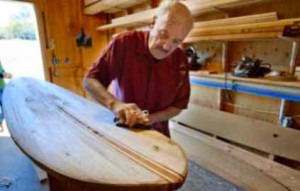
 Randall Benton / RBenton@sacbee.com Robbie Jeremica, left, watches as Floyd Smith uses a hand plane to shape a balsa wood surfboard at his home in Rescue . Read more here: http://www.sacbee.com/2013/04/01/5308377/surfboard-legend-still-making.html#storylink=misearch#storylink=cpy

Floyd Smith uses a hand plane to shape a balsa wood surfboard at his home in Rescue. Photo/Randall Benton/Sacramento Bee

World-renowned for his contributions to surfing, originally through his Gordon and Smith Surfboards and later with his signature brand, Smith is a shaper extraordinaire.

His relocation to the small town near Shingle Springs came as he tried to reshape his life.

After decades on the ocean, Smith brought his family inland for safety and sanity. That was 1985, and the San Diego beach scene – overrun at that time by what he remembers as thugs and drugs – was far from paradise. He bought a small country ranchette where he planned raise his children along with his family’s food.

Smith, now 73, said he intended to leave surfing behind him.

“I quit,” he recalled. “I wanted to do something else. But people wouldn’t let me. They kept asking me to make boards.”

So Smith complied. And he has continued making boards, enjoying every minute of it, never losing the love of his craft or the sea. Many consider his boards to be works of art, which he sees as a blessing and a curse.

“Most of the people who buy my boards now only ride them once,” he lamented. “They give them a christening in the ocean, then hang them on the wall.”

They’re too pretty and too valuable to risk to the waves. A new Floyd Smith board costs $1,500 to $5,000.

Longboards – the 9- to 10-foot “big guns” favored by big-wave riders – are his handcrafted specialty.

He has made almost 8,000 signature boards.

“All my life, I’ve tried to perfect the longboard,” said Smith, who makes at least one surfboard a month. “The longboard has a glide to it. When it goes over the water, there’s no friction, no sound. It’s just like riding on a sheet of ice, just sliding along, but with control.”

Since the 1970s, shortboards have dominated the waves. Averaging 6 feet in length, these boards are light and maneuverable.

“But you can’t slide on a short board; you just get that speed burst,” said Smith, whose original company helped usher in the shortboard revolution.

“Shortboards are fun. You get air. They’re made for aerials, for tricks. But that glide of a longboard, that’s real fun. It’s addictive.”

With six decades of shaping experience, Smith’s hands instinctively know the nuances of the board as he smooths it to perfection. A carpenter by trade, Smith still uses familiar tools such as wood planes and draw- knives that he started with as a teenager in San Diego.

“His work is fantastic,” said collector and fan Ed Bowman, who owns one of Smith’s boards along with a restored 1959 Ford woody. “He’s one of the best shapers around. He can close his eyes, run his hands along the sides of a board and just feel it, taking nothing – a blank – and making it really something.”

In the world of surfing, Smith is still revered. He pioneered the modern surfboard, molding greatness from slabs of foam and wood. In December, he was inducted into the International Surfboard Builders Hall of Fame.

At the surf festival during the recent Mavericks Invitational big wave contest at Half Moon Bay, hundreds of fans swarmed Smith as he demonstrated his old-school shaping skills. Frosty Hesson, the real-life surf mentor portrayed in the movie “Chasing Mavericks,” sought out Smith at the event.

“Both had the highest respect for each other,” recalled friend Robbie Jeremica, who helped at the demonstration. “Floyd is the most humble man. People just glom on to him. He really loves kids and will spend hours showing them how to shape. He wants to get every kid out there at the beach, surfing and shaping.”

At their home on 6 acres in the country, his wife, Sherry Smith, created a “surf room” for Floyd’s collection of memorabilia. It’s packed with beautiful boards including a 10-foot, 100-pound Hawaiian plank board like those used by the original surfers.

“It took a special wave to ride a board that heavy,” Floyd said. “You had to be a real good waterman to ride it.”

Posters and photos of famous surfers line the walls. A large collection of surf books fills a bookcase.

“To me, Floyd is like no one out there,” said Sherry Smith, who met him in church. They married in 1978.

“There’s a resurgence in interest (in his work),” she said. “The early people are passing away. He has so much history.”

A native of San Diego, Smith made his first board in 1955 when he was still a teen. In 1961, he founded Gordon and Smith Surfboards with partner Larry Gordon after making boards for a few years in Gordon’s garage.

By the mid-1960s, Smith was a major influence in surfing in both the United States and Australia, where he worked for many years.

Mike Hynson, star of “The Endless Summer,” the seminal 1966 surf safari film, rode Gordon and Smith boards. So did several of the top pro surfers of that era including Skip Frye, Dale Dobson, Billy Hamilton, Butch Van Artsdalen, Barry Kanaiaupuni and Australian legend Bobby Brown.

Today’s surfers owe their speed and grace to some of the innovations Smith and Gordon brought to the sport. They helped spearhead the board evolution from balsa to foam. Their innovative Hot Curl surfboard bridged the gap between longboards and shortboards (Gordon and Smith boards are still being made by the company).

Smith still makes his boards pretty much the way he’s always done it. He treasures the 40-pound planks of 10-foot balsa from Ecuador that he has stashed.

“Balsa wood has become too hard to get,” said Smith, noting the decline in tropical forests. “It takes a lot of skill to work it.”

A wooden custom board with inlays takes more than 40 hours to complete, he said. Foam boards can be finished in 10 hours, but require a special temperature-controlled environment.

Smith doesn’t get to the beach often these days, but the pull is still there.

Recently, he visited Santa Cruz with his two sons and four grandsons – “three generations, all in the water at the same time,” he said.

He’s spent more of his life making boards than riding them, but he still feels the same joy gliding over waves that he did when he was a teen.

“It’s like nothing else in the world,” he said. “It feels so good. You want to do it over and over again. It never gets old.”


STHS softball field almost ready

By Kathryn Reed

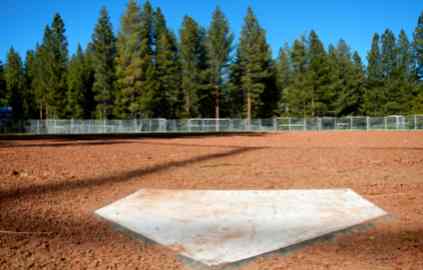
To the spectator’s eye, the South Tahoe High School softball field looks ready to play on.

But it’s also less than ideal from a spectator’s point-of-view.

There is the matter of a gated fence, at least on Tuesday afternoon, not letting anyone in. And then when seated in the first couple rows of the five-row bleachers fans cannot to see action except in parts of the outfield.

Softball may be played at South Tahoe High on April 6. Photos/Kathryn Reed

Softball may be played at South Tahoe High on April 6. Photos/Kathryn Reed

It’s the wetness of the field, though, that will force Wednesday’s home opener to be played at the South Tahoe Middle School field. The goal is to have the high school field ready for Saturday’s doubleheader. And with the lack of snow this year, this could be a record for how early the girls will be able to play at their school.

The high school softball field has been under a microscope for a couple years. In part it had to do with the Office of Civil Rights saying the field was out of compliance, then came Title IX issues, funding problems, bickering, disputes, name calling and finger pointing. From there, compromise, funding, resolution and progress came about.

Lake Tahoe Unified School District officials walked the field last week.

“Now that we can see the ground, the girls are out there practicing on it every day,” Doug Russell, STHS athletic director, told Lake Tahoe News. “We are trying to get the facility to match the needs we would need for a game situation.”

The removable outfield fence is installed, the scoreboard is working, and the dugouts are complete with bat racks, equipment boxes and benches.

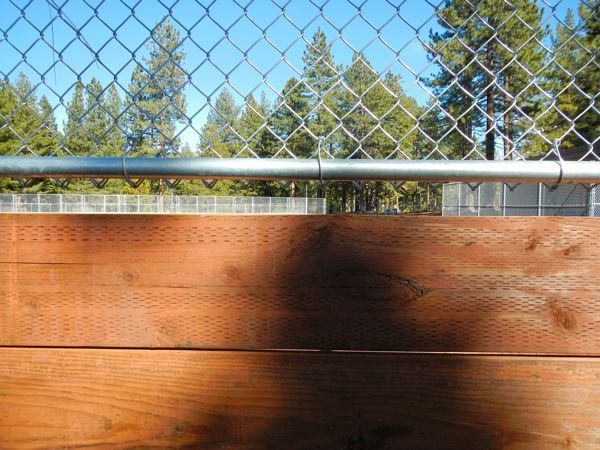
The view of the field from the bottom bleacher seat.

The view of the field from the bottom bleacher seat.

But the wood on the lower part of the backstop is still there. This hinders people from being able to see the action. When that might be fixed, well, Russell said he hasn’t been told.

Facilities Director Steve Morales said, “The major item still outstanding that the district elected to do is the addition of two restrooms. We are expecting to get approved drawings out of the Division of State Architect in the next couple of weeks.”

Construction will start after the girls’ softball season is over. Morales said this is so the players won’t be impacted by the work.

Also still to be installed are the restroom fixtures in the one stall that is built, as well as setting the sinks and cabinets in the concession stand.

With a hard freeze possible this weekend, water for that structure has yet to be turned on.


More states want in on the sports betting game

By Joe Drape, New York Times

It is a lucrative time of year for Nevada, where more than $200 million will be wagered in sports books on the men’s college basketball tournament, a pot of money that has budget-crunched states across the country pushing for a piece of the action despite strong opposition from the NCAA and professional sports leagues.

Voters in New Jersey passed a referendum by a 2-to-1 margin making sports betting legal, and last year Gov. Chris Christie signed a law legalizing it at Atlantic City’s 12 casinos and the state’s four horse racing tracks. Illinois is considering allowing sports betting, and California lawmakers are looking to reintroduce a sports gambling bill that the state Senate passed last year.

All this has the sports’ governing bodies on high alert. The NCAA has filed a lawsuit with the NFL, the NHL, the NBA and Major League Baseball claiming that sports betting in New Jersey would “irreparably” corrupt sports in the United States. This year they were joined by the Justice Department, which defended the constitutionality of a 1992 law banning sports betting outside Nevada and a handful of other states that had long allowed gambling.

The NCAA also canceled several tournaments and sporting events in the state and said it would bar New Jersey from hosting events in the future if sports betting was put into effect.

Last month, a federal judge ruled against New Jersey and upheld the ban on sports betting. The state is appealing, and legal experts expect that the case will reach the Supreme Court.

As gamblers poured into Las Vegas in anticipation of three weeks of betting on unpredictable tournament action, the NCAA sounded this warning on its official Twitter account: “Student-athletes, coaches & admins: A reminder that betting on #MarchMadness isn’t worth the risks,” with a link to a release detailing the arguments against wagering on sports.

In a statement, the organization was concise in explaining its opposition. “The NCAA maintains that the spread of legalized sports wagering is a threat to the integrity of athletic competition and student-athlete well-being,” it said.

Nevertheless, the money being wagered on the tournament will more than double the record $98.9 million bet on this year’s Super Bowl.

The federal law on sports betting, which was championed by then-Sen. Bill Bradley of New Jersey, a former professional basketball player for the New York Knicks, was intended to limit its expansion beyond Nevada, Delaware, Oregon and Montana. But New Jersey and advocates in other states say there are too many dollars at stake for that policy to continue to make sense.

Nevada took in more than $3.4 billion in bets on sports last year, generating $15 million to $20 million in tax revenue. The FBI estimates that $2.6 billion is bet illegally on the college basketball tournament, while the National Gambling Impact Study Commission says $380 billion is bet annually with bookies or offshore betting operations, often controlled by organized crime, on all sporting events together.

Last March, Nevada sports books handled $288.5 million in bets on basketball, an estimated 70 percent of them — or $201 million — on college games, according to the Gaming Commission.

In Britain, where bookmaking shops are ubiquitous and online wagering is readily available, bookmakers paid 900 million pounds in taxes (about $1.36 billion), 24 percent of it, or roughly $343 million, on sports and horse racing, according to a study by Deloitte on behalf of the Association of British Bookmakers.

The predawn scene at LVH last week served as a vivid illustration of Nevada’s special lure. At 4:30 a.m., a group had claimed a table in the sports book area of the casino, and within three hours, hundreds of people were in a line that snaked through slot machines and onto the casino floor.

“This is the only place to be during the tournament,” said Laurie Moss, a Denver software architect who has made the pilgrimage here for 13 years to bet on college games.

The growing acceptance of legalized sports betting has been reflected in an array of polls. Most recently, one from Fairleigh Dickinson University’s PublicMind in December 2012 found that 51 percent of registered voters favor legalizing sports betting in states where it is not currently legal. That was up from its March 2010 poll, which showed 39 percent of voters supported expanding sports betting.

In court, the NCAA and sports leagues have argued that wider sports betting would compromise their image and offer a powerful temptation for their athletes to fix games. It is an argument advocates of sports betting claim is disingenuous, considering the leagues have coexisted with gambling in Nevada since 1949.

Dennis Drazin, a lawyer who advises Monmouth Park racetrack, which has announced plans to set up a sports book, said the leagues long ago made gambling part of their enterprise.

“If gambling is really hurting the leagues, why does every sports show talk about point spreads and favorites and underdogs? And why does every office in America have a pool on the NCAA tournament?” Drazin said.

A.G. Burnett, chairman of the Nevada Gaming Control Board, said perhaps the best way for sports leagues to protect themselves was to allow betting to expand in legal and regulated fashion.

“We have been in this business for decades and haven’t had any problems with … any of our universities,” Burnett said. “The game-fixing scandals have happened in other states where gambling is illegal. What we have here is a regulatory process specifically to monitor what happens on both sides of the counter. This is all we do, and we’re good at it.”


Weather alters cross country race location

Challenging late-season snow conditions have forced a venue change for the USSA Super Tour cross country races. Royal Gorge, which will be hosting the Hill Climb race on April 8, will now also be hosting the National Distance Championships with the women’s 30K race on April 10, and men’s 50K race on April 11.

The Super Tour Finals is a mini tour with cash bonuses not only for race winners, but also for the best climber, best sprinter, and best young skier (under 23). The first two races – a 3.2k skate prologue on April 4 and a 10/15k classic mass start on April 5 – were moved from Tahoe Donner Cross Country to Auburn Ski Club Training Center due to low snow. Auburn Ski Club Training Center will also host the classic sprint competition on April 6.

The mini tour finishes with a Hill Climb, which this year will be a grueling test of endurance at Sugar Bowl Resort on Donner Summit. The race takes competitors from Sugar Bowl Village down to Van Norden Meadow on the Royal Gorge trail system before sending them over 1,100 vertical feet to the top of Mt. Disney. The Hill Climb will feature a “pursuit” start – competitors will start the race based on how far behind the leader of the mini tour they are after the first three events, and the first racer to the top wins the Tour overall. Spectators will be issued a free pass to ride the gondola into Sugar Bowl Village and walk partway up the course. An awards ceremony and party will be held at Village Hall in Sugar Bowl Village after from noon-3pm. Spectators will have a chance to meet the athletes, and join in the festivities.

The 30/50K National Distance Championship is part of the week of races, but separate from the mini tour. These races will also feature junior race of 15/20K, and will be on a 10K loop at the Summit Station of Royal Gorge Cross Country Resort. Discounted spectator passes and free “foot spectator” passes will be offered, and spectators can see plenty of action from the Sun Deck at Summit Station. The awards ceremony and after-party for this event will be at noon on April 11 at Tahoe Donner Cross Country.

These are all important qualification races for the 2014 Olympic Games and will be attended by the best athletes in the U.S., as well as a number of international athletes.


Dodge Ridge first Sierra resort to close for season

By KCRA-TV

After closely monitoring the forecast for the first week in April, Dodge Ridge decided to close earlier than predicted.

Dodge Ridge officially closed its ski runs for the 2012-13 season on Sunday.

Mother Nature brought warmer temperatures and warmer storms, along with snow levels at 8,000 feet during the final week of March.

During Easter weekend, 95 percent of the trails were open at Dodge Ridge for skiing and riding.

The ski resort also hosted the annual Spring Fling Golden Egg Hunt on Saturday.

Over 90 children took pictures with the Easter Bunny and searched for the golden egg, which had a 2013-2014 Dodge Ridge Youth Season Pass inside.

Dodge Ridge will open its campground operations as early as April 12 at Pinecrest, Fraser Flat and Pioneer Trail campgrounds.


Win 2 tickets to an April Giants game

Opening Day 2010. Photo/LTN file

Opening Day 2010
Photo/LTN file

Is this the start of three championship seasons out of four?

It’s official — baseball season is here. The Giants open in LA on Monday as they take on the Dodgers.

Post what you think the final score will be of the April 1 game as a comment. The first person who guesses correctly will win two tickets to the April 10 game at AT&T Park when the Giants host the Rockies that afternoon. All comments must be posted before the end of the fifth inning.

Anyone may participate. However, you must agree to have your full name published on Lake Tahoe News.

If no one guesses correctly, we will randomly award the tickets to a responder who is part of the NEWS Team. Fill out this paid subscriber form to be part of the team.


East Coast aerialists dominate at Heavenly

By USSA

With a band playing and a rocking crowd on the hill, Emily Cook (Belmont, Mass.) claimed her sixth U.S. aerials title at the Sprint U.S. Freestyle Championships Saturday night at Heavenly Mountain Resort.

Dylan Ferguson (Amesbury, Mass.) took the title for the men, scoring a U.S. Champs three-peat.

Kiley McKinnon (Madison, Conn.) and Alex Bowen (Springville, N.Y.) took second, while Madie Gorelik (Park City) and Jonathon Lillis (Rochester, N.Y.) walked away in third place.

The event was judged in the traditional aerial two-jump format which combined the athletes’ two jump scores, so each jump counted.

Despite the warm March weather, the hill was in good shape because of mannmade snow and the cold temperatures Saturday night.