‘Angora’ woodpecker may find federal protection

By AP

GRANTS PASS, Ore. — A woodpecker that depends on intense wildfires for the standing dead trees where it feeds on insects is being considered for protection under the Endangered Species Act.

This is the same woodpecker that affected the U.S. Forest Service’s rehab project in the Angora burn area.

The U.S. Fish and Wildlife Service said Monday it will take a closer look at the black-backed woodpecker. A decision is due in a year but could take longer due to budget cuts.
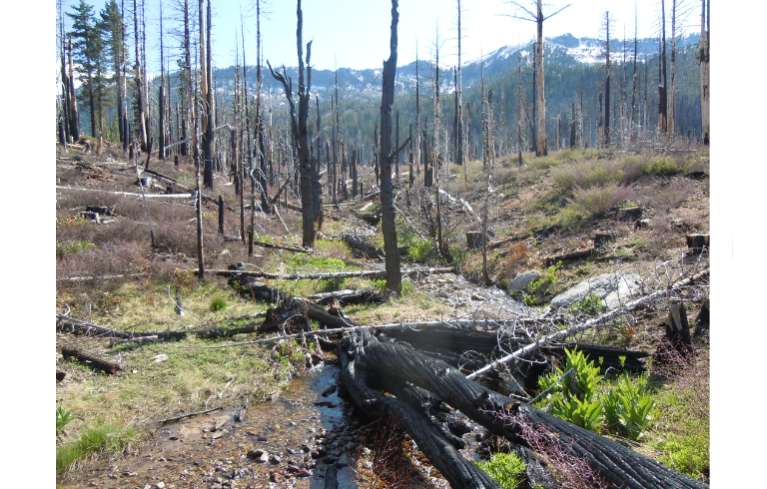
The black-backed woodpecker affected U.S. Forest Service plans for parts of the Angora burn area in Tahoe. Photo/LTN file

The black-backed woodpecker affected U.S. Forest Service plans for parts of the Angora burn area. Photo/LTN file

Fish and Wildlife is considering two populations of the woodpecker — one inhabiting the Sierra of California and eastern Cascade Range of Oregon, and another in the Black Hills of South Dakota and Wyoming. Another Northern Rockies population is not under consideration.

The agency said conservation groups that petitioned to protect the birds presented substantial scientific information that they were suffering a loss of habitat because of fire suppression, salvage logging that removes fire-killed trees, and thinning to reduce the intensity of wildfires.

The decision is giving conservation groups hope the bird can force changes in national wildfire policy the same way the northern spotted owl overhauled the idea of logging old-growth forests.

Chad Hanson, staff ecologist of the John Muir Project of the Earth Island Institute, said the woodpecker has already figured in lawsuits to stop salvage logging.

“We hope as a result of this, the Forest Service will in fact not only pay more attention to species like this, but do a proactive job of educating people that when fire happens, it is not a bad thing, wildlife rely upon it,” Hanson said. “These notions of catastrophic wildfire are really just politics and ignorance, and reflect outdated thinking.”

Forest Service spokesman Larry Chambers said the agency’s wildfire policy was not changing because the bird was not yet listed as a threatened or endangered species. He added that the agency already took “science-based actions to protect its habitat.”

The agency has also said budget cuts this year will force it to let more fires burn — a prospect Hanson said would benefit the woodpecker and a broad range of species.

Tom Partin, president of the American Forest Resources Council, a timber industry group, said the bird didn’t need any Endangered Species Act protection, because it was already getting plenty of new habitat each year from millions of acres that burn but are not harvested as salvage. He added there is a major debate going on over the role of the Forest Service on the national forests.

“Are they going to be a firefighting agency, or a land management agency?” he said. “Right now, half the budget is going to firefighting. A tenth of it is going to forest management.”

Hanson noted that major salvage logging is being planned for two areas that burned last year in prime black-backed woodpecker habitat, one on the Plumas National Forest in the Sierras, and another on the Winema-Fremont and Modoc national forests near Lakeview, Ore.


Wood cutting permits in TNF available

Woodcutting permits for the Tahoe National Forest may be purchased beginning May 1.

The price for permits is $15 per cord with a two-cord minimum and an annual 10-cord maximum per household. Permits can be obtained at all TNF Ranger Stations, the Forest Headquarters or by mail. Firewood season will extend through Dec. 1 or until rain and snow make the roads impassable.

In general, the woodcutting permit allows removal of dead or down wood on TNF system lands unless otherwise designated. It does not allow cutting on private land. Trees may not be cut if marked with paint, wildlife signs, boundary signs, and other official signs or in areas closed to woodcutting.

Wood cutters are also reminded that they are required to keep a serviceable shovel at least 46 inches long and an approved fire extinguisher (2 pound dry chemical or 1 pound foam type – ABC or greater) within 25 feet of where saws are being operated. All gasoline-powered saws and other internal combustion engines such as motorized splitters must have a USFS approved spark arrester installed. Transportation load tickets will be issued along with the permit.

For more information on the woodcutting program call the Truckee Ranger District at (530) 587.3558.


Olympic snowboarder hopeful Chelone Miller dies

By Devon O’Neil, ESPN

Chelone Miller, the younger brother of Olympic champion ski racer Bode Miller and a professional snowboarder who excelled in three disciplines, was found dead Sunday in his adopted hometown of Mammoth Lakes. He was 29.

A close friend discovered Miller unresponsive in the van in which Miller lived, outside his friend’s home, and the friend alerted authorities at 12:45pm.

According to the Mono County Sheriff’s Office, which confirmed Miller’s death on Monday, the cause of death is unknown pending an autopsy. Foul play is not suspected. Miller had a history of seizures since being badly injured in a 2005 motorcycle crash that left him in a coma for 11 days. Miller was well-known in Mammoth Lakes for his versatile riding talent, free spirit and fearless approach to big mountains. He was one of the few pros who could hit big jumps, ride precipitous natural terrain, and compete with the best snowboardcross racers in the world.

Snowboarder Chelone Miller died from an apparent seizure. Photo/Ski Channel

Snowboarder Chelone Miller died from an apparent seizure. Photo/Ski Channel

According to friends in Mammoth Lakes, Miller — affectionately known as “Chilly” — played golf Friday and spent Saturday lapping the resort’s terrain park. He had planned to fly to Alaska to compete in the Arctic Man race on Friday, an event that pairs snowmobilers with skiers and snowboarders who reach speeds in excess of 80 mph. “He was a very talented snowboarder and a great friend,” said John Teller, a Mammoth-based skicross racer who won X Games gold in 2011.

“Chilly always struck me as one to do things his way,” added Nate Holland of Squaw Valley, a seven-time X Games gold medalist who competed against Miller in snowboardcross. “He’d pop up here and there in his van as kind of a lone wolf, and throw down. He was a hard-charging snowboarder.”

Holland spoke from Alaska, where he was expecting to see Miller for the Arctic Man. Last year, Holland said, Miller suffered a seizure on the day of the event and was airlifted to a hospital. After stabilizing, Miller returned to the course and raced.

“I remember the organizer saying, ‘If Chilly says he’s racing, he’s racing, and we’re not going to finish this race until he gets back from the hospital,'” Holland recalled.

Most recently, Miller had taken steps to qualify for the 2014 Olympics in snowboardcross. He finished fourth at last month’s national championship in Utah, ahead of Holland and two-time Olympic gold medalist Seth Wescott. Miller also won the overall championship on the 2013 Rahlves Banzai Tour, clinching the title with a win at Sugar Bowl last month.

Born on the family’s land in Easton, N.H., in August 1983, Chelone was one of four Miller children who grew up without running water or electricity. They used kerosene lanterns for light.

“It was pretty much old-school livin’,” he said in a 2010 Snowboarder magazine interview. “I’m glad I had the opportunity to grow up that way.”

Miller suffered a traumatic brain injury in the 2005 dirt-bike crash near his hometown and later said he lost his memory for an entire month. After recovering, he suffered his first seizure while riding a chairlift at Mammoth Mountain and fell 25 feet, landing on his back.

Miller finished 28th in Snowboarder X in his only X Games appearance in 2010. He also was an alternate for Slopestyle that year.


South Tahoe hockey team going to state

The Bantam hockey team from the South Tahoe Amateur Hockey Association (STAHA) had an

The Bantam hockey team from the South Tahoe Amateur Hockey Association will compete at state next weekend. Photo/Provided

By Ted Parkhill

The Bantam hockey team from the South Tahoe Amateur Hockey Association had an amazing weekend of playoff hockey at the Vacaville Ice Sports arena. They placed second overall across Northern California.

With this strong finish, the team qualified to compete at the California State Hockey Championships in San Jose April 12-14.

On March 23 the team faced the Redwood City Black Stars Bantam team. The Tahoe Grizzlies started their playoff weekend with a solid 3-1 win.

On Saturday evening, the Grizzlies faced the Santa Clara Black Hawks. It was a nail biter and was a fantastic old-time hockey game. In the end the Grizzlies managed to roar past the Black Hawks with a score of 3-2. This win assured the Grizzlies of playing in the championship game the next night.

On March 24, the Grizzlies faced the Fresno Junior Monsters. The Junior Monsters were hungrier than the Grizzlies and won 3-1. With this win the Junior Monsters qualified for the championship game later that day.

The championship game was held on Sunday evening.

Again the Grizzlies faced the Jr. Monsters. It was a hard fought game but in the end the Monsters dominated in the first period. and were up 2-0. The Grizzlies roared back and tied it up 2-2. But the Jr. Monsters responded with two more goals to win the Northern California Championship.

Head Coach Ken Wood said, “The team play was the key to their success. The defense was a brick wall and the offense scored at critical times. We look forward to competing at the state level.”

The Grizzlies ended the season as the runner up. Both the Fresno Jr. Monsters and the Tahoe Grizzlies will see each other again at the California Amateur Hockey Association’s annual State Championships at the Sharks Ice in San Jose from April 12-14. Los Angeles’ California Heat and the San Diego Gulls will also be competing.

Ted Parkhill is with the South Tahoe Amateur Hockey Association.


Spring in Tahoe — from biking to shoveling

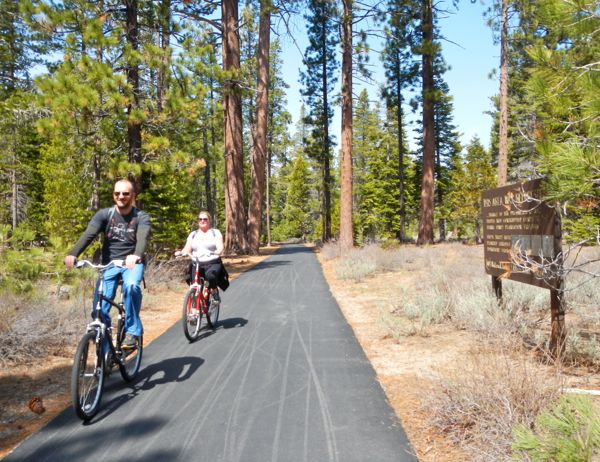
Cycling on the recently repaved Camp Rich bike trail on April 7. Photos/LTN

Cycling on the recently repaved Camp Rich trail on April 7. Photos/LTN

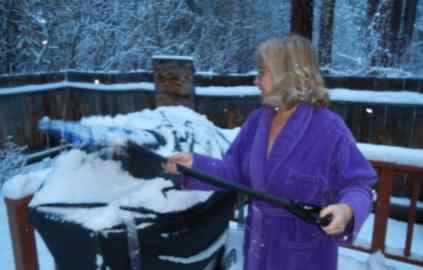
Shoveling off the barbecue on April 8.

Shoveling off the barbecue on April 8.

Yesterday people were in shirtsleeves enjoying Tahoe, this morning they are shoveling snow.

It must be spring in the Lake Tahoe Basin.

This could be the last powder day of the ski season as resorts gradually stop spinning lifts.

Wind will continue to blow through the basin today. A lake wind advisory from the National Weather Service in Reno is in effect until 8pm Monday. Waves on Lake Tahoe could be 2 to 4 feet high.

Snow tires or chains are required on some highways in and around Lake Tahoe. Click on the road icons on the top of Lake Tahoe News’ home page to learn about restrictions affecting the roads you’ll be traveling on.

It’s was a blustery commute April 8 over Spooner Summit, with snow blowing and the white stuff piling up a bit.

Wednesday looks like it will be the nicest day this week, with a high about 60 degrees and mostly sunny skies.

No moisture is in the forecast for the rest of the week.

— Lake Tahoe News staff report


Expect smoke in Cold Creek area this week

U.S. Forest Service fuels management crews will resume prescribed fire operations in the Cold Creek area near South Lake Tahoe beginning April 8.

Crews expect to burn approximately 2 acres per day. Operations may continue through the week, weather and conditions permitting.

Residents and visitors can expect to see smoke from this prescribed fire project area. The Forest Service strives to minimize the impacts of smoke on local communities. Smoke-sensitive residents should consider staying indoors and keeping doors, windows and outside vents closed. To directly receive prescribed fire updates, send an email to pa_ltbmu@fs.fed.us.

Forest Service staff will post road signs around areas affected by prescribed fire, and update the local fire information line at (530) 543-2600, No. 6. Other federal, state and local fire management agencies may also be conducting prescribed fire work during this period.


McClintock against expanding Yosemite

By Michael Doyle, Fresno Bee

WASHINGTON — A bill to expand Yosemite National Park has won the support of California’s senators, but there’s apparent skepticism from the conservative congressman who now represents the park region.

The Capitol Hill split could hinder the park expansion legislation that lawmakers will soon re-introduce. More broadly, it underscores the challenges looming as Yosemite aficionados and Rep. Tom McClintock get to know one another, like partners in an arranged marriage.

“We look forward to working with the congressman so he understands the issues,” Mariposa County Supervisor Kevin Cann said.

Yosemite National Park only recently became part of Rep. Tom McClintock's district. Photo/LTN file

Yosemite National Park only recently became part of Rep. Tom McClintock’s district. Photo/LTN file

McClintock, R-Elk Grove, visited Yosemite this week for his first time as the park’s congressman. The 56-year-old career lawmaker met with park officials for about two hours before attending a Mariposa town hall meeting Tuesday night.

The world famous park fell into McClintock’s 4th Congressional District when a state commission redrew legislative lines last year. The district now includes a big sweep of the Sierra Nevada mountains, from Lake Tahoe in the north to Sequoia National Park in the south. Yosemite is the district’s crown jewel, one that repeatedly invites political intervention.

Last Congress, for instance, the lawmaker who represented Yosemite at the time — Rep. Jeff Denham, R-Turlock — introduced a bill to authorize the park service to acquire 18 acres for a new Yosemite visitors center in Mariposa.

McClintock didn’t like that proposal. A member of the House Natural Resources Committee, he argued at a hearing last June that the park service would be better off using existing vacant buildings in Mariposa, and he asserted a new Mariposa center would put gateway communities in Madera and Tuolumne counties at a disadvantage.

“Why would we be having the federal government build yet another office facility?” McClintock asked, adding that “this is a plan that picks one winner out of many losers.”

A member of the Mariposa Tea Party Patriots shared McClintock’s skepticism and testified against the bill at the House hearing. The legislation died, and it has not been re-introduced.

McClintock did not respond to multiple requests for an interview or information over the past week.

He told Mariposa County supervisors on Tuesday that he would seek an investigation “to fully expose” a Yosemite plan that restricts certain commercial operations.

The congressman’s staff has reportedly already communicated to park advocates that he won’t support a separate Yosemite bill that will resurface in a few days.

The legislation, to be introduced by Rep. Jim Costa, D-Fresno, in the House and by California Democratic Sen. Dianne Feinstein in the Senate will OK buying about 1,600 acres in Mariposa County for an addition to the park. The land is near a development called Yosemite West, and was reportedly part of naturalist John Muir’s original plan for Yosemite.

“We haven’t made an expansion to the park in over 85 years,” said Laurie Wayburn, president of the Pacific Forest Trust. “I think this would be an extraordinary opportunity to get ready for the 2016 celebration of the park’s centennial.”

The Pacific Forest Trust owns about half of the land covered by the bill, and a partnership of medical professionals owns the other half. The bill authorizes the land purchase by the park service, but does not mandate it.

“This has been something that has been discussed for some time,” Costa said, “and it’s got bipartisan support.”

Costa added that “it would be very good” if McClintock supported the bill, which has been backed by Mariposa County supervisors. Wayburn, though, said McClintock’s staff has indicated he doesn’t support the park expansion.

In general, McClintock believes the federal government is too big. He is also critical of park service officials, as when he denounced Lassen Volcanic National Park wildland fire managers last year as “people who lack the simple common sense that God gave a squirrel,” following a blaze that blew out of control.

McClintock, without fanfare, introduced his own initial Yosemite-related bill last month. The measure would rename Mammoth Peak as Mount Jessie Benton Fremont. The mountain re-naming bill, which does not have any co-sponsors, would honor the 19th century woman whose writings helped inspire Yosemite protection efforts.

A 12,117-foot landmark near Kuna Lake, Mammoth is Yosemite’s sixth-highest peak. It’s been officially called Mammoth Peak since 1932, according to the Board on Geographic Names’ records.

McClintock publicly articulated some other intentions at the town meeting, including possible legislation blocking the park’s Merced River plan. The plan calls for the elimination of some Yosemite Valley commercial ventures, including an ice rink and bike rental operations.

“I want to sound the alarm over proposals for Yosemite from the National Park Service,” McClintock told Mariposa County supervisors Tuesday. “Yosemite belongs to the American people, and the park service’s job is to welcome and accommodate them, not to restrict and harass them.”


Vibrant colors decorate Northern California

By Kathryn Reed

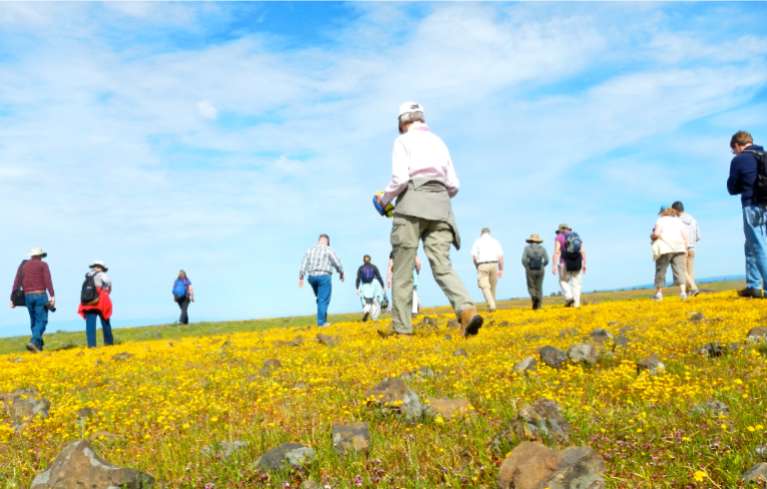
OROVILLE – It was like walking on a carpet of tiny wildflowers. And, yet, looking in the distance it was like a watercolor.

Table Mountain is usually awash in color this time of year. And while the flora is more robust compared to anyplace in Tahoe now, the lack of rain in the North State is making this wildflower season a bit lackluster compared to some years.

Still, the array of flowers last weekend on this 3,400-acre ecological preserve owned by the state Department of Fish and Game was well worth the trek. The state acquired the land from cattle ranchers in two purchases – one in 1992, the other 1997.

It's wildflower season on Table Mountain in Oroville. Photos/Kathryn Reed

It’s wildflower season on Table Mountain in Oroville. Photos/Kathryn Reed

Cattle still graze on this expanse of land. This, according to the two leaders of the hike, is a good thing because it keeps the non-native grasses “plowed” which allows the wildflowers to prosper.

Individuals, families and organized groups are scouring the landscape. Heads are bent down looking at the various flowers that create a mosaic. With this being lava country, the terrain is uneven – another good reason to keep looking down.

What keeps looking like a yellow carpet is actually various species of flowers. California gold fields is the most popular.

This area is also home to the Montana state flower – the Montana bitter root.

Brian Gilmore, who led this Fish and Game trek, said the Lewis and Clark expedition ate the bulb of this plant and that it has a succulent leaf.

Many of the plant species thrive in vernal pools. And while there are spots of water, where we walked last Saturday was dry and should have been under water in a normal March.

Table Mountain meadow foam, white tipped clover, cow bag clover, coyote thistle, butter and eggs, poppy, lupine, dwarf stone, blue-eyed gilia, California buttercup, jewel flower, purple owl’s clover, valley man-root, Larkspur delphinium – those are just some of the flowers we learn about.

A California horn lark could be heard nearby.

We catch a garter snake snacking on a Pacific chorus frog. This is a terrestrial snake – so after it swallows it needs to hang out on rock, which helps with its digestion.

In the nearby creek, Gilmore plucks a newt from the water. He enlightens the group that normally picking up bright colored amphibians is a bad idea because the color indicates it is poisonous.

Normally this time of year the six waterfalls in the preserve are flowing – not so now.

While Table Mountain is free to the public to access, to roam, to picnic, to fly kites, for those who don’t know their flowers, a guided hike is highly recommended.

—-

Note:

More info about Table Mountain, including tours, is online.

ngg_shortcode_0_placeholder (Click on photos to enlarge.)


Snow Golf Tourney at Alpine Meadows

Alpine Meadows’ 30th anniversary Snow Golf Tournament will tee off at 9am April 13 at the top of the mountain off the Summit Express chairlift.

As featured on the Golf Channel, this highly anticipated spring event is the only mountaintop snow golf course around. It’s skiing or snowboarding combined with golf.

The nine-hole course starts at the top of the Summit Express chairlift off of Sunspot and weaves its way down the mountain to the bottom of Alpine Bowl Chair. Players are provided scorecards, pencils, clubs and tennis balls. All competitors must be wearing skis or a snowboard to navigate from hole to hole, but are allowed to remove one foot to drive, chip and putt. Winners will receive prizes including golf rounds at Tahoe Donner Golf Course, Old Greenwood and Resort at Squaw Creek, in addition to Oakley goggles, a GoPro, Alpine swag and more.

Registration starts at 9am at the top of the Summit Express chair and is free (with a lift ticket or season pass). All scorecards will be entered into a raffle beginning at 3pm on the Sundeck. A live performance by Peter Joseph Burt & The King Tide will also take place on the Sundeck from 1-4pm.


Judge sides with backcountry skiers over snowmobilers

By John Miller and Todd Dvorka, AP

BOISE, Idaho — A federal judge in Idaho says the U.S. Forest Service broke the law when it didn’t craft rules to govern snowmobile travel, handing powder-loving backcountry skiers and snowshoe enthusiasts a victory that could extend to national forests nationwide.

U.S. District Magistrate Judge Ronald Bush ruled Friday that the Forest Service must go back to work on its 2005 Travel Management Rule and draw up regulations designating areas of use and non-use by all off-road vehicles, including snowmobiles, on national forest lands.

How this decision affects the Lake Tahoe Basin, Eldorado, Tahoe and Toiyabe forests is not known.

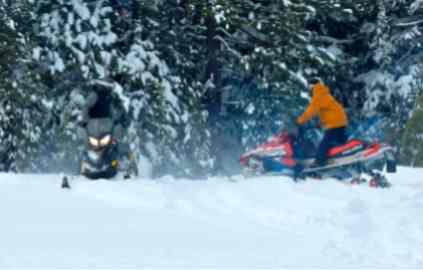
A decision in Idaho curtailing snowmobiling could affect national forests throughout the U.S. Photo/LTN file

A decision in Idaho curtailing snowmobiling could affect national forests throughout the U.S. Photo/LTN file

The Idaho-based Winter Wildlands Alliance had argued the agency’s decision to allow individual forests to exempt snowmobiles from the rules was illegal and has created conflicts between snowmobiles and backcountry skiers.

The judge agreed with the skiers’ group, ordering the Forest Service to write a new rule consistent with his decision within 180 days. The decision will lead to changes in national forests in Idaho, but could also prompt national forests across the West and other states to revisit its off-road policies.

”The court finds the OSV (over-snow vehicles) exemption is contrary to law,” Bush wrote. ”The court finds that the 2005 Travel Management Rule is arbitrary and capricious to the extent that it does not require designations for the use of OSVs upon the national forest lands.”

Mark Menlove, executive director with the Winter Wildlands Alliance, said the decision was a monumental victory for backcountry skiers and other winter recreationists seeking a peaceful experience in the woods.

The group’s goal is to not shut down snowmobiles in national forests, but force the agency to designate specific boundaries that carve out distinct areas for those who want to explore on powered sleds and those preferring skis, snowshoes and hiking boots.

”Many of our members use snowmobiles more and more to get to certain places, so we’re not in any way asking the forest service to ban them,” Menlove told the Associated Press on Monday. ”But we are asking for some balance there, where our constituents can go and find peace and powder snow in the backcountry.”

The U.S. Attorney’s Office in Idaho, which represented the Forest Service in the case, said the review process has not yet started to determine if an appeal is appropriate. Government lawyers also declined to comment on the decision.

But the ruling was disappointing to Idaho’s snowmobiling community and the groups that joined the lawsuit to defend the existing rule. Sandra Mitchell, public lands director for the Idaho State Snowmobiling Association, said she was prepared to take part in the process of drafting a new rule and defending the recreational opportunities and the rural economies that benefit from the snowmobiling industry each winter.

”Obviously we want to ride in a responsible way, and be in places where we don’t have negative impacts,” Mitchell said. ”But we also want to ensure that opportunities exist not just now but for future generations. Snowmobiling brings thousands of people to Idaho to recreate, and that’s a huge driver for economies in the winter for rural Idaho.”