Future of Royal Gorge up to public

Last December the Truckee Donner Land Trust acquired the 3,000-acre Royal Gorge property on Donner Summit as well as 351 acres in Negro Canyon above Donner Lake.

All of Royal Gorge’s meadows, peaks, natural resources, and Nordic ski area are protected forever and will be open to the public for recreation.

As part of a public outreach and recreational planning process, the Truckee Donner Land Trust has announced a series of public input meetings:

June 15 — Kick-off (Donner Summit)

June 17 — Kick-off (Truckee)

July 6 — Forestry Management

July 29 — Van Norden Meadow

Aug. 31 — Final Wrap-Up

For details regarding each meeting, visit the Truckee Donner Land Trust website.


Tahoe National Forest ready for holiday weekend

Most campgrounds and recreation sites within the Tahoe National Forest will be open for Memorial Day.

Most trails are open with only patches of snow on north facing slopes. Hikers will still find some snow patches in the high country, especially on north facing slopes or in shaded areas, however much of the forest is snow free.

Campfire permits are required outside of developed campgrounds and are free at all Forest Service, BLM, and CalFire offices.

For more information, call (530) 265.4531.


Homewood wins environmental award

Homewood Mountain Resort earned the National Ski Areas Association’s Golden Eagle Award for environmental stewardship.

The West Shore ski resort was competing in the Small Ski Area category, which consists of resorts with less than 200,000 annual skier visits .

This is association’s highest environmental honor. The award comes at the same time the resort is being sued by environmental groups wanting to stop proposed development.


Gear up for the annual Tahoe Bike Challenge

The 8th annual Tahoe Bike Challenge is June 1 (Tahoe Bike Day) through June 14.

This annual two-week event challenges everyone to ride their bike to work, school, play and for daily errands in an effort to reduce the region’s carbon footprint. For every mile ridden on a bicycle (a Green Mile) 1.9 pounds of carbon dioxide and other gases are prevented from being emitted into the atmosphere.

This year’s carbon reduction goal is 20,000 tons.

For more information and to register as an individual or as a team, go online.

There is no fee to participate. The Challenge is not a competition, but could be among friends and colleagues.


Proper food storage can keep bears at bay

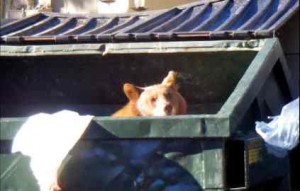
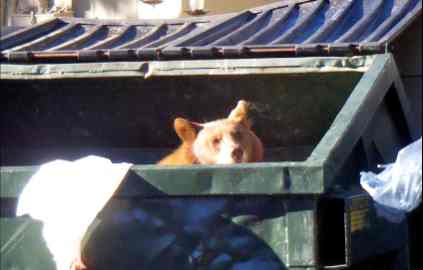
Bears in Tahoe sometimes like to forage for people food. Photo/Janice Eastburn

Bears in Tahoe sometimes like to forage for people food. Photo/Janice Eastburn

With the summer season approaching, agencies are asking residents and visitors to practice proper food storage and trash disposal when living in or visiting bear country.

There are an estimated 10,000 to 15,000 American black bears living in the Sierra Nevada.

Spring is the time when bears emerge from their winter dens in search of food. They are attracted to anything edible or scented. Once they get access to human food and garbage, bears lose their fear of humans and can cause property damage and threaten public safety.

Back-to-back dry seasons in the Lake Tahoe Basin mean bears are likely to seek out trash. Residents and visitors can help keep bears wild and reduce potential conflicts between bears and humans by properly storing food and garbage.

Follow these tips to prevent a bear encounter:

· Purchase, store all trash in, and properly close bear-resistant garbage containers.

· Freeze strong smelling left overs, such as fish, until trash day to reduce the smell.

· Wait to put trash out until the morning of collection day.

· Keep garbage cans clean and deodorize them with bleach or ammonia.

· Don’t leave trash, groceries, or animal feed in your car.

· Keep barbecue grills clean and stored in a garage or shed when not in use.

· Only provide bird feeders from November through March.

· Don’t leave any scented non-food products outside (or in your car), such as suntan lotion, lip balm, insect repellent, toothpaste, soap or candles.

· Keep doors and windows closed and locked when the home is unoccupied.

· Consider installing motion-detector alarms, electric fencing or motion activated sprinklers.

· Harvest fruit off trees as soon as it is ripe, and promptly collect all fruit that falls.

· Securely block access to potential hibernation sites, such as crawl spaces under decks and buildings.

· Never feed wildlife.

Tips for safe-guarding campsites against a bear encounter:

· Always store food (including pet food), drinks, toiletries, coolers, cleaned grills, cleaned dishes, cleaning products, and all other scented items as soon as possible after use in the bear-resistant containers (storage lockers) provided at your campsite.

· Clean the barbecue grill after each use and store properly.

· Always place trash in bear-resistant dumpsters in campground or in bear-resistant containers at your campsite and close and lock after each use.

· Never leave scented items unattended in your campsite, tent, or car.

· Never leave trash at your campsite.

· Never feed wildlife.

To report bear conflicts in California, call (916) 445.0380. To report bear conflicts in Nevada, contact the Nevada Department of Wildlife at (775) 688.2327. If the issue is an immediate threat, call 911.

Agencies involved in this effort include the U.S. Forest Service Lake Tahoe Basin Management Unit, California State Parks, California Department of Fish and Wildlife, Nevada Department of Wildlife, and Tahoe Regional Planning Agency.
Protecting outdoors is big business

By Julie Cart, Los Angeles Times

Some say that you can’t put a price on precious natural resources. As of this week, you can.

The public and private tab for conserving the nation’s fish, wildlife and natural resources is close to $40 billion a year, according to a study released this week.

The analysis, commissioned by the National Fish and Wildlife Foundation, considered the jobs, tax revenue and other economic effects from federal state and private investment in conservation.

The total — $38.8 billion — stimulates as much as $93.2 billion in economic activity, the study found.

A coalition of more than 1,200 conservation groups extrapolated the numbers from the new study and came up with another set of economic indicators.

According to the group, America’s Voice for Conservation, Recreation and Preservation, the economic impact from resource conservation, outdoor recreation and historic preservation in the United States is $1.7 trillion a year, which produces $211 billion in tax revenue and 12.8 million jobs.


Youth softball league starts on South Shore

High Sierra ASA, the recreational softball league for girls and boys ages 5-16, kicked off Saturday.

The season usually runs May through June, with teams being notified and practices starting in April. We were late in getting things organized this year as Marilyn Breisacher, Dani Brewer and myself took it upon ourselves to “resurrect” the league.

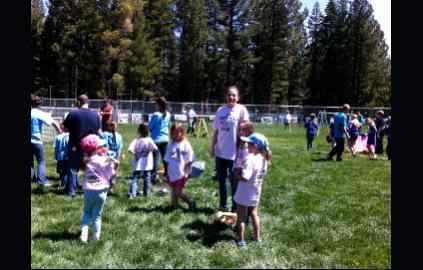
Recreational softball season under way in South Lake Tahoe. Photo/Sheri Schimmel

Recreational softball season under way in South Lake Tahoe. Photo/Sheri Schimmel

It had fallen in numbers and organization and we three – as softball is near and dear to our hearts – wanted to bring it back to where it was in the past.

We had our opening day festivities at STHS on May 12 with the flag salute, national anthem, games to improve skills for all the kids, and hot dogs, drinks, chips, and potato salad.

Games are played at Tahoe Valley for the Mini’s and Farm, and STHS Field of Dreams for Minors and Majors, weekdays 5:30-7pm and Saturdays starting at 9am.

Divisions are Minis (5-7), Farm (8-10), Minors (11-13) and Majors (14-16).

— Sheri Schimmel


Mountain bike race benefits Tahoe

The Pine Nut Cracker Race on May 18 will help support the Corral Trail fund.

Alta Alpina Cycling Club will be donating the proceeds from the mountain bike race for the Tahoe trail to become a flow trail.

Distances of the Pine Nut race vary from 11 to 29 miles. Register online.

Pearl Izumi and Bike Habitat are sponsoring the event.


Report details golf as economic driver in Calif.

By Larry Bohannan, Desert Sun

There is plenty of important news in the latest 52-page report on the economic impact of golf in California.

According to the report, commissioned by Golf 20/20 for the California Alliance for Golf, the game has a $13.1 billion overall impact, direct and indirect, on the state. That includes numbers like $4.1 billion in wages for 128,000 golf-related jobs. There is also the $346 million the game generates for charities in the state.

It is a comprehensive report, covering everything from tourism to real estate sales to television revenues to the sale of golf clubs through the 2011 calendar year.

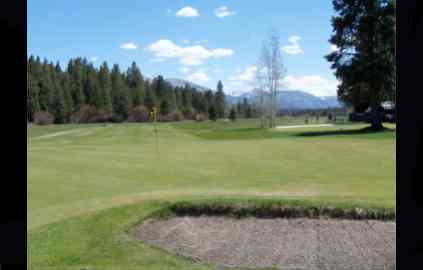
Bijou Golf Course in South Lake Tahoe. Photo/SLT

Bijou Golf Course in South Lake Tahoe. Photo/SLT

But as with pretty much any economic report these days, there is both good news and a little bad news in the document, the first of its kind since 2006 by the California Alliance for Golf. For instance, the total golf economy in the state in 2011 was $6.344 billion. That’s down from the $6.871 billion in 2006.

“The decline in the California golf economy was driven primarily by weakness in two industry segments: Golf real estates and golf course capital investment, which includes new course construction,” the report states.

Real estate accounted for $1.365 billion in the 2006 report, and just $372 million in the 2001 report. But other areas of the golf economy were up, including golf facility operations, and hospitality/tourism.

And in the last two years, since the numbers the report used were generated, most people in the golf industry will tell you the game has continued to climb from the depths of 2009 and 2010.

Why produce such a report? Because golf as an industry is fighting just like other industries for less intrusion from the state’s government and to maximize future revenues by understanding where the game stands now. The report also talks about golf’s environmental record, which it says is far better than the image of the sport as a big user of water and chemicals.

“Golf is more than a game. It is a business providing economic vitality for myriad California communities, jobs for thousands of residents, healthy outdoor recreation for families, necessary green space, and millions of dollars in charity to various local community causes,” state Sen. Ted Gaines, R-Rocklin, said as the report was released.

The game is important to California.

The California Alliance for Golf report puts hard and fast numbers to the game so state officials and other regulators will understand that the game is something to be fostered.


Nevada looks at naming mountain after Fremont

By Martin Griffith, AP

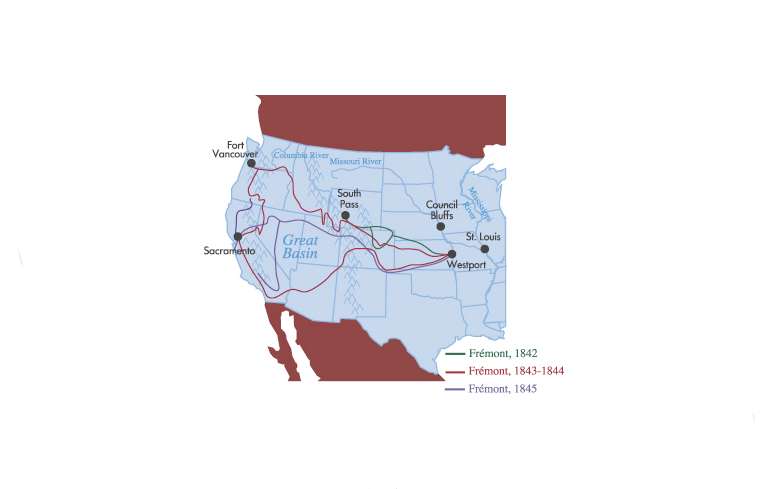
On his historic 1843-44 expedition across the West, John Fremont named some prominent features in what became Nevada, including Pyramid Lake and the Humboldt and Walker rivers.

Now the explorer known as the Pathfinder could have his first geographic feature in the state named after him.

The Historical Society of Dayton Valley is asking the Nevada State Board on Geographic Names to designate a low mountain along the Carson River about 25 miles east of Carson City as Fremont Lookout.

The routes of some of Fremont's expeditions. Map/Kansas Historical Foundation

The routes of some of Fremont’s expeditions. Map/Kansas Historical Foundation

Society members Guy Rocha and Stony Tennant said extensive research shows Fremont stood atop the mountain on Jan. 20, 1844, to gain a view west of the Dayton Valley and the Carson Range above Carson City.

Hoping to find less snow to the south, Fremont and his California-bound group then headed on a more indirect route to the Walker River near what is now Yerington before crossing the snowbound Sierra Nevada near Carson Pass a month later.

Rocha said while Nevada has streets and schools named after Fremont, a geographic feature that bears the adventurer’s name is long overdue.

In addition to leading several expeditions that helped pave the way for the West’s settlement, Fremont was one of the first two U.S. senators from California, the first presidential candidate of the Republican Party and a Union major general in the Civil War. Still, he’s viewed as a controversial figure by historians.

“I’m personally not a big fan of John C. Fremont,” said Rocha, Nevada’s former state archivist. “But he was bigger than life and quite the early explorer in American history.

“To come into the American Great Basin under some pretty tough conditions and survive that expedition (of 1843-44) is impressive. Despite how I feel personally, he deserves his rightful place in history,” he added.

Jack Hursh, executive secretary of the state board on geographic names, said he expects the request to win approval at the panel’s May 14 meeting. Before the name becomes official, it would have to be approved again at a subsequent board meeting and then by the U.S. Board on Geographic Names.

“I can’t imagine anyone opposing this,” Hursh said. “That’s a very appropriate spot to name after him because he stood at that location.”

The state board seeks to honor people who have had a significant impact on Nevada history, Hursh said, and Fremont qualifies as an early explorer who named so many prominent features. Fremont also came up with the name Great Basin for the vast region of interior drainage that includes most of Nevada and much of Utah.

Rocha and Tennant used mileages in Fremont’s journal and satellite imagery to locate the mountain that Fremont climbed. Tennant also climbed every mountain along a 12-mile section of the Carson River to pinpoint its location. Both the mountain and Fremont’s 1844 camp are located on the south side of the river, just west of Susan’s Bluff.

“I didn’t know what to expect when I walked up there, but the view from the top was identical to what he described in his diary,” Tennant said. “You can see the Carson River going out to a broad valley (around Dayton) and the Carson Range, which he described as the Sierra.

“I knew I was standing exactly in the spot where he stood and I felt a chill down my neck. There’s absolutely no doubt this is the right location,” he added.

The mountain is actually an ancient 5,003-foot volcanic cone at the northeastern end of the Pine Nut Mountains, Tennant said.