Unknown life form found at Fallen Leaf Lake

By Ky Plaskon, Capitol Public Radio

A Lake Tahoe area scientist has found an unidentified life form in Fallen Leaf Lake.

Now agencies in the area are trying to figure out what it is.

UNR professor emeritus, John Kleppe, pilots a remotely operated vehicle, or “ROV,” into the frigid depths of the South Shore lake. Particles whiz by the ROV’s lights like stars.

Life form found at Fallen Leaf Lake. Photo/Capitol Public Radio

Life form found at Fallen Leaf Lake. Photo/Capitol Public Radio

“It is sort of amazing because when you think about it no humans have seen a lot of what we see. It is like walking on the moon,” said Kleppe.

He discovered a 3,000-year-old hidden forest still standing. He says it’s evidence of past mega droughts. As if that’s not strange enough, he has found something living in the forest.

“What we are seeing here is a thing, which is like a balloon of green jell and it will eventually look like a baggie and then like it is creating a gas in it and then float away,” said Kleppe.

He’s collected samples and sent them to scientists who disagree on what they might be. Last week he got confirmation that they are not jellyfish. Researchers don’t yet know whether they are plants or animals or a combination of both. Researchers are trying to figure out if they are an invasive species that should be wiped out. Kleppe doesn’t think so.

“They only found them in very clean lakes that were high altitude, maybe it is a natural indicator of clarity. Wouldn’t that be a concept. In other words, you wouldn’t want to get rid of them, you would want to observe them,” said Kleppe.

He had only found them in July in the ancient submerged forest until last year when one of the blobs actually attached itself to his pier.

“We should know what they are and so far nobody does so I am going to find out,” said Kleppe.


Lahontan cutthroat trout spawn at Fallen Leaf Lake

Efforts to re-establish Lahontan cutthroat trout in Fallen Leaf Lake have resulted in a native, lacustrine strain of LCT to spawn in the Lake Tahoe Basin for the first time since their extirpation in the 1930.

The U.S. Fish and Wildlife Service with partners began stocking Fallen Leaf in 2002 with Pilot Peak Lahontan cutthroat trout. This effort was undertaken in order to reintroduce a lake form of this subspecies within the Tahoe basin. The Pilot Peak LCT strain is native to the basin.

This lake strain is thought to live 15 to 20 years.

The largest LCT captured prior to the 1930s from Fallen Leaf Lake was 29 pounds. The California state record for this subspecies is from Lake Tahoe in 1911 and weighed more than 31 pounds.

Fallen Leaf Lake is historic LCT habitat connected to Lake Tahoe by Taylor Creek.

To manage Lahontan spawning and prevent hybridization with rainbow trout, two weirs have been installed in Glen Alpine Creek, one at the interface of the lake and creek and the other approximately 230 meters upstream. Both weirs have been in place since mid-March to control access to spawning areas from Fallen Leaf Lake and act as a barricade to downstream movement of rainbow trout in the upper watershed. Although the weirs block access for mature trout to Glen Alpine Creek, other native species found in the watershed, Lahontan redside shiners, Paiute sculpin, and speckled dace are able to move through the half inch spacing of the bars at either weir.

Upon completion of the spawning season, both weirs will be outfitted with a fry box to capture fry produced within and above the spawning areas to ensure that hybridization is not occurring and to measure LCT reproductive success. Once fry are checked genetically, LCT will be released into Fallen Leaf Lake.


Voluntary boat inspections resume in Truckee area

For a fourth season, watercraft inspections and boater education on aquatic invasive species will take place at Donner Lake and Boca, Prosser, and Stampede reservoirs from late May through early September.

Inspections are voluntary, but highly recommended to help boaters avoid spreading aquatic invasive plant and animal species, which could threaten the ecological and economical integrity of the Truckee-Tahoe area.

Started in 2009, the Truckee Regional AIS Prevention Program works to provide community education on AIS and implements boat inspections, which are the front line to prevent the introduction of AIS, as boats and other motorized watercraft are the highest-risk vectors for spreading AIS into new water bodies.

Decontaminations will be available for a fee for high risk vessels launching at Truckee area water bodies. Decontaminations will take place at Alpine Meadows, off Highway 89, and Northstar, off Highway 267.


El Dorado officials offer tips to avoid plague

Due to increased plague activity in the Lake Tahoe Basin last fall, El Dorado County health officials advise caution this summer.

The California Department of Public Health routinely monitors rodent populations for plague activity in California. Last September and October, a surveillance effort identified three chipmunks as positive for plague in the South Lake Tahoe area; two were found near the U.S. Forest Service Taylor Creek Visitor Center and one was near the Tallac Historic Site. There were no reports of illness to people.

Signs will continue to be posted throughout this year to help advise the public.

According to El Dorado County Public Health Officer Alicia Paris-Pombo, “Plague is naturally present in many parts of California, including higher elevation (mountainous areas) of El Dorado County, so we all need to be cautious around animals that can carry it.”

Plague is an infectious bacterial disease that is spread by squirrels, chipmunks and other wild rodents and their fleas. People can become infected through close contact with infected animals or the bite of an infected flea. Plague can be prevented by avoiding contact with these rodents and their fleas, and by keeping pets away from rodents and their burrows.

Tips to prevent plague include the following:

• Do not feed squirrels, chipmunks or other wild rodents.

• Never touch sick, injured or dead rodents.

• Do not camp, sleep or rest near animal burrows.

• Look for and heed posted warning signs.

• Leave pets home if possible; otherwise keep pets confined or on a leash. Do not allow pets to approach sick or dead rodents or explore rodent burrows. Protect pets with flea control products.

• Cats can pose a higher risk of plague transmission to humans when they have contact with infected rodents. Keep cats away from rodents. Consult a veterinarian if your cat becomes sick after having been in contact with rodents.

• Wear long pants tucked into boot tops to reduce exposure to fleas, and apply insect repellent containing DEET on socks and trouser cuffs.

To report a sick or dead rodent or for questions about plague, contact El Dorado County Environmental Management at (530) 573.3450.


Acrobatic athletes sought by ski-snowboard group

The U.S. Ski and Snowboard Association is looking for future Olympic acrobatic athletes who are younger than 19 to participate in the Elite Aerial Development Program in Lake Placid, N.Y., or the Western Development Aerial Program Fly Freestyle in Park City, Utah.

The EADP has converted acrobatic athletes from sports like gymnastics, trampoline, diving and tumbling (who can’t necessarily ski) into Olympic athletes in the sport of aerial skiing.

Submit your acrobatic videos here.

The athlete’s video with the most votes will train with the U.S. Team.


Limited forest access in parts of South Shore

Thinning of trees for fuels reduction and forest health begins this week on National Forest lands between Montgomery Estates and Sierra Tract in South Lake Tahoe.

The contractor has begun mobilizing equipment and will begin cutting trees within the next few days.

The Forest Service has closed the area from 7am-6pm daily through July 26 for public safety due to heavy equipment operations and falling trees.

Hazards may be present even when operations have ceased for the day and the closure is not in effect.

Individuals disregarding the closure order may be cited, with subsequent fines or jail time.

The forest thinning is part of the South Shore Fuel Reduction and Healthy Forest Restoration Project, which will treat approximately 10,000 acres between Cascade Lake and Stateline.


Ski resorts slow to deal with climate change

By Greg Hanscom, Pique

When a report warning of global warming’s disastrous impacts on skiing garnered national headlines in December, activists hoped the news would encourage a serious response both at home and in Washington, D.C. But the ski industry itself, where bad press means all the difference between a banner year and a bust, greeted the headlines with all the enthusiasm of a rainstorm on the slopes.

Industry leaders quickly jumped in to do damage control. Vail Resorts ran an ad in the New York Times under the banner, “The Climate HAS CHANGED,” with photos of skiers and snowboarders wallowing in fresh powder at the company’s playgrounds, which include Vail, Beaver Creek, Keystone and Breckenridge in Colorado, as well as three resorts around Lake Tahoe.

The company’s CEO, Rob Katz, wrote a letter to the editor of the Denver Post berating those who “alarm people with images of melting snow.” “Count me in the category of someone who is very worried about climate change,” Katz wrote, and then added, “You can count me out of the group that says we need to address climate change to save skiing.”
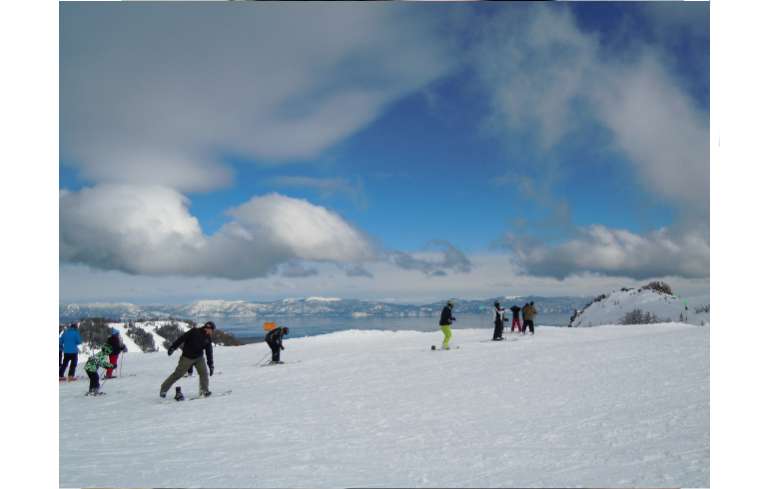
Ski resorts don't like using the C words -- climate change. Photo/LTN file

Ski resorts don’t like using the C words — climate change. Photo/LTN file

Save wildlife habitat and prevent natural disasters, sure, Katz intoned, but let’s keep skiing out of this.

The reaction revealed an industry deeply torn between protecting its long-term survival and ensuring its short-term profitability. “Ski area owners and operators are aware of the scientific studies and projections regarding the long-term potential impacts of climate change,” the National Ski Areas Association said in a position statement, “but we remain optimistic as an industry.”

The forecast does not inspire confidence, however. The report that made headlines in December, Climate Impacts on the Winter Tourism Economy in the United States, provided a long list of alarming reminders: By the end of the century, winter temperatures are projected to warm an additional four to 10 degrees Fahrenheit in North America. In high-emissions scenarios, the winter snowpack in the Cascades and the Sierra is projected to decrease between 40 and 70 per cent by 2050. If we continue to pollute the way we do now, skiing will be confined to the top quarter of Aspen Mountain in average years by the end of the century. Utah’s Park City Mountain Resort will have no snowpack whatsoever.

The report then attempted to put a price tag on all this, calculating that, over the course of the last decade, ski areas lost more than $1 billion in potential revenue to bad snow years. Failure to respond quickly to climate change, the authors wrote, “spells economic devastation for a winter sports industry deeply dependent upon predictable, heavy snowfall.”

Commissioned by the nonprofit Protect Our Winters (POW for short) and the Natural Resources Defense Council, the report was part of a broader effort to highlight the economic significance of outdoor recreation, and to use that as a lever to promote conservation. But the ski industry has been reluctant to talk about this looming catastrophe, even for the sake of prolonging its own life.

“It’s a tough reality to swallow,” says Elizabeth Burakowski, a Ph.D. candidate in snow science at the University of New Hampshire and one of the report’s co-authors. “It’s bad for business.”

The National Ski Areas Association does have a program called the Climate Challenge that encourages resorts to reduce greenhouse gas emissions — though it says nothing about all the emissions spewed when skiers travel to the resorts — and it has advocated for clean energy programs on the national level. And many individual resorts, including Vail, have cleaned up their operations by shifting to renewables like wind power. But when it comes to the larger fight against climate change, most industry leaders say they have enough to worry about already.

Nationally, the number of visits to ski resorts has remained essentially flat since the industry started keeping track in 1979. Analysts blame younger people, who aren’t replacing aging Baby Boomers, the ski industry’s main market. And now comes the news that snowboarding, a sport largely credited for saving the industry in the 1990s, is on a steep downhill slide. A report released this winter by RRC Associates, a company that tracks winter recreation, found that the percentage of snowboarding visits to ski areas has declined over the past two years, while the number of days boarders head to the mountain has dropped sharply in the past decade.

At Mammoth Mountain, environmental affairs director Ron Cohen says he’s got his hands full just keeping up with Forest Service and state regulations. The ski area, he says, simply lacks the resources to be more active on climate change. “Everybody knows — people who work here and think about strategy — we’re not ignorant of the issue,” Cohen says. “We know that there are these discussions, these issues, scientific theories, facts — all of the above — but we’re focused on business strategy a lot more than we are on something we have a lot less control over.”


Golf, luau benefit Barton Foundation

Barton Foundation is bringing Hawaii to Lake Tahoe on June 20 for Barton Foundation’s Community Health Endowment. The endowment supports the future health of the Lake Tahoe region and beyond through equipment purchases, renovations and expansions for Barton Health.

Grab your favorite Hawaiian shirt and join the foundation for a day on the green followed by a pig roast at Lake Tahoe Golf Course beginning at noon. Partake in a scramble shot-gun start, on-hole libations, entertaining challenges and compete in the most magnificent Hawaiian shirt and ambitiously decorated cart contests.

There will be a Hawaiian luau and pig roast beginning at 6pm with no-host cocktails and auction.

Golf and luau is $150 person; luau only is 460.

To reserve your spot for the Tiki Tee Off or to buy luau tickets or donate to the auction, call (530) 543.5614 by June 7.


Work at Washoe Meadows set for this summer

By Kathryn Reed

Despite an ongoing 1½-year-old lawsuit involving Washoe Meadows State Park, improvements at the South Shore park are expected to begin this summer.

The bridge crossing Angora Creek is slated for replacement, along with work on the channel so it flows better.

Comments for the CEQA documents are being taken until June 5. Project specs are available for review at the El Dorado County library in South Lake Tahoe.

Cyndie Walck with State Parks told Lake Tahoe News the plan is to work on the bridge and channel starting in August. The goal is to have everything wrapped up this season, with some possible vegetation work needed next year.

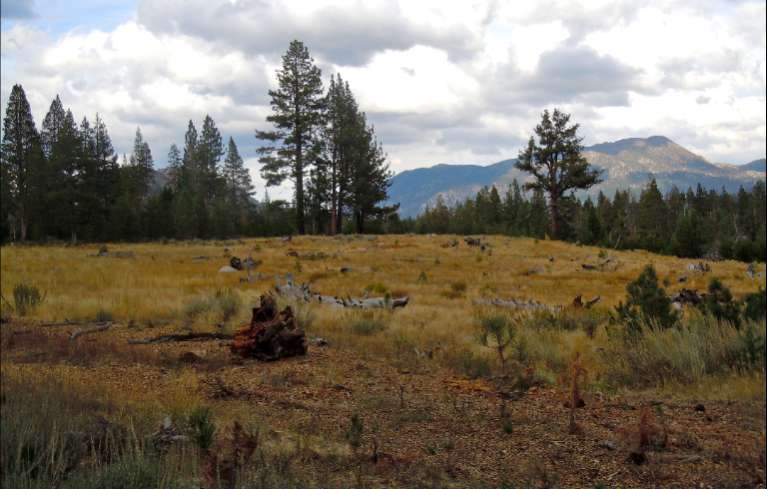
A lawsuit involving Washoe Meadows State Park is not preventing environmental upgrades taking place this summer. Photo/LTN file

A lawsuit involving Washoe Meadows State Park will not stop upgrades from happening this summer. Photo/LTN file

“The bridge will be redwood. It will have 30-foot long stringers,” Walck said.

This bridge is not near the golf course.

Once the comment period closes, the park system will begin securing necessary permits from Lahontan Regional Water Quality Control Board, Tahoe Regional Planning Agency and others.

“For the Angora Creek project, we are reviewing the recently received documents to see if we have any questions or comments. We appreciate that the project goals are to improve meadow habitat and improve park visitor experience in Washoe Meadows State Park,” Lynne Paulson told Lake Tahoe News.

Paulson is part of the Washoe Meadows Community that in November 2011 sued State Parks regarding its swapping land between the state park with neighboring Lake Valley Recreation Area.

State Parks, as all land owners along the Upper Truckee River are being mandated by Lahontan and TRPA, must reduce the amount of sediment flowing from the river to Lake Tahoe. Rerouting the river so it has a more natural meander is the most common way to achieve this goal. Proposed improvements to this section of river also come with reconfiguring the holes of Lake Tahoe Golf Course that sits on the state recreation land. Originally nine holes were to be moved. That has been revised to five.

Walck said until the lawsuit is resolved, the river restoration, the park’s first general plan and other recreation issues cannot be dealt with.

“For the Upper Truckee River and golf course project, Washoe Meadows Community’s lawsuits — and the concerns that prompted the action — remain unresolved but are active in the court system with motions, case updates and other actions on the court calendar during the coming months. It is important to continue to protect Washoe Meadows State Park’s resources and hold government agencies accountable for following the law,” Paulson said.

The other project this summer is working on the creek. It can range in depth from less than 6 inches to 3½-foot gullies. The deep part means water is not flowing into the meadow and therefore it is drying out.

“That access is from the west side off Lake Tahoe Boulevard,” Walck explained. “(The project) is to maintain the water table and spread water off the sewer line.”

Both projects are expected to cost about $150,000. State Parks will pay for part of it, with Tahoe Fund money expected as well.


Informational meeting on Upper Truckee River project set

On May 30 the U.S. Forest Service will answer questions and provide information about its Upper Truckee River restoration project.

The project area is located east of the Lake Tahoe Airport runway and west of the Washoan subdivision in the Tahoe Paradise residential area.

The meeting will provide an overview of the activities that will occur this summer, and how these will limit public access during construction due to safety concerns associated with heavy equipment operation.

The Forest Service, in collaboration with the California Tahoe Conservancy, has completed environmental analysis and permitting for the project, which is part of a larger effort to restore the lower nine miles of the Upper Truckee River. The Forest Service expects to break ground on its portion of the project in early June.

The meeting is 6-8pm at the Forest Supervisor’s Office, 35 College Drive, South Lake Tahoe.

For more information on the meeting, contact Theresa Cody, (530) 545.2057 or tlcody@fs.fed.us. The environmental documents and other project information are available online.