Learn the basics of geocaching

Rangers at Washoe Lake State Park will teach participants the basics of geocaching and develop their GPS orienteering skills on June 8.

The park will have a limited number of GPS units to loan for the program. If you have one, bring it.

The lesson will be from 9:30am-noon. Meet in the equestrian area pavilion. Washoe Lake State Park is five miles north of Carson City.

There is no charge for the program, but there is a $7 per vehicle entry fee. Nevada residents receive a $2 discount.


River restoration to displace recreationists

By Kathryn Reed

A popular recreation area is about to be off-limits while the U.S. Forest Service works on rerouting the Upper Truckee River.

Sections of much of the river are being restored as land managers have the resources to do so. The end result is to make this body of water flow like it did before ranchers, loggers and others changed the natural meander.

The goal for each reach and for the entire river is that meadows will again thrive by having the water from the river flood the banks on a regular basis, thus increasing the groundwater table, providing better habit, improving the entire watershed, and particular to the reach — revegetating about 5.6 acres of floodplain and restoring 120 acres of floodplain. Ultimately, it will also mean less sediment reaching Lake Tahoe.

Forest Service personnel on Thursday night spoke about what people can expect during the four-year project on this stretch of land that is near Lake Tahoe Airport and goes into the meadow by Elks Club Road.

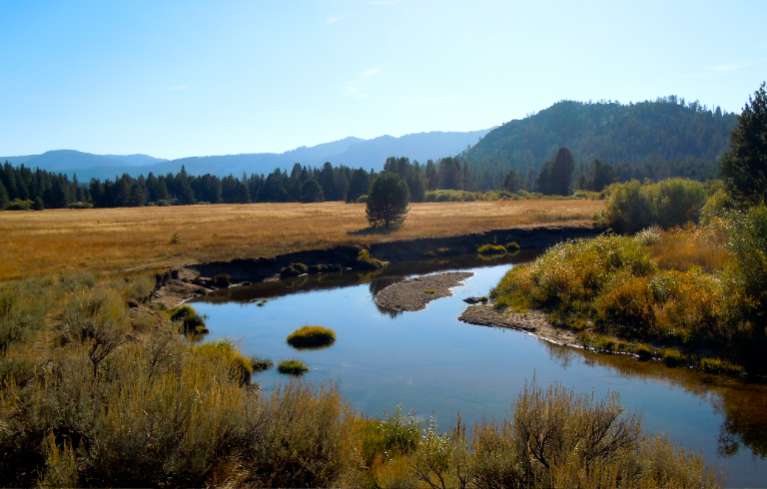
Restoring this section of the Upper Truckee River will begin in mid-June. Photo/LTN file

Restoring this section of the Upper Truckee River will begin in mid-June. Photo/LTN file

For the most part, the river will be moved farther away from the runway.

The area will be closed for safety reasons beginning June 15 and lasting until Oct. 15. Signs will be posted.

Popular biking and hiking trails nearest the river will not be accessible. A trail on the far side of the meadow will remain open.

When the project is complete, some of the user-created trails are likely to disappear because a river will occupy them or the meadow will be so wet that the trails will naturally disappear.

The Forest Service does not intend to decommission any trails. A route must be maintained because South Tahoe Public Utility District has a line in the area. It will be relocated next year.

The river will remain accessible, however there will be an area where kayakers and other boaters will have to portage because a temporary bridge will be built that they will not be able to go under. The bridge, which will be about 5,000 feet below the Elks Club bridge, will be one of the first things to be built this season. It will provide access from the Sunset Stables staging area to the meadow.

“The channel will be smaller, but the flow for rafts and kayaks will be greater,” Theresa Cody, USFS project manager and hydrologist, said of what the experience will be like when the work is completed.

For a few days fishing could be impacted as block nets are in place.

A little more than half of the 7,340 feet of new river channel will be built this season, with the remainder to be done in 2014.

While the California Tahoe Conservancy also owns part of this section of river, the Forest Service is the lead agency, and the one paying for and doing the work. How the properties connect would not allow for the project to be separated.

The actual work is costing the Forest Service $4.5 million. This money came from the Southern Nevada Public Lands Management Act.

Tree removal for the project is necessary. The plan is to use that wood for structures in the river. (The USFS and CTC also have fuel reduction projects scheduled that are not related to the river project.)

Cody said the Forest Service has gone to great lengths to make sure those structures look natural – having learned from work done on other sections of the river.

“Most of the woody material is intended to be below the low water line,” she said at the May 30 meeting.

In 2015, there will be a break in construction. This will be the summer of irrigation and making sure the vegetation has taken hold.

In 2016, the channel tie-ins will be constructed if the vegetation is intact. This will likely result in more temporary area closures.

When it’s all done, access will be as it is today – just with a “new” river and not all the same trails.

Public tours of the area are planned for Aug. 2 and Oct. 25.

More information about the project is online.


Re-introduction of Lahontan cutthroat trout displacing rainbow trout at Fallen Leaf Lake

By Kathryn Reed

It may come down to Lahontan cutthroat trout vs. rainbow trout. And if the Lahontan trout don’t take hold and the rainbow is basically eradicated, there may be no fish left.

That is the worst-case scenario for Fallen Leaf Lake and Glen Alpine Creek. It’s also one the U.S. Fish & Wildlife Service is not talking about.

When directly asked Wednesday night at the El Dorado County Fish & Game Commission meeting, the feds didn’t have an answer to what happens if the Lahontan are not successfully reintroduced to this water body.

“Never did we hear until this year that the long-term goal would be to not have rainbow trout. We were assured of the cohabitation of rainbow, lake and Lahontan cutthroat trout,” Jane Mitchell, who lives most of the year at Fallen Leaf Lake, said during the May 29 meeting at the U.S. Forest Service office in South Lake Tahoe.

While a USFWS rep vehemently refused to say the goal is eradication of the rainbow trout, a fact sheet created by her agency asks and answers a question in such a manner that complete elimination is the presumed goal.

Why do all the rainbow trout have to be removed from Fallen Leaf Lake and Glen Alpine Creek?

• Rainbow trout are not native to the Tahoe basin

• LCT and rainbow trout are ecologically similar and will spawn together and hybridize

• Hybridization results in the loss of the native, lacustrine LCT delaying and creating additional challenges for the reintroduction and recovery program at Fallen Leaf Lake

• Rainbow trout currently occupy the same feeding level as LCT in Fallen Leaf Lake and their presence is slowing the growth rate of LCT

• Rainbows removed during the spawning season are donated to the food bank

• Data such as food habits, age, and reproductive maturity.

Source: USFWS

The U.S. Fish & Wildlife Service proposed the reintroduction of the native species to Fallen Leaf Lake in 1999, with the first stocking occurring in 2002. The plan from the start was to stock the lake with 30,000 to 50,000 Lahontan yearlings each year.

Jane Mitchell talks May 29 about how the information coming out now about the Lahontan cutthroat trout program has changed, while Victor Babbitt listens. Photo/Kathryn Reed

Jane Mitchell talks May 29 about how the information coming out about the Lahontan cutthroat trout program has changed, while Victor Babbitt listens. Photo/Kathryn Reed

This strain of the LCT is the Pilot Peak. It doesn’t exist outside the Tahoe area. And it’s on the federal threatened species list.

After researchers in 2012 documented spawning of LCT, they also realized this trout was breeding with rainbow. According to Lisa Heki with the USFWS, allowing crossbreeding to continue would eventually wipeout the LCT.

Two weirs have been installed in the creek in March – one near the mouth and one by the bridge at Stanford Camp – to separate the two species. The rainbows that are caught are killed to see what’s inside. The fillets are given to a food bank. So far this has only happened to a handful of rainbow.

The USFWS would not answer why the rainbow weren’t relocated to another section of Glen Alpine Creek or into Fallen Leaf Lake.

Tom Barnes, a local resident, said, “It sounds like you want to destroy the rainbow trout fishery. It sounds like there is no recovery plan if this doesn’t work.”

Even though the LCT have not had a presence in this area for about 100 years and the rainbow are well established, government policy is for the native to take precedence over the non-native.

Some in the room wanted the USFWS to set an end date for what everyone calls an experiment. An end date defining success or failure.

“I’m not going to go there at this point because we have not given them a fair opportunity,” Heki said.

Even though the project has been going on for a decade, Heki said much of the first five years was not effective and involved a lot of learning.

It surprised most people in the room that the area where the LCT spawn can still be fished. Working on getting a temporary ban or at a minimum placement of signs discouraging the practice was talked about.

Victor Babbitt, who is on the local fish and game commission and runs a fly fishing business in South Lake Tahoe, is most frustrated with the economics of the situation.

He believes the decimation of rainbow trout in the Fallen Leaf Lake area along with what has been done to other local fisheries has the potential to cripple the local fishing industry and cost the area millions in lost revenue. The revenue is from fishing expeditions, sales of fishing supplies and tourists just not coming to town.

The reintroduction program has cost taxpayers about $2.5 million to date.

No action was taken May 29, but it was agreed better communication between the USFWS and the community is needed.


East Shore prescribed burn scheduled

U.S. Forest Service fuels management crews will resume prescribed fire operations on the East Shore on May 30.

Crews expect to burn approximately 1 to 3 acres west of the Spooner Summit area. Operations are scheduled to last through the day, weather and conditions permitting.

Residents and visitors can expect to see smoke from this prescribed fire project area. Smoke may be visible on Highway 50.

The Forest Service strives to minimize the impacts of smoke on local communities. Smoke-sensitive residents should consider staying indoors and keeping doors, windows and outside vents closed.

To directly receive prescribed fire updates, send an email to pa_ltbmu@fs.fed.us.


Cyclists to work on trail in Tahoe City

TAMBA will be hosting a trail day in Tahoe City on June 29 in conjunction with Adventure Sports Week.

Meet at 9am at Tahoe Cross Country at 925 Country Club.

Workers will ride to the work site off Forest Service Road 16N49 to finish a connector trail between that trail and the Tahoe Rim Trail.

Lunch will be provided as well as post work refreshments. The trail day is sponsored by Olympic Bike Shop and Gravity Shop.


Insects can be a good thing for gardens

By Melody Hefner

Of the more than 1 million types of insects in the world, less than 5 percent are harmful. Insects are an important part of the food web, providing a meal for other insects, birds and small mammals present in our yards. Many insects are pollinators. Without them, we would have no apples, cherries, melons or squash in our gardens.

Some insects can be nuisances but don’t cause plant damage.

Beneficial insects can be considered the “good guys” of the insects present in our landscapes. They are important tools for managing insect pests in your yard. Almost every insect pest has one or more insect natural enemies.

These beneficial predator insects kill or reduce the numbers of pest insects in your yard.

Just as many insect pests are most damaging at the larval stage, so are many beneficial insects the most predacious during their larval stage. Many people will recognize a lady bird beetle or “ladybug” but are unfamiliar with its dragon-like larvae. The larvae of lady bird beetles, green lacewings, syrphid flies and snakeflies are voracious pest predators, targeting aphids and other pests present in our landscapes.

Like all animals, beneficial insects need water, food and shelter to survive. Pest insects are food for beneficial insect larvae, and sometimes for the beneficial adults. Many adult beneficial insects sip flower nectar, so providing flowering plants will attract them to your yard.

The flowers also provide shelter for many beneficial insects. Insects require water, so providing a shallow dish or birdbath of water can also aid the good guys present in your yard. They will hang around if you treat them well.

Hopefully, the adults will lay eggs and perpetuate the beneficial insect cycle.

The balance between good and bad insects is critical to a healthy landscape. Most people are unaware of the relationship between good and bad insects in their yard until the relationship is disrupted, and insect pests begin eating their plants.

A change in weather patterns, use of a pesticide or even removal of a shrub that provides cover can disrupt the balance between good and bad insects. You can minimize this imbalance by keeping your plants vigorous and healthy throughout the year.

Melody Hefner is with the University of Nevada Cooperative Extension.


Outdoor conditions resemble summer, not spring

By Matt Weiser, Sacramento Bee

It may feel like spring in California, but this Memorial Day weekend, many rivers and creeks look like they’re already trickling through summer.

Rafters and kayakers headed outdoors this weekend will find no room to float their boats on some waterways. Snowmelt runoff peaked a month early in some watersheds, leaving some of their streams too low for holiday water play.

The north fork of the American River near Auburn, for instance, is normally used for rafting and kayaking into early June. But by the end of April, its flows were already too low for boating.

“It is unusual for it to go so low this early,” said Bill Center, a longtime California rafting guide and owner of the Camp Lotus rafting center on the south fork of the American River.

In the southern Sierra Nevada, the Kaweah River south of Fresno and the Kern River near Bakersfield are among other waterways flowing too low for boating, Center said.

Alan Haynes, a hydrologist at the California-Nevada River Forecast Center, a unit of the National Weather Service, said many streams are running at only about 10 percent of normal for this time of year.

“Because of the relatively light snowpack we had, and early melt-off, we’re already looking at flows that are more typical of midsummer,” Haynes said.

Tame rivers may not matter to a lot of people enjoying the outdoors this weekend. Forecasters predict unseasonably cool weather, and even rain, conditions unlikely to make people want to jump into the nearest stream.

The National Weather Service says high temperatures will reach only the 50s and 60s this weekend in the mountains and foothills, and the 70s in the Sacramento Valley.

Partly cloudy conditions are likely throughout the region Saturday and Sunday, with overcast skies and a chance of rain Monday.

The high in Sacramento on Monday is predicted to reach 71 degrees. The average for that date, in records reaching back to 1971, is 84 degrees.

For those who do go near creeks and rivers, experts advise caution, even with the lower-than-average flows. After all, the waterways are being fed with very cold snowmelt, which can immobilize a swimmer faster than many expect.

“Wear a life jacket, and be aware that it’s going to be a little chilly this Memorial Day,” Center said. “The key thing is to be careful.”

He said tubing has been growing in popularity in portions of the American River’s south fork, a waterway long popular for rafting and kayaking. Floating on an inner tube means being partially immersed in water at all times – not necessarily a good idea with cold May water temperatures.

“That’s more of a July-August thing,” Center said.

Many portions of the south fork are also too rough for tubing, Center said, especially for people with limited experience on the river.

Some rivers will still offer plenty of whitewater action this weekend and in the weeks ahead, including the south fork of the American River. That’s because the recent federal relicensing of upstream dams operated by the Sacramento Municipal Utility District requires certain minimum flows to accommodate rafting and kayaking.

“The south fork is in great shape,” Center said. “In fact, we’re seeing this as being one of our better years, in part because of the predictable flows but also because it’s been such an incredibly gorgeous spring.”

The same goes for the Truckee River, a popular rafting, fishing and wading destination in the Lake Tahoe and Reno areas. Low snowmelt has left the river with below-average flows, but there’s still enough for rafting.

Water releases from a small dam at Lake Tahoe regularly replenish the Truckee. Federal officials are required to maintain minimum flows, as long as the lake has water to release, to protect endangered fish species. Rafters and kayakers all the way to Reno and beyond get to enjoy that flow as a side benefit.

“We should do OK through the summer because of Lake Tahoe storage carryover from 2011,” the last wet winter, said Chad Blanchard, watermaster for the federal office in Reno that oversees Tahoe water releases. “We didn’t get a big peak that the kayak festival people (in Reno) would like to see. But because of storage, it hasn’t looked that bad.”

He said that snowmelt peaked in the Truckee River watershed on April 30, nearly a full month earlier than average. The river had its lowest peak natural flow – runoff not aided by reservoir storage – since 1988. Only one year since 1970 was worse, and that was 1977, a historically bad drought year.

The looming concern for Tahoe and other lakes throughout California is what happens in late summer and fall, when winter’s meager snowmelt runoff is long gone.

By then, Blanchard said, Tahoe “is going to approach the rim,” which means water releases into the Truckee River will no longer be possible.

Other reservoirs are likely to resemble puddles, relatively speaking, with vast exposed banks and restricted boating areas.

“Toward the end of the year, in the fall, we may start having trouble,” Blanchard said. “But through the summer, we should be fine.”

9-day outdoor fest coming to North Shore

Alpenglow Sports is putting on its inaugural nine-day Mountain Festival June 22-30.

All events are free and focus on non-competitive recreation opportunities in nature designed to inspire participants as they enjoy and explore the North Lake Tahoe playground and community.

There will be nature hikes, trail runs, lakefront yoga sessions, athlete presentations, cutting-edge product demos, and giveaways. World-class athletes, local heroes, community businesses and nonprofits, and quality brands are partners in sharing this series of outdoor activities and lifestyle events.

Festival highlights include:

• Ultra Trail du Mont Blanc winner and Western States 100 competitor Krissy Moehl leading a women’s only fun run and presenting “An Ultra Runner’s Life: Adventures, Stories and Life Lessons”. (Presentation open to all genders.)

• Ellie Greenwood, Western States 100 women’s record holder and Montrail athlete, signing posters and guiding a fun run through scenic Paige Meadows.

• Running shoe demos and athlete-led runs from industry leaders Salomon, Montrail, Hoka One One, and Salewa.

• Evening presentations by local sports nutritionists and trainers focusing on hydration, training best practices, and general health and nutrition information.

• Long-time North Lake Tahoe resident, hiker, biker, and Tahoe Rim Trail guidebook author Tim Hauserman leading a group fun hike.

• Tahoe Rim Trail full moon hike led by the Tahoe Rim Trail Association.

• Alpenglow team-led fun runs and community hikes.

• Yoga on the lake with local instructors.

• Wildflower and birding hikes with the Tahoe Institute for Natural Science.

• Guided Emerald Bay historical hike with Tahoe Trips and Trails.

• Two-day Lake Tahoe climbing demo event at the Old County Boulders and Donner Summit, with free equipment demos and beginner climbing instruction.

• Rock climbing presentation by local hero and Alpenglow Ambassador Dave Nettle on his adventures in the High Sierra.

The complete events schedule and map of locations can be downloaded. While all events are free, space is limited and participants are encouraged to register online today to assure spots.


Heavenly evolving into year-round playground

By Kathryn Reed

A playground of a different kind is mapped out for the area surrounding Tamarack Lodge at Heavenly Mountain Resort.

Of the $25 million Vail Resorts will be spending in the coming months on summer recreation plans at its California and Colorado resorts, it is not being revealed how much is going into Heavenly.

Construction on two rope courses, a canopy tour and zipline center is slated to begin in mid-June. It’s likely some of this will be open in August. All should be ready for the ski season. And if the weather cooperates, most of these amenities will be accessible year-round.

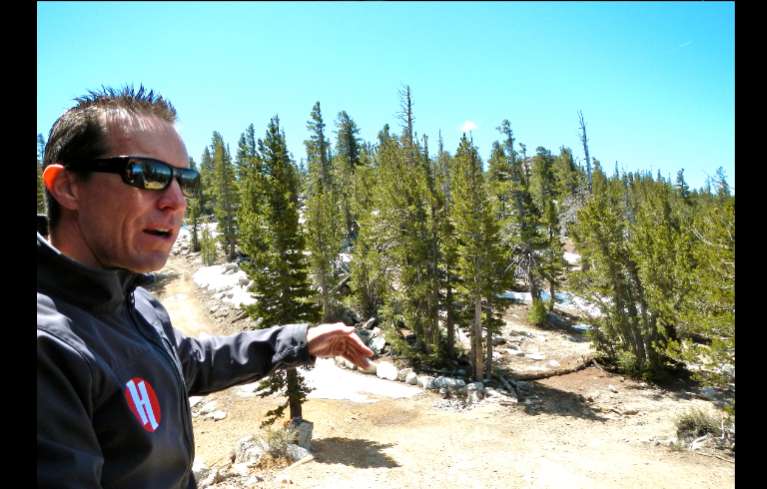
Pete Sonntag, Heavenly's general manager, points to where the amphitheater for weddings will go off the mid-station gondola deck. Photos/Kathryn Reed

Pete Sonntag, Heavenly’s general manager, points to where the amphitheater for weddings will go off the mid-station gondola deck. Photos/Kathryn Reed

Stakes are in the ground at the various locations outlining the various courses. Even though measurable snow is on the ground at the top of the gondola, Heavenly General Manager Pete Sonntag doesn’t anticipate this being a hindrance to starting work.

On a tour of the project site Thursday, Sonntag stopped at the mid-station of the gondola to point out where an amphitheater for weddings and other special events will be constructed on the southeast side of the walkway in the woods.

“It will be all natural stone with terraces built in. It will be rustic,” Sonntag said.

It’s possible interpretive talks will take place there, with a hike to follow from the top of the gondola.

Wedding guests and others will have a view of Lake Tahoe. After the ceremony, everyone would get back on gondola for the reception at Tamarack Lodge.

The lodge will be expanded in the back this summer to allow for more storage. Sonntag said with the dining facility exceeding expectations and now being the No. 4 producing restaurant of the entire company, storage has been an issue. (It opened in December 2010.)

As for the gondola, the resort is in the middle of a four-year project to replace the windows of each car.

Ed Cook, who owns a tree service by the same name, was riding the gondola May 23 to look for hazardous trees. The goal is to take ones out before they could take out the gondola line.

New amenities

A four-line zipline called the Zip Flyer will be accessed from the Easy Rider lift. The mini-climbing wall that had been nearby will go where the umbrella bar used to reside.

A rope course will be built in the boulders.

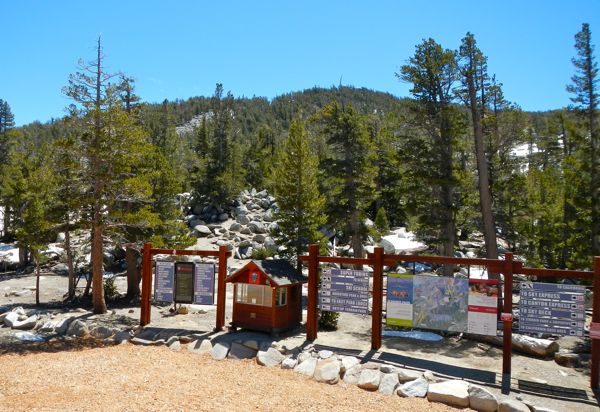
A rope course will be built in the boulders behind the signs.

The zipline will be about 1,000-feet-long – nearly one-third the length of the Heavenly Flyer that was taken out after someone riding the Tamarack Chairlift died after being struck by a zipliner. That 2009 incident is still not completely resolved.

One day the resort would like to have a longer zipline.

(At 3,100 feet, the old zipline when built in 2008 was the longest in the lower 48 states; it took 60 seconds to ride.)

The one that will be built this summer is considered more of an introductory zipline. The landing platform is near the north side of Tamarack Lodge.

The Discovery Forest Canopy Tour is slated to be fun and educational, as well as kid-friendly. It will be in front of the lodge between the kids’ ski school building and the Tamarack Chairlift.

The Black Bear Challenge will be just above that in the area now used in the winter for children’s ski school through Black Bear Hollow. Winter use of the challenge course is still being discussed.

It will be more of a straight line and rectangular.

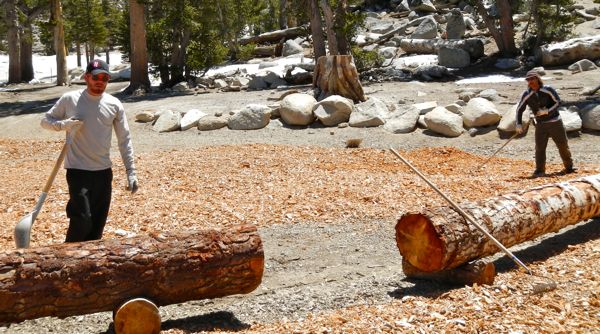
Crews are getting the Adventure Peak area ready for the summer season.

Crews are getting the Adventure Peak area ready for the summer season.

One of the rope courses will be 15 feet off the ground, the other 30. People are harnessed on each one. They will be designed in a manner that the course can be as challenging as the participant wants it to be. Various ages from varying physical abilities will be able to access the apparatuses.

The other rope course is Boulder Cove Challenge. This area is behind the sign at the base of the gondola stairs where the boulder field is. This will be a self-guided challenge course with vertical wood columns, ropes, bridges and platforms.

Pricing for everything remains an unknown. Package deals are likely.

Down the road

Vail Resorts has said it wants to spend $100 million in the next few years developing summer recreation at what were originally just ski resorts. Vail and Breckenridge are also getting upgrades this summer, as is Northstar.

With the U.S. Forest Service owning most of the land Heavenly sits on, it must sign off on new uses and infrastructure, and even tree felling. Tahoe Regional Planning Agency has a say in most things, too. But a portion of Heavenly is outside the Lake Tahoe Basin. That area is where mountain biking might one day be allowed. But to get there it would require going up the gondola.

For now, mountain biking at Heavenly is something that is just being talked about.

A plot of land to the left of the gondola stairs (when descending) is where a climbing wall five times the size of the current one is slated to go. Preliminary designs include 18 routes, with the base to mimic Sierra granite. It would be a permanent structure. That, too, requires USFS approval.

Expanded hiking is in the works – just not this year. One day a single-track trail to the top of East Peak is likely.

To date, the Forest Service has signed off on specific items that are in the Ski Area Recreational Opportunity Enhancement Act of 2011 and nothing more.

This summer

The gondola is running this long weekend for scenic excursions. It will operate seven days a week beginning June 14 from 10am-4pm, with seasonal closure in October.

The climbing wall, tubing hill and hiking will be open this summer as they have been in past years. And the Tamarack Lodge will be open with food service.

Heavenly bans all types of burning during the summer. This includes cigarette smoking and barbecuing.


Van Sickle trail work volunteers needed

The Tahoe Rim Trail Association will celebrate American Hiking Society’s 21st annual National Trails Day on June 1 at Van Sickle Bi-State Park at Stateline.

It will be a trail building day. The Tahoe Rim Trail Association will provide hard hats, trail building tools, expert crew leaders and lunch.

To participate, register online at or contact Lindsey Schultz at (775) 298.0239 or trails@tahoerimtrail.org. The first 100 volunteers to register online will be entered into a raffle.

The event begins in the back of the Harrah’s Lake Tahoe parking lot at 9am.

Volunteers of all skill levels and physical abilities are welcome. No prior experience necessary. Volunteers will receive free lunch provided by REI and the TRTA. The event will conclude at 4pm with a volunteer party at Explore Tahoe with free food and drink.