USFS resurfacing Echo Lakes parking areas

The U.S. Forest Service Lake Tahoe Basin Management Unit will resurface the road and parking areas at the Echo Chalet near Echo Lakes the week of July 29.

The parking area at the resort and the Desolation Wilderness trailhead parking area will be completely closed July 30. Striping of both parking areas will take place Aug. 1. Portions of both parking areas will be closed during the striping, but some parking will be available.

Alternate parking is available approximately one mile from the resort at the Echo Lake Sno-Park on Johnson Pass Road.

Resurfacing of the Echo Lake Resort Road will take place July 31. Travelers can expect delays of up to one hour. Access will be limited on this day and it may be necessary to walk in to access the resort, cabins, Echo Lakes, Desolation Wilderness and the Pacific Crest Trail.

The road and both parking areas will reopen Aug. 2.

For more information, call (530) 543.2694.


S. Tahoe air show events span 3 days

The 24th annual Lake in the Sky Air Show at Lake Tahoe Airport is Aug. 24.

This year’s Air Show events will span three days from Aug. 23-25. It starts with a pre-flight party at the Flight Deck restaurant at the airport at 5:30pm. Triple Ace “Bud” Anderson will be a special guest speaker along with two Vietnam fighter pilots.

On that Saturday from 8am-4pm is the air show.

Young Eagles flights are scheduled for Aug. 25, with sign up for the flights on the day of the air show.

Air show tickets are $10/adults, $8/kids, and youth 5-years-old and younger are free. Free transportation will be provided from the South Y transit center.

For additional information, call (530) 208.9901.


Farm pesticides found in Sierra frogs

By Becky Oskin, LiveScience

Pesticides from California’s valley farms are collecting in the tissues of a singing treefrog that lives in pristine national parks, including Yosemite and Giant Sequoia, a study finds.

The chemicals include two fungicides never before found in wild frogs, said Kelly Smalling, lead study author and a U.S. Geological Survey research hydrologist. The study was published July 26 in the journal Environmental Toxicology and Chemistry.

“Fungicides have been registered for use for many years, but for some reason, they haven’t really been on anybody’s radar screen until recently,” said Smalling, who is based at the USGS California Water Sciences Center in Sacramento.
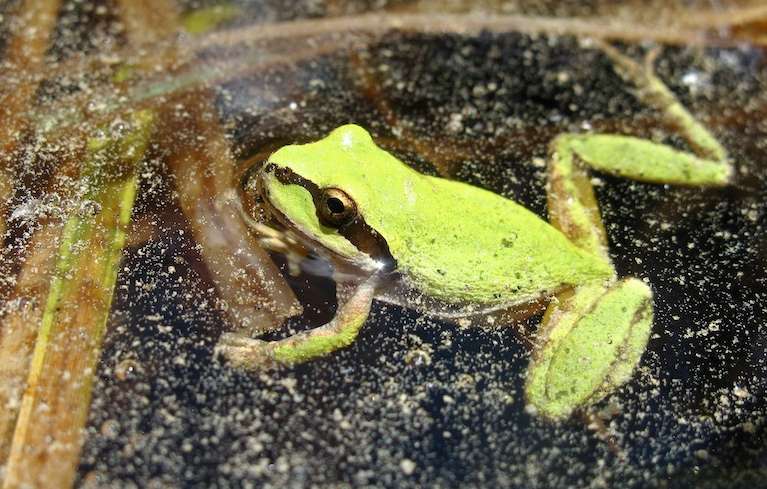
A Pacific treefrog, also known as a Pacific chorus frog. The frog is about the size of a silver dollar. (Photo: USGS)

The Pacific treefrog is about the size of a silver dollar. Photo/USGS

California’s Central Valley is one of the country’s most productive agricultural regions; crops include stellar wine grapes, nuts and kiwis. Agricultural pesticides and fungicides have been detected more than 100 miles (160 kilometers) to the east, in the rural Sierra Nevada’s snow, water, air and amphibians. But valley farmers aren’t the only source of agricultural chemicals: Illegal marijuana gardens hacked into public lands also expose wildlife to fertilizers and toxic rat poison, other studies have shown. Rare predator species, such as spotted owls and fisher cats, eat the poisoned mice and die.

“The marijuana cultivators make trail systems to go in, and put toxicants at every clearing,” said Mourad Gabriel, a UC Davis wildlife disease ecologist who studies the effects of rodenticides on rare species. “A lot of predators will use any type of trail system, so you can imagine the potential risk to multiple different species.”

Scientists first noticed sharply declining frog populations in the Sierra Nevada starting in the 1980s. (The problem is global. Amphibians everywhere are suffering steep population losses and strange deformities.) Earlier studies by the USGS researchers found toxic pesticide concentrations in several frog species living in the national parks. In 2009 and 2010, the scientists resurveyed many of the same sites, Smalling said.

Their species of choice was the bright-green Pacific chorus frog (also known as the treefrog). On spring nights, males gather on the shores of ephemeral ponds and lakes to sing for mates. That’s when biologists headed out with flashlights — to spot the frog’s eyes — and scooped up the silver-dollar-size suitors. “They’re very focused on attracting a female, so they don’t pay much attention to what’s around in their environment,” Smalling said.

Researchers collected Pacific chorus frogs on a north-south transect across Lassen Volcanic National Park, Lake Tahoe, Yosemite National Park, Stanislaus National Forest and Giant Sequoia National Monument. They tested frog tissue, water and sediment samples for more than 90 different pesticides and fungicides.

The most common chemicals in the frogs were the agricultural fungicides pyraclostrobin and tebuconazole and the herbicide simazine. DDE, a byproduct of the pesticide DDT, was also frequently found.

“This hammers home the point that even if you’re in an area that looks wild and natural, it can have very serious impacts from human activities 100 miles, or even more, away,” said Brad Shaffer, director of the UCLA La Kretz Center for California Conservation Science, who was not involved in the study.

The chemical concentrations were often higher in frog tissues than in the environment. “The contaminants in the water and sediments were ridiculously low,” Smalling said.

The frogs may store up small exposures over time, or there simply wasn’t any pesticide when the water and sediment samples were taken, the researchers suggest. “We don’t really understand the biology of these compounds and how they interact with the amphibians,” Smalling said.

While scientists agree that pesticides likely contribute to the dramatic decline in amphibians, there are many reasons that frogs are disappearing. The heavyweight is habitat destruction and degradation, followed by an infectious disease called chytridiomycosis. In the Sierras, introducing trout into mountain lakes also hit frogs hard, because the fish gobbled up tadpoles and tiny frogs.

Climate change is another factor.”The complexity is very hard to deal with,” Shaffer said. “These kinds of field surveys at least tell us what’s out there in those habitats and what’s accumulating in at least some frogs, and that gives you candidates to simplify the problem.”

Most pesticides in the Sierra come from the Central Valley. The pesticides travel to the mountains as aerosols, tiny particles that waft into the atmosphere on warm, rising air currents. Winds coming off the Pacific Ocean blow the aerosols west to the mountains, where they fall out of the atmosphere in rain and snow.

However, a boom in illegal pot farms in the past five years has brought a new chemical source into the parks. The cultivators spray pesticides and fertilizers and spread rat poison. Rodents that eat the poison live for two to seven days before keeling over, giving predators plenty of time to capture their dazed prey.

UC Davis’ Gabriel and his colleagues are seeing the effects of these chemicals on the fisher cat, a carnivore being considered for Endangered Species Act listing. Fisher cats nibble on everything from acorns to deer carcasses. The scientists found rat poison in 85 percent of fisher cat carcasses collected on public and tribal lands, according to a study published in June in the journal Conservation Letters. The animals are also passing the poison on to their kits when the babies nurse, Gabriel said.

The UC Davis group is now testing barn owls, which rely more heavily on rodents for food than fisher cats do. Spotted owls have tested positive for rodenticides in Oregon, and Gabriel said preliminary data indicates barn owls are snaring poison-laced mice.

Incline neighbors disagree about problem bears

By Kendra Kostelecky, KOLO-TV

Controversy remains in an Incline Village neighborhood after a bear and her three cubs were trapped and relocated.

Locals who named the bear Jasper say she was not the intended target.

The young male nuisance bear is suspected of breaking into as many as a dozen home in the area. Some locals are worried it could strike again accidentally injuring dogs or children. They are reluctant to ask the Nevada Department of Wildlife for help removing it, after seeing bear activists harass their neighbor online and around their home.

The victims worked with NDOW, requesting a trap on their property after the aggressive bear began breaking into homes. Activists following the Bear League and the “Lake Tahoe Wall of Shame” Facebook page attempted to talk the homeowners out of working with the state. They say they believe 57 percent of bears that are trapped are killed. Wildlife officials say that’s simply not true. They say most bears that are captured are subject to aversion training, which includes dogs and loud noises. The goal is to make the bears afraid of humans so they will stay away.

In this case, when activists were unable to talk the homeowners out of using a trap, they turned to social media. “Tahoe Wall of Shame” administrator Mark Smith says the goal of the page is to catch people who don’t manage their trash, or that invite bears in to be killed. The homeowners where the trap was set say they had managed their trash, but their home was posted on the site for cooperating with NDOW. Angry followers targeted the family, who say dozens of nasty emails were sent to one of their employers. In addition, they say they feel intimidated by strangers driving by their home.

While Jasper and her cubs have been relocated, the second bear is still on the loose. Some residents say they’re worried about what can happen if they encounter a bear in their home, but they are afraid to ask for help for fear of retaliation from misguided activists.


Recreation dollars being spent on fields, bike trails

By Kathryn Reed

Improvements to South Lake Tahoe ball fields and bike trails will be in the ground by the time the building season is over in the fall.

The upgrades all have to do with the transformation of Measure S into Measure R. South Shore voters on the California side decided the recreation measure was too limiting and that by changing the language more money could be spent on some critical items.

An update on what the fields and bicycle advisory committees are doing was given at Friday’s South Lake Tahoe Recreation Facilities Joint Powers Authority board meeting.

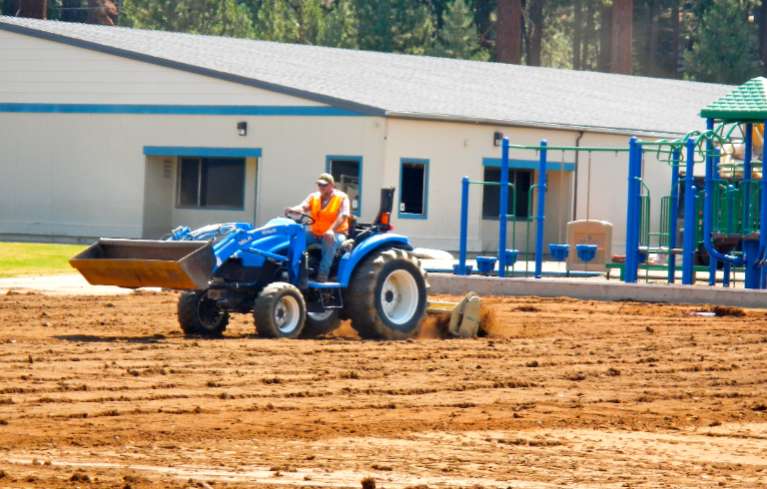
Crews work July 26 on Sierra House Elementary School's field. Photo/LTN

Crews work July 26 on Sierra House Elementary School’s field. Photo/LTN

John Dalton, chair of the fields committee, explained how the revamping of Sierra House Elementary School’s field is the big project this summer. It looks a bit like a construction site now with all of the heavy equipment moving dirt.

Before work began the field was full of holes and seemed dangerous when running on it.

It was also a field, like Bijou Community School, that when designed had its first priority be about Tahoe Regional Planning Agency erosion control mandates and not the functionality of a play field. This meant there was a slope to the field to catch runoff from the hard surfaces. That much water on turf is not a good thing.

This project is coming in under bid, with the expectation there could be a savings of $5,000. The field committee recommended the JPA board dedicates any leftover money to help fix the Babe Ruth field.

“It was vandalized in the spring and needs repairs on the field,” Dalton told the board July 26.

He said kids broke into the shack and trashed the place by using baseball bats on equipment. Babe Ruth officials have taken care of the snack shack vandalism, but need help with the field.

The board voted 3-0 to give any “extra” Sierra House money to Babe Ruth.

The JPA board is chaired by Norma Santiago representing El Dorado County, JoAnn Conner from South Lake Tahoe, and Judy Clot from Tahoe Paradise Resort Improvement District.

The fields committee is also in the process of planning improvement for the Al Tahoe fields. The goal is to add a field that youth baseball and softball could play on.

Shay Navarro, who heads the bike committee, told the board how next week the city is expected to go out to bid on the trail improvements. The goal is that they would be in the ground before the grading season is over.

The sections of trails will be pulverized, with that material becoming the base. Then new asphalt will be laid over that. This should prevent the monstrous cracks that have developed.

Portions to be upgraded are the trail behind McDonald’s at the Y, part of the area behind Motel 6, behind Meek’s in the city, and from Tulare Avenue to Los Angeles Avenue.

Also to be replaced are the bridges over Trout Creek and Upper Truckee River where the bike route parallels Highway 50.

The bike committee has $17,000 left to spend and asked the JPA board to keep that in case there are cost overruns with the projects the city will be in charge of. The board agreed to this.

The bike committee is also working with the Lake Tahoe Bicycle Coalition to provide informational signs so cyclists know where they are and where they could go.

In other news:

• The JPA board in January will make two appointments to the field committee, and probably three to the bike. Applications will be available in December.

• The state is now considering the JPA a special district, which requires more audits be done. The county auditor-controller will be tasked with that job.


Free landscaping workshop in Truckee

The Truckee River Watershed Council is offering homeowners a free workshop on river-friendly landscaping and weed warriors programs.

The workshop will be at the Truckee Community Garden at the Truckee River Regional Park on July 30 from 5:30-7:30pm.

The workshop is for homeowners, but anyone is welcome to attend, including landscape architects, landscapers, nursery, and maintenance personnel. Learn how RFL helps homeowners prevent or reduce soil erosion from area residential properties, a major source of pollution in our area streams and the Truckee River. There will also be a weed warriors weed identification workshop where participants can learn about identification, management and reporting of non-native, invasive plants in the watershed.

RSVP to Kathy Whitlow at (530) 550.8760, ext.5 to reserve a spot.


42 youths compete in pint-sized triathlon

South Lake Tahoe Recreation Department and the Tahoe Tri Club co-hosted the 2nd annual Kids Triathlon on July 21 at the South Lake Tahoe Recreation Complex.

Participating were 42 racers. Ages 3-4 and 5-6 competed in the 25-yard dash, ages 7-8 raced 50 yards, ages 9-10 ran 100 yards, and ages 11-12 competed in the 200-yard dash.

The triathlon course included the recreation complex swimming pool, parking lot, and greenway that surrounds the campground.

Here are the race results,


Record Kokanee reeled in from Lake Tahoe

Capt. Scott Carey and fisherman Bill Brush with the record-breaking Kokanee. Photo/Tahoe Sport Fishing

Capt. Scott Carey and fisherman Bill Brush with the record-breaking Kokanee. Photo/Tahoe Sport Fishing

By Kathryn Reed

A Nevada City man broke a 40-year-old state record when he went fishing last weekend. Bill Brush reeled in a 5-pound, 2-ounce Kokanee salmon from Lake Tahoe.

Dave Bournique of South Lake set the previous California record of 4 pounds, 13 ounces on Aug. 1, 1973.

The day started slow. They were trolling in the Camp Richardson, Baldwin Beach area when the record breaker clamped on.

“The next thing that freak fish hit the line and we could tell he was on to something the way the fish was banging on that rod,” Capt. Scott Carey told Lake Tahoe News. “When it hit the deck I knew we had (the record).”

Kokanee lose weight when pulled from the water so it was imperative to get to an official scale as soon as possible. It’s also been recorded with California Department of Fish and Wildlife.

The 45-year-old Carey has been fishing Lake Tahoe half his life and July 20 was the first record where he was the skipper. He said he didn’t think it was going to happen.

“I tell everyone if you can catch half the fish that hit the line, you had a good day,” Carey, who works for Tahoe Sport Fishing based in South Lake Tahoe, said.

When the fish surfaced, the deck hand went for the Kokanee scooper. Then Carey told him to get the big scoop. In one swift motion the fish was on the boat.

“He played the fish perfectly,” Carey said of Brush.

A long line of 150 was cast which went to a depth of about 67 feet. They used a flasher set-up called a double whammy that looks like a wedding ring. The little lure is on a 6-pound line.

Corn is placed on the tip of the lure because it resembles daphnia, a form of plankton that no longer exists in Lake Tahoe.

“That’s why we don’t have big Kokanee here like we did in the ’70s,” John Shearer, who owns Tahoe Sport Fishing, said of the daphnia.

Now through September is the best time to fish for Kokanee at Lake Tahoe – before they begin to spawn.

Shearer said the record-breaker is a “beautiful fish.”

It’s sitting in a cooler at Carey’s house and will eventually be mounted. Brush told Carey he wanted the captain to be the keeper of record-breaking Kokanee.


Ellis Peak — like being on top of the world

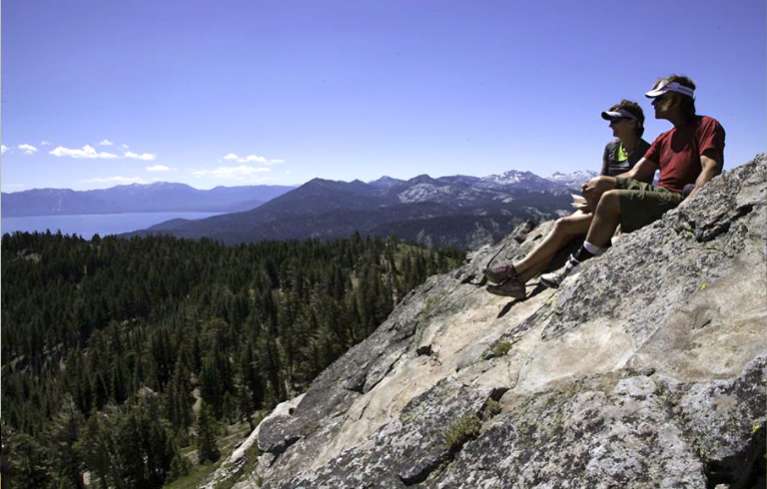
Suzy and Mark take in Lake Tahoe and all the scenery from the false summit of Ellis Peak. Photo/Carolyn E. Wright/Copyright

Suzy and Mark take in Lake Tahoe and all the scenery from the false summit of Ellis Peak. Photo Copyright 2013 Carolyn E. Wright

By Kathryn Reed

HOMEWOOD – If you survive the first half hour, the rest of the hike will feel like an average walk in the woods. But there was nothing average about the views.

This is what the six of us discovered earlier this month as we set out to climb the 8,740-foot Ellis Peak on the West Shore. It was the first time any of us had been there.

The total elevation gain is 1,465 feet. A significant amount of it comes right at the start. But the reward is so worth it.

It’s like walking into a watercolor painting. A sea of colorful wildflowers covers the expansive meadow – mule’s ear, Western blue flax, Indian paintbrush, thistle and other flora no one knew the name of fill the plateau.

To our right is Loon Lake with its island and other points in the Crystal Basin. Granite Chief and Desolation wilderness areas surround us.

We marvel at the ruggedness and rather daunting drop offs. Even from this spot it’s a bit like being on top of the world.

But it only gets better.

The trail is well maintained. Much of it is soft dirt. Shade keeps us cool.

In one section trees are covered in moss on all sides so if we were lost, there would be no knowing which direction was north.

Crossing the road that is open to four-wheelers was no big deal. We never saw nor heard any motorized vehicles.

At times Lake Tahoe comes into view. Along the trail it seems so far away.

We scamper up a rock formation we think is the top of Ellis Peak. We eat lunch, take pictures and congratulate ourselves. Then we look to our left and see people on another peak. Oops. Down we go to the real Ellis Peak.

It wasn’t that much farther, but pride insisted if we had gotten that far, we were going to make it to our true destination.

In one direction is Lake Tahoe. We are so high that we see behind the basin; the Pine Nut range is in the far distance.

At the base of Ellis is the lake by the same name. From this perch it looks dark and dank like some backwoods Mississippi swamp.

A structure in the foreground looking out to Lake Tahoe is the top of one of Homewood Mountain Resort’s chairlifts. If it were operating, it looks like it would take off substantial time in terms of hiking Ellis Peak.

To avoid the false summit, stay to the right as you near what looks like the peak. We missed the cairns on the way up, but they were clearly there on the way back. The true summit cannot be seen at this point.

The route is about 6.5 miles roundtrip. Just the first part might have some people thinking something less ambitious would be smarter. But the six of us –  Sue, Rosemary, Carolyn, Suzy, Mark and I – never thought twice about reaching our destination.

—-

Getting there:

From South Lake Tahoe take Highway 89 north. Beyond Homewood and before Sunnyside in Tahoe City will be a sign for Kaspian Campground. Turn left there. The road goes for about 7 miles. (Veer to the left and don’t go straight on the dirt road like some people.) At the end of the hill the pavement turns to dirt. The trail is to your left. Park on the side of the road.

Bug juice and sunscreen are recommended.

ngg_shortcode_0_placeholder (Click on photos to enlarge.)


Night devoted to learning about bats

Learn what bats eat, where they live and why they are important from local bat expert Brian Buttazoni. Participants will also hear the sounds they make and see photos of bats from around the world.

The event is Aug. 3 from 8:30-9:30pm at Washoe Lake State Park’s equestrian area pavilion. Washoe Lake State Park is five miles north of Carson City.

There is no charge for the program, but there is a $7 per vehicle entry fee; Nevada residents receive a $2 discount.

For more info, call (775) 687.4319 or email washoelake@hdiss.net.