Stargazing event at Spooner Lake

Professional stargazer Gigi Giles will explain what’s in the sky on Aug. 24 at Spooner Lake.

Participants will be able to peer through high-powered telescopes and astronomical binoculars at elevation 7,000 feet.

Wear comfortable shoes and bring a light jacket and flashlight. Young children and pets are not advised to attend.

The park entrance fees are waived for the event. Meet at Spooner Lake Park’s upper parking lot. The event is from 8:30-10pm.


Free bike racks available for S. Tahoe businesses

A few bike racks remain available free of charge to businesses within the city limits of South Lake Tahoe.

These racks are made available by the city and were designed by the Lake Tahoe Bicycle Coalition.

Businesses interested in bike racks must request an application form from the Lake Tahoe Bicycle Coalition which is managing the application process. The city will deliver the racks, but each business must install the racks.

Email biketahoe@aol.com to request the application packet.


Preparation key before getting on water

By Joseph Dowdy

Kayaking is a versatile activity. It can be as peaceful as floating on calm water as you soak in nature or as adrenaline pumping as navigating class five rapids.

For me, I try to keep my kayaking experiences simple and more on the peaceful side of things. One of my favorite things to do on summer weekends is to throw my kayak in the lake and spend the entire day on the water. What I learned over time is that sometimes I tried to keep things too simple and ignored common sense preparation and paid the price with sunburns, loss of gear and other mishaps that could have been avoided. No matter how you intend your kayak experience to play out, every kayaker should adhere to a checklist.

I’m talking about 10 items that every kayaker needs before getting on the water to ensure they’ll be prepared for anything and have a positive experience. You may modify this list depending on what you plan on doing but let’s start here.
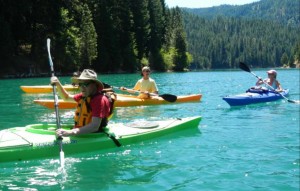
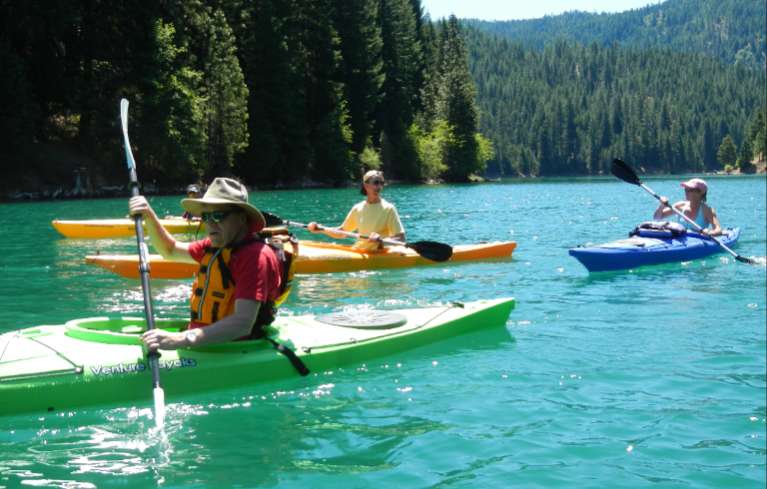
Common safety tips can ensure a kayak goes smoothly. Photo/LTN

Common safety tips can ensure a kayak goes smoothly. Photo/LTN

Life vest (AKA personal flotation device or PFD) — It goes without saying that every kayaker needs to wear a PFD when they go paddling. It’s a safety precaution usually required by law and it’s always better to be safe than sorry. They’ll help you stay afloat should a capsize occur and provide an access point for those on a boat or dock to pull you up by the shoulder strap. Many will be brightly colored or have integrated reflective materials so that you can be seen from afar or at night. Every PFD should include a place to clip in a whistle or noise-making device, which can also be required by law.

Paddle — Of course you know you need a paddle to go kayaking. You won’t get very far without one. Like PFDs, kayak paddles have been designed for every type of paddler and you should take time to find the one that fits you best. Higher end models will be more expensive but are made of lightweight, durable materials that’ll leave you feeling like you can paddle forever.

Paddle keeper — Having a place to secure your paddle is important, especially when partaking in any activity that involves you getting in and out of your kayak, rapids, fishing or photography. Why is it important? Because you don’t want to lose your paddle! You can also substitute the paddle keeper with a leash.

Leashes, hooks and clips — A piece of gear escaping overboard is the easiest way to damper an otherwise great day on the water. Save yourself some worry and lake bottom searching by securing all of your gear onto your kayak. Use a combination of leashes, hooks and clips or carabineers to attach items around your kayak.

Water bottle — It’s smart to bring along a bottle of water or Camelbak to drink from even if you’re just going out for a light paddle on a cool overcast day. Camelbaks are a great investment for kayakers because they are hands free and allow you to drink while you paddle. Otherwise, any water bottle will do.

Sandals or water shoes — I can’t remember the last time I went kayaking without my sandals and that’s because I don’t like coming home at the end of a day with a pair of ruined tennis shoes. Unless you capsize or just decide to jump in, you won’t get soaked when you go kayaking but it is almost guaranteed that your feet will.

Dry bags and boxes — Whether you’re planning on bringing a pair of keys and wallet or a complete change of clothes, you’ll need to make sure this stuff stays dry. Kayak and kayaking accessory manufacturers make a wide variety of options and sizes from bags and boxes to small pouches designed to fit the shape of your phone. It’s always a good idea to keep the items you use more often in a separate location.

Emergency kit — I started off with a red dry bag (red signifying emergency) and stuffed it with a small first aid kit, flashlight, matches, knife, rope, sunscreen, bug repellant and a rain jacket. Hopefully you’ll never have to open this bag, but when you do, you’ll know you’ve got what you need.

Phone — Yes, your phone. While I realize for some the idea of getting outdoors means leaving your electronics behind, bringing your phone with you is a good idea should you get into an emergency situation and need to make a call. It can also serve as your camera too. Protect your phone with dry bag, pouch or box. Trying to avoid emails, texts and phone calls? Simply turn it off and stow it inside your kayak.

Paddling apparel — A pair of cotton shorts and a T-shirt may be just fine, but using apparel designed to get wet and dry quickly will make your paddling experience a more comfortable and safer one. Shop for apparel that is made of synthetic materials that are capable of wicking sweat off your body and dry quickly. If paddling during the colder part of the year, also stick to synthetic materials but don’t forget to layer up.

It shouldn’t be hard to find these basic kayaking accessories. Specialty retailers will have all of these items and most will be fairly inexpensive too.

So, next time you go kayaking, be prepared with the right gear and don’t learn the hard way like I did.

Joseph Dowdy is an avid kayaker based out of the central Texas area. He has paddled many of central Texas’ waterways and has attended and/or participated in many kayak fishing tournaments, races and paddling festivals. He’s currently employed at Austin Canoe and Kayak and loves that he gets to spend time working with his favorite toys.


3-day paddleboard festival in Kings Beach

The Ta-Hoe Nalu Paddle Festival hits the waters of North Lake Tahoe Aug. 9-11 in Kings Beach.

As the nation’s oldest paddle festival located in North Lake Tahoe, this family-friendly event features distance and beginner races, a live concert from Mama’s Cookin’, sand castle building contests, and more than $10,000 in cash and prizes, as well as an attempt to set the world record for the most people doing yoga on a stand up paddleboard.

For a full event schedule and more information, is online.


Government telling people which fish to eat

By Edward Ortiz, Sacramento Bee

A state environmental health agency has issued its first-ever set of statewide guidelines for eating fish from California’s lakes and reservoirs, including many in Northern California and the Sierra.

The California Office of Environmental Health Hazard Assessment’s advisories are meant to help the public decide what fish can be safely eaten – especially from hundreds of lakes and for reservoirs that have not had fish eating advisories established.

Read the whole story


Calif. leaders vow to revamp state parks

By KCRA-TV

A group of California business, education and nonprofit leaders — including Monterey Bay Aquarium founding director Julie Packard — have agreed to help revamp the state parks system in an effort to restore confidence and financial stability to an institution rocked by scandal.

The dozen volunteers will spend the next 18 months addressing the problems that led to the state threatening to close 70 of the 280 parks in the system after long years of funding shortages — and more recent revelations that now-departed leaders socked money in a secret fund.

The Parks Forward Commission will design a blueprint to make the park system financially viable by studying everything from potential revenue sources to whether a lack of innovation at the top is tied to the practice of promoting only law enforcement rangers to leadership positions.

“Under the weight of budget cuts, added acreage and outmoded systems, our parks are struggling to meet the needs of Californians, and visitors from around the country and world,” said John Laird, secretary of the Department of Natural Resources. “This is a top-notch panel that will roll up its sleeves to craft a long-term plan for a financially sustainable and functionally relevant state parks system that meets the needs of a changing population.”

Read the whole story


CalFire: Don’t transport firewood

The Buy It Where You Burn It campaign is reminding everyone to cut or buy firewood locally and use it locally.

Additionally, CalFire says if you plan on camping and traveling outside the area, get your firewood from the area you are going too, do not transport wood from your backyard because of the potential to spread diseases and pests. Also, leave unburned firewood where you bought it.

Examples of insects and diseases that have affected California include:

The Goldspotted Oak Borer (an invasive beetle in San Diego County likely brought into the state on firewood) has killed tens of thousands of oak trees all over San Diego County since 2004 when it was first found.

Sudden Oak Death is a disease found on the California coast and as far east as Solano County and has killed tanoaks and other oak species from British Columbia, Canada to Monterey County.

Pine Pitch Canker is a disease (fungus) affecting Monterey and Bishop pine trees. However, most western pine species including commercial species such as sugar pine and ponderosa pine are susceptible. Pitch Canker has been found along most of the California coast encompassing an area over 23 million acres.


Park putting on birdhouse building program

Washoe Lake State Park is putting on a birdhouse building program on Aug. 17.

Participants will assemble and decorate a birdhouse using a kit provided by the park.

The program is limited to 15 participants, so call to reserve a spot — (775) 687.4319.

The event is from 9-11am.

Meet at Washoe Lake State Park’s equestrian area pavilion. The park is five miles north of Carson City.

There is no charge for the program, but there is a $7 per vehicle entry fee.


Perseid meteor headed for Lake Tahoe

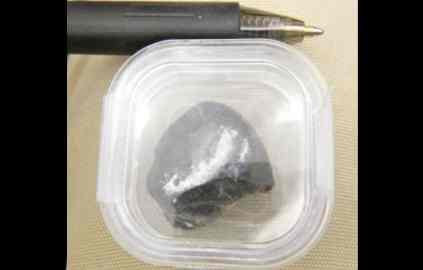
A piece of the meteorite, next to a pen for size perspective, that was found in the Sutter Mill area in April. Photo/LTN

While no particles are expected to land near Tahoe from the Perseid meteor, this  piece of a meteorite was found in the Sutter Mill area. Photo/LTN file

Although the annual Perseid meteor showers will peak next week, the night sky will begin to filled with the light show this week.

The best time to look up will be between midnight and dawn. The best days will be Aug. 12 and Aug. 13.

What people are seeing is debris entering the atmosphere at 130,000 mph as Earth passes through the comet Swift-Tuttle.


Horse competition benefits Washoe 4-H

With horses, riders and a movie theme, the Washoe County 4-H Horse Program and University of Nevada Cooperative Extension present Summer ReRuns 2013, an open horse show and fundraiser for Washoe County 4-H horse club leaders on Aug. 25.

Open to all horse, and riders of all ages, the show will feature events in showmanship, English and western riding and timed events. The show takes place at the Lemmon Valley Horse Arena, 11400 Deodar Way (at the corner of Alaska and Chestnut) in Lemmon Valley. Registration is at 8am. The show begins at 9am and will conclude at approximately 4pm. Spectators will be admitted free of charge.

Participants are asked to preregister by mail by Aug. 22. The preregistration fee is $6 per class plus a $5 nonrefundable administrative fee. Day-of-show entries are $8 per class, $2 for every change of class and a $5 nonrefundable administrative fee. All proceeds go to the Washoe County 4-H horse club leaders to help fund horse science and horsemanship training projects for 4-H youth in Washoe County.

For questions or forms, contact Sam Mitchell at (775) 336.0259 or mitchells@unce.unr.edu.