Reno’s Wise captures gold in freeski halfpipe
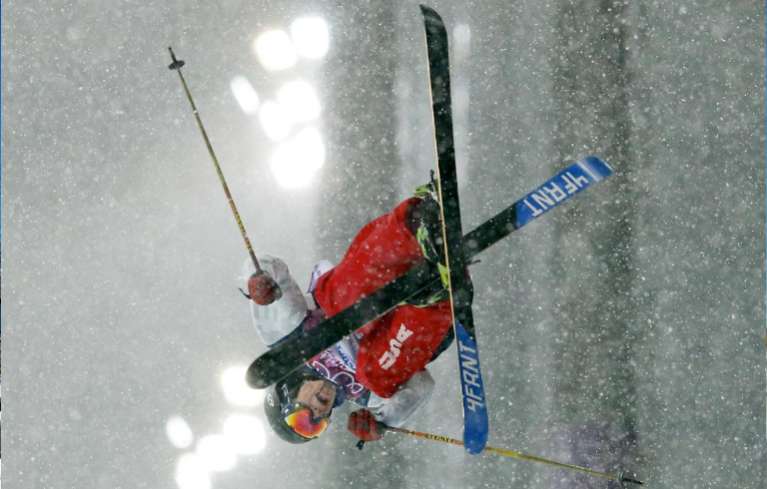
 David Wise of the United States gets air during the men's ski halfpipe final at the Rosa Khutor Extreme Park, at the 2014 Winter Olympics, Tuesday, Feb. 18, 2014, in Krasnaya Polyana, Russia. (AP Photo/Sergei Grits)

David Wise gets air during the ski halfpipe final at the Winter Olympics on Feb. 18 in Krasnaya Polyana, Russia. Photo/Sergei Grits/AP

Reno’s David Wise on Tuesday made history in multiple ways.

The 23-year-old earned a gold medal Feb. 18 in the inaugural freeski halfpipe competition. He is also the first gold medalist from Reno.

Out of an initial field of 35, he made it to the final round of 12 earlier in the day. His first run in the finals was all he needed. He scored a 92. Wise fell on the second run.

Conditions turned a bit more winter-like on Tuesday. Even though it was snowing, the pipe was slushy.

Wise had a small army of family in the crowd for support. His wife, Alexandra, even had a near life-size photo of their 2-year-old daughter. The little one didn’t make the trip to Russia.

Wise, who rides for Northstar, is well decorated in the sport of freeski halfpipe, having won three consecutive X Games gold medals.

Mike Riddle of Canada earned the silver with 90.60 points and France’s Kevin Rolland the bronze with a score of 88.60.

Aaron Blunck was the other American to make it to the finals. He finished seventh with a score to 79.40.

— Lake Tahoe News staff report


U.S. women miss podium in giant slalom

By Rob Hodgetts, BBC Sport

Slovenia’s Tina Maze won her second Sochi Olympic title with a victory in the women’s giant slalom.

Maze, 30, who shared downhill gold with Dominique Gisin earlier in the program, led by 0.52 seconds after the first run.

She was as solid in the second run, winning by 0.07 seconds in 2:36.87.

Super-G champion Anna Fenninger of Austria claimed her second medal with silver, while German defending champion Viktoria Rebensburg won bronze.

Julia Mancuso of Squaw Valley, who won bronze in the combined event, crashed out on the first run, while Germany’s double Sochi medalist Maria Hoefl-Riesch pulled out ahead of racing with a sore throat.

Mikaela Shiffrin of Vail-Eagle placed fifth in her Olympic debut.

Read the whole story


Meyers youngsters learn to snowboard — indoors

By Kathryn Reed

MEYERS – Dry slopes work for British Olympians to learn to ski and ride, so why not indoor snowboarding for Meyers kids?

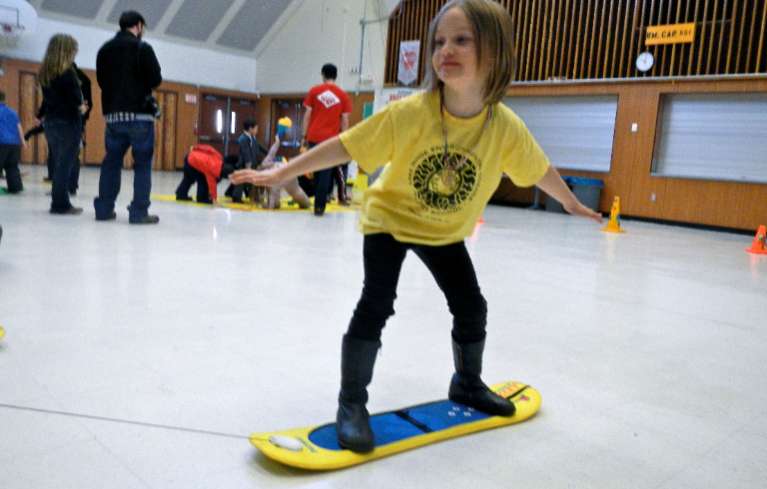
That is exactly what took place two days last week at the magnet school. Four stations were set up in the multipurpose room, which doubles at the gymnasium, so K-2 students could get a feel for what it is like to be on a snowboard.

And while this isn’t how hometown gold medalist Jamie Anderson learned, the youngsters were thrilled to be possibly following in her footsteps. One kindergartner said he had been snowboarding his whole life.

With how well some of the students were able to balance, it was obvious they had either been on a board before or they are naturally gifted.

A handful of Sierra-at-Tahoe employees brought the Burton-certified learning tools to the school as an introduction to snowboarding. But it’s more than that for teacher Kristi Jouett. What was being taught also fits into the state standards for physical education.

“It teaches them balance, changing directions, and moving through space without crashing into each other,” Jouett said of the interactive Burton program. These are all things she teaches in PE.

Sierra would like this to become a permanent component of Lake Tahoe Unified School District’s physical education curriculum at all of its elementary schools. The tools Sierra uses are supplied by Burton. All the equipment is scaled to this age group.

One station had kids on a mini plastic snowboard that was then pulled by one or two classmates who held a handle that looks like it would be used for water skiing.

Kindergartner Avalon Newberry is pulled on a snowboard by classmates at the magnet school in Meyers. Photo/Kathryn Reed

Kindergartner Avalon Newberry is pulled on a snowboard by classmates. Photo/Kathryn Reed

Avalon Newberry was “riding” through the gym as one of the instructors told her: hands out, stay low and spirits high.

A sense of seriousness then came over her, followed by a big smile as she did what she was told to do.

Those on the stage were on a springy mini snowboard that allowed them to get the feel of rocking back and forth as well as side to side. Once the balance part was mastered then they tossed a ball to each to further test their skills.

Like what the pros have been showing off for the judges, the youngsters were grabbing the tail for points.

At the end of the special PE class they were all awarded “Olympic” medals.


U.S. medals in men’s snowboarder cross

After fog delayed the men’s snowboarder cross by a day, a series of heats culminated with six riders in the final on Feb. 18. Alex Deibold of Vermont represented the United States.

A bronze medal was Deibold’s reward. This means an American has been on the podium since boarder cross became an Olympic sport in 2006.

Pierre Vaultier of France took gold. Russian Nikolay of Russia took silver.

Mammoth’s Trevor Jacob finished ninth.

Seven-time X Games gold medalist Nate Holland came up short in his third Olympics. The Truckee resident did not make into the semis on Tuesday.

— Lake Tahoe News staff report


Warming Arctic may be causing jet stream changes

By Scott Neuman, NPR

Mark Twain once said: “If you don’t like the weather in New England now, just wait a few minutes.”

He was making an unknowing reference to the jet stream, which drives the weather over North America and Europe like a high-altitude conveyor belt. But increasingly, the jet stream is taking a more circuitous route over the northern latitudes, meaning weather systems hang around longer than they used to. And, a warming Arctic is probably to blame, says Jennifer Francis, a professor at Rutger’s University Institute of Marine and Coastal Sciences.

Francis — who says it’s too early to know if the well-established Arctic warming is caused by man or some natural phenomenon — was speaking during a session on Arctic change at the annual meeting of the American Association for the Advancement of Science in Chicago on Saturday.

The wayward jet stream could account for the persistently severe winter weather this year in the U.S. and Britain, as well as California’s long drought.

Read the whole story


Challenge cycling event looking for riders

The Alta Alpina Cycling Club is looking for riders for the annual Challenge on June 28.

This event allows cyclists to explore the Eastern Sierra near Lake Tahoe, beneath snow-capped mountains, on smooth scenic roads running alongside rushing rivers.

The ride spans Douglas County and Alpine County.

Cyclists may ride as little or as far as they want; up to 200 miles. Options range from the relatively flat foothills to “the world’s toughest double century” with more than 20,000 feet of climbing.

The event is limited to 499 riders.

For details and to register, go online.


Rugged tablet worthy of the outdoors

By Berne Broudy, Outside

Your iPad doesn’t mix well with the outdoors. Even if you keep it away from water and grit, you still have to contend with the lack of internet and electricity in the backcountry.

That’s where Earl comes in. This new backcountry survival Android tablet works where your smartphone or iPad would fail. The rugged tablet can forecast the weather, determine your location, elevation, and let you communicate with folks back home.

About the size of an iPad mini, Earl is one tough gadget. It’s waterproof, dustproof, shockproof, and it will work in temperatures from 32 degrees to 122 degrees Fahrenheit. You can submerge it in three feet of water for up to 30 minutes with no ill effects.

Read the whole story


$15 mil. in improvements planned for Diamond Peak

Diamond Peak Ski Resort in Incline Village wants to evolve into a year-round destination by providing more than winter recreation.

A draft of the master plan was unveiled last week that includes more than $15 million in upgrades. Build-out would take three years.

The first phase is estimated to cost $4 million. It would include a canopy tour, aerial challenge course, Alpine coaster, mountain biking and hiking.

Upgrading the lodge and expanding it would come in the second phase.

Winter improvements include more snowmaking and replacing Lakeview lift with a detachable quad.

The Incline Village General Improvement District, which runs the resort, did not take action at the Wednesday meeting.

— Lake Tahoe News staff report


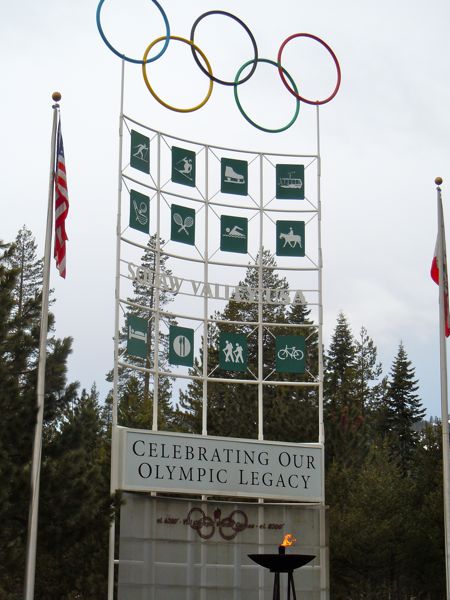
Coalition not giving up on Tahoe-Reno Olympics

By Ed Vogel, Las Vegas Review-Journal

CARSON CITY — The Sochi Olympics are expected to cost $51 billion. And a study shows that only six of the 19 cities that hosted past Winter Olympics will have enough snow to host them after 2100.

There is a movement for the Olympics to return to Tahoe. Photo/LTN

There is a movement for the Olympics to return to Tahoe. Photo/LTN

Squaw Valley hosted the 1960 Winter Games, but it won’t have the snow to host another Olympics by 2050, according to a study released in January by the University of Waterloo in Canada.

So what’s going to happen to the dream of Lt. Gov. Brian Krolicki and the Reno Tahoe Winter Games Coalition? They repeatedly have tried to coax the U.S. and International Olympic committees to award a winter games to the Reno-Tahoe area.

“We still believe Lake Tahoe will be the next region in North America to host a Winter Olympics games,” said Krolicki, chairman of the Reno Tahoe coalition for nearly a decade. “It is our passion. It is a dream you have to believe in. It would be an incredible chance to showcase our region and improve tourism and economic development for generations.”

He noted Wednesday that 55,000 tickets were sold for a curling tournament in Las Vegas last month, evidence that even Southern Nevadans would be eager for a Reno-Tahoe Winter Olympics. Corny as curling might be, it has become one of the favorite Winter Olympics sports.

When the U.S. Olympic Committee decided against having an American city bid for the 2022 Winter Olympics two years ago, the Reno Tahoe coalition just changed the year on its T-shirts and immediately began talking about hosting the 2026 Winter Games.

Read the whole story


2 medals for U.S. in men’s super G

Travis Ganong of Squaw Valley, who is skiing in his first Olympics, finished the super G in 23rd place with a time of 1:20.02.

Four medals were handed out in Sunday’s event.

Kjetil Jansrud of Norway took the gold with a 1:18.14.

Andrew Weibrecht of Lake Placid, N.Y., won bronze four years ago in Vancouver. In Sochi he came away with the silver with a time of 1:18.44

Tying for the bronze were Bode Miller of New Hampshire and Jan Hudec of Canada. They had a time of 1:18.67.

— Lake Tahoe News staff report