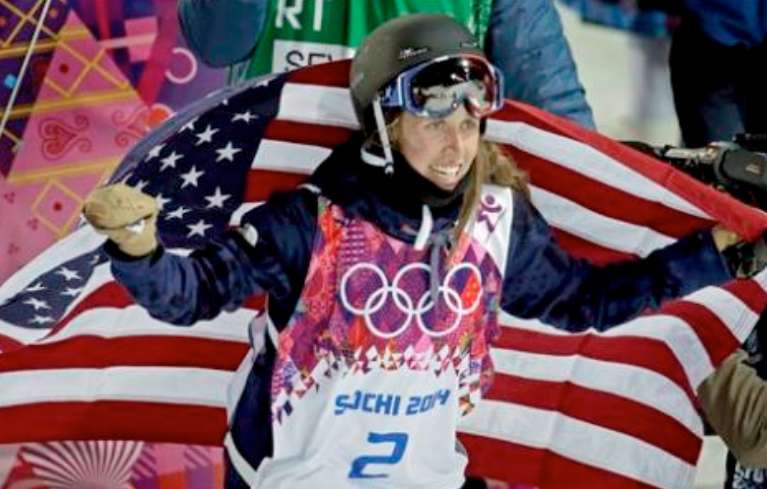
Olympics are the closest to coverage parity female athletes get

By Sarah Laskow, Columbia Journalism Review

For every Olympics since 1994’s Lillehammer Games, Andy Billings has broken down how much time the primetime broadcast spends covering male athletes and female athletes. Usually, men get significantly more of the clock time. But this year, when Billings, who directs the University of Alabama’s sports communications program, and his collaborators ran an initial data-crunch on the first week of the Sochi Olympics, NBC’s coverage was looking more equitable. Through the Friday night of Valentine’s Day, NBC spent 47.6 percent its time covering men and 37.6 percent of its time covering women, with the remainder going to pair sports, like ice dancing.

That counts as an improvement. “It’s a 10-percent gap favoring male athletes, which is smaller than normal,” said Billings, late last week. (Researchers like Billings focus on NBC’s primetime coverage because it reaches the most people—averaging 22.5 million per night, according to the Washington Post.) At the last winter Olympics, in Vancouver, the gap was 20 percent. And, at that point in the Games, women’s figure skating hadn’t even started yet.

By the end of the two weeks, the gap had narrowed even further: Men got 45.4 percent of clock time, women 41.4 percent, and pairs 13.2 percent.

Read the whole story


Confession of a former FuelBand fanatic

By Lauren Steele, Outside

When Nike released the FuelBand in January 2012, my boyfriend at the time was certain it would make the perfect gift for me, raising the bar for my fitness-crazed inner athlete—a welcome development, right? On the fateful day he ordered my wrist-worn, nonhuman trainer, little did he know that he was effectively locking me into a handcuff of obsession. To be sure, there’s a good reason why I no longer have a FuelBand (or a boyfriend).

Like most gadgets born of the recent activity-tracker movement—think Fitbits, Jawbones UPs, Basis Watches—the FuelBand uses a traxial accelerometer to sense movement. (This magic tech trick is what makes an iPhone screen rotate when it’s tilted.) The smarts inside the FuelBand tracks time, steps taken, calories burned, and NikeFuel earned on a personal NikePlus account, where you can set goals to earn a certain amount of NikeFuel each day.

So, what’s NikeFuel? According to NikePlus, it’s a “universal way to measure movement for all kinds of activities.” What NikePlus should say is that it’s a “meaningless number, calculated by an algorithm using the laws of obligation and shame, for which a limit doesn’t exist.” In sum, NikeFuel points have no meaning beyond the boundaries of Nike World. The concept behind the points is that, unlike BMRs or calories, they’re supposed to represent whole-body movements—free from the variables of weight, gender, age, or height. They count every motion equally, from a fidget to a front squat.

Read the whole story


Olympic medal game is often mental one

By David Wharton, Los Angeles Times

SOCHI, Russia — Twelve hours wasn’t nearly long enough to ease their pain.

The morning after losing in overtime to rival Canada, the U.S. women’s hockey players talked about the anguish of walking away from the Sochi Olympics with silver medals around their necks.

“We didn’t train as hard as we did for second place,” forward Meghan Duggan said. “It’s one of those things we have to swallow.”

Contrast her words with the sigh of relief from Bode Miller a few days earlier. The ski racer acknowledged making a big mistake on the super-G course, saying he felt “really lucky” to hang on for bronze.

Finishing third might feel better than finishing second.

“With silver, you’re just one person away,” said skier Julia Mancuso of Squaw Valley, who has medals of every color from the last three Olympics. “But with bronze, it’s like, I could have been totally off the podium.”

Read the whole story


Prescribed fires planned throughout basin

U.S. Forest Service fuels management crews may continue prescribed fire operations in several areas around Lake Tahoe beginning Feb. 24.

Prescribed fire activity may take place on Spooner Summit, off Bunker Drive near Tahoe City, on Highway 89 near Tahoma, and in the Luther Pass Campground off of Highway 89. Crews may continue operations through the weekend if weather, staffing, and conditions permit. Locations may vary due to changing conditions.

All prescribed fire projects are conducted in accordance with an approved prescribed fire burn plan. Burn plans describe specific conditions under which operations are conducted including the weather, number of personnel, opportunities to minimize smoke impacts, and available burn days. This information is used to decide when and where to burn.

Smoke from prescribed fire may continue for several days after the initial ignition.

To receive prescribed fire notifications, send an email to pa_ltbmu@fs.fed.us.


Council contemplates Bijou Park’s future

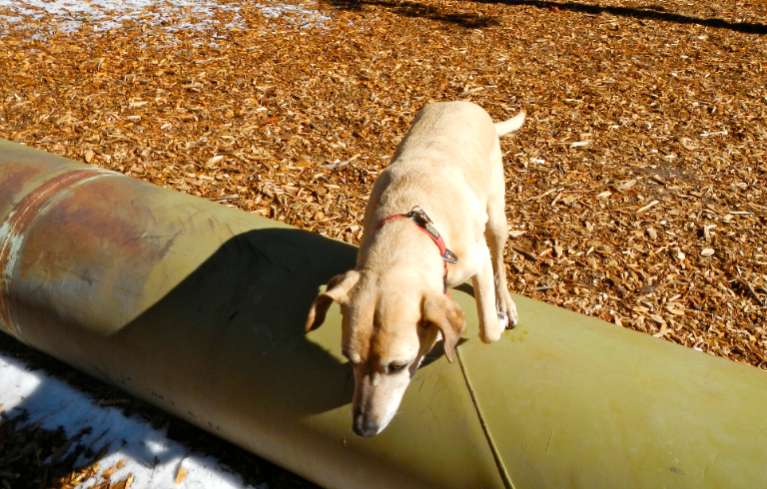
AJ shows will climb over the obstacle, but not run through the tube. Photos/Kathryn Reed

AJ  will climb over the obstacle, but not run through the tube. Photos/Kathryn Reed

By Kathryn Reed

When Bijou Community Park was formed in 1992 all the potential future amenities could not be imagined.

A disc golf has been added. The dog park came in 2008. A roller derby league uses it as its home rink. The most recent addition was a dog agility course last year. However, only one long tube structure is there now.

It’s a well-used park – especially now that parking is allowed in the winter.

On Monday, people were at the dog park, others were using the playground structures, several people were tossing discs, and even more were walking. The meadow is an ideal spot for walking. It’s wide-open, flat and has stunning views of iconic peaks like Freel and Jobs Sister. And tire marks prove it’s also popular with mountain bikers.

But more than 20 years since the park opened the city of South Lake Tahoe still does not have a policy in place for deciding how the park can be used. But that soon could change.

The city’s parks and recreation commissioners are working on a policy so entities that want to add to the park will have an easy process to do so. The commission brought a policy to the council this month that council members said needed some tweaking.

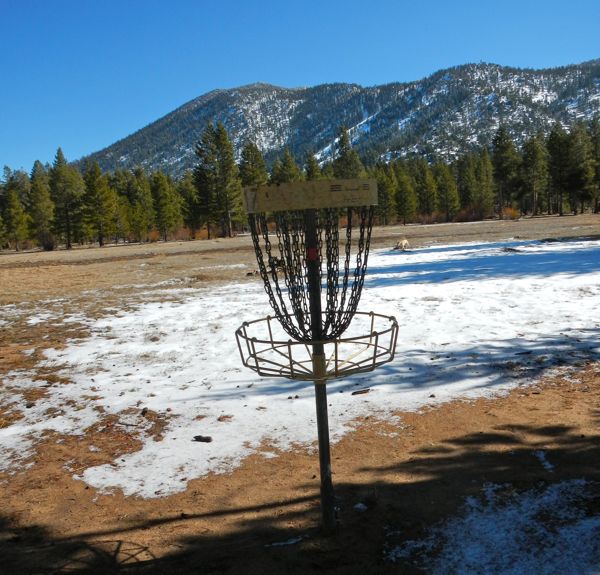
Disc golf at Bijou is popular year-round.

Disc golf at Bijou is popular year-round.

The council, though, is in a bit of a quandary because it doesn’t want to create policy that would conflict with the recreation master plan that is in the works with El Dorado and Douglas counties.

Council members JoAnn Conner and Angela Swanson were tasked with helping the commission iron out wrinkles. It’s possible the topic will be before the council again in March.

As the commission has been looking at creating policy it discovered the master plan for the park is so old it does not exist in an electronic version.

But there is urgency for creating a policy because people have ideas they want approved.

TAMBA and the South Lake Tahoe BMX Association have been in talks with South Lake Tahoe officials about building a 4-acre bike park in Bijou Community Park since 2011.

Lake Tahoe Sustainability Collaborative wants to turn a 30-foot-by-80-foot plot of land in the park into a community food garden.

Park amenities:

• Golf course

• Disc golf

• Basketball court

• Fenced dog park; separated areas for small and large dogs

• Fitness course

• Historic railroad exhibit

• Open meadow for walking

• Skateboard park

• Two covered gazebos with barbecue pits

• Volleyball courts.


Teller crashes in early heat; finishes 28th

By USSA

ROSA KHUTOR, Russia -– John Teller of Mammoth Lakes skied strong in a competitive heat Thursday, but crashed during a pass attempt, finishing 28th in skicross at the Sochi Games.

Team USA’s sole skicross athlete was edged out of his heat by Jean Frederic Chapuis and Jonathan Midol of France, who went on to take gold and bronze, respectively. Arnaud Bovolenta rounded out the French sweep with the silver medal.

Teller spent most of the heat fighting from behind in third, trying to squeeze into the top two in order to advance to the next round. It the final banked turn he attempted a pass on the inside but slid out and did not finish the race.

“I would have liked to have a better start; it wasn’t the greatest. But you’ve got to try to refocus and work on getting into the top two positions so you can advance to the next round,” Teller said. “I was battling all the way down and trying to get up there, stuck in that third spot for most of the way. I set up the pass for the last bank and was running a really tight line. It’s tough to do in these soft conditions, so I spun out and that was the end of it.”


Landscaping course focuses on being fire aware

University of Nevada Cooperative Extension will offer a free course for landscape professionals on March 17 from 8am-3pm at the Peppermill in Reno.

It will provide information on how landscaping design and materials play a crucial role in reducing the threat of wildfire to homes. The course is part of the Living With Fire Program, and is offered in conjunction with the International Association of Fire Chiefs Wildland-Urban Interface Conference.

Topics include an introduction to wildland and local fire behavior, the influence of residential landscape features on firefighting, ignition resistance of landscape building materials, good and bad plant choices for high fire-hazard areas and more.

Participants who complete the course will gain continuing education credits; those who pass a written exam will receive a certificate of completion in Living With Fire for Landscape Professionals, and will have their names posted on the Living With Fire website and on a list distributed at local events or upon request.

To rrgister for the course, contact Sonya Sistare at sistares@unce.unr.edu or (775) 336-0271 by March 9.


Bowman takes gold in halfpipe skiing

    Home     Sports     Story Print   Email   Olympics: Lake Tahoe's Maddie Bowman wins gold in ski halfpipe Associated Press Posted:   02/20/2014 10:56:02 AM PST | Updated:   16 min. ago Maddie Bowman of the United States celebrates her gold medal in the women’s ski halfpipe at the Rosa Khutor Extreme Park, at the 2014 Winter Maddie Bowman of the United States celebrates her gold medal in the women's ski halfpipe at the Rosa Khutor Extreme Park, at the 2014 Winter Olympics, Thursday, Feb. 20, 2014, in Krasnaya Polyana, Russia. ((AP Photo/Charlie Riedel))

Maddie Bowman of Meyers celebrates her gold medal in the women’s ski halfpipe at the Rosa Khutor Extreme Park on Feb. 20. Photo/Charlie Riedel/AP

By AP

KRASNAYA POLYANA, Russia — This one was for Sarah.

Braid spinning in the chilly mountain air, Maddie Bowman of Meyers soared to the inaugural gold in women’s Olympic halfpipe skiing, edging Marie Martinod of France in the final on a night the sport paid tribute to late Canadian freestyle skiing icon Sarah Burke.

Burke, a leading advocate to have several events — including halfpipe — added to the Olympic program, died following a training accident in 2012. Her parents, Gordon Burke and Jan Phelan, watched as Bowman made history.

The 20-year-old put together a pair of athletic runs in the finals. Stringing along dizzying series of spins and grabs, Bowman performed the two highest-scoring runs of the finals.

Her first one, an 85.80, put pressure on Martinod, who led qualifying. Bowman’s second run was even better. She clasped the side of her helmet in disbelief then sat and waited to see if Martinod or American teammate Brita Sigourney could top her.

Nope.

Sigourney, who washed out in her first finals run, appeared ready to threaten Bowman before her backside skimmed the snow with only one jump off the 22-foot halfpipe left.

That left Martinod, who retired in 2007 but returned to the sport in 2012 at the urging of Burke. The 29-year-old Frenchwoman was one of the oldest performers in the 23-skier field and her introduction included a series of outtakes with her young daughter.

Martinod was clean but not spectacular. Her 85.40 earned silver but didn’t really come close to bumping Bowman from the top of the medal stand.

There were several hard crashes during qualifying, the worst coming when Anais Caradeux slammed into the ice during her second run. The 23-year-old Frenchwoman lay motionless for several seconds before being tended to by medics.

Caradeux sustained lacerations on her face but managed to ski down the halfpipe to the medical tent. She qualified ninth but didn’t compete in the finals. Caradeux said afterward she blacked out for “10-15 seconds” and sustained some short-term memory loss.

Then again, Caradeux was hardly alone on a sometimes bruising night. Sigourney took a rough fall during her first finals run, with Bowman sprinting up the halfpipe to help her up. She recovered in time to take a second trip down the slope but it wasn’t nearly good enough.

Sigourney blinked back tears of disappointment, though they were soon cast aside during an event that served as a celebration of Burke’s legacy.

“A lot of girls were really pushing themselves,” said Rosalind Groenewoud of Canada, who finished seventh. “I wish (Sarah) could have won tonight if it wasn’t me.”

Ligety takes gold in GS; Jitloff 15th

The United States added another gold medal at to its collection at the Sochi Games when Ted Ligety flew down the giant slalom course on Wednesday.

In doing so, Ligety became the first U.S. man to win two Olympic gold medals in Alpine skiing.

He won with a time of 2:45.29.

Tim Jitloff of Reno had the next best time for the U.S. men at 2:47.13. He finished 15th.

Steve Missillier of France took silver with a time of 2:45.77, while the bronze went to Alexis Pinturault with a time of 2:45.93.

Jared Goldberg from the U.S. finished 19th, followed by Bode Miller at 20.

— Lake Tahoe News staff report


Curling a hot sport in South Lake Tahoe

By Larry Sidney

Some quick Olympic trivia: What is the most talked about sport in the 2014 Sochi Olympic Games in terms of social media?

Curling.

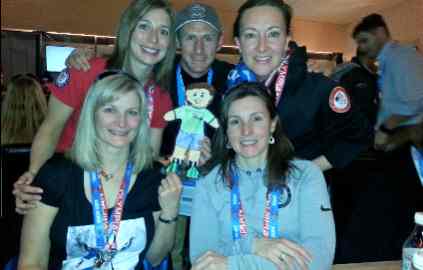
South Lake Tahoe curling founder Larry Sidney, center, with members of  U.S. Women's curling team members in Sochi. Photo/Provided

South Lake Tahoe curling founder Larry Sidney, center, with members of U.S. Women’s curling team members in Sochi. Photo/Provided

By now you’ve probably seen those 42 pound granite stones sliding down the ice, as two players sweep their way down the ice in front of it. It’s quite addicting, really, and right now the world is abuzz talking about curling.

South Lake Tahoe is the home of Lake Tahoe Epic Curling (LTEC), and they have also noticed the spike in interest.

We have quite a few people signed up for this week’s learn-to-curl. In fact, the club has had more curling requests in the last week than they do in a typical month, including requests for private ice sessions.

I’m in Sochi where there are thousands of people at every curling session. People are talking about it all over the Olympic Park. All of the excitement here is showing up at our club back in Tahoe.

Lest you think you’ve missed your chance to check out the local curling scene, fear not. In conjunction with the finish of the Olympics, LTEC is sponsoring an open house Feb. 23 from 6-8pm at the South Lake Tahoe Ice Arena on Rufus Allen Boulevard. The event is free to attend, and you can watch LTEC’s experienced curlers match up in league play.

For the more adventurous, try it yourself from either 6-6:45m or 7-7:45pm. Reservations are required for this, so you will need to email Info@tahoecurling.com to sign up. There is a small fee for participating, and you can find more information on the club’s website.

Larry Sidney is co-founder of Lake Tahoe Epic Curling.