Derby bettors aren’t horsing around

By Case Keefer, Las Vegas Sun

For most people, Kentucky Derby betting season lasts about three days.

It’s much longer in Las Vegas, as the anticipation for the annual Run for the Roses builds over the course of several months from the moment sports books first release future odds on the race.

William Hill sports books posted their initial lines for Saturday’s race in November — to an enormous response.

“It’s amazing, to be honest, how much business we’ve written this year,” William Hill Director of Trading Nick Bogdanovich said. “It’s scary. It’s more than I’ve ever seen. It’s at least double over last year already.”

Read the whole story


Fallen Leaf Lake trail network to be revamped

Improvements are coming to Fallen Leaf Lake dam and surrounding trails. Photo/LTN file

Improvements are coming to Fallen Leaf Lake dam and surrounding trails. Photo/LTN file

Upgrading the trails around Fallen Leaf Lake and creating new ones could take five years, with the first phase beginning next week.

This summer a new bike path from Fallen Leaf Campground to the Pope Baldwin Bike Path will be built. (The latter trail is better known as the Camp Rich paved path.) Several trails on the north end of Fallen Leaf Lake will receive upgrades, and others will be rerouted and reconstructed. A number of user-created trails will be decommissioned.

The trail along the west side of Taylor Creek that runs north and south will remain, but be improved. This includes slope stabilization. The Clark and Church trails will also stay.

The polo field parking lot near the entrance to Valhalla has been incorporated into the Tallac Site plans. Improvements to the Camp Richardson paved trail will be part of the Camp Rich plans. While the projects are separate, the Forest Service has an eye on the big picture so everything is designed to flow together and complement the other.

Expect temporary closures or restrictions in the areas being worked on. The U.S. Forest Service, which owns the land, is warning that noise and visual impacts may affect the Fallen Leaf campground and surrounding areas.

Two of the goals of the project are to reduce congestion and user conflicts. These trails are heavily accessed by locals and visitors. The hope is that with more trails it will better disperse users.

The entire project area encompasses 14,960 acres on the South Shore.

Future work will include reconstruction and rerouting portions of the Mount Tallac Trail, new trailheads and parking areas developed in several locations along the Highway 89 between Camp Richardson and Spring Creek Road, and the last one-quarter mile of the Camp Rich trail will to be moved to a more appropriate crossing and access point on Highway 89.

The 80-year-old dam at Fallen Leaf Lake-Taylor Creek will also be revamped to allow for cyclists to ride over it without having to lift a bike up steps.

Plans call for a new trail connecting the Pope Baldwin Bike Path from the Spring Creek Road area to Fallen Leaf Lake, a trail connecting the Fallen Leaf Campground area to Angora Ridge, and a trail connecting Angora Ridge to the North Upper Truckee neighborhoods. All of that is dependent on money.

The work scheduled for this season comes from the Forest Service Legacy Trails Capital Maintenance and Improvement Fund.

More info about the project is online.

— Lake Tahoe News staff report


Nev. resident sues NFL over ticket policy

By John Breech, CBS Sports

If you watched the NFC Championship Game on television back in January, you may have noticed that there weren’t a lot of 49ers fans at the game. One of the reasons for that is that the game was in Seattle. So that makes sense.

Another reason 49ers fans weren’t there though is because the Seahawks didn’t want them there: The team restricted ticket sales to only the fans who had a credit card billing address in Washington, Oregon, Montana, Idaho, Alaska or Hawaii — and Canada. Let’s not forget Canada. Canadians could buy tickets too.

Thanks to the restrictions, there were 44 states where fans couldn’t purchase tickets. One of those states? Nevada. And now one fan in that state is suing.

John E. Williams III has filed a $50 million lawsuit against the NFL because he says the Seahawks and the league used a selective ticket process that violates the law.

Read the whole story


Physicals available for high school athletes

All fall sports athletes in the Tahoe area are eligible to receive a free preparticipation physical on May 6 from 5-7pm at Douglas High School and June 2 at 5:30pm in the Blue Gym at South Tahoe High School.

The physical includes: vital signs, orthopedic evaluations, and medical screenings.

All students must bring completed and signed history and parental consent forms to their physical, or a parent or guardian must be present. Forms may be picked up in the school office or through the athletic coach.

For details, call 530.543.5537.


North Tahoe to host 2 Ironman events

When Ironman and Ironman 70.3 race on the same day in Lake Tahoe it will be the first time this has happened in the U.S.

The Ironman 70.3 Lake Tahoe is the 25th race in the U.S. Series. Ironman Lake Tahoe returns for the second time after selling out registration last year. The two races will be Sept. 21.

Ironman 70.3 Lake Tahoe leads athletes through a 1.2-mile swim, 56-mile bike and 13.1-mile run on the same terrain as Ironman Lake Tahoe. The race will start with a single loop 1.2-mile swim at King’s Beach. Athletes will transition lakeside before starting a one-loop 56-mile bike course that will travel through Tahoe City before following the Truckee River past Squaw Valley and into Truckee. From there, the course turns south past Northstar and climbs to Brockway Summit. Athletes will complete the bike course at Squaw Valley. Runners will proceed back up the Truckee River bike path on a relatively flat course before finishing at the Village at Squaw Valley.

More info is available online.


Raised beds can make gardening easier

By Melinda Myers

Don’t let a sore back, bad knees or lousy soil stop you from gardening. Elevate your garden for easier access and better gardening results.

The simple act of creating a raised bed improves drainage in heavy clay soil. Add in some organic matter to further increase drainage and improve the water holding ability for sandy soils.

And if your soil is beyond repair or you don’t want to wait, a raised garden allows you to bring in quality soil and create a garden right on top of the existing soil or even paved areas.

The quality soil and easy access will allow for dense plantings without pathways. This means greater yields, up to four times more, in raised beds than in-ground gardens.

Raised beds also help conserve water. You’ll concentrate your growing efforts in smaller areas and that means less water wasted. Increase the benefit by using soaker hoses or drip irrigation in order to concentrate water application to the soil nearest the plants, right where it is needed.

Make your raised bed a comfortable height. Elevating the garden minimizes bending and kneeling. Design raised beds in corners or edges suited for sitting or areas narrow enough to set a garden bench alongside for easy access.

Design raised gardens so they are narrow enough for gardeners to easily reach all plants growing within the garden. Or include steppers or pathways if creating larger raised garden areas.

Add a mowing strip around the edge of the raised bed. A narrow strip of mulch or pavers set level with the soil surface keep the area tidy and eliminate the need for hand trimming.

Select a material suited to your landscape design. Wood, brick and stones have long been used to create raised beds. Consider using materials that are long-lasting and easy to assemble, like a paver stone. These stone sections can be set right on the ground, fit together easily, and can be arranged and stacked to make planters the size, shape and height desired.

Start a raised bed garden by measuring and marking the desired size and shape. Remove the existing grass and level the area. For taller raised gardens edge the bed, cut the grass short and cover with newspaper or cardboard prior to filling with soil. Be sure to follow directions for the system being installed.

Once the raised bed is complete, fill it with quality soil. Calculate the volume of soil needed by multiplying the length times the width times the height of the raised bed, making sure all measurements are in feet. Convert the cubic feet measurement to cubic yards by dividing it by 27 (the number of cubic feet in a cubic yard). Don’t let the math overwhelm you, most topsoil companies and garden center staff can help you with the calculations. Just be sure to have the raised bed dimensions handy when you order your soil.

The best part is that this one time investment of time and effort will pay off with years of gardening success.

Melinda Myers is a gardening expert, TV/radio host, author and columnist whoe has more than 30 years of horticulture experience and has written more than 20 gardening books.


Orphaned cub likely from Humboldt area

The mystery behind where the tiny bear cub came from seems to be resolved. The Bear League received an anonymous call from a man who claimed responsibility for rescuing the orphaned cub and leaving it in the driveway of the West Shore facility.

The man knew the answer to every question regarding where she was placed, what else was out there, the color of the blanket in the kennel and more. He said he found her crying and hugging her deceased mother near Humboldt Redwoods State Park. He did not know how the mama bear died, saying it was quite a distance from a road.

He said when he notified authorities (but he would not say which agency) he was told to leave it alone. He told the Bear League his conscience would not allow him to walk away and leave her to die.

California Department of Fish and Wildlife will be running DNA from her hair and blood in an attempt to pin down her origins. If it points to that general area, the she will be released there.

In the mean time, Lake Tahoe Wildlife Care is getting her ready to return to the wild.

— Lake Tahoe News staff report


No problem hooking a fish on Lake Tahoe

By Danny Lloyd, Fish Sniffer

Spring mackinaw fishing has been very consistent at Lake Tahoe. The only stumbling block in recent days has been the wind, which has been strong and gusty.

“I got out (Saturday) morning. It was still breezy but fishable and we did well,” reported Mickey Daniels of Mickey’s Big Mack Charters. “I had five anglers on the boat and at one point we had 6 rods hooked up at once. The fish we got were good quality macks ranging from 5 to 7.5 pounds.”

“My last trip on Tahoe was a bit slow, but overall my clients have been catching a lot of lakers,” related Rick Kennedy of Tight Lines Guide Service.

Gene St. Denis of Blue Ribbon Charters has also been enjoying limit style fishing while trolling minnows teamed with dodgers.

Read the whole story


Veggie garden in Tahoe? — Yes, it’s possible

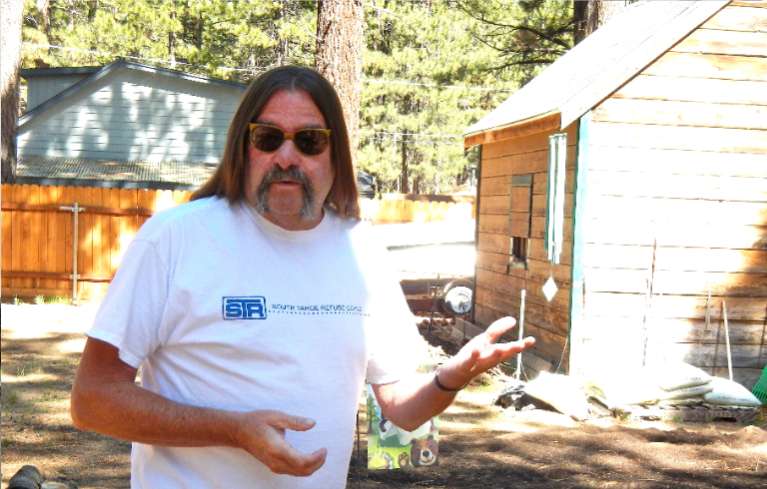
Bob Rockwell has been growing vegetables in Lake Tahoe for 40 years. Photos/Kathryn Reed

Bob Rockwell has been growing vegetables in Lake Tahoe for 40 years. Photos/Kathryn Reed

Publisher’s note: Today begins a random series of stories about growing a vegetable garden in South Lake Tahoe.

By Kathryn Reed

Sun, soil, seeds. Those are the primary elements that make for a successful garden.

Now is the time for Lake Tahoe gardeners to be getting their soil ready. With much of the soil in the basin being decomposed granite, it is necessary to amend the soil. This means mixing in nutrient-rich ingredients in the form of compost.

Compost can come in bags from a nursery or be even fresher if it comes from Full Circle Compost in Minden. Be careful about using steer manure because that can burn plants. Full Circle uses food waste from South Tahoe Refuse to create some of its product.

Bob Rockwell of South Lake Tahoe has used both, but finds the Full Circle product to work best.

Rockwell learned to garden at the side of his mother when he was a boy. When he bought his first place in town in 1974 he started his own garden. Now his primary gardening spot is the lot he owns next to where he lives in the Al Tahoe neighborhood.
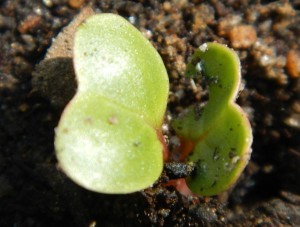
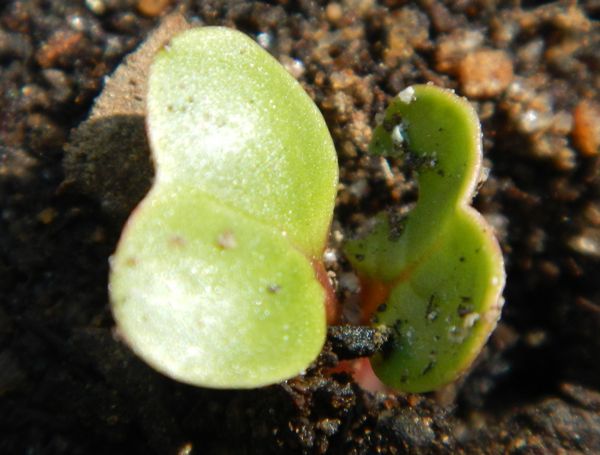
A radish pokes above ground.

A radish pokes above ground.

“I’m learning as I grow,” Rockwell told Lake Tahoe News as he perused the compost that still needed to be mixed in with the dirt.

Rockwell doesn’t claim to be an expert. But he is willing to take chances, experiment and to even expand his growing area. In the near-vacant lot his main garden is 16 feet by 25 feet. Just behind it is the secondary garden that is 8 feet by 12 feet. He has another plot behind his house. In a small wood box he is seeing what grows in an all compost mixture. Last week radishes were starting to sprout.

“Tahoe soil is good for growing pine trees and not much else,” Rockwell said. Thus the need to help it out a bit.

Rockwell doesn’t count the hours it takes to tend his garden. It’s one of those labors of love. He’s playing in the dirt nearly every day except during winter and the spring storms.

He used to only use compost from Scotty’s. He still has bags of it sitting next to the original shack that came with the property. Now he swears by Full Circle Compost. Rockwell had some delivered last fall that he then spread on top of soil where he knew he would be planting. Soon all of it will be mixed in.
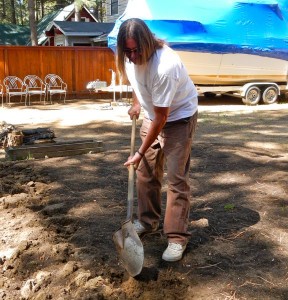
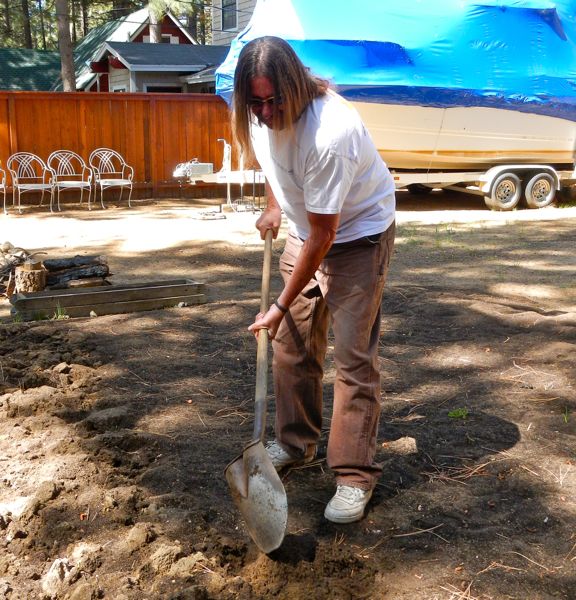
Bob Rockwell mixes compost in with Tahoe's naturally granite soil.

Bob Rockwell mixes compost in with Tahoe’s naturally granite soil.

Rockwell uses a shovel for the mixing. A rototiller would speed up the process.

Once the soil and compost are mixed, Rockwell will rake it smooth. Then distinct rows will be created to plant seeds. Mounds will be created for things like potatoes.

He says even if people are just now starting to think about the soil, that’s fine. But amend, amend, amend. And he says loosely packed soil is the best.

Fresh compost isn’t something people want to plant in right away because it can be too hot and burn the seeds or plants. That is a reason to get it in the fall and not the spring.

A raspberry plant and onion are coming up in the main area. These are volunteers – things he didn’t plant. But he’s not about to pull them either. He wants to see how they do.

His eyes, though, are always on the weather forecast. He follows four weather sites. This time of year it’s all about determining if he needs to be covering what is growing.

Various greens are a big component of Rockwell’s garden.

“When you have a salad with dinner that you grew there is nothing better,” Rockwell said.


Tahoe guide calls off Everest climb

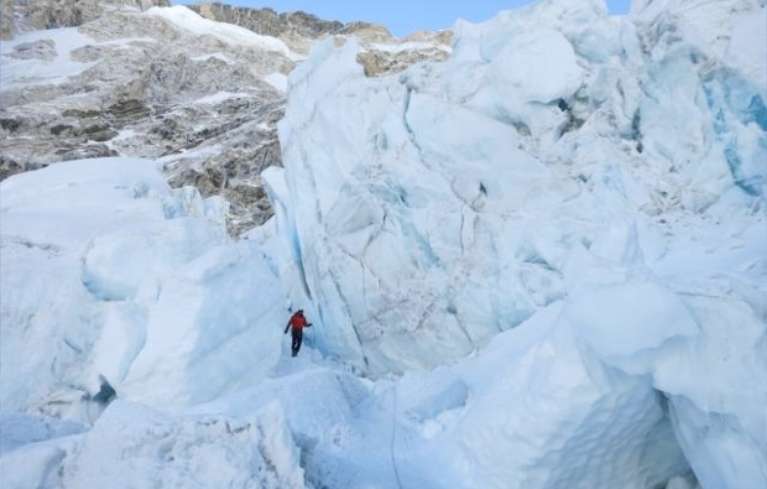
Adrian Ballinger with Alpenglow Expeditions based in Olympic Valley has been leading Everest expeditions for years. Photo/Alpenglow Sports

Adrian Ballinger with Alpenglow Expeditions based in Olympic Valley has been leading Everest climbs for years. Photo/Alpenglow Expeditions

By Brian Hickey, KCRA-TV

Northern California climbers called off their trips to the world’s tallest mountain this week after growing tension in base camp and dangerous climbing conditions on Mount Everest led to their tough decisions.

Adrian Ballinger is the lead guide and owner of Alpenglow Expeditions based in Lake Tahoe. Ballinger was to lead a group of six climbers to the summit of Everest in the coming weeks, but via his Facebook page Thursday morning announced he was canceling the trip.

The decision comes after 16 Sherpa were killed in an avalanche earlier this week.

The Sherpa are essential support staff for the hundreds of international climbers who attempt to scale the mountain each year.

Read the whole story