Coast Guard teaching safety classes on South Shore

Boating Safety 101 and Suddenly in Command are two classes being taught by the Coast Guard Auxiliary at Lake Tahoe Community College.

The first is May 31 from 8:30am-3pm. Cost is $49. Is about boating safety for adults and youths (grades 6-12) who are operators of personal watercraft, hunters, fishermen and other boaters.

The second class teaches people what to do if the skipper becomes incapacitated. The class is June 14 from 9am-1pm; cost is $39.

To register for either class, call 530.541.4660, ext. 717.


Family bike event in Truckee

Truckee Police Department and Truckee-Donner Recreation are putting on the inaugural Truckee Family Bike Day at River View Sports Park on June 1 from 11am-2pm.

Truckee Family Bike Day features activity stations ranging from a decorate-your-bike booth to exhibitions and introductory clinics at the mountain bike pump track. For a longer family-friendly bike ride, there will be a “Legacy Fun Ride” along the Legacy Trail. Food will be available for purchase from MTN ROOTS food truck.

To ensure riders start their cycling season safely, local bike shops will be offering free bike inspections and the Truckee Police Department will be distributing a limited supply of complimentary helmets.

The afternoon will culminate with a bike parade and awards for most family members, best costume and best decorated bike.


Van Sickle tours part of National Trails Day

Explore Tahoe: An Urban Trailhead Visitor Center will host guided hikes June 7 from 10am and 2pm in honor of American Hiking Society 22nd annual National Trails Day.

Participants will be lead on a moderate hike through Van Sickle Bi-state Park by Gavin Furman. The hike will highlight environmental and historic facts along the trail. Hikes begin and end at Explore Tahoe near the Heavenly Village.

Wear comfortable shoes, hat, sunglasses, sunscreen and bring water. Refreshments will be provided following each tour.

These hikes are free and open to ages 12 years to adult. Call 530.542.4637 for reservations.


Clean Tahoe spending day on bike paths

As part of the Tahoe Bike Challenge, Clean Tahoe is is having a bike path cleanup June 7 from 10am-noon.

Volunteers may choose from three starting points for the cleanup, one of which is right behind the Clean Tahoe office!. Pick up litter and pull invasive weeds from around the bike path and through the nearby neighborhood.

After the cleanup, all volunteers are invited to a free lunch and celebration at the League to Save Lake Tahoe office (2608 Lake Tahoe Blvd., South Lake Tahoe).

Everyone who rides a bike to the event will receive a free raffle ticket.

To sign up, fill out this form.

Clean Tahoe is at 2074 Lake Tahoe Blvd.


Sorenstam to tee-off at Tahoe celeb golf tourney

By Associated Press

Annika Sorenstam is ready to tee it up again with the guys.

Eleven years to the week since Sorenstam played at Colonial on the PGA Tour, she announced Monday she’ll compete in July at the American Century Celebrity golf championship at Lake Tahoe.

The 43-year-old LPGA hall of famer who has a second home at Incline Village says she’ll play from the same tees as the men in the field full of sports legends and entertainers, including defending champion Billy Tolliver, eight-time winner Rick Rhoden and five-time champ Dan Quinn.

Sorenstam, the mother of two, says she hasn’t played a lot of golf since she retired five years ago, but she’s working on her game now to try to win the 54-hole tourney at Edgewood Tahoe in Stateline.


Boating safety class offered at Lake Tahoe

Lake Tahoe’s U.S. Coast Guard Auxiliary is putting on a safe boaters course June 7 starting at 8:30am.

The course teaches the particulars of handling a motorboat or personal watercraft. This course will give people the knowledge needed to obtain a boat license or safety certification in many states.

Topics include: introduction to boating, boating law, boat safety equipment, safe boating, navigation, boating problems, trailering, storing and protecting your boat, hunting and fishing, water skiing, and river boating.

The cost is $40. The eight-class will be at the Tahoe Maritime Museum in Homewood.

To register, call Anton Kushlan at 530.525.9253, ext. 103.


Aquatic invasive species hard to keep in check

By Kathryn Reed

INCLINE VILLAGE – Aquatic invasive species are never going to disappear completely, but it is possible to manage them and possibly keep some from reaching Lake Tahoe area waterways.

That was the message Thursday during a talk from various experts at the Tahoe Environmental Research Center at Sierra Nevada College in Incline Village.

Eurasian milfoil has been here for years – predominately in the Tahoe Keys. New Zealand mud snails are also in Lake Tahoe. What aren’t here are Quagga and zebra mussels. Those are two of the major threats to any body of water because they have yet to be eradicated from waters they’ve invaded.

With Lake Tahoe seeing about 15,000 boats a year, and that number on the rise, inspecting every boat that enters the lake is the only way to keep nonnative species away. In 2013, about 4,000 boats were decontaminated before entering Lake Tahoe.
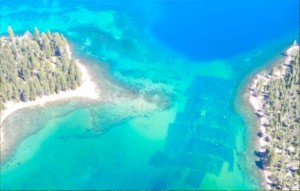
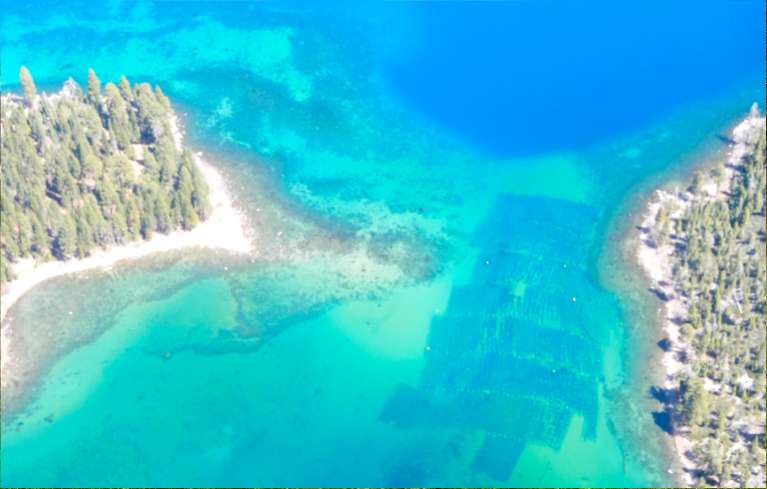
Mats, on the right, have been used in Emerald Bay to suffocate clams. Photo/LTN

Mats, on the right, have been used in Emerald Bay to suffocate clams. Photo/LTN

Tahoe Resource Conservation District does the inspections in the basin. More Tahoe-only boats are coming through, which means they are not going to another body of water. This then reduces the threat of Tahoe being contaminated.

The mussels can threaten water in-take locations, ruin the ecological diversity and potentially have an economic impact if they take hold because people will not re-create where they are.

The Thursday forum on the North Shore featured speakers from TRCD, Tahoe Regional Planning Agency, Trout Unlimited, California State Parks, Tahoe Keys, and League to Save Lake Tahoe.

One of the problems is that funding is running out to maintain the prevention programs that are in place. It costs about $1.5 million a year for the Lake Tahoe prevention program. Half is from fees, the other comes half from the federal government via the land sales in Southern Nevada. Those dollars are about exhausted.

The overwhelming message is that people accessing any lake need to be aware of the vessel they are using or gear.

The latter is important because it is anglers who are most prone to transport the New Zealand mud snails via what they are wearing. They are so tiny and asexual that it just takes one to make many. They were first documented in the Truckee River in 2013, but likely had been there for a few years.

They can live up to 24 days without water and 50 days in damp conditions, according to Dave Lass with Trout Unlimited.

The mouth of Emerald Bay had a huge Asian clam problem a few years ago. Mats were laid down as a way to suffocate them. It worked.

Dan Swan with State Parks showed dramatic photos of what Emerald Bay looked like in 2010 compared to 2013. The first year the waters were murky, brown, full of milfoil and looked almost like any California lake. Three years later the water was nearly pristine, the lake bottom could be seen and the invasive weeds were gone.

“We didn’t find a single milfoil at the end of last year,” Swan told the nearly 80 people in attendance.

Milfoil is a massive problem for the Tahoe Keys on the South Shore. The homeowners association has four harvesters that essentially mow the prolific weed. Harry Dotson with the Keys said 12,000 cubic yards of milfoil were harvested last year.

The development of the Keys turned what was the most sensitive marsh area in the Lake Tahoe Basin into a shallow warm water system. This in turn allowed for nonnative fish to thrive.

Patrick Stone with TRPA said last year killing these fish with electronic currents took out more than 50,000 nonnatives, mostly large mouth bass and blue gills.

The message to the public is the way they can help is to become a Tahoe Keeper if they are using a non-motorized watercraft, be part of the League’s Eyes on Lake Tahoe program, and to make sure all boats are cleaned, drained and dry before entering any body of water.


Tahoe area ski professionals earn awards

By USSA

PARK CITY -– The U.S. Ski and Snowboard Association recently honored several athletes, coaches and others with awards related to the past season.

U.S. Freeskiing slopestyle coach Skogen Sprang of Olympic Valley was named coach of the year. His athletes won four medals in Sochi including a sweep of the debut Olympic men’s slopestyle skiing event.

Olympic and World Champion slalom winner Mikaela Shiffrin was honored by the USSA with the Beck International Award, which is awarded to the top USSA athlete in international competition.

Former USSA President and CEO Bill Marolt was awarded the Julius Blegen Award for his lifetime of outstanding service to the sport. Marolt was responsible for 70 of the USA’s 95 ski and snowboarding medals in Olympic history.

Other winners:

  • Snowboarding Domestic Coach of the Year Award – Elijah Teter
  • Olympic Champion Award: Jamie Anderson of Meyers for slopestyle snowboarding, Maddie Bowman of Meyers for halfpipe skiing and David Wise of Reno for halfpipe skiing.


Spooner offering free guided wildflower hikes

Nevada State Park rangers are leading leisurely, two-hour walks around Spooner Lake, home to more than 100 species of wildflowers, for people to learn plant names, their uses, habitats and enjoy their beauty.

Wildflower walks are June 4, June 7, June 18 and June 21. All start at 10am.

Entry fees are waived for the event. Visitors wishing to remain in the park after the event are charged as follows $8 for Nevada residents per vehicle, $10 for others.

For more info, call Bill Champion at 775.831.0494, ext. 224.


Gardening possible even in small plots, cold places

By Melinda Myers

Picture yourself harvesting a few fresh strawberries for your cereal in the morning or perhaps picking a few apples from your backyard tree to cook up into a pie.

It is possible, even if you garden on a balcony or small lot. And even if you have plenty of space, you will still appreciate the fun and convenience of reaching out the backdoor and harvesting some homegrown fruit.

Strawberries are excellent container plants. Grow everbearing or day neutral varieties so you will be harvesting strawberries throughout the growing season. Reduce your workload and increase success with a self-watering hanging basket. Or dress things up a bit more with a decorative container.

The haystack hanging baskets have the beauty of the coco fiber lined planters, but require half the watering. The liner is a combination of coir and recycled plastic designed to conserve moisture. This means better results with less watering.

But don’t stop there. Add some dwarf fruit trees to your patio plantings. A dwarf apple, peach or pear will provide beautiful spring flowers, nice foliage for the summer and fruit for you to enjoy. Select self-fertile varieties, those that only require one plant to produce fruit, if space is limited. Grow your dwarf trees in large weather-proof pots with drainage. Those in cold climates will need to provide some winter protection, but the first harvest will make that extra bit of work well worth the effort.

Or try your green thumb at growing lemons, limes and other citrus in a container. The fragrant flowers and glossy green leaves are a beautiful prelude to the tasty fruit. Even cold weather gardeners can put their green thumb to the test by growing a Meyer lemon, Kaffir lime or other citrus in a container. Just move the potted plant indoors for the winter and back outdoors next season once the danger of frost has passed.

And don’t forget the blueberries that are high in antioxidants and flavor. These nutritious beauties require moist well-drained acidic soil. Something most gardeners do not have. This makes growing them in containers, where you control the soil, a good option. Blueberries provide seasonal interest with their nodding white bell-shaped flowers in spring, colorful fruit in summer and yellow, orange or red color in fall. Though only one plant is needed to bear fruit, keep in mind that your harvest will more than double if you grow two.

So survey your patio, deck, balcony or garden for space to add a container or two of fruiting plants that are sure to add beauty and flavor to your garden and meals this season.

Gardening expert, TV/radio host, author and columnist Melinda Myers has more than 30 years of horticulture experience and has written more than 20 gardening books.