Shoveling snow could be deadly

By Jo Jolly, BBC

A study looking at data from 1990 to 2006 by researchers at the U.S. Nationwide Children’s Hospital recorded 1,647 fatalities from cardiac-related injuries associated with shoveling snow. In Canada, these deaths make the news every winter.

Cardiologist Barry Franklin, an expert in the hazardous effects of snow removal, believes the number of deaths could be double that.

“I believe we lose hundreds of people each year because of this activity,” saysFranklin, director of preventative cardiology and cardiac rehabilitation at William Beaumont Hospital, Michigan.

His team found that when healthy young men shoveled snow, their heart rate and blood pressure increased more than when they exercised on a treadmill.

Read the whole story


Tahoe area ski resorts adapting to climate change, trying to attract newbies

By Kathryn Reed

TRUCKEE – In spite of the challenges of climate change and a shrinking snowboarding clientele, the ski resort industry is going strong, according to those in the know.

“The market and demand is still out there,” Bob Roberts, president of the California Ski Industry Association, said at this week’s Truckee-Donner Chamber of Commerce breakfast meeting.

Lake Tahoe is a critical piece to the state’s overall ski market with half of the visits being to one of the local resorts and more than half of the revenue generated here.

California had been averaging 7.4 million skier visits a year until three years ago. Last season it plummeted to 5.3 million visits. Mother Nature didn’t cooperate so the skiers and riders found something else to do.

It’s hard to attract people when resorts like Mount Shasta were open four days and Dodge Ridge 33 days. Shasta bought goodwill by offering those who purchased a season pass last year to roll it over to this season.

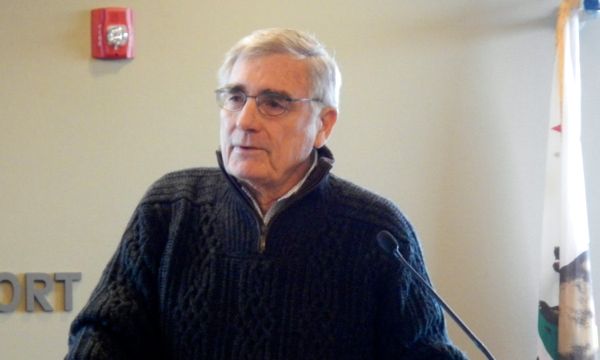
Bob Roberts, president of the California Ski Industry Association, addresses concerns and goals of the industry at a Truckee meeting Nov. 18. Photo/LTN

Bob Roberts, California Ski Industry Association president, addresses industry concerns and goals Nov. 18. Photo/LTN

Roberts on Nov. 18 acknowledged that snowmaking might have to regularly augment what naturally falls.

Resorts are beefing up their snowmaking capability, putting them on more runs and constantly working to make what comes out of the guns as close to “real” snow as possible.

“We had passholders who skied more than 100 days last year. We know we can deliver that again this year,” Rachael Woods with Northstar said.

Jeff Monson with Sugar Bowl said his resort off Interstate 80 put in $500,000 worth of snowmaking equipment, which includes 25 guns that can provide top to bottom skiing. The goal is when Sugar Bowl opens for its 75th season on Nov. 26 there will be three lifts with 1,500 vertical feet.

“We are blowing more snow, more efficiently,” Monson told the packed room at Truckee Airport.

Heavenly Mountain Resort and Northstar have two of the largest snowmaking operations on the West Coast, which is allowing both resorts to open today.

When it comes to snowboarding it is hitting the Southern California market the hardest, Roberts said. The problem is younger people are not picking up the sport. It is an issue Roberts and his colleagues are trying to figure out how to remedy.

Ski resort officials who spoke at the meeting talked about various learn to ski-ride programs that make snowsports more affordable.

Paul Raymore with Homewood Mountain Resort said the West Shore resort is bringing back free lessons for intermediate and advanced skiers-riders.

Roberts said one benefit of the consolidation of resorts is season passes are getting people to ski beyond their one favorite resort. And resorts that aren’t owned by the same company are partnering to offer combined passes.

“Season pass sales are running ahead of last year,” Roberts said. “The indicators are the market is still strong.”

In the last five years more than $500 million has been spent by Tahoe area resorts on upgrading their product. Some of this is for summer fun as they evolve into year-round destinations.

Roberts said Reno-Tahoe International Airport landing direct flights from England and Mexico would also help the local industry. He said Californians tend to spend $175/day on an average ski day, whereas travelers from abroad spend $300 per day and tend to stay at least seven days.


Skiing lesser-known resorts has advantages

By Karen Schwartz, AP

Big-name ski resorts might give you bragging rights when you go back to the office, but lesser-known mountains can give you something else: less crowded slopes, shorter lift lines and even outlets for Crock Pots.

Some of these hidden gems are located near their famous rivals, so visitors can enjoy the same choice of lodging, restaurants and off-the-slope activities.

Suzanne Greenwood, 49, an experienced skier from Nashville, happened upon one of these satellite resorts last March.

Although she’d skied the big resorts in Colorado and Utah with her husband for years, this trip was different. They were introducing their two children, ages 14 and 25, and their two friends, to skiing.

Their plan for spring break was to use the home they’d rented in Breckenridge as a base for the week while visiting several mountains in the area: Breckenridge, Vail, Beaver Creek, Keystone and Arapahoe. They’d even bought a type of pass good at multiple areas.

The first three days they skied Breckenridge, dropping $1,000 on private lessons. Then they headed 20 minutes down the road to Arapahoe Basin.

“The kids got there and loved it,” she said.

Her discovery wasn’t unusual. Smaller resorts are often favored by families and beginners who don’t mind having less terrain to choose from.

Greenwood’s children felt more comfortable on slopes that weren’t crowded. They also found the people friendlier.

She said Breckenridge had better apres ski, but, “The fact is that the kids felt they were getting skiing that was just as good” at Arapahoe.

The two resorts are about equal in the makeup of beginner, intermediate and advanced slopes, but without a doubt, there are differences.

Arapahoe has 109 trails on 960 skiable acres (388 hectares), while Breckenridge has 187 trails on 2,900 acres (1,173 hectares). The lift capacity at Arapahoe is 10,700 people per hour on six chairlifts, while Breckenridge carries four times as many people on 19 chairlifts and a gondola.

In addition, Breckenridge has more vertical: 3,400 feet compared to Arapahoe’s 2,270 feet.

Nonetheless, Greenwood and her family were so happy at Arapahoe that they didn’t bother skiing anywhere else, writing off the higher-priced lift pass they’d purchased.

Greg Ditrinco, editor of Ski magazine, said the savings on lift tickets can vary from good to nonexistent depending on the resort and how savvy the purchaser is. Still, lessons at satellite resorts generally cost less and the food isn’t as pricey, though there are fewer options.

And, “No one gives a fig about what you wear, how you ski or what you’re skiing on. It’s an authentic experience,” he said. “There’s a real value to that.”

Colorado has a wealth of smaller resorts, sometimes marketed as the “Gems,” but so do other ski states.

In Vermont, Mad River Glen is a half-hour away from Stowe and 10 minutes away from the Sugarbush Ski Complex.

In Utah, Solitude is about 45 minutes from Deer Valley, which recently announced plans to purchase the smaller resort. The locals’ resort of Brighton is also nearby.

The Mount Rose Ski Tahoe resort near Reno is within 45 minutes of both Squaw Valley and Northstar.

During the holidays, it attracts skiers from the Bay Area, who bring their rice cookers, electric kettles and occasional Crock Pot to make noodles or soup in the lodge.

“We’re a lot more lax with folks doing that,” than some of the big resorts, said Mount Rose spokesman Murray Blaney.

In the Canadian Rockies, Mount Norquay is just 15 minutes from the town of Banff, Alberta, far closer than Sunshine or Lake Louise.

“Because the resort is small, it only really provides enough terrain to keep people interested for a day or two, unless they are beginners, are taking lessons or race training,” said Banff resident Diane Volkers, 58.

But even advanced recreational skiers enjoy it if they are mixing their time with other activities.

“You can ski an incredible amount of groomed vertical in an hour,” said Volkers. “It’s very handy to go for a partial day.”

Visitors can shop, cross-country ski or do some work in the afternoon.

Greenwood’s group enjoyed Arapahoe so much they are planning on returning this season. And this time, it’s the only place they plan to ski.

“At the end of the day for the kids it’s the snow and the lifts,” she said. “They are less interested in the glitz.”


Snowmaking allows Sierra ski season to start

By Benjamin Spillman, Reno Gazette-Journal

The scenery between Interstate 80 in Truckee and the base of Northstar isn’t exactly a winter wonderland.

Autumn leaves are gone from most of the deciduous trees. Like much of California and Nevada, which have been under severe drought for years, Martis Valley is brown and dry.

But near the base of the resort, at about 6,330 feet in elevation, it’s a different landscape altogether.

That’s where a crew of as many as 28 people working with Director of Mountain Operations Jim Lamore work around the clock, but mostly at night, to cover the mountain with enough snow to make good on the resort’s promise to open Nov. 21.

On a recent Sunday night the resort was operating about 100 of its 140 snow guns which, under the right conditions, are capable of producing as much as two feet of snow in an hour. Despite the brown hillsides elsewhere, the slopes were covered with an ever-deepening blanket of fresh, white snow.

Read the whole story


LTCC soccer teams make playoffs

By Diane Lewis

Lake Tahoe Community College’s men’s and women’s soccer teams wrapped up their regular seasons in style, with the men’s team winning the Golden Valley Conference and the women’s team grabbing second place. Both teams are playoff-bound.

The Coyote men’s team will take the field at home Nov. 22 at 2 pm.

The California Community College Athletics Association requires spectators be charged admittance to playoff games. Ticket prices are $10 general admission, $7 for seniors and students with valid school ID, and kids 6 and under are free.

LTCC Foundation will provide free hot beverages and snacks to all attendees at the game, and will also offer free tickets through an LTCC Facebook page contest.

The Coyote men finished their regular season with a 13-4-3 record, and 7-0-1 in conference play. They are ranked No. 9 in the state, and No. 13 in national rankings.

Captain Josh Jirbandey, a defender from Hastings, England, is the No. 10 ranked player in the state with eight goals, nine assists, and 25 points. Coyote Carlos Trujeque, a forward from South Lake Tahoe, is ranked No. 15 in the state with eight goals, five assists, and 21 points. Both of the team’s goalkeepers are also on the state list as well, with Kyle Clark from Santa Cruz ranked No. 9, and Cameron McConnachie from Stromness, Scotland, ranked No. 25.

The Coyote women’s soccer team will likely have its first playoff game on Nov. 22 as well, but they’ll be on the road that day. The Coyotes finished their season with an overall record of 10-5-5, and a conference record of 6-1-3.

Several Coyote women are on the state’s “best of” list. Midfielder Tianna Carrington from London is ranked No. 20 with 13 goals, five assists, and 31 points. Midfielder Keely Martin from Adelaide, Australia, is No. 36 with nine goals, five assists and 23 points. Forward Tori Smith from South Lake Tahoe is No. 39 with eight goals, six assists, and 22 points. Coyote goalkeeper Alejandra “AO” Orozco is the No. 19 ranked keeper in the state.

For more information about the LTCC Coyote soccer program and playoffs, all 530.541.4660, ext. 630, or email Gochis@ltcc.edu.

Diane Lewis is communications officer for Lake Tahoe Community College.


Iconic adventure race seeks Tahoe comeback

By Benjamin Spillman, Reno Gazette-Journal

Lots of people who cover more than 400 miles cycling, paddling, ascending and trekking might say they’ve had an active season.

People who join the Primal Quest adventure race at Lake Tahoe Aug. 22-29 are expected to be able to do as much in about four days.

Organizers are planning a revival of the iconic race that from 2002-09 was known as one of the toughest events of its kind on the planet.

Maria Burton, who directed the event for its first three editions, is seeking to bring the race back with a modern twist. It’s a big job considering that by August, when the next race is scheduled, Primal Quest will have been on hiatus more than five years.

The 2003 race started in South Lake Tahoe with 80 teams and covered 457 miles. The disciplines included caving, mountain biking, trekking, ascending, traversing on ropes, rappelling, whitewater paddling, night navigation and orienteering.

Burton said the 2015 event will have some similar disciplines but will be updated to include newer activities, such as standup paddleboarding, which only recently has exploded in popularity.

Some of the reasons Lake Tahoe is a good adventure venue are the diverse terrain and great views and proximity population centers that can accommodate event support and online access.

Read the whole story


Unprepared hikers keep rescue teams busy

El Dorado County search and rescue teams were busy this weekend with people not equipped for the wilderness.

“All incidents were treated with high urgency, as none of these hikers was prepared for the cold temperatures we are experiencing,” Deputy Greg Almos told Lake Tahoe News. “All incidents involved inexperienced, not prepared day hikers. None of them had flashlights or light sources for nighttime travel.”

On Nov. 15 a couple in their late 30s got lost hiking down from Mt. Tallac. SAR volunteers had to hike into the area near Gilmore Lake and rescue them.

On Nov. 16 at about 3:30pm deputies got a call about two hikers lost near Cascade Falls. They were determined to be close to the falls near the trail. A deputy hiked in to get them.

At the same time, SAR got a call from a couple in their late 50s who got lost coming down Pyramid Creek Trail, aka Horsetail Falls. SAR volunteers were used to recover them due the technical steep location.

“In all incidents we used cell phone technology consisting of obtaining GPS coordinates from their 911 calls. This has proven to be very valuable, as it expedites our response significantly, preventing cold related illnesses,” Almos said

— Lake Tahoe News staff report


LTWC bursting with critters; ready to move

By Kathryn Reed

CAMP RICHARDSON – In the nearly 37 years that Lake Tahoe Wildlife Care has been nursing wild animals back to health, about 24,000 have come through the doors, with approximately 15,000 being able to return to the wild.

The South Shore facility is the only one in California certified to handle first-year bear cubs. They set a record for caring for 13 this year.

“One of the major problems we had this year is we had a lot of different species we couldn’t put together,” Tom Millham, who with his wife, Cheryl, runs LTWC.

It meant being creative with cages and having to release some animals sooner than they liked. But soon these issues will be a thing of the past.

Last week LTWC submitted an application to the Tahoe Regional Planning Agency for a special use permit to move to 27 acres on the corner of Al Tahoe Boulevard and Pioneer Trail. Marjorie Springmeyer owns the land. A lease with an option to buy agreement is in the works.

The cost of the first phase will be about $5.5 million, with the entire center being close to $15 million. Some of the money is from Barbara Hartoonian, which she left in her will. The rest is from donations – which are always welcomed.

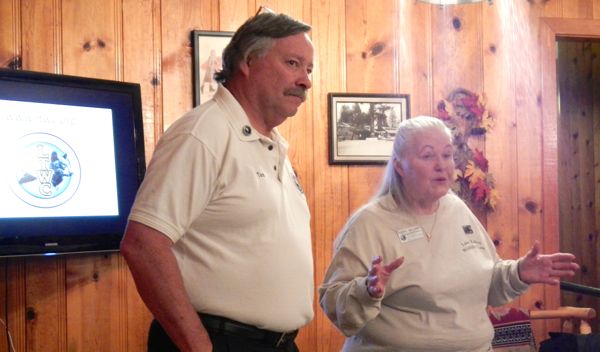
Tom and Cheryl Millham talk about caring for wildlife and their future plans. Photo/LTN

Tom and Cheryl Millham talk Nov. 11 about caring for wildlife and their future plans. Photo/LTN

The Millhams founded the renowned rehabilitation center in 1978. Last week they spoke at the Lake Tahoe Historical Society meeting at Camp Richardson Lodge about their experiences with the various animals as well as their plans to break ground in May on the center in South Lake Tahoe that would be open to the public.

Today LTWC is in the Millhams’ back yard. It’s too small to let people in other than those working to care for the animals. Plus, the whole goal is to make sure the animals don’t get too familiar with people.

It’s not easy work to care for wildlife. Baby birds eat 14 hours a day. It’s important to keep them fed because by day 25 they are ready to leave the nest.

While there are plenty of people who find coyotes to be a nuisance at best, Cheryl Millham said, “They do have a place.”

She added, “We have predators that keep our area clean. It cuts down on disease.”

Millham told the story of how a few years ago a dog from out of town came to the basin with distemper. This spread to the raccoon population, which resulted in the death of hundreds of the animals. She said just now the raccoon population is coming back.

Millham said the Mexican freetail bats are misunderstood animals.

“They eat mosquitoes, which are the most disease-carrying insect,” Millham said.

While mountain lions are not common in the Lake Tahoe Basin, LTWC was instrumental a few years ago in capturing one that was wandering around the Tahoe Keys. Once it was tranquilized, veterinarian Kevin Willitts found multiple porcupine quills in her. Some were so deep surgery was necessary. She was released in Hope Valley.

It was Li’l Smokey who was rescued in 2008 from a fire near Redding that led LTWC to get webcams in the various cages. The demand was so great to see pictures of the cub who made national headlines that the Millhams put in the technology.

It wasn’t a given the little guy would survive. Millham said his paws were like “burned steak.”

“You could see the fascia. He lost his toenails. You could see the bone,” she said.

Someone asked about the plethora of rabbits that have been seen on the South Shore in the last few years. Mostly it’s the mountain cottontail that is here. Cheryl Millham said the mild winters would allow the breed to populate and thrive.

LTWC offers training each May for people to be volunteers. More info is online.


STHS, Truckee win state soccer titles

South Tahoe and Truckee high schools are Division 1-A state soccer champions.

The girls from South Tahoe beat Sierra Vista 3-2 in overtime on Nov. 15 to claim the crown. This is the fourth state title in five years. The team will lose 11 seniors.

That game as well as the boys’ final were played in Henderson.

The Truckee boys needed a shoot out to beat Chaparral. The score was 5-3.

— Lake Tahoe News staff report


Expect smoke from controlled burns

The North Lake Tahoe Fire Protection District and the U.S. Forest Service will continue prescribed fire operations in the Round Hill, Zephyr Heights, Incline Village, Slaughterhouse Canyon, Christmas Valley, Ward Canyon, McKinney Rubicon areas and on various urban lots near Heavenly.

Operations will last through the next several weeks as conditions allow.

Smoke from prescribed fire operations is normal and may continue for several days after an ignition depending on the project size.

Before prescribed fire operations are conducted, the agencies post road signs around areas affected by prescribed fire, send email notifications and update the local fire information line at 530.543.2600, No. 6. To receive prescribed fire notifications, send an email to pa_ltbmu@fs.fed.us.