Ski resorts selling the lifestyle to Chinese market

By Liz Flora, Jing Daily

Top tourism destinations across the globe are vying for the business of China’s booming number of affluent outbound travelers, but one type of luxury world-class destination is still hoping to catch up: the ski resort.

Since the sport requires extensive training and is new to the average Chinese traveler, destinations from Switzerland to Canada are working to take a shortcut to visitor growth numbers by selling the luxury ski lifestyle along with their world-class slopes.

Over the weekend, an inaugural event in Beijing called Ski&Style spotlighted that lifestyle by bringing together top resort representatives from Switzerland, Iceland, France, Canada, and Japan to present their destinations to Chinese VIPs as they sipped Champagne, attended exclusive parties, and viewed a ski style runway show. The aim of the event was to demonstrate that a ski vacation abroad could be worthwhile even for those at the beginner level, which is the case for many of China’s skiers.

“In China, ski has been promoted through the angle of the sport. What we wanted to show is that ski before all was a destination, and is a destination,” says Delphine Lignières, the CEO of event organizer China Rendez-Vous. “It means that somebody who is not skiing should enjoy the winter lifestyle over there. What we wanted to show as well is that actually, après-ski is the best moment of the day. It’s a moment where you mingle with friends; you are enjoying life.”

Read the whole story


Wet December on tap for California

By Tim Hearden, Capital Press

SACRAMENTO — Prospects are building for a wet December throughout California, federal forecasters say.

The large low-pressure system that promises abundant rain and snow this weekend will likely be the first in a series of storms to parade through the Golden State, said Michelle Mead, a National Weather Service warning coordinator here.

Above-average rainfall is favored throughout the state in December, according to the federal Climate Prediction Center. Then El Nino conditions portend chances of above-average precipitation south of Sacramento in January and February, the center predicts.

“The storm track is definitely looking like we’re getting more systems lining up in the Northern Pacific that will have the potential to impact Northern California,” Mead said, noting the intensity of storms will depend on whether a high-pressure ridge builds off the coast.

Read the whole story


Washoe Park trail upgrades improve access

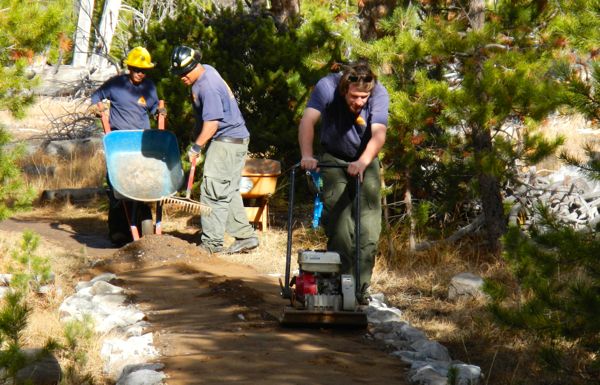
Erick Estrada, from left, Eddie Cuttman and Zackery Schell finish trail improvement at Washoe Meadows State Park. Photo/Kathryn Reed

Erick Estrada, from left, Eddie Cuttman and Zackery Schell finish trail improvements at Washoe Meadows State Park. Photo/Kathryn Reed

By Kathryn Reed

WASHOE MEADOWS STATE PARK – Trudging through water or creating a side trail is no longer necessary in sections of Washoe Meadows State Park.

Work was completed this month on about a mile of trail. Included is a rather major bridge over Angora Creek and smaller crossings to get people out of other wet areas.

“Now people have access to this section of the park longer and earlier,” explained Nathan Shasha with California State Parks.

Water had been a barrier.

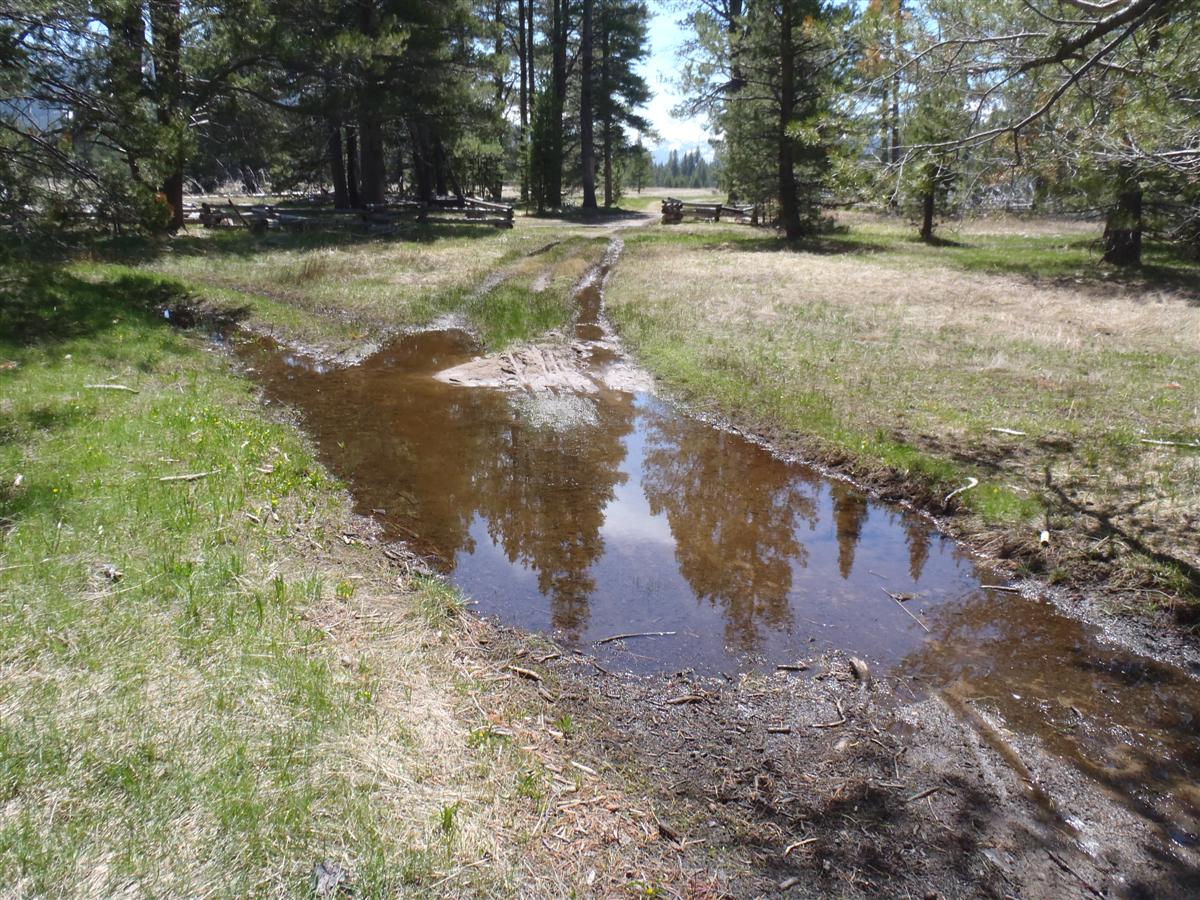
Before the work began the trail was impassable. Photo/State Parks

Before the work began the trail was impassable. Photo/California State Parks

This nearly 600-acre park on the South Shore is a bit of a secret to many because there are no signs, trailhead markers or parking. But for those who know about it, there are myriad walking, mountain bike, snowshoe and cross country trails, as well as a slew of entrances.

Carol Curran of South Lake Tahoe was walking in the park with her husband, Larry, and their dog last week. This was their second time to Washoe. When they looked up online how to get to it the directions had them go to Sawmill Road. But there is no access from that road.

When the general plan is created for the park basic amenities like signs are expected to be addressed. State Parks has taken inventory of the trails and everything else in the park so it knows what it has, but no plan has been created for what do with the park. Part of the holdup has to do with a lawsuit involving realigning the Upper Truckee River and moving holes of Lake Tahoe Golf Course.

Press_release_map_8_6_2014

The park and its access points.

The trail upgrades, which cost about $70,000, will allow for more recreation throughout the year. The money came from state agency, Tahoe Fund, Proposition 84 and Bureau of Reclamation.

“This is a hundred times better. There is an actual trail. Now I don’t have to deal with mud,” said Candace Raynar, who was jogging with her two dogs. She drives from Christmas Valley and parks on the Lake Baron side of the park to start her 11-mile run. “The transformation is amazing. It was so needed.”

The quickest way to access this improved section that park employees and California Conservation Corps members worked on is from Mountain Meadow Drive. Shasha said this section was chosen for rehabbing because it is a major thoroughfare and is heavily used.

Gone is a trail that was wide as a road with compacted dirt. Even with the limited moisture this fall puddling was occurring which made for less than a pleasant experience.

The trail is now more like a single-track, but it’s raised a bit in places. The crown will also help the trail last longer.

Chunks of asphalt were removed. Berms built by previous landowners are still evident.

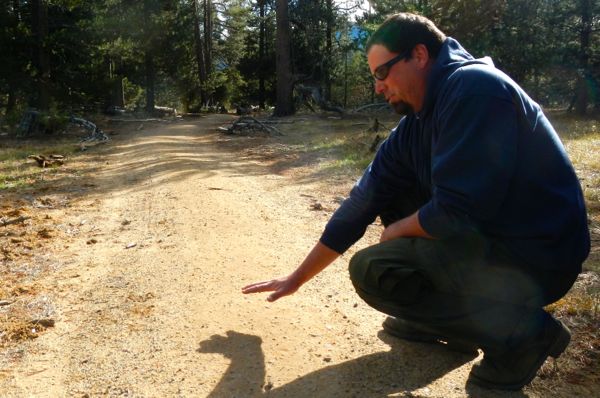
Nathan Shasha with State Parks shows the contour of the new trail.

Nathan Shasha with State Parks shows the contour of the new trail. Photo/Kathryn Reed

Shasha described creating it being like making lasagna, where various substances are put down in a layered manner – fabric, rock and dirt.

Rocks are on the side so water can run between them. The improvements should also allow more people into the area because of not having to wade into the water and giving access year-round. One user group Shasha would like to restrict is equestrians.

“I would like horses only on park roads. They have such an impact on our trails,” he told Lake Tahoe News.

Shasha and his crew will return in the spring to see how things held up and if any changes need to be made. By that time some vegetation should be sprouting along the trail sides.

Dirt used in the project has been stored at the park since it was brought in from the 2007 Angora Fire. This same dirt pile was used for the detention ponds by South Tahoe High School.

A sturdy bridge now crosses Angora Creek.

A sturdy bridge crosses Angora Creek. Photo/Kathryn Reed

The redwood bridge across Angora Creek is much heftier that what was there. The old one was made out of 2 x 6 plywood by neighbors. Two years ago a horse fell through that necessitated State Parks to do something.

If there were no structure, horses and others would likely still cross the water. The bridge was built for safety reasons as well as environmental. Angora Creek is the largest tributary of the Upper Truckee River.

The bridge is 35-feet long, while the entire crossing is 85 feet. It was built to State Parks specifications. Individual parks don’t have much say in how these things are constructed – same with the paths.


Work along Truckee River being proposed

The U.S. Forest Service Lake Tahoe Basin Management Unit  is accepting comments on a proposal to restore up to nine sections of the Truckee River near Tahoe City.

he Forest Service, the Truckee River Watershed Council and Placer County are working together to address and repair erosion and degraded water quality caused by users accessing the river and the adjacent paved trail from roadside pull-outs on Highway 89.

Under the proposal, the TRWC would restore approximately 900 feet of stream bank and wet meadow by reshaping the river banks through placement of woody material and boulders. The project would redirect access to the paved trail and the river. Restoration work would provide a more diverse habitat for waterfowl, fish and amphibians as well as vegetation such as mountain alder, willow and cottonwood.

The project area is on National Forest System lands on three sites along the Truckee River from approximately 1.3 miles below the Lake Tahoe Dam to just upstream of Alpine Meadows Road. T

Implementation could begin in 2015.

Comments are due by Dec. 23, 2014. For more information on the proposal and how to comment, go online.


Ski industry fights perception of elitism

By Thomas Peipert, AP

In 2010, the price of walk-up, single-day lift ticket at Vail and Beaver Creek ski resorts topped $100. Aspen quickly followed suit, and ticket prices at resorts across the country have consistently increased in the years since. The trend has raised a question that has dogged the ski industry for years: Is the sport becoming unaffordable for the middle class?

Industry leaders say that even though last-minute lift tickets at some resorts now exceed $100, skiing has never been more affordable if you’re savvy about discounts.

But despite the availability of deals, a report commissioned in August by the National Ski Areas Association found that skiing in the U.S. has increasingly become a sport for the wealthy. The percentage of people who participate in snow sports with household incomes over $100,000 has risen over the past eight seasons from 45 percent of ski area visitors in the 2006-07 season to 56 percent of visitors in the 2013-14 season, according to the report.

Meanwhile, those with household incomes under $50,000 dropped from 30 percent of ski area visitors to 19 percent over the same period. Visitors who make between $50,000 and $99,999 remained steady over the years at about 25 percent.

“Snow sports participants continue to skew significantly more affluent than the general U.S. population,” according to the report, which was based on surveys of skiers and snowboarders at 87 U.S. resorts. The resorts surveyed hosted 31.9 million of the nation’s 56.5 million skier and snowboarder visits last winter.

David Becher, who helped write the report, said the drop in participation by people earning under $50,000 may have been due to the recession, but “now that the economy is improving, we might see lower-income segments in the population having more confidence.” He also cited other possible explanations for a lack of participation at lower-income levels, including interests in other sports and lack of exposure to the sport among those who grew up in non-skiing families.

Michael Berry, president of the NSAA, said ski resorts are working to attract participants from all income brackets.

“The trend certainly over the past decade has been to make the price lower, in toto,” he said. Ways to save money include half-day access, skiing at smaller resorts, and discounts for kids, seniors and groups.

Evan Reece, co-founder and CEO of San Francisco-based Liftopia, an online marketplace for lift tickets, says buying early and booking multiple days also goes a long way in lowering the price of getting on the mountain.

“If customers buy in advance, they will be rewarded by doing so,” he said. “It’s very easy to understand. You wouldn’t wait until the last minute to buy an airline ticket.”

Reece, who helped start Liftopia in 2005, also recommends that skiers and snowboarders — especially beginners — look locally when choosing from one of the more than 450 resorts across the country.

“To give skiing a try, you don’t need to book a weeklong vacation to Colorado from New York. There are a lot of local ski areas where you can learn,” he said. “People will be surprised to find what is in their backyard. Sometimes the trendy spots, they’re awesome for a great reason. But there are some areas that will surprise you.”

And while large resorts like Vail, Breckenridge and Keystone offer varied terrain and more amenities, smaller resorts can provide their own charm, shorter lift lines, less crowded slopes and cheaper lift tickets.

CJ Hartland, sales manager for Monarch Mountain in southwest Colorado, says the resort’s owners have kept lift ticket prices down by offering group rates and free skiing to kids age 6 and under and to seniors 69 and over.

The owners “want people to learn and fall in love with the sport and not have to be wealthy to do it,” she said. Walk-up tickets at the 800-acre resort, which has 53 lift-served trails, are $69; advance tickets run $57.

At larger resorts, keeping skiing affordable has come down to an intense battle over season pass prices.

Until 2009, an unrestricted pass to Vail Resorts at Vail Mountain, Beaver Creek, Breckenridge and Keystone cost $1,900. Now with Vail’s Epic Pass, skiers and snowboarders have access to those four mountains, plus 18 more resorts for $769.

“People rushed out to buy it because they thought we had made a mistake,” said Vail spokesman Russ Pecoraro. The pass could pay for itself in a week, depending on where and when you go.

The debate over pricing will likely continue, but industry leaders contend that a day of skiing and snowboarding is, well, priceless.

“There’s really no better value for a family,” said Pecoraro. “To get your family out there. To participate together. It’s the value you get from the experience and it’s not always about the price.”

NDOT preps for winter storms

With a strong winter storm likely to hit the region on Sunday into Monday, the Nevada Department of Transportation is ready for whatever Mother Nature brings.

NDOT begins annual winter preparations in August by readying more than 80 snowplows and other pieces of snow and ice equipment for use in snow removal across northwestern Nevada.

More than 32,000 thousand cubic yards of salt and sand has been stockpiled, ready to be spread on winter roads for increased traction and safety. The sand is combined with salt and wetted with brine to create more dense sand that keeps roads ice-free at lower temperatures and will not as easily bounce off roadway surfaces. NDOT sand trucks calibrate the amount of salt and sand for precision and efficiency.

“Drivers will also see our NDOT vehicles spraying a liquid brine on the roads prior to certain storms,” NDOT Assistant District Engineer for Maintenance Mike Fuess said in a press release. “The brine is a solution of approximately 25 percent salt that we produce in-house at a substantial cost savings. Sprayed just before storms, the brine helps reduce how quickly the ice forms and sticks to the road.”

NDOT has 153 maintenance staff in northwestern Nevada. The department also has hired temporary winter maintenance personnel.

As storms move in, employees closely monitor meteorological forecasts detailing wind, rain, snow, ice and other weather on state roads. The updated weather readings help pinpoint precise sections of roads needing brine, salt and sand or snow removal.

During major winter storms, crews work in 12-hour shifts, rotating personnel to provide 24 hour-a-day snow removal.

NDOT has installed automatic anti-icing systems on four bridges on Interstate 580 between Reno and Carson City to help delay and prevent ice formation on bridge surfaces. When potentially freezing conditions set in, pavement sensors on each bridge activate spray disks embedded within the concrete. Each recessed disk sprays a potassium acetate anti-icing solution to help delay formation of ice.

NDOT will also use new tow plows on I-580 between south Reno and north Carson. The tow plow is a second, steerable snowplow blade towed like a trailer behind a traditional snowplow. The tow plow swings out to the lane next to the lead snowplow to clear a second lane of snow, saving an estimated $78 per hour compared to a single plow.

On average, more than 2,000 crashes occur statewide every year due to unsafe driving in snow, ice and other wet conditions, such as driving too fast for conditions, following too closely, or failing to maintain a lane and overcorrecting.


The case for ditching bike helmets

By Erin Beresini, Outside 

Helmet advocates have been dealing with a PR crisis ever since a new study questioning the lids’ efficacy in preventing brain injuries received widespread attention this month. But it was Olympic gold medalist Chris Boardman’s BBC morning show appearance that truly set people off. Why? He refused to wear a helmet while giving cycling safety tips.

Boardman defended himself, arguing on the BBC’s Facebook page and later in an article on British Cycling.org that helmets “discourage people from riding a bike” and shift the attention away from what’s most likely to kill a rider — a car.

So is Boardman right? Yes, cars pose the greatest threat to riders (more on that later). But the science surrounding helmets is a bit murkier.

First up: the recent helmet study. Led by a trauma surgeon from the University of Arizona, Dr. Bellal Joseph, and published in the European Journal of Trauma and Emergency Surgery, the study reviewed 709 cyclists who came through Joseph’s trauma center.

“Bicycle helmets protect against bruising and scratching,” Joseph concluded from examining the cyclists, but not against intra-cranial bleeding — the bleeding inside the skull that ultimately causes brain injury and death. The non-helmeted cyclists in the study were more likely to have a skull fracture, but not any more likely to have intra-cranial hemorrhage than cyclists who crashed while wearing a helmet.

Read the whole story


Multi-agency prescribed burns in basin

California State Parks, North Lake Tahoe Fire Protection District and the U.S. Forest Service will continue prescribed fire operations near Incline Village, Tahoma, Meeks Bay, Sugar Pine Point State Park, Tahoe Mountain and Heavenly urban lot areas. Operations will last through the next several weeks as conditions allow.

Fall and winter bring cooler temperatures and precipitation, which favor prescribed burning. Each operation follows a prescribed fire burn plan, which considers temperature, humidity, wind, moisture of the vegetation, and conditions for the dispersal of smoke.

Smoke from prescribed fire operations is normal and may continue for several days after an ignition depending on the project size. The agencies coordinate with state and local county air pollution control districts and monitors weather conditions closely prior to prescribed fire ignition.

Before prescribed fire operations are conducted, the agencies post road signs around areas affected by prescribed fire, send email notifications and update the local fire information line at 530.543.2600, No. 6. To receive prescribed fire notifications, send an email to pa_ltbmu@fs.fed.us.


Judge denies sports betting in N.J.

By Geoff Mulvihill, AP

A federal judge ruled Friday night that New Jersey cannot partially lift a prohibition on sports betting in an effort to boost the state’s struggling horse racing and casino industries.

The decision from U.S. District Judge Michael Shipp was the expected outcome since the judge had ruled similarly in the past.

The state, locked in a legal battle with the NCAA and four professional sports leagues, is expected to appeal to a higher court.

“We are going to continue pursuing every legal option available,” State Senate President Steve Sweeney said in a statement Friday. “The economic impact that sports wagering can have on New Jersey is far too important to simply shrug our shoulders and move on.”

A federal law bans New Jersey and most other states from authorizing betting on sports. But the state contended it did not want to license or authorize the betting. Instead, it was seeking to end a prohibition and that it would not regulate sports betting.

But Shipp agreed with the sports leagues that setting parameters such as limiting sports gambling to certain places amounts to regulation, but noted, that he “finds that the present case is not nearly as clear as either the leagues or the defendants assert.”

While Shipp agreed with the central part of the sports’ leagues argument, he dismissed some of their other arguments.

New Jersey has been pushing persistently to allow sports betting at horse tracks and casinos in an effort to support both struggling industries. Voters have approved the concept, but a federal court rejected it in a slightly different form. The U.S. Supreme Court declined to hear the case earlier this year, and it seemed that might be the end of it.

But as the financial crisis in Atlantic City’s casinos deepened, Gov. Chris Christie’s administration tried a new approach. Instead of legalizing sports gambling in defiance of the leagues and federal government, it called for not enforcing the state’s ban. The Legislature followed with a bill to lift the ban as it pertains to casinos and tracks. Christie signed that into law last month.

The NCAA and four major professional sports leagues contend that federal law would allow the state to lift the ban entirely — but not to allow sports betting with some conditions, such as limiting it to certain locations and keeping minors from participating.

The ruling comes just over a week after NBA Commissioner Adam Silver said he supports legalizing sports gambling — though not in the way it would happen if New Jersey prevailed. Silver is the first commissioner of a major U.S. sports league to make such a stand.


Schools rethinking use of ‘Lady’ for female teams

By Alexandra Svokos, Huffington Post

Recent debates at two universities about removing “Lady” from the names of women’s sports teams caused very different reactions, highlighting the two sides of an ongoing discussion about women’s athletics.

The Review, the student newspaper of the University of Delaware, announced on Sunday that it will no longer use the term “Lady Hens” when writing about the university’s women’s sports teams. The newspaper’s decision comes just as University of Tennessee fans and players are fighting to keep the term “Lady” attached to the name of their female squads, which are currently known as the Lady Vols.

“Though this change is long overdue, we are proud to announce we are disposing of a discriminatory term,” the editors of the Review wrote of their decision.

The newspaper’s move was prompted by a letter to the editor from alum James Wiles, who said that “the term Lady Hens is inherently sexist.”

“The men’s teams are somehow solely entitled to the general term Hens, without a gender specific qualifier,” Wiles wrote.

Read the whole story