Black bears rebounding throughout the U.S.

By Jennifer S. Holland, National Geographic

If you live in the eastern United States, you might want to keep an eye on your backyard for some surprising summer visitors.

Bears.

The American black bear (Ursus americanus), which was heavily diminished by overhunting, habitat loss, and fragmentation in the past century, is making an impressive comeback in parts of North America — particularly the East. An estimated 800,000 black bears roam the continent, slowly returning to many of their old haunts.

Three success stories highlight the resurgence of the up-to-600 pound omnivores. The Department of the Interior announced in May that Louisiana’s black bears may be pulled from the Endangered Species List, where they’ve sat since 1992. Years of legal protection, better habitat, and a reintroduction program have helped boost the population from as few as 200 animals to some 750 or more.

In Florida, an extensive new survey shows bear numbers have doubled, to some 1,200 animals, in one area and increased by almost a third in another since 2002.

Read the whole story


USFS implements basinwide fire restrictions

Fire restrictions on National Forest System lands in the Lake Tahoe Basin began today and will remain in effect until the official end of fire season.

Campfires will be restricted to certain exempted recreation sites and other fire-related activities will be prohibited.

On National Forest System lands, fire restrictions mean:

·         No open fires, campfires or charcoal fires will be allowed outside of exempted recreation sites even with a valid campfire permit. Campfires must be built within agency installed and approved fire rings or grills. Lanterns and portable stoves using gas, jellied petroleum or pressurized liquid fuel are allowed as long as the forest visitor has a valid California campfire permit.

·         No smoking, except within an enclosed vehicle, building or exempted recreation site.

·         Internal combustion engines are restricted to National Forest System roads, routes, trails, and areas as identified on the Lake Tahoe Basin Management Unit Motor Vehicle Use Map.

·         No possessing, discharging or using any kind of firework or other pyrotechnic device, using an explosive or operating a welding or other torch with an open flame. Fireworks, including sparklers, are always illegal in the Lake Tahoe Basin.

·         No welding, or operating acetylene or any other torch with an open flame.

For more information on fire restrictions, call 530.543.2694.


Mono Lake ecosystem in state of crisis

The drought is taking a toll on Mono Lake. Photo/ Chris Steeter

The drought is taking a toll on Mono Lake. Photo/ Chris Steeter

By Louis Sahagun, Los Angeles Times

As this drought-stricken body of salt water recedes, the repercussions mount: Its exposed alkaline flats are giving rise to dust storms. A haven for endangered migrating birds has become more vulnerable to predators. And Los Angeles’ ability to divert snowmelt from the region — which it has done for seven decades — could be cut off.

In recent months, the Department of Water and Power has reduced its take from Mono’s tributaries by more than two-thirds. Still, the 1-million-year-old lake is within two feet of the level that state officials say threatens the alpine ecosystem at the base of the Eastern Sierra Nevada.

Unless the region gets a significant amount of rain by the next official water level reading in April 2016, Mono may fall to 6,377 feet in elevation, triggering a halt to any diversions. The California State Water Resources Control Board established the limit in 1994 to resolve a dispute between environmentalists and the city 350 miles south.

Of particular concern is further exposure of a land bridge that coyotes could cross to access the second-largest California gull colony in the state. That passageway to Negit Island and nearby islets is surfacing, leaving the eggs and chicks vulnerable.

Read the whole story


ZCTC to host Breakfast at Wimbledon event

Lake Tahoe tennis players will be channeling the professionals July 11 as Zephyr Cove Tennis Club celebrates Breakfast at Wimbledon.

This is the same day as the men’s and women’s doubles finals at the All England Tennis Club.

The Tahoe tournament is for adult players of all abilities. No need for a partner because the draw will be randomly selected. Participants are asked to wear all white, just as the professionals do. Prizes will be awarded to the winners of the top four teams.

Breakfast will begin at 9am, with tennis starting at 10am.

Participants are encouraged to bring a side dish, as well as beverage of choice that does not come in a glass container.

The Breakfast at Wimbledon tournament is $15 for club members, $20 for non-members, and $5 for spectators (meal only). The fee includes breakfast and multiple rounds of tennis. The first 32 individual entrees are guaranteed a spot. Entry is secured upon receipt of payment. Sign up in the Club’s Pro Shop by noon July 8.

For more information about Zephyr Cove Tennis Club, go online.


Idea overload stalls sod replacement project

Publisher’s note: This is one in a random series of stories about what it’s like to go through the South Tahoe Public Utility District turf buyback program.

By Kathryn Reed

Brittle. That’s my front yard. It’s a yard, but definitely not grass.

Friends have come by to offer advice about how to transform it, others have emailed, called or told me in person what I should do. All of this has been welcome. The problem is I’m overloaded with information and ideas. Thank goodness I have two years to finish this endeavor.

The best advice I’ve received is just start – and start it in small sections. I still need to take that advice.

One friend suggested having a girls’ turf removal party to get it all done quickly. I’m worried I wouldn’t have any friends to enjoy the finished product with. Others said look into using a sod remover device. Why aren’t home improvement-machine rental stores open seven days a week in Tahoe?

Grass has some serious roots that I took for granted when all I did in the past was set the automatic sprinklers and mow. My yard is uneven, so that will take some leveling. I still need to mark the sprinklers – sort of like the call before you dig campaign used for utility line identification.

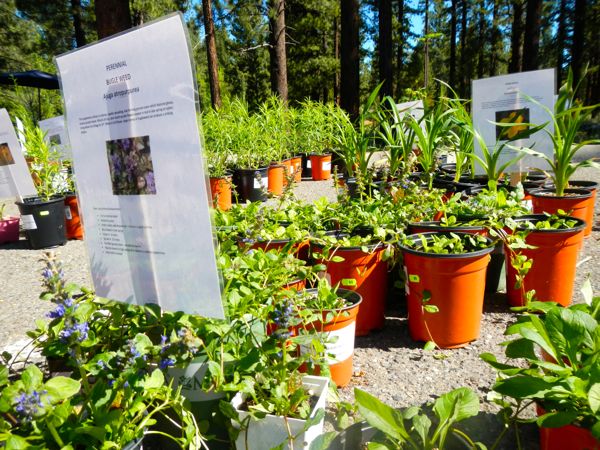
While no turf has been removed as I write this, I have bought plants. The master gardeners’ sale at Lake Tahoe Community College earlier this month was fantastic. All of these experts were milling about, suggesting what works well where. And the plants were so cheap.
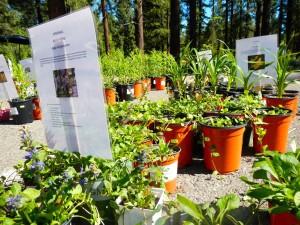
The local master gardeners group has an annual plant sale in South Lake Tahoe in June. Photo/LTN

The local master gardeners group has an annual plant sale in South Lake Tahoe in June. Photo/LTN

I was told to get there early for the best selection. Those in the know were not kidding. I thought it meant “Tahoe time” early. Wrong. I missed out on the trees.

The $50 worth of plants I have are mostly sitting along the edge of the house in shade. One looks dead. The edibles are out back in more permanent containers. I’m pretty sure those containers will find their way to the front in the final design.

Design. More procrastination. While Coleen sketched out what the front could look like, I have yet to do a final version.

I’m likely going to take Lisa’s advice and put in gutters. I have someone coming out in July to give me an estimate. This will render the current TRPA-designed (rather ugly) drip line a moot point. I want to add a rain barrel. (Who knew there were so many types – this just added to my sense of being overwhelmed.) The irony of tweaking the drip line is that it plays no role in the turf buy back; it just has a lot to do with the yard design.

I’ve figured out the work involved isn’t just the grass area. Yes, it’s my choice – but it’s part of the whole scheme. If money and coverage were not issues, the driveway, walkway and kitchen expansion would be occurring. This is because the front yard ties into all of that. Oh well, another day for those improvements.

I have split the wood that was in the way. I’ve been taking dog walks on streets I don’t normally travel on so I can get more ideas. I’m sure people think I’m nutty taking picture of their plants, color, design and yard art. I’m going to steal one idea of having two rounds of wood and making them into a bench. This will be much easier than splitting a couple of these monsters that I can’t even move.

I need to create an area for wood splitting that is completely on my property. One friend suggested having the path come from the street. I think it will look better from the driveway, with a little S curve that isn’t too decorative to make using a wheelbarrow full of rounds impossible to navigate. But part of me wants to make the path wide enough to drive on to make it easier to unload the rounds. This would necessitate a straight path. It would also mean less area to have to vegetate.

And so, I keep procrastinating. But I do know I can start getting rid of the drip line. That involves moving rocks and probably making the garage inaccessible as I make the driveway a staging area. That should annoy me enough to really start going – and get things accomplished before the snow starts to fly.

What the state is doing

California is considering a statewide initiative, in partnership with local agencies, to collectively replace 50 million square feet of lawns and ornamental turf with drought tolerant landscapes. There will be a meeting about this on July 2 from 1-3pm in Sacramento. Go online to register for the webinar. Comments on the program are being taken until July 10.

The state Department of Water Resources is also devising a model landscape ordinance at the direction of Gov. Jerry Brown.

The updated draft rules would prohibit installation of turf unless it is used for a specific function such as sports fields or gathering areas, require the installation of efficient sprinkler nozzles, ban turf in street medians and parkways with few exceptions and require use of compost to improve the water-holding capacity of soil.

Officials say the law would reduce water use at a new home by 16,000 gallons a year, or 30 percent. Water use on new commercial landscapes would be cut by approximately 40 percent. California is expected to add 472,000 single- and multi-family housing units with an associated 20,000 acres of new landscape over the next three years. The state’s population is expected to grow by more than 11 million, reaching nearly 50 million people by 2050.

State law requires all land-use agencies, such as cities and counties, to adopt a water-efficient landscape ordinance that is at least as efficient as the model ordinance prepared by DWR.


Nordic training program coming to Tahoe City

Tahoe Cross Country Ski Education Association will be offering a fall-winter comp-devo Nordic training program starting in September.

It will be open to athletes in grades 6-12 who are motivated to have fun and improve their fitness throughout the year as well as work on their ski specific technique for skate and classic. Sessions will be divided by program type and/or ability levels to ensure appropriate workouts while at the same time maintaining a fun team environment.

The Junior Development Program’s goal is to prepare ages 11-15 for the cross country ski season through a variety of activities that will improve strength, agility, endurance and ski technique.

The Competition Team (ages 14-19) will work with coaches to develop an appropriate training schedule tailored to fit each athlete’s needs. The program is designed to develop aerobic fitness, ski technique, and prepare skiers for the upcoming race season.


Star gazing event at Spooner Park

Professional stargazer Gigi Giles will be at Spooner Lake State Park on July 10.

She will have high powered telescopes and astronomical binoculars to look at the night sky from an elevation of 7,000 feet.

Wear comfortable shoes and bring a warm jacket. Red flashlights are recommended. Children under 12 and pets are not recommended for this free event.

Meet in the upper parking lot at 8:30pm.


4-wheelers event in Truckee

The Tahoe Donner 4-Wheelers Club will host the inaugural Sierra 4×4 Trails & Ales at the Alder Creek Adventure Center on July 18 from 1-6pm.

The event includes a show-and-shine of four-wheeling vehicles, games, raffles, a beer tasting, and barbecue dinner. It’s also a chance for those new to four-wheeling to learn more about the sport.

On the following day, those who sign up at online will also go on a trail run. Proceeds from the event benefit the Tahoe Donner Giving Fund. Tahoe Donner created the Tahoe Donner Giving Fund in fall 2014. It is an affiliate program designed to make charitable contributions to benefit the greater Truckee/North Tahoe area.

The Alder Creek Adventure Center is located at 15275 Alder Creek Road, Truckee. For more info, call 530.587.9400.


Deputies enforcing boating rules on Tahoe

The Washoe County Sheriff’s Office will be working to increase awareness about the dangers of boating under the influence on the waters of Lake Tahoe this weekend by participating in a national awareness and enforcement campaign called Operation Dry Water.

Operation Dry Water was launched in 2009 by the National Association of State Boating Law Administration and the U.S. Coast Guard. The campaign’s goal is to increase boating safety by reducing drug and alcohol related boating accidents.

The Washoe County Sheriff’s Office is one of hundreds of law enforcement agencies throughout the United States that are expected to participate. Other local agencies include the El Dorado County Sheriff’s Office, Placer County Sheriff’s Office, Nevada Department of Wildlife and the U.S. Coast Guard.

Deputies will be looking for signs of impaired boating and talking to boaters about the dangers of operating a motorized vessel under the influence.

U.S. Coast Guard data from past years shows alcohol use as a primary contributing factor to recreational boater deaths nationwide. Alcohol not only impairs a person’s ability to operate a watercraft, it is also known to increase fatigue along with susceptibility to the effects of colder waters such as Lake Tahoe.

The following four tips for responsible boating are from the National Association of Safe Boating Laws Administration and the United States Coast Guard:

  • Never boat under the influence of alcohol, drugs or medication. Alcohol use is the leading contributing factor in recreational boating fatalities.
  • Always wear a life jacket while boating. Eighty-five percent of people who drowned in a recreational boating accident were not wearing a life jacket.
  • Take a boating safety course. In accidents where the operator’s instruction history was known, 73 percent of fatalities occurred on boat where the operator had not received any boating instruction.
  • Get a free vessel check every year. These checks reveal life-threatening problems even on boats owned by safe, responsible boaters.

Lake Tahoe recreational boaters are also advised to check the weather before heading out on the water. Weather conditions may change rapidly on the lake so it important to keep up with the most updated forecasts.


Multiple advantages to running

By Alan Barichievich

Running has advantages. It burns more calories per minute than walking. It’s a powerful stress reducer. Running also reduces the risk for heart disease, diabetes, osteoporosis, and depression.

If you’re active and want to try this vigorous exercise, here’s where to start.

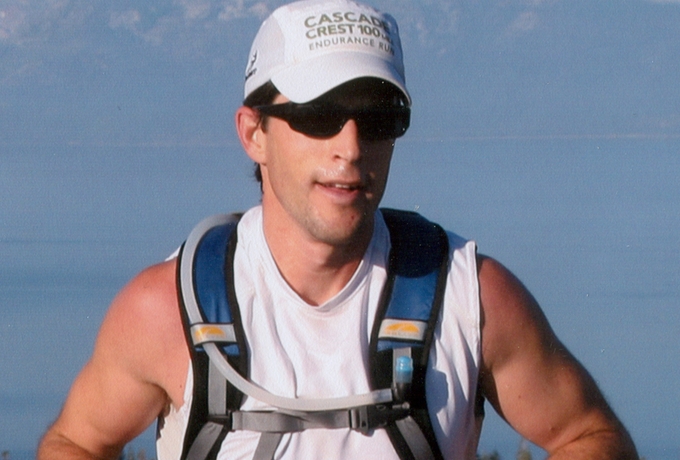
Alan Barichievich

Alan Barichievich

Sweet spot

Proper running technique is more important than shoes. Try running barefoot. Where your foot lands, usually between your heel and fore-foot, is your “sweet spot.” Land on your sweet spot, roll forward, and push off.  Now, try with shoes.

The right shoe

Type of running shoe depends on your foot type and surface you run on. Road shoes can work on trails, however, the sole may lack traction and rock protection.

General rules for arches:

·         High arch: chose a neutral shoe.

·         Medium arch: neutral or stability shoe.

·         Low arch: stability shoe.

Try on different shoes to determine which brand gives the best all-around fit. If a particular running shoe works for you, change the pair every 300 to 400 miles, but not the shoe.

Running form

Running itself does not cause injuries. It’s how you run.

Your body will thank you in the long run for proper form. Hold your head up in a natural and comfortable position.  Look ahead at the view and terrain. This helps build and maintain a strong posture, while creating a more efficient run. Keep your entire upper body relaxed and your shoulders low and loose. Relax your hands and try and keep elbows at a 90-degree angle. Run tall with a slight forward lean and straighten your torso up to its natural position. Efficient distance running requires a slight knee lift, a quick leg rotation, and a short stride with your foot landing under your body.

Terrain variation

Research shows no significant injury difference from running on various surfaces. Run on all kinds of surfaces. This challenges the body with slight changes in muscle activity which, in turn, helps reduce risk of injury.

When running hills, shorten the stride and maintain a flat running surface cadence, the foot strikes per a minute. Lean into the hill without bending at the waist and use your arms to boost locomotion up the hill.  If you feel winded and out of breath, gear down and adjust your cadence to a slow and steady pace.  On long hills, I look for a goal object – a rock, tree, or sign – up ahead and break the hill down into “little victories.” It motivates me and takes my mind off the hill.

Gear and hydration

Training outdoors, especially in the mountains, can be challenging and in extreme conditions even dangerous. Wear temperature-appropriate gear. Find clothing made of wick performance materials and wear a hat to shade your face and head. Lastly, stay hydrated before, during, and after your run with water and an electrolyte drink.

Barton Rehabilitation and Sports Medicine offers a comprehensive running program and a customized orthotics assessment. For details, go online.

Alan Barichievich is the director of Barton Health’s Rehabilitation and Sports Medicine. Alan and Caroline Barichievich will share more tips at a free presentation on July 8 at Lake Tahoe Community College.