Nevada’s horse giveaway plan under fire

By Benjamin Spillman, Reno Gazette-Journal

Opponents of Nevada’s plan to give away nearly 3,000 publicly owned, free range horses in the mountains east of Reno are cranking up the legal, political and financial pressure against the plan.

On Monday Lance Gilman, a Storey County Commissioner who helped recruit Walmart, Tesla, Google and others to the industrial park he founded in the horses’ habitat, made an impassioned plea to Gov. Brian Sandoval to tell the state’s agriculture department to abandon the idea

Read the whole story


Fire and ice: PCT in the era of climate change

By Alex Brown, Sierra

I’m climbing the western flank of Mt. Washington, a jutting outpost of volcanic rock in the Oregon Cascades, when I hear the all-too-familiar thrum of helicopter blades. Nearly four months into my through-hike of the Pacific Crest Trail, I’ve come to associate the sound with bad news. In Southern California, rotors had garbled the loudspeaker-blared instructions of the rescue team hovering over our camp, dispatched to pick up a hiker suffering from altitude sickness. More than 1,000 trail miles later, just shy of the Oregon border, I’d spent days watching choppers go back and forth overhead, refilling on water to fight the blazes that were filling the valleys below with hazy smoke.

This time, the helicopter buzzes close, past the skeletal burned-out trees I’m hiking through, and hovers over a slope east of the trail. I hear it just behind the trees as I finish my climb, but it’s gone by the time I top the ridge and follow the trail to the right. There, in the spot vacated by the chopper, I see tendrils of smoke rising from the trees, just 100 or so yards off the trail. My hiking buddies and I gawk at the sight, scarcely believing the fire is so close. We quickly hike on, not saying much. A couple miles later, we cross paths with a fire crew, 15 or more strong, hiking toward the blaze as we make tracks in the opposite direction.

“Last year was the most challenging year we’ve had in terms of dealing with closures on the PCT,” said Beth Boyst, who for the last 11 years has been the trail’s chief administrator with the U.S. Forest Service (the PCT passes through all different designations of federal and state land, but USFS holds the lead oversight role).

Read the whole story


Infusion of cash by Alterra Co. into ski resorts

Alterra Mountain Company, parent firm of Squaw Valley and Alpine Meadows, plans to spend more than half a billion dollars over the next five years, with $130 million in improvements for winter 2018-19.

However, no money has been allocated for the Tahoe resorts for next season.

At Mammoth, Canyon Lodge sees 60 percent of the resort’s. It will receive what is being called an “innovative redesign” over the next two years, positioning it to become the “day lodge of the future.”
 
A summer adventure sport offering will be available for fall 2018 at the main lodge at Mammoth Mountain,  including the longest top to bottom zipline tour in North America, plus a via ferrata rock climbing experience suspended on the mountain face, and junior ropes courses.                  
 
Alterra is comprised of: Steamboat and Winter Park Resort in Colorado; Squaw Valley, Alpine Meadows, Mammoth Mountain, June Mountain and Big Bear Mountain Resort in California; Stratton in Vermont; Snowshoe in West Virginia; Tremblant in Quebec, Blue Mountain in Ontario; Deer Valley in Utah; and CMH Heli-Skiing & Summer Adventures in British Columbia.


Anderson wins U.S. Open slopestyle competition

Olympic champion Jamie Anderson of Meyers  took the victory – her seventh U.S. Open title – to lead three U.S. Snowboard Team riders onto the podium in the slopestyle finals at the Burton U.S. Open in Vail on Friday.

Due to high winds, competitors voted to cancel the women’s slopestyle finals and let the semi-final results stand. Julia Marino (Westport, Conn.) finished third.

In the men’s final, the winds calmed down and Chris Corning (Silverthorne, Colo.) finished second, while Nik Baden (Steamboat Springs, Colo.) was ninth.

— U.S. Ski Team


Escaping Tahoe for hike on Prison Hill

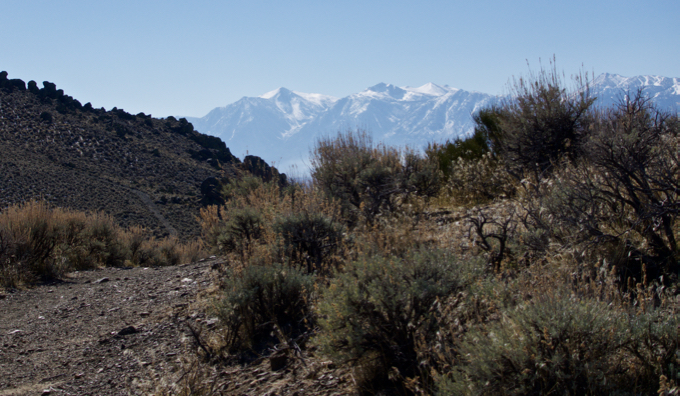
Walking among the sagebrush the Sierra seem to loom large. Photo/Kathryn Reed

By Kathryn Reed

CARSON CITY – We were held captive on our hike at Prison Hill. Captive by the beauty and number of trails we could explore.

It was a first for the three of us to experience this section of Carson City. There are so many trails in the Prison Hill Recreation Area and Silver Saddle Ranch that we will be back.

It was mid-February when we ventured off the hill. The openness – as in no trees – makes this area ideal to venture to any time of year but summer. It would be blistering hot then. When we went there wasn’t snow at the lake, so hiking outside the basin seemed like our best option for playing outside.
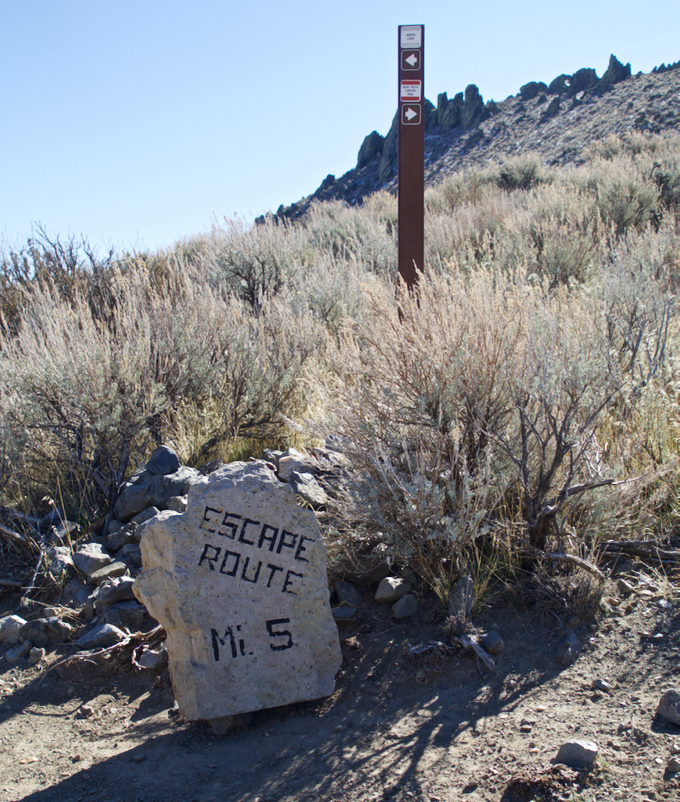
For the most part signage is good. Photo/Kathryn Reed

Even though we were in the capital city, at times it felt like we were in a remote location of the Silver State. The terrain is rugged and beautiful. Sage is the predominate plant protruding from the otherwise barren landscape.

At times the Sierra are in view, providing a snowcapped magic and complete contrast to where our hiking boots were leaving tracks.

Looking east it was more desolate. Trails – not sure if they were hiking, 4-wheeling, equestrian or biking – could be seen in the distance. Just another place to put on the to-do list.

Where we were a lone horsewoman passed us. People were scarce. That was one of the nice things about the hike – so few people on a weekend. Dogs being permitted was an added bonus.
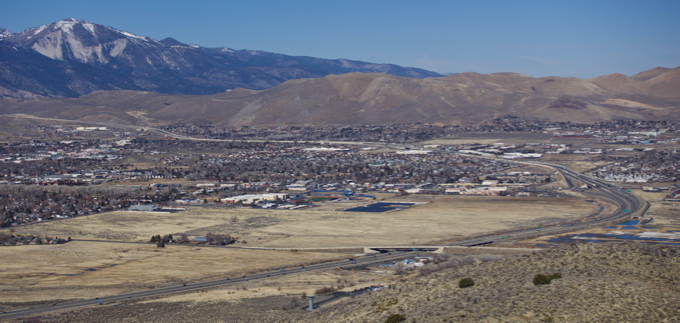
Carson City seems to go on and on from Prison Hill. Photo/Kathryn Reed

Yes, ample views showed the sprawl of Carson City, but there is so much beauty around that the development was not a distraction. On the north side the prison for which the hill is named finally came into view.

This is where the annual Escape from Prison Hill Trail Race is staged. This year’s event is April 21. There is a 5K, 10K and half marathon.

Tombstone looking rocks have “Escape Route” etched on them. Not knowing where we’d be escaping too, we kept on our preplanned route.

We started on the north side of the West Loop, then hooked up with the North Loop. In all it was just less than 5 miles. The start is nearly straight up – no switchbacks. It gets easier from there. Poles would have been welcome coming down.
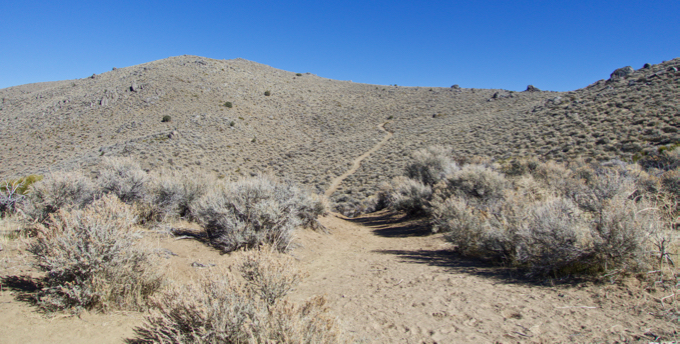
Bring water — this trail doesn’t have any. Photo/Kathryn Reed

—–

Getting there from South Lake Tahoe:

Take Highway 50 east to Carson City.

Turn left at the bottom of the hill onto Carson Street. Turn right on Clearview Drive. Go to the end. Signage is good.


Man to make another attempt to cross Sierra in wheelchair

By Sami Emory, Outside

It’s a bright winter morning and Bob Coomber, better known as 4WheelBob, is taking it slow up a trail in Redwood Regional Park, near Oakland. His gloved hands keep tireless pace with each other on the wheels of his wheelchair. His long, sinewy arms tense and twist in response to every crest, every divot of the trail. As we hike, Coomber admits he hasn’t been out in this chair—a specially modified all-terrain wheelchair—for more than three years. “It’s been on the back porch,” he says, “just sort of tempting me.”

In just a few months’ time, however, Coomber will be in prime condition. He has to be: This fall, Coomber will make his third attempt to take his chair up and over the 11,845-foot Kearsarge Pass in California’s southern Sierra Nevada, west of the town of Independence. The trek will take him from the trailhead to Kings Canyon, on the other side of the pass, for a round-trip of approximately 24 miles. Depending on the incline and the weather, Coomber will travel anywhere from half a mile to a few miles per day. The journey, he estimates, will take him 10 to 14 12-hour days of near-constant exertion.

If he succeeds, Coomber will be the first person in a wheelchair to cross the Sierra.

Read the whole story


Scientists catch 2 rare Sierra red foxes

By Jane Braxton Little, Sacramento Bee

State wildlife biologists researching the rare Sierra Nevada red fox have been trying to capture one for over a decade. On Tuesday, they caught the second one in three weeks.

A nearly nine-pound female walked into a box trap near Manzanita Lake in Lassen Volcanic National Park. She joins a 10-pound male, captured February 13 on national forest land near Mineral just outside the park boundary. Both animals were released after biologists took blood samples, conducted routine field examinations and equipped them with collars for remote tracking.

Scientists have been trying to better understand the Sierra Nevada red fox since 1980, when it was listed as threatened in California.

Read the whole story


Squaw-Alpine to host veterans for adaptive ski event

As part of the third annual Military to the Mountains program, Squaw Valley Alpine Meadows will welcome 22 injured military veterans to stay and ski March 11-17.

The Military to the Mountains program was created by the High Fives Foundation and is a collective effort between High Fives Foundation, Adaptive Training Foundation, Reno, Achieve Tahoe and Squaw Valley Alpine Meadows.  
 
The Military to the Mountain program is organized by the High Fives Foundation whose mission is to provide resources and inspiration to outdoor sports athletes who suffer life-altering injuries. Private contributions, corporate sponsors and funds raised through the sale of the Squaw Valley Alpine Meadows active military pass (raised $174,000 in 2017) make the program financial possible.
 
Prior to arriving to the slopes, 22 injured veterans participate in nine-week program hosted by High Fives Foundation and Adaptive Training Foundation, with the goal of readying their bodies for adaptive skiing lessons. Fifteen athletes train at the Dallas-based Adaptive Training Foundation, founded and operated by retired NFL linebacker, David Vobora. The mission of the Adaptive Training Foundation is to empower the human athlete, restore hope through movement, and redefine the limits of individuals with disabilities. Their role in this effort is to train military veterans who have been severely injured to be physically ready for adaptive skiing lessons. The remaining seven athletes split their nine-week training regimen between the city of Reno, Parks, Recreation and Community Services Department and High Fives Foundation, with the same goal of readying their bodies for adaptive skiing lessons.
 
Following the nine-week training, High Fives and Adaptive Training Foundation bring the 15 Texas athletes to Reno on flights hosted by American Airlines to meet up with the seven local athletes. All 22 athletes will then stay in the Village at Squaw Valley and ski at Squaw Valley and Alpine Meadows with Achieve Tahoe adaptive ski instructors.


Deceptive avalanche conditions linger after storms

By Benjamin Spillman, Reno Gazette-Journal

When Marlin Lathrop went backcountry skiing on Sunday near South Lake Tahoe he could expect great snow and even better views.

Knowing recent storms that delivered fluffy, hip-deep powder also increased the risk of avalanches Lathrop said he picked a line he thought would be safe.

That’s why Lathrop said he didn’t expect to find a massive debris field from a recent avalanche he estimated was about 200 feet across with a four-foot crown.

The Sierra Avalanche Center also reported an unusual propensity for large, deep slab avalanches with enough energy to destroy trees and houses.

Read the whole story


Avalanches a reminder of danger lurking in the snow

By Andrea Castillo, Benjamin Oreskes and Tony Barboza, Los Angeles Times

MAMMOTH LAKES — One day after an avalanche roared down Mammoth Mountain, danger was hardly on the mind of snowboarder Caleb Hill as he carved through fresh powder under clear skies Sunday.

Like hordes of other visitors to the Sierra Nevada resort, Hill, 24, was undeterred by avalanches at two of California’s largest ski resorts that closed runs and triggered rescue operations in recent days. The Colorado native was more frustrated by the long lines and lift closures keeping him from the slopes as Mammoth reopened Sunday, saying the risk of an avalanche was a fact of life.

“It’s a reminder that just because you’re at a resort doesn’t mean you’re safe,” Hill said. “Powder is forgiving but it’s also dangerous.”

Read the whole story