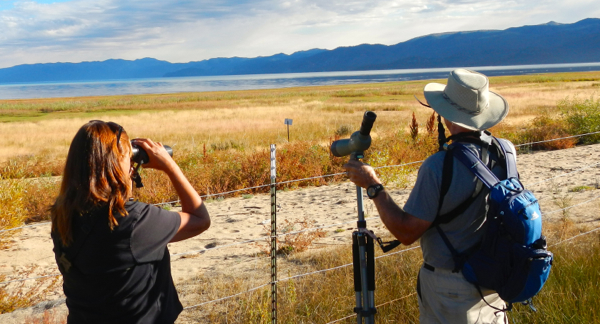
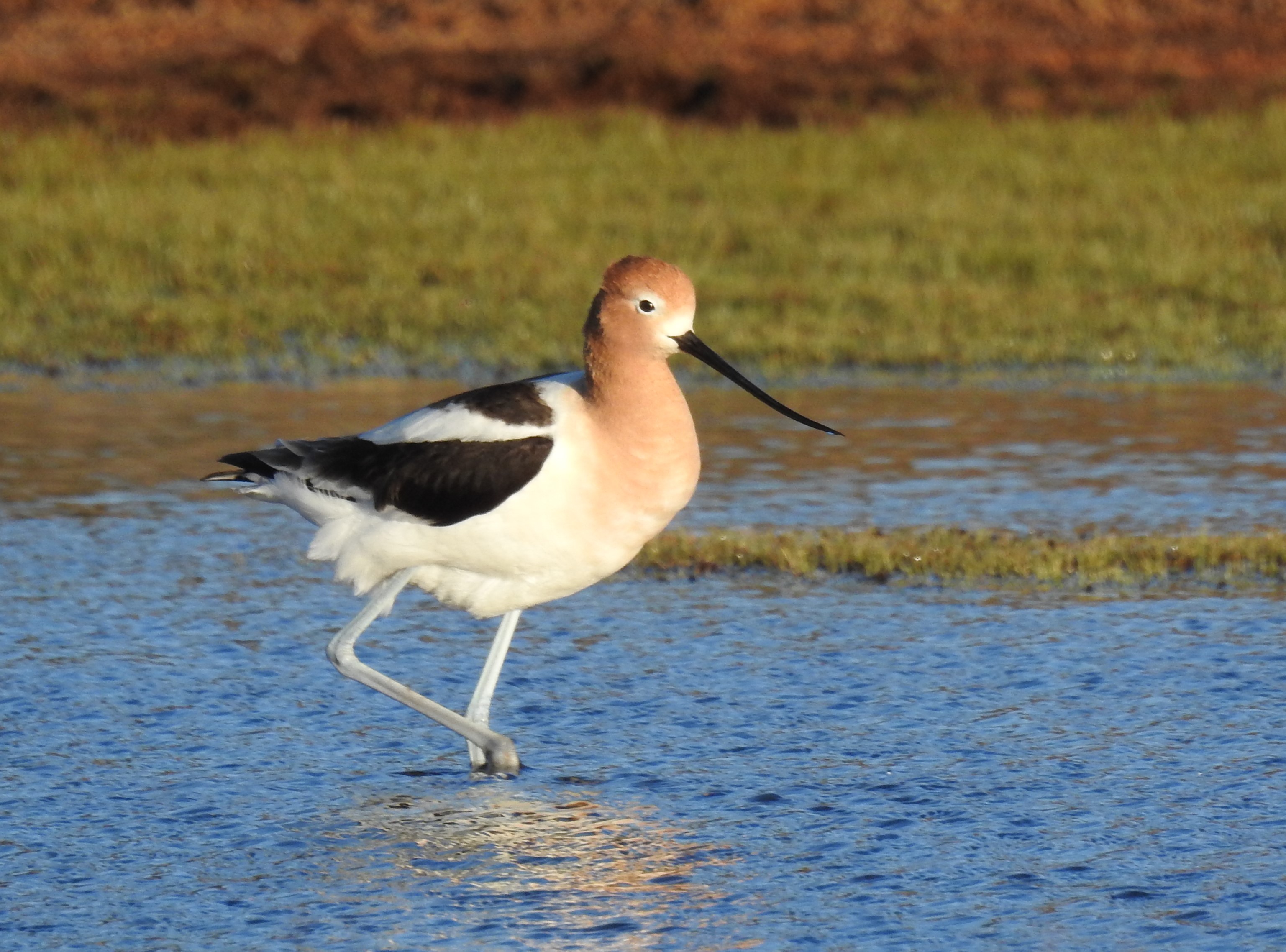
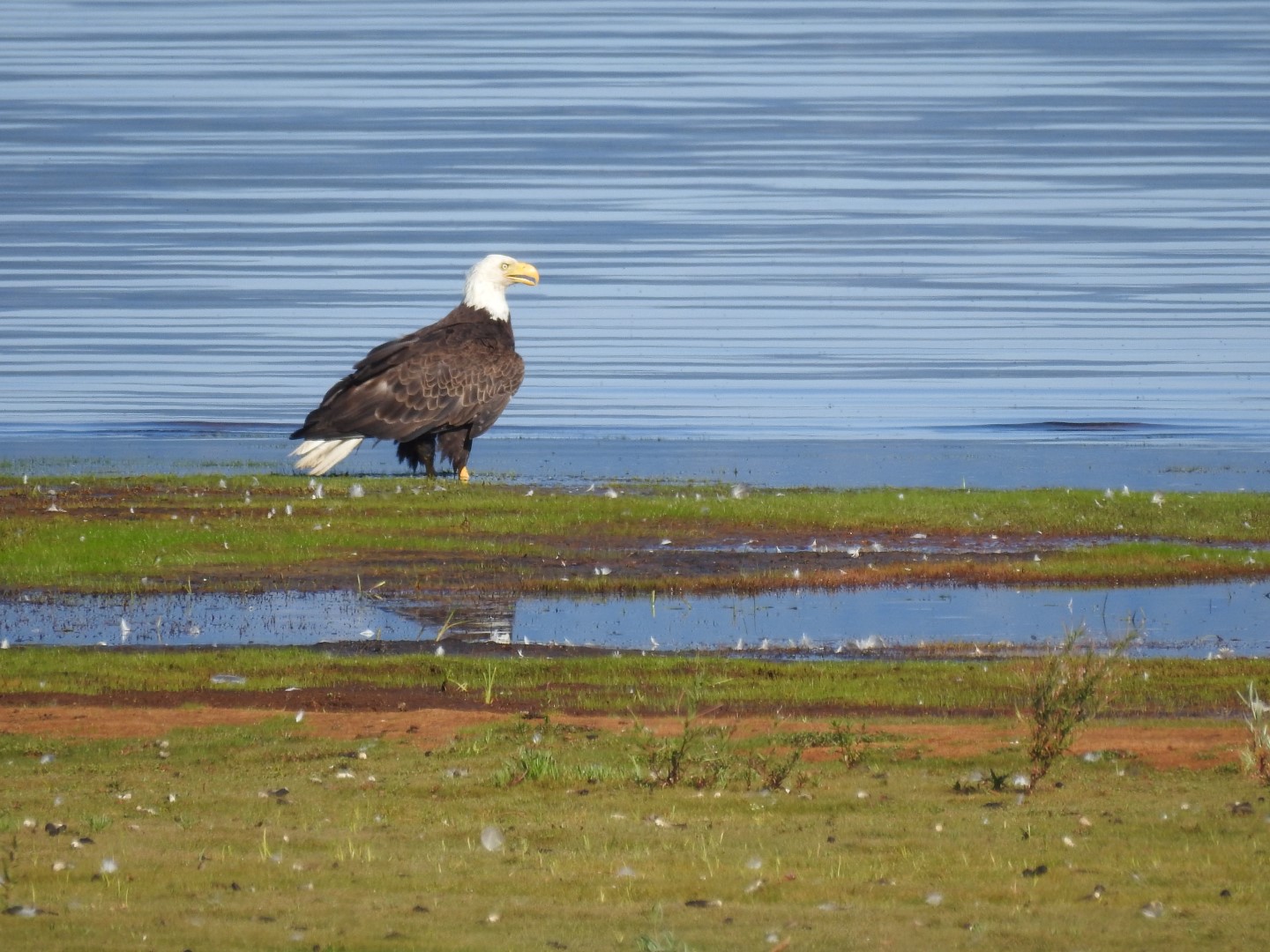
Bijou Park is a continual work in progress with the focus on locals’ recreation desires. Photos/Jessie Marchesseau
Publisher’s note: This is one in a series of stories Lake Tahoe News will be running leading up to the 50th anniversary of South Lake Tahoe on Nov. 30.
 By Jessie Marchesseau
The mountains, forests and lake surrounding South Lake Tahoe serve as a playground, of sorts, for residents and visitors. However, it’s hard to hold swim lessons in a lake that sometimes has waves and often feels like ice water. Beaches are more convenient and enjoyable when they offer parking spaces, restrooms and a cold beverage. It’s easier, or at least more comfortable, to have a family picnic when there are picnic tables. And hoping it gets cold enough to freeze the water in the marina doesn’t make for a consistent ice rink.
So, while South Lake Tahoe may inherently offer a variety of outdoor activities, the natural environment is not an adequate substitute for traditional public parks and recreation facilities. During the last 50 years, the city of South Lake Tahoe has taken on the task of creating and maintaining public recreation opportunities the environment cannot.
The first city park was Regan Beach. Construction began in 1959 when it was dubbed Lakeshore Park, before South Lake Tahoe was even incorporated. The city acquired the park not long after its incorporation in 1965. Ever since, the city of South Lake Tahoe has made a continual effort to create and maintain public parks and recreation facilities.
After 50 years of planning and implementing, the current South Lake Tahoe parks and recreation facilities are as follows:
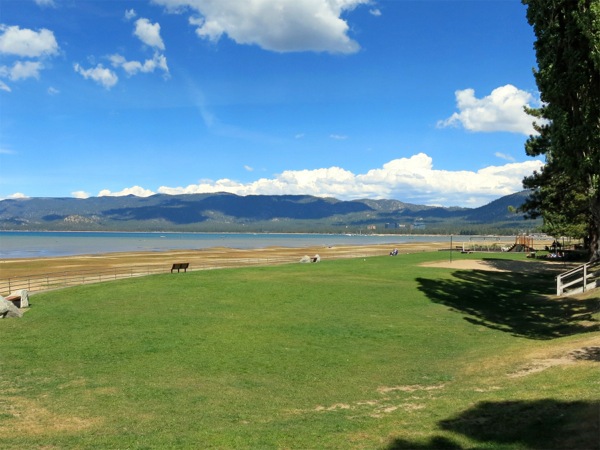
Regan Beach is due for another upgrade.
Regan Beach
Location: the intersection of Sacramento and Lakeview avenues
Size: 2.5 acres
Original construction date: 1959
Regan Beach is the city of South Lake Tahoe’s oldest beach facility, acquired by the city in the mid-1960s. A tot lot playground was added to the park in the summer of 1970. It was constructed almost entirely with donated hours and materials.
In the ’70s, lifeguards were regularly on duty during the summer months at Regan Beach, as well as many of the other beaches in town. The city, however, stopped hiring lifeguards after California’s Proposition 13 impacted public funds in 1978.
Later, in 1984, the city started the ball rolling on a six-year, $1.6 million renovation project at Regan Beach.
Three years later, the beach gained an additional 100 feet of lake frontage when the city spent $425,000 on an additional half acre of lakefront land. With water levels much higher than they are now, the retaining wall and lakeshore were badly eroded and in poor condition. Significant erosion control work was completed on the existing park and the newly acquired shoreline. The restoration project also included new walkways, stairways and fencing.
By 1989, the playground equipment was old and worn, so it was replaced, and a sand volleyball court was also added to the park.
Funding for this six-year project came from a number of sources: Lahontan Regional Water Quality Control Board provided almost $445,000; the city of South Lake Tahoe, nearly $200,000; California Tahoe Conservancy, $855,000; and $100,000 in state bond funds.
After that major project, not much happened at Regan Beach until a dog water park was added in 2009.
Now, the park is once again in line for a major remodel. The building that houses the bathrooms and concessions has a leaky roof and is in a state of serious disrepair, and the retaining wall is once again crumbling. What exactly is in store for Regan Beach has yet to be decided, but planning is in the works. City Manager Nancy Kerry hopes to have between $1.5 million and $2 million to dedicate to the project.
Park amenities:
- Large grass area
- Beach
- Large parking lot
- Observation deck
- Food and drink concessions (Memorial Day through Labor Day)
- Restroom
- Playground
- Sand volleyball court
- Picnic tables
- Dog water park.

Lakeview Commons has transformed recreation opportunities in South Lake Tahoe.
El Dorado Beach-Lakeview Commons
Location: the corner of Highway 50 and Lakeview Avenue
Size: 2 acres
Original construction date: 1968
Unlike other parks, El Dorado Beach is not actually owned by the city of South Lake Tahoe. It is part of a 56-acre parcel owned by El Dorado County for which the city signed a 55-year lease in 1968. El Dorado Beach is only 2 of those acres, the remainder lies across the street where the campground, senior center, museum and county library are located.
The city has been almost continuously making small changes and improvements to El Dorado Beach since the lease was signed in 1968. But the first significant improvements started in 1974 when bathrooms were installed across Lakeview Avenue from the beach. The boat launch and tunnel were also proposed that year and then subsequently constructed in 1976 for $380,000, mostly funded by a grant.
Like Regan Beach, El Dorado Beach once had lifeguards on duty, but that practice was also abandoned in 1978.
In 1988, the city purchased a 2.2-acre parcel off of Harrison Avenue where an old motel stood. Over the course of the next 15 years, the building was razed, oil tank mitigated and the property restored to a state suitable to build a parking lot on. The project was funded with $1 million from the California Tahoe Conservancy.
In 1989, Frank’s at the Lake, a concession cart opened at the beach. After that, a concession cart or trailer was stationed at the beach each summer; though no permanent concession structure existed until the Lakeview Commons project was completed more than 20 years later.
The boat ramp was redone in 1991, thanks to $313,000 from the California Boating and Waterways Commission. The commission also agreed to nearly $450,000 in grant money for the construction of the parking lot across the street in 2002, the same year the city put in a new 200-foot retaining wall. The parking lot was completed in 2006.
But all of these improvement projects were minor in comparison to the Lakeview Commons project which broke ground in 2010. The $6 million project funded by the CTC took nearly a decade to get off the ground, then ran into a legal snag soon after construction began. The project was stalled for a short time, but resumed and, in all, took just less than two years to complete.
Finished in 2012, the Lakeview Commons project included extensive landscape and stone terracing, retaining walls, a ramp for beach accessibility, restrooms, improved walkways, general landscaping and an improved picnic area. This was the first portion of a much larger project to improve the entire leased 56 acres.
Amenities:
- Bike trail
- Two parking lots
- Sandy beach
- Food concession
- Kayak and water toy concession
- Boat ramp/launch
- Floating dock (not currently in use due to low water)
- Large picnic area, including tables and BBQs
- Large grass area
- Restroom
- Swim area (non-boating).

The pool at the rec center is popular year-round.
South Lake Tahoe Recreation Complex
Location: 1176 and 1180 Rufus Allen Blvd.
Original construction date: 1975
In 1972, El Dorado County granted the city of South Lake Tahoe the title to 15.48 acres on which to build a recreation center. Plans for the center were drawn up and revealed to the public in 1973. By the summer of 1975, the people of South Lake Tahoe had a $1.8 million recreation and swim center.
The center consists of a 25-yard indoor pool with a retractable roof for the summer months, a weight room, locker rooms, a gymnasium-multipurpose room, kitchen, offices and various smaller multipurpose rooms.
An ice skating rink adjacent to the center was proposed that same year, but the proposal failed due to deed restrictions imposed by the county. At that time, the city was sponsoring a public ice rink in the Tahoe Keys Marina, but the existence and quality of ice was entirely dependent on weather. An ice rink near the rec center was later included in the parks and recreation master plan of 1977. However, it would be another 20 years before the area saw the likes of an actual ice skating rink, and 25 before South Lake Tahoe had an ice arena.
It was not until 1995 that the construction of an ice skating rink on the land adjacent to the recreation and swim center was finally approved. The city agreed to a 30-year lease with the Tahoe Ice Skating Association for the 1-acre parcel. A new outdoor rink was built and opened in January 1997. It closed in March of that year due to warm weather and did not reopen the following winter. The lease was revoked, and the rink sat idle and barricaded for years.
In 2001, construction began on the indoor ice arena. Doors opened in May 2002. The ice arena was remarkably successful, and the city ran it until they were forced to downsize in 2011. The arena was leased to outside operators and continues to thrive. In 2013, it became home to a Junior A hockey team, the Tahoe Blue.
The recreation and swim center has undergone various maintenance projects over the years: new fiberglass in the pool, new retractable roofs, energy upgrades such as lighting and heating systems, roof repairs, new weight room equipment, and more. A playground, sand volleyball court and basketball court were installed outside. However, in the 40 years since it was built, the center has not received any extensive renovations. The building is dilapidated and much of the equipment and amenities are sorely outdated. This is why the recreation and swim center has earned a spot on the city of South Lake Tahoe’s new parks and recreation master plan. No decisions have been made yet as to what will happen to the building, but discussions are under way.
Amenities:
- Recreation and swim center
- 25-yard indoor/outdoor year-round swimming pool
- Locker rooms/shower facilities
- Multipurpose gymnasium
- Kitchen
- Various meeting rooms
- Crafts room
- Weight room
- Ice Arena
- Indoor ice skating rink with bleachers
- Food concessions and eating area
- Ice skate rentals
- Locker rooms
- Outside facilities
- Outside mini park/playground
- Outdoor sand volleyball court
- Outdoor basketball court
- Picnic area.

Golf has been played in South Lake Tahoe for nearly a century.
Bijou Community Park and Golf Course
Location: Park – 1201 Al Tahoe Blvd.; Golf course – 3464 Fairway Ave.
Size: 153 acres
Original construction date: Park — 1992; Golf course — 1920
In 1982, the city of South Lake Tahoe purchased 153 acres from the Johnson family for $371,000. Most of the acreage was undeveloped meadow and forest land, but the 9-hole golf course on the property had been in use since 1920 when both the greens and the tees were made of sand, and the fairways were mowed with a horse-drawn mower.
Knowing they wanted a park aimed at residents more than tourists, the city began what would be nearly a decade of planning. In 1988, a sign was installed at the entrance of Bijou Park reading “the beginning of something wonderful in our community.” Park construction began in 1990, and when it officially opened in 1992, nearly 5,000 people showed up.
Bijou Park is a cornucopia of recreational activities. It seems facilities are continually being added at the request of the community. Most recently, a bike park has been under construction. The bicycle park, consisting of pump tracks, a BMX track, a terrain park and a kids’ learning facility will take up about 5 acres of the park. It will join a skateboard park originally built in 1996, and rebuilt in 2008. Next to that is the basketball court which was retrofitted to also be a roller derby rink.
Back in 1994, a park maintenance staff member proposed the idea of a disc golf course at the park. He was given permission to set one up on a trial basis. By 1995, 27 disc baskets made of plastic drums and old street sign poles had been installed. By 1998, each hole had an official tournament-approved basket. Disc golf is now one of Bijou Park’s most popular activities.
A 40,000-square-foot dog park, opened in 2008, now occupies a portion of land where an archery range once existed. The dog park was such a success, a separate dog agility course was installed in 2013.
It seems Bijou Park, more than any other city park, is a frequent the recipient of private donations of time, labor, money and materials. Citizens passionate about their recreational activities have been given opportunities at Bijou Community Park and stepped up to the challenge.
A great deal of fund raising has been conducted for Bijou Park projects. For years throughout the ’90s, a Bijou Community Park gift catalog circulated so people could easily purchase gifts for the park. This resulted in more than $200,000 in gifts. Soroptimist, Kiwanis and Rotary clubs donated money and built picnic shelters. Tens of thousands of dollars were collected in private donations. The local Lucky grocery store donated $8,500. While the city and state still contributed a combined amount of more than $1 million to the project, the amount of community involvement and generosity is impressive.
As for the golf course, a concessionaire ran it until 1990 when the city parks and recreation department took it over. It was still a fairly rudimentary course at that time. Over the next two years, they purchased maintenance equipment, installed a sprinkler system, planted grass, resurfaced greens with Astroturf and planted trees. The small course became more playable, more popular and profitable.
Amenities:
- 9-hole golf course
- 36-acre park
- 27-hole disc golf course
- Skateboard park
- Sand volleyball courts
- Basketball court/roller derby track
- Fenced dog park
- Dog agility course
- Outdoor fitness course
- Historic railroad exhibit
- Restrooms
- Concession facility (not always open)
- Two covered gazebos with barbecue pits and picnic tables
- Playground equipment
- Bike park (currently under construction)
- Open meadow land open to the public.

Linear Park parallels Highway 50; providing more than just a sidewalk.
Linear Park
Location: along the north side of Highway 50 from Wildwood Avenue to Pioneer Trail
Size: half mile
Original construction date: 2000
More of a greenbelt than an actual park, Linear Park lies between Highway 50 and the Tahoe Meadows subdivision. In 1996, the city began talks with the property owners of Tahoe Meadows to create a mutually agreed upon plan that would both allow the city to create a bike path along that stretch of the highway and provide a buffer zone between the road and the private properties.
The land, which stretches from the Holiday Inn to McDonald’s, is 2,700 linear feet. The agreement required the city to build a Class 1 bike trail on the property, but also build a fence separating the park from the subdivision, install lighting and landscape the entire area.
Possibly the most notable feature of the park is the white statue of a Washoe woman. The statue, created by artist Arnold Aragon was installed on the property in 2000. The statue’s pedestal later began to crumble and was replaced by the now-defunct Core 24 Charities in 2005. The group also planted 1,000 daffodil bulbs around the new pedestal. A plaque was installed by the city explaining the meaning of the Washoe woman statue in 2009.
Even small parks require maintenance, and in 2013, Linear Park was completely redone, a project costing more than $500,000.
Amenities:

Bonanza Park offers people near the Y a place to play.
Bonanza Park
Location: 1209 Bonanza Ave.
Size: 1 acre
Original construction date: 2012
South Lake Tahoe’s newest park, near the Y, was once a rundown hotel. Edgewood Companies, in an effort to acquire more tourist accommodation units for their Edgewood Lodge project, purchased the property and transformed it into a public park. The city was granted ownership of the park, and Edgewood Companies was granted the tourist accommodation units.
Amenities:
- Large grass area
- Walking path
- Playground equipment
- Half-court basketball
- Horseshoe toss
- Picnic tables
Building and maintaining parks in South Lake Tahoe is a non-stop process of planning, funding, building and planning some more. But the results of these efforts have provided the community with places to gather, places to play, places to learn and even more places from which to enjoy our beautiful surroundings here in South Lake Tahoe.