Sierra experiencing rare avalanche conditions

By Benjamin Spillman, Reno Gazette-Journal

Unusual snowpack conditions in the Sierra Nevada are contributing to a type of avalanche problem that in the past decade has rarely been widespread in the region.

That’s according to the Sierra Avalanche Center, a nonprofit organization that partners with the U.S. Forest Service to observe and analyze snow conditions in the Lake Tahoe area and beyond.

“There could be avalanches in places that have never seen avalanches before,” said Brandon Schwartz, lead forecaster for the center.

The biggest contributor to unstable conditions is buried surface hoar which leads topersistent slabs.

Read the whole story


History of Sierra alpine sports runs deep

By Jim Sloan, Tahoe In Depth

Many point to the 1960 Winter Olympics at Squaw Valley as the event that kickstarted skiing in the Sierra and the Tahoe region. The event, only the eighth Winter Games ever held, was the first Winter Olympics ever televised.

But the truth is that skiing had been an established, vibrant industry in the area for nearly 30 years before the Olympics arrived at Squaw Valley. There were mechanized rope tows, cutting edge ski lifts, professional ski instruction, innovative equipment designs, ski lodges, destination resorts, celebrity sightings and travel packages all along the snowy Highway 40 corridor from the western foothills to Tahoe and the eastern Sierra above Reno.

49ers raced on skis

But even before that Golden Age of T-bars and rope tows, California gold miners were strapping on boards – really long boards – for ski races in places like La Porte and Johnsville. They developed ski waxes, 12- to 15-foot skis, and a one-pole technique that had some of them reaching speeds of 100 mph. According to writer Patricia Fox, writing in a 2007 issue of Sierra Heritage magazine, the first organized ski race in the U.S. was held in La Porte, in the mountains west of present-day Graeagle, in February 1867, 14 years after informal racing had started in the town of 3,000 miners.

Of course, everyone’s heard of Snowshoe Thompson, who was not a snowshoer but actually a skier who traversed the snowy Sierra on skis for 15 years, bringing mail back and forth from Genoa to Placerville. Thompson gets a lot of credit for pioneering the sport of skiing in the Sierra, but the first ski resort didn’t open at Tahoe until the mid-1920s. Olympic Hill, it was called, and it was opened for guests of the Tahoe Tavern. Later, the ski area’s name was changed to Granlibakken.

Granlibakken joins sport

According to Jeffrey Weidel, a former newspaper reporter in Roseville who has been writing about Tahoe skiing for about 20 years, Granlibakken was the third ski resort to open in the U.S., behind Howelsen Hill in Steamboat, Colorado, and Eaglebrook School in Massachusetts. Soda Springs was the second California resort to open, hauling its first skier to the hills above Lake Van Orden in 1935.
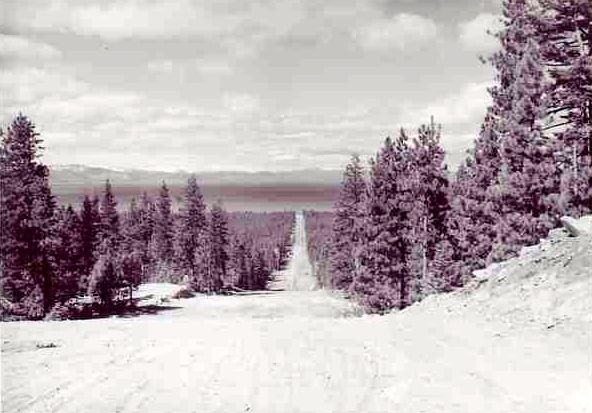
What is now a road was once an actual ski run. Photo/Stephen Gennerich collection

What is now Ski Run Boulevard was once an actual ski run. Photo/Stephen Gennerich collection

Driving to ski

According to historian Mark McLaughlin, in his book “Skiing at Lake Tahoe,” the first ski lift in the United States was a “pullback lift” built in 1910 in the Hilltop area of Truckee (the present-day finish line for the annual Great Ski Race from Tahoe City to Truckee). According to McLaughlin, the lift was initially built for toboggan riders but skiers also used it.

McLaughlin says skiing was already popular in the California mountains in 1930, where the Rainbow Lodge on Highway 40 was a magnet for winter sports enthusiasts. By 1936, there were a handful of popular skiing and sledding areas between Cisco, where the Auburn Ski Club built a ski jump and winter park, and Donner Lake to the east. Skiers either drove into the mountains, strapping their skis and poles to the roofs of their cars, or they rode the train into the Sierra and took horse-drawn sleds from the railroad depot to ski lodges.

By 1940 the “ski business was booming” in the Donner Pass region. Rope tows had replaced the original practice of hiking to the top of mountains to ski down. Ski schools imported experts from Switzerland and Austria to introduce and teach the latest techniques and equipment. You could stay at the Soda Springs Hotel for a dollar a day, paying 25 cents to a $1 for a meal. Donner Ski Ranch opened up the road in 1937, and work began on Sugar Bowl across the highway a couple of years later. It opened with great fanfare — and a fantastic $39,000 ski lift that allowed skiers to ride to the top.

Galena Creek Ski Hut

About this same time, Galena Creek Ski Hut was being built near Mount Rose. According to the Nevada Historical Society, the ski hill at Galena Creek hosted an annual Intercollegiate Winter Sports Carnival where college teams came to compete against the hometown favorites at UNR. One of those UNR skiers was Wayne Poulsen, who would become a major landowner in Squaw Valley. One of the first significant resorts in Nevada was Sky Tavern, completed in 1945 near Mount Rose. Farther south, near Spooner Summit, the White Hills ski area opened in 1949 with a T-bar lift and a ski jump. The resort closed five years later after several dry winters.

At the south end of Lake Tahoe, highway crews rarely completely cleared snow from Highway 50 between Placerville and Lake Tahoe. One of the first rope tows was installed at Twin Bridges, where the snow removal usually stopped.

Edelweiss on Echo Summit

Then in 1941 Edelweiss resort opened near Echo Summit, according to “Skiing at Lake Tahoe.” The resort operated for about 20 years before closing. The nearby Sierra Ski Ranch opened five years after Edelweiss and continues to operate today as Sierra-at-Tahoe resort. During the 1940s, other family-owned resorts opened along Highway 50, including Echo Lakes, Nebel Horn, Echo Summit, and, in the lake basin itself, Bijou Skiway Park in 1947. The park would soon be sold and renamed Heavenly Valley.

Poulsen, meanwhile, was scouting Sierra terrain for a major new ski resort. He settled on Squaw Valley. Although he worked as an airline pilot half the year, he and his wife, Sandy, purchased 2,000 acres of Squaw Valley with an eye toward finding investors to help build a ski resort over the five peaks surrounding his land. The Poulsens eventually partnered with Alex Cushing, but the partnership was short-lived, and Cushing went on to develop the alpine resort on his own while the Poulsens developed their valley land.

The wildly successful 1960 Winter Olympics in Squaw Valley ushered in a new era of large ski area development, as Alpine Meadows, Kirkwood, Ski Incline (now called Diamond Peak) and Homewood all came online in succeeding years. Some smaller resorts also emerged, like the Powder Bowl ski area in Alpine Meadows, but smaller areas couldn’t compete with the new mega resorts and either closed or merged with a neighboring establishment. Sierra Ski Ranch, Heavenly and Mount Rose all underwent large expansions to accommodate more skiers and to open up more challenging terrain. Over time, many resorts began adding snow-making equipment so they could open during low-snow winters.

This story first appeared in Tahoe In Depth.



U.S. men out of contention in combined event

By USSA

WENGEN, Switzerland – Jared Goldberg (Holladay, Utah) was the top placed American in Friday’s Audi FIS Ski World Cup Alpine combined event, but like the rest of the team, he chalked this one up as another training run for Saturday’s main event – the Lauberhorn downhill.

“Today was a good day, just like another training run all the way down,” Goldberg said after finishing 12. “I felt good, I was charging out of the start. Overall, I skied balanced and I’m ready for the next one.”

Norway took the top two steps of the podium with Kjetil Jansrud taking his first career World Cup combined victory, and Aksel Lund Svindal in second. France’s Adrien Theaux was third. Svindal remains second in the overall World Cup standings, but is now only 85 points behind Austria’s Marcel Hirscher, who did not compete inFriday’s event, and is not scheduled to race in Saturday’s downhill.

For the rest of the Americans, Bryce Bennett (Squaw Valley) was 22, Steven Nyman (Sundance, Utah) was 32 and Tim Jitloff was 36 (Reno). Ted Ligety (Park City) and Andrew Weibrecht (Lake Placid, N.Y.) did not finish the slalom portion. However, Weibrecht was 17 in the downhill portion and Ligety was 38.


Incline racer scores first World Cup points

By USSA

FLACHAU, Austria – Veteran Resi Stiegler led the U.S. team in a night of firsts at the Audi FIS Ski World Cup slalom Tuesday night, taking 15. But under the lights, it was a pair of young U.S. Ski Team members that shined, with Paula Moltzan (Lakeville, Minn.) and Lila Lapanja (Incline Village) scoring their first career World Cup points.

Veronika Velez Zuzulova of Slovakia won the race for her third career World Cup win. Sarka Strachova of the Czech Republic was second, followed by World Cup slalom leader Frida Hansdotter of Sweden in third.

Moltzan and Lapanja joined Stiegler in qualifying for the second run, and both scored their first career World Cup points. Lapanja was 23 and Moltzan finished 25th. Stiegler, qualifying for the first time in her career for a second run at Flachau, was 15.


Skiing in only her third World Cup start, Lapanja came out of the 37 start position and laid down a smooth first run, finishing 22. Lapanja, who made her World Cup debut earlier this season in Aspen, went back to the NorAm circuit and won a pair of slalom races in Panorama, British Columbia, last month before joining the team in Europe after the holidays.

“I had to be a little bit smarter with my tactics (on the second run), let the skis go out a little bit more, but I was a little bit impatient because I was so amped,” Lapanja said. “I feel pretty good, but I’m a competitor and I already know what I want to do differently to go even faster. But this is an amazing start and I can’t wait to see what the future holds.”


A world record big year for birds

By Nicholas Lund, Slate

I doubt anyone had a busier 2015 than Noah Strycker.

Beginning in Antarctica on New Year’s Day 2015, the 29-year-old Oregon man crisscrossed 41 countries on all seven continents on his way to shattering the record for most bird species seen in a single year.* Of the estimated 10,400 bird species on Earth, Strycker saw 6,042 of them in just 365 days.

Big Years—birder slang for yearlong benders to see as many birds in a given area as possible—are a huge undertaking, even when focused on the birds in a given county or state.  Hardcore birders with lots of spare time (and money) and a permissive spouse occasionally make a run at the American record, currently held by Neil Hayward, who saw 749 species in 2013.

But worldwide Big Year attempts are almost unheard of. Too grueling. Too expensive. Too many logistics. American ornithologist James Clements made the first real attempt at a global Big Year in 1989, finishing with 3,662 species. Two Brits, Alan Davies and Ruth Miller, took on Clements in 2008 and finished with 4,341 species while dodging armed robbers and abandoning sinking boats.

Read the whole story


U.S. rejects protections for Alaska wolf in decline

By William Yardley, Los Angeles Times

For more than two decades, conservation groups have argued that a wolf and the rainforest in southeast Alaska where it lives are at risk.

While the groups have won strong restrictions on logging of the Tongass National Forest, the nation’s largest, they have been denied in their efforts to win federal protection for the wolf.

Last week, the U.S. Fish and Wildlife Service denied them again: The agency determined that the wolf, known as the Alexander Archipelago wolf, should not be listed as an endangered or threatened species.

Read the whole story


Olympic champ embraces being free spirit

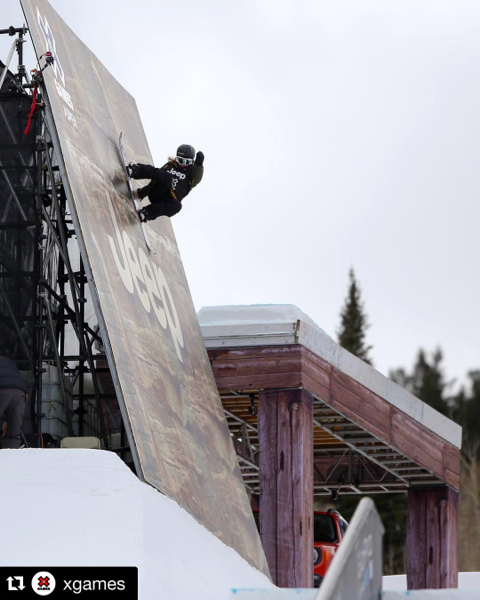
Jamie Anderson of Meyers hopes to be back competing this month after breaking her collar bone. Photo/Provided

Jamie Anderson hopes to be back competing this month after breaking her clavicle. Photo/Provided

By Jessie Marchesseau

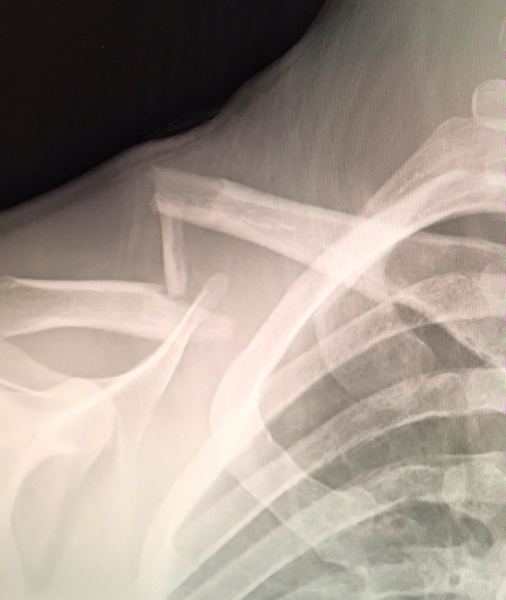
Olympic snowboard gold medalist Jamie Anderson started the season with a clavicle broken in five places, her first surgery, one plate and eight screws.

Her collarbone now on the mend, Anderson is anxiously awaiting approval from her doctors to get back on the snow. When she does return to competition, she will be doing so without the U.S. Snowboard Team.

Anderson joined the team in 2014 when she was heading to the Olympics. However, she has otherwise opted to go it on her own when it comes to training and competing on the snowboard circuit.

“For me, snowboarding is just about fun! It’s not so much about the ‘serious training’ or team stuff,” Anderson said, “it’s just about being on the mountain with your friends and having fun doing whatever you want.”

Jamie Anderson's record proves doing her own thing is working. Photo/Provided

Jamie Anderson’s record proves doing her own thing is working. Photo/Provided

John Rice, general manager of Sierra-at-Tahoe the resort that sponsors Anderson, doesn’t see her decision to not be part of the team as having negative impacts on her riding or her sponsorship from Sierra.

“Everyone knows she’s the best female snowboarder in the world, so it’s not an issue at all,” he told Lake Tahoe News.

For athletes still working their way to the top, Rice said he believes being a member of the U.S. Team can offer big training advantages. But for Anderson, the advantages would be more for her teammates than for her.

“She’s a free spirit,” he said. “When she needs to be part of the team, she signs up and she’s a good member.”

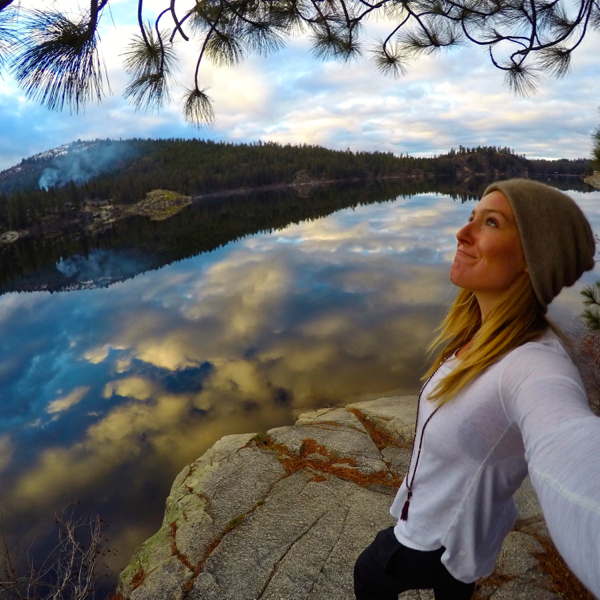
Enjoying the serenity of Tahoe is one Jamie Anderson's indulgences. Photo/Provided

Growing up in Meyers, Jamie Anderson is all about embracing the outdoors at Tahoe. Photo/Provided

Anderson is not the only pro snowboarder who has opted out of being on the team. Shaun White was rarely a member. Sage Kotsenburg who also won a gold medal in Sochi has chosen not to join this year. Two-time Olympian Elena Hight took a break from the team last year, but is back again this season.

Tricia Byrnes, snowboarding press officer for the U.S. Ski and Snowboard Association and a former professional snowboarder, said it’s not uncommon for snowboarders to go on and off the team or only join up around the Olympics.

Snowboarding is different than ski racing, she said. Snowboarders don’t necessarily want or need the structured training or team mentality that being part of the U.S. Ski Team brings. A lot of snowboard athletes want to do their own thing and work with their own coaches. Plus, many of them are juggling filming, photo shoots and other obligations which don’t really allow them to have structured schedules or make all of the competitions required of team members.

But just because Anderson isn’t officially on the team doesn’t mean she can’t take advantage of some of the benefits like coaches or training. Byrnes said anytime Anderson wants advice from a coach or trainer, all she has to do is ask. And if she wanted to join up mid-season, that option is there for her, too.

But for now, being on her own is working out just fine for Anderson. She follows her own off-the hill training regimen which includes a lot of yoga, acupuncture, working out with a personal trainer, and, recently, spending time in a hyperbaric oxygen chamber to speed her healing.

Repairing the broken clavicle was Jamie Anderson's first surgery. Photo/Provided

Repairing the broken clavicle was Jamie Anderson’s first surgery. Photo/Provided

“She can survive and thrive on her own program; not everyone can do that,” Byrnes told Lake Tahoe News. “She’s a total free spirit, and she knows what’s going to motivate her and rally her better than anyone.”

If you’re counting, that makes two people who called Anderson a free spirit so far, and Anderson herself makes three. She says being a “free spirit” and wanting to do her own thing is part of the reason she chose not to join the team.

“It’s a creative expression,” she told Lake Tahoe News of snowboarding, “and I just like to go with my own flow.”

Anderson missed out on the Dew Tour due to her injury, but she’s ready to get back on her board and is hoping to get the OK from her doctors before the LAAX Open in Switzerland Jan. 18.  U.S. Snowboard Team or not, fans can expect to see plenty more of Jamie Anderson flying through the air with her snowboard this season.


Obstacle racing losing its electrified challenges

By Erin Beresini, Outside

Swedish obstacle series Tough Viking is doing away with electrified obstacles in 2016, OCR Europe reports. The move puts it among a handful of events axing electricity as the industry chucks its original selling points of shock value and mental games in a sad but necessary drive for longevity.

Savage Race did away with its electric obstacle Tazed N Blazed in 2014. Tough Mudder, whose brand was arguably built on YouTube videos and articles about Electroshock Therapy, a giant trellis of dangling wires juiced with “10,000 volts of electricity,” (runners have to run through or under this to pass) announced in November 2015 that its new event, the Tough Mudder Half, won’t have any electric obstacles. In the meantime, the original Tough Mudder has also phased out Electric Eel, a stomach crawl under live wires.

Part of the issue with electricity is legal, to be sure. A 2013 study highlighted one Tough Mudder participant who received 13 shocks running through Electroshock Therapy. Also, “Electroshock Therapy’s had a lot of bad press,” says Margaret Schlachter, editor in chief of OCR news site Mud Run Guide. Not just for Tough Mudder, but for the industry in general, whose diverse events often get lumped together as crazy obstacle races who electrocute people.

Read the whole story


Avalanche training near Mount Rose

The North Lake Tahoe Fire Protection District and Mount Rose Ski Patrol will be conducting avalanche training Jan. 11, 13, and 15 near the Mount Rose summit.

There will be hands-on training for avalanche skills in four 30-minute stations, beginning at 10am and 1pm. The stations will consist of transceiver and RECCO search, probe line organization, snow pit-snow sack information, and depending on availability, a Search dog demonstration.

The trainings will be on the back road into Mt. Rose Ski Area across from the summit restroom parking lot. The drill area is within a few minutes’ walk.


Prescribed fires in basin to resume next week

Tahoe Douglas Fire Protection District, California State Parks and the U.S. Forest Service may continue prescribed fire operations next week.

To view a map with project locations and details, go online.

Residual smoke may be seen in locations where operations have taken place over the last several weeks.

Before conducting prescribed fire operations, agencies post road signs around areas affected by prescribed fire, send email notifications and update the local fire information line at 530.543.2816.  To receive prescribed fire notifications, send an email to pa_ltbmu@fs.fed.us.