Tahoe-based skier makes a case for cannabis

By Charles Bethea, New Yorker

In February, Tanner Hall, one of the greatest freestyle skiers of all time—he won seven X Games gold medals and four silver in the Big Air, SlopeStyle, and Superpipe events between 2001 and 2009—signed a deal with a Denver-based cannabis-accessories company called Black Rock Originals. Hall, who is now 32 and based near Lake Tahoe, helped the company create the Skiboss Collection, which consists of rolling papers, a cheese-grater-like card for grinding nuggets on the go, and a lighter, all tucked inside a travel-friendly pouch.

“We were all stoked,” Hall said recently, referring to everyone’s satisfaction with the finished product. He’d just returned to California after a few weeks of “ripping” in British Columbia’s Selkirk Mountains. Near a backcountry lodge he co-owns, Hall and twelve pals built what he described as “a 22-foot-tall Hot Wheels-type loop out of wood.” He continued, “We all filled it in and skied around Evel Knievel style. We crushed it hard.” The entire effort was filmed for a ski movie planned for release on iTunes this fall.

Hall is the first skier and, it appears, the second active professional athlete—behind ultra-runner Avery Collins, who is sponsored by Mary’s Medicinals—to formally partner with a cannabis company. For those who know him, this is not a big surprise: Hall has also inspired a line of ski gear (including a backpack and high-performance mittens) with the company DaKine, known, winkingly, as THC—that is, the Tanner Hall Collection. Still, it was an unprecedented move for a skier, even in the latter stages of his career, to accept outright sponsorship from a weed brand.

Read the whole story


Crossblades, a snowshoe-ski hybrid

By Erme Catino, Outside

If a snowshoe and a backcountry ski had a baby, you’d get something like the Crossblade, which was released last month at ISPO 2016, Europe’s ski trade show.

Like a snowshoe, this thing’s principally meant for going uphill. But it eschews metal teeth in favor of a smaller version of a climbing skin that you’d attach to backcountry skis. At the top of the hill, just unclip the rigid platform holding the skin, flip it over, and reattach it to the base of the blade to reveal a smooth surface with metal edges (unlike touring skis where you take the skins off).  Adjustable bindings work with either winter hikers or ski boots.

When you’re on hard snow, the base and metal edges ski a lot like snowblades (those incredibly dorky, miniature twin-tip skis for rent at your local hill). But when you’re in deep snow, the Crossblades sink to their wider, upper platform, turning them into powder boards for a little better float. You’d flounder in waist-deep fluff, but they might be fun in six inches or less of fresh.

Read the whole story


Sierra to host annual Buckle Up for Big Air

The Buckle Up for Big Air-Slopestyle event, in remembrance of Sierra-at-Tahoe team rider Greg Taylor Smith, is March 26 at the resort.

A favorite event with locals, it’s fun while raising awareness about seat belt safety and the ever-present need to buckle up whenever you’re in a car.

Topping off the day will be live music from Fish out of Water featuring all-original rophunk raehop (Rock, Funk, Reggae + Hip-hop) jams.

Awards and safety demonstration will follow the event.

The event starts at 8am.


Polar experiences — broken teeth, wild bears

By Benjamin Spillman, Reno Gazette-Journal

Douglas Stoup has emerged unscathed from close encounters with polar bears and plunges into icy crevasses.

The polar adventurer from Olympic Valley can’t say the same for an unfortunate incident with a chocolate bar during a 2007 expedition in Antarctica.

Like the polar bears and crevasse falls it was the sort of mishap that’s always a threat when your job involves skiing to north and south poles.

“I actually chewed on a piece of chocolate and broke one of my teeth and had to pull it out with a needle-nosed pliers,” Stoup said. “So that was not fun.”

Read the whole story


Mountain bike rides for youth in Tahoe City

The Tahoe XC Junior Mountain Riders Program provides children with an opportunity to experience and grow in the sport of mountain biking.

Weekly club rides focus on developing strong, responsible riders through instruction, practice, and fun in a healthy, supportive environment.

The six-week program runs April 18-May 23 from 4-5:30pm. Cost is $45 per child. The drop-in rate is $10 per child.

Rides are open to any child, age 7-11 who rides a geared mountain bike. Younger riders may be considered if they are experienced on dirt and capable of keeping up. Riders should have prior experience riding at least an hour and a half on dirt. Email andrews@tahoexc.org with questions and to sign up.


Junior Giants taking a swing at SLT youth


Junior Giants is making its South Lake Tahoe debut this year. Photo/Provided

Junior Giants is making its South Lake Tahoe debut this year. Photo/Provided

By Jessie Marchesseau

This summer, South Lake Tahoe youth will have the opportunity to participate in a new, free, non-competitive baseball program.

The city has been chosen to host one of nearly a hundred Junior Giants baseball leagues across Northern California, Nevada and Oregon. The program, designed to provide a safe and positive outdoor activity for children, is fully funded by the Giants Community Fund with San Francisco Giants catcher Buster Posey serving as the program’s commissioner.

However, this is not your average baseball league. The Junior Giants program focuses just as much, if not more, on building character as it does on playing baseball.

There will be skills, drills and baseball fundamentals, but each week of the eight-week season will also have another theme, one focused on important life lessons. Players will learn about topics such as leadership, confidence, teamwork, bullying, reading and healthy lifestyles. They will complete take-home projects and have the opportunity to earn prizes and Giants swag. Families will even have opportunities to attend San Francisco Giants games at AT&T Park.

The Giants Community Fund ensures the program is free for each and every child by providing all the necessary equipment for the league, from pitching machines and bases, to gloves, hats and T-shirts. In addition, they provide books and materials for the weekly programs as well as prizes and incentives such as school supplies, backpacks, water bottles and Giants bobble heads.
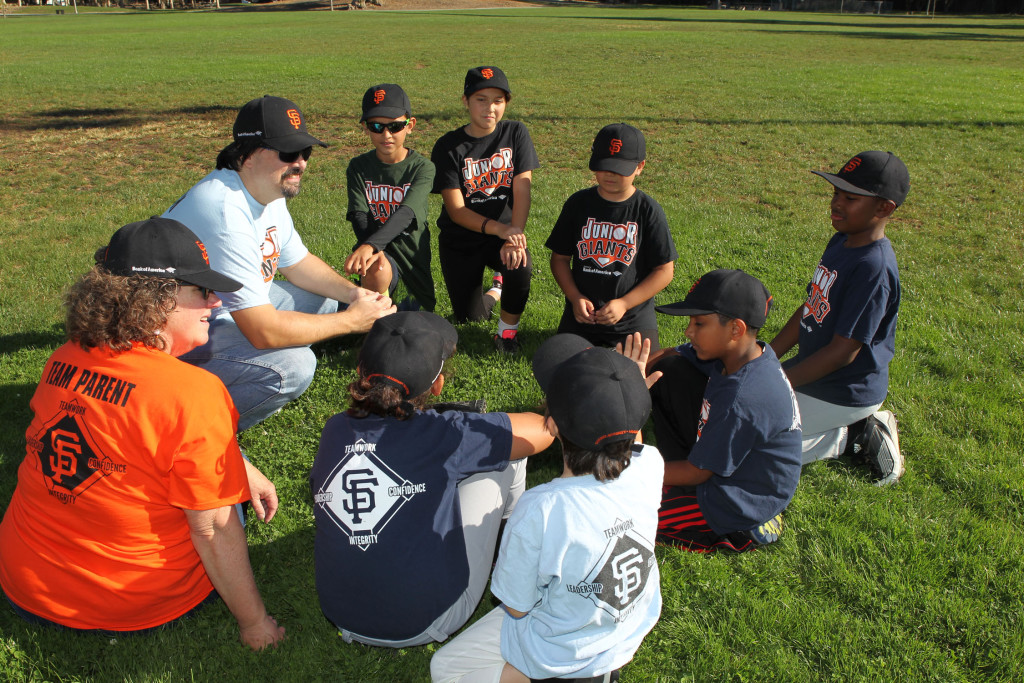
There is more to the youth program than playing baseball. Photo/Provided

There is more to the youth program than playing baseball. Photo/Provided

The non-competitive aspect also makes Junior Giants different from most baseball leagues. Games will have no umpires, no score-keeping and no winners or losers. Every child will get to hit, everyone will get to field. The goal is to take the stress out of the game, creating a more positive and fun experience.

“The main thing is we want every kid to have the opportunity to play regardless of their income level or skill level,” Junior Giants coordinator Bailey West said.

West has been working closely with Lauren Thomaselli, recreation manager for the city and the South Lake Tahoe commissioner for the Junior Giants, in getting the program set up. South Lake Tahoe is one of only four communities chosen to join the program this year. West said the Junior Giants try to choose new communities where they find a strong parks and recreation partner, but also where they see a population of kids who wouldn’t otherwise have an opportunity to participate.

Practices will be once a week after 5:30pm and games will be on Saturdays. This schedule is designed to make it easier for working parents to shuttle their kids to and from events, and to participate themselves.

Since the program is so reliant on adult volunteers to coach, assist and act as team parents, West said they try to offer plenty of services and incentives to them as well. The Giants Community Fund provides free training, supplies and regional coaching clinics for adults willing to serve as coaches. There is even a day at AT&T Park where the San Francisco Giants honor the Junior Giants coaches.

Thomaselli estimates they will need 10 to 12 adult coaches willing to dedicate two to three hours per week to their teams. The number of kids is only limited by the number of coaches available.

“It is free, it is fun, it’s a great way to get your kids outdoors and surrounded by a positive message and learn the fun game of baseball,” Thomaselli said.
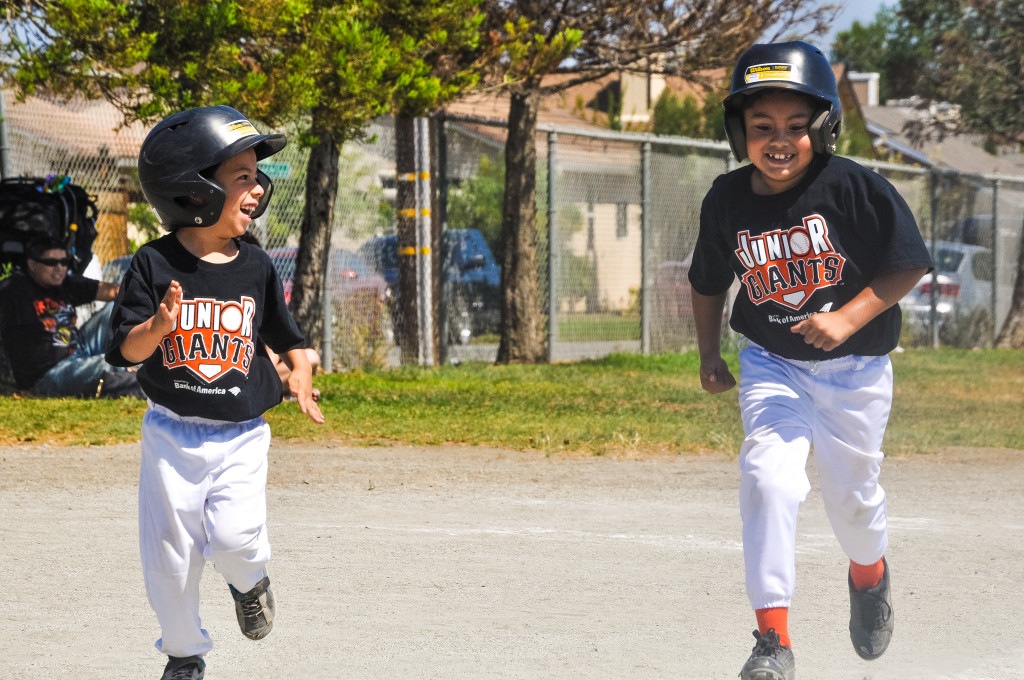
The program targets youth who may not otherwise have a chance to play baseball. Photo/Provided

The program targets youth who may not otherwise have a chance to play baseball. Photo/Provided

The Junior Giants is open to boys and girls ages 5-13 and will have both t-ball and baseball teams. The season will run from June 15 to Aug. 6, culminating in a season finale celebration with a family barbecue, baseball games and awards ceremony.

Players, coaches and volunteers may register online or in person at the following locations:

·       South Lake Tahoe Recreation & Swim Complex, 1180 Rufus Allen Blvd.
Until June 1, Monday-Saturday, 8am-6pm

·       Boys and Girls Club, 1100 Lyons Ave.
March 23 and April 6, 4-5:30pm

·       Boys and Girls Club, Bijou School, 3501 Spruce Ave.
March 31 and April 28, 4-5:30pm.


Brain’s tolerance for pain may decide how far we push ourselves

By Ian McMahan, Outside

If you’ve ever experienced that sensation of powering up the last hill of a long run— when your legs feel like cement and your lungs are heaving, you’ve probably wondered how much your body can actually take. Could you dig deeper, even when your legs are telling you to stop?

Your own stopping point may have as much to do with your tolerance for suffering as physiological strength. We are accustomed to thinking that our limits are physical and that the way to get stronger is by pushing harder and going longer.

But the brain’s tolerance for pain may play a significant role in how far one can push into that dark place.

Read the whole story


Summer is the new winter at ski resorts

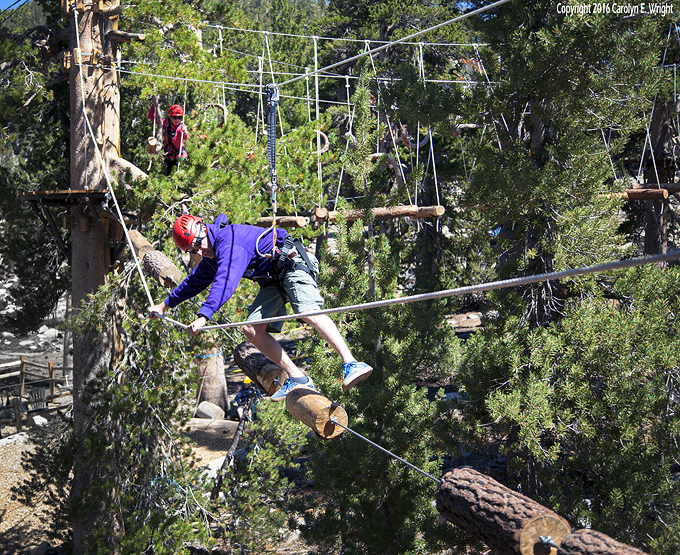
Heavenly will be expanding its summer specific activities this year. Photo Copyright 2016 Carolyn E. Wright

Heavenly will be expanding its summer specific activities this year. Photo Copyright 2016 Carolyn E. Wright

By Megan Michelson, Outdoor

With shrinking visitor numbers and low-snow seasons afflicting ski areas around the West, resort owners are realizing that attracting wintertime guests alone isn’t enough to survive.

The impetus for the change came in 2011, when President Obama signed a bill, sponsored by then Colorado Sen. Mark Udall, which amended a previous law from the 1980s that restricted ski areas on Forest Service land from offering any recreation besides skiing. The amendment, called the Ski Area Recreational Opportunity Enhancement Act, allowed resorts to provide summer activities like zip lines, mountain bike parks, Frisbee golf, and ropes courses, so long as they were in harmony with the natural environment. (Water slides, big roller coasters, and golf courses are still prohibited.)

A series of dismal winters followed, and resorts once known as snowy epicenters rapidly started changing their business plans. Squaw Valley has proposed building an indoor-outdoor recreation center, complete with climbing walls and ziplines, that would turn its winter village into a year-round destination.

Vail Ski Resort has operated at a loss during the summer months, according to its fiscal documents, but it has a new strategy to close that gap: this summer, it’s launching a program dubbed Epic Discovery that will boost summer offerings like ropes courses, an alpine coaster on elevated rails, and hiking trails with educational signage. The program will also debut at other Vail Resorts properties, including Heavenly Mountain Resort this summer and Breckenridge Ski Resort in 2017.

Read the whole story


Raised beds an alternative for gardens

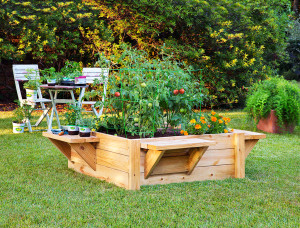
 Raised bed gardens with benches make it easier to plant, maintain and harvest. Photo credit: Bonnie Plants

Raised bed gardens with benches make it easier to plant, maintain and harvest.
Photo/Bonnie Plants

By Melinda Myers  

Raise your garden to new heights for easier access and greater productivity. Raised beds allow you to overcome poor soil by creating the ideal growing mix, plus make gardening time more comfortable thanks to less bending and kneeling.

Whether you purchase a kit or build your own, there are a few things to consider when creating a raised bed garden.

Locate the garden in a sunny area if possible. Most plants require at least six hours of sun, and vegetables like tomatoes, peppers and melons produce best with a full day of sunlight.

Select a long-lasting material such as interlocking block, fieldstone, plastic lumber or naturally long lasting wood like cedar. The material selected will influence the shape and size of your garden. Some materials allow for curved beds while others are limited to squares, rectangles and other angular shapes.

Design your raised bed to fit your space and your needs. A 3- or 4-feet width makes it easy to reach all parts of the garden for planting, weeding and harvesting. Raising your planting bed at least 8 to 12 inches improves drainage and provides an adequate space for most plants to root and grow. If you want to minimize bending, go higher. Add benches to increase your gardening comfort and ease.

Roughen or loosen the existing soil surface if your bed is built on compact, slow-draining soil. This will allow water to readily move from the raised bed into the soil below. Cover the bottom of the bed with newspaper or cardboard, if needed, to suffocate existing weeds and grass.

Line the bottom of your raised bed with hardware cloth to reduce the risk of animals burrowing into your garden. Lay the hardware cloth over the ground and bend it up along the inside of the raised bed walls.

Fill the bed with a quality growing mix that is well drained but also able to retain moisture and nutrients. This may be a mixture of quality topsoil and compost, a high quality potting mix, or a planting mix designed specifically for raised bed gardens.

Grow any plants that you normally would grow in ground. Just make sure the plants are suited to the growing conditions (such as sunlight, heat and wind) in your area. Since the soil mix and drainage is ideal in a raised garden, you will be able to grow more plants per square foot. Just be sure to leave sufficient room for plants to reach their mature size.

Keep your plants healthy and productive with proper watering. This is critical for growing any garden, but even more crucial in a fast-draining raised bed. The simple act of raising the garden height increases drainage, and a raised bed filled with planting mix means more frequent watering. Consider using drip irrigation or soaker hoses for watering ease. Always water thoroughly when the top inch of soil is dry.

Add some mulch to help reduce watering and the need for other garden maintenance. Spread a layer of evergreen needles, pine straw, shredded leaves or other organic matter over the soil surface. This helps conserve moisture, suppresses weeds and adds nutrients to the soil as it decomposes. You’ll spend less time watering and weeding throughout the season.

Add an organic fertilizer at planting if your planting mix does not already contain one. Apply again mid-season if the plants need a nutrient boost. Always follow the label directions on the fertilizer container.

The time and effort invested in creating raised beds will be returned many times over with years of healthy and productive gardens.

Melinda Myers has more than 30 years of gardening experience has written over 20 gardening books.


ZC Tennis Club plans slew of events

With spring finally here, Zephyr Cove Tennis Club anticipating all the courts will be ready for action on April 1. Throughout April there is no cost to play.

The club officially launches the season with Viva La Tennis on May 28 at noon. This social gathering is an opportunity to play doubles with other members. It is open to current, new and perspective players of all levels and ages. The kickoff party is free for 2016 club members, $10 for others. It includes a barbecue and lots of tennis. Anyone paying membership dues that day will have the event fee waived. Participants are encouraged to bring a side dish or dessert, as well as beverage of choice.

Fees are the same as last year — $80 for the season. It’s possible to lock in rates for two or three years at once by paying in for those years in advance.

Membership includes access to the six lighted courts at Zephyr Cove Park nearly seven months a year depending on the whims of Mother Nature, monthly socials, members’ only doubles tournament, drop-in events, individual lessons, and competitive USTA leagues.

This is the third year the nonprofit Zephyr Cove Tennis Club Foundation has operated the facility under a contract with Douglas County. An all-volunteer board is in charge, with members volunteering to help in various aspects.

The money collected all goes back into the facilities and programs. One of the big-ticket items this year is resurfacing the courts. Several fundraisers will take place this season to pay for this work that is scheduled to begin at the end of May.

Improvements in the past two years include building a pro shop, removing trees for safety reasons, adding viewing areas, and creating a more robust juniors program.

ZCTC events this season include:

·       May 28, Viva La Tennis and Membership Kick-Off Day at the courts

·       June 8, Hump Day

·       June 24-26, ZCTC Doubles Tournament

·       July 6, Hump Day

·       July 9, Breakfast at Wimbledon

·       July 28-31, Tahoe Tennis Classic

·       Aug. 10, Hump Day.

More details about the events will be able on the club’s website as the dates get closer, or email zctennis@gmail.com.

Zephyr Cove Tennis Club is on Warrior Way off Highway 50 in Zephyr Cove.