Fire operations planned in Tahoe basin

California State Parks, Nevada Division of Forestry and U.S. Forest Service may continue prescribed fire operations beginning April 4, weather permitting.

On the West and North shores, operations may take place in Burton Creek and Sugar Pine Point state parks. On the East Shore, operations may take place near Sand Harbor, Spooner Summit and Camp Galilee. On the South Shore, operations may take place near Lake Tahoe Boulevard and Sawmill Road, Panther Lane near South Tahoe High School, off Highway 89 near Spring Creek, and off Santa Claus Drive and West River Parkway near Christmas Valley. To view a map with project locations and details, go online.

Residual smoke may be seen in locations where operations have taken place over the last several weeks.

Each prescribed fire operation follows a prescribed fire burn plan, which considers temperature, humidity, wind, moisture of the vegetation, and conditions for the dispersal of smoke. This information is used to decide when and where to burn.


Freedom of flight — paragliding in the Sierra


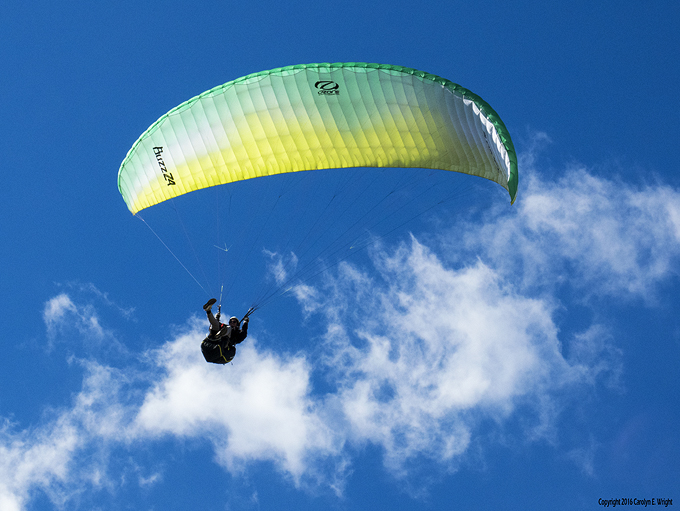
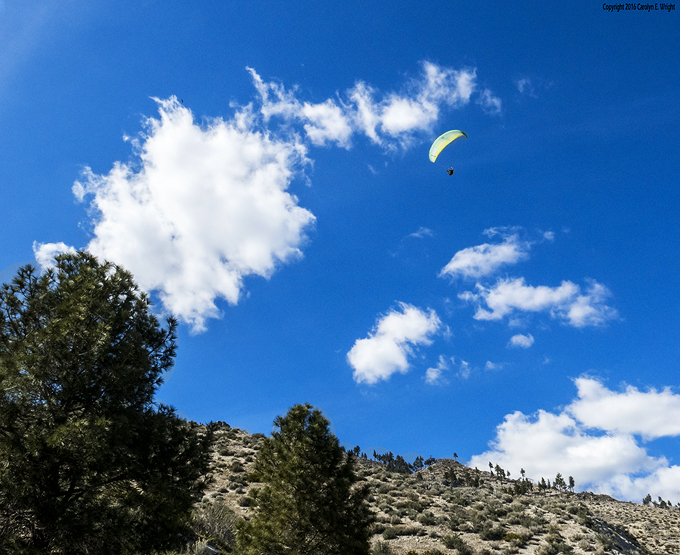
Blake Paiement soars through the air near Kingsbury Grade on March 31. Photo Copyright 2016 Carolyn E. Wright

Blake Paiement soars through the air near Kingsbury Grade on March 31. Photo Copyright 2016 Carolyn E. Wright

Swaying in the wind currents it’s like the paraglider is doing a dance in the air.

Blake Paiement, 21, with his green, yellow and white parachute-like contraption is a striking contrast against the blue sky. He soars toward the Carson Valley after having launched from the top of Kingsbury Grade.

Brad Paiment looks for a safe landing spot. Photo Copyright 2016 Carolyn E. Wright

Brad Paiment looks for a safe landing spot. Photo Copyright 2016 Carolyn E. Wright

“I was above Heavenly saying ‘hi’ to the skiers,” the Gardnerville resident told Lake Tahoe News March 31 after he landed a couple hundred yards from Foothill Road.

The views, thrills and freedom are what drive Paiement to strap on the harness and other gear a couple times a week. Then he propels himself into the air, catching the wind to get a bird’s-eye view of the local terrain.

— Lake Tahoe News staff report


Introduction to pickleball at SLT Rec Center

South Lake Tahoe is hosting an open house for pickleball enthusiasts on April 2 at 2pm.

It will be at the rec center, 1180 Rufus Allen Blvd.

Players will learn the basics of one of the fastest-growing games in the U.S.

Cost is $6 for adults and $5 for seniors. This includes access to the entire recreation center for the day.

Pickleball paddles and balls provided.


Heat causes Yosemite’s granite to crumble

By Sean Greene, Los Angeles Times

The domes and arches etched into Yosemite’s famed granite cliffs may seem frozen in time, but in reality they’re constantly moving.

The dramatic rock formations were formed as layers of rock peeled away from the mountainside, like an onion. The flakes remain attached at a few points but are completely hollow in the middle. If you were to pound on one with your fist, you’d hear an echo.

In Yosemite, these precarious attachments – geologists call them “exfoliations” – fall at a rate of one a week, on average. Most often, they collapse because water repeatedly freezes and thaws in the cracks, destabilizing the cliffs. Sometimes they fall apart during an earthquake.

Read the whole story


Popular Tahoe area trailhead now publicly owned

The land around one of the northern Sierra Nevada’s most popular trailheads is now in public hands.

The Trust for Public Land and Truckee Donner Land Trust, working as part of the Northern Sierra Partnership this week agreed to by the Castle Valley trailhead for $2.1 million. They in turn sold it to the U.S. Forest Service for the same price. The 412 acres will be part of the Tahoe National Forest.

The well-used, year-round trail network leads people to some of the most popular and easily accessed backcountry in the northern Sierra, including Castle Valley and Castle Peak, Pacific Crest Trail, the Sierra Club’s Peter Grubb Hut, the Hole in the Ground trail and the Donner Lake Rim Trail.

The Pacific Crest Trail Association said the acquisition will protect views and improve access to one of the most popular sections of the Pacific Crest Trail.


Outdoor recreationists compete for USFS attention

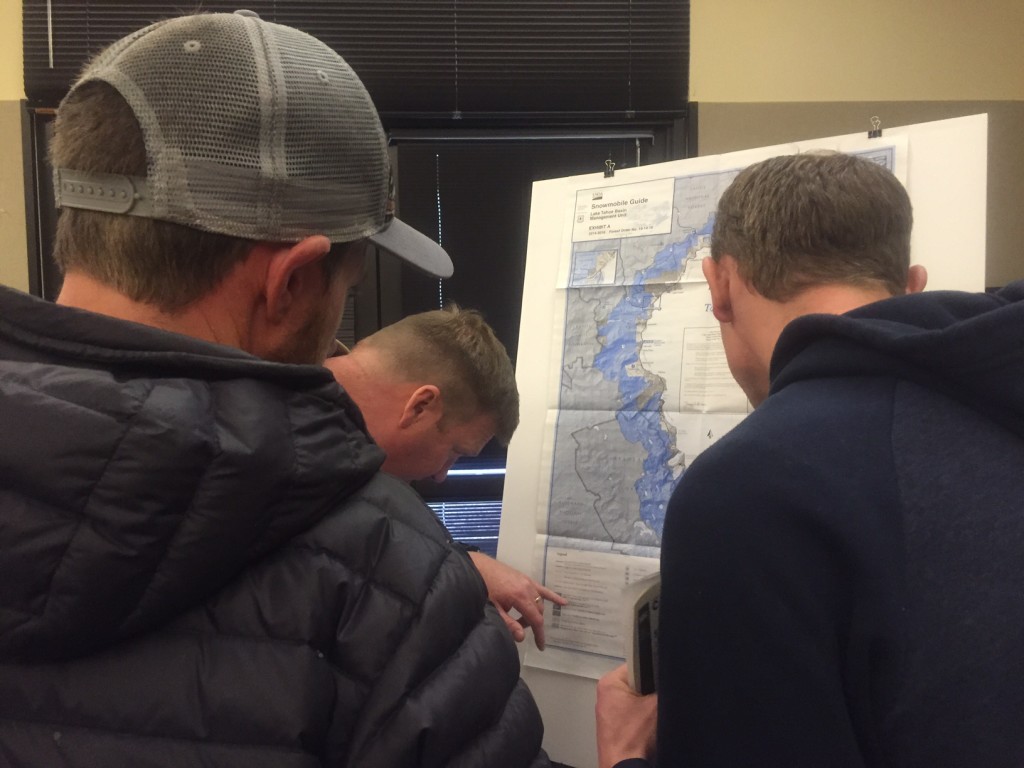
Winter recreation enthusiasts are interested in the Forest Service's plans. Photo/Susan Wood

Winter recreation enthusiasts are interested in the Forest Service’s plans. Photo/Susan Wood

By Susan Wood

How can Lake Tahoe Basin residents and nature stakeholders deal with the inevitable power struggles that go with sharing open space in winter – whether that power is driven by human or machine?

That’s the pervasive question the Lake Tahoe Basin Management Unit team is asking as it starts the long, laborious process of coming up with a winter recreation plan that serves the needs of those who play and live in the snow. The plan is expected to be completed next year.

And as longtime Tahoe park ranger icon Don Lane puts it: “How tolerant are you of what others do in this special place we call Tahoe?”

Leaning against the table in the LTBMU conference room Tuesday night in its first open house on the subject, Lane was gesturing while pointing out to Fallen Leaf Lake resident Peggy Laughlin during their debate over the history of Tahoe that many people experience this beautiful winter recreation paradise in different ways.

And therein lies a balancing act as delicate as protecting the lake itself.

Some people cross country skiing in the basin like to stop to close their eyes and not hear any noise. Snowshoers often enjoy opening their eyes to see virgin snow with no tracks in sight. Snowmobilers relish the thrill of manipulating a sled in a mighty hairpin turn through powder. Fat tire mountain bike riders may want to hear the crack of the crust. And now there’s a cross between a snowmobile and bike to plow through the white stuff.

Whatever floats the boat of the winter recreational enthusiast, sharing the land has its challenges. But in this case, the plan dictating the guidelines is long overdue.

The last time the Forest Service developed a plan here in the basin was 1975.

The federal land use agency was given the directive to revisit the “Snowmobile Guide” while the overall Forest Service general plan was being adopted because many winter enthusiasts were commenting on this type of recreation. The Forest Service’s general plan is due to be signed at any time by the regional office in Vallejo.

In the meantime, LTBMU agreed to host open houses to receive input. The next one is slated for April 5 from 5-7pm at the North Tahoe Event Center, 8318 North Lake Tahoe Blvd. in Kings Beach. The third is scheduled in Sparks on April 19 at the same time in the Humboldt-Toiyabe office at 1200 Franklin Way.

More than 50 people showed up for the South Shore’s March 29 meeting, filling the room with varied opinions. A comment box was placed on a table, along with questionnaires situated near a handful of Snowmobile Guide maps placed on easels around the room. Many gathered around them, pointing to different areas they ski in or ride a snowmobile in.

To help spur the process, the Forest Service asked:

·      “What do you value about your winter recreation experience and opportunity?

·      What conditions or circumstances detract from a high quality experience for you, and how could those be improved through different LTBMU management?

·      What is working well with the current Snowmobile Guide regulations and with current conditions regarding winter recreation opportunities, access and experience?

·      What kinds of partnerships or strategies might the LTBMU explore to provide improved winter recreation access and opportunity as well as improved resource stewardship?

·      What other information or input might help the LTBMU develop a comprehensive proposed action for winter recreation?”

The questionnaire instructed the participant to submit the form to an LTBMU employee, the front desk or electronically to comments-pacificsouthwest-ltbmu@fs.fed.us.

Phil Brand, who has lived in South Lake Tahoe for 53 years, told Lake Tahoe News he would take his home to work on.

Brand owns two snowmobiles and likes to ride up Oneidas Street to Armstrong Pass in the South Shore and in Blackwood Canyon and the Rubicon Trail on the west side where more unrestricted region exists. He recalls the days in the 1960s when “you could go almost any place” on the South Shore.

“Over the years it’s gotten where more and more areas are closed off. It’s harder to find places to go,” he said, adding that a segment of people “don’t want us there.”

He says that with a degree of understanding. Brand is also a cross country skier and occasionally pulls the snowshoes out.

When comparing this area to Mammoth, Brand contends those residents live in more harmony than Tahoe. He’d like to see more areas open up to snowmobilers, but that’s not his expectation.

“The way things are going, I’d settle for not less,” he said.

Longtime Tahoe environmental activist Laurel Ames said she wants the same – only for cross country skiers. Ames would like to see High Meadows east of the Black Bart region stay off limits to the snowmobilers because it’s “a special place for skiing” and represents an environmentally sensitive region.

“I want to see places quiet. (Snowmobilers) have a lot of places to go,” she declared.

Currently, the Snowmobile Guide outlines closed off zones in Desolation Wilderness, High Meadows and the Meiss Meadows region on the South Shore; Granite Chief Wilderness, Sugar Pine Point and Burton Creek state parks on the West Shore; East Shore beaches at Secret Harbor, Spooner and Lake Tahoe Nevada state parks on the east side; and the North Shore’s Tahoe Meadows, which LTBMU Recreation Supervisor Gina Thompson calls the most contentious area.

Thompson hopes that by having open houses where stakeholders may share their points of view they’ll come to a better understanding and therefore consensus on how to share the space.

Even the collaborative team of citizens assembled a few years ago didn’t come to that, so the Forest Service took back its own project.

“The collaborative focused on open and closed areas. There were other things to focus on,” Thompson explained.

For example, the issue of where to park came up repeatedly. Most snowmobilers place their sleds on big trailers. While skiers simply want to get off the road when they leave their vehicles for hours.

“The challenge becomes who’s going to plow and who’s going to pay for that,” Thompson said.

Keep in mind the Forest Service spent half its budget on fighting fires this year.

Thompson also realizes many users would like to see more signs.

Either way, it’s a long road ahead.

LTBMU hopes to return in the fall with a proposal from the comments, a submitted NEPA document and a call for another meeting.

“It’s really hard to give everyone their own little piece (of Tahoe), but we’ve got to be respectful,” she said.
Tahoe resorts eye longest ski season in decade

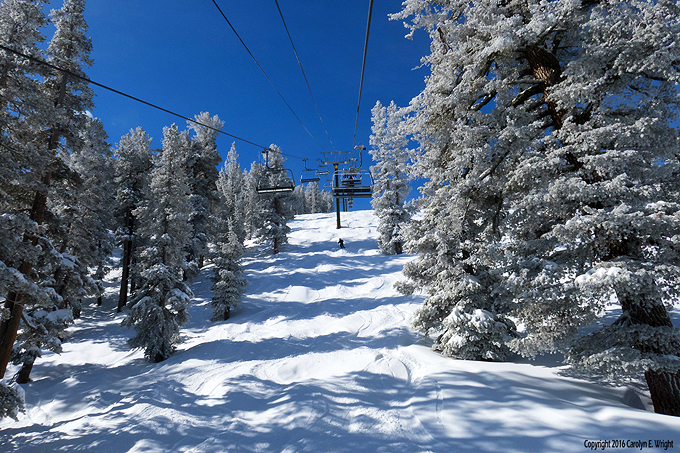
Heavenly and all Tahoe area resorts are having their best season in years.  Photo Copyright 2016 Carolyn E. Wright

Heavenly Mountain Resort and all Tahoe ski areas are having their best season in years. Photo Copyright 2016 Carolyn E. Wright

By Benjamin Spillman, Reno Gazette-Journal

Don’t give up on that season ski pass just yet, Tahoe locals.

The Monday morning powder dump that disrupted commutes in Reno served as an exclamation point for the 2015-16 season which is likely to be the longest in more than a decade.

So far Mt. Rose Ski Tahoe and Squaw Alpine resorts have announced plans to continue spinning lifts well into May. Although whether it actually happens still depends on the weather in coming weeks.

If Mt. Rose makes it’s anticipated closing date of May 8 it will mark 185 days of skiing at the resort, it’s longest season since at least winter 2005-06. Mt. Rose opened the 2015-16 season on Nov. 6. Squaw-Alpine officials have only stated they plan to offer skiing “into May as long as weather and conditions permit.”

Read the whole story


Squaw Valley may host 2017 World Cup

By USSA

The U.S. Ski and Snowboard Association (USSA) has selected Squaw Valley as the proposed site of an Audi FIS Ski World Cup in 2017. U.S. Ski Team officials are supporting the return of World Cup ski racing to the Olympic venue of Squaw Valley for the first time since 1969.

The USSA is submitting Squaw Valley as a candidate for a March 2017 World Cup that would bring Olympic champions Julia Mancuso, Lindsey Vonn and Mikaela Shiffrin to Squaw Valley for a giant slalom and slalom. The International Ski Federation will make its final decision on the 2016-17 calendar this June at the FIS Congress meeting in Cancun.

Squaw Valley was selected by the USSA as a candidate based on its strong history of managing large events and the rich heritage of alpine ski racing in the area. The proposed event would be March 10-11, 2017, with Squaw Valley a stop for the tour between the Olympic test events in PyeongChang, South Korea, and Aspen.

“Squaw Valley represents another opportunity for us to highlight stars like Julia Mancuso, Lindsey Vonn and Mikaela Shiffrin to our American audience on the eve of the Aspen World Cup Finals here in the USA,” said USSA President and CEO Tiger Shaw. “Squaw Valley has always been a strong partner and has a rich history in alpine ski racing. The kids who will be exposed to these world class stars are the future generation of Olympic champions.”

The proposal is for Squaw Valley to hold the races on its Red Dog run in the shadow of the fabled KT-22 peak. The venue was the host for the 2013 and 2014 Nature Valley U.S. Alpine Championships, attracting large crowds of kids who came to see their favorite ski racing stars.

“It is an honor to be chosen by our national governing body to play host to an Audi FIS Ski World Cup, particularly when one considers the many great mountains around the world that seek to play host to a FIS World Cup event,” said Squaw Valley Alpine Meadows President and CEO Andy Wirth. “Being selected by the USSA speaks favorably toward Squaw Valley Alpine Meadows’ ski racing heritage, our world class staff and our community and mountains. We look forward to continuing work on our bid with U.S. Ski Team and the International Ski Federation staff and truly hope for a successful outcome at the June FIS meetings.”

Built on the legacy of the 1960 Winter Olympics hosted at Squaw Valley, the resort has since reared celebrated athletes such as Jonny Moseley, Julia Mancuso, Travis Ganong, Marco Sullivan, JT Holmes, Michelle Parker, Cody Townsend, Jeremy Jones, Ralph Backstrom, Nate Holland, and Errol Kerr.

“Part of growing up in Squaw Valley is its legacy of developing world class athletes and playing host to world class events like the 1960 Olympics,” said Olympic champion and Squaw Valley native Julia Mancuso. “America has always had great ski champions, but they are often overshadowed by the vast number of European venues. Bringing the World Cup to Squaw Valley will build more awareness of the World Cup tour in the America. As an Olympian, I appreciate that Squaw Valley Alpine Meadows has been so proactive about supporting our athletes and the U.S. Ski Team.”


Skatepark to be part of Woodward Tahoe’s sport camp

Together with California Skateparks, Woodward Tahoe will break ground this spring on Sierra Skatepark — a concrete skatepark at the outdoor Woodward Tahoe campus.

It will utilize the natural terrain, while providing street obstacles designed to enhance the course with its elements and features. The park is scheduled to open the first week of summer camp on June 12.

“The idea behind this park was to keep the unique, natural beauty of the terrain and bring in some urban street obstacles that are themed to match the environment,” skateboarder and Woodward brand manager Neal Hendrix said in a statement. “We didn’t want to come in and just tear down a bunch of trees and build a park that looked and felt like everything else. The way that this park flows through the trees is really unique and we think it’s going to make an amazing setting.”

Woodward Tahoe offers summer camp, daily drop-in sessions, and Ride with Woodward programs throughout the year. Woodward Tahoe features The Bunker, a 33,000 square foot indoor facility with trampolines, satellite ramps, foam pits and an indoor concrete skatepark.


Daffodil Hill — a vibrant springtime tradition

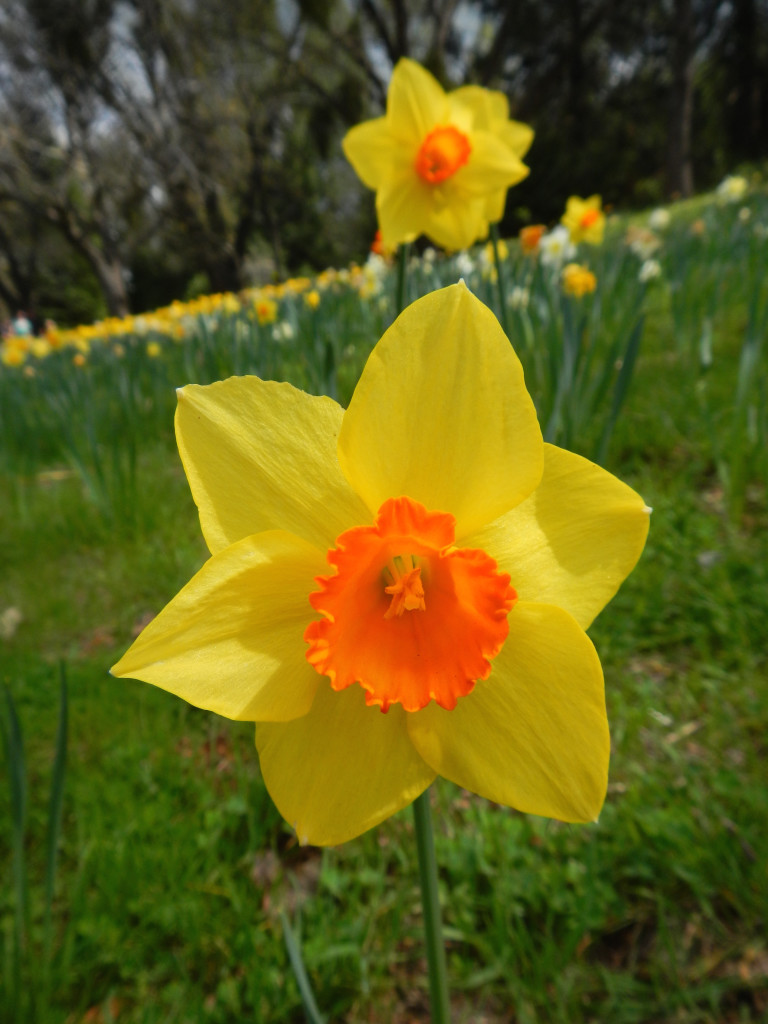
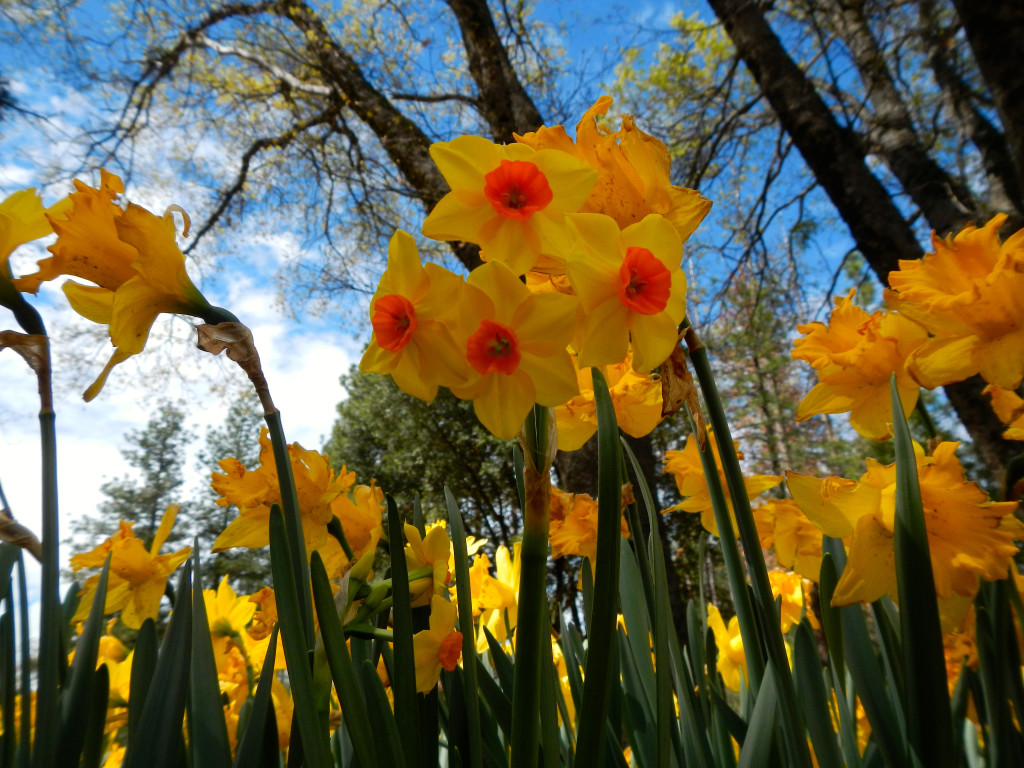
A variety of daffodils stand tall on the first day of spring. Photo/Kathryn Reed

A variety of daffodils stand tall on the first day of spring. Photo/Kathryn Reed

By Kathryn Reed

VOLCANO – Life and death all in a matter of weeks. Mother Nature can be cruel that way.

While the blooms of Daffodil Hill had clearly passed their peak on the first full day of spring, by March 21 the iconic outpost in Amador County was closed for the season.

It has been a tough few years for the McLaughlin family. Between drought and inopportune rains, the flowers have struggled to last for long. They are a seasonal bulb that can decorate a landscape for several weeks, assuming the weather cooperates. In good years Daffodil Hill is open from mid-March to mid-April, seven days a week.

Paths wonder between the fields of daffodils. Photo/Kathryn Reed

Paths wonder between the fields of daffodils. Photo/Kathryn Reed

This 540-acre ranch has been in the same family since 1887. Seven of those acres are full of daffodils. Each fall family members and friends plant more bulbs, with 11 varieties put in the ground in 2015: Arkle, Barrett Browning, Bravoure, Delibes, Flaconet, Green Eyed, Ice Follies, King Alfred, Love Call, Ringtone and Yellow River.

According to the American Daffodil Society, “Depending on which botanist you talk to, there are between 40 and 200 different daffodil species, subspecies or varieties of species and over 25,000 registered cultivars (named hybrids) divided among the 13 divisions of the official classification system.”

Different species are planted each fall. Photo/Kathryn Reed

Different species are planted each fall. Photo/Kathryn Reed

One thing that makes Daffodil Hill so special is that the family – now in its sixth generation – does all this work for the public to enjoy for free. There is no cost to walk the grounds, marvel at all the species. It doesn’t even cost to park. Donations and the sale of souvenirs pay for the 8,000 to 16,000 bulbs that are planted each year.

Kim Grady, a fifth generation family member, said it was her grandparents’ and parents’ desire to have this little hill be open for all to see – to never charge. Donations dictate how many bulbs are planted each fall. Family members pay attention to what has bloomed well and spots that need filling in to help determine which varietals to buy.

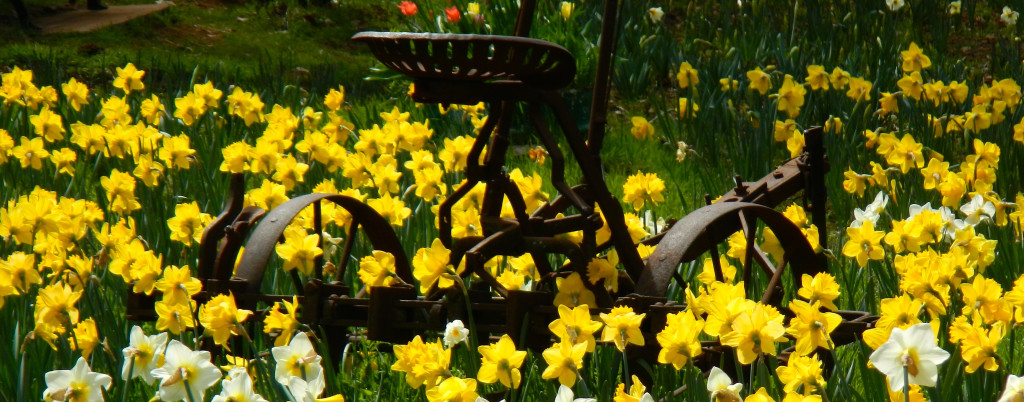
Old farm equipment and some of the original buildings are scattered about. Photo/Kathryn Reed

Old farm equipment and some of the original buildings are scattered about. Photo/Kathryn Reed

Daffodils were already on the property when Arthur and Lizzie McLaughlin bought the land from Dutchman Pete Denzer. They continued to operate it as a way station for people traveling over the Carson Pass. When she died in 1935 family members planted daffodils in her memory. Each year the tradition continued.

Now it is also a tradition for many to make the trek to Daffodil Hill. Some days 4,000 people will walk the grounds to see these yellow, white and orange flowers.

Plan to visit Daffodil Hill in 2017. Photo/Kathryn Reed

Plan to visit Daffodil Hill in 2017. Photo/Kathryn Reed

—–

Notes:

·       Telephone: 209.296.7048.

·       Address: 18310 Rams Horn Grade, Volcano.