Flower gardens can be low maintenance

By Melinda Myers

Grow a beautiful flower garden with minimal care by investing a bit of time at the start of the season to reduce on-going care.

Always match flowers to the growing conditions and the care you are willing to provide. Low maintenance plants need minimal or no deadheading and staking. This means you’ll be growing good-looking plants with little effort on your part. And if the plants are suited to the growing conditions and resistant to common pests you’ll be doing less work managing insect and disease problems.

Further reduce your workload by selecting self-cleaning or free flowering annuals and perennials and those bred for long bloom and compact growth. You’ll enjoy more colorful flowers with less pruning and grooming.

Rudbeckia Prairie Sun and Ageratum Blue Horizon make a nice combination, adding plenty of color to the garden. Photo/Melinda Myers LLC

Rudbeckia Prairie Sun and Ageratum Blue Horizon make a nice combination, adding plenty of color to the garden. Photo/Melinda Myers LLC

Ageratum, angelonia, calibrochoa and many of the newer petunia cultivars are just a few of the annuals that do not need regular deadheading for continual bloom. Include perennials like willow amsonia, bugbane, Solomon seal, turtlehead and sedum autumn joy for lower maintenance and big results.

Prepare the soil and provide proper fertilization before planting. Work several inches of compost or other organic matter into the top 8 to 12 inches of soil to improve drainage and water holding ability. Incorporate a low nitrogen organic fertilizer at the same time. The slow release formulation provides needed nutrients throughout most if not all of the season. Plus, it promotes slow steady growth that won’t interfere with flowering, is less susceptible to pests and is more drought tolerant.

Properly space the plants, making sure they have sufficient room to reach their full size. Overcrowding means you will be thinning or dividing plants more often or battling disease problems instead of enjoying the full beauty the plants provide.

Consider removing flowers on annuals at planting. This allows plants to focus energy on establishing roots instead of flowers. Can’t bear to do this?  Then remove the flowers on every other plant or every other row. Then a week or two later remove the flowers on the remaining plants. You will soon be rewarded with full compact plants that will produce more flowers throughout the season.

Pinch back long and leggy transplants. Use a hard pinch to remove the tip and several inches of stem. Use your pruners or fingers to remove stems just above a set of leaves. The remaining plant will still look good while you wait for new leaves and stems to grow and produce new blooms.

Encourage branching on single stemmed plants with a soft pinch. Remove just the uppermost portion of the stem where the leaves and tip are starting to develop. Soon you will have a well branched plant and more blossoms.

Improve plant posture and reduce the need for staking with early season pruning. Keep mums and asters compact by pinching them back to six inches throughout June to encourage compact growth. Eliminate floppy growth and the need for staking on late bloomers like Boltonia, Autumn Joy sedum, Russian sage and Heliopsis

Revive catmint and perennial salvia that flop open in the center with pruning. Cut flopping plants back halfway once or twice a season as needed.

And don’t forget to mulch. Covering the soil surface with an inch or two of shredded leaves, evergreen needles/pine straw or other organic material will conserve moisture, suppress weeds and improve the soil as they decompose.

Always water new plantings often enough to keep the top few inches of soil moist. Once established water thoroughly and only as needed. This encourages drought tolerant roots, so you’ll need to do less watering in the future.

With proper planning, plant selection and soil preparation you can keep your ongoing care to a minimum. That means more time to relax and enjoy your beautiful garden.

Melinda Myers has more than 30 years of horticulture experience and has written more than 20 gardening books, including “Small Space Gardening” and “Midwest Gardener’s Handbook”. 


Hiking changes our brains for the better

By Meredith Carey, Conde Nast Traveler

Life isn’t a walk in the park, but according to a handful of recent studies, hiking may make it at least a little easier.

We’ve all experienced how time outdoors can clear your mind and ease stress, but there’s new evidence that taking a hike can do much more: it can change our brains. From lessening negativity to boosting creativity, hiking in fresh air actually boosts brain power and can help certain parts of the brain grow.

The study found that even though the technology helped get backpackers from point A to point B, it actually was so distracting that it lowered their cognitive function.

Read the whole story


4 Tahoe bear cubs get human help

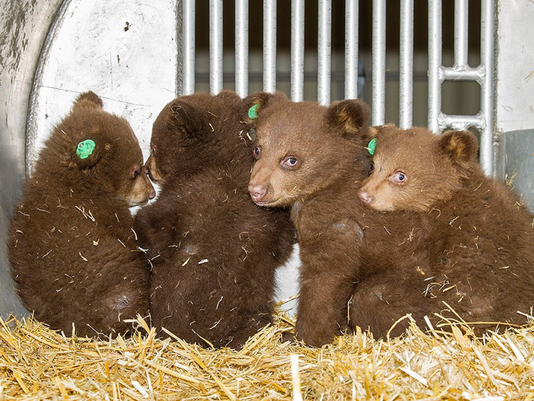
These orphaned bear cubs were rescued from Stateline, Nev., and will be raised near Reno until they can be released to the wild. Photo/Nevada Department of Wildlife

These Stateline cubs will be cared for in Reno before being returned to the wild.
Photo/Nevada Department of Wildlife

By Benjamin Spillman, Reno Gazette-Journal

Four bear cubs orphaned near Stateline will have a chance to grow up near Reno, at least until next winter.

That’s according to the Nevada Department of Wildlife which rescued the cubs last week after discovering their mother died, apparently of natural causes.

The cubs had been living under a walkway since their birth in January, according to a homeowner who reported the family of bears on her property.

Read the whole story


Expect to see smoke for controlled burns

Weather permitting, Tahoe Douglas Fire Protection District, Nevada Division of Forestry and U.S. Forest Service may continue prescribed fire operations April 18.

On the East Shore, operations may take place on the north side of Spooner Lake off Highway 28, Spooner Summit, Camp Galilee and on Kingsbury Grade near Edgewood Drive. On the South Shore, operations may take place near Lake Tahoe Boulevard and Sawmill Road, Panther Lane near South Tahoe High School, off Highway 89 near Spring Creek, and off Santa Claus Drive and West River Parkway near Christmas Valley.

To view a map with project locations and details, go online.

Residual smoke may be seen in locations where operations have taken place over the last several weeks.


South Tahoe pool available for kayakers

South Lake Tahoe is offering kayakers an opportunity to practice rolling skills at the city pool.


No instruction will be offered. What is available is a controlled and calm pool environment.

People need to bring their own kayak. Helmets and personal floatation devices are recommended.

The pool is available on Saturdays from April 16-May 21 from 3:30-4:30pm. Cost is $6 each day.

For additional information, call 530.542.6056.


Bountiful lakes await visitors

By Tom Stienstra, San Francisco Chronicle

The biggest lakes in California, crowned by Lake Tahoe, joined dozens of smaller lakes in the north state this week by rising to their highest levels in years.

It sets up a spectacular season for camping, boating, fishing and recreation-based vacations.

After hitting a long-term low last winter, Lake Tahoe rose to its natural rim this week and is spilling into the Truckee River at Tahoe City. Roughly 60 billion gallons of water have entered the lake in the past four months, according to the National Oceanic and Atmospheric Administration, one of the agencies that tracks water flow into Tahoe.

Clear Lake, Shasta, Oroville, Folsom and Bullards Bar Reservoir are other large lakes that have had massive infusions of water.

Read the whole story


Annual South Tahoe paddleboard race canceled

South Tahoe Standup Paddle is taking leap year to a new level. The South Lake Tahoe business is skipping this year’s Race the Lake of the Sky event.

The Bracketts are instead focusing their energy on moving and improving their new facilities.

The Harrison Avenue building where South Tahoe Standup Paddle has been since 2010 has been sold. While initially the hope was to use the back area, the reality was a move would be in the company’s future. It just came sooner than expected.

South Tahoe Standup Paddle is moving to where the Picchetti Winery tasting room was. This puts the paddleboard company two blocks closer to the lake and still on Harrison Avenue.

Owners said putting on the summer event would be too much, so instead it will be resurrected in 2017, which will be the fifth year for the races.

— Lake Tahoe News staff report


USFS proposes massive West Shore fuel reduction project

The U.S. Forest Service Lake Tahoe Basin Management Unit is seeking public comment on a proposal to reduce hazardous fuels on the West Shore.

The project would treat approximately 4,875 acres from Emerald Bay to Burton Creek State Park. It would include thinning and fuels reduction treatments intended to reduce the risk of severe wildfire and would provide defensible space to adjacent communities, improve forest health by thinning trees in high density areas, which decreases the risk for widespread tree mortality during drought conditions, insect infestation and spreading of diseases.

This project would mark the completion of initial Forest Service treatments in the Lake Tahoe Basin.

The project would also include demonstration areas for various treatment types that may be considered in the upcoming Lake Tahoe West Collaborative Project.


The proposal is available online. Comments are being taken until May 9.


1 season — potentially 200 days of skiing

By Benjamin Spillman, Reno Gazette-Journal

For some people getting first chair on Squaw Valley’s KT-22, one of skiing’s iconic lifts, is a bucket list moment.

For Andy Melendes and Cheryl Varner it’s a near-daily occurrence.

Fortunately for Melendes and Varner the 2015-16 season has turned out to be dreamier than any other, at least since 2010-11.

If the snow sticks around until Squaw-Alpine’s announced closing date of May 30, Melendes will reach 199 days. If he can ski on the 31st it will be an even 200. If Varner maintains her pace she would finish with 182 days on the mountain. Their combined total would be 382. According to Squaw Alpine’s pass tracking technology, Melendes has more days skiing than anyone at the resort.

Read the whole story


Helping the next generation understand extreme risk

By Tim Hauserman, Adventure Sports Journal

“We are sick of going to funerals,” said John Walsh, a lifelong Tahoe local and former ski racer, lamenting the steady stream of Tahoe based athletes and adventurers (including his nephew) who died in recent years while pushing the envelope in dangerous sports.

Action sports filmmaker Steven Siig adds, “You never want to make that phone call that a friend has died.” He knows, he has made the call.

Walsh and Siig are part of a group of Tahoe locals who, fed up with the pain of losing a steady stream of great athletes and friends, have formed the Go Bigger Coalition. The group is attempting to discredit the prevailing wisdom that flying through the air 200 feet on skis is a worthy goal no matter what the risks, and emphasize the importance of being alive at 70 and enjoying the simple beauty of skiing every day.

Read the whole story