Construction on LTWC center to resume in summer

Work on Lake Tahoe Wildlife Care‘s rehab center on Al Tahoe Boulevard in South Lake Tahoe is expected to resume in mid-July.

At that time the underground work — sewer, water, gas, electric, video — will be completed.

Work on the foundations should resume about the same time.

“We expect to have all underground work and all foundations completed by summer’s end,” Tom Millham, co-founder of the facility, told Lake Tahoe News. “Funding will determine if we can expand further with framing of cages/buildings.”

LTWC cares for sick and/or injured wildlife, with the goal of returning the animals to their natural environment. The new rehab facility will include multiple cages on 27-acres, with the end goal of having an education center that is open to the public.

— Lake Tahoe News staff report


Massive South Shore thinning project to resume

The U.S. Forest Service Lake Tahoe Basin Management Unit will resume work on the South Shore Hazardous Fuels Reduction and Healthy Forest Restoration project this week.

Mechanical whole tree removal will take place off Fallen Leaf Road near Fallen Leaf Campground over the next several months and the area will be closed for public safety. This project calls for thinning of trees and brush on approximately 10,000 acres of national forest.

Mechanical whole tree removal involves cutting the entire tree and moving it to the landing area to remove the limbs and cut it into sections.  This type of mechanical operation requires closure of the area during operations due to the hazards posed by heavy equipment and falling trees.  The Forest Service will issue a forest order closing the project area (units 1 and 148) to pedestrians from 7am-6pm from approximately May 15 through Aug. 15.

Overall benefits to forests in treated areas include reducing fuel for wildfires and providing the remaining trees with less competition for resources such as water, sunlight and nutrients, which allow the trees to grow larger and become more resistant to drought, insects and disease.

For more info, go online.


Amgen party in Nevada; Strider race for kids

Amgen Tour of California women’s race viewing party will be at the Lake Tahoe Visitors Authority office in Stateline on May 19 from 1-2pm.

The cyclists are expected to pass by the Nevada Visitor Center at approximately1:45pm that Thursday.

Local author Andrew M. Homan will be autographing and selling his book “Life in the Slipstream – the Legend of Bobby Walthour Sr.”


Fore more info, go online.

There will also be a Strider bike race after the women’s race starts. It will be at 1pm, check-in at 12:30pm. It is open to ages 2-5. Open to Ages 2-5. Register online.


Cycling summit highlights South Shore’s growing prominence in world of mountain biking

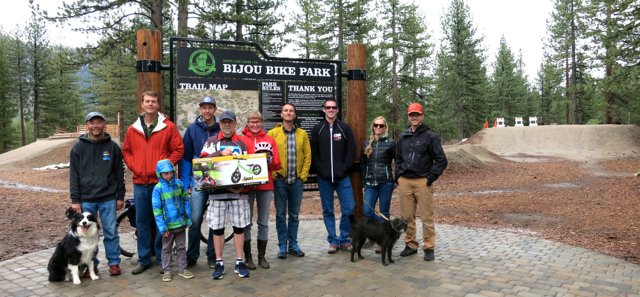
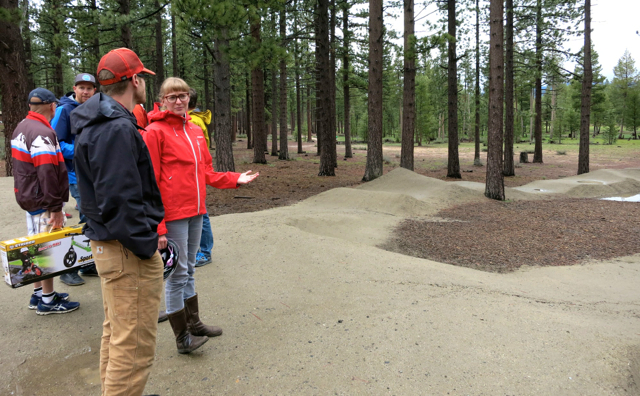
Amy Fish talks about the features of the bike park at Bijou that opened last year. Photo/Jessie Marchesseau

Amy Fish talks about the features of the bike park at Bijou that opened last year. Photo/Jessie Marchesseau

By Jessie Marchesseau

It takes more than a little rain to keep mountain bikers indoors. Riding enthusiasts donned rain jackets and jumped over puddles as they toured the Bijou Bike Park on Saturday afternoon as part of the 2016 Tahoe Trails Summit.

The Tahoe Area Mountain Biking Association in partnership with the U.S. Forest Service Lake Tahoe Basin Management Unit and the Beach Retreat & Lodge at Tahoe hosted the May 6-8 event.

Consisting of trail tech talks, presentations, panel discussions, Q&A sessions, social events and, of course, riding, the summit was designed to bring together a variety of trail users and experts to celebrate the progress made on Tahoe trails in recent years, introduce what’s happening now and open a dialogue about where to go from here.

The weekend’s speaker list was diverse, including South Lake Tahoe’s mayor pro tem Austin Sass; founder of Ibis Bicycles, Scot Nicol; Mammoth Lakes Council member John Wentworth; athlete and adventurer Chris McNamara; Sierra Buttes Trail Stewardship Executive Director Greg Williams; Tahoe Rim Trail Executive Director Morgan Fessler; and representatives from TAMBA, Heavenly and the USFS.

Gary Sjoquist, advocacy director for Quality Bicycle Products, the largest distributor of bike parts in the world, was also one of Saturday’s presenters. He spoke about the potential of Lake Tahoe becoming a true mountain biking destination.

Sjoquist has traveled to biking destinations all over the country. He said he sees a few things in Tahoe that make it truly unique, one being the amazing scenery the location offers pretty much everywhere you look. He said we also have a rare combination of officials who realize the importance of recreation to our local economy, forward-thinking individuals with the USFS and motivated community members who are all willing to work together to make a great trail system happen.

Ben Fish, president of TAMBA, is one of those people. Fish played a major role in organizing the summit, acted as a panelist, a presenter and host of Saturday’s bike park tour.

Cycling advocates are ensuring the South Shore is a destination for mountain bikers. Photo/Jessie Marchessea

Cycling advocates are ensuring the South Shore is a destination for mountain bikers. Photo/Jessie Marchessea

As the group walked the track, rain wetting the already muddy ground, Fish showed how the park has multiple lines to accommodate riders with a variety of skill levels and riding styles. The slopestyle track, he explained, the one with the bigger jumps, is by far the most popular. Riders have been known to perform a variety of flips and tricks over the jumps that were intentionally built in full view of Al Tahoe Boulevard.

The smaller pump track appeals more to BMX riders and the younger crowd. Fish’s wife, Amy, said the medium track is her favorite. And there is also talk of building an additional smaller track to accommodate still younger riders on strider bikes, two-wheel bikes kids push with their feet rather than using pedals.

Amy Fish said the bike park has also become a place for riders who were once out building illegal trails and jumps on USFS land to come and play. She is now seeing some of these riders help with maintenance in the bike park as well as TAMBA’s organized trail building events. Keeping these riders interested is one reason they intend to periodically alter and upgrade the bike park tracks.

“If they don’t feel like they can change things and have fun with it, they’ll go back to the woods,” she said.

When it comes to building bike tracks, they have learned some lessons, such as how adding a layer of glue on top of the track actually makes maintenance harder and putting a teeter-totter feature in the middle of a track isn’t such a good idea. These lessons will make the park better in the long run.

More than one attendee pointed out the current lack of connectivity to other bike trails, making it difficult for people to actually ride their bikes to and from the park. Current projects such as the Greenway bike trail should resolve that issue in the near future.

“That’s the dream,” Ben Fish said, “that everyone will be able to ride right from their hotel room or their house, and they can get to the bike park or go on an epic 35-mile ride.”

This summit was part of making that dream a reality.

Jacob Quinn, USFS trails engineer, pointed out the dramatic trail improvements the community has seen since the first trail summit in 2010. He said we are fortunate to have such active groups and productive partnerships when it comes to improving our trails system.

“As a trail community, we’re in a really good place right now,” he said.

Even so, Fish said he sees a new energy and more dynamic partnerships resulting from the weekend’s discourse. This energy could fuel area trail improvements and collaborations for the next five years, and possibly beyond.


Nev. reluctantly kills bighorn sheep to save them

By Scott Sonner, AP

Nevada state wildlife veterinarian Peregrine Wolff worked at zoos in the Midwest, with farm animals in Florida and exotic species on movie sets in Hollywood. She never dreamed she’d have to help pull the trigger on a contentious strategy to slaughter a diseased herd of bighorn sheep.

Ed Partee, a state game biologist who’s spent much of his 24-year career rebuilding bighorn populations, drew the grim task of tracking and gathering the carcasses of the 27 sheep. The animals were gunned down from a helicopter in February in an emergency attempt to save a neighboring herd.

“Having to kill an animal like that is probably one of the worst feelings I’ve ever had in this job,” said Partee, a native Nevadan who grew up fishing and hunting and knew by the time he was in junior high that he wanted to be a wildlife scientist.

Now, they wait to see if their gamble paid off in a race against the spread of pneumonia that’s also hit bighorns in Washington, Wyoming, Utah, Idaho, Montana and Utah, and threatens efforts to rebuild native populations that were on the brink of extinction a half century ago.

About 2 million bighorn sheep roamed North America before numbers started declining in the late 1800s to about one-tenth of that today due primarily to overhunting, habitat loss and disease — often transmitted by domestic animals.

“It’s been a concern since the Old World European settlers started bringing their domestic sheep with them across the West,” said Wolff, president of the American Association of Wildlife Veterinarians.

She suspects Desert bighorns in northwest Nevada contracted the biological agents that spread the pneumonia from domestic sheep or goats, as has been the case elsewhere. That’s been a point of contention in Montana and Idaho, where ranchers and conservationists have been fighting for decades over management of domestic sheep that biologists blame for transmitting the disease.

Livestock producers suffered a setback in March when the 9th U.S. Circuit Court of Appeals upheld a 2010 U.S. Forest Service decision to protect bighorns in Idaho’s Payette National Forest by closing 70 percent of the domestic grazing allotments.

The Idaho Wool Growers Association had argued that the service failed to consult the Department of Agriculture’s research service before it pushed 10,000 sheep out of the area, running many ranchers out of business.

It’s a “heated topic that has vast socio-economic and ecological impacts in the western United States,” said Maggie Highland, a USDA animal disease researcher at Washington State University.

She’s among those who question the science and wonder whether Nevada acted prematurely, “without really understanding all of the factors that caused the first outbreak.”

“I’d also question how we know for certain that none of the members of the affected herd hadn’t already intermingled with the herd that they were reportedly trying to protect,” Highland wrote in an email to AP.

Skeptics include Mark Thurmond, professor emeritus of veterinary epidemiology at the University of California-Davis.

“What they are doing is illogical — to say we found these agents therefore we’ve got to eradicate this entire herd,” Thurmond said. He says disease transmittal involves a complex combination of multiple agents and outside impacts, ranging from drought and wildfires, to extreme cold and snow.

“If the herd is doing well otherwise, why destroy the gene pool that has been able to handle these agents?” he told AP.

But by all accounts, the Nevada herd was not doing well.

State officials knew if they didn’t act fast, the sheep would disperse as the snowpack melted. Partee said they were lucky to get an early warning of trouble in December because they’d just fitted several sheep with radio-signal collars in a partnership with Oregon to monitor movement across state lines.

“You could tell right away there was something not right because of the fact they weren’t moving,” Partee said. “Within weeks we started realizing we were at the start of a devastating disease event.”

Necropsies confirmed the dead animals had pneumonia. Others were in such bad shape that Wolff was “surprised they were still alive.”

“In January, we started talking about the fact that if we lost this herd, it would be tragic, but if it spread to the neighboring herd to the south, we’d lose both of those,” Wolff said.

By the time the decision was made to kill the herd, fewer than a third of the 100 animals remained and those were so weak that they barely attempted to flee when the helicopter approached.

The move wasn’t without precedence. British Columbia killed a herd in hope of saving others in 2000. Utah officials killed 25 in 2010, and Washington 63 in 2013.

Wolff consulted experts, including those in British Columbia, before conceding that killing the herd was the only hope to keep the disease from spreading in the state with the most bighorns in the Lower 48. Nevada is the only state with all three North American species — Desert, California and Rocky Mountain.

Early indications are the kill may have kept the disease from reaching the neighboring herd.

Wolff stands by the decision.

“I take exception to anyone in the domestic sheep industry looking over my shoulder and telling the Nevada Department of Wildlife how to manage,” she said. “I totally understand the politics. But to deny the science because of the politics is sort of short-sighted to me.”


Growing sport: Bikepacking the backcountry

By Brad Branan, Sacramento Bee

I was having a perfectly good time backpacking the Tahoe Rim Trail last year, when I became unnerved by all the people passing me on mountain bikes. The reason for my frustration: They were clearly having more fun than I was.

So I did what any self-respecting outdoor enthusiast would. I bought a full-suspension Marin mountain bike the next week.

My interest in backpacking didn’t wane, though, with the purchase of the bike. I began to see mountain biking as an extension of the same love for exploration driving my backpacking. So I asked myself: How could I take overnight trips into remote areas like I did backpacking, except on my mountain bike?

Enter bikepacking.

Read the whole story


Lake Tahoe bicyclist overcomes broken kneecap to compete in Tour of California race

Peter Stetina is eager to compete on his home turf  in the Sierra on May 19. Photo/Provided

Peter Stetina is eager to compete on his home turf in the Sierra Mountains on May 19. Photo/Provided

By Susan Wood

For professional cyclist Peter Stetina, the choice was a no-brainer – his leg or his life.

The rider, who is set to compete in South Lake Tahoe for the Amgen Tour of California on May 19, endured a near career-ending crash about a year ago. His rehabilitation is long and inspirational.

The 28-year-old athlete who splits his time between homes in Tahoe City and Santa Rosa remembers that time during the Tour of the Basque Country on April 6, 2015, like it was yesterday.

With only 1 kilometer to go in Stage 1, he came around a corner and hit a metal pole in the road at about 40mph with his right leg taking the full force.

“Anywhere else on my body, and I probably wouldn’t be here today,” he told Lake Tahoe News.

He shattered his kneecap, cracked his tibia, tore his ACL and broke five ribs. He was listed in critical condition in the hospital for 11 days and underwent four surgeries.

Beyond the physical challenges, Stetina was forced to overcome his condition with mind over matter.

“I had a lot of dark days initially in my recovery. I thought ‘whatever becomes of my cycling career, I want my leg use in everyday life’,” he said.

Still, Stetina admits he was hungry to return to the racing circuit after such the setback stalled one of the best cycling years he had had.

“I learned a lot about myself,” he said, referring to his will to survive and thrive.

For three months, he underwent two-hour physical therapy sessions five days a week.

His physical therapist, Dave Townsend, also got an education in Stetina’s will.

“I saw him pretty fresh. For me, I had my doubts about his return because I know the severity of the injury,” Townsend told Lake Tahoe News from his Santa Rosa home.

Stetina’s knee was held together by a multitude of screws. The duo worked on Stetina’s range of motion, and Townsend knew his therapy would hurt.

“He’s one of the toughest people I knew to take that kind of pain,” Townsend said, describing the pain threshold as “off the charts.”

“I had to bend his knee in many directions,” Townsend said.

At the time, the physical therapist knew how difficult it was, especially with the build-up of scar tissue following the surgeries, but admits “it’s the fastest I’ve ever gotten anybody back” to competition.

“It was 100 percent mental will. He was able to get his mind somewhere else. In a lot of ways, that makes him a great cyclist. I feel like he can push his body further now,” Townsend said. “I’d definitely put my money on Peter.”

Stetina, who started his cycling career at age 15 and made the pro tour in 2010, will have a chance to prove himself again. When he takes on the Sierra Nevada Mountains this year, it will be like home to the cyclist who considers himself a “mountain goat” climber.

This will be his third Tour of California, the other two in 2010 and 2014. In Tahoe, he gets an altitude boost. He regularly takes his Trek bike out on interval training from the West Shore with climbs on Mount Rose, Black Canyon and Alpine Meadows and enjoys the diversity of the landscape and scenery.

Stetina grew up in the mountains of Colorado, so the terrain here reminds him of his roots. He bought a house in Tahoe City specifically to train.

“Tahoe is my power place – to breathe that thin mountain air is my mojo,” the team Trek-Segafredo rider said.

Stetina is at a place of peace these days despite knowing he’s uncertain about how long his knee will last the grueling nature of bicycle racing. He guessed he probably has at least five years to go.

Then what?

“When I was in my dark days in recovery, I had to think about what’s next,” he said, admitting he’d like to own a restaurant.

“To me, the only thing more competitive than cycling is the food industry, so I’m not so easy on myself,” he joked.

The two industries coincide, and he lives in the right place for the next chapter.

The Wine Country is indeed a foodie’s paradise.

“Sometimes I ride more so I can throw down another sandwich,” he said.

These multi-day rides like Amgen require cyclists to eat the equivalent to a Thanksgiving meal — between 3,500 to 7,000 calories a day to keep up their strength and stamina.

Amgen riders covering 800 miles over eight days will need that fuel more than ever since history will be made in Tahoe for the 11th annual event. Not only are 10 UCI WorldTour teams competing – a record – but the Tahoe leg encapsulating the men’s finish features a peak elevation of 8,600 feet – another record.

Stetina hopes to use the springtime event to go into the Olympic Games in Rio de Janeiro this summer. He expects to find out in late June. The South American course is particularly mountainous, making Stetina keenly interested.

In the meantime, Amgen represents one of the majors for those in the cycling world. The ride showcases California’s diversity of terrain from the Central Valley to the Sierra Nevada Mountain Range. It starts May 15, finishes Stage 5 at Heavenly’s California Base Lodge on May 19 and ends as an event three days later.

The women’s race starts at Heavenly, encircles Lake Tahoe and runs through the South Shore, featuring a climb at Emerald Bay. It ends in the same place nearly a few hours apart.

Last year, the women’s race brought out cycling enthusiasts to the expo and along the route.

Having the men’s and women’s races in tandem ups the ante for enthusiasm.
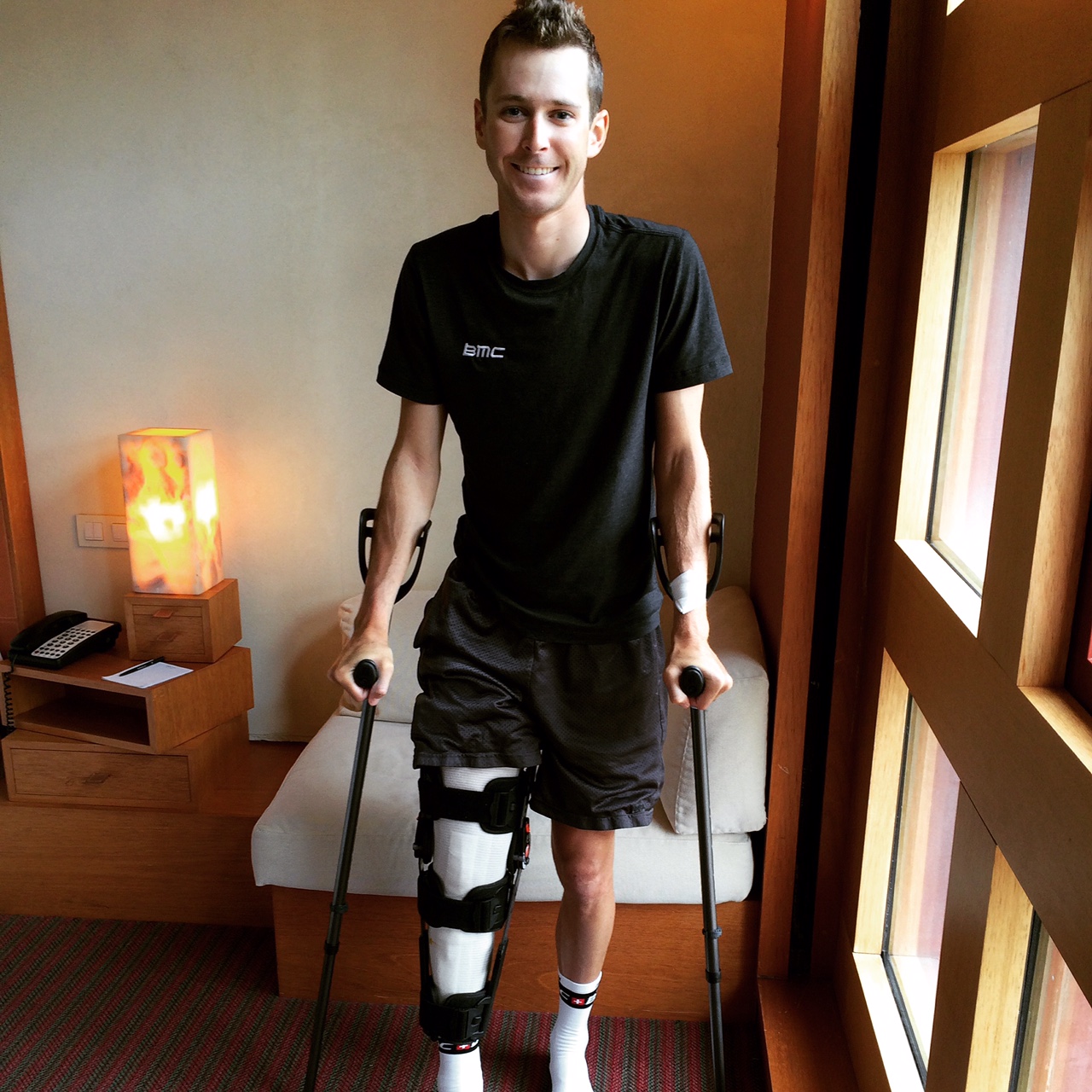
Rigorous physical therapy allowed Peter Stetina to be cycling competitively again. Photo/Provided

Rigorous physical therapy allowed Peter Stetina to be cycling competitively again. Photo/Provided

Lake Tahoe Visitors Authority Executive Director Carol Chaplin, herself a cyclist, believes the men’s finish this year will add to the attendance potential.

Moreover, being an Olympic year may also boost the energy level among wannabes and spectators.

It’s been an interesting relationship between the Amgen tour and Lake Tahoe weather. A few years ago, the ride was canceled because of snow.

The harsh weather can put the riders at risk of hypothermia and makes braking a challenge – but that’s “the call of the race director.”

The value of having the Tour here is already evident in the buildup to the event.

“It’s huge exposure for our destination. If something (like weather) happens, we got a lot out of it beforehand,” Chaplin said.

True. And if the race goes on as planned, Chaplin’s team is ready for it, having hosted it in prior years.

“If we learned anything, it’s in the actual support of the tour in law enforcement, activities and permitting process,” she said.

Now there’s a database where the event crew knows whom to call for what.

“We’re able to anticipate what needs to be done easier and faster,” she said.

The smoother operations have lent themselves to having more time to review the checklists of things to do.

And if Mother Nature decides to be difficult, the late starts help “even if there’s a squall” in the morning.

Tahoe residents and visitors are a gutsy lot. They stood out in harsh, cold night temperatures wrapped in blankets waiting for the Olympic torch to come down the street in January 2002.

A little threat of an on and off Tahoe winter won’t deter their fun.

For those wanting to see 300 tuned, top athletes compete in this grand, international cycling event, there are ideal viewing spots.

From 10:50am to 2pm, one can witness the women’s race at Al Tahoe Boulevard and Highway 50 and where the major thoroughfare meets Highway 89. Spooner Summit, Lake Parkway and at the intersection of Pioneer Trail and Ski Run Boulevard also round out the list.

Places to see the men race from 3:15 to 3:45pm are mainly in the Meyers area off Highway 89. The race continues down Pioneer Trail to the California Base Lodge.

Officials warn of parking impacts. Restrictions run along Pioneer Trail from Stateline to Black Bart, Tamarack, Blackwood, Spruce, Montreal and Chonokis avenues. Also, Glenwood Way along with Rocky Point, Keller and Saddle roads as well as Al Tahoe and Ski Run boulevards will be affected.

Pure Amgen followers may opt for a VIP experience that ranges from a behind-the-scenes tour to a special car ride with a Tour jersey. Go online for more details.


Sports books could lose on Kentucky Derby

By Case Keefer, Las Vegas Sun

Sports bettors galloped over sports books in last year’s Kentucky Derby with longtime favorite American Pharoah prevailing to pay out a multitude of tickets.

Gamblers are positioned to kick dirt in the faces of bookmakers again this year in the 142nd running of the Kentucky Derby, with post time at 3:34 this afternoon from Churchill Downs in Louisville, Ky. Favorite Nyquist, much like American Pharoah, topped Wynn Las Vegas’ initial list in odds to win the Derby last September and attracted significant action for months.

Nyquist opened at 35-to-1 and trimmed to 7-to-2 before Avello closed his future book at the commencement of pari-mutuel wagering on the race after Wednesday’s post draw. Churchill Downs oddsmaker Mike Battaglia made Nyquist, who came out with the No. 13 post, the favorite at 3-to-1 on the morning line.

Read the whole story


Pinyon trek a contrast in landscapes

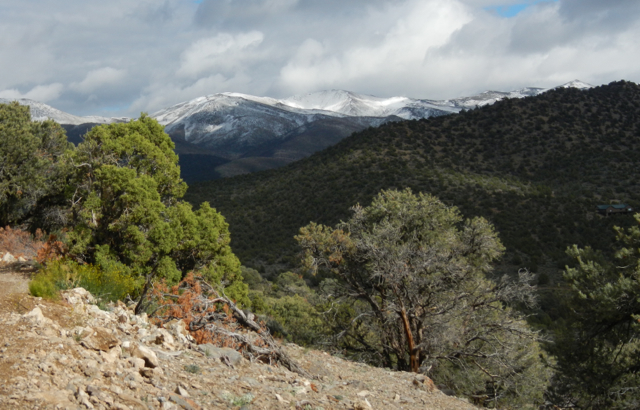
The Pine Nut range is a dominate feature along the Pinyon trail. Photo/Kathryn Reed

The Pine Nut range is a dominate feature along the Pinyon trail. Photo/Kathryn Reed

By Kathryn Reed

GARDNERVILLE – The sun danced in between the clouds, casting shadows across the land. At times it was like being in a bowl, with snowcapped mountains in nearly every direction.

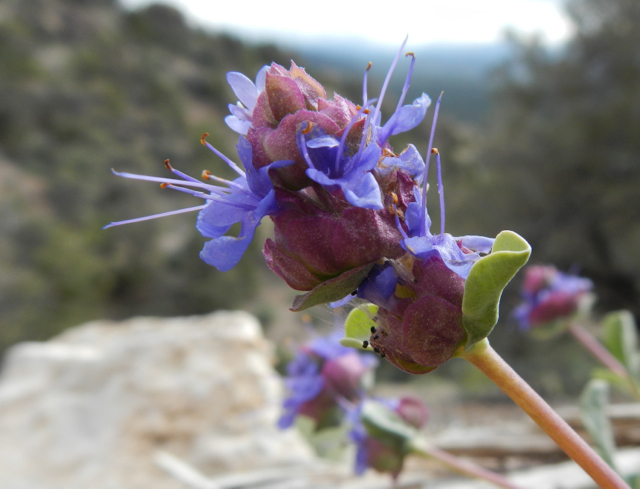
While the weather was gloomy, the scenery was spectacular on this last Saturday of April. Wildflowers are already out in the Pine Nuts, just east of Gardnerville. Red, yellow, purple and white dot the landscape at the start of the trail. Even though there is not an abundance of flora, compared to the trails of Tahoe right now it was incredibly colorful.

The Pinyon trail is part of the network maintained by the Carson Valley Trails Association on Bureau of Land Management property. This particular trek was 5 miles.

Flowers are in bloom along the trail. Photo/Kathryn Reed

Flowers are in bloom along the trail. Photo/Kathryn Reed

Starting at 5,700 feet, the highest point is only 6,060 feet. The single track is well maintained. Signage is outstanding. This is important because there are trails that cross the main route that the newcomer might opt to inadvertently take. Most of those trails are for dirt bikes and the like, while the main trail is for hikers, mountain bikers and equestrians.

Much of the trail is a loop. Even this is marked so you know when it starts.

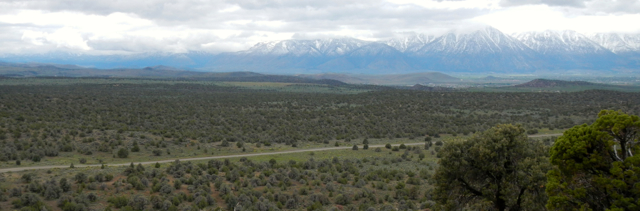
As the sun came out it was like a spotlight illuminating the snow covered Pine Nut and Carson ranges in the distance. Between the trail and mountains it was either flat or rolling hills – most of it green and lush.

The Carson Range with fresh snow. Photo/Kathryn Reed

The Carson Range with fresh snow. Photo/Kathryn Reed

Pinyon pines – Nevada’s state tree – and Utah juniper dominate the immediate landscape. These short trees, that look like their growth has been prematurely stopped, would not provide much shade. My guess is this area would be hot and not ideal for hiking in the middle of summer. Plus, there is no water, even this time of year.

What was a nice change compared to most places in the Tahoe basin is that dogs are allowed off leash.

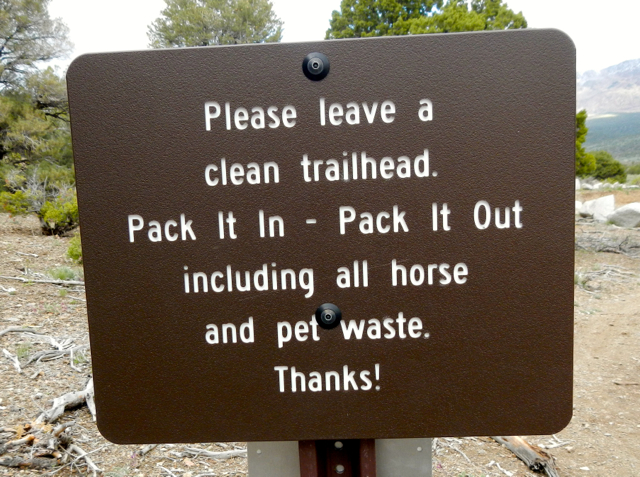
A sign at the trailhead says people should pick up after dogs and horses. Too bad the wording is facing people as they are coming back to their vehicles. The equestrians AJ and I passed had left their messes for us to walk around.

An abundance of trails exist in this area. Most looked like they would be great for mountain bikers or all terrain vehicles.

Pinyon trail, hike near gardnerville—–

Getting there:

The trailhead is about 30 miles from South Lake Tahoe. Easy access from Kingsbury Grade or Luther Pass depending on starting point.

Once in Gardnerville, turn on Muller Parkway going east. (There is a 7-Eleven on the other side of the street.)

At the roundabout go right onto Pinenut Road. Turn left on Pinenut Road 2. At the Y go right onto the gravel road. (The average passenger car would be fine on this road.)

The trailhead is clearly marked a couple miles farther on the left. There are on signs on each of the roads as well.


Upper Truckee Marsh off-limits to dogs

The California Tahoe Conservancy’s annual seasonal dog closure at the Upper Truckee Marsh is in effect now through July 31.

The purpose of the closure is to keep dogs out of critical breeding habitat for special, threatened and endangered species.

Beginning Aug. 1, dogs will again be permitted access to the Upper Truckee Marsh provided they are on leash.

The Conservancy-owned Cove East property, west of the river, remains open for year-round, leashed dog
access.

The El Dorado County Sheriff’s Office enforces county and city ordinances and Conservancy staff monitors for compliance.