California fighting spread of invasive species

California agencies combatting the spread of invasive quagga and zebra mussels are reminding boaters to remain cautious over Memorial Day weekend.

Quagga and zebra mussels are invasive freshwater mussels native to Eurasia. They multiply quickly, encrust watercraft and infrastructure, alter water quality and the aquatic food web, and ultimately impact native and sport fish communities. These mussels spread from one body of water to another by attaching to watercraft, equipment and nearly anything that has been in an infested waterbody.

So far none have been found in Lake Tahoe.

Microscopic juveniles, invisible to the naked eye, are spread from infested waterbodies in water entrapped in boat engines, bilges, live-wells and buckets. Quagga mussels have infested 29 reservoirs in Southern California and zebra mussels have infested San Justo Reservoir in San Benito County.

To prevent the spread of these mussels and other aquatic invasive species, people launching vessels at any body of water are subject to watercraft inspections and are strongly encouraged to clean, drain and dry their motorized and non-motorized boats, including personal watercraft, and any equipment that comes into contact with the water before and after recreating.

To ensure watercraft are clean, drained and dry, many local agencies conduct boat inspections, including in the basin and Truckee.

Take the following steps both before traveling to and before leaving a waterbody to prevent spreading invasive mussels, improve your inspection experience and safeguard California waterways:

Clean — inspect exposed surfaces and remove all plants and organisms,
Drain — all water, including water contained in lower outboard units, live-wells and bait buckets, and
Dry — allow the watercraft to thoroughly dry between launches. Watercraft should be kept dry for at least five days in warm weather and up to 30 days in cool weather.


CalFire ups staffing because of fire danger

CalFire is increasing its staffing as windy conditions are predicted to elevate fire danger across many areas of California.

With many Californians planning to recreate outdoors for the Memorial Day weekend, CalFire is asking the public to take steps to prevent sparking a wildfire. According to the National Weather Service many parts of California will see warm weather this weekend and winds through Saturday with gusts of 20-30 mph. There is a risk of lightning across the higher elevations in the Sierra.

Since Jan. 1, CalFire has responded to more than 1,100 wildfires that have burned more than 10,000 acres. Last week fire crews responded to 169 wildfires that charred approximately 4,000 acres.

Here are some tips to be safe:

Camping:
· Obtain a campfire permit
· Check for local fire restrictions
· Clear away grass, leaves and other debris within a 10-foot perimeter of any campfire
· Have a responsible person in attendance at all times
· Ensure all campfires are completely extinguished before leaving
· When barbecuing, never leave the grill unattended,

Vehicle
· Ensure your vehicle is properly maintained with nothing dragging on the ground
· When towing, make sure trailer chains are properly secured
· Never drive or pull over into dry grass.


Safety tips for recreating on USFS land

Crews on the Eldorado National Forest have been busy getting the forest ready for the rush of visitors expected this weekend.

Visitors are reminded to check the status of their favorite campgrounds as not all facilities are open.

Campground status:  Campgrounds expected to be open for Memorial Weekend are Fashoda, Silver Creek, Wolf Creek, Yellowjacket, Ice House, Wench Creek, Gerle Creek, Sunset (sites 62 to 131), Dru Barner campground, Strawberry Point, Jones Fork, Northwind, Northshore, Middle Fork Cosumnes, Pardoes Point, South Shore, Sugar Pine Point, Stumpy Meadows, Ponderosa Cove Group, Hell Hole, Westpoint, Airport Flat, Camino Cove, Azalea Cove, Lone Rock, Bridal Veil, China Flat, Sand Flat, Capps Crossing, Silver Fork, Mokelumne, White Azalea, Pipi and Loon Lake. Campgrounds above 6,000 feet in elevation that are expected to open in mid to late June are Bear River Group, Caples Lake, Kirkwood Lake, and Silver Lake East.

Woods Lake and Wrights Lake at over 7,000 feet in elevation will be the last to open most likely in late June to early July.

Black Oak Group campground and Big Meadows campground are closed until repairs from the King fire are completed later this summer.

Sunset loops 1 and 2 (sites 1-61) are temporarily closed through mid-August due to nesting bald eagles which were found last week.

The Union Valley Reservoir area has numerous campgrounds for campers.

Wench Creek Campground is a great alternative to Sunset Campground and doesn’t require reservations.

Fire and wilderness permits: Outside of hosted campgrounds, visitors must have a California campfire permit to have a campfire, charcoal barbecue, or use a gas stove or gas lantern. The permit is your agreement to follow the campfire restrictions and regulations in effect. Remember that regulations governing campfires can change with weather conditions and the seasons. Smoking outside of an enclosed vehicle may be completely prohibited during times of high fire danger.

Wilderness permits are required for the Desolation and Mokelumne wilderness areas. Hikers and backpackers should be prepared to encounter snow in the high country. The Eldorado National Forest Interpretive Association (ENFIA) will be staffing the Carson Pass Information Station on Highway 88 Memorial Weekend to assist visitors with Mokelumne Wilderness permits and recreation information. They also staff the Pyramid Creek Trailhead on Highway 50 by Twin Bridges to provide recreation information for forest visitors.

Road conditions: Most of the roads on the Eldorado National Forest are open for vehicle travel. The higher elevation routes including the Mormon Emigrant Trail are still blocked by snow drifts or wet from melting snow. Be cautious of downed trees where crews have not yet cleared the roadways.

Hazard trees: Visitors are urged to be extra aware of the trees around them due to the ongoing hazards of fire killed trees in the King Fire area and the hazards caused by drought and insect stricken dead or dying trees.

Fish advisories: The California Office of Environmental Health Hazard Assessment  recently issued a fish advisory to provide safe eating advice for fish caught in Hell Hole Reservoir in the Georgetown Ranger District as well as the nearby French Meadows Reservoir in the Tahoe National Forest. There is also a general statewide advisory for eating fish from California’s lakes and reservoirs. Visitors who are fishing should be familiar with OEHHA’s safe eating guidelines.


Boating safety emphasized with higher lake levels

With help from a wet winter, law enforcement agencies in Northern Nevada are preparing for a busy boating season at lakes Tahoe, Topaz, Lahontan and others, following several years of drought and tough boating conditions.

The Nevada Department of Wildlife, Douglas County Sheriff’s Office and Washoe County Sheriff’s Office are all launching boats before the Memorial Day weekend to provide for public safety and enforce boating laws.

“We’ve seen challenging conditions over the past few years, but with a healthy winter behind us, we expect a lot more people out on the water,” Chief Game Warden Tyler Turnipseed of the NDOW, the agency responsible for boating across the state, said in a statement.  “With more boaters, we don’t want to see more accidents, so we’re being proactive with our boating safety and enforcement efforts.”

NDOW has officers stationed at all of Nevada’s major waterways, and Memorial Day weekend is the traditional kickoff to boating season.

In addition to NDOW, many other law enforcement agencies will be putting boats on the water before this busy boating season gets underway.

Douglas County is launching a new patrol boat to work enforcement on Lake Tahoe, a lake that saw three fatal accidents last year, all on the California side.


Boaters who were born on or after Jan. 1, 1983, are required to complete a boating course to operate a motorboat of more than 15 horsepower on Lakes Tahoe or Topaz.  As every year, officials also stress life jacket wear as the single greatest step boaters can take to stay safe.


Rained-out tennis lessons rescheduled at ZCTC

While the pros were sliding on the clay at the French Open, Lake Tahoe kids have been pounding the hard courts at Zephyr Cove Tennis Club.

Deanne Larsell, assistant pro at the club, led more than a dozen kids through a series of drills this week before the rain forced play to stop. The two free clinics that were canceled because of the weather have been rescheduled for June 1. Grades 3-5 will play starting at 3:45pm, while grades 6-8 begin at 4:45pm.

Youngsters are taught the fundamentals of the game, as well as have the opportunity to refine skills they already have.

Douglas County Parks and Recreation Department, and the nonprofit Zephyr Cove Tennis Club Foundation are providing the free lessons.

The Northern California chapter of the U.S. Tennis Association is providing goodies to each participant.

ZCTC will be offering a more in depth youth summer program starting June 6. For more information, go online.


Day of recreation in South Lake Tahoe

The South Lake Tahoe Recreation Division’s annual Spring into Summer Kick-Off Party is June 4 from 10am-2pm.

The event is designed to highlight summer programs, introduce recreation instructors and provide tours of the recreation and swim complex in a fun and festive environment.

South Tahoe Adventure Recreation (STAR) Camp leaders will be on hand to meet prospective campers and parents as well as provide details about the many adventures campers will experience this summer such as hiking, biking, bike park riding, ice skating, archery, arts and crafts, fun with science, field trips and more. STAR camp is for youth ages K-5 grade.

Water safety instructors will be available to provide information on swim classes for all ages and abilities. Tahoe Swim Club coaches will provide information on youth competitive swimming and training programs.

The recreation complex located at 1180 Rufus Allen Blvd. For more information, call 530.542.6056.


Pinnacles Park — A peak experience

Publisher’s note: This is one in a series of stories about the National Park Service, which is celebrating its 100th anniversary in 2016.
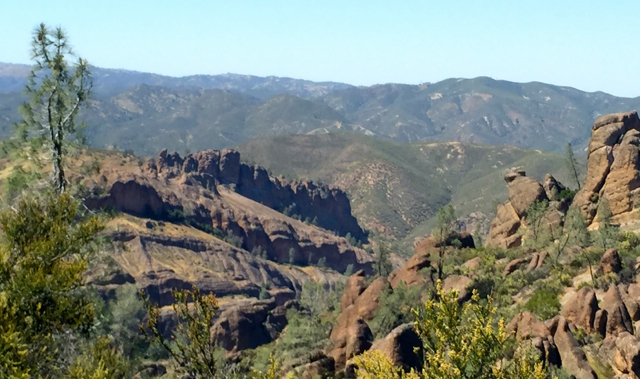
Pinnacles National Park is a geological wonder. Photo/Susan Wood

Pinnacles National Park is a geological wonder. Photo/Susan Wood

By Susan Wood

PINNACLES NATIONAL PARK — Whatever your penchant for an ideal national park, Pinnacles ranks as the most recently inducted. It was established as a national monument by President Theodore Roosevelt in 1908, and 105 years later, President Obama signed it into law as a park.

“Where?” people ask.

What Pinnacles lacks in fame, it makes up for in grand-scale features.
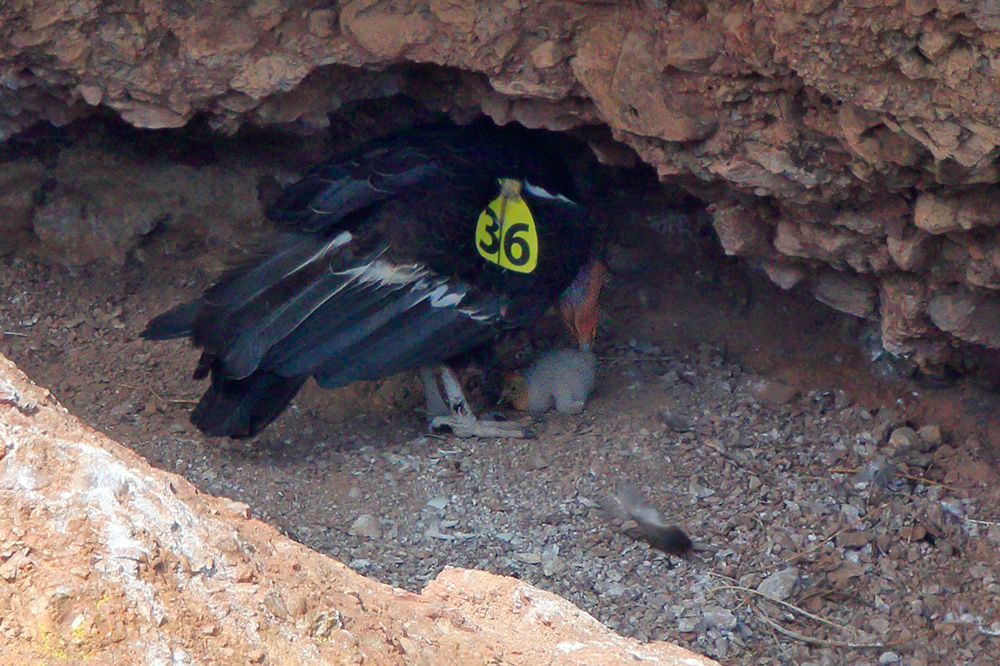
Condors are gradually becoming more prominent in the park. Photo/National Park Service

Condors are gradually becoming more prominent in the park. Photo/National Park Service

A bird’s-eye view

First, it might be a blessing it isn’t well known considering the endangered California condor calls it home. The nesting grounds represent one of a few release sites in the United States and Mexico. Loss of habitat, shootings and poisoning from lead bullets almost did them in when they made the list in 1967. The population has dwindled down to 435 – make that 436 as No. 828 was born in the last few weeks – with 167 in captivity.

The condor is one of the largest birds in North America, with a wingspan of 9½ feet. It soars on thermal updrafts at 55 mph, at altitudes of 15,000 feet. When you see one, it is a spectacle to behold.

The Park Service has established an aggressive program to monitor their progress.

Winter rains bring spring flowers. Photo/Susan Wood

Winter rains bring spring flowers. Photo/Susan Wood

“We want to get a general sense of where the birds are,” program park worker Arianna said, while holding a transmitter at a picnic table stationed at the Bear Gulch day use area. Bear Gulch is ground zero for condors, as the social birds can often be spotted in the afternoon flying over High Peaks and swooping down into the valley. The park workers set up a spyglass station to help spot them between the campground and Bench trailhead.

The birds wear radio transmitters that workers track a few times a day. If a bird doesn’t move after eight hours, workers know to go find it because something’s wrong.

This is not an easy task. They tend to fly in remote areas and weigh 20 pounds, making it a challenge to carry them out. They nest at night and feed on dead carcasses during the day.

It’s a big deal when a new chick enters the flock. Park workers even announced No. 828 on a sandwich board sign at the general store.

That’s not all to announce. Pinnacles’ terrain, wildlife and lack of light at night make programs unique. There’s stargazing, life with bats – which hang out in the Balconies Cave – and in spring, wildflowers that pop out of the ground as far as the eye can see. There are larkspur, mariposa lilies and poppies everywhere.
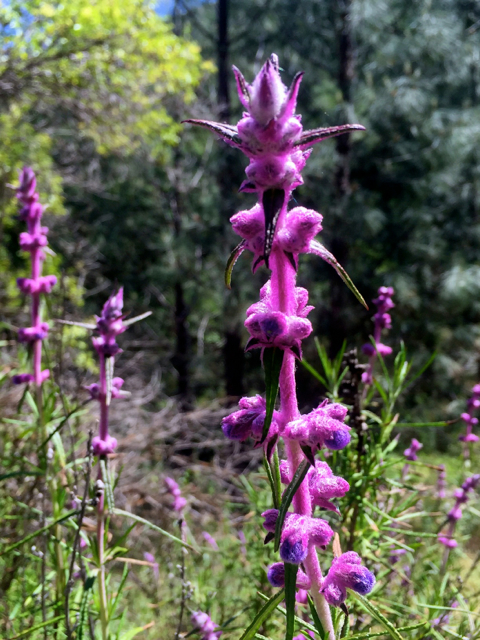
An array of wildflowers fill the landscape. Photo/Susan Wood

An array of wildflowers fill the landscape. Photo/Susan Wood

This is especially true this year, as park workers celebrate Mother Nature bestowing a lot of water last winter that fell on the 26,606-acre park that is split between San Benito and Monterey counties.

Sunset magazine rated Pinnacles Campground – which used to be private before it melded into the national park — one of the top 50 in the West. Large meadows give the appearance of a wide-open expanse and plenty of shade from trees form canopies to provide relief from the sun. Many songbirds find refuge in these trees. It’s highly recommended to close one’s eyes and allow for a pure sensory experience as the birds compete with the gentle winds. For a more stark auditory experience, wild turkeys that roam the land can be heard at all hours.

It’s hard to imagine what would happen if they tangled with the also-roaming javelinas.

Granted, it’s easy to just hang out at the campground to see how the day unfolds. But there are rewards for hikers wanting to venture out.

At ground level

The terrain at Pinnacles National Park represents a magnificent landscape of rock formations.

The Earth has moved in this region, creating a moving experience for those who take in its beauty. After all, the park is situated very close to the long San Andreas Fault that slices through 600 miles of California. Millions of years ago fault lines divided volcanic and sedimentary rocks that developed an uplifting of land forming steep cliffs. Signs along the Bench Trail from the campground to Bear Gulch highlight the extraordinary geology.
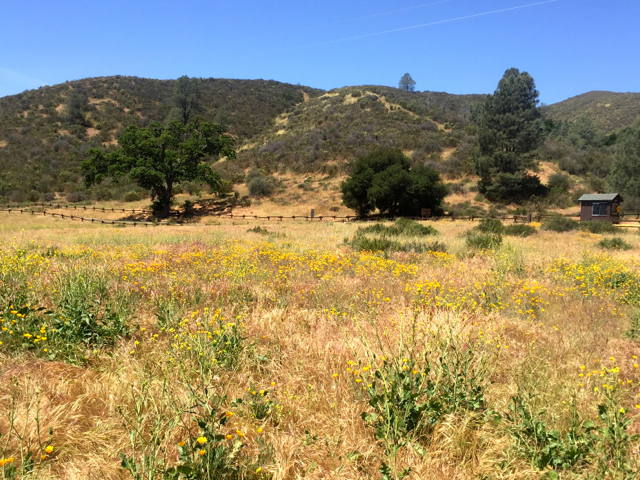
Spring is an ideal time to visit -- before it gets too hot. Photo/Susan Wood

Spring is an ideal time to visit — before it gets too hot. Photo/Susan Wood

Erosion from water and wind make the spires and towers seen today. The High Peaks loop from the Bear Gulch area was calculated at only 5 miles, but the spires appear from the parking lot to be a two-day backpack away.

The trek is well worth the effort. Views dominant the hike, with a short scamper on the top of the ridge to the tippy-top of Hawkins Peak at 2,720 feet, providing that top-of-the-world experience.

The return from the Condor Gulch Trail may not be for the faint of heart, but it’s definitely suggested for the adventurous spirit. There’s a reason this place is a rock climber’s paradise. Hiking becomes more like bouldering – with the safety of iron bars and chopped out steps to keep the trekker balanced in some precarious spots.

The scenery is more spectacular at every turn.

—–

Notes:

·       Pinnacles National Park is located in the Central Valley off Highway 25, 35 miles from Hollister.

·      Camping is $23 for tent sites, $36 for RV sites with electrical hookups. Reserve online.


Mixed results in Everest ascent without oxygen

Adventure photojournalist Cory Richards on May 24 made his first successful ascent of Mt. Everest without the use of supplemental oxygen.

Everest veteran and founder of Lake Tahoe-based Alpenglow Expeditions, Adrian Ballinger, turned back at 8,480 meters earlier in the day.

Less than 3 percent of climbers make it to the top without oxygen.

The duo’s Snapchat account grew a following of several hundred thousand views per day.

“This experience has been extraordinary,” Richards, who was National Geographic’s 2012 Adventurer of the Year, said. “Emotion overwhelms me as I look at the path the last five years has led me down — or up, rather — and to be able to share that journey with the world, I’m humbled and very grateful. I owe immeasurable gratitude to Adrian without whom this journey would not have been possible.”

Ballinger has summited Mount Everest a previous six times, but this particular trek was his first attempt at a summit on the North side, from China.

“There are times on the mountain at this altitude that your body just says, ‘enough’. And you have to listen. I am so grateful I was able to make that call for myself with help from our extraordinary support team, led by Dr. Monica Piris and Palden Namgye Sherpa, and hours later, we were able to celebrate my partner Cory’s summit,” Ballinger said.

National Geographic reported that the death rate for those climbing without oxygen above 26,000 feet is at least five times higher. Four people have died this month on Everest.

— Lake Tahoe News staff report


The importance of free play for kids

By Katie Arnold, Outside

The other morning after breakfast, my 5-year-old daughter whined, “I’m bored!” Few words have the power to rankle parents more than these two (except maybe “When are we gonna be there?”). It was Saturday and the whole day stretched luxuriously before us. We didn’t have to hustle off to school or pack lunches or fly off in four different directions. We could simply hang around and do nothing.

Therein lay the problem.

I told my daughter what my mother had told me when I was a girl: that being bored meant I just hadn’t thought of something clever to do. Boredom reflected poorly on me, not my circumstances. Then I shooed her and her 7-year-old sister out to the arroyo to play.

The arroyo is a dry, sandy wash that runs a few hundred feet below our house. We’ve found piles of rusty tin cans there, traces of a makeshift homeless camp (long abandoned), and other random cast-offs. Mostly, though, it’s wild little corridor between steep hillsides, lined with piñon and juniper trees and bound by sandy cliffs that are perfect for scooting down on your bottom—a narrow slice of nature a few blocks from downtown Santa Fe.


Child development experts call these kinds of spontaneous, child-directed activities “free play.” A generation ago, when kids were far more likely to wander out the door and goof off in the yard or ride bikes with their friends, this didn’t need special terminology. It was just called play. A seminal 1997 study from the University of Michigan determined that the amount of spare time kids in the U.S. had to play dropped by 25 percent since 1981, and Boston University psychologist Peter Gray has found that it has been declining ever since. In a 2007 report, the American Academy of Pediatrics found that “much of parent-child time is spent arranging special activities or transporting children between those activities… Many parents seem to feel as though they are running on a treadmill to keep up yet dare not slow their pace for fear their children will fall behind.”

Read the whole story


Year-round hockey academy moving to Meyers

By Kathryn Reed

Meyers is about to be home to the Tahoe Hockey Academy.

The year-round facility for boys and girls in middle or high school is expected to break ground this summer. The building permits from El Dorado County are in hand. The project is on the consent agenda of the May 25 Tahoe Regional Planning Agency Governing Board meeting.

“We are looking at initiation on the upper dorm as early as June and the first academic year starting in August,” Mike Dill of Aspen Environmental Services told Lake Tahoe News.

Dill works for Tahoe Hockey Academy, the group that is looking to move onto the property to create a year-round sports school.

The existing residence would become a dorm, with another 7,000 square feet added to it. A second two-story building will be 13,193 square feet, which will be part dorm, dining hall, kitchen and exercise room. In all, about 90 youths would live there, along with eight residence assistants.

A tennis court, which has been previously approved and graded, but not built, would be converted into a mini ice rink in the winter for 3-on-3 practices. The ice rink in South Lake Tahoe is where they would have full team practices, as well as games.

“The academy will follow the school year – August to May. Then the facility will operate summer camps for groups of 20 to 25 kids,” Dill said. “Basically it’s a prep school and prep academy to get them academically ready for college and physically ready to play Division 1 hockey.”

The 3,800-square-foot residence was erected years ago. This is a legally existing, non-conforming use. Converting the use to a recreation facility will bring it into compliance.

Some Meyers residents are starting to question why this project seems to be getting approved without the usual scrutiny.

“The previous approvals are part of the parcel’s history. It doesn’t mean we don’t do the same level of review,” Paul Nielsen, planner with TRPA, told Lake Tahoe News. “It’s on the consent calendar because until recently there was no known concerns about the project.”

When the notice about the project went out to neighbors this month letters started coming in to TRPA. Noise and water supply are two of the main concerns so far.

In 2006, the 16.4-acre parcel known as Echo Creek was permitted to be a recreation group facility for about 200 people. The infrastructure was put in, the lower loop road built, grading for the tennis court is done, with the basketball court already in place. In fact, 80 percent of the grading for the academy is complete, which includes tree removal.

The problem is the owners at the time – Alex Graf and Paul Gardner – could not find a user. Both men have since died and their trusts are left dealing with the parcel at the bottom of Old Meyers Grade.

In 2012, Lake Tahoe Wildlife Care seriously considered relocating there, but a deal could not be reached.

Tahoe Hockey Academy, which is run by a group of investors, is leasing the property, with an option to buy.

Noise, traffic and vehicle miles traveled have been studied.

“We will have full size buses to shuttle kids to tournaments; passenger vans to get to the rink (in South Lake Tahoe),” Dill said.

There will be 44 parking spaces for general use, and nine for employees. The thinking is because of the age of students most will not have a vehicle at the academy.

Dill does not anticipate the academy having any impact on those who walk-run Old Meyers Grade, especially because the academy will not use the street for parking. The gate will stay where it is.