Amgen to continue as Tour of California sponsor

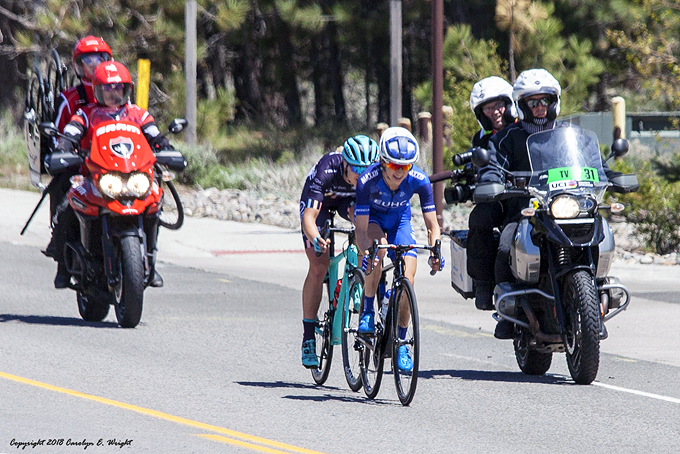
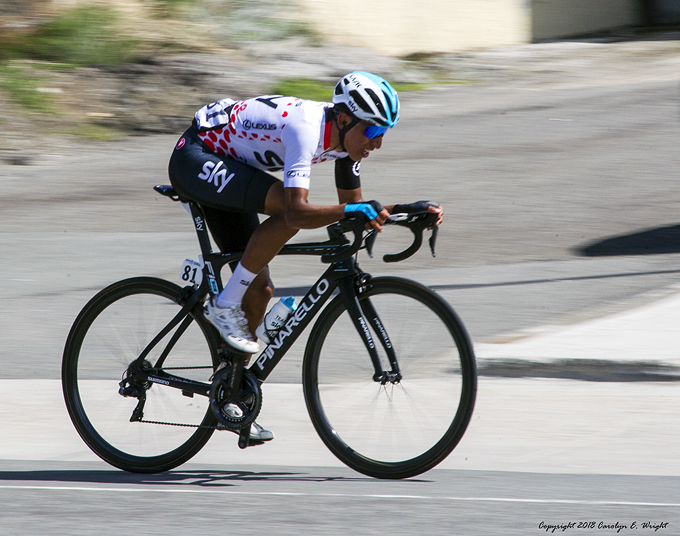
Egan Bernal is the overall winner of the 2018 Tour of California. Photo Copyright 2018 Carolyn E. Wright

Amgen will remain the title sponsor of the Tour of California for the foreseeable future.

AEG, the owner and operator of the Amgen Tour of California, has renewed its agreement with Amgen. Amgen has been the sponsor for the last 12 years.

“At this time, we are not disclosing the exact renewal length other than multiyear,” spokeswoman Kristi Mexia told Lake Tahoe News. Nor has the value of the agreement been disclosed.

The renewal agreement provides the biotech company with naming rights and other exclusive sponsorship benefits for the Tour de France-style eight-day professional cycling road race, which travels annually across more than 800 miles of California’s most scenic roadways, highways, and coastline drives.

South Lake Tahoe is a regular stop on the route, with stages for the men and women being here on Friday.

“At Amgen, our mission is to serve patients, and the Amgen Tour of California gives us a platform to discuss, educate and empower the community including patients who are battling serious illness,” said Laura Hamill, Amgen senior vice president, said in statement.

As a part of the renewal, AEG and Amgen are collaborating on an elementary school program for participating California schools. The program, Be Safe! Be Active! Be Smart!, is aimed at helping children lead a healthy lifestyle while learning about bike safety.


Judge: USFWS illegally denied bi-state sage grouse listing

By Scott Sonner, AP

The U.S. Fish and Wildlife Service acted illegally in 2015 when it denied Endangered Species Act protection for a distinct population of bi-state sage grouse in California and Nevada, a federal judge ruled Tuesday.

U.S. District Chief Magistrate Judge Joseph Spero in San Francisco said in an 85-page opinion that the agency ignored its own best scientific evidence when it reversed course three years ago on its 2013 proposal to declare the bird threatened.

Read the whole story


Upshaw golf tourney to benefit cancer, concussion causes

In the decade since football legend Gene Upshaw died from pancreatic cancer in 2008, the Gene Upshaw Memorial Fund held with Tahoe Forest Health System Foundation has raised nearly $1.5 million for cancer and concussion research and helped fund vital programs and services for patients at the Gene Upshaw Memorial Tahoe Forest Cancer Center.

Terri Upshaw, Gene Upshaw’s wife, started the fund at Tahoe Forest Health System Foundation because of care her husband received at Tahoe Forest Hospital.

On July 8-9, National Football League hall of famers, former Major League Baseball players and other sports and entertainment celebrities will gather at Schaffer’s Mill Golf & Lake Club for the 10th annual Gene Upshaw Memorial Golf Classic. 

Proceeds from the 2017 tournament helped fund breakthrough technology in mammograms for area patients with the purchase of 3D mammography equipment, which is helping to improve breast cancer detection rates. The fund raised a total of $205,006 in 2017. Money also was given to further the Tahoe Institute for Rural Health Research’s mild traumatic brain injury diagnosis project. This project is attempting to develop a simple, portable, self-contained sideline diagnostic system for the identification of mTBI.

The tournament format features one sports celebrity and four amateurs on each team playing a shamble format.

Registration, sponsorship opportunities, volunteer inquiries and a full list of participating celebrities can be viewed online.


Time to sign up for mountain festival events

The sixth annual nine-day summer edition of the Alpenglow Mountain Festival on the North Shore will showcase more than 40 individual events from June 16-24, and is almost entirely free.

Geared toward beginner and intermediate summer recreation enthusiasts, the festival includes trail running, hiking, backpacking, lakeshore yoga, stand-up paddle boarding, rock climbing, natural history events and more.

Registration is open. A complete event schedule is online.


Kingsbury Grade a defining climb for Amgen racers

Katie Hall uses Kingsbury Grade to her advantage on May 18. Photo Copyright 2018 Carolyn E. Wright

By Ashton Lyle

Thousands of residents came out to watch as the Amgen Tour of California cycling race return to South Lake Tahoe on Friday.
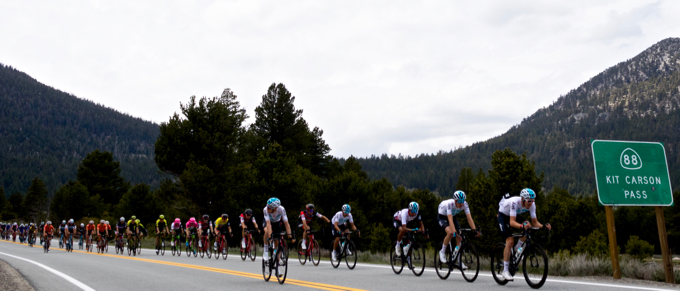
The main group descends Carson Pass with 30 miles to go. Photo/Ashton Lyle

The women started the day with Stage 2, a 67-mile loop running into the Carson Valley, with a start and finish at Heavenly Mountain Resort’s Cal Lodge. The day also included an ascent up Kingsbury Grade, an 8-mile climb that averages over 6 percent grade.
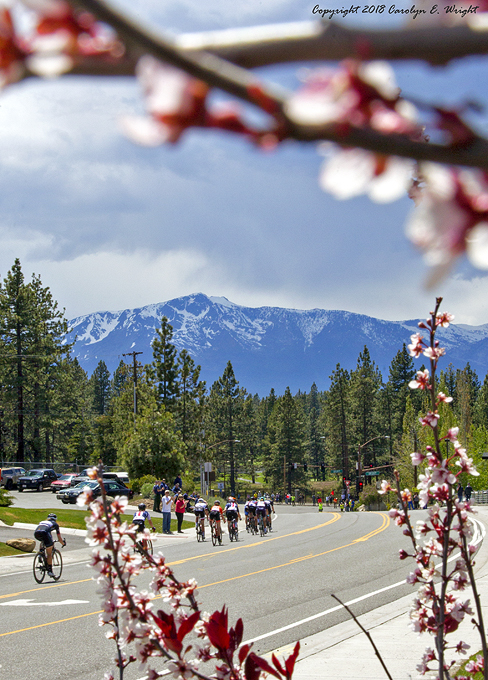
The women scream down Kingsbury Grade under the threat of stormy weather. Photo Copyright 2018 Carolyn E. Wright

The men finished later in the day, tackling Stage 6, which ran over 120 miles from Folsom to Heavenly. 

The Tour of California has visited the Lake Tahoe area six times over the 13-year history of the race, most recently visiting South Lake Tahoe in 2017. The high altitude and mountainous terrain have a profound impact on the final results, and have led to some of the most exciting stages in the history of the event, including Tom Skujins’s win from the breakaway in 2016.
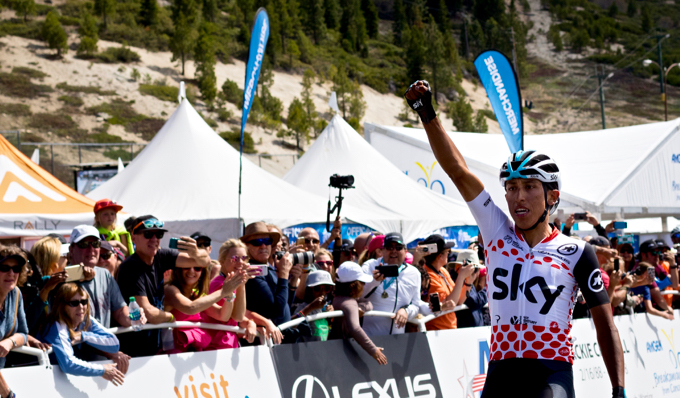
Egan Bernal (Sky) salutes the crowd as he wins Stage 6 in South Lake Tahoe. Photo/Ashton Lyle

In the women’s race, American Kendall Ryan (Tibco) held the race lead after a surprise win in Elk Grove on Thursday, but faced a stiff challenge from world-class climbers such as Megan Guarnier (USA) and Katie Hall (UHC).
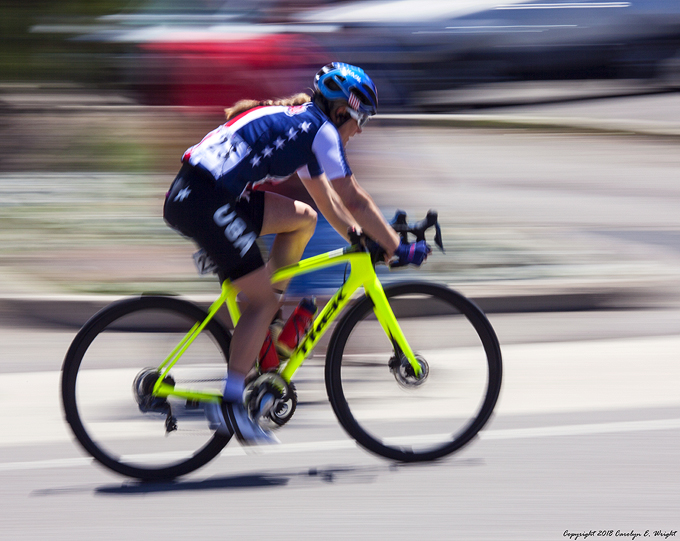
Riders are often going much faster than the posted speed limit. Photo Copyright 2018 Carolyn E. Wright

Liza Rachetto (Hagens-Berman) was the first to attack, but Coryn Rivera (Sunweb) and Lily Williams (Hagens-Berman) formed the day’s early breakaway. After the first major climb, Williams dropped Rivera on the decent and forged on solo. She held a maximum advantage of 2 minutes, but rejoined the peloton just after the intermediate sprint, with over 15 miles still to race.
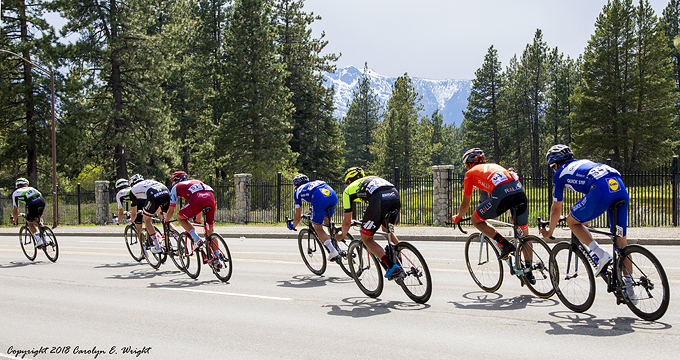
A group of men make their way through the South Shore. Photo Copyright 2018 Carolyn E. Wright

Astana drove the pace into Kingsbury Grade, the day’s hardest climb, which tops out with just 6 miles to the finish. The high pace quickly reduced the field to an elite group of six riders, dropping overnight leader Kendall Ryan (Tibco). Less than a mile from the summit, Hall (UHC) and Tayler Wiles (Trek) attacked and opened a gap of 40 seconds. After the decent, Hall attacked again, opening up a gap on the final climb into Heavenly and took the stage by 25 seconds over Wiles and 1:01 over Katazyna Niewiadoma (Canyon). 
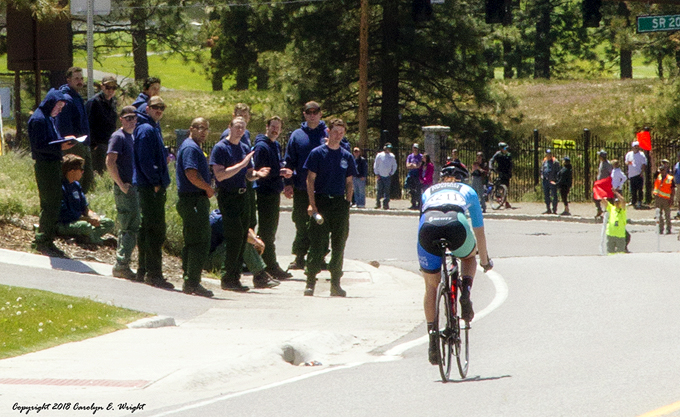
Zephyr Cove firefighters watch and applaud the women as they race by. Photo Copyright 2018 Carolyn E. Wright

In the men’s race, another American, Tejay van Gardernen (BMC) entered the day as the race leader, with Colombian Egan Bernal (Sky) a mere 23 seconds down. With Saturday’s stage in Sacramento designated for the sprinters, the race would be decided on the run into Lake Tahoe.
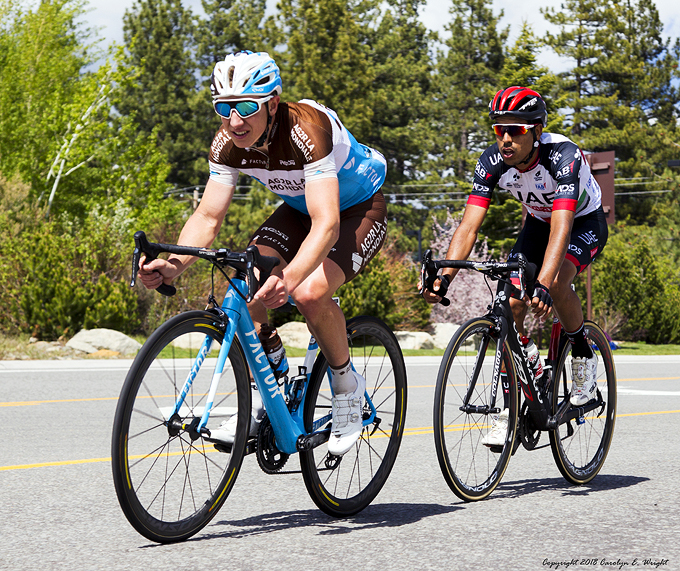
It was a grind for the men who had started Friday in Folsom. Photo Copyright 2018 Carolyn E. Wright

Eight miles into the race, a nine-rider breakaway separated themselves from the peloton, gaining a maximum advantage of over 5 minutes. The break had three Americans, Sean Bennett (Hagens Berman), Lawson Craddock (EF Education First) and Evan Huffman (Rally). Bennett was only 3:23 down on Tejay van Garderen, forcing BMC to ride on the front to keep the breakaway close.
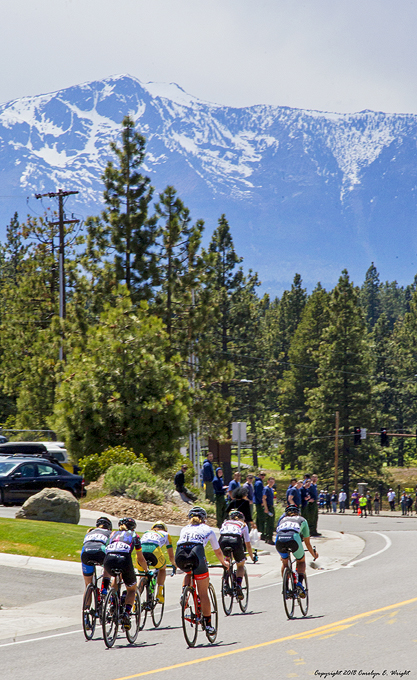
Mount Tallac looms in the background as the women race through Stateline. Photo Copyright 2018 Carolyn E. Wright

Sky took over the front of the peloton, and drove a hard pace. Inside of 30 miles to go and the peloton had been reduced to under 40 riders. The last remnants of the early break were caught on the penultimate climb, with 12 miles to the finish. Racing up the same climb where Hall (UHC) had attacked in the women’s race, Sky continued to drop riders as they rode a brutally fast pace.

Bernal (Sky) attacked hard from the reduced front group with 10 miles to race, opening up a minute gap over Tejay van Garderen (BMC) by the top of the climb. The chasing group, driven first by van Garderen, and then by Brandon McNulty (Rally) could not close the gap, and Bernal took another solo stage win. Adam Yates (Mitcheton-Scott) finished second at 1:28 down and Tao Geoghegan Hart (Sky) finished third, a further two seconds down.
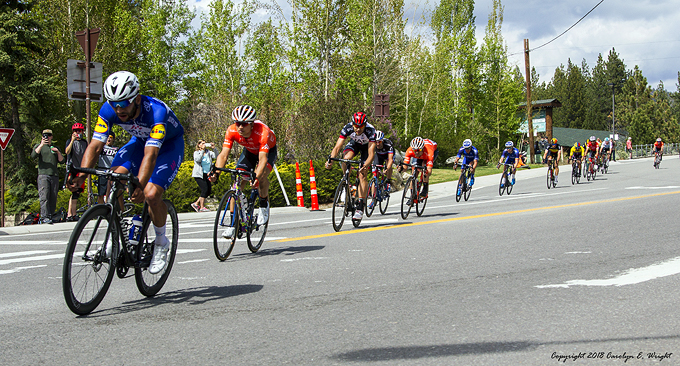
The men find the strength for the final push to Heavenly. Photo Copyright 2018 Carolyn E. Wright

Hall and Bernal now confidently lead their overall classifications with the race finish May 19 in Sacramento, on a day that is made for a bunch sprint. Caleb Ewan (Mitcheton-Scott) will look to take his first stage victory after two second place finishes, while Fernando Gaviria (Quick-Step) will look to add to his total.

The final stage of the Tour of California will be live on NBC from noon-2pm on May 19, with the daily race recap available on NBCSN from 7:30-9:30pm.


Tribes welcome opportunity to add sports books

By Felicia Fonseca, AP

American Indian tribes are welcoming an opportunity to offer sports betting in potentially hundreds of casinos across the country after the U.S. Supreme Court cleared the way for states to legalize it.

Tribal casinos generate more than $31 billion a year in gross revenue. While adding sports books isn’t expected to boost that number significantly, tribes say it’s another source to deliver services to tribal members.

Many tribes give a share of casino profits to states in exchange for exclusive rights to conduct gambling operations.

In California, voters would have to approve a change to the state Constitution. As is, California tribes have exclusivity in casino-style gambling, and some believe that includes sports betting.

Read the whole story


NCAA tourney games now possible in Reno

By Chris Murray, Reno Gazette-Journal

The NCAA has long considered Nevada taboo territory for hosting its championship events, citing the state’s legalized sports betting, but that policy changed Thursday.

The organization, in a press release addressing the Supreme Court’s decision to allow sports wagering across the nation, said:

“Also in response to the Supreme Court decision, the NCAA Board of Governors suspended the Association’s championships policy related to sports wagering. The board’s decision will ensure championship location continuity by temporarily allowing NCAA championship events to occur in states that offer sports wagering.”

Read the whole story


Confederate landmark near Tahoe could get Native American name

By Mike Moffitt, San Francisco Chronicle
 
A distinctive peak near Lake Tahoe may not keep its controversial name much longer.

Alpine County supervisors have recommended that Jeff Davis Peak be renamed “Da-ek Dow Go-et,” a name proposed by the Hung-A-Lel-Ti Woodfords Washoe tribe. “Da-ek Dow Go-et” means “saddle between points.”

The proposed name change was made to the U.S. Board on Geographical Names, which has final say in the matter.

Read the whole story


Proper bike fitting has multiple benefits

By Harrison Brown

Being ready to enjoy summer on your bike doesn’t only mean getting or being fit, it includes having your bike fit. With temperatures warming up, this is the perfect opportunity to get your bicycle ready for the season.

Anyone who enjoys riding should have their bike fitted. At Barton Health, bike fitting is geared toward clients who road bike, mountain bike, or compete in triathlons – all with the goal of optimizing body position to maximize performance, based on the rider’s recreational or competitive goals and history of injury.

Discomfort from a poorly fitted bike is one of the most common reasons people will avoid riding, but fixing a poorly-fit bike is a solution. Both the casual and competitive cyclist benefit from a properly fitted bike, and Barton Rehabilitation and Sports Medicine offers fitting services from all ability levels of those who enjoy riding the phenomenal roads and trails in our own backyard.

As a certified bike fitter and physical therapist at Barton, many of the patients I see feel medical conditions limit their ability to ride a bike, however, many medical issues can be accommodated and even corrected by a properly fitted bike. A bike fitting entails an initial two-hour appointment with a certified bike fitter and physical therapist like myself. The rider’s initial evaluation begins on their bike, where they can describe any problems they experience when pedaling. Next, the rider moves to Barton’s Performance Laboratory where they ride the bike trainer to have everything from foot, knee, hip, shoulder, elbow and wrist position analyzed and addressed.

An important component of analysis is ensuring proper cleat position and wedging. Unlike most fitting services, Barton offers a one-hour follow up appointment to make sure the initial fit is dialed in. In addition, patients are referred to local bike shops to find products that will improve their biking experience.

Being more comfortable on your bike will allow you to be more efficient and more likely to get outside and enjoy the beauty Lake Tahoe has to offer. Barton Performance by ALTIS members get a discounted price from the otherwise $250 two-session bike fitting. Current patients can sometimes use their insurance to cover the cost with the proper referral from their doctor.

Harrison Brown is a certified bike fitter and physical therapist at Barton Rehabilitation and Sports Medicine.


Illegal sports betting in U.S. is not really a $150B business

By Jay L. Zagorsky, The Conversation

The Supreme Court on May 14 struck down a 25-year federal ban on sports betting outside of Nevada.

The big question on many minds – particular state officials and companies like MGM Resorts and DraftKings looking to cash in – is how much money is at stake. Many of the articles on the decision cite the same eye-popping figure: Americans wager an estimated $150 billion in illegal sports bets every year.

As a macro economist, I am used to dealing with big numbers. Still, $150 billion struck me as much too high. To put it in perspective, that’s 14 times more than Americans spend going to the movies, twice as much as they put into grooming and feeding their pets and about the same as they pay for fruits, vegetables and dairy products.

The figure comes from the American Gaming Association, which represents the U.S. casino industry and works to reduce restrictions on gambling. It says it based this number on a 1999 government estimate of about $80 billion in illegal sports betting. The group, which describes this as “the most conservative estimate,” then adjusted it to 2017 dollars using GDP growth.

I’m not the first to find fault with these figures. A 2014 article in Slate questioned an even higher estimate, $380 billion, drawn from the same report. An examination of the underlying study showed that such estimates were not based on serious research.

While the figure has no real basis, it does have real impact. Numerous states need more tax revenue. If the potential dollars are big enough, then many states will rush to allow sports betting – as almost 20 are already doing, including New Jersey, which was behind the lawsuit that resulted in the high court ruling.

Real-world examples

As I know from my work in economics, there are better ways to make estimates than pulling numbers out of thin air.

The first thing you do in such cases is look for a real-world example. In this case, data from the U.K., which has allowed sports gambling for decades, with thousands of betting parlors offering odds on everything from Premier League matches to when royal babies are born.

The U.K.’s Gambling Commission tracks betting statistics and issues an annual report. The one released in January shows that Brits placed about 10 billion pounds in bets in the latest fiscal year.

To get a comparable estimate for the U.S., that figure needs to be adjusted by population and currency. The U.K. has only about 66 million people, compared with 327 million in the U.S. And the pound was worth $1.36 on May 14.

After making both adjustments, this suggests that if people in the U.S. are allowed to make bets at the same rate as in the U.K., the size of the industry would be about $67 billion a year. While enormous, that’s a far cry from $150 billion.

Will legal sports gambling be big business? Yes, but not as big as its proponents want you to believe.

Jay L. Zagorsky is an economist and research scientist at Ohio State University.