Study: Economy contributes to decrease in national park visits

By Laura S. Bly, USA Today

Contrary to the assumption that cash-strapped tourists flock to U.S. national parks during a recession, a University of Georgia study ties a decline of nearly 10 million visitors since 1998 to a lousy economy.

Though overall park visitation has dropped to about 280 million, the decrease hasn’t been uniform, note researchers at UGA’s Warnell School of Forestry and Natural Resources and the Catholic University of Korea’s department of economics.

For example, visits to Yellowstone and Yosemite were up sharply between 2000 and 2011. But the Great Smoky Mountains National Park, the United States’ most visited, saw a 7 percent decrease in visitation over the same time period.

The increases for Yosemite and Yellowstone could be credited to their “high international recognition,” said Michael Tarrant, a Warnell School professor and director of the study abroad program Global Programs in Sustainability.

And even as visitation at such iconic parks is up, time spent per visit has declined nearly 15 percent systemwide over the past two decades, a USA Today story noted this summer.

At Yosemite, the average park visitor spent nearly 27 hours inside the national park in the early 1990s. By 2011, that was down to less than 17 hours. Many of the nation’s largest parks have seen similar declines — in Wyoming’s Grand Teton, the hours the average visitor spent in the park dipped from 10 to about 6½ over the past two decades. At Grand Canyon, hours spent were down 10 percent, and at Cape Hatteras, N.C., that figure had dropped more than 19 percent.

“Visitation to some national parks may be incidental to tourism,” Tarrant said in a release. “For example, U.S. Highway 441 is the only main road in the Smokies and receives substantial non-tourism and thoroughfare traffic. Consequently, reduced visitation to such parks may be a function of lower vehicle miles traveled in the past decade. National transportation statistics show that traffic on U.S. 441 has had a reduction from 3.03 trillion in 2007 to 2.96 trillion miles in 2011.”

The UGA study suggests that when faced with tighter budgets, consumers will cut out non-essential goods and services and visit local city or neighborhood parks rather than drive to national parks. Another potential factor: while national parks are a bargain compared to theme parks, “they don’t offer the same kind of recreation experience,” the study says.

Some researchers speculated that when money is tight, people would turn to national parks for cheaper recreation options. But that does not seem to be happening, or the substitution is perhaps limited to national parks of national and international reputation, the study said.


Most Americans have almost zero in savings

By Harry Bradford, Huffington Post

Got five Benjamin Franklins stored under the mattress? You’re doing pretty good then.

Nearly half of Americans don’t have more than $500 saved up, according to a recent study by CreditDonkey.com, a credit card comparison company. Of the roughly 1,100 Americans polled, 41 percent reported having less than half a grand of readily-accessible savings at hand.

With the country struggling to recover income lost during the recession, the study isn’t the first to make clear the desperate state of so many Americans’ finances. Back in March, it was estimated that less than a third of American workers had savings of $1,000 or less, according to a study by the Employee Benefit Research Institute.

That lack of savings means most Americans have little in the way of a backup plan when things get tough. Indeed, over two thirds of Americans live paycheck to paycheck, a survey by the American Payroll Association found last month.

Perhaps that explains the retirement anxiety, which has begun to afflict some people still in their thirties. Many Americans have even more pressing concerns: 45 percent told CreditDonkey.com that they fear they’ll never be able to save much money at all.


Park City officials to tour Tahoe-Truckee for inspiration

By Jay Hamburger, Park Record

A delegation from Park City is scheduled to visit the Lake Tahoe region this weekend with an itinerary that includes stops at two mountain resorts in an effort to learn about an action-sports camp and development trends.

The travelers are scheduled to leave on Saturday and return on Sunday. The trip had not been publicized prior to Monday, when City Hall issued a statement about the itinerary attached to the agenda for a Thursday Park City Council meeting. The statement was required since a majority of the City Council is scheduled to attend.

Four of the five city councilors early in the week were planning to travel. Jon Weidenhamer, who manages City Hall’s economic development programs, said City Councilor Cindy Matsumoto will not attend. Mayor Dana Williams will not make the trip, either, Weidenhamer said.

Weidenhamer said City Hall staffers scheduled to travel include himself, Chief Building Official Chad Root and Nate Rockwood, a key figure in the budget office. The delegation involves seven people. Weidenhamer said the trip is anticipated to cost between $2,000 and $3,000.

The itinerary calls for the group to stop in Truckee, Northstar and Boreal Mountain Resort. There could be a stop in Squaw Valley as well.

The group especially wants to learn about an action-sports camp at Boreal Mountain Resort called Woodward Tahoe. There has been interest on the part of Park City Mountain Resort parent Powdr Corp. in the possibility of developing a Woodward location in Park City. Powdr Corp. owns Woodward. It also operates Woodward locations in Pennsylvania, Colorado, China and another spot in California.

Weidenhamer said City Hall wants to learn about the potential economic and community benefits of a location in Park City for Woodward. He said there are prospects of a Woodward facility being built as part of the redevelopment of the PCMR base area. He said there is interest in the year-round activity of a Woodward facility and the action sports that would be its focus.

Weidenhamer said the Park City group plans to meet executives from Boreal Mountain Resort and Woodward Tahoe.

Jenni Smith, who is the president and general manager of PCMR, and Tim Brennwald, the senior vice president of development at Powdr Corp., will address the travelers.

Meanwhile, the delegation wants to research a high-end hotel at Northstarand the wider redevelopment of the resort. A Ritz-Carlton is situated on the slopes of the resort, providing an opportunity to learn about the operations of a midmountain hotel.

He said the visit to the Ritz-Carlton is not related to the ongoing discussions between City Hall and the Treasure partnership about the development proposal on the slopes of PCMR overlooking Old Town. A member of the Sweeney family side of the Treasure partnership once said there had been talks with Ritz-Carlton about developing a property in the project. The statement was made in mid-2010, but it is not clear what sort of interest there is now. There has been little made public about the Treasure negotiations over the past year.

Weidenhamer said the Truckee stop will provide an opportunity to learn about the community’s downtown, redevelopment projects and lodging properties.

The trip resembles in some fashion the annual City Tours, which travel to different communities each year to learn about the inner workings of those places. The City Tours, though, involve a much larger group from the wider Park City area in addition to a roster of government officials. The City Tour in 2006 visited the Lake Tahoe region.

It is rare, though, for City Hall to send a delegation the size of the one traveling this weekend to an out-of-state location.


South Shore residents talk economic revitalization

By Kathryn Reed

In 2007, the South Shore experienced what many believe was one of the worst disasters to hit the area – the Angora Fire that reduced 254 houses to ash in a matter of hours.

To rebuild – the structures, their psyche, their belongings – it took the community coming together. This included the government agencies setting aside some long-held ways of doing things. It took people giving – time, resources, money.

SMG President Carl Ribaudo talks economics Oct. 23 in South Lake Tahoe. Photo/LTN

It took having a common goal. That goal was to make whole the lives of those individuals who lost their homes and those who were displaced.

That type of cooperation is what Paula Lambdin suggested be done to turn the economy on the South Shore around. She should know it works. Her family rebuilt in the burn area. And Lambdin was instrumental in holding her neighborhood together after the fire.

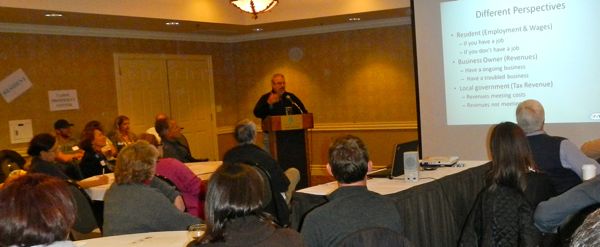
Lambdin was one of nearly 200 people who attended an economic forum Tuesday night at Embassy Suites in South Lake Tahoe that was put on by the Lake Tahoe South Shore Chamber of Commerce, Tahoe Prosperity Center and Lake Tahoe Visitors Authority.

Casey Blann, president of the chamber board, said it is time to stop looking in the rearview mirror and start doing something.

Carl Ribaudo with Strategic Marketing Group went over the economic analysis he prepared for the South Shore Vision plus some additional information. (This is the economic analysis he presented to the South Lake Tahoe City Council earlier this month, which is similar to what he delivered Oct. 23.)

He emphasized how the South Shore has lost about a half million hotel room nights, or 30 percent, since 2001; that retail sales in the city are declining, while Truckee’s are increasing; the need to look at whether economic changes are cyclical or structural; how the bulk of hotel rooms are not in casinos, but that the casinos are hosting the majority of travelers; the abundance of rooms; and how other areas are charging more and therefore bringing more taxes to government coffers.

“The status quo does not provide the level of revenue that is sustainable for the community,” Ribaudo concluded.

He believes the type of person coming to Tahoe is the same person who shops at REI. While he doesn’t want to discount the idea of bringing families, Ribaudo said with that sector representing 30 percent of travelers, it would be foolish to forget the other 70 percent.

B Gorman, president of the chamber, spoke about the trek a group of South Shore powerbrokers took earlier this year to Livermore and Monterey and what the message was from that excursion. She also shared a video from the experience.
http://youtu.be/9dCeNVqudN0

Three questions were asked of the audience at the beginning before each table worked on its solutions. In a brief brainstorming this is what people came up with:

Q: What expectations do you have for the evening?

A: • Education • Accurate data • Inspiration • Information • Solutions • All encompassing plan • Partnership • Shared vision • Momentum • Change.

Q: What are the obstacles?

A: • Financial • Regulations • Communications • The past • Lawsuits • Assumptions • Complacency • Apathy • Status quo    • Lack of imagination • Weather • Fragmentation • Isolation • Lack of leadership • Multi-jurisdictional.

Q: What are you willing to do?

A: • Engagement • Collaborate • Invest • Compromise • Shop local • Participate • Be uncomfortable • Volunteer • Share assets/resources.

Then it was time for the eight tables comprised of residents, business people and agency types to hash how best they would revitalize the economy and the obstacles that may get in the way.

All the comments were being collected, with the goal of having a meeting after the first of the year to encourage solutions with the public and private sectors working together.

Comments included, but were not limited to:

• Stop competing with each other – in other words, work together instead of against each other;

• Identify core values;

• Perhaps the wrong visitor is being targeted;

• Change the status quo;

• Transportation is a problem;

• Communication needs to go both ways – not just one segment telling everyone else what is going to happen;

• Find out what visitors want;

• What brought locals to Tahoe will bring tourists;

• Mountains, wildlife views, fly fishing – those things and others need to be promoted, not just the lake;

• Create a collection of pedestrian zones that are linked;

• Reduce the speed limit;

• Empower locals;

• More jobs;

• Leadership;

• Need more participation – not just all the regulars.

The question people were left with was: What role are you willing to play in the economic revitalization of South Lake Tahoe? Substantive answers will be sought at the next meeting.

A similar question is the Question of the Week on Lake Tahoe News.


Fatal single-car accident north of Truckee

By Barbara Barte Osborn, Sacramento Bee

TRUCKEE — A 64-year-old Meadow Vista man died Saturday after his car left Highway 89 about 10 miles north of Truckee, struck a tree and burst into flames.

Passing motorists quickly put out the fire, but the driver, Steven Metzgar, sustained fatal injuries in the crash, according to the California Highway Patrol report.

The accident occurred at 1:50 p.m. north of Hobart Mills Road.

According to the report, Metzgar was driving a Lexus southbound on Highway 89 at a high rate of speed when it ran off the right side of the road and collided with a large tree.

The CHP is investigating the accident and asks that any witnesses contact Officer J.J. Varanini at (530) 582.7570.


Hearst Castle’s fee waivers scrutinized

By Stephanie Snyder, California Watch

While nearly 70 of California’s state parks fought to escape closure from budget cuts, the crown jewel of the park system – Hearst Castle – waived $611,000 in private event fees over the last decade for select individuals and organizations, including the politically connected.

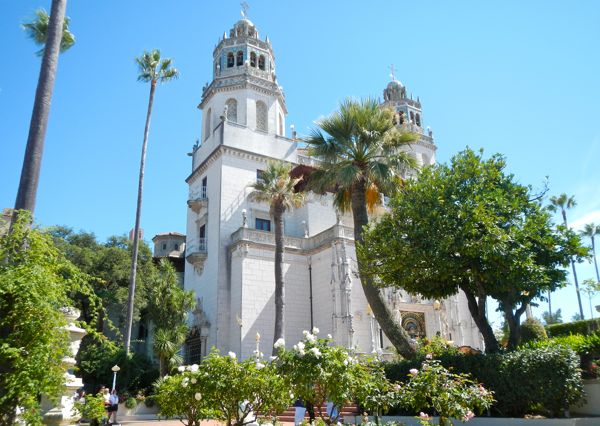
Hearst Castle, the lavish 165-room estate on a San Simeon hill overlooking the Pacific coast and Highway 1, has been the venue of choice for 125 events since 2002, ranging from weddings to fundraisers, birthday bashes to cocktail parties.

Most of the excused events were hosted by local partnerships, but politics also played a role in deciding who had to pay full price and who didn’t, said Nick Franco, superintendent for the state Department of Parks and Recreation’s San Luis Obispo Coast District.

Hearst Castle waives fees for those with connections. Photos/LTN

More than a fifth of the total – $124,450 – was waived for the birthday party of former state Superintendent of Public Instruction Jack O’Connell and a charity race led by Maria Shriver while she was California’s first lady. The race benefited an international nonprofit, Best Buddies.

The waived fees stood to benefit not only Hearst Castle, but also the 11 other parks in the San Luis Obispo Coast District.

“The money stays in the district where earned and it first goes to cover the cost of the event – staffing, security, garbage, clean up, damage to facilities,” state parks department spokesman Roy Stearns said in an email. “But it is also seen as funding that can help make improvements to the parks within the district to improve maintenance, visitor services and the like.”

Two parks in the district – Limekiln State Park and Morro Strand State Beach – were set to close in July, but both received reprieves through last-minute funding from a private parks management company and the district. Budget cuts had added them to the state’s 70-park closure list, though a recent investigation revealed that the department was not suffering as much as it seemed – it had been sitting on a $54 million surplus for years.

The rate for a three-hour event at Hearst Castle is $11,100, but that nearly doubles to $22,100 if more than 50 people are expected to attend. The ultimate decision of whether to charge the event fees is left up to the district superintendent.

Franco said he always weighs two questions: “What is the benefit we’re getting, and what’s the impact on our operation?” If the impact on the facility is high, there should be a large benefit to Hearst Castle, he said; if the event is low-key, any sort of benefit is appreciated.

Less than a year after Gov. Arnold Schwarzenegger took office, his wife, Shriver, helped launch a Best Buddies charity race at Hearst Castle in October 2004. For the first five years of the annual race, Hearst Castle did not charge a dime – fees that would have brought in more than $80,000.

“There’s obviously politics that come into play with big events like that,” Franco said. “It plays into it when the first lady is one of the sponsors of the event.”

Asked why Best Buddies did not pay the state to use Hearst Castle for the first five years of the charity race, Shriver’s spokesman Matthew DiGirolamo responded in an email that he has “no knowledge of this and neither does Maria Shriver.”

The inaugural race in 2004 brought in close to $1.6 million in gross receipts, followed by a fairly steady annual increase to $2.7 million in 2008, according to tax filings for Best Buddies.

Hearst Castle started charging Best Buddies the event fee in 2009, after the maximum event rate was raised from $16,050 to $22,100. The charity race grossed nearly $3 million in 2009 and $3.2 million in 2010, according to the nonprofit’s tax filings.

Use of the Julia Morgan-designed property has been discounted for more than the politically connected. Hearst Castle employees pay a nominal $100 to host weddings, engagement parties and baby christenings, while Hearst family members pay nothing.

The state’s former schools superintendent got a significant discount, too. After leaving office in January 2011, O’Connell hosted a 60th birthday party on two nights, one in October and one in November, which typically would have cost $44,200 for the event permits alone. Hearst Castle did not require the longtime politician to pay the standard fee for two nights of bringing 55 anticipated guests to tour the facilities and swim in the famous Neptune Pool, followed by a reception, said Jim Allen, Hearst Castle’s marketing director.

“I honestly didn’t think about it that deeply,” Franco said. “If I think about it now, I certainly could have charged him that fee – whether or not he would’ve paid it, I don’t know.”

According to Franco, instead of directly paying the state park for his birthday party, O’Connell donated $10,000 to the nonprofit Friends of Hearst Castle – a cooperating association of the California Department of Parks and Recreation that supports the preservation of Hearst Castle and assists with community outreach and education. According to the nonprofit group’s tax forms, O’Connell also donated another $5,000 during the 2011 fiscal year.

O’Connell assumed he had paid full price to host the events, he said, and he wasn’t aware that his $10,000 check was considered a donation rather than a payment to the state park.

“I just sent what was requested,” O’Connell said. “I paid what was asked.”

In 2011, special event fees were waived for four other events at Hearst Castle, according to data from the parks department’s San Luis Obispo Coast District. For two of those events, donations instead were made directly to Friends of Hearst Castle, as they were in O’Connell’s case. Between 2002 and 2011, no donations appear to have been made to the Friends of Hearst Castle in lieu of event fees.

There is a greater guarantee that money will stay at Hearst Castle if it is spent on donations to Friends of Hearst Castle instead of special event fees to the state park, which can be used elsewhere in the district. Friends of Hearst Castle is contracted by the state to give all revenue above expenses back to the state park – a contribution that the nonprofit’s vice president and former treasurer called “significant.”

“We submit to the state how much money we raise as far as fundraisers, how we got that money and how much money we basically give back to art preservation,” said Vice President Kristin Rasmussen. “That’s the whole point of a cooperating association – to go back and preserve what’s there.”

Janelle Beland, who was appointed the parks department’s acting director less than three months ago after her predecessor resigned over the $54 million surplus, said she does not expect the relationship between parks and cooperating associations to end anytime soon.

“We’re spread too thin,” Beland said, adding that the benefits of such relationships are clear when park closures appear imminent. “Decisions were being made – before we found out about the surplus funds – of having to look at potentially closing parks, and these organizations and groups stepped up to help.”

One of those groups, the Coe Park Preservation Fund, recently asked for a refund of $279,000 in light of the surplus.

Beland said the parks department now is taking a “longer-term look” at how partnerships with cooperating associations and donations to nonprofits intended for state parks should be structured systemwide.

When asked if parks should be collecting donations instead of state park fees, Beland said donations should be collected “in addition to” state fees, “not instead of.”

Friends of Hearst Castle ended the 2011 fiscal year with a profit of $148,000, according to the nonprofit’s most recent tax filings. But the organization struggled in prior years, which Franco blamed on the recession.

Friends of Hearst Castle had a $77,000 deficit in fiscal year 2010, down from a deficit of $152,000 in 2009 and $211,000 in 2008. The organization fared better financially in 2011 in part because the executive director died and has not yet been replaced.

The San Francisco Chamber of Commerce donated $1,000 to Friends of Hearst Castle for an event in June 2011 that typically would cost $11,100. On a larger scale, Savor the Central Coast – an annual food and wine festival – donated $15,000 and $3,000 worth of outdoor furniture to Friends of Hearst Castle to host the September 2011 reception instead of being charged $22,100 by the state.

In the case of the festival, presented by Sunset magazine and the San Luis Obispo County Visitors and Conference Bureau, Franco said benefit fees were waived in exchange for four months of free promotion for Hearst Castle in the magazine.

This year’s Savor the Central Coast, held last month, included tapas and wine during a $125-a-head “Enchanting Evening at Hearst Castle” – and another waived $22,100 fee partly offset by an expected $20,000 donation, Franco said.


LTUSD, TTUSD closed Tuesday; other school openings delayed

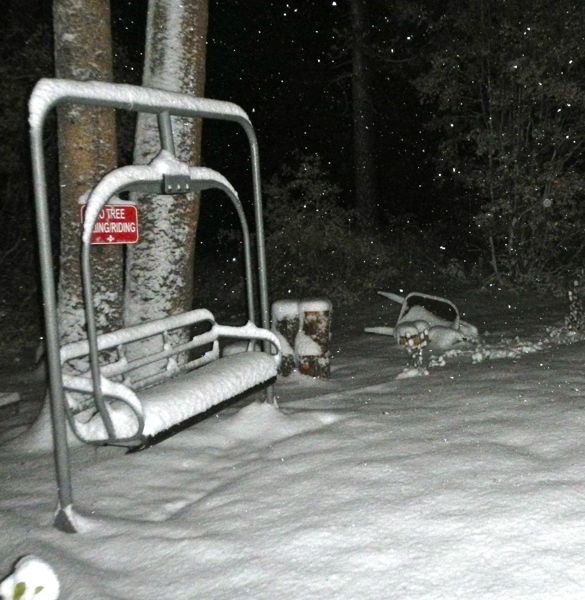
Updated Oct. 23 8:55am: The trip between the South Shore and Carson City is slow going. It’s slushy, according to one commuter, on the Tahoe side. About a foot of white stuff has fallen at the summit.

Updated Oct. 23 6:55am: Several wrecks have occurred on Interstate 80 between Truckee and the Nevada state line. Expect substantial delays. Click on the state icons on Lake Tahoe News’ home page for road updates.

——

Slick roads and about a half a foot of snow in spots has canceled school in Lake Tahoe Unified School District today.

This is the second day in a row that schools in Tahoe Truckee Unified are closed.

There is a two-hour delay for Incline Village schools. The high school field trip planned for Tuesday morning has been canceled.

Several inches of snow fell overnight in South Lake Tahoe. Photo/LTN

Douglas County students at the lake will be picked up at the main bus stops – Tina and Ski courts on Upper Kingsbury Grade and at the Glenbrook entrance. Schools are also on a one-hour delay.

Chains or snow tires are required on all highways in the Lake Tahoe Basin and over mountain passes.

The National Weather Service in Reno is calling for the snow to taper off this morning, but picking up again Tuesday night and into Wednesday morning. The winter storm warning is in effect until 11 this morning for the basin.

Slippery roads are expected to cause traffic issues.

Fall may return Friday, when the forecast is for mostly sunny skies.

 — Lake Tahoe News staff report


South Lake Tahoe airport passes FAA inspection; major changes in the works

By Joann Eisenbrandt

Even though the Lake Tahoe Airport has not had scheduled commercial air service for more than a decade, the city has retained the airport’s FAA-issued Part 139 Air Operating Certificate. This is required for airports serving scheduled air carrier aircraft to remain ready for the return of commercial service.

To obtain Part 139 certification, commercial service airports agree to meet specific operational and safety standards for the upkeep of the physical plant, to maintain accurate recordkeeping by the airport proprietor and fixed base operator (FBO), and to provide for adequate firefighting and rescue equipment and proper safety training for all personnel.

FAA inspections to ensure compliance are conducted annually, problems noted and time frames for correction given. On Aug. 27, 2012, Elizabeth Louie, FAA airport certification safety inspector from the Los Angeles Airports District Office, conducted the Lake Tahoe Airport’s yearly Part 139 Airport Operating Certificate inspection.

Lake Tahoe Airport officials want to make sure all the FAA certificates are in place so commercial air service could return. Photo/LTN file

Last week, a rumor began circulating that the airport had failed to correct problems, specifically related to fire suppression equipment, by the deadline, and that the Part 139 Air Operating Certificate had been pulled. Lake Tahoe News and the city received inquiries.

South Lake Tahoe City Manager Nancy Kerry responded, “Somebody is certainly calling people and saying things that are not true. They’re trying to stir the pot. I don’t know what the source is, but it’s disheartening.”

FAA inspector Elizabeth Louie later confirmed, “This was a normal inspection. There are some ‘housekeeping’ items that need to be addressed, but the [Lake Tahoe Airport] certificate was not pulled.”

The annual inspection included a review of airport and FBO files and logs; checking the runway and taxiways for correct slope, pavement condition, markings, lighting, and signage; inspecting rescue and firefighting equipment and reviewing personnel training records. The fuel farm and mobile fueler’s fire suppression equipment (maintained by Mountain West Aviation, the airport’s FBO) was also checked. A post-inspection briefing was conducted with airport management and a “letter of correction” sent noting any violations.

“This is normal,” Airport Director Sherry Miller told Lake Tahoe News. “Every airport goes through this exact same thing and gets a list of corrections.”

Noted this year was the need to perform a live fire drill, to light all the windsocks on the runway at night and ensure all fire suppression equipment was BC, not ABC (ABC extinguishers are corrosive to planes), and was currently certified and properly tagged. Last year’s inspection requested development of a wildlife hazard assessment and management plan. Miller noted the city’s fire extinguishers are all now correct, the live fire drill has been done and the runway windsocks are all lighted. The wildlife management plan will be put in place in the next several years ― a timeframe acceptable to the FAA.

The remaining unresolved issue is with Mountain West Aviation’s fire suppression equipment. The FAA correction letter states, “Mountain West Aviation (FBO) has expired fire extinguishers in the fuel storage area …. The mobile fueler’s fire extinguishers have no tags.” Miller adds, “[Michael Golden] has been notified that he’s in noncompliance. He has the right kind (of fire extinguishers) on the fuel trucks … but the fire suppression system at the fuel farm has not been certified every year by a licensed certifier.”

Golden, president of Mountain West, disagrees. He told Lake Tahoe News that all his fire suppression equipment, “is current. We received a letter two years ago from Sherry [Miller] to change the fire extinguishers from ABC to BC and we did. Last year we were notified that our fuel truck meters were not certified. They have been certified. We haven’t received anything verbally or in writing (from this year’s inspection) that we’re out of compliance.”

1992 Airport Master Plan Settlement Agreement expires

Having a current Part 139 certification is crucial to the city’s future plans for the airport. Officials have been actively seeking proposals for scheduled commercial air service, using smaller, quieter, new-generation aircraft, with the initial focus on routes to Los Angeles and San Diego. The last 20 years saw a number of short-lived, largely unsuccessful spurts of commercial service from a variety of airlines. The city points to the 1992 Lake Tahoe Airport Master Plan Settlement Agreement as a main cause for these failures.

This agreement among the city, Tahoe Regional Planning Agency, California Attorney General’s Office, League to Save Lake Tahoe and FAA resolved a swarm of lawsuits over noise restrictions and other operational issues at the Lake Tahoe Airport. It included a master plan and environmental impact report, and created the regulatory framework governing airport operations for 20 years. On Oct. 8 it expired.

A key issue discussed in the past was brought to the forefront by the expiration of the Settlement Agreement. Must the city prepare a new Airport Master Plan before reinstituting commercial air service?

“The only environmental document we have right now is the EIR completed in 1992. It’s still a viable document.” Miller notes. “If we wanted commercial service now, we must operate under those documents, even if the SA has expired, because that EIR says what can and can’t be done.”

In July, Julie Regan, TRPA’s external affairs chief, expressed her agency’s viewpoint, “If the current (master) plan expires before a new plan is in place, the status quo would continue, i.e., the city would continue to operate the airport as a general aviation facility until a new plan is developed and put in place.”

General aviation airports do not have scheduled commercial air service.

Kerry, at the time, disagreed, “We don’t have to wait for a master plan to be completed to bring in commercial service.”

The city has not had additional discussions with TRPA about this question, but has decided to prepare a full master plan study. It recently secured needed FAA funding and put out a request for qualifications for consultants to complete the document.

Master plan costs will be between $450,000 and $500,000, with federal funding paying 90 percent and the city 10 percent, and will take about a year and a half to complete. Three responses to the RFQ have been received, a committee has been formed to review them and make a recommendation to the City Council, with potential selection at the Dec. 11 council meeting.

But what happens if the city receives a serious proposal for commercial air service before the master plan is completed? There isn’t a simple answer.

“If somebody wants to propose service,” Kerry states, “they would have to meet the thresholds that are required. What those thresholds are … that’s a long conversation. We’ll do what’s required to be done, but it would depend on what’s proposed. It’s too broad a question to answer without having a specific proposal.”

When asked if such a proposal were imminent, Kerry replied, “We have had someone interested, but we’re not sure if they’re just kicking the tires or are going to give us a proposal.”

Potential outsourcing of airport management operations

As important to the city as securing commercial service is the need to control costs. Serious reductions in overall city staffing, and a reconfiguration and consolidation of duties have already taken place. Outsourcing of airport management may be the next step.

On Oct. 9, the city put out a request for proposals inviting, “submissions from qualified and interested airport managers or management companies who will manage and operate the city’s FAA certificated airport … serving both general aviation and commercial aviation operations.”

The city’s goals, as stated in the RFP, are to increase the number of airport users, eliminate the city’s subsidy of airport operations, maximize the facility’s revenue potential and take advantage of all available and creative marketing opportunities.

The deadline for RFPs is Oct.31. They will be evaluated by a selection committee, interviews conducted and an award of contract potentially approved by the City Council on Dec. 11.

The transfer of management would begin within 60 days with a 36-month contract, with an option by the city to renew the agreement for two additional 12-month periods for a total of 60 months. All airport functions and staffing would remain basically the same ― but would be performed by management company employees, not city staff.

Kerry emphasized this RFP process may not actually result in any changes to current airport management.

“Don’t presume any specific action will be taken regarding the RFP. Putting out an RFP does not guarantee a specific outcome. It provides an opportunity to assess management and operations solutions,” Kerry said.

The city could choose to reject any and all proposals, even from fully-qualified bidders, or to modify, postpone or cancel the RFP. Kerry declined to make any additional comments about the RFP, the options for current city airport employees, or elaborate on specifics regarding the city’s plans until the bidding process has closed.

While not all city employees appear aware of the RFP, current Airport Manager Miller sees value in it. “This is a good process to go through and the city and the public will get some good information from it.”

The privatization of airport management was suggested several years ago by former City Manager Tony O’Rourke in his report to the City Council at its March 15, 2011, meeting. It was proposed as part of the city’s five-year financial plan for, “structurally reducing the city’s personnel costs.”

This change has become a more common choice for airports, the Minden-Tahoe Airport among them. It has contracted out all airport operations and staffing to ABS Aviation Management.

In 2009, Douglas County was notified by the FAA that its ordinance imposing weight restrictions on aircraft wasn’t appropriate under federal regulations, and unless it was changed, federal funding to the airport would stop.

“This led,” as Douglas County Manager Steve Mokrohisky explained, “to an extensive public engagement process to figure out exactly what type of airport we wanted, which was a self-sustaining, general aviation airport focused on soaring, sport flying and corporate aviation.”

While the ordinance was being revised, the airport manager left and the county contracted with ABS Aviation Management for airport management services for an interim six-month period while recruiting nationwide for a new county airport manager. Bobbi Thompson was the contracted airport manager with county staff remaining in the other positions. After the recruitment period, Mokrohisky was unsatisfied with the applicant pool.

“We didn’t want to settle. We were pleased with the very good service we’d received from Bobbi and decided to ask ABS to make a proposal,” Mokrohisky told Lake Tahoe News.

In February 2011, the Douglas County signed a two-year agreement through January 2013 with ABS for overall airport management, with a yearly savings in airport staffing costs of $50,000. Airport staff are all now ABS employees.

“They are all residents of Douglas County. Their business cards say Minden-Tahoe Airport, not ABS. From the public standpoint, there is no difference, other than the quality of service they’ve received. We’ve done a 180 at our airport and are now back on the map internationally as one of the top two locations for soaring. “

County airport employees all had the opportunity to apply for positions with ABS, and all who did secured them. Mokrohisky adds that even though airport operations have been outsourced, county oversight remains.

“We still have a Board of Commissioners. I oversee the airport manager. She comes to all my directors’ meetings, and as before, issues related to airport leases, changes in fees, standards, rules and regulations require approval by the Board of Commissioners,” he said.

“The city (of South Lake Tahoe) did inquire of the county how this has worked,“ Mokrohisky added. “This is a great example of a time when privatization works well in the private sector. … The Minden-Tahoe Airport is the only financially self-sufficient general aviation airport in the state of Nevada.”


Tornado warning issued for Sierra foothills

The National Weather Service in Sacramento has issued a tornado warning for northwestern El Dorado County, Nevada County and Placer County until 7:15pm Monday.

At 6:26pm the Weather Service Doppler radar indicated a severe thunderstorm capable of producing a tornado near Auburn moving northeast at 25 mph.

Other locations in the warning include but are not limited to Cool, Lake of the Pines, Applegate, Alta Sierra, Colfax, Grass Valley, Weimar and Foresthill.

When a tornado warning is issued based on Doppler radar it means that strong rotation has been detected in the storm. A tornado may already be on the ground or is expected to develop shortly. If you are in the path of this dangerous storm, move indoors and to the lowest level of the building. Stay away from windows. If driving, do not seek shelter under a highway overpass. The safest place to be during a tornado is in a basement. Get under a workbench or other piece of sturdy furniture. If no basement is available, seek shelter on the lowest floor of the building in an interior hallway or room such as a closet. Use blankets or pillows to cover your body and always stay away from windows.


Minden airport hangar expansion under way

By Northern Nevada Business Weekly

Construction is under way on an ambitious plan to boost general aviation space and services at Minden Tahoe Airport.

Piñion Aero Center LLC, a group of three private investors, has a plan to erect as much as 1 million square feet of aircraft hangar and light industrial flex space at Minden Tahoe Airport.

The Piñion Aero Center will start with a much more modest beginning, though: 12 T-hangars for general aviation aircraft and three more hangars to house gliders. The initial phase encompasses 7,374 square feet.

General contractor Pinecrest Construction Development of Reno has erected much of the steel framework, and the hangar doors were scheduled to be installed last week, says Floyd Rowley of Johnson Group, who is handling sales and leasing of the hangars.

Rowley says the developers have floated the idea to increase hangar space at Minden Tahoe Airport for about 10 years, and as the economies of California and Nevada slowly recovered ground lost over the past four years the project finally took shape.

“The developer believes that given the strength of the economy in California and the apparent resurgence of the Northern Nevada economy there will be a demand for these hangars and people resume migrating here from California,” Rowley says.

The hangar space could prove attractive to general aviation enthusiasts from Incline Village, Glenbrook, Zephyr Cove and throughout Northern Nevada, Rowley says. Hangars are priced at about $89 per square foot.

Piñion will sell individual hangars subordinate to a master lease with the airport or lease space outright. Future development is contingent upon demand for initial phases of the project, Rowley adds.