El Dorado County joins fight against fire fee

The El Dorado County Board of Supervisors voted unanimously to join the Howard Jarvis Taxpayers Association class-action lawsuit seeking to overturn the state fire fee.

“Hundreds of residents have contacted the county to voice their frustration about the fire tax,” Supervisor John Knight said in a press release. “The Board of Supervisors can’t sit idly by while the state is running a legalized extortion scheme on rural residents.”

El Dorado County residents living in the “state responsibility area” began receiving fire fee bills in late September. The fee is $150 per habitable structure within the state responsibility area. A $35 discount applies if the structure is also within the boundaries of a local fire protection district, like Lake Valley.

The county government received bills for five pieces of property including sites purchased for road right of way, the Perks Court homeless facility, residential property adjacent to the Headington Road corporation yard, and the Union Mine disposal site. The county filed a petition for redetermination, and submitted a letters to state officials indicating the county’s payment of the fee was provided under protest.

The county’s letter argues that the fire fee is actually a tax which requires a two-thirds vote of the Legislature. The bill imposing the fire fee garnered only a simple majority of votes.

“For this reason,” the letter states, “the county of El Dorado pays the Fire Prevention Fee under protest and reserves all rights to pursue a refund of said amount through judicial action or otherwise.”

It is expected that the HJTA complaint against the fee will be amended in the coming weeks to add additional plaintiffs, including El Dorado County.


Reid’s machine powers Obama in Nevada

By Adam Nagourney, New York Times

LAS VEGAS — Vice President Joseph R. Biden Jr. sat onstage before a crowd of culinary workers here the other morning, listening intently to a man who is not on the ballot but might hold the key to a victory for President Obama in economically ravaged Nevada.

“Mr. Vice President, let me give you some real numbers here,” Sen. Harry Reid, the Democratic majority leader, said to union members who had screamed “Harry!” when he poked his head around a curtain. “These people and others have filled 26 field offices around Nevada and have made 3.2 million phone calls. Obama-Biden has 255 team leaders. Mr. Vice President, these folks have registered 70,000 new voters. Three hundred and twenty-five thousand door knocks.”

Reid has spent the last 10 years building a political machine that helped Obama win Nevada in 2008 and carried Reid to a re-election victory two years ago that stunned many pollsters. It is widely praised — even by Republicans — as one of the most effective voter-organizing and money-raising political organizations.

But the Reid machine is facing its biggest test yet.

Reid’s organization is a large reason that Obama is favored by many analysts to win narrowly in Nevada, despite what may be the worst economic climate in the nation and a sizable population of voters who, like Mitt Romney, are Mormons. Reid, who has long been strongly supportive of Obama in Washington — he maneuvered the president’s health care bill through legislative hoops to an unlikely victory in the Senate — has made it clear that he views a victory for Obama in his state as a personal mission. This reflects not only his admiration for the president but also his visceral dislike for Mr. Romney, expressed in constant needling and attacks for almost six months.

Even more ambitiously (and perhaps more problematically), Reid is determined, friends say, to lift Representative Shelley Berkley, a Democrat, to victory over Sen. Dean Heller, a Republican, as he seeks to make sure that he does not return to Washington next year as the Senate minority leader.

Romney is campaigning here for two days this week — both he and Obama were in the state on Wednesday — backed up by a surge of new advertising, reflecting the importance that both he and the president have placed on this state’s six electoral votes.

In a contrast that has been noted by the Romney camp, the Nevada Republican Party has collapsed in a storm of factionalism and infighting between Tea Party conservatives and party regulars. A contingent of supporters of Representative Ron Paul of Texas, an unsuccessful Republican presidential candidate, ousted the party leadership in a showdown in the spring.

Romney’s campaign responded by building a parallel political organization, Team Nevada, to match the combined forces of the Reid organization and Obama for America, which built on what Reid had in place. Aides to Romney said they had made considerable progress. Hundreds of Romney volunteers, many bused in from Southern California and Utah, gathered recently outside the campaign’s headquarters at a Las Vegas shopping center before heading out in white vans to knock on doors in Clark County.

Still, the aides did not dispute the advantage that Reid had created for the president.

“Turnout is going to be important,” said Ryan Erwin, Romney’s senior adviser here. “And, candidly, the Reid machine and the Democrats have been better and more disciplined than we have been for the better part of a decade.”

For all the ways that presidential elections are portrayed as national affairs — and for all the technology that has transformed the relationship between candidates and voters — the basic get-out-the-vote mechanics that have empowered political organizations for 100 years remain critical in elections. (Or, at least, close elections. A good organization can, at best, add two or three percentage points to a candidate’s vote share, analysts said.)

The Reid army may be using modern tools — volunteers can be spotted walking through neighborhoods with iPads linked to headquarters, feeding and updating information on potential voters — but the intent is the same as ever: finding people who like your candidate and making sure they vote.

“Reid, working with various leaders of the Democratic Party, put together a very effective voting machine that’s gotten better every election,” said Eric Herzik, a professor of political science at URN. “Reid is the conduit to money for candidates, he is a conduit to organized labor, and he has great relations with multiple groups around the state.”

Several early indicators have attested to the effectiveness of the Democratic machine, which draws on the state party, powerful unions like the culinary group Reid spoke to last week, and the staff members and resources the Obama campaign dispatched to this state.

Voter registration in Nevada closed earlier this month, leaving the Democrats with an edge of 90,000 voters over the Republicans, up from an advantage of 60,000 voters two years ago, the secretary of state’s office reported. (Reid understated the figure in his speech last week.) Democrats have substantially outpaced Republicans in early voting, another way to measure political organization.

The obstacles for Obama here are considerable. The state’s unemployment rate was 11.8 percent in September, a drop from 12.1 percent the month before but still the highest in the nation, and the state has been racked by mortgage foreclosures.

“I don’t think that anyone believes that Obama supporters are going to be as motivated this year as they were in 2008,” said Mason Harrison, the communications director for Romney’s campaign here.

In Reid, Republicans face an opponent who is fiercely combative and wily, with a command of the ebbs and flows of his state. He is loyal to those he likes (Barack Obama) and unrelenting against those he does not (Mitt Romney).

He has been one of Romney’s top tormentors, at one point claiming that he had failed to pay any federal income taxes for the past 10 years, an assertion that was debunked when Romney released information on two years of income taxes.

“The man who is leading the Republican ticket for president of the United States is giving used-car salesmen a bad name,” Reid said at the rally here.

Reid’s campaign to rebuild the Democratic Party was motivated by self-preservation after he almost lost re-election to John Ensign in 1998 and Republicans went on in 2002 to sweep every contested statewide office.

He displayed his ability to turn out voters in 2010 when he defeated his Republican opponent, Sharron Angle, by five percentage points, after many analysts — and polls — predicted that he was headed for defeat.

Herzik said he had followed Reid workers to observe their efforts in neighborhoods. “They are like dogs on meat,” he said.

Erwin, the Romney adviser, said that for all the work he and other Republicans had done to catch up, he did not dispute that characterization.

“We do know how to run Republican organizations here — for the first time since 2002, the Republican Party is strong,” he said. “But I don’t harbor any misconceptions that we’ve caught up to something that Democrats have built up over a decade.”


Tahoe firefighters in SoCal ready for action

By Melissa Pinion-Whitt, San Bernardino County Sun

Dozens of out-of-state firefighters have come to the Inland Empire to help protect the San Bernardino National Forest from potential wildfires during expected high winds and dry weather.

Five Lake Tahoe-based engine crews and two hot shot crews from the U.S. Forest Service – totaling about 70 extra firefighters – traveled to the area on Thursday in preparation for the season’s first round of Santa Ana winds. Extra aircraft have also been requested.

“We’re now at the very peak of our fire season and at this time of the year, we operate at a high state of readiness,” said U.S. Forest Service spokesman John Miller. “When a citizen dials 911 for the possibility of fire, our response is going to be very aggressive.”

The National Weather Service issued a Red Flag Warning for the San Bernardino Mountains and other parts of the Inland Empire on Thursday. The warning is in effect until Saturday afternoon.

“We’re looking at wind gusts of 55 mph, and locally wind gusts could get as high as 65 mph,” said Phil Gonsalves, a Weather Service meteorologist.

Because vegetation has been drying out all summer long and there was less-than-average rain and snowfall last winter, firefighters say the potential for brush fires is high.


3 Truckee stores caught selling tobacco to minors

Three stores in Truckee were caught selling tobacco products to people younger than 18.

The Truckee Police Department in conjunction with the Nevada County Tobacco Use Prevention Project conducted an under-age tobacco purchase operation in Truckee on 17 locations.

Citations were issued to the responsible clerks in each of the three stores that sold tobacco products to the juveniles. The three store locations included the Union 76 gas station at 10041 Donner Pass Road, the 7-Eleven store at 11400 Donner Pass Road, and Z Marketplace at 12716 Northwoods Blvd.

The two agencies had conducted a non-enforcement under-age tobacco purchase operation in July. In the July operation, no enforcement action was taken and each store location was sent a letter advising of their compliance after the operation. The purpose of the July operation was that of a survey to determine the level of compliance of local merchants in verifying the age of the purchaser before selling tobacco products.

People under the age of 18 years are not allowed to purchase tobacco products in California. When the age of the purchaser is in question merchants should check identification.

Police officers will conduct periodic future tobacco operations and take enforcement action as appropriate.

— Lake Tahoe News staff report


Tahoe Conservancy ready to restore Upper Truckee Marsh

By Kathryn Reed

While the Tahoe Keys subdivision will remain as is, the sensitive wetlands surrounding it could expand, sand dunes may return, the sailing lagoon that abuts the Cove East walking trail may be filled in and that trail rerouted, and the mouth of the Upper Truckee altered.

These are some of the proposals in the draft environmental documents that will be released by the end of the year for the Upper Truckee Marsh.

Four alternatives are being studied. The California Tahoe Conservancy owns this swath of land that borders the Tahoe Keys and Al Tahoe neighborhoods in South Lake Tahoe and goes from Highway 50 to Lake Tahoe. No preferred alternative has been selected, so all four will receive equal analysis.

It's possible this lagoon at the Tahoe Keys will be filled in. Photo/LTN file

“The purpose of the project is restoration, but we know it is well accessed so we had to do some level of public access,” explained Scott Carroll, project manager. “We just put different features in different alternatives so we could evaluate the impacts – from water quality to impacts on biological resources to parking – the array. In the end, when we develop a preferred alternative, what we do to the site will be guided by what access works in that type of setting.”

One option includes building a platform that would allow cyclists and walkers to get from one side of the meadow to the other. Other things being considered to make the area more people friendly include a fishing platform, signs and kiosks.

Most of the proposed changes are for the Cove East side of the marsh. It’s possible the mouth of the Upper Truckee River could be rebuilt or reduced. In the 1960s it was dredged and was the original access to the Keys.

The Conservancy acquired the 22 acres in a settlement agreement stemming from the Keys development. In 2002, a $10.5 million restoration project was completed that brought back the wetlands that run between the walking path at the end of Venice Drive and the river.

Three of the alternatives would fill in the sailing lagoon, which is to the left of the trail when walking toward the lake. Then the trail would head in that direction where boats come into the marina instead of along the river.

Restoring the Upper Truckee River is a large component of this project.

“We want to restore the historic and natural hydrology of the system as much as we can within the constraints we have,” Carroll told Lake Tahoe News. “(The) express purpose (is) enhancing the ecosystem of the area – from habitat for aquatic species and terrestrial, and species utilizing the riparian zone. We are trying to create a sustainable linked system.”

The other goal is improving the water quality that enters Lake Tahoe.

Three individuals own some of the land where the Conservancy would like to do work – Marjorie Springmeyer, Knox Johnson and Royce Dunlap. All have been approached, but no agreements are in place.

For the most part, little is proposed for Trout Creek, which runs through what was known as the Barton Meadow. Those 311 acres were purchased about 11 years ago for $10 million and is now referred to as the Upper Truckee Marsh. It is considered one of the most sensitive areas in the basin.

The bank of the creek near the highway is proposed to be fortified in each of the alternatives.

What this project will cost is unknown. And when it would begin is also undetermined. CTC employees expect a number of comments will be received during the 60-day comment period. The plan is for the Tahoe Regional Planning Agency’s Advisory Planning Commission and Governing Board to discuss the project in January. The final environmental impact report and environmental impact statement could take a year to prepare.

When the project begins, it’s possible it will be done in multiple phases depending on funding sources.


New generation of veterans don’t favor one political party

By David Wood, Huffington Post

WASHINGTON — Veterans and military families are no longer the dependable core of support for Republicans that they were for generations.

Seared by a decade of war and service in a military force that is more ethnically and racially diverse — and includes openly gay troops — more than two million Americans who served in Iraq and Afghanistan are powering a shift in electoral politics.

They are relatively small in numbers: less than 1 percent of qualified young Americans opt for military service. But they tend to be vocal and active, and more picky about throwing their support to one party.

As a result, the campaigns of President Obama and Republican presidential candidate Mitt Romney are fighting hard to win the votes of more than 30 million American veterans and their families. And their votes are up for grabs.

“We are not a homogeneous group,” said Alex Cornell, who fought as a Marine sergeant in Fallujah, Iraq, in 2006.

The experience of war makes veterans more skeptical, less willing to trust politicians. “We see through candidates and public officials who just make statements,” Cornell told the Huffington Post. “People are smart and realize that actions matter. How we look at specific issues — veterans care, GI bill, energy security — that trumps party affiliation.

“That’s why you see this shift, from the more homogenous, ‘Republicans are better.’ Now it’s more mixed.”

His views are backed up by polling, which has found a surprising diversity both inside the active-duty military and among veterans and families.

In an in-depth study of the American military, Lt. Col. Jason Dempsey, a West Point graduate with a doctorate in political science, found a stark difference between the small officer core — about 6 percent of the force — and the vast majority of active-duty troops who are enlisted.

“While army officers are likely to be more conservative, rank-and-file soldiers hold political views that mirror those of the American public as a whole,” he writes. “Army personnel are less partisan and politically engaged than most civilians.”

Another study, this one by Reuters/Ipsos, finds a wide variety of opinion among veterans and military families: More than half supported ending the military’s policy of “Don’t Ask, Don’t Tell” that outlawed openly serving gays; less than one-third said the war in Iraq ended successfully; a plurality (42 percent) said the U.S. military involvement in Afghanistan should not continue. Veterans and military families rejected the idea of “leading from behind” by 44 to 32 percent, in the poll.

While issues of war and terrorism tend to be hot-button issues for many voters, including those in the military, Dempsey found in his study of active-duty troops that, “on most social issues and questions of how the government should spend money, the attitudes of service members largely tracked those of the civilian population,” he wrote in a blog post for the Huffington Post.

And with neither Obama nor Romney having had combat experience — or even peacetime service in the military — the narrative of an experienced commander-in-chief has become less potent. Obama gets high marks for having managed two wars and “gotten” Osama bin Laden. But many combat veterans say time in uniform doesn’t really matter.

“Some presidents who were excellent as generals weren’t very good as presidents — Grant, for instance,” said Anne Rawley, a retired Navy captain with 26 years on active duty. “We’ve had excellent wartime presidents with no military background — Lincoln and Roosevelt.”

She said the commander-in-chief’s military experience “is not something I thought about” when she was serving as a combat trauma nurse at a hospital in Danang, Vietnam, where the “typical patient was a triple amputee with one eye gone.”

But veterans do have passion about issues specific to them: access to health care, education, housing and other benefits. Seeking to capitalize on veterans’ chronic impatience with the giant Department of Veterans Affairs (VA), the Romney campaign has been quick to criticize the Obama administration for not fixing its long-term problems.

“President Obama has failed to lead on the issues important to us veterans,” said Curt Cashour, who served for 15 months as an Army staff sergeant in Iraq, and is a Romney campaign organizer in Virginia. “President Obama has thrown a lot of money at the VA, but the problems have only gotten worse.” Romney, he added, “really wants to get into the VA and cut all the red tape.”

A senior Romney campaign adviser on veterans issues, who was allowed to speak to the Huffington Post only if promised anonymity, said Romney “can’t wait to get his hands on the VA to institute positive reforms.” He said the VA is “over-regulated,” and suggested that if veterans had trouble getting health care from the VA, they should be granted access to Tricare, the Defense Department’s health insurance plan.

“That’s nonsense,” said Ed Meagher, a forward air controller with ground troops during the Vietnam War and a retired career VA official. “It’s another way of saying, ‘Put these guys out on the economy.'”

“It infuriates me,” Meagher told HuffPost, “that some folks don’t seem to realize we have a duty, we made a commitment” to veterans. “We have just run two wars on a credit card and the tail of this, the veterans who need and deserve help, may stretch out 50 to 60 years — and now they want to save money?”

Perhaps typical of the new generation of war veterans is Michael Cogar. A military brat — his father served in the Air Force — Cogar enlisted right out of high school, deployed twice in Iraq as an Army combat engineer hunting IEDs, and was blown up eight times. “That was one of the lowest numbers in our unit,” he said. He was eventually diagnosed with Traumatic Brain Injury and released from the Army.

At loose ends, he picked the East Coast as a place to live and enrolled in Old Dominion University in Norfolk, Va., because it had the engineering courses he wanted to take. He didn’t know anyone and had no family or friends in the region.

Eventually, he joined the university’s Young Republicans club. Out of ideological conviction? Not so much, he said. “It seemed like a good way to meet new friends.”


Juvi system seeing more girls incarcerated

By Carrie Johnson, NPR

The number of boys locked up for crimes has dropped over the past decade, but the number of young women detained in jails and residential centers has moved in the other direction.

Experts say girls make up the fastest-growing segment of the juvenile justice system, with more than 300,000 arrests and criminal charges every year. A new report by the Georgetown Center on Poverty, Inequality, and Public Policy says the system isn’t doing enough to help those young girls.

Most girls who wind up tangled in the justice system have family problems, trauma or a history of abuse, says Georgetown University professor Peter Edelman, who co-authored the report, “Improving the Juvenile Justice System for Girls.”

More than half of the girls detained these days don’t commit big crimes. More often their transgressions are things like skipping school, breaking curfew or running away from home, says Edelman, who has studied justice up close since the 1970s.

“Getting them back into school and getting them back on a path without invoking the sanctions of the juvenile and criminal justice system,” Edelman says, “that is so much better in terms of not leaving those wounds and scars and preserving the possibilities for the future.”

Jabriera Handy says she is still living with some of those scars.

Four years ago, Handy was locked up in the Baltimore City Detention Center. Her 69-year-old grandmother had died of a heart attack shortly after they had a fight. Handy was charged with second degree murder in the adult system and spent 11 months in the detention center.

One day, on the way to school behind bars, the jail was put on lockdown because someone had been stabbed to death.

“I was looking, and I saw the man was just laying there with a limp body,” she says.

She says they continued on to school like nothing had happened.

“So it wasn’t like anybody came to us to talk about what [we had] just seen,” she says.

The Georgetown report says no juveniles — girls or boys — belong in adult jails and prisons. It also says prosecutors should never lock up kids on technicalities, like violating probation or other minor offenses.

That doesn’t sound right to longtime prosecutor James Backstrom.

“We’re talking about kids that are violating curfew laws, being truant from school [and] violating court orders,” Backstrom says. “Do we need the authority to pick those kids up? I think we do.”

Backstrom, the district attorney in Dakota County, Minn., says not all of those juveniles need to be in detention.

“[But] if you ignore the small issue, you might not get to the big issue before it’s too late,” he says.

Backstrom says he agrees with Edelman on a key point in the report, that it makes sense to devote resources to kids.

“I’ve long believed if we’re going to reduce crime in America in the long run, we have to start with our kids, with early intervention and prevention efforts,” he says.

Handy, who got out two years ago, says she is doing her part. She wants to become a social worker and is visiting girls at a detention center in Maryland to try to listen and help.


Former Tahoe-area camp counselor arrested in SoCal on child sex charges

By Teresa Watanabe, Los Angeles Times

A 27-year-old male teacher suspected of sexually assaulting two fifth-grade boys in an El Segundo classroom has been arrested, and authorities are looking for other possible victims.

Jeffrey Simonek, who had been placed on administrative leave from his job at Center Street School in the El Segundo Unified School District while allegations were being investigated, was scheduled to appear Friday at the Airport Courthouse.

He was arrested around 6:50 p.m. Wednesday by El Segundo police investigators, who received an anonymous report of possible sexual assault through the Los Angeles County Department of Children and Family Services, police said in a news release. Simonek was booked on suspicion of committing lewd acts with children under the age of 14. Bail was listed at $300,000, police said.

Simonek also worked as a counselor at a Lake Tahoe-area summer camp for boys ranging from age 6 to 11 from 2005 to 2011, officials said. Police said in the news release that Simonek is suspected of assaulting young boys at that camp.

Simonek has also volunteered with various youth organizations in Los Angeles and Orange counties that placed him in direct contact with young boys, police said. They said they believe Simonek sought these volunteer and counselor positions so he could interact with boys he could potentially victimize.

Anyone with information is asked to contact El Segundo police Det. Jeff Humphrey at (310) 524.2284 or jhumphrey@elsegundo.org.


Final EIS outlines future planning regs for Lake Tahoe

By Kathryn Reed

KINGS BEACH – On a blustery day where Lake Tahoe seemed to have the energy of the ocean, it set the stage for what could have been a combative, boisterous day. Instead, those who came out to discuss the final environmental documents of the TRPA Regional Plan update remained civil.

Oct. 24 was the first of two days to discuss the Tahoe Regional Planning Agency’s revisions to the documents that were first released in April. This morning the Governing Board and Advisory Planning Commission meet at Harveys in Stateline starting at 9:30.

The final environmental impact statement for the TRPA Regional Plan update is out. Photo/LTN file

Board members Mara Bresnick (California Assembly speaker appointee) and Byron Sher (California Senate Rules Committee appointee) are expected to introduce changes to the Regional Plan update at today’s meeting. Sher was not at the Wednesday meeting. It was possible for Bresnick to have brought her concerns to the table sooner, as she was asked to be part of the committee to hash out the update. She declined to do so.

Eight members of the public voiced their opinions after staff gave a brief overview of what the differences between the draft and final EIS are. Arlo Stockham, TRPA regional planning coordinator, outlined the changes. None of the changes is the law of the land until the Governing Board takes action.

One difference between the draft and final EIS is the ability to appeal decisions to TRPA. More procedural safeguards are in place when it comes to permitting area plans. Those are the plans local jurisdictions will create. They come with more flexibility and less microscopic analysis from TRPA.

The increase in height allowances to bring the Stateline casinos into compliance will be granted just for those structures and any buildings on those properties that would replace what exists today.

Increased building height for areas outside the town centers was scrapped.

With about 4,300 development rights left, a maximum of 2,600 allocations would be released in the next 20 years. And those would be doled out in four-year intervals.

The final EIS lists “resort recreation” areas as Edgewood’s property and Heavenly’s California Base Lodge. Additional recreation development may be possible in area plans. Transfer of sensitive property must be within hydrologic areas.

Property within 300 feet of Lake Tahoe would have different coverage rules than other locations. Americans with Disabilities Act exemptions would be in place in regards to coverage, too.

Businesses have five years after the building was shuttered before mitigation fees would have to be paid. Currently, it’s two years. A pilot program to see if a drive-through pharmacy impacts air quality will be allowed.

While the inadequacy of the noise threshold was brought up in the peer review of the threshold document, no substantive changes are in the works to make it more logical.

The Governing Board will be asked to come up with a list of priorities after the first of the year for things to work on after the update is finished. Noise could be on that list.

When it came to public comment, Jennifer Quashnick with the Tahoe Area Sierra Club, said she believes the document focuses more on development than thresholds.

Laurel Ames, also with the Sierra Club, raised doubts about enough being done regarding scenic issues, said pervious pavement is problematic, and soil needs to be addressed further in relation to coverage.

Bob McKay with Tahoe Beach Club believes the plan is good.

In addition to the EIS, the other updated documents released this week include the Threshold Evaluation, Regional Transportation Plan and final EIR, and Code of Ordinances.

Notes:

TRPA’s website has the documents. TRPA staff will also have USB thumb drives available for $15 each at the Oct. 25 meeting.

• The final environmental impact statement was released Oct. 24. Because of this, more input will be taken next month to give people an opportunity to review the information. The Nov. 14-15 meetings (in Incline Village and Stateline, respectively) will be another joint meeting of the APC and Governing Board.

• A vote by the Governing Board is expected on Dec. 12.


Embassy Suites does not change hands — for now

The trustee sale scheduled for Oct. 24 of Embassy Suites South Lake Tahoe did not take place.

For the time being, the hotel will stay open and continue to be owned by Ken Corp. in Japan.

However, the details of what has transpired are unknown.

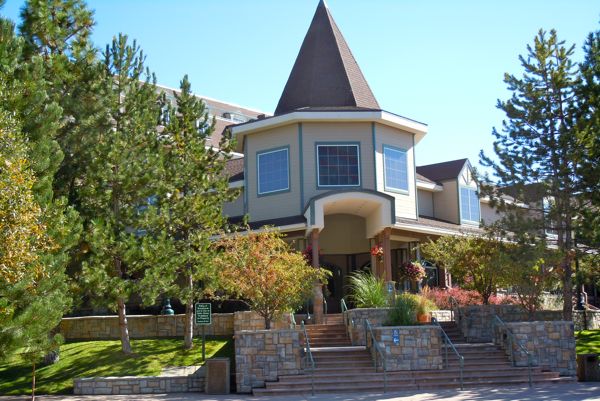
Embassy Suites in South Lake Tahoe not sold. Photo/LTN file

“I won’t make any comment. I would rather not continue this conversation,” Max Saito with Ken Corp. told Lake Tahoe News.

He confirmed his company still owns the property and it will remain open under the Hilton flag.

A hotel official told Lake Tahoe News that staff was unaware of the pending foreclosure until Lake Tahoe News wrote about it earlier this month.