El Dorado library measure goes down; Stracener leads in judge race

By Kathryn Reed

Measure L, the El Dorado County library tax, never came close to the two-thirds it needed to pass. The no votes had close to that amount with 63.5 percent. That’s with 45.2 percent of the precincts reporting Wednesday morning.

The purpose of the measure was to make funding of the countywide system the same throughout the county.

The 4th Congressional District that covers the Lake Tahoe area is returning Republican Tom McClintock to Washington. He faced Democrat challenger Jack Uppal. With 85.8 percent of the vote, it’s McClintock with 61 percent to the 39 percent for Uppal.

Ted Gaines, who has a second home in Tahoe City, will continue to represent the Lake Tahoe Basin in the state Senate. He was beating Democrat Julie Griffith-Flatter with 64 percent of vote, with 91.4 percent of the votes counted.

Two Assembly members will represent El Dorado County. Beth Gaines, who has had the seat that encompasses Lake Tahoe, faced fellow Republican Andy Pugno to retain the West Slope in the 6th District. Gaines was trouncing Pugno with 69 percent of the vote after 92.3 percent of the precincts counted.

Tahoe, based on 87.7 percent of the precincts reporting, will have Republican Frank Bigelow in the 5th Assembly District. He leads fellow Republican Rico Oller with 52.8 percent of the vote.

In what was an extremely contentious race for who would be El Dorado County Superior Court judge, Warren “Curt” Stracener led all night and continued to into Wednesday morning with 52.29 percent of the vote with 45.2 percent of precincts tallied.

There was always going to be a new member on the Board of Supervisors. Richard Barb and Brian Keith Veerkamp are vying for Jack Sweeney’s seat. Sweeney was termed out. Veerkamp was leading with 55.63 percent after 70.8 percent of the precincts had been counted.


Governor declares Prop. 30 victory

By Mike Rosenberg, San Jose Mercury News

Gov. Jerry Brown’s tax hike measure, Proposition 30, which is billed as the only hope to prevent more cuts to California schools, was headed for a narrow victory Wednesday morning.

With 64 percent of precincts around the state partially reporting results as of 12:30 a.m., the measure was leading 52.2 percent to 47.8 percent, according to results from the Secretary of State. The difference was about 295,000 votes — the measure’s most significant advantage of the night.

Brown declared victory in a rally just before midnight.

“We had a lot of obstacles,” the governor said. “We overcame them.”

He added: “I know a lot of people had some doubts and some questions: Can you really go to the people and ask them to vote for a tax?’ Here we are … We have a vote of the people, I think the only state in the country that says, ‘let’s raise our taxes, for our kids for our schools, and for our California dream.”’

Proposition 30 would raise the state’s sales tax by a quarter of a cent for four years and increase income taxes for people who make at least $250,000 by up to 3 percentage points for seven years. It would raise an average of $6 billion annually for the state’s general fund and education to prevent nearly $6 billion in “trigger cuts,” mostly to education, this year.

Los Angeles County, the Bay Area and coastal areas supported the measure while inland and rural areas rejected it. The biggest support was in liberal San Francisco County, while the largest opposition was in little Modoc County at the northeast tip of the state.

Brown’s campaign has raised more than $40 million, mostly from teachers unions and other labor groups. Some business groups, most school districts, celebrities and the state’s major newspapers also endorsed the measure, saying a tax increase was needed to balance the state budget and prevent schools from chopping days or even weeks off the school year.

Anti-tax groups led by Bay Area physicist Charles Munger Jr., son of billionaire businessman Charles Munger, and an Arizona group fought hard to defeat the measure. They argued that the state was wasting money on high-profile projects such as high-speed rail and did not need more tax money.

“We are grateful for all the hard work from thousands of small business owners, taxpayers and many groups from around the state in helping us communicate our ‘no on 30’ messages to voters,” the No on 30 campaign said in a statement. “We now wait for the final votes to be counted and determine the will of voters.”

Munger’s half-sister, Molly Munger, the author of a competing tax-for-education measure, Proposition 38, also briefly launched attack ads against Proposition 30 last month — and a decline in support for Brown’s measure quickly followed in the polls. Munger and Brown spent months feuding over which tax measure was better, and analysts predicted their competing measures could result in both failing.

Another distraction was Brown’s pursuit of the identity of the donors behind an Arizona campaign group that gave $11 million to defeat Proposition 30 and pass Proposition 32, leading to a lawsuit from the California Fair Political Practices Commission, which eventually forced the group to disclose the donors.

Still, supporters were optimistic.

“I think Prop. 30 will pass because voters understood this is about our schools,” Dan Newman, a spokesman for Yes on 30, said Tuesday night. “They are fed up to the cuts to our schools, with the double-digit tuition hikes, laying off teachers and increasing class sizes.”


Heller survives contentious battle to retain Senate seat

By Karoun Demirjian, Las Vegas Sun

Sen. Dean Heller rode to a close but safe victory over Rep. Shelley Berkley Tuesday night, earning a public mandate for the Senate seat he was appointed to in mid-2011, and defying both the Democrats’ registration advantage and the power of their storied get-out-the-vote machine.

Heller won by slightly more than 12,000 votes — or 1.3 percent — in a race that drew almost a million voters from across the state and took until midnight to finally tally.

Berkley came into Election Day with about a four-point lead in the Senate race from early balloting. But Heller quickly erased it as the precinct numbers started rolling in.
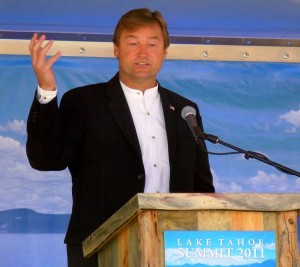
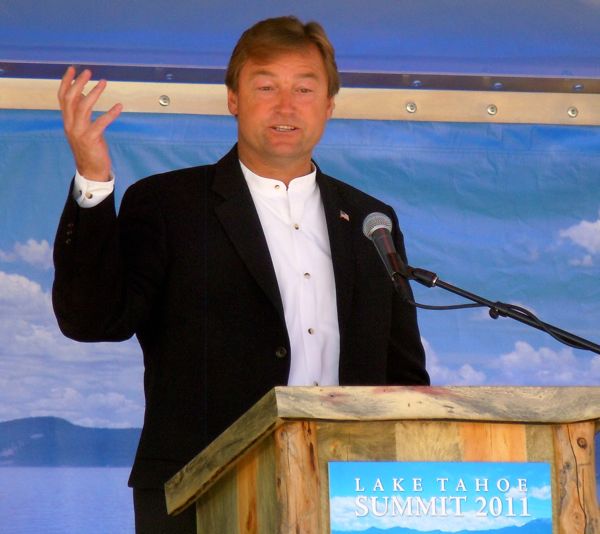
Dean Heller, a supporter of Lake Tahoe issues, retained his Senate seat. Photo/LTN file

Heller’s burst of strength came from two sources: High turnout in the rural counties, where pro-Heller ballots outnumbered pro-Berkley ballots by almost 4 to 1; and crossover voters, who apparently favored Heller over Berkley, even as they favored President Barack Obama over Mitt Romney.

Had Berkley been able to earn the support of every voter that supported Obama, she would have bested Heller handily. But statewide, Berkley fell over 80,000 votes behind Obama’s totals.

The difference was starkest in swing-district Washoe County, where Heller drew about 21,000 more voters than Berkley, a difference of about 12 percentage points. Obama had secured the support of 22,000 more voters than Berkley.

As Heller widened his lead in Washoe, he also nibbled away at Berkley’s advantage in population-rich Clark County, bringing the race there from a double-digit lead for Berkley to less than 10 percent by the end of the night.

It’s an important win not only for Heller, but for the Nevada Republican Party as well. Just a few months ago, they were the laughingstock of the national GOP, splintered and overrun by a rowdy Ron Paul faction more desperate to make a national splash for their sherpa than to use their grassroots heft to shore up the party ticket.

But by keeping their distance, Heller’s handlers kept the candidate and campaign on track, maintaining a small but steady lead Berkley from the earliest polls through to election night.

Heller will now be faced with earning the trust of half the people he represents. He’ll also be tasked with establishing an identity separate from attack ads and forging a relationship with Nevada’s more recognizable senator, Harry Reid.

Because it remained so closely fought, the Heller-Berkley race defied the logic of what should drive an election in present-day Nevada more often than it was defined by it.

Almost every voter interviewed in the weeks and months leading up to Election Day cited the local unemployment crisis, foreclosure crisis or some other aspect of Nevada’s worst-in-the-nation economy as their chief concern in the 2012 elections.

Heller and Berkley understood that, and, at every opportunity, each quickly declared a commitment to creating jobs, jobs and more jobs.

Perhaps ironically, their campaigns focused more on any issue but the economy.

Allegations over ethics, a war on women and attacks on each other’s integrity dominated the contest, as the two slugged it out in a mudfight that put questions about the candidates’ character before real conversations about the fate of the state.

“I defy anybody to tell me one new idea or one new innovation that came up in this campaign,” said Billy Vassiliadis, a Democratic strategist and Berkley supporter. “We’re sitting here with folks out of work, houses underwater, and nobody, even my home guys, have proposed a new idea. And I don’t know how long the voters will tolerate this.”

“I think everybody wants to see how we’re going to get at the issues,” said Sig Rogich, a Republican strategist and Heller supporter. “But for the most part, this campaign is not too different from every campaign in America. They all get down to personalities, and they all advertise about how somebody’s mistakes are a reflection of how they would govern.”

Berkley and Heller launched their campaigns in the spring of 2011. Berkley sprang to define Heller early on as someone exclusively interested in serving in Washington in order to serve the barons of Big Oil.

“Dean wants to end Medicare as we know it and give billions more in wasteful subsidies to his big oil campaign contributors,” became Berkley’s main argument for the balance of the campaign, serving as a supplementary answer to nearly every question posed to her in the last year.

But Heller was handed a political gift when allegations surfaced that Berkley had improperly used her congressional seat to lobby other members of Congress and the administration to save a kidney transplant center in Las Vegas and protect Medicare reimbursement rates that benefitted her husband’s medical practice. As allegations spun into an official congressional ethics inquiry, the question took center stage in shifting the tone of the campaign.

Heller didn’t personally play the card on Berkley’s ethics until this summer, but the outside groups around him seized on it, producing a string of accusing commercials that cited not only Berkley’s troubles with the House ethics process but her other near-misses with the moral side of the law.

None of Berkley’s counterpunches seemed to be able to quell the questions about her character. So she started throwing the book at Heller, seizing the opportunity of a congressional vote about funding birth control this year to accuse him of being generally “anti-woman.” She also dug up the seemingly shadier points of his past, like his association with money-launderer Eddie Floyd.

Six weeks out, Heller lashed back, calling Berkley “the most unethical, corrupt person I have ever known.”

The ad war and related catfight all but drowned out the debate over their competing views on social safety nets, energy policy and immigration — issues that do and will continue to affect Nevada over the next six years far more directly than the attack ads.

But in these and many other areas, the candidates have real differences.

They supported diametrically opposite approaches to Medicare, with Heller backing the Paul Ryan budget restructuring of the program and Berkley remaining adamantly against. They backed vastly different approaches to immigration, with Berkley supporting a full-fledged comprehensive immigration reform law with a pathway to citizenship. Heller supports the idea only for young military enlistees and has listed enforcement as his chief concern in the immigration arena.

And on matters involving energy, housing and balancing the budget, their philosophies were similarly disparate: Berkley believes in spending government money strategically to influence changes that will grow the larger economy, while Heller believes the road to financial recovery is through strategic cuts to government.

But perhaps the most important question about their differences, at least for the next few months, never even came up: How each one approaches compromise.

Congress has faced down many behemoth bills to avert more fiscal calamity in the last two years, and with a fiscal cliff looming, will have to face down many more.

To date, Berkley has voted for every major deal Harry Reid and John Boehner struck. Heller, however, dropped off around April 2011, adamantly refusing to lend his support to budget deals or debt ceiling solutions. He returned to the conciliatory fold in December 2011, dusting off the banner of bipartisanship in time to advocate for an extension of payroll tax cuts.

With the Senate and House split in similar fashion heading into the taxation and sequestration fights slated for the new year, Nevada’s new senator will have to decide when to stick to and when to split from the deals Reid invariably strikes.

At the same time, they will be challenged to craft a Senate persona for themselves that isn’t completely defined by Reid’s agenda.

Reid has been Nevada’s face in Washington since John Ensign resigned amid his own ethics investigation in 2009.

It was his narrative too, that undergirded the Berkley campaign.

After several elections that featured the power of his turnout machine, Reid’s earned his claim to in-state political guru status. But there was a problem with that this year: While his turnout machine seemed to work for the president, it seemed unable to perform as well for Berkley, at least as far as statewide polls were concerned.

The Heller-Berkley race swung heavily on the voters of registered independents, and the independently-minded voters who crossed party lines as they made their way down the ticket.

Heller and Berkley both turned out their base out. But they also both snatched some of their opponent’s.

Democrats and Republicans even admitted they would need strong support from the other candidate’s base — voters whose turnout the parties can’t control — if they hoped to win.

“Shelley Berkley is not going to win this vote only with Democrats. Shelley Berkley has been in this community her whole life, basically, and she has significant Republican support,” Reid told reporters last week.

“I clearly need the Obama voters to win,” Heller told the Sun this week. “There are plenty of crossover voters. … I see plenty of Obama-Heller voters, but I don’t see too many Romney-Berkley voters.”


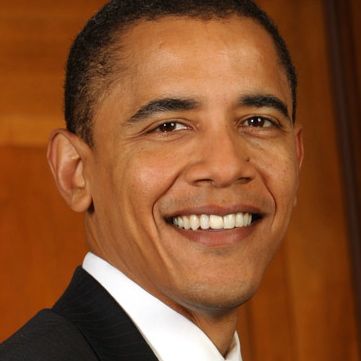
DCSD incumbents in, change to county commission

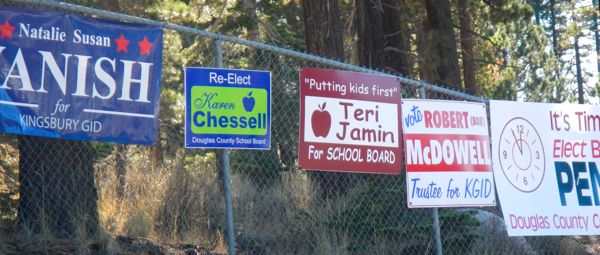
Douglas County voters have made their choices. Photo/LTN

Three of the seven Douglas County School District seats were up for a vote Tuesday night.

Incumbent Karen Chessell will retain her seat, having beat Ron Santi with 57.74 percent of the vote; Neal Freitas beat former member John Louritt to take over Randy Green’s seat with 54.31 percent; and incumbent Teri Jamin topped Laurence Lippmann with 53.22 percent. Those results are with 100 percent of the precincts reporting.

All results are preliminary until certified.

With 100 percent of the precincts reporting, the Douglas County Commission is being shaken up a bit. Incumbent Doug Johnson bested Frank Godecke with 54.99 percent of the vote. Incumbent Greg Lynn had no challenger. Incumbent Mike Olson lost to challenger Barry Penzel. Penzel had 51.61 percent of the votes.

Tom Perkins will be the judge in the Justice of the Peace East Fork Township. He beat Wayne Fazzino soundly by taking 67.11 percent of the vote.

The Tahoe Douglas Fire Protection District board will have Greg Felton, Larry Schussel and Steve Seibel as board members.

The Kingsbury Grade Improvement District board voters elected Bob McDowell, Jodie Nelson and Natalie Yanish.

Jim Wheeler, who beat incumbent Kelly Kite in the primary, prevailed Tuesday over David Schumann in the District 30 Assembly race, which includes Lake Tahoe.

— Lake Tahoe News staff report


Placer County looking at Republican representatives

Of the 208,600 registered voters in Placer County, 80 percent were forecast to turn out to cast a ballot on Nov. 6.

While Placer County residents are represented by two congressional districts, it is the Fourth District that covers the Lake Tahoe area. Republican incumbent Tom McClintock faced Democrat challenger Jack Uppal. McClintock faced Democrat challenger Jack Uppal. With 12.8 percent of the vote, it’s McClintock with 60.6 percent to the 39.4 percent for Uppal.

Ted Gaines, who has a second home in Tahoe City, looks like he will continue to represent the Lake Tahoe Basin in the state Senate. He was beating Democrat J. Griffith-Flatter with 63.8 percent of vote, with 16.1 percent of the votes counted.

The western part of the county is in the Fourth District.

Tahoe may now be represented by Frank Bigelow in the state Assembly. He faced fellow Republican Rico Oller in the Fifth District.

Beth Gaines, who has had the seat that encompasses Lake Tahoe, faced fellow Republican Andy Pugno to represent the 6th District which has the western edge of the county. She was winning handily.

For full results, go online.

— Lake Tahoe News staff report


Obama wins second term

President Obama

President Obama is going to be calling the White House home for another four years.

The president has won the electoral college vote, though he is trailing Mitt Romney in the popular vote.

Ohio put Obama over the top.

— Lake Tahoe News staff report


3 Tahoe soldiers killed in action to have peak named for them

By Kathryn Reed

Naming a North Shore mountain Gold Star Peak is closer to becoming a reality.

South Lake Tahoe councilmembers voted unanimously Tuesday to endorse the idea of Rep. Tom McClintock, R-Granite Bay.

McClintock has set up a memorial to active duty military members who have died in each sector of his district where a soldier has died in a conflict. A committee that included family members of those who died and local agency reps came up with the idea of the peak.

It would honor Pfc. Brandon Williams, Sgt. Tim Smith and Spc. Garrett Fant – all who had lived in South Lake Tahoe, and all who died in either the Iraq or Afghanistan wars.

The unnamed peak that would get the special name is between Mount Pluto (the highest point at Northstar ski resort) and Martis Peak. Because it is visible from Lakeview Commons, a plaque will go there pointing to the peak and expressing thanks to the three men. Mention of all veterans will also be included on the plaque.

Blair Clark with the local American Legion chapter said his group supports honoring these men, with the added hope no other names have to be added.

There was some discussion as to whether the peak should honor veterans and not just three people. It was pointed out that those who are killed in action are never veterans – so to have it be a veterans peak would actually exclude the three McClintock and others want to single out. Plus, there is Veterans Peak in Napa County already.


Raley’s workers walk the line; management keeps doors open

By Dale Kasler, Sacramento Bee

The grocery shelves were stocked, the coffee stand was open and shoppers were lined up at the deli counter for sandwiches.

On the picket line outside, morale was high and strikers said they were settling in for the long haul. They pumped their fists every time a potential customer left without going inside.

Monday was Day 2 of the strike against Raley’s, and across Northern California both sides were scrambling to put the best face on things. It wasn’t clear if labor or management had gained the upper hand.

Raley’s said it was pleased with overall operations and customer support. What’s more, spokesman John Segale said, “nearly half” of union employees showed up for work Monday.

The United Food and Commercial Workers denied that many workers crossed the picket line, but the union wouldn’t provide specifics. UFCW officials said the picketing workers succeeded in driving shoppers away.

“Raley’s customers are shopping elsewhere while the workers are on strike,” said UFCW Local 8 President Jacques Loveall in an emailed statement.

Raley’s has two stores in South Lake Tahoe. Pickets were out in force at the driveway entrances to both stores as well as in front of the store. People carrying signs were also along the highway in front of the Raley’s owned gas station at the Y.

While the company says normal operations are under way, the usual Monday donation to Bread & Broth was not received.

Company Chief Executive Michael Teel, in a radio commercial airing Monday, urged shoppers to ignore the strike.

“You can still count on us,” he said, reminding listeners of the grocer’s decades of experience.

Getting a gauge on the volume of customer activity was difficult. Segale said it was clear that some consumers “changed their shopping habits” but others were “coming out, supporting the company.”

One Sacramento customer, Dolly Rominger, said she came to the Folsom Boulevard store only because her mobility is limited and she didn’t want to drive farther. She expressed sympathy for the picketing workers.

“I feel bad for them,” said Rominger, who lives about three miles away. “I don’t like to see anybody have to stand on a picket line.”

Strikers said they walked out largely to protect their health plans. Raley’s wants to switch them to a different plan and eliminate health coverage for retired workers who are eligible for Medicare.

Not all shoppers were convinced that the strike was warranted. Vanessa Herburger, 26, her cart full of fresh fruit and vegetables, expressed mixed sentiments. Herburger, a state worker, said she has endured her share of cuts and furloughs in recent years.

“They are standing up for what they believe, and that’s good, Herburger said. “But I’m just happy to have a job.”

Maybe the Raley’s employees should be, too, she suggested, during tough economic times.

Supermarket industry consultant Bob Reynolds said Raley’s could find itself isolated, as there is no shortage of union and nonunion stores where Northern Californians can buy groceries without crossing a picket line.

“It’s not just short term, it’s long term,” he said. “You never want to show your most loyal shoppers where the alternatives are.”

The strike has put something of a strain on Raley’s operations. Store hours have been reduced at several locations. But every store is open, and Segale said logistics are running smoothly for the most part.

Although Teamsters drivers are refusing to cross the picket lines, Segale said they’re delivering products to nearby sites, where store managers can collect them. Besides, many deliveries come from nonunion vendors, he said.

“They’re able to get product to the stores … and put on the shelves,” he said.

Yet it’s typical in supermarket strikes for some products to run short eventually, Reynolds said.

Even if replacement workers are hired, as Raley’s has promised, it’s tough to keep all departments fully stocked over the long haul, he said.

The union says it has amassed a $60 million strike fund and will pay striking employees at least $200 a week. That’s a fraction of the $840 a week earned on the job by veteran employees at the top of the pay scale.

Still, the striking workers said they were committed to staying out of work for as long as it takes.

“If it lasts until the winter, and the rain is falling down, I’ll be out here,” said Brian Pickens, who was manning the picket line at the Folsom store. “I’m in for the long haul.”

Ken Jacobs, a labor relations expert at the University of California at Berkeley, said most strikers stayed off the job for the duration of the nine-month Southern California grocery walkout in 2003.

He said Raley’s proposals on health insurance could keep the workers anchored to the picket line.

“When people see their health care threatened, that’s the kind of thing that tends to keep people motivated,” he said.

This appears to be the first walkout in the U.S. grocery industry since 2010, when employees struck warehouses owned by Shaw’s Supermarkets in New England. That strike lasted four months.

— Lake Tahoe News contributed to this story.


LTWC in talks with investors to grow rehab facility

By Kathryn Reed

The sound of hope fills Tom Millham’s voice when he talks about the possibility of investors coming forward who could transform Lake Tahoe Wildlife Care into a sustainable enterprise for generations to come.

For more than 30 years Tom and Cheryl Millham have been rehabbing wild animals in their spacious backyard. Long ago they outgrew the facility that is in El Dorado County, on the edge of South Lake Tahoe. And all those years they have been looking to move to a more suitable location that would also allow them to create an education component to the center.

Reason after reason the center has stayed put.

Lake Tahoe Wildlife Care is caring for a record number of bears. Photo/LTWC

At tonight’s LTWC board meeting, the volunteers of this nonprofit will be updated on the two people who have expressed interest in putting up what could be millions of dollars to buy a 3,700-square-foot house on 16-plus acres that back up to U.S. Forest Service property at the bottom of Old Meyers Grade, as well to pay for the work needed to make LTWC more than it is today.

“We haven’t heard that part yet,” Tom Millham said of what the investors might want in return for their cash. “None of that has been discussed yet. We are still in the initial stages of discussions, but at least we have someone now we can focus on.”

Millham would not discuss who the potential investors are so as not to jeopardize negotiations. He said one is from the region, while the other is out of the area.

He told Lake Tahoe News if things progress smoothly and quickly, the rehab part of the operation could move to the Echo Creek Estate location by the end of next summer. This is assuming a decision by the backers is made by the end of the year.

“We know we can rebuild these nine cages in a fairly short amount of time,” Millham said.

Ben Fagan has been sketching some designs for possible cages.

The next phase would be the education center.

“It would have an amphitheater for shows and things like that; a store for retail; café; upstairs will be the board room, offices and living quarters for the person living on site; and custodial,” Millham explained.

The amphitheater may seat up to 200 people. It would be used to show educational films about wildlife, the facility, be a place for lectures, and also be a venue for community gatherings.

The idea is one person or a family would live onsite. It will not be the Millhams – they’ve had enough of that experience.

Mike Dill with Aspen Environmental Services has been working with the Tahoe Regional Planning Agency. The original permit on the property was to have expired last month, but a two-year extension has been granted.

Millham relayed that TRPA and El Dorado County have been working cooperatively to make the wildlife center a reality at the Meyers location.

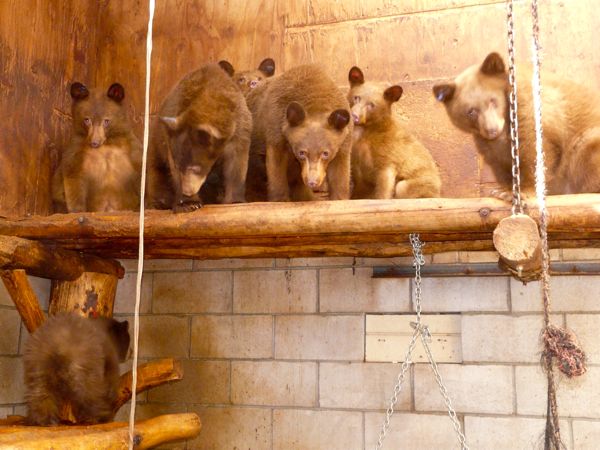
The need for this type of facility keeps increasing based on the numbers of animals LTWC rehabilitates each year. This season, which is usually wrapped up by now except for getting bears to hibernate, has been busy. The eight bears and six bobcats were each a record number.

The bears alone cost $3,000 a month to feed. That will taper off soon as they transition to hibernation.

“It’s not stopping. We got a red tail hawk on Saturday,” Millham said. Two golden eagles still remain, with the likelihood of one starting to exercise next week for release. The other is not likely to make it back to the wild so it will need to find another home.

One of the bobcats will also not return to the wild. It had become too comfortable around people. It’s next home could be Six Flags Marine World in Vallejo. Folks from that facility were in town Monday to take a look at the little guy.

While Lake Tahoe Wildlife Care has interested investors, the Millhams know it could fall through. That is why they are continuing to seek out others who may be interested in helping LTWC evolve. Then, there’s always the need for donations to keep the animals fed.

More info about LTWC is online – including webcams of the bears.


Most Truckee businesses found not to be selling booze to minors

On Oct. 31 and Nov. 2, Truckee police officers conducted a minor decoy program in which a minor was used to attempt to purchase alcohol from businesses licensed in Truckee as “off-sale” retailers by the California Department of Alcohol Beverage Control.

Of the 18 licensed off-sale alcohol businesses in Truckee only one store, J&L Food Mart located at 12105 Donner Pass Road, completed a sale of alcohol to the minor decoy.

The clerk was cited for a violation of selling alcohol to a minor and released with a promise to appear.

— Lake Tahoe News staff report