It pays to shop for car insurance

By Jerry Hirsch, Los Angeles Times

It pays to shop around for car insurance. California rates can vary by as much as a third for the same driver in the same car at the same address.

An analysis by CarInsurance.com, an Internet car insurance clearinghouse, looked at rates for an unmarried 40-year-old male who commutes 12 miles to work each day.

The hypothetical insurance had policy limits of $100,000 for injury liability for one person, $300,000 for all injuries and $50,000 for property damage in an accident and a $500 deductible on collision and comprehensive coverage. This hypothetical driver had a clean record and good credit.

The average annual premium from six national carriers in all ZIP codes was $1,277 for a 2012 Honda Accord. However, the least expensive premiums averaged $870, or 32 percent less. The analysis looked only at price and did not consider customer service variations between insurers.

In California the average cost for the policy was $1,428, but the least expensive was $960, or 33 percent less. The biggest swing was in Ohio where the lease expensive policy was 56 percent below the average.

“No two insurance carriers have the same way of calculating rates,” said CarInsurance.com managing editor Des Toups. “In some places the difference between the most expensive and least expensive is thousands of dollars — and the rates in our study are for low-risk drivers.”

The differences are even greater for high-risk drivers, he said.


Alpine Meadows instructor dies before resort opens

By KTVN-TV

Employees at Alpine Meadows are mourning the loss of one of their own.

Officials said on Saturday Annalise Kjolhede, a ski school instructor, was skiing the mountain before the resort opened when she hit a rock. She suffered serious neck and head injuries and passed away from her injuries on Nov. 13.

Alpine Meadows in a statement said, “…Though she was part of our team but one season, Annalise was a valued member of Alpine Meadows’ Kids Ski School. Her outgoing personality, passion for working with kids and friendly nature will be remembered and missed by all of her friends and colleagues here at Squaw and Alpine. Her passing is a tragic loss for our team and community.”

Kjolhede was wearing a helmet at the time of the accident.


LTUSD, LTCC investigating altering how boards are elected

By Kathryn Reed

Early next year the boards of Lake Tahoe Unified School District and Lake Tahoe Community College are expected to decide if they will alter elections to no longer allow candidates to be elected at-large.

The California Voting Rights Act is forcing K-12 and community colleges to look at their demographics to ensure everyone is represented.

“The data shows we’re at risk if we keep it at-large,” LTUSD Superintendent Jim Tarwater told the board at the Nov. 13 meeting. “We have 40 percent Latino population. We don’t reflect our population.”

LTUSD and LTCC have formed committees to work on this together with their top administrator. LTUSD’s committee is board members Wendy David and Larry Green, and Tarwater. The college committee is board members Molly Blann and Roberta Mason, and President Kindred Murillo.

They are all scheduled to meet after Thanksgiving, with the respective boards expected to take action after the first of the year. Both have elections in 2013.

Lawsuits filed elsewhere have involved schools, though it does not mean municipalities are immune. South Lake Tahoe City Manager Nancy Kerry told Lake Tahoe News the city wants to be part of the discussions, but that the city is different because it doesn’t have the disparity issues the schools do because the boundaries are different. LTUSD and LTCC include the unincorporated part of El Dorado County in the basin.

If either LTUSD or LTCC abandons at-large elections, each of the five board members would be elected from a geographic area. This is different from South Tahoe Public Utility District which has districts, but they have nothing to do with geography.


Man accused of S. Tahoe murder awaits trial

Sacramento Bee reporters answer questions about area crime news, trends and other issues.

QUESTION: What is going on with the man/case who was arrested in Carmichael this year for a killing that took place 30 years ago in South Lake Tahoe?

Submitted by: George, Fair Oaks

ANSWER: Andrew Evan Sanford is in El Dorado County Jail awaiting trial in the death of 16-year-old Richard E. Swanson.

Swanson was killed Aug. 14, 1980, at what was then a Shell gas station at what is known as the Y intersection of Lake Tahoe Boulevard and Emerald Bay Road in South Lake Tahoe. He was working alone that night and was killed during a robbery.

According to a story in the Bee, Swanson’s head had been severely beaten and he was robbed of his wallet, which contained $190 in cash from his first paycheck at the station. In addition, $761.02 was reportedly taken from the gas station’s cash drawer.

Sanford, 51, a Carmichael resident, was arrested in March of this year. He has pleaded not guilty to the 32-year-old crime.


El Dorado County man arrested in museum heist

By Cathy Locke, Sacramento Bee

The California Highway Patrol has announced the arrest of three men in connection with the Sept. 28 robbery of the California State Mining and Mineral Museum in Mariposa.

The robbery involved the theft of more than $1 million in precious metals, mostly gold.

Search warrants were served Tuesday morning in El Dorado, Sacramento and Sutter counties.

Edward Rushing III, 40, of El Dorado County was arrested on suspicion of multiple felonies, including drug charges, and is believed to be a conspirator in the Mariposa heist, according to a CHP news release.

Two men were arrested in Sutter County.

Matthew Campbell, 43, was arrested on suspicion of conspiracy to commit robbery, and Jonathan Matis, 41, was arrested on suspicion of conspiracy to commit robbery, armed robbery, vehicle theft and vandalism.

Officials said the investigation is continuing, and there may be additional arrests and charges.

The robbery occurred while the museum was open for business.

The suspects smashed display cases to steal the gold and gems, and their actions were captured on surveillance cameras at the museum, officials said.

CHP investigators, in cooperation with the Mariposa and Placer county sheriff’s departments, and the Sacramento Police Department identified the suspects in the museum heist and linked them to other crimes in Sacramento and Placer counties, according to the news release.


With strike over, Raley’s turns its attention to customers

By Dale Kasler, Sacramento Bee

Raley’s has settled its strike in time for Thanksgiving, restoring labor peace to Northern California’s turbulent supermarket industry.

But as picket lines disappeared and strikers returned to work Tuesday morning, Raley’s faced a competitive landscape overrun by low-cost, nonunion companies – and must immediately try to regain favor with shoppers.

“How long is it going to take to get our customers back?” wondered Michael Bates, a veteran employee at the Freeport Boulevard store in Sacramento, shortly before he dropped his picket sign.

The 10-day strike concluded with Raley’s able to boast that it won cost savings from the United Food and Commercial Workers. Details of the new contract weren’t released, and it’s unclear if the West Sacramento grocer lowered its costs enough to better compete with low-price competitors such as Wal-Mart and Target.

Raley’s gave ground to the union on a key issue. The United Food and Commercial Workers rebuffed the company’s demands to redo its health plan and eliminate coverage for Medicare-eligible retirees.

Preserving the health plan “is an extraordinary accomplishment for our members and our retirees,” said Jacques Loveall, president of Roseville’s UFCW Local 8, in a video message to members.

Although the contract must still be ratified by members of Local 8 and San Jose’s Local 5, and a vote is not yet scheduled, union leaders ordered picket lines removed right away from Raley’s and Nob Hill Foods stores. Raley’s said the 500 replacement workers hired in the past week would be dismissed.

Even though they didn’t strike, Bel Air workers are covered under the new contract.

The walkout leaves bruises. Raley’s must repair its image and lure back customers following the first strike in the family-owned company’s 77-year history. In the days before the strike, union officials described Raley’s as a fine institution that had lost its way.

With Thanksgiving just over a week away, Raley’s has likely lost some crucial holiday business as some shoppers have already ordered their turkeys, said retail consultant Burt Flickinger III.

“Raley’s may be competing for Christmas, Hanukkah and New Year’s more than Thanksgiving,” said Flickinger, managing director of Strategic Resource Group in New York.

Raley’s will announce a host of new promotions to get customers back, said spokesman John Segale.

Beyond the holidays, Raley’s must find its way in an increasingly crowded market. Chief Executive Michael Teel said before the strike that Raley’s was losing millions of dollars a year.

In a statement announcing the deal, he said the contract “provides us with the cost savings we need to fund our vision and the initiatives to make us more competitive.”

The savings weren’t disclosed. But it’s likely, based on the deal the UFCW made with Save Mart Supermarkets in September, that workers will surrender at least some of the premium pay they earn working Sundays and night shifts. Base pay for the most senior employees is $21 an hour, although most earn less than that.

Even with lower costs, Raley’s isn’t in the clear. Flickinger said the companies hurting Raley’s – and fellow union chains Safeway and Save Mart – aren’t going away.

“The competitive pressures are unprecedented, particularly with Wal-Mart, Tesco (Fresh & Easy), WinCo, Costco,” he said.

One thing in Raley’s favor is the quick end to the strike. “It’s a good thing for the company and the workers,” said Bob Reynolds, a grocery consultant in Moraga. “It’s much better than a long, bitter, acrimonious, brick-through-windshields kind of thing.”

Both sides were showing signs of vulnerability. Segale said nearly two-thirds of Raley’s workers – and nearly a third of Nob Hill employees – crossed the picket lines.

The union succeeded in persuading droves of customers to shop elsewhere. Segale said business was generally stronger in the Central Valley than the Bay Area.

“It wasn’t without impact to our business,” Teel said in a letter sent to the Bee‘s editorial page after the strike ended.

The UFCW likely strengthened its hand last Thursday by signing a new contract with Safeway. The deal, like the one Save Mart signed in September, preserves the union’s health plan.

Segale said the Safeway deal didn’t affect Raley’s strategy. But Raley’s felt one week was enough and called the union. Talks resumed over the weekend in San Francisco and concluded with a marathon session that ended sometime before 8am Tuesday.

“Both sides felt the need to wrap this up before the holidays,” Segale said.


Medical companies play growing role in Douglas County

By Roger Diez, Northern Nevada Business Weekly

Motorists traveling south on Highway 395 to Minden and Gardnerville can’t help but notice the impressive eastern slope of the Sierra Nevada and ranchlands stretching out on both sides of the highway. What they often don’t see, however, is the small but growing presence of medical-related industry that is a part of Douglas County’s efforts to bring business and industry to the area.

As Douglas County’s Economic Vitality Manager Lisa Granahan says, “We want to create a business community to match the scenery.”

Granahan is working closely with the Northern Nevada Development Authority to recruit biomedical companies to the area. Biomedical is just one of a number of “cluster” industries that make up NNDA’s regional nine-county strategy.

NNDA Deputy Director Maurice Washington said that NNDA is working on a biomedical center incorporating Douglas County and Carson City.

“We are working with Carson-Tahoe Regional Healthcare on the medical side of things,” said Washington. Elements of the NNDA plan include vitamin and pharmaceutical manufacturing, adult stem cell research, medical device manufacturing, holistic health initiatives and medical tourism. “We are talking to the folks at Edgewood on the medical tourism piece. Europe is light years ahead of us in this field, and we’d like to recapture some of those dollars that are going offshore for medical treatments,” Washington said.

Although the biomedical segment is still small in Douglas County, it is already very diverse. Here’s a snapshot of some of the companies currently in operation in Douglas County.

Comfort Care dentistry management

Formed in November 2011 and operational since February, Comfort Care is a dental management company that helps dentists focus on dentistry by assuming the administrative functions of the dental office.

According to Deputy General Counsel Ashley Cox, the company’s staff takes care of human resources, payroll, accounting, insurance, legal and contract issues through their Patient Relations Management Center.

The company also operates its own dental offices in Walmart stores in California and Arizona, partnering with the giant retailer and Colgate-Palmolive to educate patients and to bring affordable dentistry within easy reach of people who might not otherwise afford it. Plans include a dental lab in Gardnerville to provide laboratory services to their company-owned and client dental offices.

Currently at 10 employees locally, plans are to grow the PRM business as needed to support the field dental offices, with additional employment when the lab opens. The company was recently recognized by NNDA at the Bubbles and Barbecue awards dinner.

Injectimed, which does business as Frontline Medical Products A recent transplant from Ojai, Calif., President and Chief Executive Officer Tom Kuracina is already a big booster of Douglas County. He cites the scenery, the frontier spirit, and the warmth and goodness of the people as the best things about moving to the area, along with the business-friendly climate and tax benefits.

The company is a developer of medical products with an impressive patent portfolio. They currently are bringing to market a device that will go into medical kits for procedures such as inserting stents and pacemakers. It can also be used for cardiac catheters, anesthesia, oncology, emergency room procedures, and field use by EMTs for tracheotomies. Kuracina also has a series of safe hypodermic needle designs that prevent medical providers from accidental punctures. There are currently only three employees in the company, but he is planning to open a fulfillment center to distribute product. Manufacturing will be done by a U.S.-based contract manufacturer. Kuracina has high praise for NNDA, Western Nevada College, UNR and Casey, Neilon & Associates, all of which were instrumental in his move to northern Nevada.

Life Enhancement Products

Recent arrival Life Enhancement Products moved from Sonoma County to Minden in July. Already at 23 employees, the company runs two manufacturing shifts.

President and CEO Will Block cited Nevada’s business-friendly atmosphere and tax structure, as well as the transportation infrastructure and high quality of employees as reasons for relocating. The company publishes a monthly magazine rooted in the most current literature on nutritional science, and staff members are continually testing and developing new products.

Block says that 65 percent of his readers and buyers are women ranging in age from low 40s to mid 60s, who are primarily interested in anti-aging and memory-enhancing products.

He recently returned from Poland, and plans to add that country to the nearly 100 countries where he distributes his products. As far as assistance from local agencies, Block said that NNDA’s Rob Hooper has been very welcoming and has offered to help with training and hiring grants.

The company also got assistance from the Small Business Administration to get a loan to purchase their building in Minden.

Bio-Pure Products

Much smaller, but no less enthusiastic about the area, Bio-Pure Products makes and distributes a bacteria/enzyme waste management product. Victoria Alexander-Cushman and her husband run the company with the help of two part-time employees.

The product was originally developed by a doctoral-level researcher in microbiology to maintain pure water in fish farms in third world countries. Bio-Pure obtained a license and adapted the product for use in cleaning vacuum systems in dental offices. It has been so successful that manufacturers of those systems now specify Bio-Pure as the cleaning agent required to maintain warranties. Alexander-Cushman says they are also investigating the use of their product in surgical applications. They relocated from California in 2009, and cite the better business climate and quality of life as prime factors. They have not sought any assistance from local agencies, but may do so as they expand.

HCI Sciences

This small, four-employee firm is poised to revolutionize anatomical pathology. Chief Medical officer Jerry Fredenburgh has developed a more reliable and environmentally friendly dye that is used to stain tissue sections. He teamed with healthcare sales expert Peggy Lyon to market the product to pathology labs. They chose this area because Nevada’s regulatory climate is more conducive to development of medical manufacturing than California’s.

With FDA certification of the 5,000 square foot lab and production facility in progress, the company plans to add employees in the first quarter of 2013. NNDA has provided assistance in the company’s move to Minden.


Raley’s says deal on the table to end strike

By Dale Kasler, Sacramento Bee

Raley’s said today it has struck a deal to end its strike.

There was no immediate confirmation from the United Food and Commercial Workers. Ellen Anreder, a spokeswoman for UFCW Local 8 in Roseville, said there wasn’t a signed agreement yet.

The announcement from Raley’s came after a marathon negotiating session in San Francisco that went all night and into the morning. Bargaining resumed over the weekend.

Raley’s didn’t provide any details of the agreement but said an announcement was expected later this morning.

The UFCW went on strike a week ago Sunday over the grocer’s demands for wage and benefit concessions. In particular, the workers rebelled against Raley’s proposals to restructure their health care plan and eliminate coverage for Medicare-eligible retirees.

The company said that while sales were affected by the walkout, revenue was steadily improving in recent days. Raley’s also said well more than half the UFCW members crossed their own picket line to return to work.

But Raley’s may have suffered a setback last Thursday, when rival Safeway signed a tentative labor agreement with the union. The deal preserved the union-preferred health plan and left Raley’s as the only unionized grocery chain in the region without a contract. Save Mart Supermarkets made a deal with the union in September.


Northstar creates growth plan for the next decade

By Kathryn Reed

What would Northstar be like if skiers were whisked to the village via a gondola from the lower parking lot, if 300 acres of terrain were added, and those runs were accessed by an additional seven lifts?

Skiers and snowboarders will get to know the answers firsthand in the next decade or so if Vail Resorts has its way.

The Northstar Mountain Master Plan is on the street for people to comment on, and Placer County officials to review before the environmental documents are created. It is all about the mountain and does not include a real estate component.

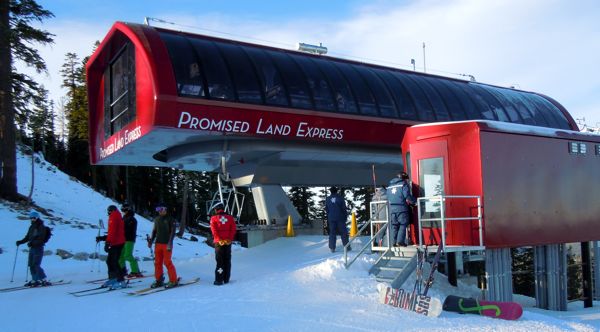
Vail Resorts has spent more than $30 million to upgrade Northstar, including the Promised Land lift that opened last season. More money is on its way. Photo/LTN file

Even though Northstar is on private property and the resort would not normally have to go to the level of detail that it is, the Martis Valley settlement required a bit more depth to planning.

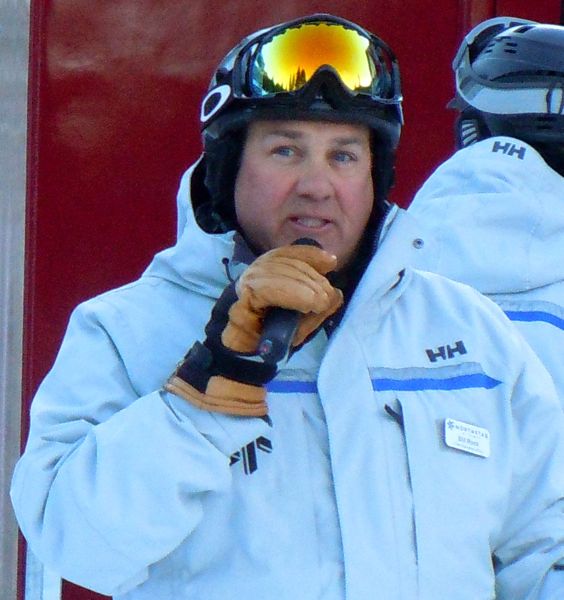
“This plan is based on the overall Habitat Management Plan,” Northstar COO Bill Rock told Lake Tahoe News. That plan was developed in conjunction with Sierra Watch and other conservation groups. Those entities, according to Rock, have also been privy to the details of the master plan as Northstar was formulating the document.

“This plan really is designed to be a real benefit to the people who are already here. No additional parking is proposed in this plan. That is what limits access to resort,” Rock said.

Parking has long been one of the biggest complaints about the ski resort. Lodging wiped out where people used to be able to park within walking distance to the village and slopes. Now people are bused from close to the entrance off Highway 267.

Rock says the gondola that is proposed to take people to the village from the parking area will get buses off the road and “provided a better experience for guests.”

Other lifts are designed with the idea of getting people dispersed throughout the mountain faster and more efficiently. A lift would start in the village to take riders to the top of Lookout Mountain.

“This outlines our vision for the next 15 years – what we might do at the resort.” — Bill Rock, Northstar COO

“We have a great plan to go out onto Sawtooth Ridge. It will absolutely enhance the skier experience,” Rock said.

To help Mother Nature, more snowmaking apparatuses would be put in the ground. Snowmaking helped save last season at so many Tahoe-area resorts.

“Well-engineered, thoughtful snowmaking is a critical piece of any resort no matter where it’s located,” Rock said.

He said Northstar has enough access to water on the mountain so its reservoir storage will not need to be expanded. Rock added that snowmaking is good because it replenishes the groundwater supply.

Things that are included in the master plan that are likely to get built right away include expanding the Summit Deck and Grill (which is near the top of Comstock and Backside lifts), possibly putting in a warming hut on the backside of it, adding other bathrooms and warming huts on the mountain, and minor food and beverage options.

In this PDF of Northstar’s plans, it shows skier service areas in yellow as well as where other changes could occur. For now, those are areas where resort officials believe they want to do something, but don’t have the specifics of what could go there.

“This outlines our vision for the next 15 years – what we might do at the resort,” Rock said.

Besides needing Placer County’s stamp of approval, the Vail Resorts board of directors must weigh in as to when the checks would be written for the expansion and what gets done first.

What build-out of the components in the proposed master plan would cost are not being discussed because a time line to build them has not been established. Plus, this document is mostly about the big picture, and not specific details of individual projects.

While this is a winter master plan, Rock said Northstar would like to enhance its summer offerings at some point, too. A separate plan would be submitted to the county for those ideas. Things being talked about include a mountain coaster that is a toboggan-like device that would go through the forest on rails, family-friendly bike trails, and a zipline and canopy tours.

Notes:

• More information may be found online.

• Written comments will be accepted until Dec. 5 at 5pm. Send them to Maywan Krach, Environmental Coordination Services, Community Development Resource Agency, 3091 County Center Drive, Ste. 190, Auburn, CA 95603 or cdraecs@placer.ca.gov.

• A meeting to receive comments on the scope of the environmental impact report will be Nov. 28 at 10am at the Lakeview Suite, North Tahoe Event Center, 8318 North Lake Blvd., Kings Beach.


Number of student loan defaults continues to climb

By Phillip Reese and Melody Gutierrez, Sacramento Bee

Going to college has always been a gamble for students taking loans. They bet on a college degree conferring higher earnings that will let them settle up after graduation.

For most, the gamble pays off: The unemployment rate for college graduates is half the rate for those with only a high school diploma.

But a growing number of local college graduates are falling short and quickly defaulting on their loans. And the trend is not just happening at private, for-profit schools.

Public college students in the Sacramento region borrow almost twice as much as their peers did six years ago – and default on their loans twice as often after graduation, new federal data show.

Current students borrow more because student fees continue to rise at UC Davis, Sacramento State and the region’s two largest community college districts. Recent graduates default more because the job market, while improving, is not back to full strength, leaving thousands underemployed in jobs that don’t require a degree.

“It’s like the housing market – all the debt,” said Sacramento State senior Daniel Eastman, referring to the housing bubble. He’s borrowed about $7,000 a year since transferring from community college. “People aren’t going to be able to pay it all off.”

Eastman wants to avoid the fate of roughly 1,000 local public college graduates who defaulted within just two years of starting loan payments in 2010. Four years prior, 400 local students defaulted in that short time, U.S. Department of Education figures show.

Local public college students and parents borrowed $315 million from the U.S. government last school year, up from $170 million during the 2006 school year.

Much of the new debt comes from a surprising quarter: community colleges.

While most community college students don’t take loans, a growing number now borrow to cover living expenses. Almost 3,000 left local community colleges with debt in 2010; after graduation, these students defaulted at more than triple the rate of students at four-year public colleges.

“I think it’s psychotic,” Sierra College financial aid program manager Linda Williams said, adding that the federal government, not the college, decides whether to issue a loan. “I can’t deny them, unless it is something glaring.”

Statewide, public college students at all levels borrowed $3 billion last school year, almost double the amount from six years prior. Quick loan defaults also have almost doubled.

California nonprofit private school students drew down another $3 billion in debt last year, and students at for-profit, private schools borrowed $2 billion.

The consequences of defaulting on a loan are severe – and tough to escape. Unlike other types of debt, student loans usually can’t be discharged through bankruptcy.

“You’ve got to be dead to get out of these loans,” said Ed Emerson, chief of federal policy and programs at the California Student Aid Commission. “The feds don’t give up. They can garnish your wages. They can seize your property.”

Higher fees, fewer classes

Eastman, a biology major, is optimistic that he won’t ever face that crisis, but he’s not certain.

As Sacramento State continues to cut class offerings, Eastman said he struggles to get the courses he needs to graduate. Spending more time in school leads to more debt.

He also worries about rising tuition. CSU officials announced last week that they want more fees from students taking too long to graduate and repeating classes.

Already, about 315 Sacramento State students who began paying off loans in 2010 defaulted within two years, triple the number from five years prior. Only one public college in the state, California State University, Northridge, saw more recent graduates default almost immediately.

Desiree McSherry, 22, a senior in nutrition science at Sacramento State, doesn’t owe the government any money, but has had trouble getting experience in her field because most internships don’t pay, and she needs to keep her part-time job – or start taking out loans.

“You can’t really build bridges when you have to work” a job unrelated to your field, she said.

Anita Kermes, the financial aid director at Sacramento State, said the college “does a lot of proactive things” including loan counseling and career fairs to deter defaults. But, she said, “double-digit unemployment has had a big impact.”

At UC Davis, about 125 students who started paying off their loans in 2010 defaulted less than two years later, more than double the number from five years prior.

Still, that represents less than 3 percent of UC Davis 2010 graduates, giving UC Davis the lowest default rate, by far, in the region.

“Our default rate is not that high, but it’s going up every year,” said Katy Maloney, financial aid director at UC Davis.

Defaults can hurt schools

At the region’s two largest community college districts, Los Rios and Sierra, students and their parents borrowed $51 million last school year, quadruple the $13 million their peers borrowed six years earlier.

Juan Vasquez, a part-time student at both Sierra College and Sacramento State, owes about $20,000 and has 18 months before he graduates. Vasquez said his loans pay for food and transportation.

“The way the economy is right now, you will try to do something,” said Vasquez, a communications major who lives in Orangevale. “So people go to school.”

If Vasquez graduates, he’ll have a good shot at finding a job and starting payments on his loans.

But no one is guaranteed work, and hundreds of students drop out of local colleges each year, hauling big, unpaid loans behind them. Roughly 15 percent of former local community college students who started paying loans in 2010 defaulted less than two years later.

“If it’s hard to get a job, people can’t pay it back,” Vasquez said.

The total annual cost of attending Sierra College while living with parents last year was $7,500, up 25 percent from 2006, after adjusting for inflation, federal data show. That figure includes books, food and transportation.

Far less than 10 percent of students at Sierra and Los Rios colleges take loans, but, as the number grows, college officials often discourage students from seeking loans.

“We do strong counseling,” Los Rios spokeswoman Susie Williams said.

The stakes are high. Some community colleges worry that they will face federal sanctions if they don’t keep loan defaults in check.

Schools with high default rates can lose their eligibility for federal financial aid, such as Pell Grants, beginning in 2014. That prospect has led some California community colleges to stop participating in federal loan programs, though many wouldn’t face sanctions anyway because of the relatively small number of students taking loans.

Students counter that they often have no choice but to take loans.

Samantha Ledbetter, 19, is studying to become a nurse. She’s taking close to a full class load at Sierra College, working to pay bills, living with her parents, and receiving a tuition fee waiver, but still needs loans, she said, “for gas, food and stuff like that.”

After two years at Sierra College, Ledbetter said she will have about $13,000 in student loans by next semester’s end.

Feds work with students

Student loan defaults will continue to rise, several experts said, so long as student fees keep increasing and the economy remains weak.

While none expected college costs to fall anytime soon, several pointed to positive signs that the economy is improving, making loan payments easier for graduates.

“We had a record number of employers participating in our most recent career fair,” said Kermes, the financial aid director at Sacramento State.

Federal government officials have taken steps to reduce loan defaults. Some students unable to repay can put off payments, a process called forbearance. Officials have made consolidating several student loans into one loan easier, a process that can often reduce interest rates.

Graduates who default can also work out a payment plan with the federal government, though that may result in extra fees.

Emerson, the California Student Aid Commission official, said the federal government may soon tighten restrictions on who can receive aid – and which schools can take it. The new guiding principle may be, “Don’t give money to people with no hope of paying it back, and don’t give money to students at diploma mills,” he said.

The change might take a while, though. Williams, the Sierra College official, still sees many students borrowing against a low-paying vocational career while attending college part time.

“The loan system needs reworking, and I think the Department of Education understands that,” she said. “I think they are seeing what we are seeing in the field.”