A price to pay for saying no to NV Energy smart meter

By Cy Ryan, Las Vegas Sun

CARSON CITY — Not wanting a smart meter could be an expensive choice.

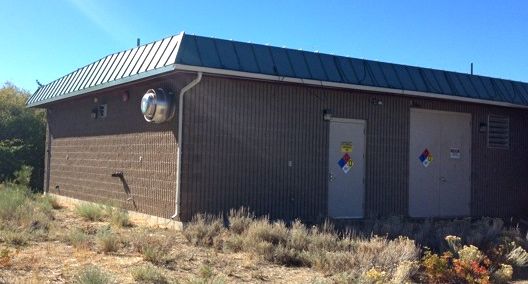
An estimated 10,000 NV Energy customers in Southern Nevada who don’t want smart meters will be hit with extra costs, under a draft order to be presented to the state Public Utilities Commission on Tuesday.

If adopted, those who opt out of the smart-meter program in Southern Nevada would have to pay $98 for installation of an alternative meter and a $9-per-month fee.

In Northern Nevada, about 4,000 customers would be charged $107 for installation and $10 a month, under the draft order by commission Chairwoman Alaina Burtenshaw.

The three-member commission will vote on the proposed plan and is still free to make changes.

The draft order says the fees imposed on the opt-out customers “will result in just and reasonable rates.”

Some customers oppose the smart meters, fearing they might cause health hazards, and many said they would be willing to pay the added cost.

NV Energy has installed about 1.3 million smart meters, which can transmit meter-reading data directly from a home or business to the utility.


4 people die in accident near Placerville

By Darrell Smith, Sacramento Bee

Four people were killed, including two children, and five others were injured in a collision Saturday night in the Apple Hill area of Highway 50 near Placerville.

California Highway Patrol officers say a Toyota Prius westbound on Highway 50 near Braeburn Lane about 6:05pm veered into the path of a minivan driving east on the highway, colliding head-on with the van.

A 4-year-old in the minivan and a child in the Prius died in the wreck as did the Prius’ driver and another adult in the car, said CHP Sgt. Gilbert Lee.

Four others in the minivan, including 1-year-old twins, survived the collision as well as a 10-year-old in the Prius, Lee said. All were taken to local hospitals with injuries.


Placer County supes take on variety of Tahoe issues

The Placer Board of Supervisors took up several Lake Tahoe-related actions at last week’s meeting in Auburn.

Items included: approval of an annual contract with the North Lake Tahoe Resort Association for marketing, transportation and infrastructure projects; approval of an amended lease for the Jackpine parking lot in Tahoe City; approval of the acquisition of easements as part of the Kings Beach Commercial Core Improvement Project; and a modification of public hearing locations for the Kings Beach Benefit Assessment District.

The contract with NLTRA pays for the promotion of Placer County’s portion of the North Shore of Lake Tahoe. The $5.15 million agreement, paid for by transient occupancy taxes collected on the North Shore, helps promote tourism and provides guidance in funding infrastructures to enhance to North Lake Tahoe communities. As approved, the contract maintains tourism and business development and services while balancing other Placer County Tahoe operational needs such as the North Tahoe health clinic, beach maintenance, additional Placer County Sheriff’s Office patrols over the Fourth of July holiday and transit service.

The Jackpine parking lot in Tahoe City opened in 2006 and is available for off-street parking in the Tahoe City business district. Land for the lot, which has space for 40 cars, was leased under an agreement between the landowners and the former Placer County Redevelopment Agency. The board approved an amended lease that will save $357,624 over the term of the lease, which runs until 2036.

With the Kings Beach Commercial Core Improvement Project progressing, the board approved two easements and a modification of a public hearing that are related to this project. The first easement is a permanent acquisition needed for construction of a roundabout on Highway 28; the second easement is a temporary construction easement.

In October, the board adopted a resolution to consider the formation of the Kings Beach Benefit Assessment District No. 1. Should the district be formed, assessments collected would pay for the maintenance and services of all improvements related to the Core Project. Following the distribution of an assessment ballot to all property owners within the district in early December, a public hearing will be held. Following the public hearing, the ballots returned by property owners will be tabulated to determine whether a majority exists to form the district.

The board has scheduled that hearing for Jan. 22 at the North Tahoe Event Center during its regularly scheduled meeting. In addition, the hearing will also be held simultaneously in Auburn at the County Administrative Center.


Placerville man to oversee California National Guard

By Charles Piller, Sacramento Bee

Gov. Jerry Brown appointed Lt. Col. David Kauffman of Placerville as the first independent inspector general of the California Military Department, which includes the National Guard.

The position was established by Senate Bill 921, signed into law in September in response to concerns raised by a Bee investigation of the Guard that exposed widespread financial fraud, as well as neglect of Camp Roberts, a key training facility.

“I’m pleased the governor acted so quickly to appoint a new inspector general,” said Ted Lieu, D-Torrance, an Air Force veteran and co-author of the new law. He said the governor’s appointment signals that Kauffman will be independent from Guard leadership – meant to assure whistle-blowers that they can report wrongdoing without fear of reprisal. The law also bars such retaliation. Kauffman said in an interview that to help ensure that service members understand that they can safely share concerns about higher-ranking officers, he would visit units across the state to talk with rank-and-file soldiers without their leaders present.

In addition to examining complaints, Kauffman will issue quarterly and annual public reports.”The biggest challenge for anybody serving as an inspector general is making the hard call, whatever the pressure” or appearance of pressure from Guard leadership or from aggrieved service members, he said. “When the time comes to make that hard call, the office of the inspector general will do that.”

His appointment “continues the process of restoring confidence in the state’s military,” Lieu said.

Kauffman, 41, was appointed to a four-year term. Although he reports to the adjutant general, the Guard’s top leader, he cannot be fired except for cause. Should claims arise against the adjutant general, Kauffman would be required to report them to federal authorities and the governor.

Kauffman has served with the California Army National Guard and U.S. Army Reserve for almost 20 years, including tours of duty in Afghanistan and Guantánamo Bay, Cuba. His professional experience includes work as a military attorney and as a deputy district attorney in El Dorado County. The position, which does not require Senate confirmation, pays $141,619 annually.

The Bee series described fraud involving tens of millions of dollars in Guard enlistment incentive payments. An ongoing federal criminal investigation of those concerns so far has resulted in four plea agreements, including one that involved a prison sentence for a former incentive-program manager.

The series also exposed improper “double-dipping” payments to top pilots in the Fresno-based 144th Fighter Wing, which resulted in their removal, and to former Adjutant General William H. Wade II, who has agreed to repay tens of thousands of dollars.


Election loss has Republicans seeking common ground with Democrats

By Anthony York, Los Angeles Times

SACRAMENTO — The drubbing Republicans suffered in California elections this year came as no surprise to many GOP activists, who for years have been advocating a shift in direction to avert irrelevancy.

Now, some longtime party stalwarts are questioning whether it is even worth the effort.

Business groups are taking their agendas to Gov. Jerry Brown and a new crop of centrist Democrats in the Legislature, many of whom were elected with financial backing from traditionally Republican groups.

“For the business community, there is a recognition that the best path forward for the state from a governance perspective is with moderate Democrats,” said Rob Stutzman, a Republican consultant who advised the California Chamber of Commerce on a number of legislative races this year.

Although all of the Republicans the chamber backed lost their races, at least seven of the newly elected Democrats in the Assembly had its backing.

That trend could continue in the coming years if Republicans remain stuck in political oblivion. Charles Munger Jr., the wealthy donor who has long called for his party to take a more moderate tack, said at a post-election forum that diminishing numbers and a damaged brand mean “our role as Republicans for awhile will be to choose the best Democrat.”

California’s GOP leaders have wrestled since the mid-1990s with the problem of adjusting to the shifting state demographics. At that time, Gov. Pete Wilson’s crackdown on illegal immigrants led to Latinos backing Democrats in droves.

Subsequent efforts to recalibrate the GOP’s stance on a number of issues, including immigration and economics, failed because hard-line conservatives refused to budge.

The state party is weaker now than it has ever been, accounting for fewer than 30 percent of registered voters. No statewide elected officials are Republicans, and the party has become almost a nonentity in the Legislature.

Democrats now hold a two-thirds supermajority in the Assembly and Senate, meaning they can pass taxes and place proposals on the statewide ballot without any Republican support.

Some Republicans say that their party must remain true to its conservative roots. Rep. Tom McClintock, R-Granite Bay, recently wrote: “One of the lessons that we should take from this experience is that capitulation on our values and principles is not the answer.”

But others, such as former state Sen. Jim Brulte of Rancho Cucamonga — who has been rumored to be a candidate for state party chairman — said the GOP needed to reach out to new voters, including Latinos and Asians, who now constitute more than one-third of the electorate. Since the mid-1990s, both groups have overwhelmingly supported Democrats.

“Demographics do not have to be destiny,” Brulte said. “But if Republicans don’t do a better job of reaching out to all Californians, they are going to be.”

Brulte said that though there was work to be done at the grass-roots level, the state party’s woes are due, in part, to a national party that has opposed immigration reform and been seen as out of touch on a number of issues important to Californians.

Exit polls showed many of the state’s new voters were more moderate than the hard-line activists who wield considerable clout within the party.

Moderate Republicans have tried to assert themselves.

In 2009, for example, a handful of Republican lawmakers voted for temporary tax hikes backed by Democrats and Gov. Arnold Schwarzenegger to patch a $24-billion hole in the state budget.

But the votes cost both GOP legislative leaders their jobs and led to an attempted recall of another Republican assemblyman.

As conservatives retain their grip on the party, their numbers have continued to drop. Some Republicans say the party would be better off focusing on the Democrats.

“It will be easier,” said longtime Republican consultant Mike Madrid, “to moderate the Democratic Party than to fix the California Republican Party.”


California lawmakers set to take pay cut

By Jim Sanders, Sacramento Bee

California elected officials from governor to legislator will see their pay cut by thousands of dollars next month under decisions made by appointees of former Gov. Arnold Schwarzenegger.

Effective Dec. 3, Gov. Jerry Brown’s pay will drop to $165,288. Legislators will be paid $90,526, legislative leaders $104,105. Salaries for constitutional officers from attorney general to secretary of state will range from $143,571 to $123,965.

But Brown’s administration will soon control a majority of seats on the salary-setting commission as two seats become vacant Dec. 31, ensuring that his appointees will fill four of the seven positions. The turnover could change attitudes on a commission that moved aggressively in recent years to cut pay and perks for state elected officials.

Charles Murray, a Schwarzenegger appointee on the commission, said he expects labor unions to gain clout with Brown’s two pending appointments – and for the seven-member panel to start raising officials’ salaries once California’s budget deficit ends.

“Everything is going to swing the other way,” he said.

The panel, created by a voter-passed initiative in 1990, voted to make the pay cut in May. At the time Brown said, “I’d run for governor whether it was a paid job or not.”

Next month’s reductions slash $8,699 from Brown’s annual salary. Legislators will lose $4,765, legislative leaders $5,479. Constitutional officers from attorney general to secretary of state will see drops ranging from $7,556 to $6,525.

Aaron Read, a longtime Capitol lobbyist, said the cut creates unfairly low salaries that could discourage the “best and brightest” candidates from seeking office in a state of nearly 40 million people that has one of the world’s largest economies.

Read contends the pay cut was meant as a slap at officeholders while state government was wrestling with billions in red ink and service cuts.

“It was clear that it was punitive,” Read said. “I think the commission should be disbanded. I think it’s done a grave disservice to the state.”

Murray countered that elected officials need to share in fiscal sacrifice. “In tough times you have to do tough things,” he said.

Kris Vosburg, executive director of the Howard Jarvis Taxpayers Association, said “average folks would say they’re still overpaid.”

The pay cut of 5 percent next month is in addition to an 18 percent reduction in officeholder salaries and fringe benefits in 2009, and elimination of the Legislature’s car-lease program in late 2011.

Brown’s restructuring of the board began last year, when he appointed labor union business manager Tom Dalzell to the panel and designated him as chairman, adding a voice of restraint to a board that has sharply cut compensation.

Dalzell votes only if the panel is deadlocked, however, and it was not when it voted on May 31. Four of five Schwarzenegger appointees, joined by one Brown appointee, agreed to slash elected officials’ pay by 5 percent when the new legislative session begins.

Dalzell, before the vote, noted that supporters’ argument for reducing elected officials’ pay was that state workers were about to take a similar cut. Ultimately, workers’ hours were reduced 5 percent temporarily through a monthly furlough day, but their rate of pay was not changed.

“I want to maintain my impartiality as chairman, but I think the commission acted on assumptions that did not play out,” Dalzell said recently.

Dalzell, a leader of International Brotherhood of Electrical Workers Local 1245, said he would be willing to consider restoring some of the previous cuts once the state’s budget outlook brightens. State law bars the panel from raising pay in years of deficit.

Peak salaries for elected officials, in 2008, ranged from $212,179 for governor to $116,208 for legislators.

Key legislative aides, many of whom received a pay hike this year, routinely earn substantially higher salaries than the officeholders they serve.

Assembly Speaker John A. Pérez’s chief of staff receives $190,000 a year, for example, while the Democratic legislative leader makes $109,584 now and will see that fall to $104,105 on Dec. 3.

Democrat Ken Cooley must quit his job as a senator’s legislative director to represent Sacramento County in the Assembly. His pay will drop from $108,792 as an aide to $90,526 as a legislator.

“I knew I was taking a pay cut – that’s OK,” said Cooley, who also must resign his $6,000-per-year job as Rancho Cordova councilman. “My wife is a church bookkeeper. We live within our means. And I believe in public service.”

Assemblyman Jeff Gorell, R-Camarillo, said the 5 percent cut “is not going to be easy,” but “we’ve adjusted our income to it.”

“Frankly, I think it sends the right message when we’re making cuts to vital state programs,” he said.

Pérez and Senate President Darrell Steinberg declined to comment on the pay cut.

Sabrina Lockhart, spokeswoman for Assembly Republican leader Connie Conway, said the “commission was created to take salary-making out of the hands of legislators and she’ll accept whatever decision they make.”

Even with the new 5 percent cut, California lawmakers’ $90,526 salary will lead the nation in base pay, followed by Pennsylvania, $82,026 and New York, $79,500, according to a 2012 survey by the National Conference of State Legislatures.

The two East Coast states arguably rank highest in total compensation, however, because legislators there can qualify for pension and retirement medical benefits, while California lawmakers cannot.

California legislative salaries pale in comparison to judges and to many city managers, college presidents, auditors and district attorneys.


Red Hawk Casino stabbing victim identified

By Melody Gutierrez, Sacramento Bee

Police have identified the man stabbed to death Wednesday night at Red Hawk Casino as 19-year-old Gene Mcarn.

The El Dorado County Sheriff’s Office reported that deputies were dispatched to the Shingle Springs casino about 10:30pm Nov. 21 following an alleged stabbing.

Mcarn was transported by friends to Marshall Medical Center in Placerville, where he was pronounced dead.

After interviewing witnesses and analyzing the crime scene, the heriff’s office reported in a news release that detectives are looking for a man named Estaphen Juarez as a person of interest in the incident.


Property owners file lawsuit to stop KGID from expanding pump station along Tahoe’s shores

By Kathryn Reed

A lawsuit was filed this week to stop Kingsbury General Improvement District from making more than $6 million in improvements to its water pumping plant at the shore of Lake Tahoe.

Tahoe Shores, which owns the land where the KGID facility is located in Stateline, has the authority per prior agreements to prevent further expansion. Tahoe Shores is the one who owns the land. But KGID is not abiding by those agreements.

This property is where a mobile home park sits and the future Tahoe Beach Club will go.

KGID and the property owners disagree on who has final say regarding future improvements to the Stateline facility. Photo/Provided.

In October, the KGID board voted for a rate increase to cover the costs of switching to meters. Some question if the fee is really to pay for the upgrades to the intake facility that are mandated by federal water guidelines.

KGID General Manager Cameron McKay told Lake Tahoe News he could not comment on anything regarding the lawsuit until he spoke with legal counsel, which was not expected to be until at least next week.

“We want to put them on notice they are violating the state and federal Constitutions by taking land. And if they want to, they must pay for it,” attorney Lew Feldman, who is representing Tahoe Shores, told Lake Tahoe News. “This would be government taking if they do it.”

A non-exclusive easement exists, which allows Tahoe Shores and KGID to have rights to the land where the water pump house is. Among other things, it means KGID is not supposed to have locked gates, like it does, to prevent Tahoe Shores from accessing that area.

The agreement states, “KGID is not permitted to add on, modify, increase or relocate the ‘improvements’ without the prior written consent of Tahoe Shores, which may be withheld in its sole and absolute discretion.”

The two sides have been exchanging letters this fall, but not to a resolution that satisfies the owners of Tahoe Shores.

Tahoe Shores has offered a parcel at the other end of the project area where KGID could build the improved facility. This would be inland and not on the shore. It is also being offered for free.

According to Feldman, KGID has turned down that offer.

It would be an obvious boon to the Tahoe Beach Club project because it would mean getting rid of the structure that is a bit of an eyesore.

As a government agency, KGID does have the power of eminent domain and therefore could take the land after paying fair market value for it.

But as long as Tahoe Shores owns the land KGID will have a hard time getting a permit from the Tahoe Regional Planning Agency because the property owner has to be involved in that process.

Unless a resolution is found outside of the courthouse, it will be up to a judge in the District Court of Douglas County to resolve the dispute.


Egg farmers want state law changing hen space to be tossed

By Stacy Finz

California’s egg farmers filed a lawsuit against the state late last week, arguing yet again that new standards for confining egg-laying hens under Proposition 2 are too vague to be enforced. They’re asking that the law, which goes into effect in January 2015, be abolished.

The lawsuit marks the third legal challenge to Prop. 2 since its passage in 2008. The two previous suits failed.

The latest lawsuit, filed in Fresno Superior Court by the Association of California Egg Farmers, claims the organization has “exhausted all available avenues for seeking clarification” on the state initiative.

Farmers say that before they spend an estimated $400 million on the larger cages required by the law, they’d like to know what size to make them. Nowhere in the statute does it give those dimensions, according to the suit.

The legislation requires farmers to provide hens enough room to stand up, turn around and spread their wings. Currently, each egg-laying bird is caged in about 67 square inches of space. California is the fifth largest egg-producing state in the nation- about a $1 billion-a-year business.

“The farmers support the idea of giving the hens more space,” said Dale Stern, one of the attorneys representing the trade organization. “But the state has never said what that should be. The farmers just need some help.”

The Humane Society of the United States, which supported the bill, and two judges – one state and one federal – have said the law is clear.

“Just like consumers shop around for the best eggs, these guys are shopping around for the best judge,” said Jonathan Lovvorn, chief lawyer for the Humane Society. “If animal activists did this they’d be sanctioned by the court. Enough is enough.”

The state attorney general’s office had not yet been served with the suit, but spokeswoman Lynda Gledhill said, “We will continue to defend the law.”

Federal Judge John Walter out of the Central District, who dismissed the second lawsuit, said there was nothing abstract about the statute.

“Prop. 2 provides a person of ordinary intelligence more than a reasonable opportunity to know what is prohibited and provides explicit and objective standards to prevent discriminatory enforcement,” Walter ruled.

“Although the Court could answer this question if it had the opportunity to measure the wing span of an average egg-laying hen, the answer to this question is certainly not a mystery and is capable of easy determination by egg farmers, who have been in this business for decades,” Walter said.

Lovvorn said the Humane Society estimates that it’s probably about 200 square inches per bird. “But the law doesn’t mandate a size, it mandates performance,” he said.

Arnie Riebli, a Sonoma egg farmer and president of the Association of California Egg Farmers, said the Humane Society has been all over the map on that number.

“If you’re going to charge me with a crime, at least tell me what the crime is,” he said.

In the meantime, a federal law is in the works that would enforce national standards for egg farmers.

That proposal calls for 116 square inches of space per bird and would pre-empt Prop. 2. The country’s egg farmers would have until 2029 to expand cages to that size. Stern said the federal plan, currently working its way through Congress, further creates a quandary for farmers.

“If they would take a consistent position, it would help,” he said.


Do-nothing employees consume good deal of boss’ time

By Los Angeles Times

Slacker employees don’t pull their weight. But they do a great job attaching it to their bosses.

Managers spend nearly 17 percent of their working hours dealing with poor performers, according to a report from staffing firm Robert Half International. That’s basically a full day a week that could have been spent being productive.

And sucking up supervisors’ time isn’t the only downside to subpar workers, according to the report. Of the more than 1,400 chief financial officers interviewed by Robert Half, 95 percent said laggards can bring down office spirits.

“Bad hires are costly, not just for the drain they place on the budget but also in terms of lost morale, productivity and time,” Max Messmer, chief executive of Robert Half, said in a statement.

They’re like the human embodiment of a holiday or March Madness, except not nearly as enjoyable. During such periods, productivity slumps as workers become more distracted and take more time off, according to consulting firm Challenger Gray & Christmas.

So how best to avoid bringing aboard Peter Gibbons, the disgruntled programmer made famous from the movie “Office Space”?

First, managers shouldn’t try to lone-wolf the hiring process, according to Robert Half. Instead of relying solely on their own instincts, they should ask employees what they’re looking for in a teammate.

And supervisors should extend an offer immediately after making a hiring decision to avoid losing promising workers to competitors, according to the report.

Finally, lowball salaries won’t get a good worker, according to the study, which reasons that if a company pays employees what they deserve, they’re more likely to want to work harder.