Sher stepping down from TRPA board

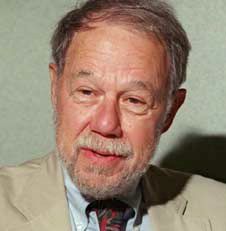
STATELINE — Byron Sher made it publicly known Wednesday that he will be resigning from the Tahoe Regional Planning Agency Board of Directors effective Dec. 13.

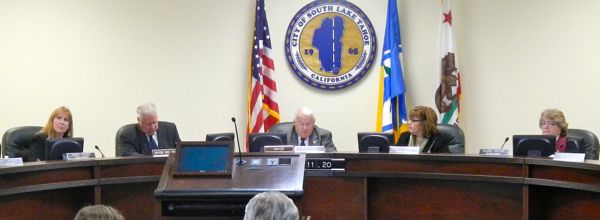
He made the declaration during deliberations of the Regional Plan update.

Byron Sher

“If I were going to remain on the board, I would probably vote against the Regional Plan update,” Sher said. “I hope what you adopt today will move us forward and it will meet the thresholds.”

Sher said he expects to abstain on most of the votes.

As of 3:35pm, the board was still deliberating. The meeting began at 9:30am at Harveys casino.

Sher is the California Senate Rules Committee Appointee.

— Lake Tahoe News staff report


Washoe County agrees to temporary changes in pet laws

Washoe County commissioners agreed to proposals by the Washoe County Sheriff’s Office to allow Regional Animal Services to provide pet owners with free microchips and waive late fees for dog license renewals.

The sheriff’s office proposed these two campaigns as part of efforts to increase successful returns of lost pets and raise awareness about the value of dog licenses.

Animal Services will determine dates and locations for the campaigns, which are scheduled to begin in February.

The proposed microchip campaign allows Animal Services to provide free microchips to pet owners for one year.

A microchip is a small, electronic chip enclosed in a glass cylinder about the size of a grain of rice. The microchip is activated by a scanner which receives information about the pet’s owners and home from the chip.

The goal of waiving late fees for dog licenses is to increase public awareness about the importance of dog licenses. Licenses benefit the animals, the dog owners and the community in many ways. The program will be for one year.


Feds may take legal action against states that legalize pot

By Charlie Savage, New York Times

WASHINGTON — Senior White House and Justice Department officials are considering plans for legal action against Colorado and Washington that could undermine voter-approved initiatives to legalize the recreational use of marijuana in those states, according to several people familiar with the deliberations.

Even as marijuana legalization supporters are celebrating their victories in the two states, the Obama administration has been holding high-level meetings since the election to debate the response of federal law enforcement agencies to the decriminalization efforts.

Marijuana use in both states continues to be illegal under the federal Controlled Substances Act. One option is to sue the states on the grounds that any effort to regulate marijuana is pre-empted by federal law. Should the Justice Department prevail, it would raise the possibility of striking down the entire initiatives on the theory that voters would not have approved legalizing the drug without tight regulations and licensing similar to controls on hard alcohol.

Some law enforcement officials, alarmed at the prospect that marijuana users in both states could get used to flouting federal law openly, are said to be pushing for a stern response. But such a response would raise political complications for President Obama because marijuana legalization is popular among liberal Democrats who just turned out to re-elect him.

“It’s a sticky wicket for Obama,” said Bruce Buchanan, a political science professor at the University of Texas at Austin, saying any aggressive move on such a high-profile question would be seen as “a slap in the face to his base right after they’ve just handed him a chance to realize his presidential dreams.”

Federal officials spoke on condition of anonymity because they were not authorized to discuss the matter. Several cautioned that the issue had raised complex legal and policy considerations — including enforcement priorities, litigation strategy and the impact of international antidrug treaties — that remain unresolved, and that no decision was imminent.

The Obama administration declined to comment on the deliberations, but pointed to a statement the Justice Department issued last week — the day before the initiative took effect in Washington — in the name of the United States attorney in Seattle, Jenny A. Durkan. She warned Washington residents that the drug remained illegal.

“In enacting the Controlled Substances Act, Congress determined that marijuana is a Schedule I controlled substance,” she said. “Regardless of any changes in state law, including the change that will go into effect on Dec. 6 in Washington State, growing, selling or possessing any amount of marijuana remains illegal under federal law.”

Durkan’s statement also hinted at the deliberations behind closed doors, saying: “The Department of Justice is reviewing the legalization initiatives recently passed in Colorado and Washington State. The department’s responsibility to enforce the Controlled Substances Act remains unchanged.”

Federal officials have relied on their more numerous state and local counterparts to handle smaller marijuana cases. In reviewing how to respond to the new gap, the interagency task force — which includes Justice Department headquarters, the Drug Enforcement Administration, the State Department and the offices of the White House Counsel and the director of National Drug Control Policy — is considering several strategies, officials said.

One option is for federal prosecutors to bring some cases against low-level marijuana users of the sort they until now have rarely bothered with, waiting for a defendant to make a motion to dismiss the case because the drug is now legal in that state. The department could then obtain a court ruling that federal law trumps the state one.

A more aggressive option is for the Justice Department to file lawsuits against the states to prevent them from setting up systems to regulate and tax marijuana, as the initiatives contemplated. If a court agrees that such regulations are pre-empted by federal ones, it will open the door to a broader ruling about whether the regulatory provisions can be “severed” from those eliminating state prohibitions — or whether the entire initiatives must be struck down.

Another potential avenue would be to cut off federal grants to the states unless their legislatures restored antimarijuana laws, said Gregory Katsas, who led the civil division of the Justice Department during the George W. Bush administration.

Katsas said he was skeptical that a pre-emption lawsuit would succeed. He said he was also skeptical that it was necessary, since the federal government could prosecute marijuana cases in those states regardless of whether the states regulated the drug.

Still, federal resources are limited. Under the Obama administration, the Justice Department issued a policy for handling states that have legalized medical marijuana. It says federal officials should generally not use their limited resources to go after small-time users, but should for large-scale trafficking organizations. The result has been more federal raids on dispensaries than many liberals had expected.

2 arrests made in rash of Thanksgiving thefts in Truckee

Two Truckee residents were arrested Dec. 11 because of their suspected involvement with a series of thefts during Thanksgiving weekend.

People had reported electronics and personal property being stolen from unlocked vehicles.

Placer County sheriff’s deputies were interested in talking to Wiley Washam on an unrelated matter.

“During their investigation, a detective noticed Washam was in possession of a distinct property item. The detective notified Truckee police detectives and the item was confirmed as recently stolen in Truckee,” Truckee officers said in a press release.

Detectives searched a residence in Truckee and recovered numerous stolen items, including pieces of identification belonging to victims.

The occupant of the residence, Brittany Nash, was arrested on charges of possession of stolen property, conspiracy and criminal activity while on bail. Washam was charged with possession of stolen property and conspiracy.

— Lake Tahoe News staff report


More tech equipment may be added to Tahoe Keys facility

Additional antennas and other equipment may be added to what already exists in the boat storage area of the Tahoe Keys Marina.

A zoning administrator with South Lake Tahoe will review the design and special use permit at a public hearing on Dec. 19 at 2pm at Lake Tahoe Airport.

John Yu with ATT Mobility/Lyle Company of Rancho Cordova is the applicant.

What is being proposed is adding two equipment cabinets within the lease area, three antennas, six remote radio units, one DC surge protector, and one GPS antenna to the existing monopole.

— Lake Tahoe News staff report


South Lake Tahoe City Council agrees to raise garbage rates, install parking meters

By Kathryn Reed

Tuesday was a day of 4-1 votes. The first involved garbage rates and two were about paid parking in South Lake Tahoe.

JoAnn Conner on her first day as a member of the South Lake Tahoe City Council voted against the 1.57 percent South Tahoe Refuse hike. The increase will be effective Jan. 1.

For most residents it means the current monthly rate of $24.33 will now become $24.71.

Conner believes with the decrease in residents and people having a hard time making ends meet, that this is not the time for an increase. The other council members were not thrilled with the increase, but agreed to it.

The South Lake Tahoe City Council — JoAnn Conner, Hal Cole, Tom Davis, Angela Swanson, Claire Fortier. Photo/LTN

The garbage company per the franchise agreement may ask for rate hikes every three years that have to do with all sorts of factors. But the one granted Tuesday had to do with the consumer price index. STR may ask for hikes based on the CPI in the interim years.

However, rates did just go up May 1. This was actually a delay from Jan. 1, which is the date the company had wanted for that increase. But the city, along with El Dorado and Douglas counties were in talks to get their rate adjustment times in alignment. In May, fees went up 4.48 percent in El Dorado County, and 4.97 percent in South Lake Tahoe and Douglas County.

El Dorado County supervisors have already approved the latest increase. Douglas County commissioners are set to vote on it Dec. 20.

Another money related issue on the agenda involved putting in parking meters at various locations in the city.

Parking issues in South Lake Tahoe are driving a wedge between residents and somewhat between council members.

Two votes were taken at the Dec. 11 meeting with Mayor Tom Davis casting the lone dissenting vote each time.

Ultimately the ordinance the council approved in November regarding parking meters is intact except there won’t be any meters on Ski Run Boulevard from Highway 50 to Pioneer Trail.

On Jan. 8 the council is expected to revise the ordinance to add meters on Ski Run from Pioneer Trail to Saddle Road and along Paradise Road, and to identify neighborhoods that should have permitted parking.

Sixteen people spoke at the meeting and three letters were read into the record.

The views ranged from this is the worst time to do something like this to do it now because there is never a good time. Some believe it will hurt businesses, while others said the meters could help turn over business. Others said it would just hurt locals. The counter argument was locals need to pay for the areas they use, just like tourists.

In other action:

• Davis is now mayor of South Lake Tahoe and Hal Cole is mayor pro tem.

• Conner was sworn in as a new councilmember after Bruce Grego said his goodbyes.


South Lake Tahoe hires interim fire chief

South Lake Tahoe has a new fire chief. At least for now.

Bruce Martin was introduced at the Dec. 11 council meeting. He will be working on an interim basis through June 30.

In the 2012-13 budget the council had allocated funds for a deputy public safety director. Martin takes on that title under Police Chief Brian Uhler, but at the same time takes over the fire department. Uhler for about the last year had been chief of both departments.

Bruce Martin

Martin retired as chief of the Fremont Fire Department in June. He and his wife have already rented a house in the city.

City Manager Nancy Kerry said fire staff helped decide to bring Martin on board.

What she told Lake Tahoe News that she likes about Martin is his leadership capabilities.

Kerry said hiring an interim would give the city time to figure out what to do in the long term in regards to management at the fire department.

— Kathryn Reed


State looking for taxpayers to give money to

By Claudia Buck, Sacramento Bee

Missing your state tax refund? Nearly 48,000 California taxpayers, with refunds totaling $14 million, have checks that can’t be delivered, the state Franchise Tax Board said Monday.

The refunds, ranging from $1 to $35,000, were returned as “undeliverable” by the U.S. Postal Service.

“The biggest problem is people move and don’t change their address (with the FTB),” said FTB spokeswoman Denise Azimi.

In the four-county area, the number of residents and the total amount of refunds are: El Dorado, 172 refunds for $41,400; Placer, 216 for $80,700; Sacramento, 1,147 for $262,400; Yolo, 160 for $53,000.

To check your refund status or update an address, call the FTB at 800.852.5711.

Once an address is updated, the FTB will reissue the refund.


Study: Federal agencies ignore public’s right to information

By Josh Hicks, Washington Post

President Obama promised a more transparent government on Day One of his first term, and his attorney general issued a memorandum less than two months later urging all heads of executive departments to err on the side of openness when it comes to disclosure.

But an audit by the George Washington University-based National Security Archive has found that nearly 70 percent of government agencies haven’t updated their Freedom of Information regulations since Eric Holder sent out that letter, and well over half haven’t done so since Congress and President George W. Bush approved the Open Government Act of 2007, which mandated certain changes.

The study also found that 17 out of 99 agencies have not properly posted their regulations on their FOIA websites, as required by the Electronic FOIA Amendments law of 1996.

The National Security Archive sent FOIA requests asking those 17 agencies for their FOIA regulations, but only seven responded after three months. The law requires agencies to respond within 20 business days.

The archive noted that even among agencies that have updated their FOIA regulations, the new guidelines do not always reflect the law or the president’s pledge.

Tom Blanton, the archive’s director, said during an interview that the audit findings “demonstrate with some tangible measures the level of bureaucratic resistance to open government.” But he described the lack of agency compliance as more of an opportunity for executive action rather than a condemnation of the Obama administration.

“Outdated agency regulations really mean there’s an opportunity here for a second-term Obama to standardize best practices and bring all the agencies up to his day-one openness pledge,” Blanton said in a statement posted on the archive’s website.

The National Security Archive is a nonprofit institution that collects and publishes declassified U.S. government files, especially those relating to U.S. foreign policy. It claims to file more FOIA requests than any other group.


Ex-Tahoe resident off to prison for cheating IRS

A fraudulent tax return is costing a former South Lake Tahoe woman two years of freedom.

Gwen Noel Luckett, 59, was sentenced Dec. 10 to two years in prison for filing a fraudulent 2008 tax return in July 2009. That was the first time she had filed a return in six years.

Luckett must also pay $605,692 in restitution to the IRS.

 — Lake Tahoe News staff report