Nevada judge: Mental illness at the root of mass killings

By Sean Whaley, Nevada News Bureau

CARSON CITY –- Nevada Supreme Court Justice James Hardesty said Monday that the country will not have success in reducing the tragic type of shooting incident that occurred Friday in Connecticut without providing more mental health support.

Hardesty, interviewed on the “Nevada NewsMakers” television program, said “we’re going backward” on mental health treatment needs nationally and in Nevada.

“It’s high time the country does something about these matters,” he said. “And from the perspective of a judge who has worked hard to, and the judiciary as a whole, worked hard to promote mental health court as an example, we cannot achieve any success in any of these areas if we do not recognize the importance of being proactive in dealing with mental health issues in this country and in this state.

“And yet we’re going backward,” Hardesty said. “And I hope that these very sad incidents demonstrate the need to revisit these subjects.”

The National Alliance on Mental Illness, in a report released in November 2011, said there is a national crisis in helping people with serious mental illness due to deep cuts in state spending for mental health services.

“States such as California, Illinois, Nevada and South Carolina, which made devastating cuts to mental health services previously, have made further cuts for fiscal year 2012, putting tens of thousands of citizens at great risk,” the report said.

The NAMI report said states have cut more than $1.6 billion in general funds from their state mental health agency budgets since 2009 while at the same time demand increased significantly.

The state Division of Mental Health and Developmental Services has more than $7 million in general funding spending requests in the state budget “wish list” document released to the public on Friday. Many of the $419 million in total state agency general fund requests included on the list are not expected to see funding due to a lack of tax revenue.

One of the mental health requests is for nearly $200,000 for a clinical program manager and training for a new program to provide a continuum of care for clients reentering the community when being released from jails, prisons and forensic hospitals.

In his “NewsMakers” comments, Hardesty said the Second Amendment and gun control debate is a separate issue.

But the perpetrators of many of these terrible incidents are afflicted with serious mental health issues that require a proactive society, he said. Families who struggle with family members who suffer from such illnesses need help and support, Hardesty said.

Nevadans don’t have to look to Connecticut to see the problem, he said, citing the Carson City incident in September 2011 where a man armed with an AK-47 assault rifle shot five uniformed National Guard members eating breakfast at a restaurant, killing three and another person before shooting himself.

The shooter, Eduardo Sencion of Carson City, suffered from mental health issues and was on medication. He left no note or explanation for the shootings.

“So I hope that it causes us, as a society, to look at what will help be proactive and achieve some significant changes in those areas,” Hardesty said.

On a positive note, he pointed to the successes of the state’s mental health courts, where the focus is on diverting non-violent offenders with mental illness into treatment programs. The goal is to reduce or eliminate offender recidivism by treating their mental illness.

“And the more we can do to be proactive to support programs like that, the more we’ll do to reduce the risks to our society caused by the Sandy Hook Elementary event,” Hardesty said.



Firefighters spent thousands to keep Stracener off bench

By Joe Ortiz, Sacramento Bee

Among the hundreds of campaign expenses incurred by the state firefighters’ union political action committees this year, two relatively small line items reflect a grudge the organization has held for years.

The California Department of Forestry Firefighters Small Contributor PAC made 147 contributions to state and local candidate campaigns in 2012. It also made two independent expenditures totaling $10,500 to oppose Curt Stracener’s bid to keep his El Dorado County Superior Court judgeship.

Before former Gov. Arnold Schwarzenegger appointed him to the bench in 2010, Stracener worked as a senior litigator for the administration who helped shape furlough strategy.

When Stracener ran to retain his seat, the firefighters countered with a campaign tying him to Schwarzenegger with a website picturing the two men together over a caption, “Two of a kind.”.

Stracener won re-election in the conservative county.

Stracener’s race accounted for a tiny fraction of the $1.39 million the 3,700-member union spent through its two PACs. Some $821,000 went to campaigns and $267,000 went to independent expenditures, according to disclosure documents filed by the organization. Much of the money went into opposing Proposition 32, the failed ballot measure that would have ended payroll-deducted funding of political activities.

About 10 cents of every dollar, some $123,000, paid for “staff/spouse travel, lodging and meals.”


Peak to honor 3 Tahoe soldiers gains Placer County support

Placer County supervisors last week gave their support to efforts to name an unnamed peak in eastern Placer County in honor of three Tahoe servicemen who were killed in action in the conflicts in Iraq and Afghanistan.

The peak, located in the Lake Tahoe Basin on U.S. Forest Service land in Placer County, will be called Gold Star Peak.

The three fallen men include two soldiers and one Marine — Pfc. Phillip Brandon Williams, Sgt. Timothy M. Smith, and Spc. Garrett Fant.

The South Lake Tahoe City Council in November approved the naming. All three men had connections to South Lake Tahoe.

Next up is the board on Geographical Names, which is responsible for approving the naming of this natural feature. The request to name the peak has already been supported by the American Legion and El Dorado County.

The effort, spearheaded by Rep. Tom McClintock, R-Granite Bay, will have a memorial installed at Lakeview Commons with a view across the lake at the ridge where the peak is located.

The peak’s name, Gold Star, comes from the Gold Star lapel pin that was established by Congress in 1947 to identify widows, parents and next of kin of service members killed in certain operations.


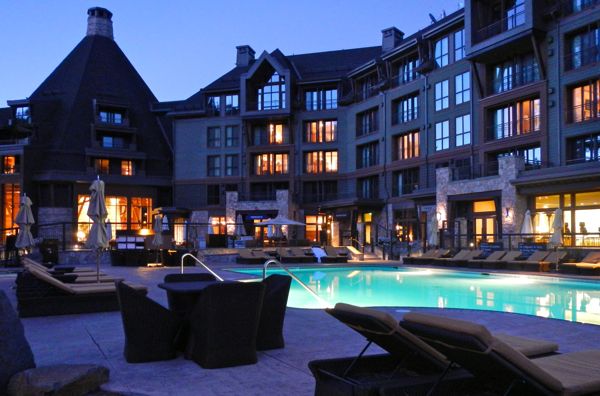
Ritz-Carlton at Northstar changes hands

International real estate investment and services firm Kennedy Wilson today announced it along with unnamed partners bought the Ritz-Carlton, Lake Tahoe and Ritz-Carlton Residences.

The properties had been bank owned.

The Ritz-Carlton, Lake Tahoe has been financially troubled since Day 1. Photo/LTN

However, a year ago JMA Ventures, owners of Homewood Mountain Resort, had entered an agreement to buy the residences.

KW said Pacific Western Bank provided $45 million of financing. The company invested $18 million of equity in the transaction for a 50 percent ownership interest.

The Ritz opened three years ago this month midmountain at Northstar.

KW reps said they will begin marketing the 23 units at the Ritz-Carlton Residences, Lake Tahoe in January.

— Lake Tahoe News staff report


Bankruptcy judge removes El Dorado County from transit case; gives credence to conspiracy

By Kathryn Reed

RENO – Even though plaintiffs wanted to draw El Dorado County back into the fray of the MV Transportation-STATA lawsuit, a bankruptcy court judge on Monday granted the county’s motion to dismiss.

Sallie Armstrong, outside counsel for the county, argued that the county’s payment of $160,000 to MV two years ago satisfied its obligation. U.S. Bankruptcy Court Judge Gregg Zive agreed.

David Thompson, the federal bankruptcy trustee appointed by Zive, had sought to bring El Dorado County back into the mix.

But the other attorneys representing a multitude of defendants are still on the hook for what could be millions of dollars if the Fairfield-based transit company prevails in its quest to have member agencies and their respective board members of the now defunct and bankrupt South Tahoe Area Transit Authority honor the contract that was in place.

Thompson is essentially representing STATA even though it doesn’t really exist. And in turn he represents another plaintiff for the gaggle of defendants to fight. But the judge has made it clear there will not be double recovery.

In 2010, MV filed a lawsuit for a number of reasons; most having to do with not being paid the nearly $3 million it claims it was owed to run the BlueGo bus system on the South Shore.

STATA, a nonprofit conglomerate of private and public entities, was the parent operation of the BlueGo system.

To be determined are what assets belonged to STATA, the value of them, where they are now, how to handle third party beneficiaries, successor liability, and whether conspiracy was involved.

Zive said his tentative ruling is that that conspiracy was plausible.

“I’m going to find out what happened even if I have to use an element of authority of this court,” Zive said. “That more than anything is of particular concern of this court. It’s almost like someone tried to fool me.”

Zive is referring to the approximately $1.6 million that was moved from STATA’s bank account to the Feldman Client Trust Account. STATA didn’t include that cash when it filed for bankruptcy.

Thompson in his September report to the court called it fraud.

The judge took great issue also with the fact that the participation agreement between the member agencies and STATA said that if it didn’t have the money to pay its bills, it must reduce service. The STATA board never reduced service, racked up bills and ended up bankrupt. But the member agencies and the people who were on the board at the time could collectively be held financially responsible.

Zive read from the agreement, emphasizing the word shall.

“Shall makes it mandatory and not discretionary,” the judge said. “You either decrease service levels or pay more.”

Zive said he didn’t understand why the STATA board didn’t reduce service when MV officials were calling for that.

He went on say STATA would have been better off had it followed its own rules and hired an executive director instead of allowing a Tahoe Regional Planning Agency employee to run things.

Joan Wright, representing Ridge Tahoe, said because her client wasn’t part of STATA when it was created in 1998, it should not be held liable. Zive wasn’t buying that line of thinking because Ridge Tahoe had a member on the board, benefited from the contract and was a member when MV was hired.

Lou Bubala, the outside attorney representing South Lake Tahoe, tried to make a case that California law precludes the city from being held liable under the Government Claims Act. That theory has not been ruled upon.

Bubala also tried to convince the judge there was never a contract between the city and STATA because the mayor at the time, Hal Cole, didn’t sign a contract.

“If the city reaps the benefit of a coordinated transit and made payments, how can it disavow its responsibility?” the judge asked. He said maybe with MV the city could weasel out of its obligation, but not to STATA.

As of the end of August, South Lake Tahoe had paid Bubala more than $75,000. City Attorney Patrick Enright did not respond to Lake Tahoe News’ request asking for the current dollar amount.

Douglas County has spent approximately $47,000 on legal costs related to the STATA litigation, according to County Manager Steve Mokrohisky.

“The county has a $50,000 deductible for legal costs, so insurance will cover any legal costs over $50,000,” Mokrohisky told Lake Tahoe News.

With the next court date set for Jan. 17, all entities will continue to rack up attorney costs. MV and the court trustee have indicated they will both be going after defendants to recover their legal fees.


Red Hawk Casino settles water dispute

By Cathy Locke, Sacramento Bee

After more than a decade of lawsuits and threats of lawsuits, a dispute over water service for the Shingle Springs Rancheria and Red Hawk Casino appears to have been resolved.

The El Dorado Local Agency Formation Commission, which rules on government reorganizations, earlier this month effectively rescinded the 1988 annexation of the rancheria to the El Dorado Irrigation District and approved a re-annexation with conditions necessary to meet current water service needs.

The irrigation district has been supplying water for the casino since it opened four years ago. The re-annexation is intended to clear up legal issues and satisfy recent court rulings, officials said.

“I’m just glad that this time all the parties managed to work together to see this through,” said Jose Henriquez, LAFCO executive director.

Nicholas Fonseca, chairman of the Shingle Springs Band of Miwok Indians, said in a written statement that the tribe was pleased with LAFCO’s action.

“We have worked for many years to simply be treated like any other water customer, and remove what are obviously unfair and we believe illegal restrictions on the tribe,” he said.

The 1988 annexation, which Henriquez described as seriously flawed, limited water service to 40 residences, a community building and garden plots. As the tribe sought to build a casino on the rancheria off Highway 50, opponents cited the water restrictions in an effort to block the project.

In June 2008, with the casino’s opening date just months away, tribal leaders vowed to truck in water if necessary, raising the specter of up to 25 trucks a day hauling water via Highway 50.

The irrigation district board subsequently approved an agreement to supply the Shingle Springs Band of Miwok Indians up to 135,000 gallons of water a day. The tribe agreed to purchase water at the commercial rate to serve the 270,000-square-foot casino, as well as the existing homes and other facilities on the rancheria.

In approving the agreement, the district board cited an opinion by the U.S. Department of the Interior Solicitor General’s Office that questioned the validity of LAFCO’s restrictions in the 1988 annexation. The opinion indicated that if LAFCO’s intent was to regulate use of the tribe’s land, a court likely would find that the restrictions would be pre-empted by federal law.

In 2008, the irrigation district and the tribe rejected Henriquez’s proposal that the tribe apply for detachment and concurrent annexation to the district, allowing LAFCO to remove the restrictions.

In July 2008, the citizens group Voices for Rural Living filed suit in El Dorado Superior Court seeking to nullify the agreement to serve the casino. In December 2009, the court ruled that there was a fair argument that the irrigation district did not comply with the California Environmental Quality Act when it approved the agreement and that it did not have the authority to unilaterally invalidate the LAFCO conditions. The tribe appealed the ruling, but the trial court decision was largely upheld earlier this year by a state appeals court.

The ruling affirmed LAFCO’s authority in such matters. Although the tribe is not subject to LAFCO unless it willingly waives its sovereign immunity, a public agency is subject to state law and contracting with a tribe does not extend immunity to the public agency, Henriquez said.

Tom Cumpston, the El Dorado Irrigation District’s general counsel, said, “We had a legitimate difference of opinion of what was the best approach. Once we had the trial court’s decision, it was clear that we needed to go through some sort of LAFCO process.”

The district filed the application for detachment and re-annexation.

Under the 2008 agreement, the tribe indemnified the district against any legal challenge, and it has borne the cost of the litigation, as well as an environmental impact report and the LAFCO proceedings, Cumpston said.

Any requests for additional water for the rancheria will not require LAFCO approval. The district will be able to negotiate with the tribe as it would any other water customer, Cumpston said.

He said the district will seek a trial court ruling that it has complied with the court’s order. Since the lawsuit was filed in 2008, he said, much of the public controversy over the casino has abated.

“The casino has been operating four years, and it is obvious that EID can serve them with water,” he said.


Study: TV in kids’ rooms a super bad idea

By Melissa Healy, Los Angeles Times

Thinking of buying your kid a TV of his or her own for Christmas or Hannukah? Well here’s a bit of advice from your friends at the American Journal of Preventive Medicine: Don’t. It turns out there is a way to make television even more unhealthy for your children: Put a set in their bedroom.

Research has long established that for kids, more “screen time” is linked to higher rates of obesity. A new study goes further. It finds not only that kids with a TV in their bedroom tend to watch more TV, which in itself should make them fatter, but also: Compared to television watched in, say, a family room, the screen time a kid logs in his or her bedroom is linked, hour-for-hour, to more belly fat, higher triglycerides and overall greater risk of developing heart disease and diabetes.

Take two kids with roughly the same diet and the same level of physical activity: The study published Tuesday found that the one with a TV in his bedroom (and boys are more likely to have them than girls) will have more cardiometabolic risk factors than than the one who has to watch TV in one of his home’s common rooms.

For the majority of American households, that advice comes too late. Nationwide, 70 percent of kids between the ages of 8 and 18 already have a television in their bedroom.

The study’s lead author, Amanda E. Staiano a researcher with the Pennington Biomedical Research Center in Louisiana, says she’s fine with scotching the hopes of kids wishing to get their own TV this holiday season.

“If this gives parents one more bit of ammunition to say, ‘No, you can’t have TV in your bedroom,’ I’m OK with that,” Staiano says. “If we have fewer obese kids in the world, I’ll be the Grinch.”

Staiano suggested that over and above the effects of being parked too long in front of a TV, a television in the bedroom might magnify the box’s corrosive effects on a child’s health by disrupting sleep patterns and discouraging the practice of family mealtimes. Sleep deprivation — the likely outcome when screen time trumps shut-eye — is a known risk factor for obesity and, worse, for metabolic dysfunction. Family mealtimes seem to promote healthier eating and lower obesity rates, not to mention less alcohol, drug and tobacco use by kids.

To conduct the study, Staiano and her colleagues studied 369 children and adolescents between 5 and 18 years old. In addition to asking how much television they watched daily and whether they had a TV in their room, the researchers gave the kids a battery of tests. They measured the kids’ waist circumference, blood pressure and fasting triglycerides; ran a full cholesterol panel; and gauged each child’s fat mass in two ways to get precise measures of subcutaneous fat, fat accumulated in the belly and around visceral organs, and overall fat-to-lean mass ratio. And they tested each child’s fasting glucose level — a measure of metabolic function. The researchers also had participants estimate their daily physical activity levels of food intake.

Among kids who watched more than two hours of TV a day, those who had a TV in their bedroom were as much as 2 1/2 times likelier than those who did not to be in the top one-quarter of kids in terms of fat mass. That finding held steady even after researchers adjusted for age, gender, ethnicity, physical activity levels and diet. Compared to kids who had to watch TV in a living area of the home, those who had a TV in their room were almost three times likelier to have “elevated cardiometabolic risk,” meaning they had three or more unhealthy readings in the panels of medical tests they were given.

Sheer volume of TV time mattered too: Kids who watched five or more hours of TV a day were twice as likely as those who watched less to carry a density of visceral fat that fell in the top quartile.

Vicky Rideout, who has written some of the most detailed studies of children’s media exposure and its effects for the Kaiser Family Foundation, said the latest study should strengthen some well established warnings but may miss some newer dangers as well.

“Research has consistently shown better outcomes for kids who don’t have a TV in their bedroom than for those who do, whether we’re talking about obesity, sleep or academic achievement,” said Rideout, now an independent consultant specializing in health communication, social marketing and youth and media.

Rideout urges parents to “take the TV out of the bedroom.” But newer technologies will require a new level of vigilance, she adds. “Keep an eye on your child’s smartphone and computers too, because food companies are now marketing games, websites and mobile apps designed to boost consumption of foods kids should be eating less of, not more of,” Rideout said.


Time running out to get packages delivered by Christmas

By Bill Lindelof, Sacramento Bee

Today is likely to be the busiest mailing day of the year for the U.S. Postal Service — and private shippers will also be busy moving millions of parcels. There is still time to mail, but Christmas is drawing close.

Ralph Petty, spokesman for the Postal Service in Sacramento, suggests people use priority mail to make sure packages get to their destination. Priority mail gets to its destination in two or three days. Express mail is even faster: overnight delivery to most areas in the country.

Sacramento-area postal workers will process about 2.4 million cards, letters and packages today. Normally, workers would handle 700,000 in a day. FedEx expects to handle a record-breaking 280 million packages worldwide between Thanksgiving and Christmas, an increase of 13 percent from last year.

Here’s holiday numbers courtesy of the U.S. Postal Service:

• 237 is the number years the Postal Service had been delivering holiday greetings.

• 17.9 billion cards, letters and packages will be delivered between Thanksgiving and New Year’s eve.

• 685 million pieces delivered today, the busiest mailing day of 2012.

• mail carriers service more than 150 million American homes, businesses and post office boxes, delivering nearly 40 percent of the world’s mail.

• 170,000 vehicles are needed to transport the mail.

• 242 million people visit a post office during the holidays.


CTC looking at how best to manage its lands

By Kathryn Reed

In a meeting that was more about reports than decision-making, the California Tahoe Conservancy board was updated last week about the Upper Truckee Marsh, lands the state agency owns and what the adoption of the Tahoe Regional Planning Agency’s Regional Plan means.

While the environmental documents for the Upper Truckee Marsh may be released at the end of next month, a comprehensive workshop about restoration along the Upper Truckee River is not slated until April or May.

Penny Stewart with the California Tahoe Conservancy told the board at the Dec. 14 meeting the idea is to bring experts from various disciplines together to talk about restoring the river – what has happened, what is in the works and what is planned. River restoration is part of the marsh project.

Nancy Gibson, U.S. Forest Service chief in the Lake Tahoe Basin and a non-voting member of the CTC board, said she supports the education component of such a meeting to explain the why here and why now questions. However, she said funding is in place for the reach of the river the Forest Service is responsible for and would hate to have that money threatened as the CTC takes this new global approach.

The Upper Truckee Marsh, which borders the Tahoe Keys, is an area the California Tahoe Conservancy wants to restore. Photo/AECOM

“I’m cautious about undermining decisions that have already been made,” Gibson said.

Lynne Paulson, who is concerned with what is going on at Washoe Meadows State Park and Lake Valley Recreation Area, said the panel discussion should happen sooner. The river runs through those parcels.

Les Wright, a member of South Lake Tahoe Recreation Commission, advocated for including a boardwalk across the meadow from the Al Tahoe neighborhood to the Tahoe Keys area.

Asset lands

Property that has some financial value to the CTC comes under the category of asset lands. They could potentially be sold and developed.

The 332 parcels that have been identified as such amount to 223.56 acres. Patrick Wright, CTC executive director, said it is not the intent to start unloading them all.

Bruce Eisner with the CTC said about 20 of those would likely be put on the market in the next five years. He said those are mostly in the commercial core areas. This would mean filling in open space in high traffic areas and getting rid of parcels that don’t fit the Conservancy’s goals.

Nine of the parcels are in Meyers near highways 89 and 50.

“These were acquired as a possible multi-agency visitors center,” Eisner explained. He said as Meyers moves forward with its area plan that these parcels might be of interest to planners, especially since the agencies have abandoned the idea of such a center.

The Conservancy’s current policy to sell land requires requests for proposals be sent out in a competitive bid process instead of the conventional route of using a real estate agent. Eisner suggested looking at revising that policy in order to offer flexibility.

Regional Plan impacts

With passage of the Tahoe Regional Planning Agency Regional Plan it means changes to land coverage issues involving the CTC and other marketable rights.

The ability to use excess coverage mitigation fees across hydrologic area boundaries is seen as a positive by the CTC.

The CTC hopes the incentives to transfer residential development rights from sensitive land to town centers will jump-start the agency’s ability to purchase developed land, like old motels, that were built in stream environmental zones.

Another change with the Regional Plan is that Van Sickle Bi-State Park, a CTC and Nevada State Parks project on the South Shore, is now designated recreation instead of conservation.

The CTC will also benefit from how bike and walking trails are exempt when it comes to coverage issues.

In other action:

• Wright said it’s likely Sen. Dianne Feinstein, D-Calif., will reintroduce the Lake Tahoe Restoration Act. This would mean money for various Tahoe groups for projects under the environmental improvement program that was established after then-President Bill Clinton came to Tahoe in 1997.


Game maker Zynga wants Nevada gambling license

By Gerry Shih, Reuters

Social games maker Zynga Inc. has filed a preliminary application to run real-money gambling games in Nevada, a significant step in cracking a complex but potentially massive new market that could resuscitate its faltering business.

The Nevada Gaming Control Board will now examine whether Zynga is fit to hold a gaming license that would allow gamblers in the state to bet real money on the San Francisco-based company’s popular games like Zynga Poker, which currently involve only virtual chips with no monetary value.

Zynga is hoping that a lucrative real-money market could make up for a steep slide in revenue from its games like “FarmVille” and other fading titles that still generate the bulk of its sales.

“We anticipate that the process will take approximately 12 to 18 months to complete,” Zynga Chief Revenue Officer Barry Cottle said in a statement. “As we’ve said previously, the broader U.S. market is an opportunity that’s further out on the horizon based on legislative developments, but we are preparing for a regulated market.”

Zynga, along with many major gaming industry players, is hoping that a tide of proposed legislation to regulate gaming could sweep through states across the U.S. and open a massive new online market.

Nevada, Delaware and New Jersey are among the states that have moved or are moving toward interactive gaming after the U.S. Justice Department last year declared that only online betting on sporting contests was unlawful, presenting the opportunity for states to legalize some forms of online gambling, from lotteries to poker.

Although widespread legalization of online gaming in the United States appears years away at the minimum, obtaining a license in Nevada would be a meaningful foot in the door for Zynga’s nationwide aspirations.

Zynga has told investors in recent quarters that a concerted move into real-money gaming could represent a hefty – and badly needed – source of new revenue for the company, which has seen revenues sag and its stock plummet by more than three-quarters in the past year as gamers abandoned titles like “CityVille.”

In October, the company slashed its 2012 full-year earnings outlook for the second time and laid off employees to trim costs, while CEO Mark Pincus implored investors to give him time to turn around the company by pursuing initiatives like real-money gaming.

That month, Zynga struck a deal with bwin.party, a Gibraltar-based gaming company, to provide real money casino games like poker and slots in the United Kingdom beginning in the first half of 2013.