Kings Beach face-lift set to begin in summer

By Barbara Barte Osborn, Sacramento Bee

Construction on a long-awaited project to revitalize a popular north Lake Tahoe community’s downtown and make it safer for pedestrians is expected to begin this summer.

The Kings Beach Commercial Core Improvement Project, estimated to cost $48 million, is aimed at improving pedestrian access, water quality and aesthetics for residents and visitors.

Last week, Placer County supervisors approved a financing and construction plan for the project’s first phase, which will begin the reconfiguration of Highway 28 through the downtown core.

Improvements to Kings Beach are set to begin in May.

It also will address traffic management in neighborhoods north of the highway. Other downtown improvements will be detailed in a second, final phase.

A Feb. 19 open house from 5:30-8pm at the North Tahoe Event Center has been scheduled to answer questions from the public, said county spokesman Robert Miller.

In the planning stages for decades, the project will reconfigure 1.1 miles of Highway 28 into three lanes with two roundabouts. It currently is a four-lane highway with a traffic signal at Coon Street.

The wide road is flanked by very few sidewalks, making pedestrian access to shops, restaurants and beaches difficult and sometimes dangerous.

Sidewalks, bike lanes, bus shelters, water-quality improvements and landscaping in the downtown area are included in the project.

The stretch of highway through Kings Beach is one of the last remaining four-lane sections of road on Lake Tahoe’s North Shore, said Dan LaPlante, a county associate engineer and the project’s manager.

Because concerns have been expressed that some drivers may cut through neighborhoods once the highway is narrowed, sidewalks and traffic-calming devices, including 29 speed humps, will be installed in neighborhoods north of downtown.

Eight humps already have been installed. Speed-radar signs and neighborhood entrance features will also be used to slow traffic.

County supervisors in January approved the formation of a benefit assessment district to maintain the improvements, saying the district was favored by a majority of ballots from affected property owners.

The $166,000 annual assessment will be divided among 296 property owners whose property is fronted by the planned improvements, based on the amount of frontage, lot size, square footage and zoning, LaPlante said.

Most of the assessment will be used for the removal, hauling and storage of snow. The remainder will go toward the repair, replacement and power washing of sidewalks, emptying trash receptacles and maintaining landscaping.

LaPlante said the project’s $48 million cost will come from a combination of federal, state and local funding. Still needed is about $10 million, he said.

The first phase of the two-phase project is expected to take up to three construction seasons, Miller said, noting that “in the Tahoe basin, construction can take place only between May and October.”

No estimate is available for completion of the second, final phase.

“It’s funding-dependent,” LaPlante said. “We don’t know where the remaining $10 million will come from, but we’re committed to doing the entire project and are working on finding funding sources every day.”



Flash in night sky a meteor in Bay Area

By San Jose Mercury News

It may not have been as spectacular as the space rock that streaked across the skies above Russia late Thursday, but the Bay Area’s close encounter with a meteor Friday night was drawing its own attention on social networks.

Comments on Twitter indicated the object that flashed across the horizon about 7:45pm was blue in color and visible throughout the Bay Area and large areas of the West Coast, with at least one reported sighting in Washington state.

Amateur video footage broadcast on KTVU-2 showed a bright streak lasting approximately five seconds that appeared to head downward. Some viewers described it as a firework in the night sky.

One commenter on Twitter, who said they saw the meteor while driving in a car in Cupertino, said the object appeared to be headed west.

Scanner traffic at the Contra Costa County Sheriff’s Office indicated that they were aware of the event, but a dispatcher said they had not received any emergency calls related to it.

Gerald McKeegan, an astronomer with the Chabot Space and Science Center in Oakland, was at the center Friday evening for its weekend stargazing sessions with free access to the center’s large telescopes, but he said they did not spot the meteor there.

He said that the center received phone calls from people who reported seeing the meteor. Based on their reports, McKeegan said it may have been what astronomers call a “sporadic meteor,” an event that can happen several times a day but most of the time happens over the ocean, away from human eyes, and brings as much as 15,000 tons of space debris to Earth each year.

Meteors, hunks of rock and metal from space that fall to Earth, burn up as they go through the atmosphere, which is what apparently caused Friday night’s bright flash of light, McKeegan said.

It was likely smaller than another meteor that landed in the Bay Area in October, which caused a loud sonic boom as it fell, breaking apart and spreading rocks, called meteorites, in the North Bay, McKeegan said.

There were no reports of damage from Friday’s event, unlike the object that crashed down in the Ural Mountains of Russia less than 24 hours earlier shattering windows, scattering debris and injuring an estimated 1,100 people.

NASA scientists said that object, described as a “tiny asteroid,” measured about 45 feet across, weighed about 10,000 tons and was traveling about 40,000 mph before it exploded 15 miles above the Earth’s surface with a force equivalent to a small nuclear bomb.

Astronomers at the Chabot observatory said Friday night’s light show was not connected to the fly-by of a small asteroid earlier in the day. The asteroid, which NASA dubbed 2012 DA14, came within 17,200 miles of the Earth before continuing on its cosmic journey.


Minimum wage not keeping up with productivity

By Caroline Fairchild, Huffington Post

President Obama’s call to increase the federal minimum wage to $9 an hour was one of the more significant proposals he laid out in his State of the Union address Tuesday night. But $9 an hour is still a far cry from what workers really deserve, a 2012 study finds.

The minimum wage should have reached $21.72 an hour in 2012 if it kept up with increases in worker productivity, according to a study by the Center for Economic and Policy Research. While advancements in technology have increased the amount of goods and services that can be produced in a set amount of time, wages have remained relatively flat, the study points out.

Even if the minimum wage kept up with inflation since it peaked in real value in the late 1960s, low-wage workers should be earning a minimum of $10.52 an hour, according to the study.

Between the end of World War II and the late 1960s, productivity and wages grew steadily. Since the minimum wage peaked in 1968, increases in productivity have outpaced the minimum wage growth.

The current minimum wage stands at $7.25 an hour. In 2011, more than 66 percent of Americans surveyed by the Public Religion Research Institute supported raising this figure to $10.

The last time the federal minimum wage increased was in 2009. Currently observed in 31 states, the federal minimum wage translates to an annual income of about $15,000 a year for someone working 40 hours per week.


S. Tahoe man to face charges involving brother’s death

A 22-year-old South Lake Tahoe man has been charged with vehicular manslaughter in the death of his brother.

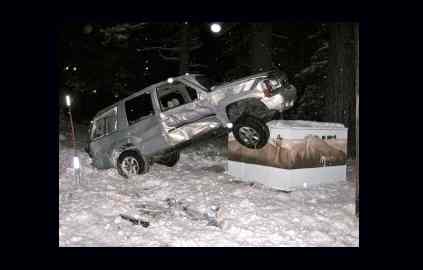
Roberto Olazaba was reportedly intoxicated as he was driving Dec. 15 on Pioneer Trail at Ski Run Boulevard when his Honda accord broadsided a GMC Yukon.

William Olazaba, 26, was a passenger in the Honda. He died at Barton Memorial Hospital.

 — Lake Tahoe News staff report

The passenger in the Yukon required treatment at Barton Memorial Hospital. Photo/Provided


Employee accused of stealing from Incline women’s center

By Kathryn Reed

An employee of Tahoe Safe Alliance has been accused of embezzling about $15,000 from the nonprofit.

The woman, whose name has not been released, was fired from the North Shore organization in December. A criminal complaint was filed Feb. 15 with the Washoe County Sheriff’s Office.

The woman had worked in the Incline Village office. The 28-year-old organization also has offices in Kings Beach and Truckee to help people with domestic violence, sexual assault, and child abuse issues.

“None of our programs are or will be affected by this loss,” Executive Director Karen Carey told Lake Tahoe News.

She also said based on the internal investigation that no one else is believed to be involved. The alleged theft occurred for about the last six months of 2012.

“We have a $1.4 million budget. Even one dollar stolen from us we take very seriously,” Carey said.

The goal is to get the stolen money repaid by the woman who had been a longtime employee.

“It was fundraising and donor dollars. We respect them and value them. That is one of the reasons why we are going to make every effort to get the money back,” Carey said. No grant money was taken.

A letter has been sent to donors explaining the situation and Carey has met individually with more than two dozen people to answer questions.

“A positive outcome of these events is that we know that our current financial safeguards worked — allowing us to uncover this theft. With that said, a forensic accounting team will review our financial records to gain deeper understanding of the situation. We commit to review and strengthen our internal policies, procedures and processes as needed,” the letter says.

While Tahoe Safe Alliance thought it had enough protocols in place for something like this not to happen, the holes that were uncovered have been sealed.

When the matter is behind the group, Carey hopes to be able to share Tahoe Safe Alliance’s experience with other nonprofits in hopes they don’t have to go through the same thing.


El Dorado County man pleads guilty to pot charges

Dylan Hudson of Placerville pleaded guilty Feb. 15 to conspiring to manufacture, distribute, and possess with intent to distribute marijuana.

According to court documents, the 26-year-old was in charge of an interstate marijuana-trafficking conspiracy. More than 1,100 pounds of processed marijuana, more than $329,000 in cash, and eight firearms were seized during the investigation.

Hudson is scheduled to be sentenced May 3. He faces a statutory mandatory minimum prison term of five years, a maximum prison term of 40 years, and a $5 million fine.

— Lake Tahoe News staff report


Ex-department head sues South Lake Tahoe

South Lake Tahoe’s former Community Services director has filed a lawsuit against the city.

Stan Sherer worked for the city from January 2011 to July 2012. He was hired by then City Manager Tony O’Rourke and fired by City Manager Nancy Kerry.

Five allegations are in the suit. They boil down to wrongful termination and age discrimination. Department heads are at will employees and do not have contracts with the city, nor are they part of an employee bargaining unit.

Stan Sherer

Sherer told Lake Tahoe News he is not able to comment on the suit at this time.

Nira Feeley, deputy city attorney, said the item would be on closed session March 5 for the City Council to discuss.

In the next week it should be decided if the matter will be handled in house or if outside counsel will be hired. City Attorney Patrick Enright leaves in May and Feeley is expected to go out on maternity leave in the summer for a short while.

The city was notified of the lawsuit on Feb. 11. There is a 30-day window to respond to the initial filing. The suit did not come as a surprise because Sherer had filed a claim against the city last year, which the council denied. This is the normal precursor to a lawsuit.

— Lake Tahoe News staff report


Upper Truckee River restoration to resume in June

By Kathryn Reed

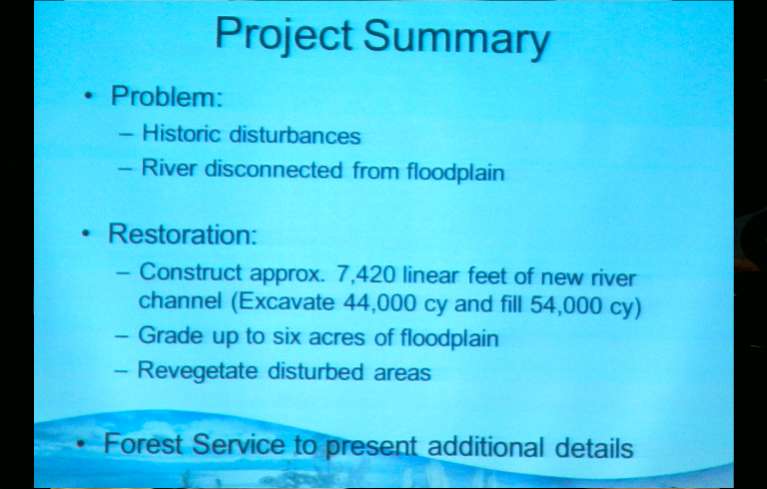
A four-year project to restore a section of the Upper Truckee River is expected to start in June.

A major hurdle to make the U.S. Forest Service project a reality was overcome Thursday when the Lahontan Regional Water Quality Control Board unanimously gave its approval.

Because there will be disturbance to stream environment zones and projections are the turbidity of the river will exceed normal levels, the board needed to grant these allowances to occur during construction.

The U.S. Forest Service will begin restoring a section of the Upper Truckee River this summer. Photo/LTN

The Tahoe Regional Planning Agency Governing Board must sign off on the project. That approval is needed because more than 100 trees greater than 14 inches in diameter will be taken out because they encroach on the meadow. It may be on the April agenda.

“The project is necessary to help rewater the meadow system,” Nancy Gibson, Lake Tahoe Basin Management Unit forest supervisor, told the Lahontan board Feb. 14. “It’s one of the primary reasons we are pursuing this project.”

This is one of many projects along the river. Some are completed, others are in the planning stages, and others are just being talked about.

With the Upper Truckee River being the largest tributary to Lake Tahoe, it carries the most amount of sediment. The goal is to make the waterway flow more naturally like it did before it was disturbed for ranching, building the airport and other needs. This in turn will mean less sediment reaching Lake Tahoe because the banks of the river will be more contoured, thus allowing the water to go over the banks and flood the meadow. The fine particles in the future will be deposited in the meadow.

The Forest Service will be repairing what’s called reaches 5 and 6, for a total of 13,000 feet of channel. The project starting this summer and what has the regulatory approval is for Reach 5, also known as the Sunset Stables Reach. The Forest Service and California Tahoe Conservancy own the land that runs parallel to and directly east of Lake Tahoe Airport.

Sunset Stables will be the staging area. By not having it at Elks Club it allows the annual summer flea market to remain open.

What is planned:

• Year 1: New channel construction, approximately 4,000 feet.

• Year 2: Remaining new channel construction, approximately 3,300 feet; utility line relocation. South Tahoe Public Utility District’s backup treated effluent export line and water line will be relocated and buried.

• Year 3: Irrigation and seasoning; no active construction.

• Year 4: Construct channel tie-ins, floodplain grading area, and connect new channel to Upper Truckee River flows.

Extra dirt that is needed will come from a South Lake Tahoe erosion control project.

During construction it’s likely areas will be off-limits to the public for safety reasons. The whole project is expected be done in October 2016.

In other action:

• The Lahontan board approved amendments to the Lake Tahoe Basin Plan.


Bay Area woman dies at Homewood

A San Jose woman died while skiing at Homewood Mountain Resort on Feb. 13.

KNCO-AM is reporting medical personnel were not able to revive Yesenia Guadalupe Garcia-Ramirez.

This is a recording from the radio station of Placer County sheriff’s Deputy Dina Erwin talking about the fatal accident.

— Lake Tahoe News staff report


Lahontan board OKs changes to water quality plan

By Kathryn Reed

In order for elements of the Tahoe Regional Planning Agency’s Regional Plan to be effective, what’s known as the 208 Plan needs approval from Nevada and California.

The Nevada Environmental Protection Agency signed off on the water quality management plan in January. Now it’s up to California’s Water Board to do the same. The first step in getting that done happened Thursday morning with the recommendation by the Lahontan Regional Board to approve the 208 Plan Amendment.

Not everyone agrees how to regulate water quality at Tahoe. Photo/LTN file

“The existing 208 Plan is a product of its time,” Bob Larsen with Lahontan told the board of the nearly 30-year-old document. This means it does not have total maximum daily load (aka sediment content reaching Lake Tahoe) regulations in it. Plus, there are other inconsistencies based on the TRPA Regional Plan adopted in December.

Laurel Ames with the Tahoe Sierra Club and Jennifer Quashnick with the Friends of the West Shore spoke Feb. 14 in favor of delaying a vote on the 208 Plan Amendment. These are the two groups that earlier this week sued to invalidate the Regional Plan.

Lahontan staff refuted their contention that adopting the changes to the Clean Water Act would negatively impact water quality and land coverage.

TRPA attorney John Marshal said, “The Sierra Club and the Friends of the West Shore are just dead wrong when they say there is not enough environmental analysis.”

The Lahontan Water Quality Control Board voted unanimously in favor of the amendment.