Funding issues force CTC to scale back projects

By Kathryn Reed

Maintaining its nearly 5,000 properties and paying the people to do so are the priorities of the California Tahoe Conservancy in this era of austerity. New projects, while important, are farther down the priority list.

This was the bleak news delivered to the board on Thursday at its meeting at Lake Tahoe Community College.

That is not to say the Conservancy won’t be funding projects – just not to the level or at the frequency as some in the Lake Tahoe Basin may have gotten accustomed to.

CTC logoAlmost $2.3 million has been set aside to buy the Alta Mira building and Johnson Meadow in South Lake Tahoe. The building is at the far end of what is to be the second phase of Lakeview Commons. Demolishing the structure would open a view to the lake and tie the area into the Commons that was completed last year.

About the same amount of cash is being put toward the Sustainable Communities Investment Program.

The CTC’s Kevin Prior, who went over the numbers with the board, said this money would be used to acquire coverage outside town centers, tourist accommodation units and commercial floor area. (The Tahoe Regional Planning Agency has made a commodity out of hotel rooms and commercial square footage.)

Just more than $900,000 is set aside for the South Tahoe Greenway Bike Trail that one day will go from Meyers to Stateline. The Homewood and Dollar Creek bike trails have $1 million in CTC funding.

The CTC has budgeted $1.4 million for restoration of the Upper Truckee River Marsh. That project will be before the Tahoe Regional Planning Agency board on the afternoon of March 27.

The capital outlay budget is expected to drop to less than $12 million for fiscal year 2014-15. It’s just more than double that this fiscal year.

“We can no longer rely on a percentage of bond sales,” Executive Director Patrick Wright said.

In the past, bonds were the primary source of the Conservancy’s budget. And while a water bond is still being talked about for the 2014 ballot, the original $100 million earmarked for Lake Tahoe is likely to be dramatically diminished or not exist at all. That is one of the warnings Wright delivered March 21.

Plus, a poll that came out this week shows voters are growing less enamored with the idea of a water bond.

“We hope by 2016 one or more new funding sources will come through,” Wright said.

The CTC divides its pot of money into two main categories – support and capital. The former deals with salaries, maintaining its assets – this includes fuel reduction projects, and the day-to-day operations of the agency. The capital budget is for acquisition of property and upgrading those parcels.

The support budget, which for 2013-14 is slated to be just less than $5 million, comes largely from license plate revenues. The CTC gets money from the Tahoe specialty plate as well as the environmental license plate fund.

A marketing campaign has the goal of increasing the $1.2 million Tahoe plate revenue by 10 percent in the next year. Instead of going after individuals, the CTC wants to get companies to buy into the program. About 30,000 vehicles in the state have the Tahoe plate.

The Conservancy also recognizes it has not done a great job in educating people about how the bike trails and other projects are the result of the those new and annual renewals of the specialty plate.



Poll: Californians’ support for water bond sinking

By Bettina Boxall, Los Angeles Times

Judging by a new statewide poll, California lawmakers were smart to pull an $11.1-billion water bond off last fall’s ballot.

The Legislature has twice postponed the bond measure’s day at the polls, worried that it would go down to defeat at a time of high unemployment and budget woes. Though the economy and budget problems have eased a bit, support for the bond has continued to decline.

A poll released Wednesday by the Public Policy Institute of California found that 42 percent of likely voters favored the funding measure, compared with 51 percent of likely voters a year ago who said they would vote for it.

The water bond would bring money to Lake Tahoe. Photo/LTN file

The water bond would bring money to Lake Tahoe. Photo/LTN file

Among those polled, 44 percent said they supported the bond — now headed for the November 2014 ballot — and 48 percent were opposed. Seven percent were undecided.

Pollsters found that the bond fell short of majority support in all age, education, gender and income groups. Opposition was greatest in the Central Valley and among Republicans.

But overall support jumped to majority approval when respondents were asked how they would vote on a smaller bond.

Passed in 2009, the funding bill was immediately criticized as too big and laden with pork. The $11 billion would pay for projects around the state, including new storage, watershed improvements, recycling and restoration of the Sacramento-San Joaquin delta.

The poll results were based on a survey of 1,703 adults, who were interviewed in English or Spanish on land-line telephones or cellphones.


Sketch of S. Tahoe robbery suspect released

Police officers still have not caught the man who on March 7 robbed the El Dorado Savings Bank at 3443 Lake Tahoe Blvd. in South Lake Tahoe.

bank robbery suspectBut they have released a sketch of the suspect. He is described as white, between 22- and 28-years-old, 5-foot-11inches, thin, wearing a dark colored sweat shirt with the hood up. He wore a letterman-style jacket over the hoodie and had ski goggles on.

Anyone with information is asked to call the police at (530) 542.6100.

– Lake Tahoe News staff report


Ad campaign helps fill N. Lake Tahoe hotels

By Renée Frojo, San Francisco Business Times

“Your life called. It wants its balance back.”

That’s one of the lines from North Lake Tahoe’s newest advertising campaign that’s trying to take some of the credit for the destination’s surprising boost in hotel bookings.

Despite the severe lack of snow, hotel bookings in Tahoe are reportedly up by more than 30 percent weekly over the first three months of 2012. While that also could be attributed to an improvement in the economy, other than anecdotal evidence, heads in beds is one of the few things advertisers can use to measure success of a campaign.

This is one of the ads created for North Lake Tahoe by School of Thought.

This is one of the ads created for North Lake Tahoe by School of Thought.

To give them credit, it has been eye-catching.

If you haven’t noticed the billboards or stencil street power washings which is running in San Francisco and Los Angeles, the focus is on living your life to the fullest and pitching a winter escape to North Lake Tahoe as inner restoration.

Unlike previous campaigns, they’re not telling you what to do, exactly, just giving a glimpse of what you’re missing — reminders about the joys of life away from a desk or computer. Of a dozen different headlines, only one is specifically ski related.

“Every year the ads for Tahoe tend to portray some sort of badass skiers, and North Tahoe in particular is distinctive, so we felt campaign needed to reflect that,” said Joe Newfeld, co-founder and creative director of San Francisco-based advertising agency School of Thought, which is spearheading the campaign for the North Lake Tahoe Marketing Cooperative.

Some of the campaign’s headlines include, “When your kid asks about the stars, do better than an app,” and “Somewhere not far away, people are sipping hot chocolate and making snow angels.” Or one of my favorites, “A sick day is a terrible thing to waste.”

The $330,000 campaign also did some creative marketing by slashing broadcast radio from its budget to add more Internet radio, TV, blogger outreach and even street stencils — all with a 15 percent cheaper budget than the year before.

“We don’t take credit for all of it, but the numbers are up and that’s good for the clients and the economy up there,” said Newfeld.

Hopefully the continued lack of snow won’t put a damper on things.


South Tahoe devising plan for state line area

By Kathryn Reed

Remove development on the lake to provide better views. Have hotels near bike-pedestrian paths. More access to public transportation. Boardwalks. More kayaking. Decrease the number of driveways at Bijou Center. Make Lakeside Beach public.

Those are some of the ideas the public came up with at a meeting Wednesday night in regards to the tourist core area, aka the state line section of South Lake Tahoe. The plan goes from Ski Run Boulevard to the Nevada border.

The city is on a mission to have the area plan for this part of town go to the Planning Commission in May, the City Council in July and the Tahoe Regional Planning Agency Governing Board in August.

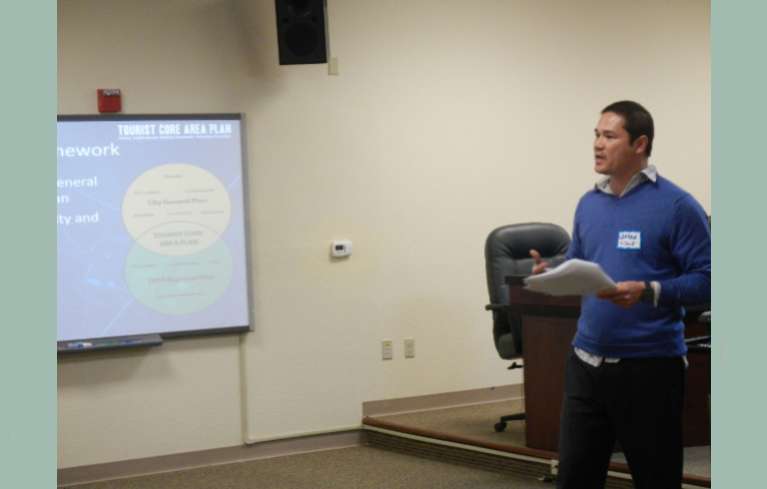
South Lake Tahoe planner John Hitchcock talks March 20 about the Tourist Core Area Plan. Photo/LTn

South Lake Tahoe planner John Hitchcock talks March 20 about the Tourist Core Area Plan. Photo/LTN

“The intent of the area plan is not a vision plan, it’s an implementation plan,” John Hitchcock, planner for the city, told the approximately 40 people who were at the March 20 meeting at Lake Tahoe Airport.

Hitchcock went over how area plans are TRPA’s latest version of community plans, but with the goal of being more functional. With a new TRPA Regional Plan in place, area plans come with redevelopment incentives, increased height allowances in town centers and the goal of revamping what’s in place for environmental gain.

South Shore resident Jerome Evans is concerned no one has asked business owners if they want to move to what are being called town centers; and wonders why an economic study to prove or disapprove this approach to planning is good or bad was not done.

One goal of the plan will be to harness and capitalize on the recreation areas that exist – Heavenly Gondola; Van Sickle Bi-State Park – including access to the Tahoe Rim Trail; Edgewood Tahoe Golf Course – and the beach that will be public after the lodge is built; the lake; and Ski Run and Lakeside marinas.

After the nuts and bolts were talked about, the mass of people went into the lobby area to write on maps, fill out comment cards and ask officials questions. The three main areas were land use planning and community design; conservation-water quality; and transportation-recreation.

Sharon Doughty, co-owner of the Ski Run Center that is anchored by the Red Hut Café, told City Manager Nancy Kerry after the group session that she is worried the plan will eliminate mom and pop businesses. Doughty fears the town centers will be high rent districts.

“Our goal is not to get rid of anything except something that is on very sensitive land,” Kerry said. “We don’t want to plan for the outcome, but instead plan for the opportunity to occur.”


CVS demanding to know how fat workers are

By Christine McConville, Boston Herald

A national data privacy group is seeing red over a new CVS policy that requires workers who use company health insurance to report their weight, and body fat and glucose levels to the insurer — or pay a $600-a-year penalty.

“This is an incredibly coercive and invasive thing to ask employees to do,” said Patient Privacy Rights founder Dr. Deborah Peel, adding that mounting health care costs have made these policies increasingly common.

“Rising health care costs are killing the economy, and businesses are terrified,” Peel added. “Now, we’re all in this terrible situation where employers are desperate to get rid of workers who have costly health conditions, like obesity and diabetes.”

Rhode Island-based CVS Caremark, which has 200,000 employees, told all workers who use the company insurance plan to have a doctor determine their weight, height, body fat, blood pressure and glucose and fasting lipid levels by May 1.

The company has dubbed the request “a health screening and wellness review so that colleagues know their key health metrics in order to take action to improve their numbers, if necessary.”

CVS says it will pay for the weight, body fat and blood screenings.

But in exchange, workers must sign a form saying the screening is voluntary, and that the insurer can give test results to WebMD Health Services Group. The firm provides health management programs and benefit support to CVS.

If workers don’t sign up, their medical coverage will jump by $50 a month.

Peel said the $600 noncompliance penalty shows the program isn’t voluntary.

“How is it voluntary if you are a low- or medium- wage person?” she said.

CVS spokesman Michael D’Angelis defended the policy, saying, in an email, “Our benefits program is evolving to help our colleagues take more responsibility for improving their health and managing health-associated costs.”

He said CVS bosses won’t be able to access workers’ personal health records.

“All personal health data is kept private by our wellness program’s third party administrator and is never shared with CVS Caremark,” D’Angelis said.

Peel said workers should be wary. “There’s no chain of custody for health data,” she said, “so there’s no way to verify that they don’t really look at it.”

MIT health economics expert Jonathan Gruber said he’s not sure where he stands on the effort.

“There is an important line here between a valid method of incentivizing wellness versus discriminating against sick workers, but I’m not sure where that line is,” he said.


Report: California lousy about posting healthcare costs

By Chad Terhune, Los Angeles Times

California consumers don’t have easy access to actual prices for medical care, according to a national report card that gave the state a D for its dismal showing.

Overall, 36 states received a D or F in the report issued Monday by two nonprofit healthcare groups that analyzed government efforts to make pricing information widely available to consumers. This issue has taken on added importance in recent years as patients shoulder a growing share of healthcare costs from higher deductibles and other insurance changes.

The two organizations, the Catalyst for Payment Reform and Health Care Incentives Improvement Institute, looked at state laws on requiring doctors and hospitals to share prices, whether the data was available on public websites and the ability of patients to request estimates prior to a hospital admission.

Only two states, Massachusetts and New Hampshire, earned an A on the report card.

“Without price transparency, consumers will continue to pay widely ranging amounts for the same exact services with no difference in quality,” said Suzanne Delbanco, executive director of Catalyst for Payment Reform, an employer-backed group based in San Francisco.

“Consumers want to know what are they going to pay out of pocket if they pick one provider over another. We hope this report card spurs states to act to help consumers further,” Delbanco added.

Policy experts say greater disclosure of medical prices would enable patients to comparison shop and force healthcare providers to compete more on cost and quality.

“It should be concerning to every lawmaker in the country that 18 percent of the U.S. economy is shrouded in mystery,” said Francois de Brantes, executive director of the Health Care Incentives Improvement Institute.

Under a state law that took effect in 2006, California hospitals must publish their average charges for the most common procedures on a state website. But relatively few take the extra step of listing prices on their own websites.

The other problem, Delbanco said, is that no one actually pays those charges reported to California officials, not even the uninsured. Insured patients would be responsible for a reduced price negotiated by their insurer, and the discount would vary based on the company.

Some insurers and employers have tried to assist patients by creating new online tools that show a range of prices among network providers. Other sites such as fairhealthconsumer.org and healthcarebluebook.com offer consumers average prices by ZIP Code for many common services.


Past decisions add to S. Tahoe’s Linear Park costs

By Kathryn Reed

South Lake Tahoe is balking over the $35,000 connection fee the water district is imposing in order for there to be ample water to irrigate Linear Park.

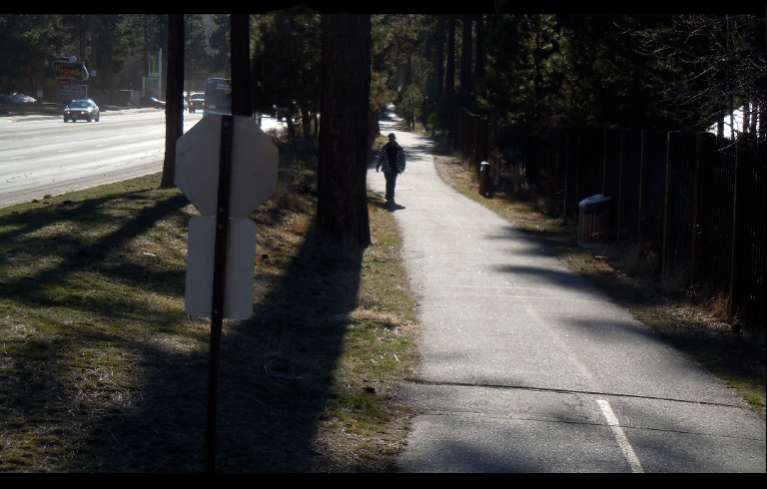
This stretch along Highway 50 isn’t really a park, but instead a paved path with landscaping from McDonald’s to Holiday Inn Express in front of the gated Tahoe Meadows neighborhood. It once looked better than it does now, but plants died without enough moisture and then the lights got kicked in, which contributed to the dilapidated look of the area.

In 2004, the now defunct Core 24 Charities had landscape plans drawn up for the area and secured a free connection for the 2-inch waterline from South Tahoe Public Utility District.

Linear Park in South Lake Tahoe will get a makeover this summer. Photo/LTN file

Linear Park in South Lake Tahoe will get a makeover this summer. Photo/LTN file

South Tahoe PUD saw this as a demonstration project to show how native landscaping can work in Tahoe with minimal water use and a way to promote its turf buy-back program.

(Core 24 morphed from the inaugural Leadership Lake Tahoe class that at the time was a product of the two chambers of commerce that later merged to become the Lake Tahoe South Shore Chamber of Commerce. Duane Wallace was the head of one of the chambers and on the STPUD board, STPUD spokesman Dennis Cocking was in LLT and Core 24, as was this reporter. When Core 24 dissolved, it gave the city $22,000 to be used solely for Linear Park.)

Former City Manager Dave Jinkens later traded that free connection for water at city facilities.

And with the current landscape design by Brett Long, the same person who did Core 24’s plans, the city wants lots of grass. This is not what the nonprofit had proposed or what was endorsed by STPUD. This requires larger water lines to accommodate all of the irrigation.

It also means the city now must pay a $35,000 connection fee. (The whole project will cost about $770,000.) The City Council on March 19 entered into an agreement with Herback General Engineering to do the work.

The California Tahoe Conservancy paid for most of the work the first time, but they aren’t allowed to use taxpayer money on do-overs.

Mayor Tom Davis pulled the item from the consent agenda and then went on a rant about how horrible STPUD is for charging connection fees.

The district, which was not at the meeting, told Lake Tahoe News afterward the connection fee is about buying into the nearly $1 billion South Shore water system.

“When people say waive this or that, they are saying all the ratepayers should help pitch in and waive this for project X,” STPUD’s Cocking said.

The money goes toward future improvements and replacement costs to the system.

“We are bound by law to charge what are real costs and what the costs of infrastructure are down the road,” Cocking said.

He added that the last time the rates were looked at – 2009 – the consultants recommended an increase. The board keeps saying stick with what’s in place.

But for Davis, he said the fees are “excessive” and “a job killer”.

He said the city doesn’t charge STPUD a fee to have the water and sewer lines under city streets.

When told this, Cocking said the city has altered its rules when it comes to STPUD crews doing repairs and that now more streets are paved by the district than anytime in the past – so the city is charging a fee of sorts.

At the end of the council meeting the five decided to create a new position, where Councilwoman Brooke Laine will be the city’s rep who will go to STPUD meetings and report back what is going on.

In other action:

• City Manager Nancy Kerry was given an “excellent review” by the council, according to the mayor. No changes were made to her contract.

• Aaron Abrams and Michael Adlard were awarded the concessionaire contract at Lakeview Commons and Regan Beach. Donna Rise (Aloha Ice Cream) will be the concessionaire at Bijou Park. Both contracts are expected to be for three years.

• The council approved guidelines for special events at Lakeview Commons.

• The five agreed to issue a request for proposals for signature events at the Commons.

• Councilmembers Davis and JoAnn Conner will work with city staff, Lake Tahoe Community College and the business community to keep SnowGlobe in town. The North Shore is wooing the music promoters. The college board on April 9 will have a debriefing on the 2012 New Year’s weekend music festival.


Dilapidated S. Tahoe motel to be resurrected

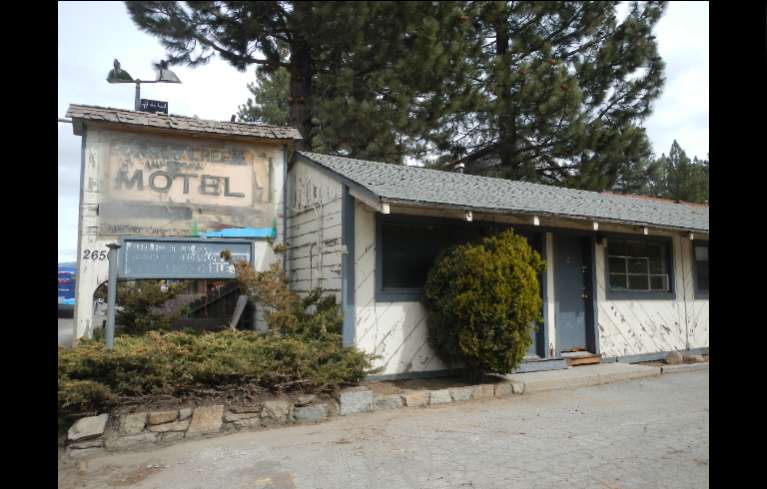
Trout Creek Motel's new owner promises upgrades. Photo/LTN

Trout Creek Motel’s new owner promises upgrades. Photo/LTN

By Kathryn Reed

One of South Lake Tahoe’s rundown hotels on Highway 50 is about to undergo some much-needed rehabilitation.

“By April 30 it will be looking good from the road,” Robert Durward said of the Trout Creek Motel.

He is the new owner of the 11-room lodging facility near the Town and Country Center. Durward also owns the Sky Lake Lodge next door and the El Nido down the road. He has refurbished both.

“My plans are not to tear it down, but have more curb appeal from the street and revamp the whole thing,” Durward told Lake Tahoe News.

The former owner had been cited and fined by the city numerous times for never making any of the improvements to the blighted facility.

Bill Potts, senior housing inspector for South Lake Tahoe, said Durward has promised to do what the former owner never did — remove the sign, rehabilitate the roof, paint the building and remove the foundation that is in the driveway.

In a letter from Durward to the city, he says he also plans to upgrade the rooms.

The three tenants have been given eviction notices. Once the place is renovated, Durward plans to keep it a weekly rental facility. He said it’s too hard to make it a tourist hotel because of the spring and fall shoulder seasons would mean too many nights with no heads in beds.

Durward said if the weekly rentals don’t work, he’ll think about converting the property into apartments.


11 arrested in Placer County ‘shoulder-tap’ sting

By Cathy Locke, Sacramento Bee

Agents from the California Department of Alcoholic Beverage Control, in cooperation with more than 100 law enforcement agencies, conducted a record-setting statewide decoy “shoulder-tap” operation.

The task force operation was conducted Friday and resulted in 506 arrests statewide, surpassing last year’s record of 435 arrests, according to a department news release. More than 400 individuals were cited for furnishing alcoholic beverages to minors, and at least 50 were arrested for other crimes such as illegal drugs, illegal gun possession, public drunkenness, parole violations and outstanding warrants, officials said.

Arrests in the Sacramento region included nine in Sacramento, four in Rancho Cordova, two in Folsom, six in Marysville, 11 in Placer County and 16 in Nevada County, according to the news release.

This was the second time the operation had been conducted statewide.

A decoy shoulder tap operation can lead to the arrest of adults who purchase alcohol for people younger than 21. Under the program, a minor under the direct supervision of a peace officer stands outside a liquor or convenience store and asks patrons to buy alcohol for him or her. The minor indicates in some way that he or she is underage and cannot purchase the alcohol.

If the adults agree to make the purchase, officers arrest and cite them for furnishing alcohol to the minor. The penalty is a minimum $1,000 fine and 24 hours of community service.

The program is intended to reduce the availability of alcohol to minors.

Officials cite American Medical Association findings that underage drinking can increase chances of risky sexual behavior and teen pregnancy, juvenile delinquency, compromise health and result in unintentional injury and death.