Famous pilot now has a Truckee address

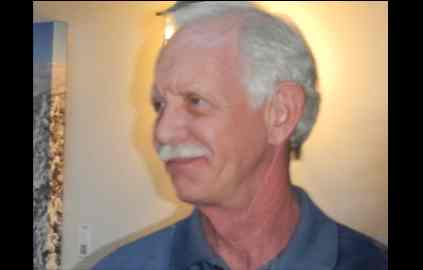
When Chesley “Sully” Sullenberger was in South Lake Tahoe last summer he told Lake Tahoe News his family spent a lot of time skiing at Northstar.

Chesley “Sully” Sullenberger just bought a house near Northstar. Photo/LTN file

Chesley “Sully” Sullenberger bought a house near Northstar. Photo/LTN file

Now it will be even easier for the family to do so. No longer do they have to make the 3½-hour drive from Danville. Sullenberger and his wife, Lorrie, have bought a place in Truckee.

The 4 bedroom, 4½ bath was listed for $2.85 million, but the Placer County Assessor’s Office said it sold for $2.4 million.

The couple owned a place in Incline Village at one time as well.

In the time since Sullenberger reached hero status for successfully landing US Airways Flight 1549 into the Hudson River in New York on Jan. 15, 2009, he has spent his time working on air safety, giving talks and getting kids interested in aviation.

— Lake Tahoe News staff report


CalFire fee backlash gains momentum

By Kathryn Reed

This year’s rural fire bills have been delayed because CalFire is still trying to figure out who should receive them.

“CalFire found a number of problems with addresses that should no longer be in state responsibility areas,” George Runner, who is a member of the state Board of Equalization, said April 2 during a teleconference. His agency sends the bills based on the addresses provided by CalFire.

Runner is a strong opponent of the fee that charges people $115 for living in an area serviced by CalFire. Last month the Howard Jarvis Taxpayers Association formally served the California Board of Equalization, CalFire and state Department of Justice with a lawsuit challenging the constitutionality of the state’s Fire Prevention Fee. Runner plans to join the lawsuit by filing an amicus brief on behalf of the California taxpayers he represents.

CalFire at times has a truck at the Lake Valley station on Lake Tahoe Boulevard. Photo/CalFire

CalFire at times has a truck at the Lake Valley station on Lake Tahoe Boulevard. Photo/CalFire

Besides the lawsuit, there are six bills in the Legislature that would either alter who pays, how much is paid or repeal the fee completely. Three of those bills are sponsored by state Sen. Ted Gaines, R-Roseville, who represents Lake Tahoe.

On Tuesday night Runner said, “The problem is state responsibility areas were never well defined. They were never meant to be as an overlay for taxing. That is why (CalFire is) backing off a bit as they are doing this year’s review.”

In El Dorado County, Runner said 1,300 properties are supposed to be removed from the fee list.

Runner said the plan by CalFire is to clean up the list, but a removal does not mean a refund is forthcoming. It means no bill will come in future years.

The fee was initiated last year as a way for the state to backfill CalFire’s coffers. The $85 million that was supposed to be raised was never designed for new programs or fire prevention. The governor and Legislature took that sum to balance the state budget and used the fee to keep CalFire whole.

To date, $73.8 million has been collected. About $1 million of that has been refunded to people who protested.

Runner is hosting a series of meetings with constituents throughout the state, with a particular area’s lawmaker to be on the line as well.

In the inaugural call people from one end of the state to the other complained about how the fee is really a tax – which becomes taxation without representation.

Another issue brought up is how owners of dwellings are charged, not property owners. This has impacted mobile home owners and those with more than one structure on a parcel.

Susan, a disabled senior from Grass Valley, told Runner a collection agency came after her because she was paying the fee in installments and the money drastically cut into her food allowance.

Ronny lives on 40 acres in Cottonwood. He said he has no idea why he should be charged the fee when he uses a tractor to cut his own fire lines and has been taking care of his property for years.

Janelle in Santa Cruz said CalFire does nothing for her, which frustrates her considering she had to pay the fire fee.

Robert, a truck driver, called from the road. He spoke about how he pays a fee for the volunteer fire department that is less than a quarter mile from his house. He called it silly to pay the CalFire fee when the state services his area three or four months a year, and then it can take 90 minutes for crews to arrive in an emergency.

While Runner agrees with the callers believing the fee is absurd, he recommends everyone pay it because otherwise it could get messy. He also says everyone should protest it.

“There is a view in the Legislature that folks in rural areas are responsible for fire. I like to remind people about the whole concept of conservation,” Runner said. He said CalFire wasn’t set up to protect properties, but instead to protect watersheds – that’s why CalFire will go into the backcountry. “Watersheds are primarily for people who live in the cities, not for the people paying the fee.”

David, who lives in the town of El Dorado, said then he didn’t understand why he was being billed instead of others farther west of him in more metropolitan areas. Plus, he added, he has a fire hydrant on his street, lives six doors from a fire station, and pays for fire protection via other taxes.

“I don’t think the average legislator down the street understands watersheds,” Runner said from his Sacramento office. “They don’t understand the relationship of fire protection and watersheds. They just turn on the tap.”

—-

Notes:

• More info about the fire fee is online.

• State Sen. Ted Gaines will participate in a tele-townhall May 7 from 6-7pm with Runner. To register, call (916) 324.4970.

• Runner’s number: (916) 445.2181.


Sandoval not ready to commit to TRPA

By Sandra Chereb, AP

Nevada Gov. Brian Sandoval favors keeping alive the threat to leave the bi-state Tahoe Regional Planning Agency Compact, a decades-old agreement that has governed environmental controls and development in the basin , a legislative committee was told Tuesday.

But conservation groups said given more cooperation with California, environmental groups and business interests, repealing Nevada’s threat would show the state’s commitment to collaboration and tackling the lake’s environmental challenges.

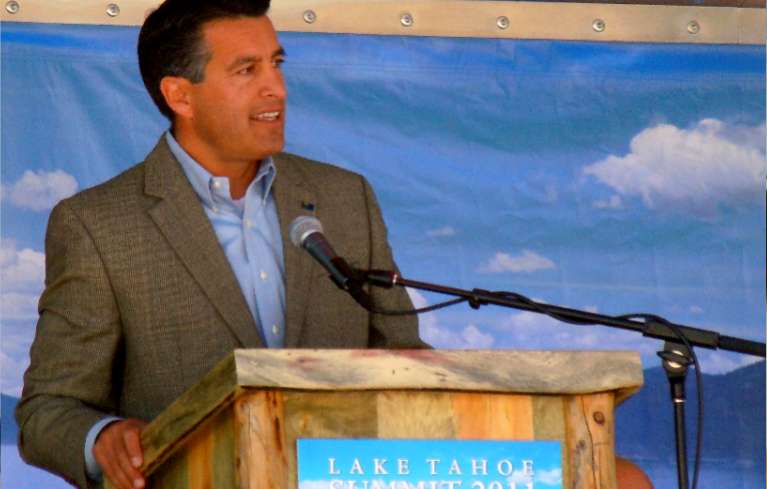
Gov. Brian Sandoval wants to keep Nevada's options open regarding inclusion in TRPA. Photo/LTN file

Gov. Brian Sandoval wants to keep Nevada’s options open regarding inclusion in TRPA. Photo/LTN file

No action was taken April 2 by the Senate Committee on Natural Resources on SB229, which would repeal the 2011 withdrawal legislation.

Steve Robinson, Sandoval’s designee to the TRPA, said SB271 passed by the 2011 Legislature authorizing possible withdrawal from TRPA was “essential” to jumpstarting negotiations and updating a regional plan for the first time since the late 1980s.

But he cautioned that a lawsuit filed in federal court in Sacramento by two environmental groups over the Regional Plan adopted in December “could be stopped in its tracks,” depending on how the court rules.

Additionally, the regional plan has yet to be fully implemented, and local governments now must come up with their own guidelines for overseeing some development activities.

“Looming over all of these … are the threat of litigation,” Robinson said.

SB229 would repeal a law passed in 2011 that paved the way for Nevada to leave TRPA and instead regulate environmental protections and development within its boundaries.

Nevada lawmakers blamed their California counterparts for favoring tough environmental standards that they said were hindering development and the economy.

TRPA in December approved an updated Regional Plan that gives local governments more control over some decisions.

Sen. David Parks, D-Las Vegas and sponsor of the latest measure, said last year’s law was successful in bringing all parties to the table and an updated plan. But leaving it in effect would be a mistake.

“For this collaboration to continue … it’s essential that Nevada recommit to the compact” by passing legislation this session repealing it, he said.

Kyle Davis with the Nevada Conservation League agreed, saying repeal of the withdrawal bill is “the top priority” of the state’s conservation community.

“I think lack of action by Nevada during this session will have a negative effect,” Davis said.

He said a perception that Nevada still wants to hold back would send “a pretty bad message” about its willingness to continue talks and work collaboratively.

Leo Drozdoff, director of the Nevada Department of Conservation and Natural Resources, reiterated Sandoval’s opposition to repeal — a sign committee chairman, Sen. Aaron Ford, D-Las Vegas, acknowledged was a hurdle for bill sponsors.

“We believe this bill is premature,” Drozdoff said, adding existing law sets a 2015 timeline for withdrawal and gives the governor the option to extend that deadline for another two years.

Business groups, including Tahoe resorts, also opposed the bill and urged the committee to allow more time, keeping the hammer of withdrawal in place.

But Parks disagreed.

“I think the important thing to bear in mind is time is of the essence,” he said. Given that Nevada lawmakers meet every two years, they won’t be able to consider repeal again until 2015.

“We’ll be at the eleventh hour,” he said.


1,000-home development proposed for Shingle Springs

By Richard Chang, Sacramento Bee

Shingle Springs residents are gearing up for a showdown over a proposed 1,000-home mega development off Mother Lode Drive.

The project, named San Stino, will have 1.6 units per acre over a 645-acre tract. Developer Joel Korotkin of San Stino LLP estimates the build-out could take several years, depending on market conditions.

But neighbors are launching a grass-roots effort to stop the proposal. They say the project is too dense and will threaten their rural lifestyle.

“The development is so large it will affect almost all Shingle Springs residents,” said Frank Verdin, an organizer for No San Stino, one of two grass-roots groups opposing the development.

No San Stino and the Shingle Springs Community Alliance are asking the El Dorado County Board of Supervisors to halt review of the plan and for the developer to go back to the drawing board.

The county is in the process of preparing an environmental impact review, which will assess the project in terms of traffic, infrastructure and other factors. But officials caution that final approval is still far away.

“For this many lots, you’re looking at 10 years or more before you achieve a full build-out,” said Pierre Rivas, the county’s principal planner.

The stiff opposition from the community has the developer on the defensive.

“We’ve been very open from the beginning,” Korotkin said, noting that San Stino has already been scaled down from the original 1,300 houses proposed two years ago.

“If you think this is going to affect you, we want you to write a comment setting forth your concerns,” he said.

El Dorado County’s elected leaders are taking note of the growing chorus of criticism.

Supervisor Ray Nutting, who represents Shingle Springs, said he is “very aware” of the constituent backlash against the project.

“I’m very skeptical of the numbers,” Nutting said. “My hope is that those numbers come way down. The developer needs to build trust with the community.”

Korotkin said that he has followed the application process from the beginning and that the county had previously designated the land as an area for growth in the 2004 General Plan.

The site has historically been a grazing ground for farm animals and is currently zoned as one home for every 5 acres.

Many in Shingle Springs live on plots of 1 acre or more, according to data from the county planning department. Community leaders have expressed concern that the large influx of people could upend the area’s rural lifestyle.

“If you take 1,000 homes and multiply that by two, you’re looking at 2,000 cars,” said Verdin, whose home sits on 8 acres and is 400 feet from the development site. “Traffic is a huge concern. People have to drive because it’s rural.”

But Korotkin contends that he has made ample provisions to allow San Stino to fit in with the community, including creating a new road to minimize traffic and setting aside 42 percent of the land, or 270 acres, toward open space.

“It’s a challenge, but I believe we can do this in a way that doesn’t hurt Shingle Springs,” he said.

The 30-day public comment period for the environmental impact report ended Friday.

The report is likely to be released by next spring.

Rivas, the county planner, doesn’t expect the Board of Supervisors to vote on the project until mid-2014.

“You’re looking at years off into the future,” he said. “But the project tells me there is a positive outlook in the future of the economy.”


Hyatt property at Northstar changes owners

The Hyatt Residence Club near the Village at Northstar has traded hands.

For an undisclosed sum, Welk Resorts took over the 23 remaining unsold whole ownership and fractional residential units, along with two adjacent vacant parcels for future development.

Those parcels are zoned for an additional 67 units totaling 102,619-square-feet.

The first 34 two- and three-bedroom units were completed in 2008.

LTMR Properties had owned the property.

The property, known as Northstar Lodge, is to the right of the ski resort village. It is a private ski-in/ski-out club. It is close to the gondola that takes passengers to the Ritz-Carlton at mid-mountain.

The Northstar Lodge in Truckee joins Welk Resorts San Diego, Welk Resorts Branson, Welk Resorts Desert Oasis, Welk Resorts Sirena Del Mar, Cabo San Lucas, as well as land held for future resort development in Breckenridge, Colo., and the newly acquired Poipu, Kauai property.

 — Lake Tahoe News staff report


CalStar adds clot stabilizing drug to medical kit

CalStar is the first air ambulance in the United States to introduce a new clot stabilizing treatment to its arsenal of medications.

Tranexamic acid (TXA) could save hundreds of lives in California and thousands across the country, according to David Duncan, CalStar’s medical director.

According to Duncan, this old drug now has a new job — it has been shown to decrease the mortality of critically bleeding trauma patients by about 30 percent if given in the first hour. He predicts TXA will become widely used.

CalStar flight nurses can administer the first dose of TXA when on a scene or while in transport. A second dose, given over an eight-hour period, may be initiated by CalStar nurses or by the receiving center. Because of the newness of the drug, CalStar flight crews carry enough medication to give to the receiving medical center.


Deaths tied to painkillers rising in U.S.

By Scott Glover and Lisa Girion, Los Angeles Times

Despite efforts by law enforcement and public health officials to curb prescription drug abuse, drug-related deaths in the United States have continued to rise, the latest data show.

Figures from the U.S. Centers for Disease Control and Prevention reveal that drug fatalities increased 3 percent in 2010, the most recent year for which complete data are available. Preliminary data for 2011 indicate the trend has continued.

The figures reflect all drug deaths, but the increase was propelled largely by prescription painkillers such as OxyContin and Vicodin, according to just-released analyses by CDC researchers.

The numbers were a disappointment for public health officials, who had expressed hope that educational and enforcement programs would stem the rise in fatal overdoses.

“While most things are getting better in the health world, this isn’t,” CDC director Tom Frieden said in an interview. “It’s a big problem, and it’s getting worse.”

Drugs overtook traffic accidents as a cause of death in the country in 2009, and the gap has continued to widen.

Overdose deaths involving prescription painkillers rose to 16,651 in 2010, the CDC researchers found. That was 43 percent of all fatal overdoses.

The numbers come amid mounting pressure to reduce the use of prescription painkillers. The U.S. Food and Drug Administration is considering a proposal to limit daily doses of painkillers and restrict their use to 90 days or less for non-cancer patients. The proposal also would make such drugs available to non-cancer patients only if they suffer from severe pain.

“The data supporting long-term use of opiates for pain, other than cancer pain, is scant to nonexistent,” Frieden said. “These are dangerous drugs. They’re not proven to have long-term benefit for non-cancer pain, and they’re being used to the detriment to hundreds of thousands of people in this country.”

Among the most promising tools to combat the problem, Frieden said, are computerized drug monitoring programs that track prescriptions for painkillers and other commonly abused narcotics from doctor to pharmacy to patient. Frieden said such programs should be used to monitor doctors’ prescribing as well as patients’ use.

“You’ve got to look at the data to see where the problems are,” he said. “You don’t want to be flying blind.”

In California, officials do not use the state’s prescription drug monitoring program, known as CURES, to proactively seek out problem patients or physicians. The state’s medical board initiates investigations of doctors only after receiving a complaint. Legislation awaiting action in Sacramento would increase funding for CURES and provide more investigators to police excessive prescribing, among other measures.

Frieden, a physician trained at Columbia and Yale universities, said patient safety should be placed above the concerns among some doctors about scrutiny of their prescribing patterns.

“We all take an oath to, above all, do no harm,” he said. “And these medications do harm. You’re free to practice medicine however you want. But you’re not free to do things that hurt people.”

President Obama’s drug czar, R. Gil Kerlikowske, echoed Frieden’s call for aggressive monitoring by state medical boards.

“You can’t just sit back, have a big database and then say, ‘Well, we’ll wait till there’s a complaint that comes in,'” he said in an interview. “You have to use it proactively.”

Lynn Webster, president-elect of the American Academy of Pain Medicine, said the new figures underscored the need for further action, such as educating physicians to recognize patients who are at risk for abusing painkillers.

“This is not the trend anyone wants to see,” Webster said.

CDC mortality data, culled from death certificates, do not detail how the decedents obtained the drugs that killed them.

A Los Angeles Times analysis of coroners records published last year found that prescriptions from physicians played a substantial role in the death toll. Of 3,733 prescription drug-related fatalities in Southern California examined by the Times, nearly half involved at least one drug that had been prescribed to the decedent by a physician.

Seventy-one doctors prescribed drugs to three or more patients who later fatally overdosed, the analysis showed. And several of the doctors lost a dozen or more patients to overdoses.

The latest CDC figures predate a broad attack on prescription drug abuse and misuse launched by the White House in April 2011. The preliminary figure for 2011 is down slightly but is expected to grow by at least 5% — exceeding the 2010 level — when all death certificates are in and counted, experts said. That’s what has happened in previous years.

Kerlikowske, who heads the White House Office of National Drug Control Policy, said efforts to hone the response to measures that show results were frustrated by the lagging mortality data. But, he said, anecdotal evidence and surveys of younger Americans suggest “there’s a lot going on that’s moving in the right direction.”

He declined to predict when there would be downturn in deaths.

“It won’t be overnight, certainly,” he said. “But we didn’t get here, with these kinds of numbers of deaths and overdoses, overnight.”


3 people wanted in robbery of S. Tahoe motel

Three people are being sought in an armed robbery of a South Lake Tahoe motel.

Officers said the clerk of the Pinewood Lodge on Highway 50 heard a knock about 11:30pm March 30. The woman said she needed a room.

The clerk told officers she opened the door and two men wearing ski masks and gloves entered the office. One was armed with a handgun and pushed the clerk behind the counter. The second man placed a large hunting knife near the clerk’s neck. The woman demanded money.

The amount of cash that was taken is not being disclosed.

The trio left in a brown four-door Cadillac headed east toward the casino corridor.

The suspects are described as:

• Female, black, adult, with a small build, approximately 5-foot-4, wearing a grey sweat shirt with a hood and black gloves.

• Black male adult with a medium build, approximately 6-foot-2, wearing a black sweat shirt, dark jeans, black ski mask and black gloves. Armed with a small black semi-automatic handgun.

• Black male adult with a medium build, approximately 6-foot-2, wearing all dark clothing, black mask and black gloves. Armed with a large hunting style knife with a black blade.

Anyone with information, should cal encourage to call the South Lake Tahoe Police Department at (530) 542.6100.

 — Lake Tahoe News staff report


Bomb hoax closes Hwy. 50 in Stateline

A Minden man pulled over Saturday night on suspicion of drunken driving ended up closing down Highway 50 in Stateline for several hours on what turned out to be a false bomb scare.

Adam Smith, 29, was stopped about 10:58pm near Kahle Drive by the Sushi Pier restaurant. Douglas County sheriff’s deputies saw a wire going from the front seat to the trunk. When asked what it was, deputies said Smith told them it was a bomb.

Tahoe Douglas' bomb robot determined there was no bomb in the suspect's vehicle. Photo/Provided

Tahoe Douglas’ bomb robot determined there was no bomb in the suspect’s vehicle. Photo/Provided

Eric Guevin of Tahoe Douglas Fire Protection District told Lake Tahoe News people will say things that like to “divert attention” from why they were originally pulled over.

The fire department’s bomb squad, including the robot, was then called out.

Highway 50 traffic was diverted around the area for several hours.

It wasn’t until 4am March 31 that it was officially determined Smith’s allegations were a hoax.

Smith was arrested on charges of driving under the influence and making a bomb threat.

 — Lake Tahoe News staff report


Sugar Bowl expanding number of homeowners

By Kathryn Reed

New development at Sugar Bowl is more rare than a powder day has been this ski season.

It was 2005 when the last subdivision sold out.

One day the resort off Interstate 80 expects to have 250 dwelling units. With the recent release of 25 single-family home sites, the privately held company is almost halfway there.

Originally there were 54 homes, which included the 12 Snow White condo-apartments. There are 67 single-family home sites – which includes the 25 just put on the market. And there are 24 townhomes. There are no plans for more townhomes. The Jerome Creek Lodge was of part the Judah expansion. Three more phases are part of that project, for a total of 39 units. With there being no market for condos, there is no time line for when that will be developed.

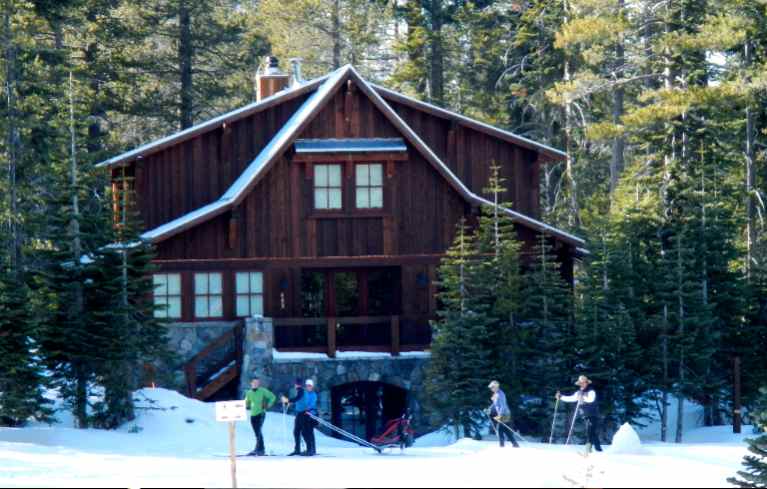
Sugar Bowl homeowners have cross country trails outside their door. Photos/Kathryn Reed

Sugar Bowl homeowners have cross country trails outside their door. Photos/Kathryn Reed

When Sugar Bowl started in the late 1930s the investors had stock. And then the homeowners did. These folks are still responsible for the operation of the resort and the homeowners association.

But a significant difference with the 25 Summit Crossing sites is they don’t come with shares in the corporation.

Of those 25 lots, two are sold, two are in escrow and four are reserved. Lots range from $250,000 to $750,000.

“All have direct access to Royal Gorge. You can step out any home site and be on a Royal Gorge trail,” Rebecca Meyerholz, who is with the resort’s real estate and development team, told Lake Tahoe News.

A lift of some sort, possibly a rope tow, is expected to be put in this summer. That will take residents to the base of Nob Hill and Disney at the downhill resort.

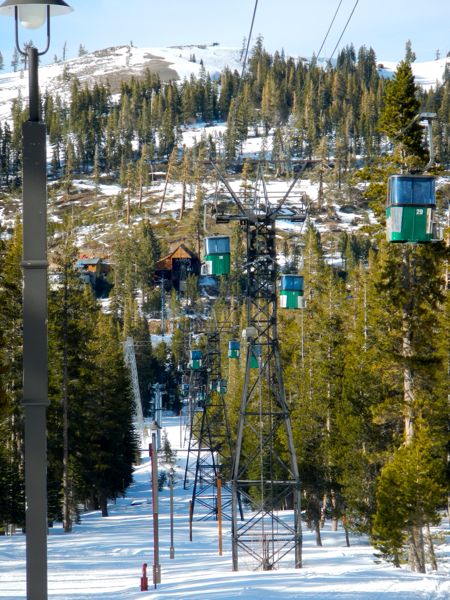
The gondola takes skiers and residents to the slopes or homes.

The gondola takes skiers-residents to the slopes-homes. Lights illuminate the paths.

Signs help trail users be safe.

Signs help trail users be safe.

Throughout this little enclave are paths for people to walk or ski on. Signs clearly delineate the sides for those on snowmobiles and those under human power.

These are second homes. And mostly it’s Bay Area residents buying into this enclave. In fact, some families have multiple houses to accommodate the multiple generations.

“Primarily it’s winter uses,” Meyerholz said. “We are seeing more summer use with more summer amenities.”

With homeownership comes buy-in to Village Services. It means having groceries in the fridge and cupboards before arrival, a spot to park in the garage, and an exclusive line just for them at each chairlift. When the sport house aquatic center is complete, this will be another benefit for residents.

To get to the houses during winter requires taking a gondola across. This runs 24 hours a day during the season. When the lifts close, the homes are accessed via the Judah area.

“It’s a more classic alpine experience. It’s a safe, secure environment where you can let your kids out,” Meyerholz said.