Harrison Ave. work delayed until 2014

By Kathryn Reed

The much talked about multimillion-dollar streetscape improvement to Harrison Avenue is not going to happen. At least not this year.

It was decided by South Lake Tahoe officials and property owners to push back the project to 2014 so everything can be completed in one year.

The thinking is that it would be better for businesses – and patrons – not to endure two construction seasons. This section of town has had work done to it for the last several years between Caltrans projects and Lakeview Commons.

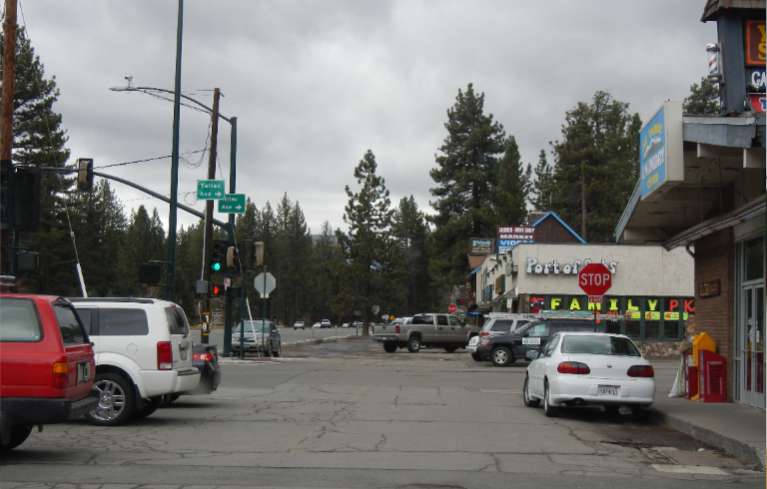
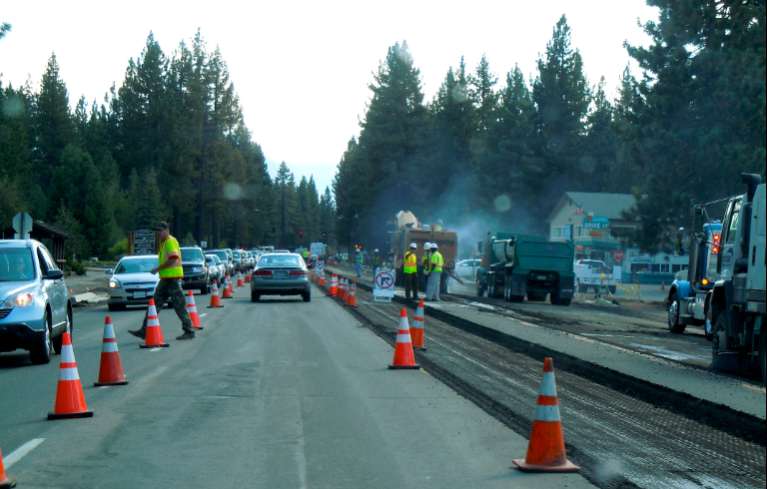
South Lake Tahoe's Harrison Avenue won't be overhauled this year. Photo/LTN

South Tahoe’s Harrison Avenue won’t be overhauled this year. Photo/LTN

With the consultant’s delay in completing the paperwork to get the federal money, the project could not start May 1 when the building season opens in the Lake Tahoe Basin. That meant starting later in the summer and finishing next year or holding off a year. Wait a year is what business owners opted for when they met with city staff March 28.

Coleen Shade, the consultant with R.O. Anderson, did not return a phone call.

The congestion mitigation air quality dollars are $510,000 of the total $3.2 million project. But the project cannot be bid until they are released.

The bulk of the remainder of the money comes from city issuing a bond, some U.S. Forest Service money for water quality, and property owners creating an assessment district. The latter also ensures this frontage street to Highway 50 and the side streets also meet the erosion control requirements of the Tahoe Regional Planning Agency.

Essentially a district stormwater collection system will be created instead of each property owner individually dealing with the runoff.

The project will be bid in August or September, with the City Council expected to award the contract in November.

The plans are set and the TRPA permit is in hand. The city is still awaiting some documents from R.O. Anderson.

Rehabbing this area of town next to Lakeview Commons has been talked about since 1995. The scope of work goes from San Jose Avenue to Los Angeles Avenue, and then down the side streets.

AT&T needs to move phone banks and Southwest Gas has to lower gas mains. That could still occur this year.

Some of the streets in the area are going to be one-way and in some cases one lane, diagonal parking will increase the number of spots, paving stones will be used for the sidewalks, crosswalks will be colored concrete, a multi-use Class 1 bike path will go along Riverside Avenue, light standards similar to Ski Run will be erected, and a gateway sign near the boat ramp will be installed.

The vacant lot across from Sno-Flake Drive-In is now owned by the city. In this project it will be paved over for parking. Lights will also be installed.


Fewer community college students transfer, get degrees

By Carla Rivera, Los Angeles Times

Fewer than half of California’s community college students transferred to a four-year school or earned an associate’s degree in 2011-12, the lowest level of completion in five years, according to data released Tuesday by the chancellor’s office.

Statewide, 49.2 percent of students who enrolled in 2006 achieved those goals after six years, compared with 52.3 percent of students who enrolled in 2002.

The completion rate for students needing remedial math and English was about 41 percent. By comparison, 71 percent of students who entered prepared to do college-level work in those subjects earned degrees or transferred.

Students in an LTCC food class. Photo/LTN file

Students in an LTCC food class. Photo/LTN file

The figures are among a raft of information available on the system’s newly released Student Success Score Cards, which highlight student performance statewide and at all 112 campuses.

The score cards are available on the college chancellor’s website and on those of individual campuses. They include other measures such as retention of students and job training success, in an easy-to-use format.

The numbers are also broken down by age, sex, race and ethnicity.

During a telephone media briefing, community colleges Chancellor Brice Harris said the “softening” of completion rates reflected a financial crisis that resulted in more than $1 billion in state funding cuts, slashed course schedules, a 17 percent increase in class size and other pressures.

“These have been five of the most stressful years California community colleges have suffered in decades,” Harris said. “It doesn’t surprise me we’ve seen the numbers soften as a result. It’s a clarion call that in spite of the difficult financial times we’ve had, we have to redouble our efforts and focus on student success.”

Harris said he hoped that students paid particular heed to the stark differences in success for those prepared and unprepared for college work.

“We’re frankly very pleased by that 70 percent-plus number, but we have to make clear to students and their parents the importance of being prepared … to come to college,” he said.

Harris said the score cards were not designed as a method of ranking institutions — which have different mixes of programs, student bodies and locations — although comparisons are inevitable, he conceded.


Tahoe casinos contribute to statewide gaming win

North Lake Tahoe casinos had a dramatic jump in revenues – 35.26 percent – in February from 2012.

South Lake Tahoe’s numbers were up, too – 7.8 percent.

The Nevada Gaming Control Board released the numbers Wednesday morning. Statewide, casinos collected $1.073 billion in gaming revenue. This is an increase of 15.1 percent from February 2012.

Casinos on the Las Vegas Strip set a single-month record with $696.1 million in revenues. And this was all done in the shortest month. The Chinese New Year being in February helped contribute to the spike.

 — Lake Tahoe News staff report


Expect delays on Tahoe roads starting now

Publisher’s note: This is one of a few stories about construction planned for the Lake Tahoe Basin this summer.

By Kathryn Reed

Work on Highway 89 between Tahoma and Tahoe City started Tuesday. And it won’t be done until October 2016.

Caltrans will have many of the highways in the Lake Tahoe Basin torn up this construction season in what are mostly water quality projects. Besides putting in systems to keep sediment from reaching Lake Tahoe other benefits for motorists and cyclists are also part of the plans.

The work that started April 9 is Southwest Gas contractors moving the natural gas lines before Caltrans comes in to do its roadwork. The project started last year and came with a ton of complaints. Much of that had to do with the delays getting around the West Shore as well as the large metal plates in the road. Though, delays and metal plates will be seen this year, too.

Caltrans will be doing a number of projects in the Lake Tahoe Basin this season. Photo/LTN file

Caltrans will be doing a number of projects in the Lake Tahoe Basin this season. Photo/LTN file

That contractor from Texas had not worked in the basin before and is not coming back – at least on this project.

“We hope it goes smoother than last summer,” Steve Nelson with Caltrans said.

The Southwest crews will be working from Pine Street in Tahoma to Timberland Lane near Chambers Landing.

It’s possible between the two Southwest contractors and the Caltrans gang people could face three delays on this stretch of road. Nelson said the delays should not be more than 20 minutes at any given stop. (This is for all of the Department of Transportation’s Tahoe projects.) But if someone is stopped at each section of this project, that could add an hour to the trip.

“Each project has traffic-control specifications the contractor has to follow, but in general it’s accurate to say that night work will be conducted during the peak season from July 1 through Labor Day, but there will be daytime work during the non-peak months of May, June, September and October. No weekend work starting Friday at 9am (peak) or Friday at 11am (non-peak) and no holiday work,” Nelson told Lake Tahoe News.

Caltrans will be putting in nine sand vaults to collect and filter stormwater runoff. They will start on the south end of Highway 89 in May. By 2016, the work will culminate in Tahoe City.

The road will be widened and repaved, curbs and gutters installed, and some left turn lanes installed. This is a $34 million project that is federally funded.

Caltrans has a meeting set for April 18 with the West Shore Business Association to address any lingering concerns.

Tahoe City Public Utility District in 2015 will be the project leader for a multi-use trail adjacent to Highway 89 between Trout Street and Cherry Street.

South Shore projects

Landscaping is the last thing that remains to be done for the Trout Creek to Ski Run Boulevard project that tied up traffic in South Lake Tahoe for the last two summers. An official dedication of the project will be sometime this summer.

Caltrans will be back at work on Highway 50 from 1,200 feet west of Ski Run to Wildwood Avenue. This $7 million project will include widening the road to provide a 6-foot shoulder for cyclists.

Curbs, gutters, sidewalks and stormwater treatment systems will be installed.

Work should begin May 1 and is likely to be finished in one building season.

Starting at Lake Tahoe Airport and going to the Y is a $12.4 million project that is expected to take two summers to complete.

Where the road is two lanes it will be widened to provide 3- to 4-foot shoulders for bikes. Curbs and gutters will be added, along with storm filtration systems.

The section of highway that is four lanes will have sidewalks installed. This is the commercial area.

Other projects

The $21 million Meyers project is not expected to start until next year.

The same goes for the Y to Cascade Lakes work along Highway 89.

Work in Kings Beach on Highway 28 is a Placer County project, with oversight by Caltrans. Utility crews are already working.

More info about Caltrans’ Tahoe projects may be found online.


SnowGlobe No. 3 in South Lake Tahoe? — maybe

By Kathryn Reed

Hear that sound?

It used to be a loud bass that rattled nerves. Now it’s the cha-ching of cash registers – in the literal sense of local businesses and the figurative sense of city coffers and college admissions.

The reason?

SnowGlobe.

SnowGlobe may return to South Lake Tahoe for a third year. Photo/LTN

SnowGlobe may return to South Lake Tahoe for a third year. Photo/LTN

Chad Donnelly wants to hear more of that cha-ching sound as well. He is the promoter of the three-day music festival that has been staged at the community ball fields next to Lake Tahoe Community College for the last two years.

His is a private business, so the actual amount of money the South Lake Tahoe venue has put into his pocket is unknown. But he wants more and he no longer wants to pay for the privilege to bring his eclectic line-up of techno musicians-disc jockeys to town during New Year’s Eve weekend. Donnelly wants to be paid $100,000. That’s what he is making at his other venues.

For the past two years he has paid the city and Lake Tahoe Community College to cover part of their expenses.

But now the North Shore wants part of what it sees as a lucrative event. It’s a bit of a bidding war that once again is pitting the North Shore against the South Shore.

Donnelly claims SnowGlobe brings $5 million to the South Shore. He is preparing an economic study that should be released April 18.  The city, college and business community will have something more to evaluate when it is released.

While it’s not public information what the North Shore has offered Donnelly, the presumption is $100,000 or less since that is what he is asking from the South Shore. He also wants a five-year contract.

The business community has expressed it is willing to pony up the $100,000 as an investment. The theory being that you need to spend money to make money. Plus, SnowGlobe gives people something to do other than stand in the cold on New Year’s Eve at casinos where nothing happens and it attracts people who might not have otherwise come to Tahoe.

At the Tuesday night LTCC board of education meeting it was agreed that the college should work with the city to keep the event in South Lake Tahoe. (Board member Fritz Wenck was absent.)

South Lake Tahoe City Manager Nancy Kerry, City Councilwoman Angela Swanson, Lake Tahoe Visitors Authority Executive Director Carol Chaplin, and Lakeside Inn Casino’s Mike Bradford all spoke April 9 in favor of 2013 being year three of the music festival.

Chaplin spoke both as LTVA’s head honcho and as a mom of two teenagers. She said how she let her boys attend the event and would do so again.

The biggest hurdle is how to protect the ball field that was built with Measure S money by taxpayers – an initiative that is still being paid off by those on the California side of the South Shore.

It is not definitively known how much life SnowGlobe is taking off the field, but those involved recognize the field was built for play, not music festivals. If those concerns can be mitigated, the city is ready to go forward with SnowGlobe 2013.

Donnelly is also in talks with Vail Resorts to bring a summer concert to Heavenly Mountain Resort.


S. Tahoe woman accused of selling drugs in Colo.

By Matt Stensland, Steamboat Today

A third person who is thought to have been involved with selling cocaine that later turned out to be methamphetamine was taken into custody this week in Steamboat Springs.

Margie “Maggie” A. Levin, 26, had a warrant for her arrest and was booked into Routt County Jail on Thursday on suspicion of conspiring to sell cocaine. Levin’s Craig attorney, Douglas Timmerman, arranged to have Levin return to Routt County from South Lake Tahoe, where she is living. Levin was released from custody after being given a $50,000 personal recognizance bond.

Timmerman said he still was gathering information about the case. She is due back in court May 8.

Margie “Maggie” A. Levin

Margie “Maggie” A. Levin

According to arrest warrant paperwork filed with the Routt County Courthouse, the All Crimes Enforcement Team drug task force used a confidential source to arrange for the purchase of 56.1 grams of cocaine from Levin on Aug. 24 for $2,500 plus a $500 fee.

The warrant states that the source placed the $2,500 inside the engine compartment of a snowmobile parked at a house in the 400 block of Sixth Street in downtown Steamboat. The $500 fee later was transferred to Levin’s bank account.

According to the warrant, the source was told to pick up the cocaine in a green shoe placed by a 20 mph speed-limit sign on Routt County Road 36 just north of Steamboat Springs. The source and ACET Commander Marvin Cameron retrieved the drugs from the shoe. The white substance later was tested by the Colorado Bureau of Investigation and identified as methamphetamine.

Cameron later reviewed the surveillance video of a man retrieving the money from the snowmobile. According to the warrant, the man was Trevor Rice, who was arrested March 7 after a separate controlled buy that was organized by ACET and took place Jan. 25 at the downtown post office, according to his arrest warrant. The warrant states Rice sold the ACET source 3 ounces of cocaine for $4,000.

ACET thinks Rice was Levin’s supplier.

Rice was charged with a single count of unlawful distribution, manufacturing, dispensing, sale or possession of a Schedule 2 controlled substance, a Class 3 felony, related to the Jan. 25 controlled buy. Rice is due back in court April 12.

The third person arrested by ACET was Levin’s boyfriend, Conor Barrett. He was arrested March 8. According to his warrant, Barrett gave 28 grams of cocaine, which also turned out to be methamphetamine, to an ACET source on Levin’s behalf Oct. 12. Money did not exchange hands during the transaction.

Barrett was charged with a single count of unlawful distribution, manufacturing, dispensing, sale or possession of a Schedule 2 controlled substance, a Class 3 felony. Barrett is due back in court April 17.


Nevada unveils latest tourism campaign

By Richard N. Velotta, Las Vegas Sun

Virginia “is for lovers.”

Kentucky has “unbridled spirit.”

And now, Nevada is “A World Within. A State Apart.”

State tourism leaders today unveiled the state’s new slogan, which has been almost two years in the making and cost close to $9 million. Officials also debuted the first television commercial to use the branding.

Nevada tourism officials try to balance rural places like Genoa with the urban appeal of Las Vegas. Photo/LTN file

Nevada tourism officials try to balance rural places like Genoa with the urban appeal of Las Vegas. Photo/LTN file

The slogan conveys the uniqueness of the state, residents’ independent spirit and the variety of experiences and opportunities Nevada provides, Gov. Brian Sandoval said. The state plans to use the mark on documents from all of its departments.

Nevada began its quest to create a brand and slogan in 2001. It hired GreenRubino, a Seattle company, to research what aspects of the state best resonated with residents and visitors.

The company tinkered with several proposals. The taglines included “ReiNVent,” which included the state’s postal code; “All in Nevada,” a play on poker terminology; and “Nevada is for Doers,” which referred to the variety of things to see and do here. All were soundly criticized by the public and members of the Nevada Tourism Commission.

Claudia Vecchio became the state director of tourism and cultural affairs in October 2011, took GreenRubino’s research and handed it off to a new agency, New York-based Burson-Marsteller. It was a controversial choice.

The company again was an out-of-state vendor, and its two-year contract with Nevada cost $3.2 million. GreenRubino, by comparison, charged $250,000.

To date, the total cost of Nevada’s tagline project, including the work by GreenRubino and Burson-Marsteller, the development of the television ad, ad buys in several California markets and development of a mobile app is about $8.5 million.

“A brand is more than a tagline,” Vecchio said. “It’s a full collection of expectations, experiences and characteristics. It’s the full breadth of language and the way we communicate with our audiences.”

Burson-Marsteller explains the slogan like this: “We are unwavering, we go about things our own way. We’re a hearty bunch, unyielding and diverse like the land itself. We’re mountains and snow and valleys of fire. We’re characters. We live in our own world. When other states restrict, we allow. We’re silver mines and pickups on long, lonely roads. But we’re also artists and oddballs and one-liner kings. Yes, we’re Vegas, but we’re also Tahoe and the Hoover Dam and wide-open country. We are enterprising. We are future focused. We’re unlike any other state in the union. We are Nevada. A world within. A state apart.”

Sandoval asked Burson-Marsteller to develop a brand that all state departments could use, much the way Kentucky uses its “unbridled spirit” brand.

“We wanted to put a clear personality around the state that we could all collectively rally behind,” Vecchio said. “That did change and broaden our challenge a little bit. Instead of having something that appealed just to travelers, we needed it to appeal to Nevadans, because they are the ones that are going to be our brand ambassadors.”

Vecchio said the concept celebrates the dualities of the state.

“One of the greatest challenges, when I thought about how we would develop a statewide brand, was overcoming some of these boundaries we had,” she said. “We’re north, we’re south. We’re urban, we’re rural. We’re this, we’re that, when we are in fact one state. So instead of fighting these boundaries, we’re celebrating them, saying we are a world within with a lot to do here, but then, we do things differently than anyone else does.”

Burson-Marsteller tested the slogan with 800 people in Nevada, Los Angeles, San Francisco, Sacramento, Fresno, San Diego, Phoenix and Salt Lake City. About 78 percent liked it, the company said.

The public will get its first look at the branding in a television commercial launching the state’s summer tourism campaign. It incorporates a distinct Nevada vibe. The soundtrack is performed by the Killers, who come from Las Vegas.

The band covers the classic western song, “Don’t Fence Me In,” written in 1934 by Cole Porter and Robert Fletcher. It has been performed by Bing Crosby, the Andrews Sisters, Eddie Arnold, Roy Rogers, Gene Autry, Ella Fitzgerald and Willie Nelson.

But Vecchio had only one band in mind for the commercial – the Killers.

When she contacted front man Brandon Flowers, the band was on tour in Europe. They recorded it while on the road.

“They took the time out of this crazy tour schedule to record the song,” Vecchio said. “They’ve been a great, great partner and when people hear it, I think they’ll agree that they nailed it.”

The commercial features actors singing with the band while a montage of local sites and activities flash in the background – hiking at the Valley of Fire State Park, riding jet skis on the Colorado River, riding ziplines in Boulder City.

The ad directs people to the state’s website where they can find more information about the places shown. The Killers’ version of “Don’t Fence Me In” also can be downloaded from the website.


Ex-El Dorado County DA arrested on DUI charges

By Village Life

A former El Dorado County district attorney was arrested March 30 for allegedly driving while under the influence.

At 3:45am, an El Dorado County sheriff’s deputy stopped a black Hyundai Sonata for impeding traffic on El Dorado Hills Boulevard south of Highway 50 in El Dorado Hills, a press release from the California Highway Patrol states. When the deputy made contact with the driver, he allegedly detected a strong smell of alcohol from within the vehicle, and CHP was requested to make a DUI evaluation.

Gary Lacy

Gary Lacy

The deputy was able to identify the driver as Gary Lacy, 59, El Dorado County district attorney from 1994 to 2006. Lacy reportedly exhibited symptoms of intoxication. Lacy also allegedly admitted to drinking prior to driving. The former DA subsequently failed the field sobriety tests.

Lacy was arrested on charges related to DUI. He was not booked into the county jail. Officer Quinn Cuthbertson confirmed that Lacy’s blood alcohol level was at least 0.08.

According to the sheriff’s department daily logs, Lacy had been impeding traffic while being yelled at by a female; Cuthbertson believed her to be a passenger in the car. The female, Kimberly Alander-Hunt, 27, was arrested on suspicion of public intoxication and later released.


El Dorado County probation in state of flux

By Kathryn Reed

A show of force late Monday afternoon by El Dorado County employees prevented the chief probation officer and others from being found in contempt of court.

El Dorado County Superior Court Judge Steve Bailey summoned Greg Sly to his courtroom April 8 to talk about the staffing situation at the Juvenile Detention Center in South Lake Tahoe. Bailey is the presiding judge of the juvi system and Sly is head of probation.

Since September there has not been enough female staff to allow girls to be housed at the South Lake Tahoe facility. Today there are seven girls in the juvenile system; one is from Tahoe. She is with the rest of the girls in Placerville.

Bailey and Sly met April 5. Bailey wasn’t satisfied with Sly’s reasons for the ongoing staff shortage and at that meeting threatened Sly and other county officials with contempt of court. This could have resulted in their sitting in a jail cell or facing a fine.

Greg Sly, El Dorado County chief probation officer, is ready to spend more time backpacking with his dog. Photo/Provided

Greg Sly, El Dorado County chief probation officer, is ready to spend more time backpacking with his dog. Photo/Provided

It was Sly, two members of the county legal team, the human resources director and a member of the chief administrative office who met with Bailey on Monday. The result is none was detained or fined, and that there is better understanding of the recruiting process for probation.

Staffing issues

The 40-bed Tahoe facility was built to house an equal number of girls and boys. This is the second time since the facility opened in 2004 that the girls’ side is dark. That’s because a minimum of six female employees are needed to keep that side of the 24-hour facility open. Physical searches and showers require staff to be the same sex as the detainees.

Five of the seven female workers are injured – some are workers’ comp cases, some injuries happened outside of work.

Sly told Lake Tahoe News he hopes to be back to a full complement of employees by May 1. Three of the injured workers should be off leave and new recruits hired. The hiring process takes about six months with all the background checks and other training needed for probation officers.

Fully staffed at the Tahoe Juvenile Treatment Center would be 10 men, 10 women.

The JTC has had trouble keeping and recruiting people because it’s more expensive to live in Tahoe, more remote and the kids more dangerous than those in Placerville.

Probation officers cost the county about $90,000 a year in salary and benefits. There are 131 people in the department. Probation has an annual budget of about $14 million.

In the current recruitment batch 318 people submitted applications. Of those, 168 went through the testing process. Nine of the 60 top tier applicants want to work in South Lake Tahoe.

After a report by Sly last fall went to top administrators as well as the Board of Supervisors, the county has created the position of program coordinator and hired a counselor for the Tahoe site.

While Sly is getting what he wanted in terms of staffing, it came with some retaliation last fall when he was placed on a 10-week paid administrative leave for reasons Chief Administrative Officer Terri Daly has never disclosed.

The lack of communication continued between Daly and Sly when after a report by a third party was done on the probation department, Daly kept it from the person in charge of the department for several weeks. It also took a public records request for Lake Tahoe News to obtain the document.

The report says, “The findings of this study are that the major critical factors affecting El Dorado County’s ability to recruit and retain qualified personnel for its juvenile justice facilities are: Fiscal issues; work schedules and shift structures; operational and programming issues affecting staff safety; and, to a slightly lesser extent, safety concerns associated with facility physical plants.”

Consultant’s report

Suzie Cohen and Associates was paid $33,000 to evaluate the county’s juvenile facilities from October 2012-February 2013. The consultant was tasked with looking at staffing, programs, operations, population levels at the facilities in South Lake Tahoe and Placerville, and more.

Recommendations include:

• Increase base pay by 10 to 12 percent for staff.

• Raise base pay of chief probation officer before hiring a new one.

• Increase stipend for Tahoe employees.

• Have someone do a scheduling study to potentially go from three eight-hour shifts to two 12s.

• Screening and placement of wards should be the responsibility of probation staff, not the courts.

• Community members and service providers should assist with delivering life skills.

• Introduce a “true” drug and alcohol treatment program.

• Introduce “proven” programs that reduce recidivism.

• Girls should have as many programs as boys.

• More internal training.

• Develop comprehensive emergency response plan with El Dorado County Sheriff’s Department.

• Plan to build a new juvenile facility in Placerville.

Not much has changed since the county did a needs assessment for South Lake Tahoe in 1999-2000. The consultant quoted from that report, “The Tahoe area could pose particular problems … because it is relatively remote, has a small and transient population base, has no university nearby from which to draw, is expensive and has a mainly recreation/gaming economy. The consultant added, “Especially if El Dorado County pays less than comparable and/or neighboring counties, recruiting and retaining staff will continue to be extremely difficult.”

Population projections for the county indicate both juvi facilities could be full as time goes by.

The report says, “Violent crime and youth gang activity are more prevalent in South Lake Tahoe than on the West Slope. As a result, juvenile offenders from the Tahoe basin are somewhat more sophisticated and have committed more serious offenses than their counterparts form the West Slope.”

Staff who were interviewed by the consultant team spoke of the differences between Tahoe and Placerville, right down to how a little snow in Placerville means closing offices, while Tahoe offices stay open with several feet of snow.

“Cultural differences between the West Slope and South Lake Tahoe reportedly contribute to morale problems in many agencies, including the DA’s office, the bench, the jail and others,” the report says. “People in South Lake Tahoe feel cut off, like ‘step children.’ They say managers and administrators in Placerville ‘don’t know what it’s like up here.’”

Sly retiring

The county on April 5 opened the recruitment process to replace Sly. His last day will be Sept. 13. With his assistant chief retiring in December, Sly announced his retirement early with the intent of allowing his replacement to be on board so there is no gap in leadership.

He has been with the department for 23 years.

Sly will be 50 when he retires. He is considering what his future will entail. He’s hoping not to work the first year. Instead, he wants to fill his time backpacking. The John Muir Trail is on his list.

Sly has a new dog that became part of the family to be his backpacking buddy.

He is also looking at going to law school. He and his daughter could be classmates. Sly admitted with the turmoil in his life of late, labor law is of particular interest.

Having taught at Lake Tahoe Community College, he also envisions possibly teaching at UNR.

Then part of Sly also thinks selling backpacks at REI could be his next career.


California aerospace industry eyes drones

By Torey Van Oot, Sacramento Bee

A technology long deployed on the battlefield could be coming to a farm, newspaper or police station near you.

An expected boom in the use of nonmilitary “unmanned aerial vehicles,” commonly known as drones, has California looking to regain some of the aviation industry swagger it enjoyed for decades before defense downsizing shuttered military bases and manufacturers.

The Federal Aviation Administration, which is moving toward a 2015 target for opening the skies for public and private drone use, estimates that more than 30,000 could be in flight nationwide by 2020.

“We’re not darkening the sky yet, but we’re poised,” Richard Christiansen, vice president of aerospace engineering firm Sierra Lobo Inc., said at a Southern California symposium on civilian drone uses.

At stake for California and other states is a piece of $82 billion in economic activity the drone industry estimates it will generate between 2015 and 2025.

But the emerging technology has attracted questions about use, safety and privacy, leading state and federal regulators to grapple with how to govern drones. Capitol hearings and the two-day symposium in Thousand Oaks, sponsored by state lawmakers and an industry association, have explored those issues in recent weeks.

Unmanned systems are most commonly known for their use by the military, which has increased its reliance on drones to conduct surveillance and track down terrorists in places like Afghanistan and Pakistan. But advances in technology and cuts to defense spending have led manufacturers to experiment with new ways to use what the industry calls “UAVs.”

Boosters of the technology say it could be used to assess and sell real estate, help news organizations report stories and patrol oil pipelines, ports or vast swaths of water of the coast.

First responders and emergency management officials see potential in monitoring and fighting wildfires or assessing damage from natural disasters in real time. Some law enforcement officials want to use drones to conduct surveillance and search-and-rescue operations or crack down on illegal drug cultivation and trafficking.

Shipping companies have explored using them to deliver packages, industry representatives say. UC Davis has been granted a waiver to test drones that spray and fertilize crops.

“Everywhere I go people ask me for new applications for these things,” Kristen Helsel, a vice president for Public Safety UAVs at AeroVironment, told a room of industry representatives and policy specialists at the symposium. “There are smart people out there who when we put the technology in their hands, they’re going to be able to think of great ways to use it that will save lives and protect property.”

But the opportunity for expansion has sparked privacy concerns and calls for rules about where, how and by whom the system can be used.

“The key thing is that there has to be a (regulatory) framework in place before the drone is deployed,” said Linda Lye, a staff attorney with the American Civil Liberties Union of Northern California. “In too many other instances, we see the technology rapidly outpacing the law.”

The ACLU wants states and federal officials to ensure information collected in non-law enforcement capacities, such as surveying a forest, isn’t stored and later used for other purposes. The organization believes a regulatory scheme must include warrant requirements and other safeguards in place to protect the rights of citizens.

It is especially concerned about how police and other government agencies will deploy drones. Such uses, Lye believes, will be widespread because the aircraft are less costly than helicopters or other surveillance tools and the Department of Homeland Security is offering grants to help pay for the equipment, which can cost hundreds of thousands of dollars for each aircraft.

Industry reports downplay those uses, saying agriculture is expected to attract much of the spending in the early years.

Privacy concerns also have led to some public backlash. Supervisors in Alameda County, for example, have put a county sheriff’s proposal to seek a drone on hold in light of pushback from privacy advocates and others in the community.

Drone supporters in California say privacy concerns must be addressed, but not to the detriment of development.

Assemblyman Jeff Gorell, who has introduced legislation setting parameters for use and privacy rights, said he hopes privacy concerns don’t hurt California’s “opportunity as a state to earn back some of the eminence that we once held in the area of job creation around aviation and innovation in aerospace.”

“Most of these platforms have nothing to do with caring one iota about what people do in their backyard,” the Camarillo Republican said. “If we allow the privacy issue to drive these jobs out of California or to drive the industry underground, that would be a terrible consequence of a concern that has to do with only one of the limited applications of the fastest growing sector of aerospace in the last 25 years.”

Gorell’s package of bills, co-authored by Democratic Assemblyman Steven Bradford, includes a set of proposed tax breaks to attract the drone industry to the state.

Those bills represent two of least 80 proposals related to drones in 39 statehouses across the country, according to the National Conference of State Legislatures. Because the authority to regulate federal airspace rests with the FAA, many of the proposals tackle privacy concerns and issues over data storage and usage.

Drone boosters also are working outside the Statehouse to promote industry growth in California. At least two applications, backed by groups in San Diego and Ventura County, have been submitted to win one of six test sites the FAA is set to award nationwide. The locations chosen are expected to become hubs for drone development in the future.

“What the Bay Area is for IT, one of these test sites could be for aerospace and (unmanned aerial systems),” said Ventura County Director of Airports Todd McNamee, who is working on a proposal that would open corridors of airspace for testing that run from Oxnard along the coast to Northern California with inland routes east to Redding and Truckee. “That’s how we sort of envision it.”

The FAA says 50 applications have been received from 37 states. Supporters, pointing to other states with coordinated campaigns, have called on Gov. Jerry Brown to put more muscle behind at least one of the proposals to increase its competitiveness. Legislators trying to raise the issue’s profile in the Capitol convened a committee hearing last month.

“We want to do everything we can to get those jobs and economic development here in California,” said Assemblyman Al Muratsuchi, D-Torrance, who chaired that hearing.

While securing a test site could accelerate growth in California, supporters say the technology will advance either way.

Some limited testing through public-private partnerships is occurring in the state’s military airspace. The FAA has handed out 1,400 waivers – only to public agencies – such as the one UC Davis received to operate drones under certain circumstances since 2007; 327 of those were active as of mid-February.

Hobbyists like Jason Goldman, a recent Pepperdine University graduate who builds his own drones, are already in the air for recreational purposes, awaiting the OK to do more with their drones.

“We’re here now and we’re ready,” Goldman told the symposium audience last month. “I say let us fly.”